Structure of Electrical System

 An electrical system is a network of components that work together to generate, distribute, and consume electrical power. The structure of an electrical system can vary widely depending on the size and complexity of the system. However, there are certain fundamental components that are common to most electrical systems.

Source – https://engineeringnotesonline.com/

Power Source –

The first component of an electrical system is the power source. This is the device that generates electrical power. It can be a generator, a battery, or a solar panel, depending on the application. The power source is connected to the rest of the system through a set of wires or cables, which carry the electrical power to the other components.

Load –

The next component of an electrical system is the load. This is the device that consumes the electrical power. The load can be a light bulb, a motor, or any other electrical device. The load is also connected to the rest of the system through a set of wires or cables.

Switch –

In between the power source and the load, there are several other components that help to regulate and control the flow of electrical power. One of the most important of these components is the switch. A switch is a device that can be used to turn the flow of electrical power on and off. It is often used to control the operation of a load, such as a motor.

Transformer –

Another important component of an electrical system is the transformer. A transformer is a device that can be used to change the voltage of the electrical power. This is important because different devices require different voltages to operate properly. For example, a motor may require a higher voltage than a light bulb. A transformer can be used to step up or step down the voltage of the electrical power as needed.

Distribution System –

The distribution system is also a crucial component of an electrical system. This is the network of wires and cables that carry the electrical power from the power source to the loads. The distribution system is often divided into several different levels, such as the transmission system, the sub-transmission system, and the distribution system. Each level of the distribution system is designed to handle a specific amount of electrical power and to serve a specific geographic area.

Protective Devices –

Finally, an electrical system may also include various protective devices, such as fuses and circuit breakers. These devices are designed to protect the system from overloads and short circuits, which can damage the components and cause fires or other hazards.

You can read more about protective devices here.
What are Protective Devices?

Electrical power systems are complex networks of electrical components that supply power to homes, businesses, and industries. These systems are designed to deliver electricity safely and reliably, but they are also subject to a variety of hazards that can cause damage to the system and threaten the safety of personnel. Protective devices are therefore a crucial part of any electrical power system, as they help to prevent damage and ensure safety in the event of abnormal conditions.


Source – LinkedIn

Circuit Breakers

Circuit breakers are perhaps the most common type of protective device in electrical power systems. They are designed to interrupt the flow of electrical current when an abnormal condition is detected, such as an overcurrent or short circuit. Circuit breakers can be installed at various points in the system, including at the main distribution panel, sub-panels, and individual outlets. They typically consist of a switch mechanism that opens and closes the circuit, along with a protective mechanism that detects abnormal current flow and trips the switch.

Fuses

Fuses are similar to circuit breakers in that they are designed to protect against overcurrent conditions. They consist of a thin wire that melts when the current exceeds a certain level, causing the circuit to break. Fuses are often used in conjunction with other protective devices, such as circuit breakers or surge arresters, to provide an additional layer of protection.

Surge Arresters

Surge arresters are used to protect the system against voltage surges caused by lightning strikes or other external sources. Voltage surges can cause significant damage to electrical equipment, so surge arresters are often installed at strategic points in the system to absorb the energy of the surge and prevent it from reaching the equipment. Surge arresters typically consist of a metal oxide varistor that absorbs the energy of the surge and dissipates it as heat.

Ground Fault Interrupters

Ground fault interrupters (GFI) are designed to protect against electric shock. They detect imbalances in current flow between the hot and neutral wires and trip the circuit if a ground fault is detected. GFIs are often used in areas where water is present, such as bathrooms, kitchens, and outdoor outlets.

Protective Relays

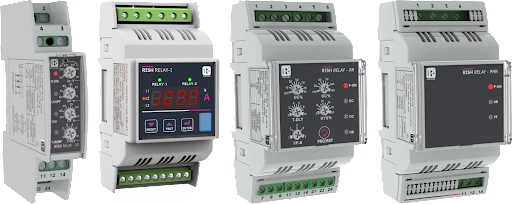
Protective relays are another type of protective device used in electrical power systems. They are designed to detect abnormal conditions in the system, such as overcurrent, under voltage, or overvoltage, and trip the circuit breakers or other protective devices as needed. Protective relays are often used in high-voltage systems, such as transmission lines and substations, where a fault can cause significant damage to the system.

Transients in Power Systems

In power systems, transients refer to short-term disturbances or fluctuations in voltage, current, or power that can occur due to various factors, such as sudden changes in load demand, faults in the system, lightning strikes, switching operations, and generator or load tripping.

Transients can have different time durations, ranging from a few microseconds to a few seconds, and can cause various problems, such as equipment damage, system instability, and power quality issues. Transients can destroy computer chips and TV.

To mitigate the effects of transients, various protective devices are used in power systems, such as circuit breakers, fuses, surge arresters, and voltage regulators. These devices help to limit the magnitude and duration of transients, and protect the system and equipment from damage.

Simulation tools, such as transient stability analysis software, are also used to model and analyze the behavior of power systems during transients, and help to identify potential problems and optimize system performance.

Transients are usually classified into two categories:

  • Impulsive and
  • Oscillatory

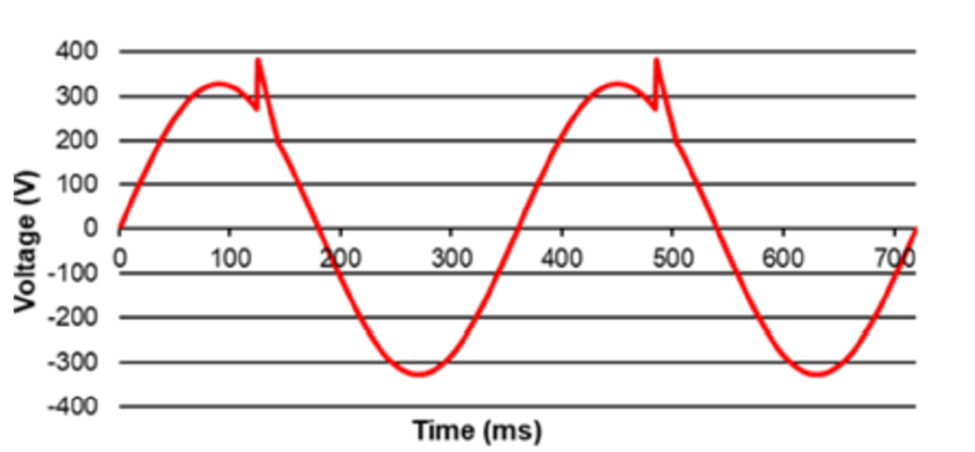
Impulsive transient caused by a lightning stroke.
Switching of lines with power factor correction capacitor banks, poor
grounding, switching of inductive loads, utility fault clearing, disconnection
of heavy loads, and electrostatic discharge. Impulsive transients can be very
fast events (5 ns rise time from steady state to the peak of the impulse) of
short-term duration (less than 50 ns), and may reach thousands of volts, even
in low voltage.

Devices are needed to prevents damage to electrical equipment
caused by impulsive transients from lightning strokes Utilities use lightning
arresters mounted on their transmission and distribution systems and in their
substations, while many utility customers use transient voltage surge
suppression (TVSS).

Fig- Impulse transients

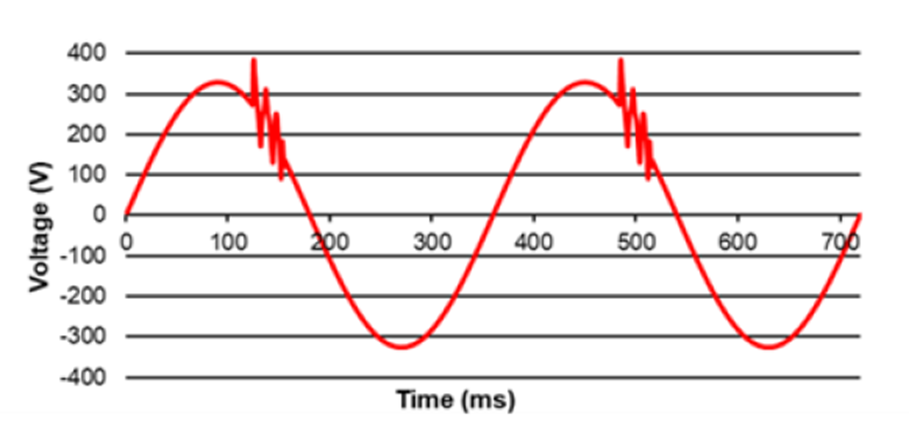
Oscillatory transients occur when switching inductive
or capacitive loads such as motors or capacitor banks. An oscillatory transient
occurs because the load resists the change. Lighting, utility fault clearing
and transformer energization and Ferro resonance could also cause oscillatory
transients.

Oscillatory transients do not decay quickly like impulsive
transients. They tend to continue to oscillate for 0.5 to 3 cycles and reach 2
times the nominal voltage or current. Another cause of oscillatory

transients, besides lightning strokes going into resonance, is
switching of equipment and power lines on the utility’s power system.

Fig – Oscillatory transients