SEA BEACH OF PURI

The President of India, Smt Droupadi Murmu spent some time this morning (July 8, 2024) at the sea beach of the holy city of Puri, a day after participating in the annual Rath Yatra. Later she penned her thoughts about the experience of being in close commune with nature.

Here is the text that was posted on X: “There are places that bring us in closer touch with the essence of life and remind us that we are part of nature. Mountains, forests, rivers and seashores appeal to something deep within us. As I walked along the seashore today, I felt a communion with the surroundings – the gentle wind, the roar of the waves, and the immense expanse of water. It was a meditative experience.

It brought to me a profound inner peace that I had also felt when I had a darshan of Mahaprabhu Shri Jagannathji yesterday. And I am not alone in having such an experience; all of us can feel that way when we encounter something that is far larger than us, that sustains us and that makes our lives meaningful.

In the hustle and bustle of the daily grind, we lose this connection with Mother Nature. Humankind believes it has mastered nature and is exploiting it for its own short-term benefits. The result is for all to see. This summer, many parts of India suffered a terrible series of heatwaves. Extreme weather events have become more frequent around the globe in recent years. The situation is projected to be far worse in the decades to come.

More than seventy percent of the surface of the earth is made up of oceans, and global warming is leading to a rise in global sea levels, threatening to submerge coastal areas. The oceans and the rich variety of flora and fauna found there have suffered heavily due to different kinds of pollution.

Fortunately, people living in nature’s lap have sustained traditions that can show us the way. Inhabitants of coastal areas, for example, know the language of the winds and waves of the sea. Following our ancestors, they worship the sea as God.

There are two ways, I believe, to meet the challenge of protection and conservation of the environment; broader steps that can come from governments and international organisations, and smaller, local steps that we can take as citizens. The two are, of course, complementary. Let us pledge to do what we can do – individually, locally – for the sake of a better tomorrow. We owe it to our children.”


***

THE JOURNEY OF PURI TOWARDS FIRST CITY TO PROVIDE 24 X 7 CLEAN WATER

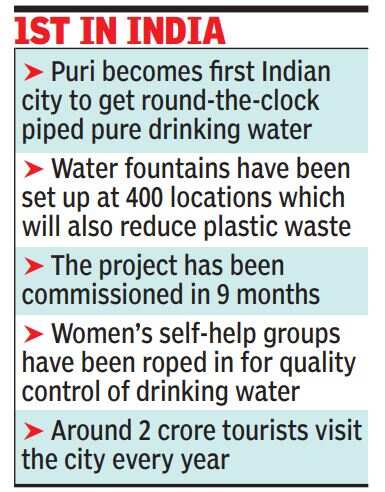
Puri is one of the major heritage cities of the country and every year more than 2 crore tourists visit every year. And this month the city earned an unique distinction of becoming the first Indian city to provide 24X7 pure drinking water. This is the landmark achievement for the city and state and is one of the major contributors for enhancing the status of sanitation and hygiene in Puri, Odisha. The city has become the first city to offer safe drinking water directly from taps to the residents and the tourists visiting the city every year and now has joined the group of global metropolitans like London and New York for providing safe drinking water.

The government launches “Sujal: Drink from Tap Mission” which has the goal of providing all time safe drinking water to all the residents and people visiting the cities directly through taps. The city has fulfilled and achieved the credentials of the ambitious mission and has achieved the goal of the mission. The 24 hour drink from tap facility provides water which can be used directly without filtration for different purposes such as drinking, cooking etc. This move is beneficial for the 2.5 lakh people residing in the city and the 2 crore tourists visiting the city every year. And the people don’t need to carry water bottles with them and can directly rely on the taps. This type of facility is present in very limited number of cities globally and Puri has established its place. Furthermore, the state government had installed 400 water fountains in different locations of the city with the aim of reducing the reliance and usage of plastic bottles in Puri. This will eventually reduce the amount of plastic wastes being can be reduced.

The government uses 5T initiative for increasing the efficiency and effectivity of the services being delivered across the city. The Chief Minister of the state emphasized on the linkage between safe drinking water with health, living standards and the economy, thereby, urging the people not to waste or pollute water. Transparency, teamwork, technology, time-frame and transformation form the 5Ts which has been adopted by the government for improving its governance. The budget for drinking water has been doubled in 5 years from Rs 200 crore to Rs 4000 crore thereby making the city the first heritage town in the country to get this facility. It is expected that the initiative will have great contribution in reducing the amount of plastic wastes generated. It is estimated that the amount of plastic waste being generated by the city will reduce by 400 tonne per annum. 1100 Stand posts were already present in the city and the state government has established additional 110 modern public stand posts along the Grand Road (Badadanda) and nine by the sea beach area have been installed. Old stand posts are being replaced with steel pipes and taps and at present 36 MLD clean water is being supplied everyday in the city. About 135 – 140 liters of drinking water per head per day is being provided to the residents everyday.

The Jagannath Rath Yatra

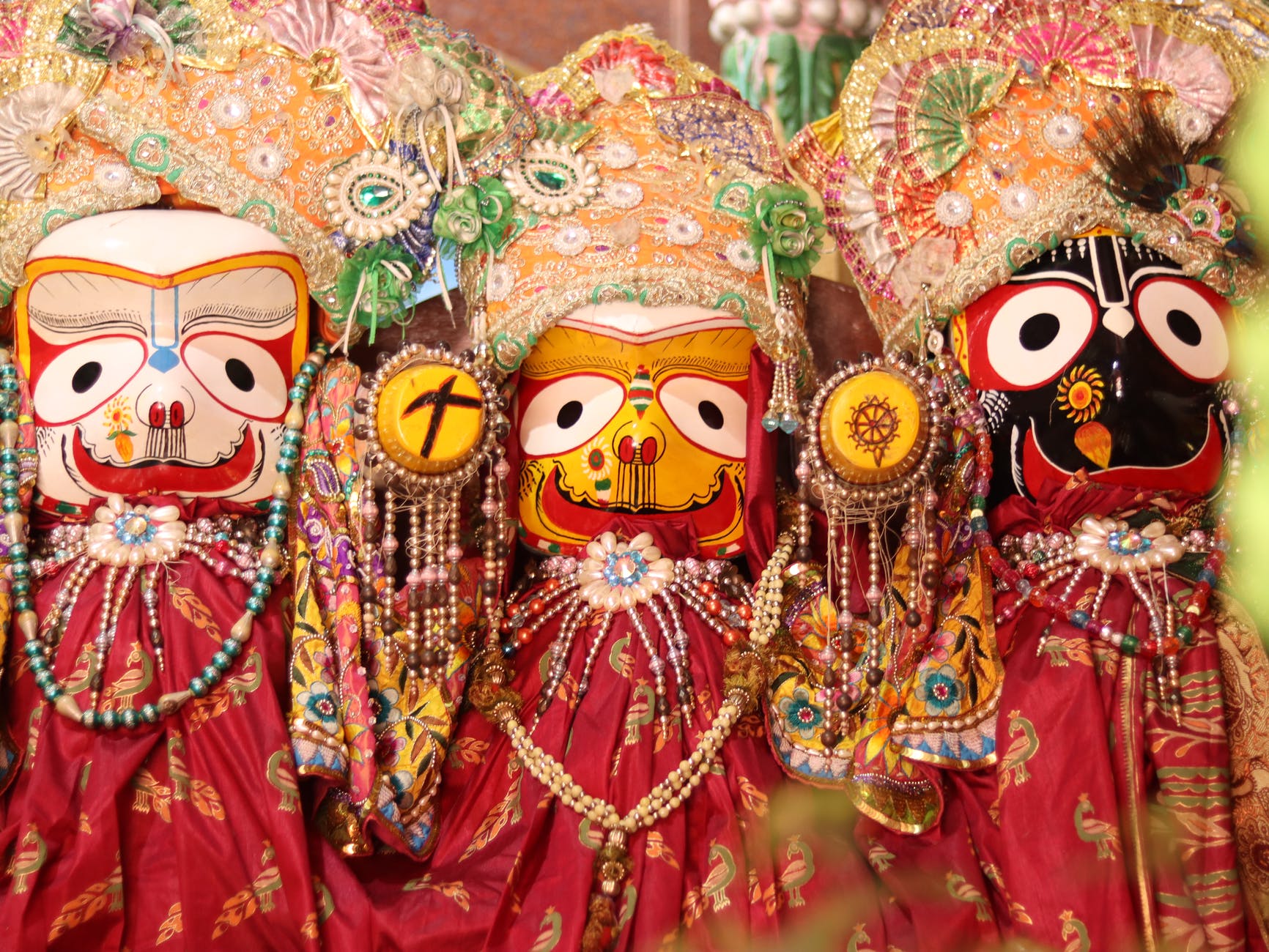
The Jagannath Rath Yatra is an annual Hindu festival associated with Lord Jagannath celebrated in Puri at the state of Odisha. It is celebrated on the Ashadha Shukla Paksha Dwitiya which is the third month according to the traditional Oriya calendar. A 9-day long event, it is celebrated as the return journey of Lord Krishna- who is known as Lord Jagannath, his brother Balabhadra- also known as Balaram and his sister Devi Subhadra to Vrindavana . On their way back from the Shri Gundicha Temple, the three stop near Mausi Maa’s Temple (their aunt’s abode) where Poda Pitha is offered to them.

The rath yatra begins at the Jagannaath Temple in Puri. The Jagannath Temple is believed to have been constructed by the king of Ganga Dynasty- Ananta Varman Chodaganga Deva in the 12th century(source-wikipedia). The image of Sri Krishna (Lord Jagannath) in the temple of Puri is made of wood and is replaced every 12 or 19 years by an exact replica. This temple is part of the Char Dham( that comprises of the temples of Badrinath, Dwaraka, Puri and Rameswaram).

Every year, the rath of all three deities is newly constructed by a specialized team of carpenters from the wood of a particular type of neem tree and takes about 2 months to construct. They are given hereditary rights for the very same. A week prior to the Rath Yatra, the Jagannath temple’s doors are shut as the lord is believed to have caught a high fever during his annual bath. After the end of the 7-day rest period, the doors are opened and the 3 km Rath Yatra begins, where thousands of devotees from all over the world participate in pulling the raths of the 3 deities to Shri Gundicha Temple. It is a popular belief that anyone who participates in the Rath Yatra is blessed with a good fortune. During the festival, the king dressed as a sweeper, sweeps the area around all the 3 chariots with a golden broom and sprinkles sandalwood water and powder as a part of the Chera Paahara ritual held on two separate days that marks the beginning as well as the end of the Rath Yatra. This day of the beginning of Rath Yatra also marks the beginning of agricultural season and farmers start ploughing their fields. It also marks the beginning of a three weeks long Chandan Yatra.

This year, however, in response to the covid-19 pandemic that is spread across the country, the government said that the Rath Yatra will take place with only 5 vehicles including 3 chariots and no devotees. The Supreme Court also said that the Rath Yatra will take place in limited areas of Puri. It began on the 12th of July,2021.