

Putin was born in Leningrad (now St. Petersburg) in 1952. After graduating from Leningrad State University in 1975, he joined the KGB, the Soviet Union’s security agency, and served as a foreign intelligence officer for 16 years. During his time in the KGB, Putin was stationed in East Germany, where he reportedly recruited agents and monitored foreigners.
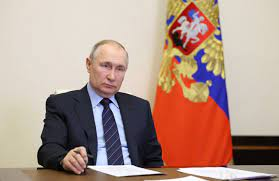
After the collapse of the Soviet Union in 1991, Putin entered politics and served as the head of the Federal Security Service (FSB), the KGB’s successor agency, from 1998 to 1999. He was appointed as prime minister by President Boris Yeltsin in August 1999, and later that year, he succeeded Yeltsin as president of Russia.
Putin’s rise to power was marked by a series of events that helped him consolidate his position. In 1999, a series of apartment bombings in Russia killed over 300 people, and the Russian government blamed Chechen separatists for the attacks. Putin used the bombings as a pretext to launch a military campaign against Chechnya, which helped him gain popular support in Russia.
Putin’s early years as president were marked by a number of reforms, including changes to the tax system, efforts to modernize the military, and the consolidation of power within the federal government. Putin also pursued a more assertive foreign policy, including the annexation of Crimea from Ukraine in 2014.
Putin has been criticized for his authoritarian tendencies, including restrictions on freedom of the press and the persecution of political opponents. He has been accused of ordering the assassination of journalists and dissidents, and his government has been accused of human rights abuses in Chechnya and other regions of Russia. Despite these criticisms, Putin remains a popular leader in Russia, with approval ratings that are consistently above 60%. He has been re-elected as president multiple times, most recently in 2018.
Putin’s journey from a KGB agent to the president of Russia is a remarkable story that reflects both his personal ambitions and the political landscape of Russia. While he has been criticized for his authoritarian tendencies, Putin remains a dominant figure in Russian politics and has had a significant impact on the country’s direction over the past two decades.

 Eduindex
You must be logged in to post a comment.