Chokher Bali: The Book Review

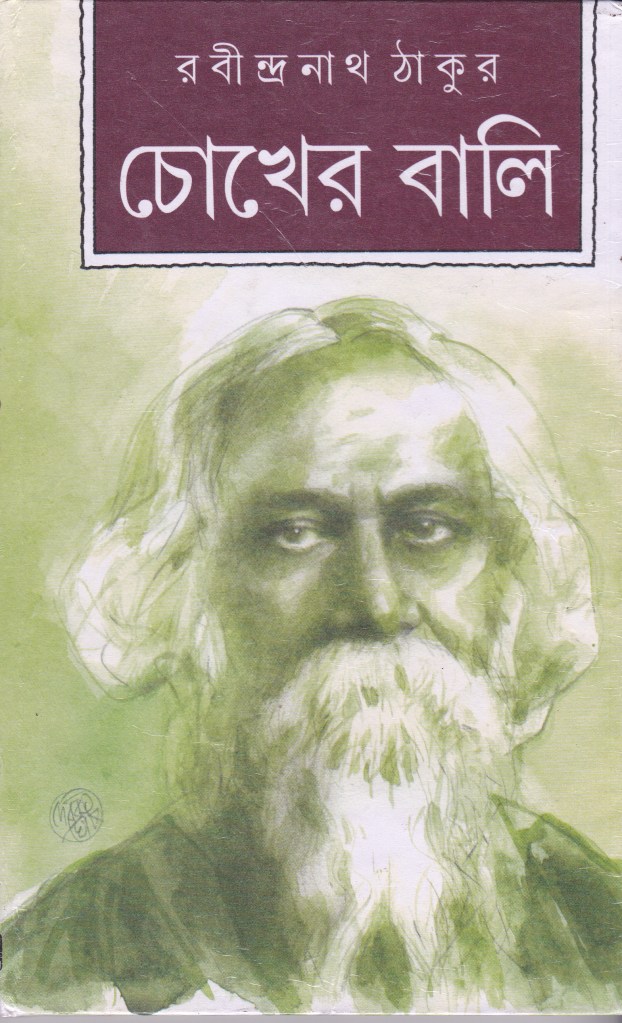
Cover of Chokher Bali (1903) in Bengali

Introduction

Rabindranath Tagore’s 1903 Bengali novel Chokher Bali is often referred to as India’s first modern novel, where he highlighted the issues of women’s education, child marriage and the treatment of widows in 19th and 20th century Bengal. It was first serialised in the Bengali literary magazineBangadarshan first founded in 1872 by Bankim Chanra Chattopodhay and later resuscitated under the editorship of Tagore in 1901.
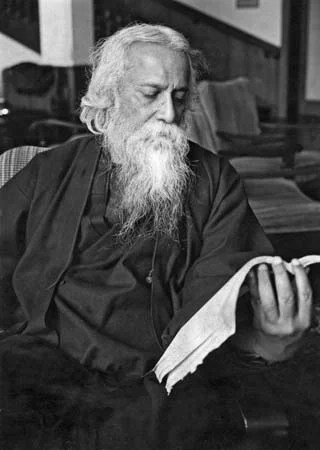
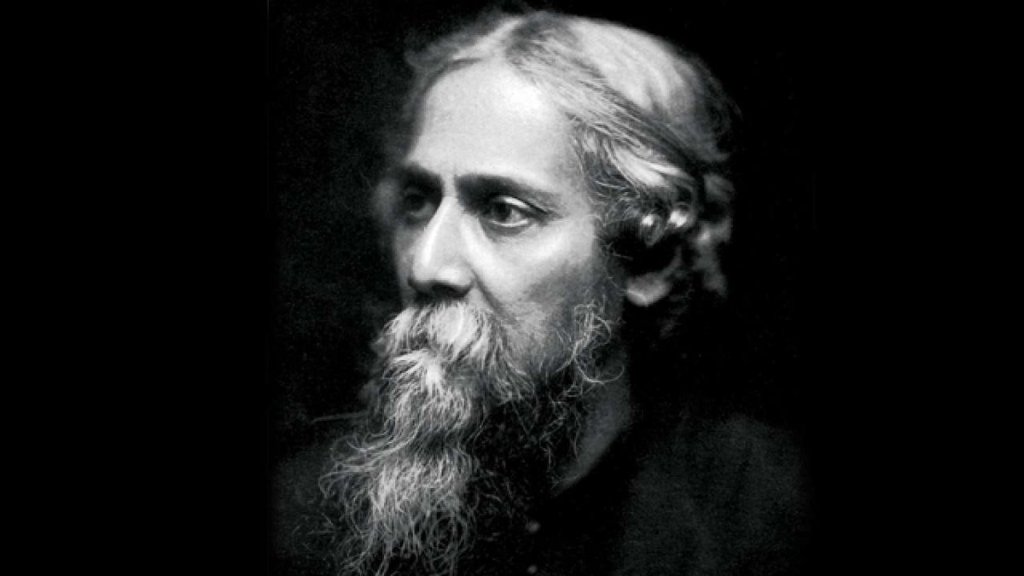
Rabindranath Tagore

About The Author

Rabindranath Tagore (7 May 1861 – 7 August 1941) was a Bengali  Polymath —poet, writer, playwright, composer, philosopher, social reformer and painter. He reshaped Bengali Literature  and music  as well as Indian Art with Contextual Modernism in the late 19th and early 20th centuries. Author of the “profoundly sensitive, fresh and beautiful” poetry of Gitanjali, he became in 1913 the first non-European and the first lyricist to win the Nobel Prize in Literature. Tagore’s poetic songs were viewed as spiritual and mercurial; however, his “elegant prose and magical poetry” remain largely unknown outside Bengal. He was a fellow of the Royal Asiatic Society.  Referred to as “the Bard of Bengal”, Tagore was known by sobriquet: GurudevKobiguruBiswakobi.

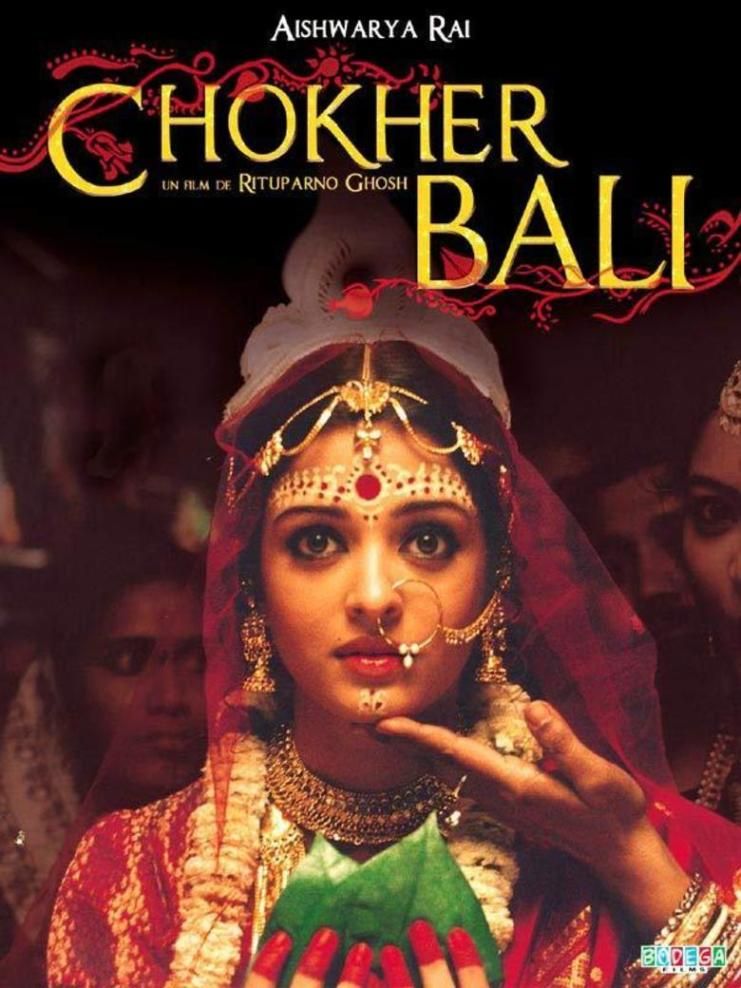
Aishwarya Rai Bachhan as Binodini in Chokher Bali (2003)

Storyline of The Novel

The plot revolves around four protagonists- Mahendra, Ashalata, Binodini and Bihari. Mahendra is the only scion of a rich family based in Calcutta. Bihari is his childhood friend, who frequents his house. Mahendra’s mother wanted him to marry Binodini, her friend’s daughter. But Mahendra refused. Then his mother requested Bihari to marry Binodini and save the poor girl which Bihari refused. Eventually, Binodini got married to a man who died soon after marriage. Meanwhile, Mahendra married Ashalata, a poor orphan girl. Mahendra was besotted with his wife when Binodini came to live in their house. With time, an extra-marital relationship develops between Mahendra and Binodini, which threatens to destroy his marriage with Ashalata. But soon Binodini discovers that Mahendra is a self-obsessed person, unable to provide a safe shelter to her. So she inclines towards Bihari, who lives life by principles. Throughout the novel, there is an implicit implication of Bihari’s affection towards Ashalata, though he never crosses the boundaries of the relationship. In the end, Bihari falls in love with Binodini when realizes her feelings for him. He proposed to marry her, which Binodini refused saying that she doesn’t want to ‘dishonour’ him further. During that period (the novel was written in 1902), widow remarriage was not well accepted in society. That may partially explain the reason behind Binodini’s refusal. In the end, Binodini leaves for Varanasi– a fate that awaited most of the widows in those days.
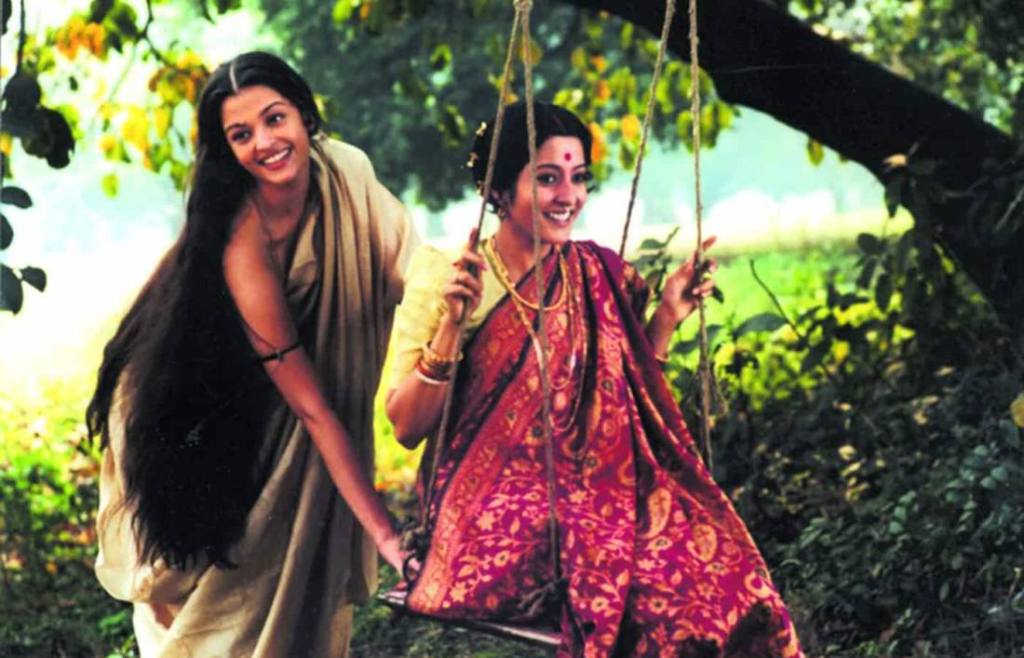
Aishwarya Rai Bachhan as Binodini and Raima Sen as Asha in Chokher Bali (2003)

Analysis of The Storyline

The term ‘Chokher Bali’ literally means a sand grain in eye  in Bengali  and metaphorically means to be a source of irritation or disturbance in someone’s eyes, which is what Asha and Binodini become for each other. Binodini is presented in many avatars a hopeless widow, a friend, a temptress, and a remorseful woman. Tagore gives readers an insight into her desires and longings, the feeling that many widows at the time had silently undergone. On the other hand, Asha is presented as naive and innocent, which combined with her illiteracy initially results in her subjugation. The narrative almost becomes an implicit debate on love and morality, urging readers to understand Asha and Binodini outside of the social norms of Bengali society. The central character Binodini is not an idealised Indian woman but a woman with shades of grey and very human flaws. Binodini cannot come to terms with her life as a widow, as she is still young and has wants and desires. She feels wronged as she believes she is superior to Asha in all respect and deserves the life she is living. Tagore’s depiction of Binodini is impressive as she subverts the expectation of society for widows to forgo all worldly desires.
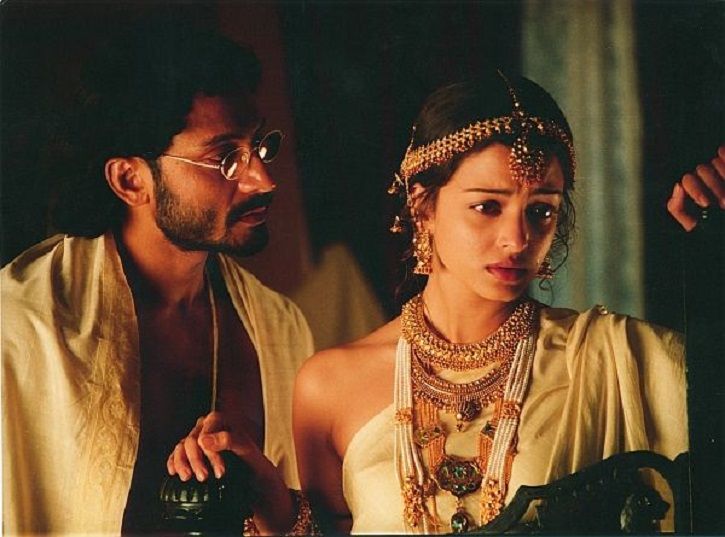
Tota Roy Choudhury as Bihari and Aishwarya Rai Bachhan as Binodini in Chokher Bali (2003)

Criticism of The Storyline

The story of this novel delves deep into many facets of human relationships and how a single wrong decision can make the life disharmonious. Jealousy and deprivation of happiness can result into an emotion strong enough to forget all other ties and relationships.Tagore shows the intellectual interchange between the characters, possible due to education and the interception of letters. The innocent and illiterate child bride Asha fails to understand the exploitation she faces at the hands of her husband and dear Bali (Binodini) whom she trusted blindly. Tagore does not justify Binodini’s actions and actually is sympathetic to Asha, perhaps stressing that Asha would have been able to avoid Binodini’s interference in her marital life, if she were educated enough to understand the intentions behind her friendly nature. However, one of Tagore’s greatest regrets in the novel is the ending. Despite his progressive portrayal of Binodini and Bihar, he does not allow them to marry at the end. Although, today we may see the girl marrying the guy as regressive today in Tagore’s time a widowed woman was not permitted to re-marry. Thus, ending the novel with Binodini and Bihari marrying would have been the most revolutionary.
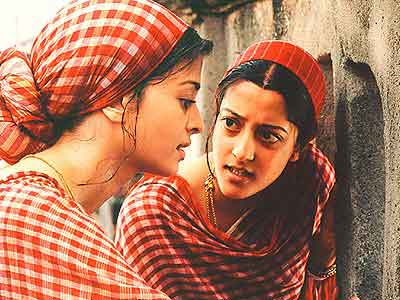
Scene from Chokher Bali (2003)

Movie Adaptation of The Novel

Adapted from Tagore’s Chokher Bali, the movie with the same name was released in 2003, directed by eminent Bengali Moviemaker Rituparno Ghosh, starring Aishwarya Rai Bachhan, Raima Sen, Prosenjit Chatterjee and Tota Roy Choudhury in the lead roles. The movie won the National Film Award for Best Feature Film in Bengali and was nominated for the Golden Leopard Best Film award at the Locarno International Film Festival in 2003. Aishwarya Rai won the Best Actress award at the Anandalok Awards 2003.

Conclusion

A century after Chokher Bali, education is still a struggle for many women to access easily globally. Tagore’s novel is radical and unconventional presenting a viewpoint that is ahead of the conservative times of 19th and 20th century India. Through the story of Binodini, Tagore questions the societal norms. He condemns all kinds of taboos and unjust customs which deprive women and especially widows of their rightful freedom and autonomy; confined to live a mournful colourless life. As a man from a privileged background, his understanding of the emotions of Indian women and his empathetic attitude towards them is remarkable.

Kabuliwala by Rabindranath Tagore

Kabuliwala is a Bengali short story written by Rabindranath Tagore in 1892, during Tagore’s “Sadhana” period (named for one of Tagore’s magazines) from 1891 to 1895. This story is one of the best stories written by Rabindranath Tagore.

This is very emotional and sensitive story which portrayed a father’s deep love for his daughter. This story is adapted many times as a Bengali and Hindi movie in 1957 and 1961 respectively and also as a part of television series named “Stories by Rabindranath Tagore”.

SUMMARY

The story opens with the narrator describing his five-year-old daughter Mini, who learned how to talk within a year of being born and practically hadn’t stopped talking since. Her mother often tells her to be quiet, but her father prefers to let her talk, so she talks to him often.

One morning, Mini chats with her father while he’s working on an adventure novel. She looks out the window and spots a man and starts calling him “Kabuliwala, Kabuliwala!” The man she’s shouting about is an Afghan named Rahamat in baggy clothes, walking along selling grapes and nuts. However, when he comes over, Mini runs into another room, convinced that his large bags are full of children, not goods.

A few days later, our narrator finds Kabuliwala sitting next to Mini with a pile of raisins and nuts in her lap, paying close attention as she talks and talks. He has given her some grapes and pistachios, so the narrator gives the Kabuliwala half a rupee and tells him not to give her any more treats.

Later, Mini’s mother finds her with the half-rupee and asks where she got it, and is displeased to hear she took money from the man.

Mini and the Kabuliwala develop a close relationship, spending time together every day joking around and talking. The narrator enjoys talking to Kabuliwala too, asking him about his home country of Afghanistan, and all about his travels. But Mini’s mother is alarmed by her daughter’s closeness with the man, worrying that he might try to abduct Mini. The narrator does not agree that there is any danger.

Every year in the middle of the month of Magh, the Kabuliwala returns home. Before making the trip, he goes around collecting money he is owed. But this year, the Kabuliwala gets into a fight with a man who owes him money and staggers him. As a result of this, he spends the next many years in prison, during which Mini grows up and starts enjoying the company of girls her age. The narrator more or less forgets about the Kabuliwala.

A few years later, the narrator and his wife are preparing for Mini’s wedding day. But on the day of Mini’s wedding, the Kabuliwala appears at the narrator’s house. Without a bag or his long hair, he is barely recognizable to the narrator, but he eventually welcomes him in. The narrator is uneasy, thinking about how the Kabuliwala is the only would-be murderer he’s ever known, and tells the visitor to leave. He complies.

But shortly after, the Kabuliwala returns, bringing a gift of grapes and pistachios for Mini. The narrator doesn’t tell him that it’s her wedding today, but simply repeats that there’s an engagement at their house and he must go. But Kabuliwala pulls “a crumpled piece of paper” out of the breast pocket of his shirt and shows the narrator the handprint of his daughter, Parvati, that he carries with him while he travels for work. He explains that he has a daughter back home in Afghanistan, and that Mini helps him deal with the heartache of being so far from her. The narrator is touched and gets Mini.

Mini and the Kabuliwala have an awkward exchange during which the Kabuliwala suddenly realizes that his daughter, like Mini, will have grown up and be different from the little girl he once knew. As Kabuliwala thinks about Afghanistan and his daughter, the narrator pulls out some money and asks Kabuliwala to use it so that he can return home  to Afghanistan to see his daughter. He tells Kabuliwala that, “by your blessed reunion, Mini will be blessed.” Giving Kabuliwala the money means that Mini’s wedding party is not as grand as it might have been, but the narrator is happy with it, believing that “the ceremony was lit by a kinder, more gracious light.”

Analysis

There are two central themes in this story, and Tagore masterfully plays them against each other to build tension in the narrative. The first key theme is otherness, with Kabuliwala standing as a clear outsider who speaks broken Bengali and dresses in a way that situates him outside of typical Bengali society. The narrator is fascinated by him in part because of the fact that he’s seen parts of the world that are so different from Calcutta, while the narrator’s wife distrusts him precisely because he is a foreigner, and perhaps one who will kidnap her child, which she thinks Afghanis are wont to do.

The other theme is doubling, as the narrator and the Kabuliwala are construed as mirror characters of one another. They are both shown as storytellers, and each is fascinated enough by Mini to listen to her talk for hours. But most importantly, Tagore reminds us that they’re both fathers, and the narrator seeing the Kabuliwala as a man who is heartsick over a daughter that he has not seen in years helps the narrator see the man as a human being, not as some would-be murderer.

The genius of the story is the fact that the climax seems to come when Kabuliwala stabs the debtor, which would confirm the narrator’s wife’s worst fears that this outsider is dangerous. During what seems like the denouement of the story, the Kabuliwala returns and the narrator, who has clearly spent the intervening years considering the man a would-be murderer, tries to brush this outsider off.

But then the real climax comes. The Kabuliwala pulls out the piece of paper with his daughter’s handprint inscribed on it. This image draws a link between the narrator and Kabuliwala as men with daughters they love dearly. With the move to bond the narrator and the Kabuliwala, Tagore crafts a tale about finding common humanity despite all of the differences that two men may have.

It’s worth noting here that one of the things that makes Tagore such an innovator given the context he was writing in was his unconventional narrative structure. Indeed, this story doesn’t play out over some sort of conflict and resolution like a typical narrative (or the adventure stories that the narrator writes) might. Instead, Tagore develops a set of relationships and shows us how those relationships play out when tempered by the sands of time.

FLUTE-MUSIC

By Rabindranath Tagore

“O master poet, I have sat down at thy feet. Only let me make my life simple and straight, like a flute of reed for thee to fill with music.”— Rabindranath Tagore

ABOUT THE POET

Rabindranath Tagore was born in Calcutta on May 6, 1861. Tagore came from a wealthy Bengali family. He was educated privately and went to England in 1877 to study law but soon returned to India or a time he managed his father’s estates and became involved with the Indian nationalist movement writing propaganda. His characteristic later style combines natural descriptions with religious and philosophical descriptions. He is our greatest poet after Kalidas. His Gitanjali published in 1912, won the Nobel Prize.

Tagore wrote a large number of lyrics in Bengali and translated some of them himself into English. He also wrote novels, short Stories and plays. His best-known novels and poetry include The Gardener, The Crescent Man, Songs of Kabir. ‘Chitra’ etc.

Tagore was a messenger of India who showed Europe some of the beauty and greatness of our ancient land. He brought great glory to his motherland.

THE POEM

‘Flute-music’ is the story of a lower middle-class clerk who lives an abject poverty. He lives in a dingy room on the ground floor of two Storeyed houses. He barely manages to exist on his meagre salary and feels suffocated and nauseated by the darkness and foul smell of the alley. But one evening the music from the flute of one of the Residents makes him dream and he feels uplifted like a king. He dreams of marrying the girl of his dreams and forgets his destitute life.

The poem gives an account of the poverty-stricken existence of a middle-class clerk.

In Kinu, the milkman’s street, on the ground floor room of a double storeyed house lives a poor clerk. The windows of the room have bars, the walls are old and peeling, falling to dust in most places or damp with moisture. On the door of the room is pasted Picture of Lord Ganesh, the god who brings success and prosperity, taken from a roll of cloth. Apart from the clerk there is another inhabitant of the room who lives without paying any rent, it is a lizard. But there is a difference between the lizard and the clerk, unlike him the lizard never goes hungry. The clerk gets a salary of twenty-five rupees a month as a junior clerk in a trading office. The Datta’s give him food for giving tuition to their son. In the evening he goes to Sealdah station to save the cost of electricity in his room and to while away time. Engine’s puff, whistles shriek, coolies shout, passengers hurry past. He stays there till past ten ‘o clock and then goes to sleep in his dark, silent and lonely room.

In a village, situated on the banks of the Dhalesvari river, his aunt’s family resides. He was to marry her brother-in-law’s daughter. The moment was lucky for her, no doubt about that, as he ran away. The girl was saved from marrying him, a poor man and he was saved from her. She did not come as his wife to the room but he was always thinking of her: dressed in a Dacca sari, with the red vermilion on her forehead showing her marital status.

It was raining heavily. His cost of travelling by tram mounts. But still his pay is deducted for reaching office late. In the street are strewn mango peels and stones, pulp of jack-fruit, rotting fish-gills, dead kittens and all kinds of other rubbish. Like his fast-diminishing salary his umbrella is also full of holes. His office clothes are wet and water oozes out like a religious man who has bathed for his prayers. The damp dinginess of monsoon prevails in his room, like an animal that has been trapped, still and shocked. Day and night the clerk feels helpless and bound on to a world which is only partly alive.

At the street corner lives Kanta babu-a man with long hair which has been carefully parted, large eyes and tastes which have been carefully pampered. He regards himself as a good musician who is skilled at playing the cornet: its sound can be heard at intervals, wafting on the vile-smell of the street it is heard sometimes in the middle of the night and sometimes at dawn, sometimes it can be heard in the afternoon when the sun shines brightly and the shadows are also not dark. However, on that particular evening Kanta babu starts playing the notes of Sindhu-Baroya raag on his instrument. The whole sky resounds with the soulful music playing the notes of the pain of separation. At that very moment the filthy street is no longer a reality, as false and dirty as the senseless talk of a drunk man, and the clerk also forgets his reality and feels at par with the Emperor Akbar. His torn umbrella takes the form of an emperor’s royal parasol and his soul rises along with royalty towards the same heaven. He no longer feels humble, the music uplifts him as if he were a king.

The music is what is true, a reality where, in the eternal evening he visualises his wedding, the waters of the Dhalesvari river flow its banks shaded by the leafy tamal trees and the girl waits for him in the courtyard of her house, wearing a Dacca sari, with the red mark of vermillion on her forehead.

Rabindranath Tagore : Pertinence in the 21 century

Rabindranath Tagore is truly the maestro of Indian literature a man who inspires us and the one who with his spectacular poems instils hope in us to light the fire. He has created magical works which have left a mark behind and will always be cherished for his knowledgeable flair and for his bewildering literary creations. His works are till date best sellers and will continue to remain so. He is also known as “the world poet” and the “Shakespeare of India”.

He is an author whose works will never be outdated that is his works will always be relevant and will be read with great aspiration. In today’s time we have become quite insensitive towards many components of our lives be it religion, race, culture, economy or even our surroundings. Tagore’s works offer an insight into many raw realities of life. His works are looming with verity be it his poems, plays or short stories.

His famous novel Ghar-Baire that is the home and the world gives an insight into politics of a nation and marital life, it offers a real picture into the life of the relation between a husband and wife. The novel has been greatly recognised and also gives one an insight for our strong attraction towards the ways of the western world and their influence on us. His works transcend time. This novel and its themes are very much relevant till date, one can greatly empathise with the instances of the novel.

158th Birth Anniversary of Rabindranath Tagore Observed

His works have a modern point of view to them, it is said that unlike men of his time Tagore had a broad mind set and he could think out of the box and his views were not at all monotonous, he was always seen as a man who inculcated wisdom with his wise words. Unlike the conservative society he always propounded women’s education and favoured women’s equal treatment in all instance of life.

His glorious poem collection Geetanjali is known for the remarkable poems it consists of which bring lives from different backgrounds together, his glorious collection still holds a great amount of weightage even in the twenty first century, and is equally popular in the western countries as well. It holds great value in the western countries as well and has become super famous worldwide. Devotion being its central theme attracts many readers and will always hold value over many other things. Devotion can bring many people together and can imbibed spiritual aspects within people.

Even his artworks like landscape, dancing woman and woman’s face brings the notion of unanimity amongst the people over his beautiful creations. His works have always been related to society and its different aspects. Be it gender studies or culture and influences that shape a society. His works always gave out a fruitful message to society.

Even our beautiful national anthem which we sing with pride filled in our hearts is a pulchritudinous anthem representing our diverse society and representing our sundry culture and its ways. The vivid combination of cultural and societal themes along with the words he combined and formed many exorbitant creations and gave society masterpieces to appreciate and ponder upon.