Racial composition of India

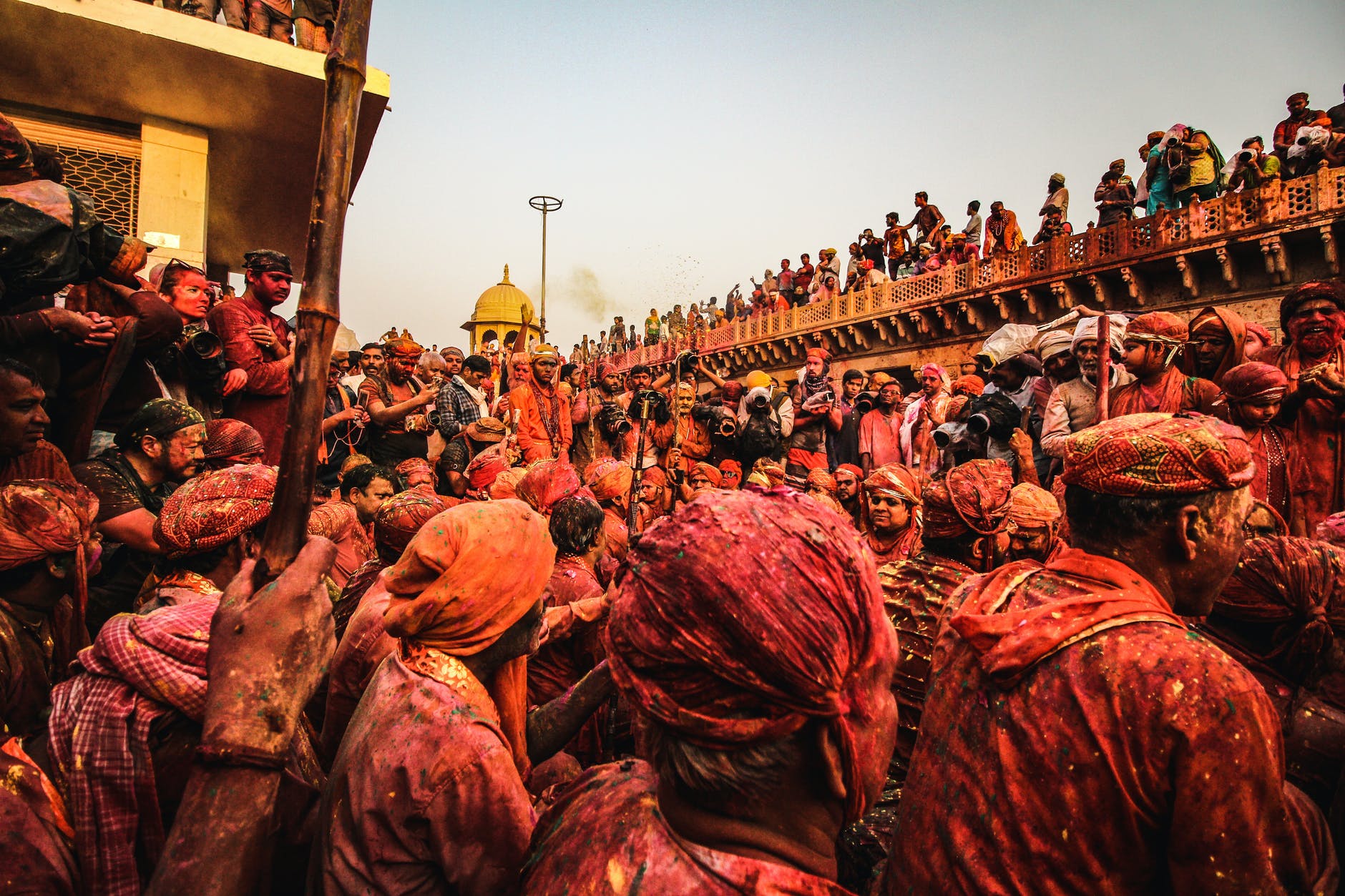
Photo by Yogendra Singh on Pexels.com

Race remains one of the most complex concepts in sociology. In popular usage, race maybe human race, car race, etc., but in this context it refers to any category or group of people who have similar physical traits. Race according to some is a group of people who maybe separated from other groups by repeating physical features like color of skin, hair, stricture of jaw, structure of eyes, etc.

Race, as a term, gained usage around 16th century and it began being referred to family, village and breed. It was in the 18th century period, especially during the enlightenment,i.e., age of reason, that the idea of race began to be restored more systematically. Ethnic groups in Indian society have a complex history of more than 5000 years. It is a history of series of migration, accommodation, assimilation, invasions and wars.

According to Dubey, it can stipulate about the original people of India on the basis of information provided by physical anthropology regarding the racial groups in the composition of India. The most authoritative and widely accepted classification is by Dr. B.S.Guha who identified six major racial types, namely:

  1. The Negrito: People belonging to this racial group are characterized by black skin color, frizzly hair, thick lips, etc. The prevelance of a Negrito segment in the Indian population is a matter of controversy for the anthropologists and as such they are divided into two groups:
    1. The protagonists, who believe in the existence of the Negritos in India.
    2. The antagonists, who do not find any conclusive evidence of the existence of Negrito racial stock in Indian population.
  2. The Proto- Austroloid: This racial stock consists of an ethnic group comprising of the Australians aborigines and other people of the Southern Asia and Pacific Islands. The aborigines are also considered the pre- Dravidian race and the Indian tribal population in general, is dominated by this racial element.
  3. The Mongoloid: The Mongoloids, as a major racial stock, are native to Asia. This race entered India from the Western China through The Tibet, The Chinese, The Japanese, The Burmese, The Eskimos and also the American Indians are covered within this strain.
  4. The Mediterranean: This racial stock may be related to the Caucasian physical type i.e., the white race. It is one of the dominant races in India.
  5. The Western Brachycephals: It is believed that this racial group have entered India from the West. This race is divided into three sub- groups:
    1. The Alpinoid
    2. The Dinaric
    3. The Armenoid
  6. The Nordic: People belonging to this racial stock are characterized by tall stature, long head, light skin and hair and blue eyes. Tho physical stock has come to India from the North East Asia, South West Siberia through Central Asia and spread all over the Northern part of our country during the second millennium B.C.

SPACE RACE

On July 11 British billionaire Richard Branson and crewmembers (which also included Indian origin Sirisha Bandla making her third Indian origin woman in space) from his space tourism company Virgin Galactic, reached an altitude of 88 km from the deserts of New Mexico from where it took off. Reports pointed up they experienced three to four minutes of weightlessness and safely returned and the total time taken by them was approximately fifteen minutes. Although few doubted if it was space as it did not pass over the Karman line(100 km above the earth), the business community celebrated his feat and his competitors congratulated him. Virgin Galactic has already started receiving requests for reservations from the rich.

Former Amazon CEO Jeff Bezos stepped down and one of the areas he wanted to focus on post-retirement from the CEO job was space exploration. Talking of space who would not know Elon Musk’s SpaceX which persistently is working in this domain and who’s out of the space ideas and heavy experiments and trails is always making news.

But what is common in Elon Musk’s SpaceX, Jeff Bezos’s Blue Origins, and Richard Branson’s Virgin Galactic is that their main motive is the commercialization of space route. Unlike previous many space travel who’s main aim was expanding scientific knowledge through research, observation, and exploration this time the entrepreneurs are more or less involved in the “space race”, and their main motive- dominating the space tourism industry and or achieving the feat first. Anyways whatever the motive(unless not far extremely on the wrong side) given the leverage they have exploring the unknown, and the less-traveled road is not completely a bad idea and might bring us something exciting in the future. It would be exciting only when it does not as a result end up slowly poisoning and degrading the space like the other capitalist industries are degrading Earth.

Colorism In British India .

British colonialism further exacerbated colourism. The British Raj, or the official British rule over India, began in 1858 and lasted until the independence of India and the partition of Pakistan in 1947. During this time, a pseudo-scientific concept called “social Darwinism” became popular. The term, a reference to Charles Darwin’s work on evolution, describes the common belief that factors such as skin colour, bone structure, and facial features were determinants of levels of intelligence, and it became part of the justification for Britain’s treatments of its colonised natives. In India, Britain’s general strategy seemed to involve keeping fair-skinned Indians as allies by privileging them over darker-skinned Indians. A system of institutionalised segregation was established and, while some institutions segregated against all “[coloured] people”, many segregated only against “black Indians”, with signs clearly stating: “Indians and dogs not allowed”. Conversely, lighter-skinned Indians were given preference over their darker counterparts and were hired more frequently.

Although there was some pushback against this mistreatment by the British, the Indian people were, in general, less motivated to protest because the caste system had already cemented clear divisions along racial lines. Centuries of rule by foreigners had already cemented the idea that power belonged to light-skinned individuals, and it meant that when an external, more malicious force came in to uphold those divisions, people were less inclined to object.

However, colourism has always been an intersectional issue. The oppression people face due to colourism is often paired with, and/or magnified by their gender, caste, social status, financial status, and education. Despite the longevity of the issue, civil society is only now beginning to dismantle institutional colourism. “Dark is Beautiful” is an organisation fighting colourism by organising workshops to educate the youth on the dangers of colourism and by creating petitions and lobbying against the leading fairness cream brands. In the future, it seeks to “involve… many people and [organisations], including politicians, sportspersons, and influential people.” “India’s Got Colour” is another campaign that aims to end systemic bias against skin colour. One of its ambassadors, Nandita Das, an actress and producer, travels around the country to educate children in schools on the pervasiveness of colourism and to share her story and recount the different treatment she received from the media due to her skin colour. In Bollywood, instances of brownface, the act of intentionally darkening one’s skin, have started receiving more public backlash than ever before.

Colourism refers to prejudice against individuals with a dark skin tone. In India, it is reflected in many parts of society, from advertisements on billboards to lyrics in songs to household anecdotes. It can manifest itself in very apparent ways, such as in advertisements for skin lightening products showcasing women achieving their dreams only after lightening their complexion, but it can also take on more subtle forms. Regardless, its influence is pervasive. In 2015, the Indian National Museum conducted a study where they surveyed one hundred college students from across the country, inquiring about the skin colour they considered to be a beauty ideal. When asked to describe “pretty”, 71% of the respondents cited words alluding to lighter skin tones, including “fair” and “light”. While this study featured a relatively small sample size, the trends it highlights are common in Indian society and perpetuated through the media. In fact, 90% of all Indian advertisements show lighter-skinned models, and most Bollywood movies feature a cast of exclusively light-skinned actors.

Beyond a lack of representation of dark-skinned individuals in the media, having darker skin is seen as a disadvantage for many other prospects as well, from “hireability” to chances of marriage. The latter is especially true in rural villages wherein women with a darker skin tone are seen as less desirable and face greater challenges in finding a spouse. Another damaging result of colourism is the rise of the ever-growing skin lightening market and the health risks this market presents. The Tata Institute of Social Science (TISS) conducted a study in which they surveyed 1,238 women and 746 men on their use of fairness creams. Of those, 59.6% of women and 46.1% of men reported using fairness products at some point in their lives. When asked why, 31.2% said they wanted to look “beautiful” and 36.2% believed looking fairer would help them “feel culturally accepted”. These skin lightening products have serious, and often long-lasting, side effects. In 2006, the Food and Drug Administration (FDA) released a notice stating that it no longer recognises over-the-counter skin bleaching products as safe or effective. Despite this, India’s skin lightening market is projected to continue growing with an April 2018 study estimating that by 2023, it would be worth “Rs. 5,000 crore”, or about $700 million USD.

Race and class in Harper Lee’s ‘To Kill a Mockingbird’

‘To Kill a Mockingbird’ is a Southern gothic bestseller written by Harper Lee. The novel is narrated by Scout Finch, a six-year-old white girl who learns about life, people and the injustices prevalent in her society. Through her, Lee cleverly portrays issues such as gender, race and class discrimination in the fictional setting of Maycomb county, Alabama. Readers have speculated that the character of Scout was based on Lee’s own childhood experiences, wherein she combines the nostalgic elements with the political situation that she witnessed around her in America. Scout’s innocence and her defiance against the social hierarchies in Maycomb cuts a deeper meaning into the futility of these societal constructs.

Race is one of the issues that is evidently portrayed in the novel. Scout’s father Atticus Finch is a lawyer who defends the less privileged. He strives hard to stand by his moral compass and wishes to set an example for his children through his actions. One of the major events in the novel takes place when Atticus chooses to defend Tom Robinson, a black man accused of raping a white woman. The racist residents of Maycomb, as well as his family members are horrified and attempt hard to dissuade him. So much so, that even Scout and her brother Jem are subjected to verbal abuse by other children for his actions. During the trial, Atticus provides clear evidence to prove Tom’s innocence. Despite the impressive evidences, the extremely racist jury sentences him to jail where he later attempts to escape, but is shot and killed. We see that even the law is corrupted when it comes to rendering justice to innocent African Americans. Tom Robinson’s trial scene is monumental in proving the racial discrimination in America.

Calpurnia, the Finch family’s black maid plays a significant role in Scout’s life. Unlike most southern black characters, she is well- educated and is highly respected within the Finch family. Having lost her mother at a young age, Scout regards Calpurnia as a mother-like figure. One of the important moments in the novel is when Calpurnia takes Jem and Scout to the Black Church. Here, the children witness a different side of characteristics in Calpurnia as she interacts with the rest of her community. W. E. B. Du Bois refers to this as “double consciousness”; a phenomenon wherein a person exhibits two different personalities with the blacks and the whites. This can be seen as a defence mechanism to gain acceptance in a white supremist society due to their own internalised racism. Furthermore, despite being a novel that is concerned with issues like racism, it only portrays a subjective version of it. The black community are not given a voice of their own against this prejudice, which marginalises them within the text. If they are given a voice, it is usually to show gratitude to the good white people instead of raising their anger and frustration against the racial injustices in Maycomb.  

Social class prejudice is an important element highlighted in ‘To Kill a Mockingbird’. This can be understood clearly when Jem imagines ‘folks’ as being divided into four different kinds. “Our kind of folks don’t like the Cunninghams, the Cunninghams don’t like the Ewells, and the Ewells hate and despise the coloured folks.” (Lee, 249) Through Jem, Lee clearly explains the class hierarchical structure of Maycomb. It is a prejudice engrained in Maycomb which even dictates the relationship between children at school. But the novel also explains that the class system can eventually be dismantled. Initially, when Scout treats Walter Cunningham Jr differently, Calpurnia teaches her otherwise and makes her realise that a person’s financial background has nothing to do with their personality. When Cunningham Sr. arrives with a mob to lynch Tom Robinson, Scout’s innocence humbles him, saving Tom’s life briefly. Scout thus is able to achieve a small proportion of justice by disregarding the class system. Her reply “I think there’s just one kind of folks. Folks.” (Lee, 250) is an innocent yet powerful statement against the prevailing class structure in the society.

“You never really understand a person until you consider things from their point of view…”

Harper Lee

Aside from race and class, the novel also deals with other important issues like gender, disability, and sexuality. As Scout belongs to a middle-class white family, the primary concern that she personally deals with is sexism. She is portrayed as a tomboy, who is forced to confirm to the conventional idea of a girl. Over the years, readers have come up with multiple theories from the book pertaining to current social issues which proves that even after sixty years, it is still contemporary. Atticus’s advice that “You never really understand a person until you consider things from his point of view . . .” is a principle that could serve as a solution for all types of prejudices. And as mentioned by John Green, the “combination of nostalgia and criticism makes Mockingbird both endearing and enduring.” To Kill a Mockingbird is revolutionary in the fact that it brilliantly portrays multiple serious themes through the eyes of an innocent child.

Reference Links:

The pressure of being extraordinary and it’s affect.

3 idiot was not only an iconic movie on a very good content but it has many dialogue that hit or felt by everyone. And one of the most famous dialogue goes “Life is a race, agar tezz nhi bhago ge to koi kuchal ke aage chala jayega”. Let’s talk about that.

I want to be a very a good writer, singer, actor, or anything else. We use to say this when we were a kid, yeah! we were a kid. Because now it’s not like ” I want to be very good” it is like, I want to be the only good. And that perfectly explain,we are now grown up. There’s nothing bad in it, but, we lost that touch of goodness inside us.

No matter how good you do your work, there is someone who does better then you. Like there’s an axe for every tree. You can’t be the only one among the crowd. There will be someone better then you. And it is not like you Don’t know that, still you are not able to accept that. That’s the main problem. And you are a part of this society. What you think is what this society get build.

Becoming an extraordinary among ordinary. This is the final goal of every single one. But, you know what, you personally never dreamed of this. It is what society gives you. It is what only society praise. This is what happens when you live in a society which sucks.

Being an excellent version in your field is not wrong, but, asking every one to be that is. We all know that every human has a same ear, eyes , brain, and other body parts. Still, there are some who are born or living there live without them. Same way it is not right to ask two brain to perform in the same manner because they can’t.

Just like asking elephant to swim because a fish can. We live in a society which runs behind those things which is already done and try to improvise it every time. Like a sheep in a crowd and still hate to call themself a sheep.

If only a person get appreciated for there work without comparing from others. Then this society will improve. When there is a comparison in self rather then doing it with others. Then only this society is going to improvise. Actually this society want to be perfect society. And there can’t be any perfection if you can’t accept the flaws. Because flaws are part of you. They exist in you.

So, tell me what do you think about this in the comment section bellow.

See yaa..