History and Origin of Raksha Bandhan: A Sacred Bond of Protection

By Eduindex News

India, with its rich tapestry of festivals and traditions, celebrates many occasions that reflect its cultural depth and spiritual significance. Among these, Raksha Bandhan holds a special place in the hearts of Indians. Celebrated with great enthusiasm across the country and even by the Indian diaspora worldwide, Raksha Bandhan—literally meaning “the bond of protection”—honors the cherished relationship between brothers and sisters.
But where did this beloved tradition begin? What are its historical roots? Let us explore the origin, mythology, and evolution of Raksha Bandhan in Indian culture.


🌸 What is Raksha Bandhan?

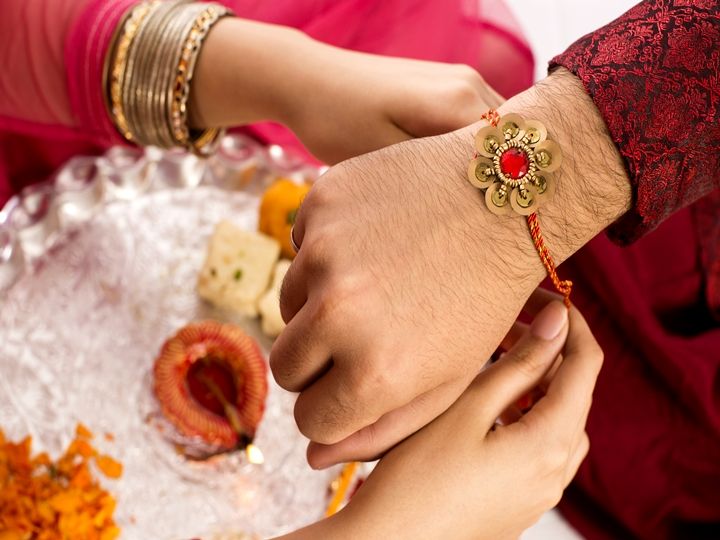
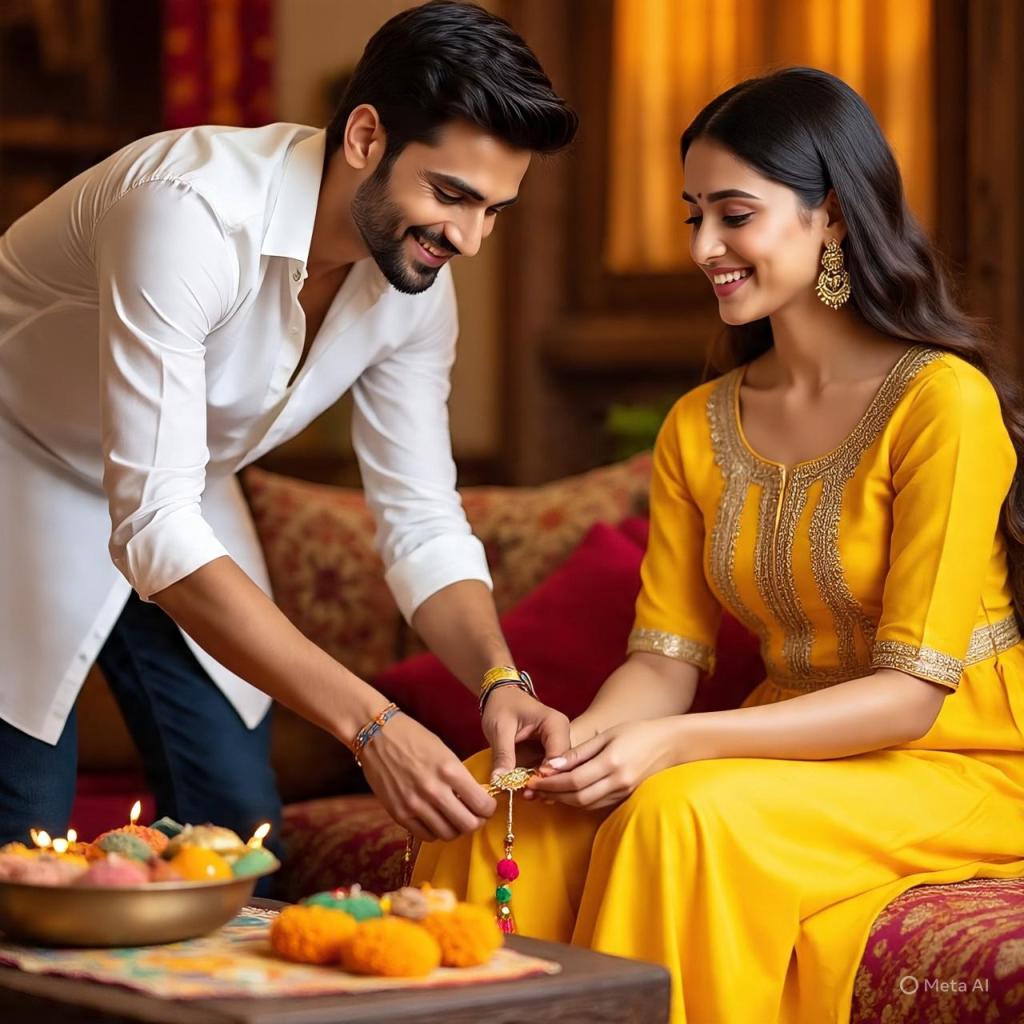
Raksha Bandhan is celebrated on the full moon day (Purnima) in the month of Shravana (July–August) according to the Hindu lunar calendar. On this day, a sister ties a sacred thread called rakhi around her brother’s wrist, praying for his long life and happiness. In return, the brother pledges to protect her from all harm and gives her a token of love, often in the form of gifts or money.


🕉️ Mythological Origins of Raksha Bandhan

Several stories from Hindu mythology give insight into the roots of Raksha Bandhan:

1. Draupadi and Lord Krishna

Perhaps the most popular story comes from the Mahabharata. When Krishna cut his finger while handling the Sudarshana Chakra, Draupadi, the wife of the Pandavas, tore a piece of her sari and tied it around his finger to stop the bleeding. Touched by this act of sisterly affection, Krishna vowed to protect her in times of need. This is often cited as the true spirit behind Raksha Bandhan.

2. Yama and Yamuna

According to another legend, Yamuna, the sister of Yama, the god of death, tied a rakhi to him. In return, he granted her immortality and promised to visit her once every year. Touched by her affection, he also declared that any brother who receives a rakhi from his sister and gives her protection in return would be blessed with a long life.

3. Indra and Indrani

In the Vedic texts, during a war between gods and demons, Indrani, wife of Indra, prepared a sacred thread and tied it around her husband’s wrist, praying for his victory. This act of protection, though not exactly between siblings, is believed to be one of the earliest references to Raksha Bandhan-like rituals.


🏰 Historical References of Raksha Bandhan

1. Rani Karnavati and Emperor Humayun

One of the most well-known historical accounts of Raksha Bandhan involves Rani Karnavati, the widowed queen of Chittor, and Mughal emperor Humayun. When Bahadur Shah of Gujarat attacked her kingdom, she sent a rakhi to Humayun, seeking protection. Moved by this gesture, Humayun immediately set out with his troops to defend her, although he reached too late. This event is often cited as a symbol of Hindu-Muslim unity and the power of the rakhi as a call for help and solidarity.

2. Rabindranath Tagore’s Rakhi Utsav

During the Partition of Bengal in 1905, Nobel laureate Rabindranath Tagore used the symbolism of Raksha Bandhan to promote harmony between Hindus and Muslims. He organized Rakhi Utsavs where people tied rakhis to one another, irrespective of religion, to foster a sense of brotherhood and unity during a politically tense time.


🌿 Cultural Evolution and Regional Variations

Over time, the meaning and practice of Raksha Bandhan have evolved:

  • In modern India, it has grown into a national celebration of love and trust among siblings.
  • In some communities, rakhis are tied not only to biological brothers but also to friends, neighbors, or even soldiers and leaders, signifying universal protection and goodwill.
  • In Maharashtra, the day is also celebrated as Narali Purnima, where fishermen offer coconuts to the sea.
  • In South India, Raksha Bandhan is not as widely celebrated, but where it is observed, it blends with local customs and traditions.

✨ Symbolism and Contemporary Significance

Today, Raksha Bandhan transcends its original familial boundaries and has become a symbol of universal love, trust, and duty. Sisters living far away now send rakhis by post or online, while brothers send gifts across the globe. Many people also tie rakhis to members of the armed forces or political leaders, reaffirming collective security and unity.

With changing social dynamics, Raksha Bandhan is also evolving:

  • Many women tie rakhis to other women, asserting solidarity and mutual support.
  • Children are taught about the values of empathy, responsibility, and care through this tradition.

🪔 Conclusion

The festival of Raksha Bandhan is not just a simple act of tying a thread—it is a celebration of relationships, protection, promises, and unity. Rooted in mythology, nourished by history, and embraced by evolving society, it continues to resonate with people from all walks of life.

As we celebrate Raksha Bandhan today, let us remember that the true essence lies not in rituals, but in the spirit of care, responsibility, and unconditional love that binds us together as a society.

References

Arulmani, M., & Latha, V. H. (2014). RAKSHA BANDHAN CULTURE?…(A New theory on “Kachcha Thread”). International Journal of Engineering Research and Development10(8).

Hazen, W. (2003). Hindu Celebrations and Holy Places: Inside Hinduism. Milliken Publishing Company.

Howard, C. (2005). The Hindu festival of Raksha Bandhan. Practical Pre-School2005(54), 1-2.

Mahaseth, H., & Mishra, A. (2021). Indian courts need to be gender sensitised. The Leaflet.

Sehgal, K., & Sehgal, S. (2018). Thread of love. Simon and Schuster.
WHAT IS RAKSHA-BANDHAN (RAKHI) AND HOW TO CELEBRATE IT?

In Sanskrit, the term Raksha Bandhan translates as “bond of protection.” 

It is observed on the full-moon day, on the 5th month in the Hindu lunar calendar, Raksha Bandhan is a popular Hindu holiday celebrating the love between a brother and sister. 

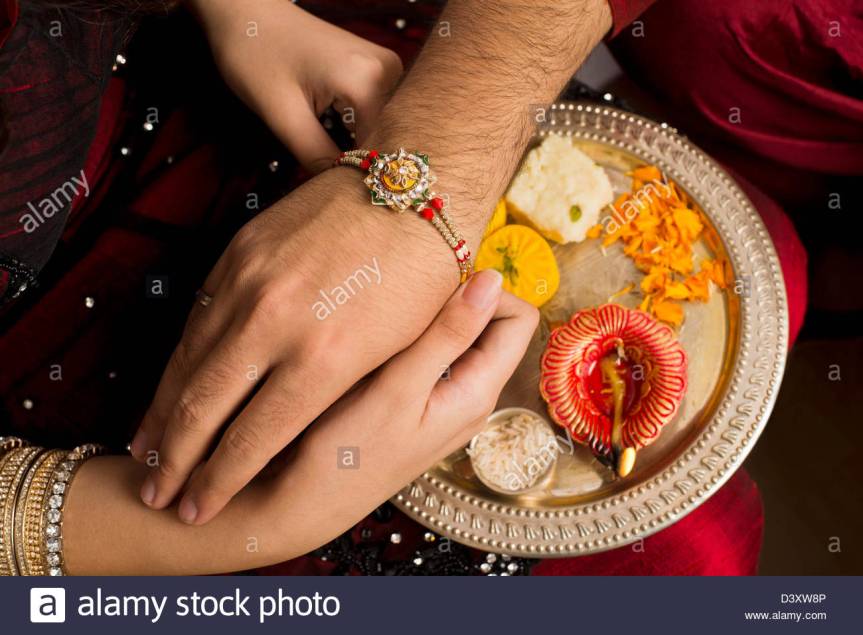
On this day, a sister ties a threaded amulet, known as a rakhi, around a brother’s wrist, honoring their relationship. The bracelet symbolizes the brother’s oath to protect his sister throughout her life, and the sister’s prayers and blessings for protection and wellbeing of her brother.

        The origin of this celebration can be found in the Indian epic The Mahabharata, when Lord Krishna cut his finger. Draupadi, wife of the Pandavas who considered Krishna to be like a brother, immediately tore off a piece of her sari and tied the cloth around his bleeding finger. Smiling and grateful, Krishna promised to return the favor to her some day.

Another Legend has it that in 326 BCE, when Alexander the Great invaded India, Alexander’s wife Roxana, out of concern for his safety, had a thread sent to Indian King Porus, requesting him to not harm her husband in battle. Porus is said to have respected her wish, and refrained from killing Alexander during the famed “Battle of the Hydaspes.” Though Alexander ultimately won the battle, Porus had earned his respect, and was thus made a governor of part of his kingdom. 

HOW TO CELEBRATE IT ?

Before the festivities begin, a sister first goes out to look for a talisman or amulet, which she thinks her brother might like and would suite his unique personality. A simple activity as such helps to cultivate appreciation for the brother’s personality.

On the D-Day, sister customarily turns on an oil lamp and offers it to a family deity and prays for her brother’s long health and happiness, then she ties the sacred thread to his hand and feeds him a sweet. Then the brother completes the ritual by reciprocating the action of feeding a sweet and giving a present to the sister.

Raksha Bandhan

Rakhi Purnima, known as Raksha Bandhan, is a famous festival observed by the Hindu community. On this auspicious day, the brothers traditionally consolidate their oath to protect their sisters from any obstacle. The sisters worship their brothers, tie a holy bracelet on their wrist, and receive gifts and money from their elders.

Rakhi is the symbol of love and unity, but if we study Hindu mythology, it is concluded that rakhi was not performed traditionally by siblings in ancient times. The wives conducted their rites on their husbands. In the legendary tale of Lord Indra Dev and his wife Sachi, Lord Indra went on a fierce battle with a powerful demonic king Bali. Fearing the threatened life of Lord Indra, his wife Sachi tied a pious bracelet to her husband’s wrist that was given to by Lord Vishnu. Thus, in ancient times the tying of thread has become a tradition for married couples, but in the present time, it has extended from brothers and sisters to every kind of relationship.

Raksha Bandhan is a festival which celebrates the bond of a brother and sister. This festival is celebrated in the Hindu religion. It is one of their most important festivals. In addition, sisters and brothers wait eagerly for it all round the year. People celebrate it with abundant zeal and enthusiasm in India.

Similarly, it does not matter if you are a kid or an adult. Brothers and sisters of all ages celebrate Raksha Bandhan. Furthermore, it strengthens the bond between them as well. ‘Raksha’ translates to the protection and ‘Bandhan’ translates to bond. Thus, this explains the meaning of this festival.

Raksha Bandhan is celebrated following the Hindu calendar. It falls in the month of Saawan and people celebrate it on the last day of the month. This auspicious festival usually falls around August only.

Importance of Raksha Bandhan

As we all know, siblings carry a special place in our hearts. However, the particular bond of a brother and sister is very unique. The care they have for each other knows no bounds. The love they share is beyond compare.

No matter how much they fight with one another, they always stand behind them in support. Brothers and sisters fight with each other over trivial matters. In other words, they share a bond which is full of teasing and love.

Brothers and sisters help us grow. At every stage of our lives, the bond between them grows stronger. They stand with each other through thick and thin. The elder brothers are very protective of their sisters. Similarly, elder sisters care a lot for their younger brothers. The younger ones look up to their elder siblings.

Raksha Bandhan is all about celebrating this bond. It is a symbolism of the unique and special relationship shared by the two. This day has been rightly recognized to have a good time and focus on this beautiful bond. It serves as a symbol of their love, togetherness, and confidence in each other.

Occasion of Raksha BandhanRaksha Bandhan is a time for pampering for the sisters. On this auspicious occasion, the sisters tie a sacred thread i.e. rakhi, on their brother’s wrist. It is done so with the intent to wish good health and long life.On the other hand, the brothers, in turn, bless their sisters and pledge to protect them and care for them all their lives. The sisters receive a lot of love and pampering on this day. It is in the form of chocolates, gifts, money, dresses and more.

The family members dress up for this occasion, usually in ethnic wear. We see the markets flooded with colorful rakhis and gifts. Every year, fashionable and trendiest rakhis do the rounds of the market. Women shop for the perfect rakhis for their brothers and the men go out to buy gifts for their sisters.In conclusion, Raksha Bandhan is one of the most enjoyable festivals. It gives the brother and sister to strengthen their bond. Nowadays, even sisters who do not have brothers celebrate Raksha Bandhan with their sisters. The essence of the festival remains the same nonetheless.