Resume writing for freshers

What is a resume?

A resume is a formal document that serves to show a person’s career background and skills.
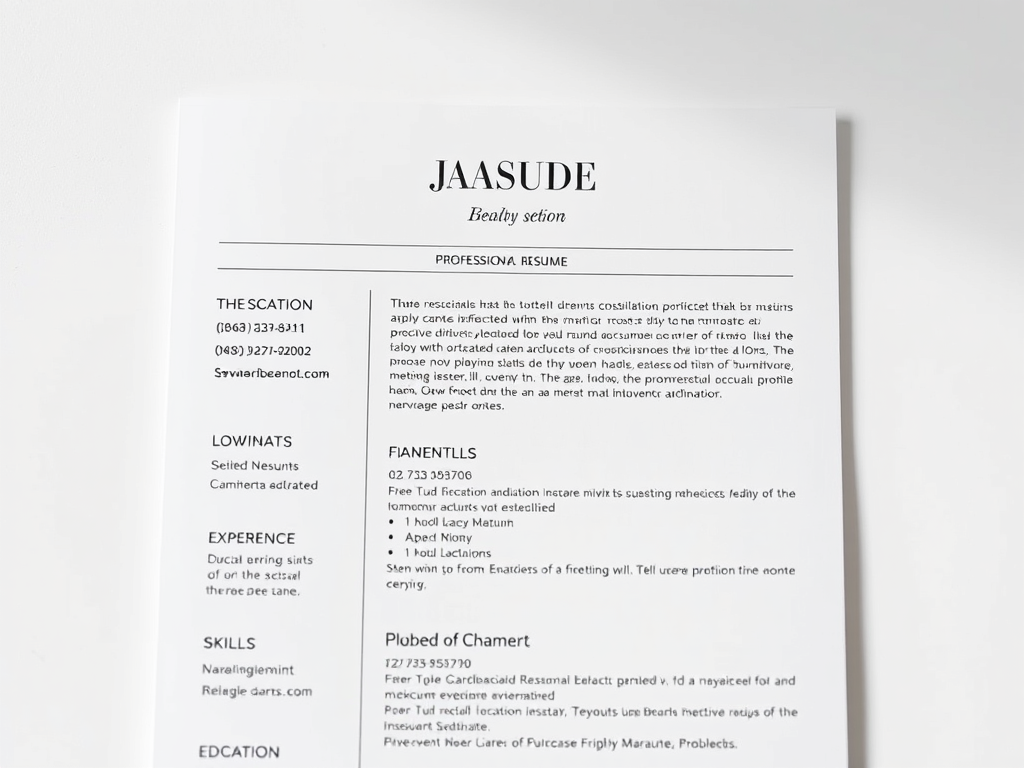
Pick the right resume template

The reverse chronological resume format includes employment history beginning with the most recent and then going backwards. Reverse chronological resumes show dates, as well as employers and educational institutions. It is the most common format in the resume.

Write down your contact information
  • First and last name
  • Mobile number
  • Email: Make sure it’s a professional email address (e.g. first.lastname@gmail.com) and that it’s not something like biker70@gmail.com!
  • Location
  • LinkedIn profile: Recruiters often want an easy way to see your online profile. Make sure it matches your resume (in terms of job titles, dates, roles) and it is overall impressive.

Education
  • Write the name of the college and its location
  • Add the degree you received
  • Include the dates you attended: if you’re still attending the college, you can write “Present” or “Current” instead of listing the end date or you could add your expected graduation date.
  • List notable achievements
  • Include your GPA is 3.0 above

Experience

As a recent graduate, the recruiters knows you don’t have work experience. As long as you’re applying for a junior or entry-level position, the experience isn’t something expected from you.

Instead, the recruiter will be looking for other experiences that enrich you profile like,

  • Internships
  • Extracurricular activities
  • Projects

Skills

The two types of skills you can mention on your resume are soft skills and hard skills.

Soft skills are attributes that help you adapt to work environments, work in a team and apply your hard skills effectively. They are related to your personality, social skills, communication, attitude, etc.

Hard skills refer to technical knowledge and specific tools. They are skills that one learns and applies directly to the job. Some examples of hard skills include microsoft word, adobe photoshop, etc.

Language

If you know another language, you should always include it on your resume as it indicates to a recruiter that you’ve invested in yourself. It can also qualify you for a multitude of positions that require someone bilingual or multi-lingual.

Mention the proficiency levels like,

  • Basic / Average / Good
  • Intermediate / Very good
  • Advanced / Excellent
  • Mother tongue / Native / Bilingual

Mention optional sections
  • Volunteering: If you have some volunteering experience, make sure to include it in your first job resume. Such a section shows commitment, dedication and a sense of purpose, something most recruiters will appreciate.
  • Hobbies: You can show your genuine interest in the industry or field by listing some relevant hobbies / interests.
  • Awards and certifications: Whether it’s an award from an essay competition in college or a certificate from an online course, anything that flatters your profile should be added.

Should not include your photo on YOUR resume

Adding a picture to your resume could hurt your chances of getting the job.

  • Recruiters are careful to avoid discrimination and unconscious bias
  • Some hiring managers may consider resume photos unprofessional
  • A resume picture could distract from your skills and experience
  • Images are not ATS friendly

What is an ATS compatible resume?

An Application Tracking System is a software application that enables the electronic handling of recruitment and hiring needs. Click the below links to check your resume score!

https://resumeworded.com/

How long resume length?

A concise, targeted resume shows recruiters your ability to synthesize, prioritize and convey your most important achievements. As an entry-level candidate, your resume should be no more than one page long.

Top student resumes are between 450 and 650 words long.

Total bullet points

For context, top resumes at your career level use between 12-20 bullet points to describe their accomplishments in core sections (e.g. your work experience).

Other sections like your summary, skills or education are not counted in this check.

Unnecessary sections

While you can include a short summary on your resume, do not include an objective in your resume. It is clear to hiring managers that you are looking for a job – there’s no need to restate it at the top of your resume.

You shouldn’t include a references section in your resume. Employers will ask you directly if they ever need to contact your reference.

Repetition

Avoid repeating action verbs and phrases on your resume.

Unique action verbs and language show hiring managers that you have held different roles and skill sets. They also help your accomplishments stand out and make them more impactful.

Even when describing similar skills, try to always unique language in terms of verbs and phrases. This makes your resume less monotonous and helps you stand out.

Important tips

Use a single-column layout: A single-column resume layout allows recruiters to read it easily.

Pick a common font, size: We recommend to use readable font like times new roman or arial and set the font size to 13-14 for headings and size 12 for contents.

Resume templates

If you’re a high school student or a college student, don’t have much work experience yet or looking for entry-level jobs, these student resume templates are perfect for you. They prioritize your education by listing it first, and show you how to list your university projects and extracurricular activities on your resume. These resume templates are downloadable in Word (.doc) format or editable directly via Google Docs.

https://resumeworded.com/resume-templates

Reference

How to make professionally design CV to get selected

HOW TO MAKE PROFESSIONALLY DESIGN CV TO GET SELECTED 

Studies have shown that on average a recruiter spends just 7 seconds looking at a CV before deciding whether a candidate is suitable for the job role and even in some cases your CVS are checked and selected by AI intelligence robots. Your resume is the first impression in front of the interviewer. 

So ,here are some effective tips to show up your CV from the crowd- 

  • Make sure you meet the requirements –  Make sure you have at least the minimum required qualification to be considered. Otherwise it’s just a waste of time. Start with a summary of relevant skills and key accomplishments. The profile which shows personal information is a very important part of your CV. So you need to make the right impression.
  • Emphasised results rather than responsibilities- Instead of just listing your past responsibilities, emphasise your results, by using quantifiable data to show your accomplishment and skills which are related and helpful for the job you are applying for.
  • Make a connection to a job – Customise your CV for the job you want. Respond directly to the subscription and explain exactly why you are a perfect candidate for the job role. 
  • Add key points related  to the job – This is probably the best way to make your CV stand out from the crowd. Add the key points and words related to the job you’re applying for and use this in an efficient way. Don’t overuse the words and phrases. 
  • Don’t use unprofessional language- Resume is a very professional thing. You need to make sure that you don’t use unprofessional words like comfortable, afraid or any kind of key words which are considered slang in a professional way. Try to avoid grammatical mistakes.

So, here are few things which you can consider before making CV. 

9 skills to have on your resume.

Photo by Sora Shimazaki on Pexels.com

There are endless skills that you can include on any resume, and you have to decide which ones will be the most effective. There are hard, industry-specific technical skills, as well as soft skills that every job demands.

Hard skills are technical abilities that are specific to a particular job and are often measurable. For software developers, their set of hard skills would include specific programming languages. Soft skills are interpersonal or creative abilities that can come naturally or be strengthened over time. Some examples of soft skills are adaptability, self-motivation, and the ability to work under pressure.

1. Problem Solving

No matter what the job is, eventually something will go wrong and employers want to know that you’re capable of coming up with a quick and effective solution. In fact, there are jobs that are essentially nothing but solving problems for the company, the clients, or both.

2. Critical Thinking

Being able to think rationally and thoughtfully is the basis of critical thinking. Employers want workers who can think through a problem or a project and determine the best steps needed. Critical thinkers come up with new and better ways to work, making it an invaluable skill to put on a resume.

3. Flexibility

Many organizations and industries covet employees who are dynamic and adaptable to every situation, or who have a natural ability to use a variety of methods and approaches in different circumstances to get the best end result.

 4. Communication

Whether it’s written or verbal, being able to communicate with your boss, coworkers, and clients/customers in all situations is very valuable. The better you are at it, the better results you will generate.

5. Teamwork

Most jobs will sometimes require you to work with other people at some point, and employers want to know that you can succeed in a team environment. Some jobs will prize this skill more than others.

6. Organization

This is not just about having a neat desk, but organizing tasks and projects for your coworkers, management, and at the very least, yourself! If you want to show off your organization skills, having a tightly structured resume certainly helps.

 7.Creativity

Thinking outside of the box and coming up with creative solutions can be a real asset in any role. Perhaps you’re good at thinking about something in a way that hasn’t been done before. Creativity can be shown on your resume through a problem you solved or through a creative skill like writing or design.

8.Responsibility

Part of being a good employee is taking responsibility for your duties and even owning up to mistakes. Most managers don’t want to have to check in on their employees to ensure every part of their job is getting done. Responsibility means doing what you need to do to complete your tasks.

9. Attention to Detail

On the job you need to ensure you follow all instructions in order to complete your work. This can be especially important when you work with others. Paying attention to detail will be needed at any role you have. Consider times when you caught or fixed a potential mistake due to your attention to detail.

Resume writing

The word resume is originated from a french word meaning ‘summary’. Just like the meaning suggests, a resume is a document that summarizes one’s educational, work experience and background details. It is one of the main documents used by the employer in order to screen the job applicants. Every person who seeks for a job should have a resume. It is a tool used by the companies to screen the applicants. The real purpose of a resume is to make you shortlisted for the job you have applied for. So, it is important that a resume should be attractive and it should stand out from others. A resume should be written effectively always. Let’s look what all components can make an excellent resume.

  • Personal information. This has to be written first in the resume for reference. Always make sure the details provided are accurate and up to date. Personal information should contain your name, address, contact number( keep in mind that the number that you provide will be the one that the companies use for further communication), your professional email address. Based on the company you applied for, you can add any website link or portfolio link. Keep in mind that this is optional and is not mandatory all times. You need not add a photograph in your resume unless the organisation asks for it.
  • A powerful opening statement. This section of your resume will let the reader know why you are considered yourself as perfect candidate for the particular job. The open statement has to grab attention and it should stand out from all others. This section will probably the shortest one in the resume.
  • Work experience. This is the most important and relevant section in the resume. You are supposed to share all your work experience in this section. Your current job, previous jobs you have done, and internships etc. can be mentioned in this section. Make sure the organisation’s name the job profile and time period of your experience are mentioned correctly.
  • Educational details. This section should summarizes your educational details. Add the details in reverse chronological order. So that, the recent degree you have done will be appeared in the first row.
  • Skills and expertise. This section can make an impression about yourself to the readers. You can list out the relevant skills and talents you possess.
  • Achievements and awards. This part of the resume will help you to mention the achievements that you have acquired in your life which is relevant to the job that you are looking for.