Redesigning Token Economics with Lunar Wisdom: LUNARBURN (LUNAR) Revolution

  Amidst the rapidly evolving realm of cryptocurrency and blockchain technology, pioneering initiatives persistently redefine the limits of what can be achieved. Among these, the LUNARBURN (LUNAR) Revolution stands out as a particularly innovative venture, striving to overhaul the very foundations of token economics with a fresh and distinctive strategy that draws inspiration from lunar wisdom. By shedding light on its fundamental principles, potential ramifications, and its role in reshaping the landscape of cryptocurrencies, this piece offers a comprehensive understanding of the significant contributions made by the LUNARBURN Revolution. Another project buzzing amongst the traders is Digital Yuan! Learn about the risks of Digital Yuan and the 51% attack. 

Photo by David McBee on Pexels.com

Understanding Token Economics

Prior to delving into the intricacies of the LUNARBURN Revolution, it is crucial to gain a comprehensive understanding of the pivotal role that token economics occupies within the realm of cryptocurrency. Token economics encompasses the intricate orchestration and oversight of a token’s essential characteristics, encompassing its supply dynamics, equitable distribution mechanisms, and the diverse range of functions it serves within its designated ecosystem. These interwoven elements wield a profound influence in shaping a token’s valuation trajectory and its overall embracement within the broader digital landscape.

The Birth of LUNARBURN

Central to the essence of the LUNARBURN Revolution is a deeply rooted philosophy intricately intertwined with the rhythmic cadence of lunar phases and their inherent cyclical patterns. In a display of visionary foresight, the project’s founders astutely identified the imperative for cultivating a token ecosystem characterized by sustainability and equitable dynamics. Drawing wisdom from the moon’s ever-changing journey across the sky, they harnessed its timeless guidance as a source of inspiration to forge a new path in the realm of cryptocurrency.

Lunar Wisdom: A Paradigm Shift

LUNARBURN introduces a unique concept inspired by the lunar phases: token burning cycles. Just as the moon waxes and wanes in a predictable cycle, LUNARBURN employs a systematic approach to token burning. This innovative strategy involves periodic token burns, effectively reducing the circulating supply over time.

Reinventing Scarcity and Value

Scarcity has always been a fundamental driver of value. By implementing a consistent token burn mechanism, LUNARBURN enhances scarcity, thereby potentially increasing the token’s intrinsic value. This novel approach challenges traditional inflationary models and offers a deflationary alternative that could have profound implications for the broader cryptocurrency market.

Community Engagement and Governance

LUNARBURN places a strong emphasis on community engagement and decentralized governance. Token holders are actively involved in shaping the project’s direction through voting mechanisms that determine aspects like the frequency of token burns and allocation of resources. This democratized approach fosters a sense of ownership and empowerment among stakeholders.

Redefining Utility

In addition to its tokenomics, LUNARBURN redefines token utility. The burnt tokens are not merely destroyed; they are transformed into a new form of utility within the ecosystem. This innovative approach bolsters the overall utility of the LUNAR token, potentially attracting a wider user base and driving increased adoption.

Navigating Challenges

Amidst its promising potential, the LUNARBURN Revolution stands poised at the intersection of possibility and challenges. Navigating the intricate landscape of its journey, the project encounters a mosaic of factors ranging from the complexities of regulatory frameworks and the ever-evolving technological terrain to the nuanced shifts in market dynamics that collectively influence its path forward. Yet, a steadfast dedication to principles of transparency, relentless innovation, and a robust foundation of community engagement instills the project’s endeavors with the resilience needed to adeptly navigate and surmount these challenges on its quest for transformative impact.

Conclusion

The LUNARBURN (LUNAR) Revolution represents a groundbreaking shift in token economics, driven by lunar wisdom and a commitment to redefining value, utility, and sustainability. With its unique token burning cycles, community-driven governance, and innovative approach to scarcity, LUNARBURN has the potential to reshape the cryptocurrency landscape.

As the blockchain ecosystem continues to evolve, projects like LUNARBURN inspire us to explore new avenues and challenge existing paradigms. By harnessing the wisdom of the moon and translating it into a revolutionary token model, LUNARBURN paves the way for a more balanced and prosperous digital economy.

In a space characterized by rapid change and innovation, LUNARBURN stands as a beacon of transformative potential, inviting us to reimagine the future of token economics. The journey of the LUNARBURN Revolution has just begun, and its impact on the crypto world is poised to be nothing short of revolutionary.
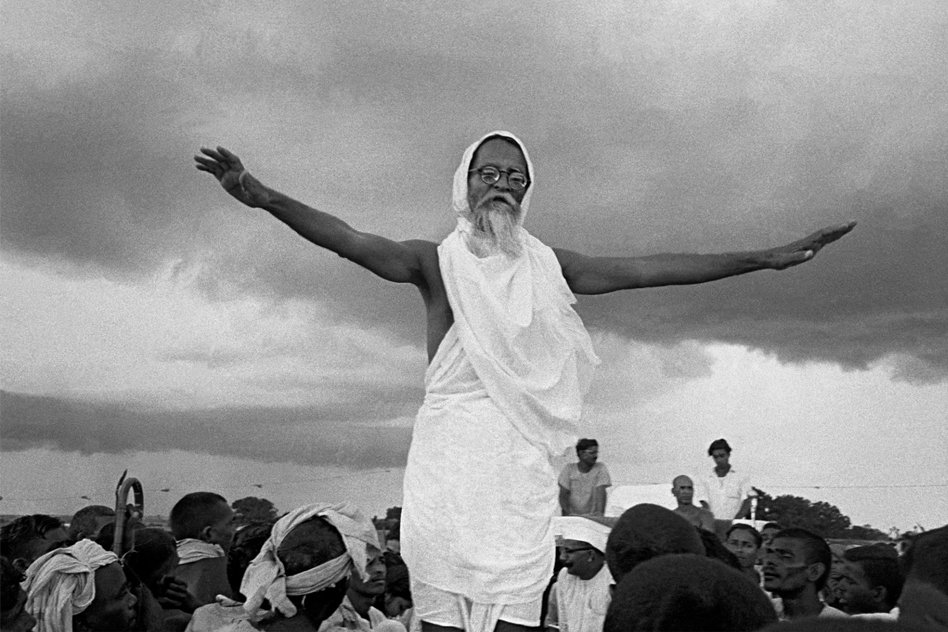
The Bhoodan movement- A Bloodless Revolution

Vinoba Bhave was born in Gagode village, Raigad, Maharashtra. A keen follower of Mahatma Gandhi, Vinoba Bhave took part in the freedom struggle and started the Bhoodan movement in 1951. He was an avid social reformer throughout his life. Vinoba Bhave, a humble spiritual leader, the first non-violent resister to the Britishers and reformer of Independent India started what we know as the Bhoodan movement – a landmark in Indian history where its mission was to persuade wealthy landowners to willingly give a small share of their land to the landless people .About four years later after india gained independence, Vinoba Bhave carried out a unique movement of his own. He travelled across all of India to convince the wealthy land-owners or land-lords to share a small area of their land with their poor and downtrodden neighbours with the condition that they can’t sell the land. Over a span of 20 years, a total of 4 million acres of land was shared across the country through this movement. Bhoodan literally means a donation of land. As implied by the name, in this movement, landlords voluntarily give up land to be distributed to landless labourers, who would then cultivate the land..

How it started

Bhoodan or Land Gift movement began with Acharya Vinoba Bhave in 1951 in Telangana. An inspirational icon, Vinoba Bhave’s work & dedication impacted people all across the country. He vowed to life-long celibacy as well as selfless service for others when he was as young as 10 years old. As it is said about him, “Perhaps none of Gandhi’s followers have created so many worshippers of Truth & Non-violence, so many genuine workers as has Vinoba Bhave.” It all began on April 18th 1951, which we now know as the historic day this movement began. Vinoba Bhave stepped into the Nalgonda district, which was the epicenter of communist activity in the region. He stayed at Pochampalli, a village with about 700 families who have him a hearty welcome. He visited the ‘untouchables’ or Harijan colony, where they asked for 80 acres of land for 40 families. As documented in history, while the discussion was going on, Ram Chandra Reddy who was the local landlord, got up and exclaimed, “I will give you 100 acres for these people.” This made Vinoba come up with an idea, that this may have the solution for possibly resolving land issues across the country. Soon, this movement led to become the Gramdan or village-gift movement and went through many levels of allied programmes and initiatives. In October 1951 rose a demand for fifty million acres of land for the landless in the whole of India by 1957, thus turning a small goal into a mass-scale movement. The success lasted till 1957, post which it slowly faded.

Outcomes

It gained a lot of success, especially in Northern India in UP and Bihar. Over 4.5million acres of land in India was given as a donation by 1957. The core belief of land being a gift of earth which belonged to everyone made its way into minds of everyone. With time, many problems seeped into the movement later such as slow progress, bribery, donating bogus land, greed to get more land or incorrect implementation in some regions. The movement soon failed due to increasing misuse of a voluntary movement for self-serving purposes by a few.

To conclude taking an overall view it cannot be gainsaid that the Bhoodan – Gramdan Movement, despite all its real & apparent limitations, it would ever be deemed as a glorious attempt for a peaceful & non-violent solution of the basic land problem of Indian society & through it for a non-violent reconstruction of the Sarvodaya socio-economic-politico order of universal relevance & significance

https://thelogicalindian.com/story-feed/get-inspired/vinoba-bhaves-bhoodan-movement/

E- EDUCATION: AN EDUCATIONAL REVOLUTION

Eeducation or elearning is the delivery of education or training by electronic teaching methods like computers or laptops etc. E- Education means Schools on Web and it consolidates virtual classrooms, laboratories and integrates it with your other enterprise applications. These now supplement the face – 2 – face class room and commonly known as Blended Learning. It is the learning experiences from the online information sources. This E-Learning approach helps the students know, makes them understand how to research more and the students can preserve their online resources posterity. It helps the teacher to provide better materials for the students by doing research on various topics and subjects. It normally works over the internet and provides numerous tools such as for assessment, communications, collaborations, uploading of content etc.

Schools On Web help in connecting people with each other and provides new ways of communications and collaborations with the help of all kinds of information’s being provided by it. The aim is – Learning without Limits- anytime, in any place, and at any pace. It provides a platform where students and parents are connected, administrators are empowered and teachers are inspired.

E- Learning

The technologies of web collaborations helps in real time access to subjects or instructors or topic matters directly from the PC of users. The key communication/ participation tools are: e mail, chat rooms, whiteboards, journals etc.

Some of the key benefits are:

  1. Enable the teaching od new or existing courses wuthin virtual classrooms
  2. Interactive sessions which can be recorded
  3. Effective evaluation of virtual classes
  4. Provide instant accesS
  5. Generate academic reports
  6. Enables to track the progress of individual learner

Experiential Learning

Experiential Learning

Experiential Learning stimulates experiments and boosts the dimensions of interest, involvement, imagination and interaction by virtual laboratories, scenario – based learning activities and tests of different concepts. All these can be incorporated into various teaching approaches as pre-labs, as alternatives to textbooks home work and individual or group activities.

Some of the key benefits are :

  1. Highly Interactive Platform
  2. Provide Learning by Doing
  3. Ensures and promotes high level of cognition and retention
  4. Safety and Security is ensured
  5. Simulates real-life environments

Management System

E-Learning helps in managing fee structure, fee submission, generation of time table and management, library management and other reports. Web based Institute Management software is designed which enables better interaction among students, teachers, parents and managing body. Thus, it helps in customization of the system for respective needs at a reasonable cost.

COVID 19 and E – Education

Countries are at different points in their COVID 19 infection rates and worldwide there are nearly 1.2 billion children in 186 countries who are getting affected by school closures due to the pandemic. With such sudden transition and shift away from the classroom many problems and issues have emerged across the globe. In such situations, online learning and e-learning approaches have emerged as solutions and in response to significant demand, many online learning platforms have also moved forward for offering free access to their educational services. With the help of e-learning and online teaching initiatives many issues which were being faced in the field of education have been sorted out but still there are still lots of problems which are associated with the availability of proper infrastructures etc. at each and every corner of the globe which can enable each and everyone to access the facilities of e-learning.