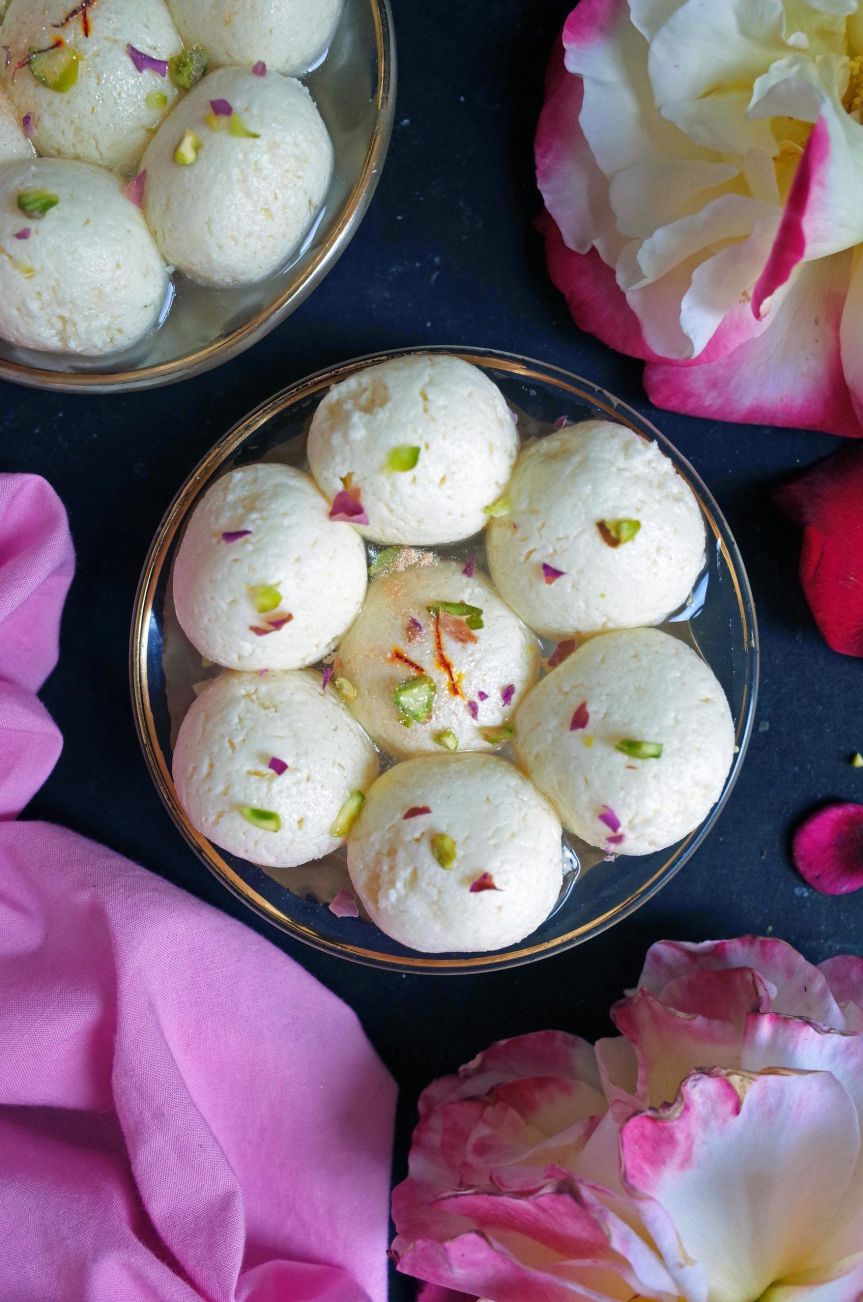

Bengali Mishtis: The Delectable Sweet Affair of Bengal

Traditional Sweets of Bengal

Introduction

Bengal is well-known for its music, cinema and delicious food, especially the mouth-watering sweets. In fact, it’s rather hard not to run into a sweet shop in almost every corner of the land, including the narrowest of the lanes. And, it’s equally hard to find a Bengali who is not in love with their ‘mishti’. Bengalees are incredibly proud of the sweets of Bengal and their unique appeal. And for a good reason too — Bengali sweets have wooed Indians and foreigners alike.

Bengali Mishtis

History of Sweets in Bengal

The prominent presence of sweets in Bengali cuisine can be noted throughout history. Ancient Bengal was known as ‘Gauda Banga’, a name believed to be originated from the term ‘Gur’ or molasses that were harvested in abundance in the region. The early Bengali sweets were made from the delicious jaggery or molasses and coconuts. There were several sweets made from ‘khoya and kheer’, which are Bengali names for milk solids and condensed milk, respectively. Sweets like ‘Naru’, ‘Moya’ and ‘Takti’  were popular in ancient Bengal. The uses of different fruits to make a variety of sweets were also prevalent. Books like Manasa Vijaya Kavya, written by 15th-century Bengali poet Bipradas Pipilai, also account for how varieties of ‘pithe’ or Indian Cake made from rice flour, jaggery, kheer and milk solids have been an integral part of Bengali rituals and festivals.
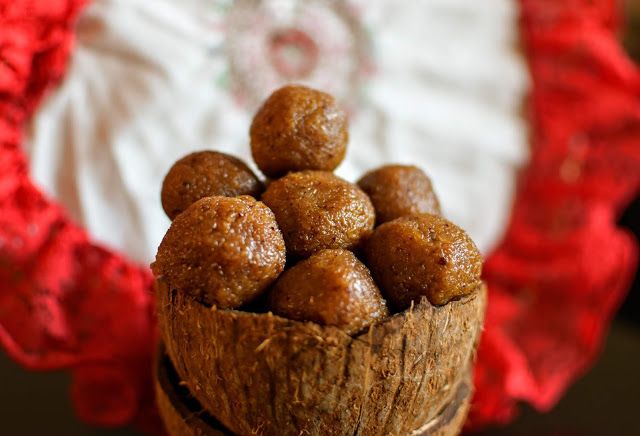

Traditional Coconut Balls or Narkel Naru
Patisapta or Eggless Crepes
Malpua or Indian Pancakes

The introduction of ‘Chhana’ (Cottage Cheese) in Bengali cuisine happened after the Portuguese invaded Bengal, yet it’s interesting how today most of the characteristic Bengali sweets are made primarily from fresh ‘chhana’ (cottage cheese) and sugar. The curdling of milk with an acidic substance was forbidden according to Hindu cultures, but the Portuguese loved their cheese. After settling down in and around Kolkata in the 17th century, the Portuguese tradition of making sweets with cheese inspired the local cuisine as well. The Bengali confectioners then picked up this incredible art of curdling milk and creating mouth-watering ‘Sandesh’ and ‘Rosogollas’ among others.

Some Famous Bengali Sweets

Bengalees love all their sweets but among those, some are all time winners who can brighten up moods on a tiring day, and can even spoil a diet that you are maintaining for too long! Let’s dive deep into the varieties of some scrumptious and unique Bengali Mishtis.

Sandesh

The simplest yet one of the most loved sweet of Bengal, is Sandesh. Generally, made by fine kneading of fresh cottage cheese along with sugar powder, cardamom essence and pistachios to garnish. If jaggery is used, instead of sugar then, it’s called Nolen Gurer Sandesh.

Sandesh

Pantua

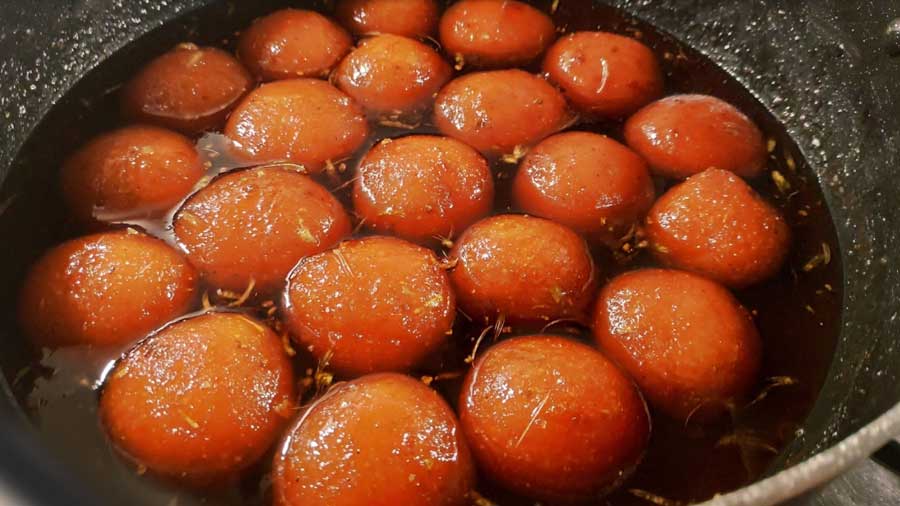
One of Bengal’s most loved syrupy sweets, is Pantua. Though it has an uncanny similarity with North India originated Gulab Jamun, taste and procedure wise they are quite different. Balls made of cottage cheese, semolina are deep fried and then tossed in sugar syrup until completely soaked in. And unlike Gulab Jamun, they can be served cold too.
Pantua

Kheer Kadam

The name of this sweet is suggestive of a flower named Kadamphool in Bengal. The flower is bright yellow in colour cover by soft, white spikes and has a distinctive smell. This Mishti resembles the flower, and has a layer of Sandesh covered over small Rosogollas .

Kheer Kadam

Lyangcha

Lyangcha is a cylindrical fried sweet, soaked in sugar syrup and prepared with Fresh Chhena (Cottage cheese) and Mawa/ Khowa. To make soft and tasty Lyangcha use of Fresh Chhena is must. Originated from Shaktigarh, around 80kms from Burdwan in West Bengal, Lyangcha is a staple of Traditional Bengali Mishtis.

Lyangcha

Komola Bhog

As the name suggests, Komola Bhog is literally the orange flavored Rosogolla, (Komola means Orange in Bengali) with the sweetness of Rosogollas and the tanginess of Orange. And of course, they are bright Orange in colour.

Komola Bhog

Jolbhora Sandesh

Jolbhora Sandesh, also known as Taalsas, is a sweet shaped like a ‘taal’ or kernel of the palm fruit. The sweet was created on the event of ‘Jamaisasthi’ by Surjya Modak. It is filled with sweet ‘Nolen gur’ inside and thus got its name. According to stories, Bandopadhay family of Chandernagar requested these sweets for their son-in-law. When he took his first bite of the sweet, the sweet juice spilled out. The sweet, thus, got well-known among the Bengalis.

Jol Bhora or Taal sas Sandesh

Sitabhog

Originated from Burdwan in Bengal, Sitabhog, according to Legends, was Goddess Sita’s favourite dessert and hence the name. Sita Bhog is prepared by frying a dough made of cottage cheese and powdered rice in ghee and then soaking it in sugar syrup. The final product looks like vermicelli served along with mini Gulab jamuns.

Sitabhog

Mihi-Dana

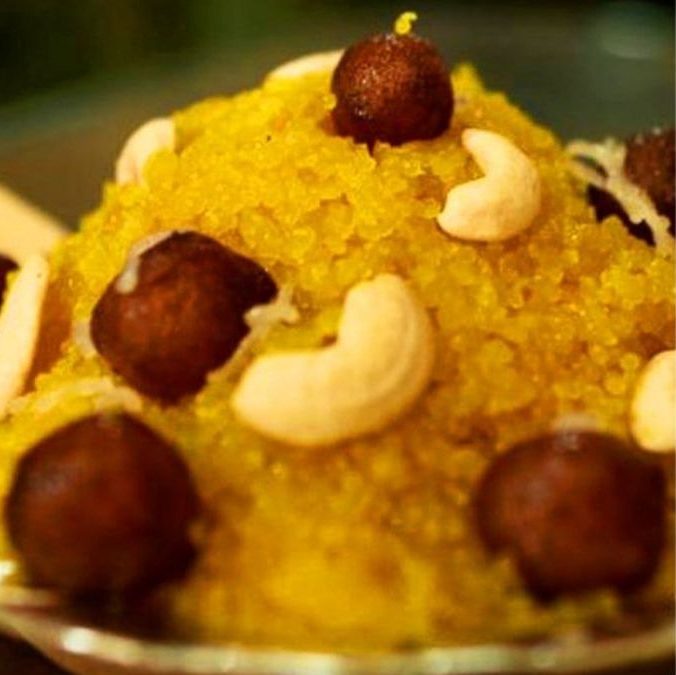
Originated from Burdwan in Bengal , these are one of the famous sweets, that has similarities with Motichur. These are granular, deep fried and soaked into sugar syrup. Recently, Mihi-Dana has received GI Tag from UNESCO and has received its first enormous foreign order to export to The Kingdom of Bahrain.
Mihi-Dana

Ledikeni/ Lady Kenny

Ledikeni or lady Kenny has been a popular Bengali dish since the British rule. The dish is named after Lady Canning, the wife of Charles Canning who was the Governor-General of India during the 19th century. The dish a light brown sweet ball made of Chenna which is fried and then soaked in sugar syrup. It tastes divine and is prepared on most auspicious days. 
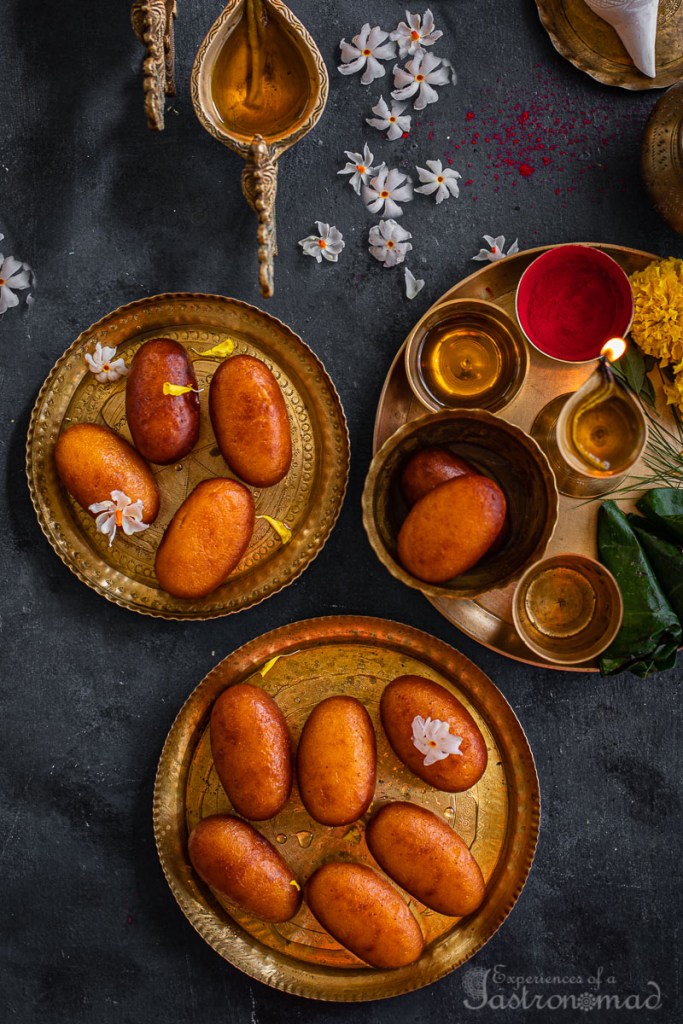
Lady Kenny

Rosogollas

Rosogollas has done the honourable deed of introducing many, if not all, North Indians to the Bengali cuisine. These magical balls are prepared by dipping a mixture of cottage cheese and semolina dough into a sweet sugar syrup. The mere thought of those soft and spongy balls makes the mouth water.

Rosogollas

Laal Mishti Doi (Caramelized Sweet Yogurt)

Just like the name, this Bengali dessert is extremely simple and sweet. Mishti Doi is essentially sweetened yogurt which is prepared by adding sugar to boiling milk, then leaving it to ferment overnight and is served chilled. This quintessential dessert is often served in small earthen pots which add to the aesthetics of this dish.

Laal Mishti Doi

Conclusion

Ending on a sweet note, Mishtis are also an important part of the culture and tradition of Bengal. Be it during the festivals or weddings or just greeting guests, Bengali Mishtis are always the stars of the show. If you’re a sweet-tooth, you should try these once in a while. And good news is, that many of them are now available online to order from in India and abroad.


Taxation of the Rich

On July 20, 2021, the world’s richest man: Jeff Bezos flew to space alongside his brother Mark Bezos. The suborbital flight lasted over 10 minutes, reaching a peak altitude of 66.5 miles (107.0 km). The flight qualified him as an FAA commercial astronaut. It is estimated that this short flight cost Bezos $10-20 million, a mere drop in the bucket for the Amazon CEO who is reported to have a net worth of $177 billion. This minimal cost which only lifted a short flight could have lifted the burden of those struggling in the world. This brings up the question: Should the rich be taxed more?

But first what do we mean when we talk about “the rich”?

These are:

  • The well-off: About 9% of the households in the U.S. have income greater than $200,000, and they get almost 45% of all pre-tax income, according to the Tax Policy Centre.
  • The really rich: the top 0.4% of households—have incomes above $1 million a year and get 13% of all pre-tax income. Since the 1980s, those at the very top have enjoyed faster growing incomes than the rest of America. The Congressional Budget Office estimates that the best-off 1% of American households (average annual income $1.8 million in 2016) saw their inflation-adjust incomes before taxes nearly triple between 1979 and 2016; the next best-off 9% saw theirs grow by 75% while everyone else saw their pre-tax incomes rise by 33%.

The talk of tax rises is common — and there is a growing appetite for taxing the wealthy, which has been out of favour since the 1970s. In the US, the Democrats control all three branches of the federal government for the first time since the early Obama years. The Biden administration is planning the first major tax hike since 1993, which will include higher taxes on higher earners. The COVID-19 pandemic has ravaged the economy, and the high unemployment and extremely low interest rates provide ample justification for budget deficits. Still, in the years ahead, many feels that the U.S. government needs more revenue, in order to fund urgent fiscal priorities such as infrastructure, healthcare and education. As policy-makers search for new revenues, those at the top of the income distribution are natural targets for tax increases, since their incomes have grown the most rapidly in recent decades.

Several Democratic presidential candidates propose to raise taxes on the rich to raise money both to pay for their spending agenda and to reduce income inequality. They argue that the people who have benefited the most should bear the burden of the cost of programs that help the rest of the population. In light of the widening gap between economic winners and losers, they would use the tax code to reduce inequality more aggressively than today’s tax code does, and they devote some of the revenues to fund programs that benefit those less well-off. They also point out that the average tax rate paid by people at the top has fallen.

The arguments against progressive taxes on wealthier people are well-known: tax people less and you incentivise wealth creation. You prevent wealthy people from becoming tax exiles and stop money fleeing offshore; if you give the rich more, they spend more and everyone is richer. A related issue is the idea, that philanthropy from the rich can replace some of the work of taxation. An example is the Gates Foundation, which has given away more than $50bn since its inception. Yet, philanthropy as a substitute for government spending brings its own problems. One is that billionaires can choose their causes in a way that governments cannot. Philanthropy tends to benefit causes such as the arts and the environment over ones such as alleviating poverty and poor health. A further problem here is that allowing philanthropy to take over from taxation is another way of ceding power from the state to the wealthy whose influence is already cause for concern.

Senator Bernie Sanders described it as: “What kind of nation are we when we give tax breaks to billionaires, but we can’t take care of the elderly and the children.” Will the rich be taxed or will they continue basking in their well of wealth without a care in the world?

Amazon CEO and other returns from their space voyage

Amazon CEO Jeff Bezos returned to earth after his maiden space voyage. Mark Bezos, Wally Funk and Oliver Daemen were his other co-passengers in this journey. He spent total of 10 minutes in space. He went there on Blue Origin’s New Shepard spacecraft from its Launch Site One located in the West Texas desert (United States).

Happy, happy, happy!,You have a very happy crew up here!

Jeff Bezos said in space

For the first time in the history a commercial company launched a privately funded and built spacecraft from a private launch range with astronauts on board.

Congratulations to all of Team Blue past and present on reaching this historic moment in spaceflight history. This first astronaut crew wrote themselves into the history books of space, opening the door through which many after will pass

Blue origin released this statement after safely return of the passengers on earth.

Private companies are competing in space travels and explorations, let’s hope this competition may result in affordable space travel ,well within reach of common man. Space travel is still dream of many people.

How I Stay Positive

EVERYTHING MATTERS

One of my readers recently replied this to one of my weekly newsletter emails:

“How are you so positive?”

I thought to myself, “Haven’t I written about this before?” I went through all my articles and the answer is no. I have written about the importance of having a positive mindset a lot.

But after 6 years of blogging, this was the first time I got that question. And it’s so on point. Sometimes we take things for granted. Even though I’ve experienced many challenges in life (like almost every other human being), I never gave up my positive mindset.

Often, we look at the world and consider it negative. That’s not a surprise. Because taking one glance at a news website will make the steadiest person depressed. It happens to me too. But calling the world negative is a misjudgment.

That will only cause frustration. The Stoic philosopher Epictetus made that evident in his teachings, two thousand years ago (quote is from The Good Life Handbook):

“So when we are frustrated, angry or unhappy, let’s hold ourselves responsible for these emotions because they are the result of our judgments.”

The Stoic perspective is all about being objective in your perceptions. When your thoughts become negative “because” of something, you’re making misjudgments. Epictetus continues:

“No one else is responsible for them. When you blame others for your negative feelings, you are being ignorant. When you blame yourself for your negative feelings, you are making progress. You are being wise when you stop blaming yourself or others.”

Not blaming others nor yourself is one of the most important things if you want to stay positive. But there are also 4 other things I do to stay positive. Here they are.

1. Practice gratitude

Taking a few moments every day to write down a few things you’re grateful for changes your perspective. The funny thing about this practice is that when you read about it, you think, “It can’t be THAT effective!”

I was exactly the same. But once I started actively practicing gratitude, I felt more in control of my life. A while back, I stopped writing about the things that make me feel grateful. For the first few weeks, I didn’t feel any different.

But after a few months, I noticed that I complained more than usual. I was also more frustrated compared to before. When I started practicing gratitude again, I went back to being consistent. Consistently calm, that is.

Remember that you can also be grateful for things that you didn’t ask for. Be grateful for everything—even the bad things.

2. Don’t take it personally

A lot of our frustration comes from what other people do or say. “OMG! I can’t believe he said that! How does he dare?!”

Well, maybe it’s time to lighten up a bit. We overanalyze every single thing people say and do. Sometimes, people just do dumb things. Not everything people do is personal.

If you want to live a good life, you can’t take everything personally. Understand that there are more important things to life—things like your health, family, and career.

3. Let it out

I’m a big fan of processing your thoughts, experiences, and emotions. We all deal with difficult things in our lives.

A partner that doesn’t listen to you, colleagues who piss you off, a landlord that doesn’t fix the drain, the loud neighbors, you name it. No one’s life is perfect and tranquil.

That’s something we really need to understand. But that took me many years. I always thought that you could achieve some kind of magic place in life where you would have no stress and annoying responsibilities.

But then I grew up. Life is basically one challenge after the other. We can’t let that get the best of us. That’s why we need to let it all out.

All your anger, frustration, anxiety, insecurity—it needs to get out of your system. Whether you do that by journaling, talking to a friend, or going to therapy is your choice. Just make sure you don’t keep all those things inside yourself.

4. Focus on improvement

Look, life’s not always pretty. And we tend to overemphasize the bad times. When we experience a setback or negativity, we blow it up in our minds. “This is the worst thing ever.”

Think about it. Is it really? Or is there a way you can improve your life situation? Because that’s how I like to look at it.

Where you are now is a temporary situation. No matter how good or bad it is—this very moment will pass. Do you realize that?

Because if you do, you know that you have a chance to improve your life. And to me, that’s the best use of your time and energy.

Don’t spend one second on feeling sorry for yourself and focus on what you can do NOW to improve something about your life. It doesn’t even matter what it is.

Go for a walk. Take a shower. Shave. Start a journal. Fix something in your house. Write down some ideas. Set a goal.

You can even do those things while you’re feeling bad. Because that’s not the point. As am I writing this article, I’m not feeling well. I ate something bad two days ago, and I have food poisoning symptoms since yesterday morning.

I feel weak. And yet, I feel better mentally after I wrote this article.

In the back of my mind, I know I will recover. I understand this is a small example and much worse things happen in life. But when you practice a positive attitude on the small stuff, you will be better at dealing with the big stuff.

I like how Napoleon Hill, the author of the famous self-help book, Think And Grow Rich, put it:

“If you cannot do great things, do small things in a great way.”

It’s unquestionable: Doing small things will make you feel better. But you don’t need to believe me. Just go and do a small thing now and see it for yourself.

3 best Books That Teach You To Be Rich

BOOKS CAN CHANGE ANYTHING

What’s your money strategy? Do you even have one?

If not, it’s not uncommon. Until two years ago, I didn’t have a financial plan, whatsoever.

Even though I’ve been reading about money, finance, and investing ever since I made my first few bucks as a teenager, I never created a financial plan.

But now, I think every single working professional needs a financial strategy. How do you spend your money? How much do you save? What are your thoughts about debt? How do you invest your money? How much money do you need to retire?

1. The Richest Man In Babylon by George S. Clason

This book was published in 1926 and as far as I can tell, it was the first popular book on personal finance.

Usually, I’m not into parables. But this is a great book. It’s the only parable that I’ve read that makes the message of the book even more powerful.

What it comes down to is this: Rich people are rich because they save their money, don’t get in debt, and don’t spend their money foolishly.

Clason recommends to save 10% of your income (I believe you should save 50% — more on that later). He calls saving “paying yourself first.” That’s an important mindset.

You only get rich by paying yourself. Don’t foolishly spend all your money on things you don’t need. When you do that, you pay others, not yourself.

Everyone should read The Richest Man In Babylon — the earlier the better.

2. Your Money Or Your Life by Vicki Robin and Joe Dominguez

What I enjoyed most about this book is that it teaches you to transform your relationship with money. This will change your life.

Money is something you trade your life energy for. Think about it. You work to earn money.

But you spend your time to work. That’s why Robin and Dominguez spend the first part of this book to make us aware that more is not better.

More money is especially not better if you have to put your own well-being on the line. It’s never worth it. Just ask the family of the bankers who committed suicide during any recession.

If you want to live a healthy and wealthy life, you must detach yourself from money. Instead of striving for more, get better at managing your money.

Save it. And don’t waste it on stuff you don’t need. Your Money Or Your Life starts out strategically and gets more practical towards the end.

One thing I don’t agree with is retiring early. I don’t want to retire and sit on a beach. That’s because my mentors, who are beyond the retirement age, still work and are very happy. I aspire to do the same.

But I also want to build enough wealth that I don’t “have” to work if I don’t want to. That’s one thing Robin and Dominguez also believe in.

3. The Intelligent Investor by Benjamin Graham (with commentary by Jason Zweig)

I bought my first stocks when I was 20 years old. At the time, the finance sector was doing great, and I thought it would be good to invest in ING, the major Dutch bank.

Oh yeah, I should mention that this was in 2007, right before the financial crisis. I invested €1500 in ING and €500 in AEGON, a Dutch asset management firm.

It was about half of my savings at the time — a lot of money for a student. And a few months later, when Lehman Brothers collapsed, my stock portfolio was worth only a few hundred euros in total.

Man, I was so pissed off. I can’t even tell you how livid I was. But looking back, I understand that losing money is a part of investing.

And fortunately, I didn’t sell and waited until the stocks recovered. That took eight years, though.

I decided to not invest in individual stocks anymore. And The Intelligent Investor is one of the most important books that helped to realize investing in stocks is not for me.

If you already know that you don’t want to invest in individual stocks, you don’t have to read this book. However, if you are interested in finance, I highly recommend it. The commentary by Jason Zweig, a WSJ columnist, is also excellent.

P.S. I skipped the chapters about stock analysis because I’m not going to use it.

Story of the two most expensive spices

Saffron

One pound of saffron costs you $5000. It is the most expensive spice next comes vanilla. Saffron is a complicated spice to harvest. Harvesting saffron needs a lot of hand work to pick up the flowers, separate the saffron that is the dried stigma or the female part of the flower. Saffron comes from the saffron crocus flower and each flower has 3 stigmas. The yield of saffron is very low. One pound of saffron requires 170000 flowers. These flowers bloom over a six week period from late September to early December. There is a specific time to day to harvest them. High relative humidity and sunlight can break the chemical structure in the saffron. Early morning is preferably the best time to harvest them.

90% of the world’s saffron is grown in arid fields in Iran. It is so because workers are available and for cheap. But it’s mostly like slavery. Most workers are women getting five dollars a day. Not only Iran, it’s grown in Morocco, Spain, Italy, the Netherlands, Afghanistan, India and even in United States. Though many Americans have never eaten saffron, the US imports large amount of saffron. Saffron has a resistance to cold weather.

Over centuries saffron has proven useful in many situations. Most commonly used in cooking. Middle east Asian countries have a lot of food containing saffron. When saffron is broken down it creates a golden dye. Which is how when used in cooking it gives a different kind of colour and taste and smell to it.

Saffron contains some chemical components which are really expensive like picrocrocin, crocin and safranal. These are the main components responsible for the taste, smell and colour.

People have tried passing turmeric, red marigold petals, and lily flower stigma as saffron. But the flavour and dye is totally different. In large quantities, saffron can be a potent happiness inducing narcotic. Research suggests it may help reduce the symptoms for Alzheimer’s, depression and PMS.

Vanilla

From ice cream to cakes and even perfume, vanilla is the go-to flavour of the world. In recent years, the price of natural vanilla has shot up. At one point it was more expensive than silver by weight. 80% of the world’s vanilla is grown in the perfectly suited climate of the north east region of Madagascar. It’s the country’s primary export crop. In 2014, vanilla was $80 a kilo. Three years later it was $600. Today its around $500. The price rise is due in part to global demand. The trend of eating naturally means that food companies have shunned synthetic flavouring in favour of the real deal.

Price fluctuations affect producers of agricultural commodities everywhere but vanilla is particularly volatile. In just a few weeks the price can jump or plummet by over 20%. Liberalisation is one reason for such movements. The Malagasy government once regulated the vanilla industry and it’s price. But now the price is negotiated at the point of sale which makes for a freer market but a more volatile one. It’s also a tiny industry. A single cyclone can knock up the entire crop within Madagascar. It’s also a difficult and delicate crop to grow.

Vanilla is an orchid that needs to be hand pollinated. This is a really labour intensive practice. It takes roughly six months to grow it on the vine and then six months of manual post harvesting. The interesting thing about vanilla is that it needs to be taken off the vine when it is almost rotted!

The growers have to contend with another problem. Thieves are targeting vanilla crops. So Malagasy now have to sleep out in their vanilla fields. They can’t rely on those who are changed from the state to protect them or their crops. Some farmers have resorted to harvesting the beans before they’re ripe but this produces a poorer quality vanilla and ultimately pushes down the price. The combination of deteriorating quality and high prices is having an effect. The vanilla price bubble may burst. If the price continues to stay high there’s a number of scenarios that will play out. Continuation of current situation will cause an unstable market. Otherwise the corporate sectors step in, try to regulate the market in some way that may stabilise prices and also quality. Or the market may crash out.

Big buyers that provide vanilla are now working directly with farmers in a bid to gain greater control over quality. Other companies have started to look elsewhere for their natural vanilla. Indonesia, Uganda and even the Netherlands are growing the crop. For a century Madagascar has enjoyed a near monopoly on vanilla. But this industry maybe in line for radical overhaul.

Thank you for reading. Have a nice day!🌼

Virtual Classrooms – An Alternative for Classroom learning

When the lock down was announced our whole educational system came to an abrupt stop. Now we had to depend on online apps and webinars to learn.

 Until the lock down period was announced most of us were not even aware of the existence of such apps.  By the time lock down was announced the fame for an app like Zoom, had won over the millions of people across the world. It was one of the popular apps used around the world to conduct meetings. It accommodated more than about 100 participants.

First times in online classes are always a headache because half of the people  forget to turn on the audio and camera. Not only us but teachers also have hard time in finding different functions.  Online classes are always an advantage in situations where classroom learning cannot take place but in many strong opinions it can never take over the idea classroom learning.

To the other side of online classes, it opens us to a world of disparities between the elite and the middle class and the poor. An online class eliminates the human connection that a face-to-face, in-house teaching environment provides. An online instructor cannot gauge the mood, involvement and engagement level of her students the way she can in a traditional lecture-based classroom.

There are a lot of problems with online learning. Most of the students will face difficulty in connecting with the teacher. Without a proper connection at home for internet, students will find difficulty in attending the classes. Proper 4G connection is need for the smooth conduct of meeting in Zoom. This creates a digital divide between the students. Not all students can afford a phone or not all will have a proper connection. This creates a differentiate between the haves and have nots. 

Such a simple issue as this can really draw us attention over the issue of network and internet connections, but what most of us forget is in some states of India, internet connections have been cut off which makes it very hard for students in that are to attend class.

Zoom classes does not allow you to enhance your learning capacity. It doesn’t provide for any kind of learning other than the academics. Sometimes the app would crash and there would be a lag.

Most of the times when classes go on, the system gets lagged and create network problems due to which students wont be able to focus. Students are forced to sit in front of their phones for hours listening to lectures which can have a lot of effect on their eyes as well as their thinking capacity.

Sometimes classes are taken without giving any breaks in between, this can cut off the span of concentration of a student. One person can normally concentrate to max to max half an hour without any other thoughts barging in, with proper breaks in between it becomes easier to learn.

Taking all these facts into consideration we can come to the conclusion that online learning may not always be an alternative for classroom education. Being in touch with human beings and socializing with people is what develops a persons character.

Most of us learn from school, from what we see and hear we develop into better versions of ourselves. Being outside in the sun, playing in the mud, reading a book to bed etc adds up to the character of a child. In all places learning by experience matters.

How to Become Rich Faster than Others (Practical Steps)

Everybody wants to become RICH one day.

Still, how is it that some people have all the answers? How do the rich keeping getting richer while the poor keep getting poorer? Is the game actually rigged against us? Are we, in fact, doomed to live ordinary lives, merely controlled by our hedonistic desires and pleasures, forced to succumb to our animalistic urges, never able to actually get ahead in life, let alone get rich? Or, is there some solution? A way out, if you will? 

How to Become a Millionaire and Get Rich the Right Way

Clearly, these are questions posed by the masses. But not everyone can pull it off. What separates those who seem to have all the answers from those that are constantly jumping from one ship to the next, never able to truly find their gravy train? Well, the answers are far simpler than most would imagine. 

Don’t spend more money than you make.

 Not many people follow this advice. Many are focused on spending as much as possible. Whether it’s to revel in the perception of being more well-off than they actually are, or some other purpose, this is the truth across much of the developed world. 

Keep a Diary of your Expenses.

Benjamin Franklin once said, “Beware of little expenses. A small leak will sink a great ship.”

As easy as it might seem to ignore the little stuff, so to speak, the more you sweat the details, the better off you’ll be. Cancel that gym membership you haven’t used in six months. Eliminate that costly cable television plan. Stop buying expensive lattes and eating out when you know you can’t afford to do it. Download an app or purchase a small notebook and track every expense no matter how small or how big. 

Quit all the Bad Habits- drinking, smoking, gambling, etc.

Bad habits hold us back from achieving many kinds of goals. They stop us from losing weight, making more money, saving, investing and everything in between. The only way you can actually get ahead in life is to decimate those bad habits. You need to quit the bad habits before they lead you down a deathly spiral. 

It’s hard to achieve something that takes so much of your energy, such as getting rich, without eliminating your bad habits first. I’m not just talking about poor financial habits; I’m also talking about any other habit that eats away at you, physically, emotionally or mentally. 

Save 20 % of your Income every Month.

In order to get rich, you need to save at least 20 percent of your income off the top. Everyone has heard this before, but how many people actually follow this advice? 

The term “pay yourself first” holds major weight here. While some don’t find the importance in this, others realize that this not only provides a rainy-day fund in case of emergencies, but also moment-of-the-opportunity cash. When the right opportunity comes by, you need cash to seize it. If you don’t have the cash, you just missed the proverbial boat. 

Pay-Off your Debts.

When you’re debt-free from the bad debt (not the good debt like mortgages for investment properties and loans to grow you business, for example), take that money and put it towards your savings. The trick is not to go spending cash and splurging on a vacation or a new car once you’re debt-free. Stay focused. 

Don’t Rent but Own your House.

No matter what it takes, even if you have to downgrade your living situation, you should do what it takes to purchase a home. Sit down with a mortgage broker and assess your situation. Set some goals and create a plan of action.

Even if you don’t have enough money saved for a down payment right now, figure out what it’s going to take to buy your home. We’re not talking about your dream home here. However, over time, the money spent on your mortgage is far better invested than money spent paying rent. 

Invest, but only after Researching the hell out of it.

Many people invest for the sake of it. If you don’t have proper knowledge about the plans your investment offers then you might never really grow your money in it. The better you know an industry or niche, the more likely you’ll be able to spot ideas that could possibly create massive amounts of income for you in the future. No one else is going to do this for you. And when you do invest in something that you know, be sure to track it vehemently.

Multiple source of income but not mainstream.

Anyone who’s serious about getting rich needs to build multiple streams of passive income. Passive income is incredibly important when it comes to amassing wealth. Simply put, you to need to generate your income on autopilot if you want to create a considerable net worth. 

There are a number of passive income generating ideas that you could implement. Some of the most popular involve real estate and dividend income for those that can afford the often high-cost barrier of entry into those fields. Others opt for generating passive income by starting a blog, creating digital products such as e-books or courses, and even creating online tutorials, just to name a few examples.

Time Value of Money.

We all have the same amount of time in this world. You don’t have more than the next person and that person doesn’t have more time than another. No matter if they’re a powerful politician, a business magnate or a famous athlete, they don’t have more time than you do. Time is life’s greatest equalizer. 

It all depends on how you utilize your time. Every second is precious. Become lazy or procrastinate and lose your dream of being rich.

Rome was not built in a day.

Daily goal setting provides milestones on your way to your bigger goals. Break the big goal down to achievable daily goals that won’t seem so overwhelming. For example, if you want a $10 million dollar net worth in the next five or 10 years, figure out what it’s going to take on a daily basis to move closer to that goal.