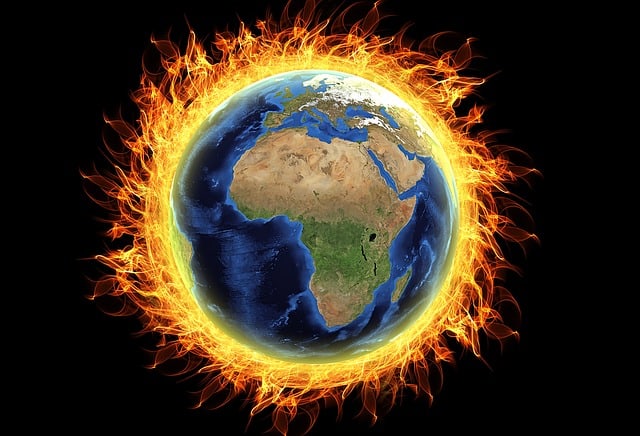
Climate change| Are we finally going to compensate for the damage we did?

Death dolls due to floods in Italy, China, Germany and India keep rising. “Airpocalypse” in Siberia to forest fire, “Bootleg fire” in Oregon, flash floods in Southwest, Southeast and Northwestern Europe.
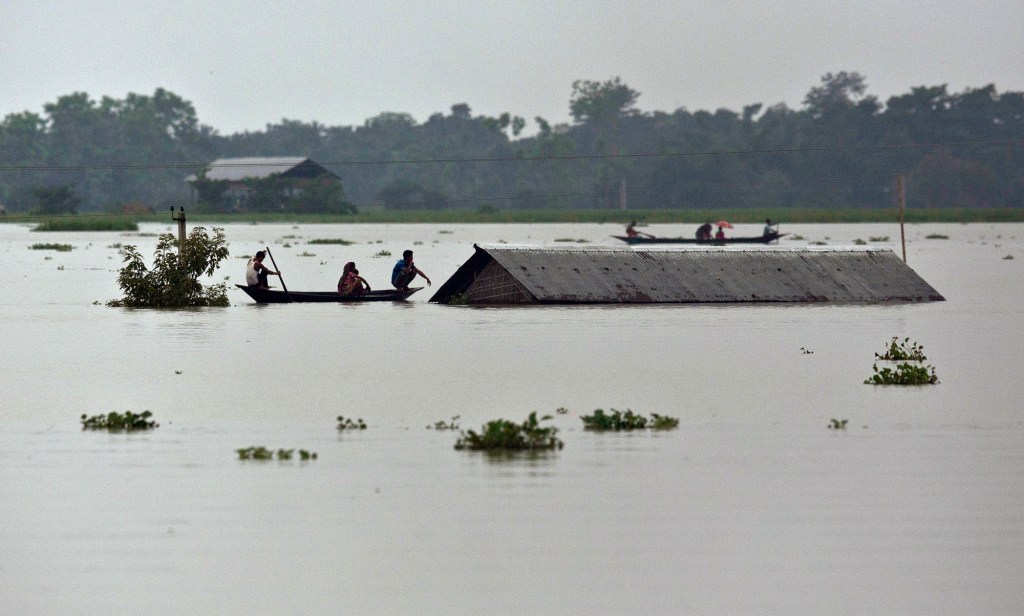
(AP Photo/Anupam Nath)

Climate change – When there’s a significant change in weather in a given area over a period.

Intense climate change can occur due to external as well as internal factors. External factors including change in solar emission, change in global energy balance due to change in the Earth’s orbit around the Sun, and volcanic activity.

Internal factors are human induced which leads to Greenhouse Effect.

The classical period used for describing a climate is 30 years, as defined by the World Meteorological Organization (WMO).

Floods:

A flood is an overflow of water that submerges land that is usually dry. In the sense of “flowing water”, the word may also be applied to the inflow of the tide.

NEWS:

China’s central Henan province received its heaviest rainfall which led to massive floods, killing over two dozen people. Many dams have breached and it  flooded the highly populated downstream areas. Scientists have said many factors contribute to flooding, but a warming atmosphere caused by climate change made extreme rainfall (Cloudburst) more likely.

The People’s Republic of China is the world’s leading annual emitter of greenhouse gases and mercury.

High levels of air pollution in China’s cities caused to 350,000–400,000 premature deaths.

In India, Himachal Pradesh experienced torrential rain, cloudburst, and putting in many lives and environment. Floods and landslides has caused mayhem in more than 4 states in India.

Of the 30 most polluted cities in the world, 21 were in India in 2019.

Germany has taken a terrifying hit; causalities cross 160. Angela Merkel, Chancellor of Germany, has demanded to take faster climate action as the casualties keep on climbing.

Every News channel now covers how terrifying rainfall has caused havoc over the world. Will it take more causalities, economic damages in rich nations to take a significant step to heal our world? To find ways to cut down their harmful amount of chemicals? To see past their greed for money, power, and status, and adhere to the environmental damage?

We are human. Everything we have is all due to nature, all due to the abode we call Earth. If Earth doesn’t remain the same, if there is no land or adhering to our selfish intent let’s say, fertile land left, we would be constantly fighting to even have a pure drop of water or food for us to fetch.

Reality is far from movie. It is not going to be like 2012 (Movie) or the Earth isn’t going to go for full apocalypses mode wherein humanity can start over. It is the feeble attempt to believe we can start over. What if cloudbursts never stop, the land we polluted probably will merge with the oceans rivers we polluted. There won’t be any quality of life not only for us humans but also for other living beings who have done nothing but trying to maintain the ecosystem.

There are many things to ponder upon. Why do we take climate change so lightly? Why are people who strive to heal nature met with false notices and hopes?

Greta Thunberg, 18 years old Swedish activist, is known for challenging world leaders to take immediate action for climate change mitigation. We are surely proud of her and many more environmentalists. She is very vocal and dedicated to spreading awareness about the climate crisis, taking steps herself to let us see ways to protect our Earth, and target those in the power of controlling carbon emission to take steps.

But, I feel we let her and many down in many ways. If you recall, she pushed Siemens to make the “only right decision regarding projects such as Adani Group’s Carmichael thermal coal project. It has been a focus of environmentalists since 2010. The voices went unheard, But, a cartoon of her getting assaulted spread, all due to just voicing her concerns enraged and disgusted lakhs.

EVERY PROBLEM HAS A SOLUTION. WE ARE JUST NOT LOOKING HARD ENOUGH (INTENTIONALLY AND CONSCIOUSLY).

I believe that we need to come together, to use our success in the scientific field, to use our intellectuality, and to actively come up with eco-friendly alternatives. We can encourage environmentalists and environmental engineers to go on with their endeavors and lend strength to deal with things that pose a great risk to nature.

  • To make plantation drives a mandatory event in schools.
  • To encourage beach, ocean, and any water bodies clean-ups.
  • To teach basic greener alternatives.
  • To learn why we need to fight against climate change.
Let our voices, actions come together despite our conflicts and work to give back to Mother Earth.
Why plastic bags should get banned?

Plastic bags are harming our environment. Plastics are non biodegradable product which means that they will not degrade in the soil for thousands and thousands of years. Plastic harms our environment in all the ways it can.

How plastic degrades our environment?

Land pollution from plastics…

Firstly, let’s talk about land pollution so if we throw plastic bags on for example, soil, it will not degrade easily and it will degrade may be after thousand years but the chemicals which are used to make the plastic bag degrade the fertility of the soil. Plastic bags are made from poisonous chemicals and if we will throw it in soil firstly it will degrade the fertility of the soil and secondly it will make the crop poisonous and if we will eat that food crops that will grow on such soil we can even die so it deplete the fertility of soil and at the same time makes our food poisonous. Please ,Please ,Please never throw plastic bags on soil or some land area where crops are grown. This way it causes land pollution.

How plastics causes animals death?

Sometimes animals eat plastic bags which causes them to choke. We should never throw plastic bags in garbages because in our country especially in India cows and many other animals like dogs eat from garbages and if by mistake they eat plastic it will let them to die so please never throw garbage inside plastic bags.

Water pollution from plastics…

Plastic bags also causes water pollution. Let’s see how. So when plastics are thrown inside water, the Marine animals which used to live inside the water bodies , by mistake eat that plastic or even a part of the plastic bag which made them to die. The plastic bags are made from poisonous chemicals so please remember never to throw plastic bags anywhere.

In these above-mentioned ways and many more ways plastics destroys our environment.

Measures taken against plastics by different countries…

Some Countries banned plastic totally while some other countries levied taxes on it. But a country is made by its countrymen and we are the country man of India and it is our national duty to stop using plastic bags and save our environment. In our country today also people are using plastic bags even after knowing that they are not good for our environment and causes so many problems.

Why still using plastic bags?

The question is why we are not stopping ourselves from using the plastic bags even if we know that it causes harmful effects on environment. So, there are a lot of reasons behind it. Let’s discuss them one by one.

The first reason is that we are used to it. We habitual of using plastic bags.

The second reason is that it is very convenient to use plastic bags. Plastic bags are lightweight and are very small in size so it becomes very easy for us to carry them . On the other hand cloth or jute bags are not lightweight and are big also, which makes them inconvenient or less convenient than plastic bags.

The third reason is that plastic bags are very cheap. So it’s easy to buy them.

So there are many more reasons but these are the main reasons which make plastic bags very common in use.

Conclusion

We should today take the oath that we have to never use plastic bags and this is not a rule that you have to follow against your will but this is your duty to never never never use plastic bags because it’s our Earth we can make it a better place to live for everybody else.We always want to change our society and the world. But let me tell you very clearly that you can’t.

You can just change yourself and you know what that will make the world change.

“If you can change yourself, you can change the world and if you can’t change yourself ,you will never be able to change the world.”

Thankyou so much for reading.

Global Warming a threat to Life

The process of rising average air temperatures near the Earth’s surface during the past one to two centuries is known as global warming. Climate scientists have been collecting extensive data of numerous weather events (such as temperatures, precipitation, and storms) and associated effects on climate (such as ocean currents and the chemical makeup of the atmosphere) since the mid-twentieth century. The Intergovernmental Panel on Climate Change (IPCC) was established in 1988 by the World Meteorological Organization (WMO) and the United Nations Environment Program (UNEP) to give voice to a growing conviction within the scientific community (UNEP).  Human beings and human activities have been responsible for a worldwide average temperature increase of between 0.8 and 1.2 °C (1.4 and 2.2 °F) of global warming since preindustrial times, according to a special report published by the IPCC in 2018, and most of the warming observed in the second half of the twentieth century can be attributed to human activities.

Climate change since last glaciation

Changes in the sum of qualities that constitute climate change are referred to as global warming. Changes in precipitation patterns, winds, ocean currents, and other aspects of the Earth’s climate are all examples of climate change. A federal assessment on the implications of climate change on the future of the United States has been issued. According to recent research from the Geological Survey, climate change has been more relevant over the industrial age of the previous two centuries. The climate of the Earth has changed across different periods, from a single human life to billions of years. Significant fluctuations in the worldwide extent of glaciers and ice sheets were seen throughout the Pleistocene glacial era (about 2,600,000 to 11,700 years ago). Changes in the geometry of Earth’s orbit around the Sun drove changes in the distribution of solar radiation over the planet’s surface. According to a new study, these changes occurred across tens to hundreds of millennia. 

The most recent ice age, or glacial era, ended 21,000 years ago, and is known as the Last Glacial Maximum. Continental ice sheets stretched deep into Europe and North America’s middle latitude areas during this period. The global annual mean temperature appears to have been 4–5 degrees Celsius (7–9 degrees Fahrenheit) lower than it was in the mid-twentieth century. During the last ice age, Earth’s climate was marked by more cooling at higher latitudes and very less cooling across broad portions of the tropical waters (around the Equator). The Holocene is the term used to describe the most recent period of Earth’s history. The Holocene Epoch is an era in which humans have had a significant impact on climate. However, other scientists suggest that the Holocene ended very recently and that the Earth is now in the Anthropocene Epoc, a climatic gap that might be named the Anthropocene Epoc. Since the end of the ice age, people have had a major effect on climate throughout this time period.

Causes of Global Warming

  1. The greenhouse effect

A balance of solar and terrestrial radiation keeps the Earth’s average surface temperature constant. Because the frequencies of the radiation are very high and the wavelengths are relatively short, solar radiation is sometimes referred to as “shortwave” radiation. Terrestrial radiation, on the other hand, is classified as longwave radiation due to its low frequencies and long wavelengths. The total energy of incoming solar radiation is approximately 1,366 watts per square metre each year. Approximately 30 units of incoming solar energy are reflected back to space by clouds, the atmosphere, or reflecting areas of the Earth’s surface for every 100 units of incoming solar radiation. Earth’s planetary albedo is the reflective capacity of the planet, and it does not have to remain constant throughout time. Earth must emit these same 70 units back into space to preserve thermodynamic equilibrium. Some of the infrared light emitted by the Earth’s surface is absorbed by greenhouse gases. As a result of this absorption, some of the initial 70 units are unable to reach space. The presence of greenhouse gases in the atmosphere causes the surface and lower atmosphere to warm up.

  1. Radiative forcing

Solar radiation and greenhouse gases in the atmosphere may change the      temperature of the Earth’s surface and lower atmosphere. According to Dr. David Frum, “radiative forcing” might be thought of as “radiative force” or “radiative forcing.” The quantity of downward-directed radiant energy impinging on the Earth’s surface is measured by radiative forcing, which is a measure of the effect of a specific climatic component. Climate variables that contribute to the warming of the Earth’s surface are known as “positive forcing,” whereas forces that cool the Earth’s land surface are known as “negative forcing.” According to the IPCC, there is no question that human-caused greenhouse gas emissions are driving global warming. Each square metre of Earth’s surface receives around 342 watts of solar energy each year on average. This amount can be linked to a change in the Earth’s temperature. Changes in the distribution of terrestrial radiation (that is, radiation emitted by Earth) within the atmosphere can cause temperature changes at the surface. Radiative forcing has a natural cause in some situations, such as during volcanic eruptions when expelled gases and ash block some of the sun radiation reaching the surface. It has an anthropogenic, or purely human, origin in other situations. Anthropogenic increases in carbon dioxide, methane, and nitrous oxide, for example, are predicted to cause positive radiative forcing of 2.3 watts per sq metre. 

  1. The influences of human activity on climate

Human activity has affected global surface temperatures through altering the radiative balance that governs the Earth on a variety of temporal and geographical scales. The most substantial and well-known anthropogenic effect is the increase in greenhouse gas concentrations in the atmosphere. Humans also have an impact on climate through altering aerosol and ozone concentrations and changing the land cover of the Earth’s surface.

Do you know how to say “No To Plastic “? 3rd July , International Plastic Bag Free Day .

Do you know about   Skrap organisation  ? Or about Paperman and Saahas Zero Waste? 

Do you know about Ryan Mario Yasin ?

Or about Joanna Sandler or about  Aweko Faith or Andrew Mupuya ?

I will assume that your answer is no .

Because we are busy being Fantastic that we forget to avoid using Plastic .

But these organisations and people don’t .

Skrap

Mumbai-based Skrap environment sustainability management organization.   They analyse waste generation data based on the type and size of event, devise a customised plan and implement it on the premises . They provide an end-to-end process of waste management at events and offices.

Paperman

Paperman was established in 2010 with the objective to accelerate recycling in India, Paperman launched a mobile app offering on-demand doorstep recycling, which people could use to directly connect with local ragmen to sell their waste. Along with this, the organisation’s initiatives also include public awareness programmes.

Saahas Zero Waste

Saahas Zero Waste is  a Bengaluru-based NGO established in 2001 , they specialise in handling bulk waste produced by MNCs, residential communities, universities, tech parks and other organisations and using sustainable management to recycle the waste .

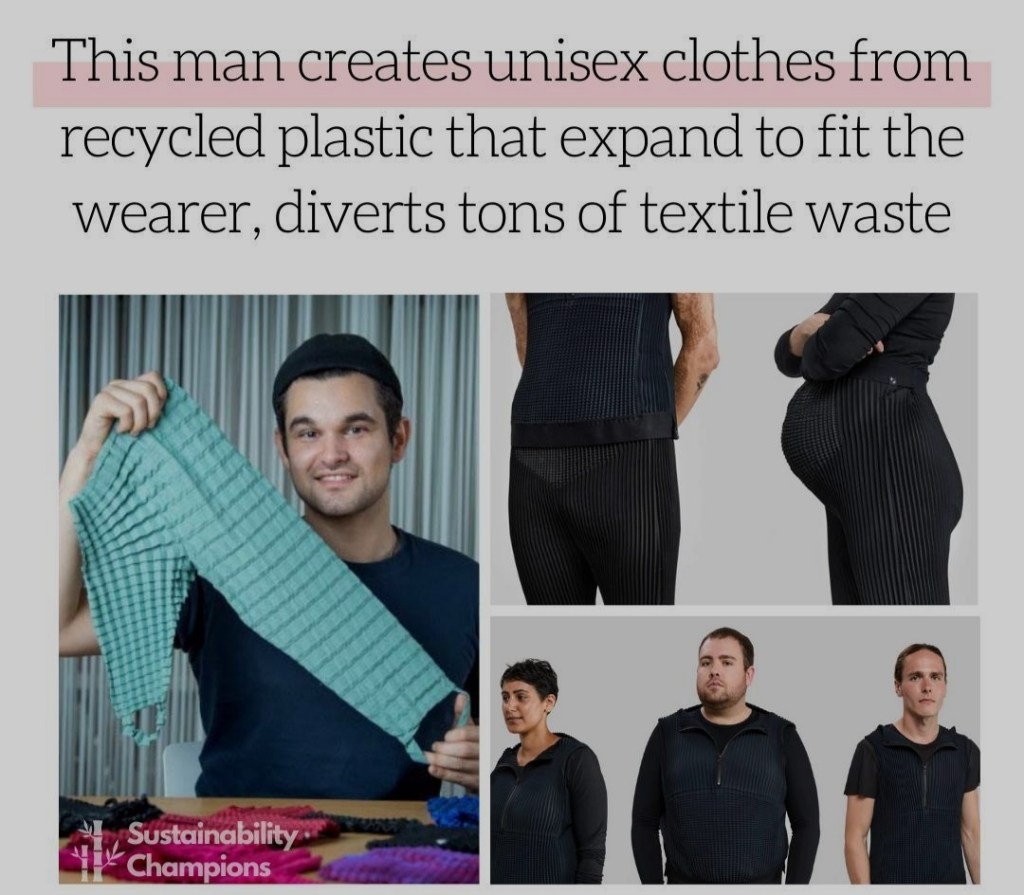
Ryan Mario Yasin , developed Children’s wear made out of recycled plastic bottles that can grow 7x their size .

Joanne Sandler genetically engineered bacteria that could turn plastic bottles into a valuable ingredient i.e vanilla .

Aweko Faith, along with her two friends , developed a durable and waterproof bag from plastic waste they collect .

Andrew Mupuya ,a 16 year old who handcrafted 20,000 eco-friendly  bags in a week to eradicate plastic use .

We are too ignorant towards our environment because it’s always just “one bag of plastic ” by “8 million people “.

It is foreseeable that plastic pollution has become one of the world’s most tremendous  environmental crises. The increasing production rate of plastic has surpassed the world’s ability to recycle ,hence  making  plastics take over our lands and water bodies.

This pollution is  extremely dangerous which can have a catastrophic influence on biodiversity. 

 Plastic particles in the ocean attract toxins, which in turn affects us, as the toxins enter the food chain making our water bodies have plastics swimming in them leading to  millions of deaths of animals  from ingestion of plastic every year.

I assume you already know the harmful effects of plastic . But do you know how to say ”  No to Plastics ” ?

We humans have become dependent on plastic for a range of uses, from packaging to products. Reducing our use of plastic bags is an easy place to start getting our addiction under control.” 

David Suzuki

3 July , International Plastic Bag Free Day 

International Plastic Bag Free Day is observed all around the world on 3 July  every year. 

This day  emphasizes the plastic bag-free world and spreads awareness about the devastating effects of plastics on the environment. 

International Plastic Bag Free Day was created by Bag Free World. It was created as a worldwide initiative for the purpose of getting rid of the single-use of plastic bags around the world. 

On this day many organizations and thousands of responsible citizens  work together to raise awareness on the impact of plastic bags and encourage the use of other eco-friendly bags. 

One must promote  environmental conservation by encouraging  all to stay away from the use of plastic bags and use  eco-friendly alternatives.

Ways to celebrate this day :- 

” It’s when plastic takes on a life of its own that the food chain will be disrupted.”

…. –  Anthony T. Hincks

There are many steps one  can take to honor this important date :-

• By volunteering the primary three ways Plastic Waste Management i.e :-

•Reduce

•Reuse

•Recycle .

•  Volunteering by giving our  money or  time to an environmental organization or charity that is focused on cleaning landmasses and water of plastic bags. 

Groups  such as Greenpeace, Plastic Pollution Coalition, Clean Ocean Project etc .

• By  making and selling eco-friendly handbags and  shopping bags .

I think, on a personal level, everybody, when you go through the checkout line after you get your groceries and they say, ‘Paper or plastic?’ We should be saying, ‘Neither one.’ We should have our own cloth bags. “

Woody Harrelson

•  By organizing or taking part in raising awareness to stop the usage of single-use plastic bags. 

• By  conducting a workshop based on using reusable plastic bags. 

• By volunteering to clean up some mess of plastic bags on streets and in the ocean.

• By Adopting  the habit of using reusable bags.

• By using  social media  and spreading awareness , sharing information and  and #PlasticBagFreeDay slogan .

• By  supporting and out- spreading  the alternatives for single-use plastic bags such as recyclable bags, cloth bags, canvas bags, and a lot more, which may help in saving the environment and animals.

It is in the hands of each and everyone in  the world to make a plastic bag-free society possible. 

Effects Of Plastics:- 

To make a plastic bag-free world, it is essential to teach the public about the harmful  effects of throwing plastic into the environment. 

Plastic pollution leads to  extremely detrimental effects on the environment, wildlife and indeed human health.

BPA is just one chemical used to make plastic baby bottles and in the lining of food, beverage, and infant formula containers. Research shows that children are exposed to BPA by drinking from polycarbonate bottles and consuming food from containers made using BPA.”

– Suzy Shuster

The marine ecosystem is  suffering immensely as a result of plastic pollution.  Over 250 species have become entangled in plastic , leading to suffocation and death.

Littering of plastics in open spaces creates unhygienic conditions. Plastics do not undergo degradation, thus, stay in the soil for many years, which affects soil fertility and degrades the soil quality.

The improperly disposed of plastic bags , when eaten by animals, cause harmful diseases   leading to  death.

When plastic artifacts enter the drainage and sewerage system, they block the pipes and the drains causing waterlogging.

3 July , International Plastic Bag Free Day , is a global initiative to eradicate or reduce the use of these dangerous plastics and to make people aware of its harmful effects. We must foresee the future dangers that will soon affect our ecosystems and  our vision of  sustainable development.

This day is just like any other day where one  can voice their opinion and use it to save the  environment from a global  man made catastrophe i.e plastic pollution.