Navigating College Costs: The Critical Role of High School Scholarships

The rising cost of higher education has put a strain on the finances of families across the nation, creating a barrier to accessing college for many students. Scholarships, especially those awarded during high school, can play a pivotal role in overcoming this barrier, offering students the chance to lessen the burden of tuition fees and other college-related expenses. Identifying and applying for scholarships early in one’s high school career can lead to significant financial relief down the line. Keep reading to uncover the vital steps and strategies that high school students can deploy to reduce college expenses through scholarships.

Understanding the Importance of High School Scholarships in College Funding

As tuition rates climb, the pursuit of high school scholarships has morphed into a crucial strategy for prospective college students. These scholarships can cover a portion or even the entirety of tuition costs, depending on the award’s value. They offer a form of financial aid that doesn’t require repayment, unlike student loans, making them a highly attractive option.

Furthermore, high school scholarships can diminish the need for part-time jobs during college, allowing students to focus more on their studies and extracurricular activities. They also serve as a recognizant of academic or personal achievement, bolstering a student’s resume and college applications. In some cases, the prestige associated with scholarships can pave the way for additional opportunities, such as internships or research positions.

Meritorious and need-based scholarships can have far-reaching implications for students from economically challenged backgrounds. They act as a leveling field, providing equal opportunities for quality education regardless of a family’s financial standing. Scholarships reward initiative and hard work, encouraging other students to strive for excellence in their academic endeavors. The early pursuit of scholarships for juniors in high school is an excellent first step on this rewarding journey.

Exploring Types of Scholarships Available to High School Students

High school students may be surprised by the diversity of scholarships accessible to them, each with its own set of criteria and benefits. Academic scholarships are among the most well-known, typically awarded based on exceptional grades, test scores, or other scholarly achievements. These can spring from schools, private organizations, or federal and state governments.

Athletic scholarships are another type, earmarked for students who excel in sports. Universities often offer such scholarships to recruit top talent to their athletic programs. Creative merits, such as those in arts, music, and writing, can also be recognized through scholarships, supporting students with specific talents and aspirations in these fields.

Community service scholarships reward students who have made significant contributions through volunteer work, signaling a commitment to civic engagement and leadership. Additionally, many organizations support scholarships aimed at minority groups, intending to cultivate diversity and equal opportunity in higher education environments.

Strategies for Successfully Applying to High School Scholarships

Securing scholarships requires a strategic approach that begins with thorough research and organization. Students should start by mapping out scholarships that align with their strengths, interests, and career goals. This targeted approach can increase the chances of success and avoid the wastage of effort on unlikely matches.

Preparation is the key to a strong scholarship application. Students should collate all necessary documents, such as transcripts, letters of recommendation, and personal statements, well in advance of deadlines. It’s also essential to tailor applications to reflect the values and objectives of the awarding body, showcasing a well-rounded candidate.

Essays are a critical component of many scholarship applications, giving students the platform to articulate their achievements, aspirations, and the impact the scholarship will have on their futures. These essays should be crafted with care, undergoing multiple drafts and revisions to refine their messaging and clarity.

How to Integrate Scholarship Hunting Into Your High School Education Plan

Integrating scholarship hunting into a student’s high school education plan calls for a proactive and well-organized approach. Students should start early, identifying potential scholarship opportunities as soon as possible, even as early as their freshman year. Keeping abreast of scholarship deadlines and requirements should become a regular part of their educational routine.

High school counselors can be invaluable resources in the scholarship search, helping to identify opportunities that fit a student’s profile. They can also provide guidance on the application process and offer support in preparing necessary documents or practicing for interviews.

Academics should remain a priority, but students should also seek experiences that could strengthen their scholarship applications. Participating in clubs, sports, volunteer work, or internships could provide personal growth and also material for compelling applications that resonate with scholarship committees.

Overall, scholarships can dramatically transform a student’s college experience, alleviating financial pressures and broadening opportunities for personal and academic growth. By understanding the types of scholarships available, adopting successful application strategies, and managing awards effectively, students can step confidently into adulthood, well-equipped to succeed.

Ministry of Education organises workshops on NMMSS in Uttar Pradesh

The Department of School Education and Literacy (DoSEL), Ministry of Education, organized a workshop/training for Institute Nodal Officers (INOs) and Heads of Institutes (HoIs) of Prayagraj and Varanasi districts of Uttar Pradesh, along with a state-level workshop for District Nodal Officers (DNOs) of the State in Lucknow under the National Means-cum-Merit Scholarship Scheme (NMMSS). This initiative aimed to facilitate the completion of the application and verification process on the National Scholarship Portal (NSP) which commenced its activity with effect from 30.06.2024 for the project year 2024-25.

A District-level Workshop for the Institute Nodal Officers (INOs) of NMMSS, Prayagraj was conducted on 10 September 2024 at the Bureau of Psychology, Prayagraj, which was presided over by Smt. Hema Malini SK Deepak, Under Secretary, DoSEL. The State Nodal Officer of NMMSS, Smt. Usha Chandra, Director, Bureau of Psychology, Government of Uttar Pradesh and the District Nodal Officer (Prayagraj) of NMMSS joined the Workshop in physical mode. The INOs of the District participated in the meeting in virtual mode.

The Workshop, a hand-holding session, was held to review the status of fresh and renewal NMMSS applications for the year 2024-25 and expedite the registration and verification process on NSP and troubleshoot the technical queries arising in the course of registration. A District-level Workshop with the INOs was also conducted on 12 September 2024 at Government Queens’ Inter College in Lahurabir, Varanasi. The District Inspector of Schools, the State Nodal Officer, DNO, Varanasi, and 137 INOs participated in the workshop.

The Ministry also conducted a State-level Workshop with the District Nodal Officers (DNOs) of NMMSS on 20 September 2024 in Lucknow under the Chairmanship of Smt. Sreekala P Venugopal, Deputy Secretary, DoSEL. Shri Shailesh Kumar, Joint Director, NSP (NIC) and DNOs of UP were present at the workshop. It was organized to expedite the registration and verification process on the portal and to handhold officials in operating on the NSP hassle-free. UP has a scholarship quota of 15143 in NMMSS.

NMMSS is a Central Sector Scheme of DoSEL boarded on the National Scholarship Portal (NSP) – a one-stop platform for scholarship schemes given to students. NMMSS scholarships are disbursed directly into the bank accounts of selected students by DBT.

*****

Applications (fresh & renewal) on National Scholarship Portal for 2024-25 under NMMSS

The last date for submission of applications by the selected meritorious students on the National Scholarship Portal (NSP) for the National Means-cum-Merit Scholarship Scheme (NMMSS) for the year 2024-25 has been extended up to 31.10.2024. The NSP portal is open for submission of applications by students with effect from 30th June 2024. In this project year 2024-25, the selected students are first to do a One-Time Registration (OTR) on the NSP, after which they have to apply for the scholarship scheme that they have selected. The FAQ details for registration on NSP can be accessed at https://scholarships.gov.in/studentFAQs.

Through the ‘National Means-cum-Merit Scholarship Scheme’ implemented by the Department of School Education & Literacy, scholarships are awarded to meritorious students from economically weaker sections to arrest their drop-out after elementary level, i.e., Class VIII and encourage them to complete their school education up to higher secondary level, i.e., Class XII.

The scheme provides one lakh fresh scholarships every year for Class IX students who clear the qualifying exam for the scholarship conducted by the State/UT governments. The scholarship is continued through renewal mode from Classes X to XII based on the student’s academic performance. The scheme is applicable only to students studying in State Government, Government-aided, and local body schools and the scholarship amount is Rs. 12000 per annum per student.

The National Means-cum-Merit Scholarship Scheme (NMMSS) is implemented through the National Scholarship Portal (NSP) – the one-stop platform for scholarship schemes disbursed to students by the Government of India. As of 15.10.2024, 84606 fresh and 158312 renewal applications have been finally submitted by applicants. NMMSS scholarships are disbursed directly into the bank accounts of selected students by electronic transfer through the Public Financial Management System (PFMS) following DBT mode. The eligibility parameters for availing the scholarship include parental income not more than Rs. 3.50 lakh per annum and a minimum of 55% marks or equivalent grade in the Class VII examination for appearing in the selection test for award of scholarship (relaxable by 5% for SC/ST students).

On the NSP portal, there are two levels of verification of the scholarship application of selected students: Level-1 (L1) verification is at the Institute Nodal Officer (INO) and Level-2 (L2) is with the District Nodal Officer (DNO). The last date for INO level (L1) verification is 15.11.2024 and for DNO level (L2) verification is 30.11.2024.

*****

National Scholarship Portal for 2024-25 under NMMSS

The last date for submission of applications by the selected meritorious students on the National Scholarship Portal (NSP) for the National Means-cum-Merit Scholarship Scheme (NMMSS) for the year 2024-25 has been extended up to 15.11.2024. The NSP portal is open for submission of applications by students with effect from 30th June 2024. In this project year 2024-25, the selected students are first to do a One-Time Registration (OTR) on the NSP, after which they have to apply for the scholarship scheme that they have selected. The FAQ details for registration on NSP can be accessed at https://scholarships.gov.in/studentFAQs.

Through the ‘National Means-cum-Merit Scholarship Scheme’ implemented by the Department of School Education & Literacy, scholarships are awarded to meritorious students from economically weaker sections to arrest their drop-out after elementary level, i.e., Class VIII and encourage them to complete their school education up to higher secondary level, i.e., Class XII.

The scheme provides one lakh fresh scholarships every year for Class IX students who clear the qualifying exam for the scholarship conducted by the State/UT governments. The scholarship is continued through renewal mode from Classes X to XII based on the student’s academic performance. The scheme is applicable only to students studying in State Government, Government-aided, and local body schools and the scholarship amount is Rs. 12000 per annum per student.

The National Means-cum-Merit Scholarship Scheme (NMMSS) is implemented through the National Scholarship Portal (NSP) – the one-stop platform for scholarship schemes disbursed to students by the Government of India. As of 01.11.2024, 86323 fresh and 162175 renewal applications have been finally submitted by applicants. NMMSS scholarships are disbursed directly into the bank accounts of selected students by electronic transfer through the Public Financial Management System (PFMS) following DBT mode. The eligibility parameters for availing the scholarship include parental income not more than Rs. 3.50 lakh per annum and a minimum of 55% marks or equivalent grade in the Class VII examination for appearing in the selection test for award of scholarship (relaxable by 5% for SC/ST students).

On the NSP portal, there are two levels of verification of the scholarship application of selected students: Level-1 (L1) verification is at the Institute Nodal Officer (INO) and Level-2 (L2) is with the District Nodal Officer (DNO). The last date for INO level (L1) verification is 30.11.2024 and for DNO level (L2) verification is 15.12.2024.

*****

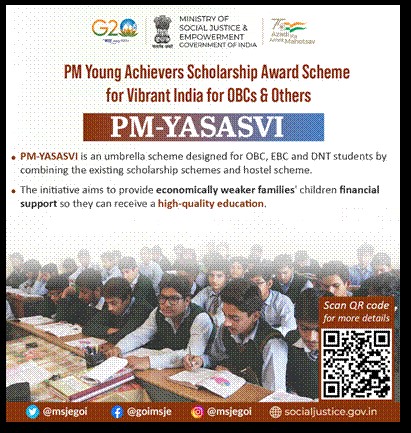
PM Young Achievers’ Scholarship Award Scheme for Vibrant India (PM YASASVI)

Daily writing prompt
What food would you say is your specialty?

With a vision of “Sabka Sath, Sabka Vikas”, the Ministry of Social Justice and Empowerment has implemented the PM Young Achievers Scholarship Award Scheme for Vibrant India (PM-YASASVI). This comprehensive umbrella scheme is aimed at uplifting students from Other Backward Classes (OBC), Economically Backward Classes (EBC), and Denotified Tribes (DNT) by providing them with access to quality education during their formative years.

The PM YASASVI scheme consolidates and enhances several earlier initiatives, including the Dr. Ambedkar Post-Matric Scholarship Scheme for EBCs and the Dr. Ambedkar Pre-Matric and Post-Matric Scholarship Scheme for DNTs, which were subsumed under this program starting from 2021-22. By integrating these schemes, PM YASASVI aims to ensure a more streamlined and impactful approach to supporting the educational needs of socially and economically disadvantaged students.

Objective

The overarching goal of the scheme is to promote educational empowerment among these vulnerable groups, helping them overcome financial barriers and complete their education. This initiative not only fosters individual academic growth but also contributes to the broader vision of creating a more inclusive and equitable society.

Under this Scheme students can avail Pre-Matric Scholarship from Class 9 to 10 and Post Matric Scholarship for their higher studies at post-matriculation or post-secondary stage. Students who excel in their studies also get an opportunity of Scholarship to study in Top Class Schools and Colleges under the Scheme of ‘Top Class School Education’ and ‘Top Class College Education’. Hostel facilities are also provided to OBC students under the ‘Scheme of Construction of Hostels for OBC boys and girls.’

PM –YASASVI for OBC, EBC and DNT students has been formulated having following five sub-schemes:

  • Pre-Matric Scholarship for OBC, EBC and DNT Students
  • Post-Matric Scholarship for OBC, EBC and DNT Students
  • Top Class School Education for OBC, EBC and DNT Students
  • Top Class College Education for OBC, EBC and DNT Students
  • Construction of Hostel for OBC Boys and Girls

Scope

The Pre-Matric Scholarship is designed for students in classes IX and X attending government schools, offering an annual academic allowance of Rs. 4,000 to families with an income below Rs. 2.5 lakh. For the 2023-24 academic year, Rs. 32.44 crore has been allocated to states and Union Territories for its implementation. The Post-Matric Scholarship supports students pursuing post-secondary education, providing academic allowances ranging from Rs. 5,000 to Rs. 20,000 based on the category of the course. For this scheme, Rs. 387.27 crore has been released for the current year.

Additionally, the Top Class School and College Education schemes are designed to support meritorious students from OBC, EBC, and DNT categories. These programs cover tuition fees, hostel expenses, and other academic costs, with school students (Class 9-12) eligible for funding up to Rs. 1.25 lakh annually. College students at top institutions receive full financial support, including tuition, living expenses, and educational materials. To further enhance access to education, Rs. 12.75 crore has been allocated in 2023-24 under the ‘Construction of Hostels for OBC Boys and Girls’ scheme, which aims to provide accommodation for socially and educationally backward students near government schools and institutions, ensuring they have better access to quality education.

Benefits

The PM YASASVI aligns with the government’s broader vision of fostering inclusivity, equity, and societal upliftment. By offering comprehensive support to students from OBC, EBC, and DNT categories, it directly addresses the systemic barriers that prevent many from accessing quality education. This initiative not only ensures financial assistance but also promotes educational empowerment for some of the most vulnerable sections of society, thereby creating opportunities for upward mobility and self-reliance.

The scheme’s focus on supporting students at both school and college levels helps to nurture talent from an early age and carry it through to higher education, laying a strong foundation for personal and professional growth. Moreover, by integrating earlier scholarship initiatives into a single, streamlined program, PM YASASVI enhances the impact of these efforts, contributing to the creation of a more inclusive and equitable education system. PM-YASASVI is ensuring that no student is left behind in the pursuit of academic and social progress. This scheme is playing a crucial role in the welfare and upliftment of marginalized communities, enabling them to contribute meaningfully to the vision of Viksit Bharat @ 2047.

Impact

The PM YASASVI (Young Achievers Scholarship Award Scheme for Vibrant India) scheme has made significant strides in providing financial assistance to students from Other Backward Classes (OBC), Economically Backward Classes (EBC), and De-Notified Tribes (DNT). In Financial Year 2023-24, a substantial sum of ₹ 193.83 cr. was allocated for the Pre-Matric Scholarship, benefiting 19.86 lakh students during 2023-24, with further beneficiaries for 2023-24 expected. Similarly, under the Post-Matric Scholarship scheme, ₹988.05 cr. was released, benefiting 27.97 lakh students in 2023-24. These scholarships aim to empower underprivileged students by alleviating financial burdens, thereby promoting education across marginalized communities.

Additionally, the government has invested in other educational support initiatives. ₹14.30 cr. has been released for the construction of hostels, accommodating 1146 students in 2023-24. Top-class education programs and overseas study interest subsidies have also seen significant funding, reaching thousands of students. For example, ₹ 111.18 cr. was allocated to support 4762 students in top Class education in college scheme and Rs. 6.55 Cr. Was allocated to support 2602 students in Top Class education in Schools for OBC, EBC & DNT Students and ₹ 56.24 Cr. was granted as interest subsidies to 2789 students pursuing overseas education. These efforts reflect the growing impact of the PM YASASVI scheme, which is transforming the educational landscape for disadvantaged students, enabling them to achieve their academic potential and contributing to overall societal upliftment.

*Any additional documents specified in the application form

Key Points

  • Selection Process: The YASASVI Entrance Test (YET) 2023 is the basis for candidate selection, conducted by the National Testing Agency (NTA) under the direction of the Ministry of Social Justice and Empowerment (MSJ&E), Government of India.
  • Eligibility: Open to OBC, EBC, and DNT students with a total annual family income of up to ₹2.50 lakhs. Additional eligibility criteria may apply, depending on the specific scholarship scheme.
  • Where to Apply: Eligible students can apply online at the National Scholarship Portal: scholarships.gov.in.

Conclusion

By offering a comprehensive array of scholarships and support programs, PM-YASASVI is addressing the financial constraints that often hinder access to education for marginalized communities. The integration of various earlier schemes into one streamlined initiative ensures that students are supported from their school years through to higher education, creating pathways for personal and professional growth. With the government’s ongoing commitment to expanding access to quality education, the PM YASASVI Scheme is making a tangible impact on the lives of thousands of students, helping to create a more inclusive and prosperous India.

References:

Click here to see in PDF:

Scholarship for Study in Europe

Studying in Europe can be a transformative experience, offering students exposure to world-class education, diverse cultures, and career opportunities. Scholarships are an excellent way to make studying in Europe more affordable. Here’s an overview of some key scholarships and funding opportunities for international students, including those from Asia, Africa, and other regions.

1. Erasmus+ Program

Eligibility: Students from EU and non-EU countries Level: Bachelor’s, Master’s, Ph.D., and professional training Description: The Erasmus+ program is a flagship EU initiative that offers scholarships to students from across the globe for study, training, and internships in Europe. Students can spend 3 to 12 months at an EU-based university or undertake internships. Erasmus Mundus Joint Master Degrees (EMJMD) are also available for students pursuing a master’s program in two or more European countries.

Financial Coverage: Full tuition, living allowance, travel costs, and health insurance.

Duration: Typically 1 to 2 years for master’s programs.

2. DAAD Scholarships (Germany)

Eligibility: International students Level: Master’s and Ph.D. Description: The German Academic Exchange Service (DAAD) offers numerous scholarships for international students to study in Germany. DAAD scholarships are available for a wide range of programs, including full-time master’s degrees and doctoral studies at German universities.

Financial Coverage: Monthly stipend (approximately €861 for graduates and €1,200 for doctoral candidates), health insurance, and travel allowances.

Additional Benefits: Free German language course and support for dependents.

Duration: Varies depending on the program, typically 1 to 3 years.

3. Chevening Scholarships (UK)

Eligibility: Citizens from Chevening-eligible countries Level: Master’s Description: Chevening is a prestigious UK government scholarship for international students to pursue a one-year master’s degree at any UK university. The scholarship focuses on leadership and networking opportunities in addition to academic achievements.

Financial Coverage: Full tuition fees, a monthly stipend, travel costs, and other allowances.

Duration: 1 year (master’s programs only).

4. Swedish Institute Scholarships (Sweden)

Eligibility: Non-EU/EEA citizens Level: Master’s Description: The Swedish Institute (SI) offers scholarships to talented students from select countries for master’s degree studies in Sweden. This scholarship is aimed at fostering future global leaders and is available for many programs offered in Swedish universities.

Financial Coverage: Full tuition fees, living allowance, travel grants, and health insurance.

Duration: 1 to 2 years.

5. Eiffel Excellence Scholarship Program (France)

Eligibility: International students from developing countries Level: Master’s and Ph.D. Description: The Eiffel Scholarship is offered by the French Ministry for Europe and Foreign Affairs. It is aimed at attracting international students to French institutions for studies in engineering, economics, law, and political science.

Financial Coverage: Monthly allowance of €1,181 (master’s) or €1,700 (Ph.D.), travel costs, health insurance, and cultural activities.

Duration: Up to 24 months for a master’s program and 36 months for Ph.D.

6. ETH Zurich Excellence Scholarship (Switzerland)

Eligibility: International students Level: Master’s Description: ETH Zurich, one of Europe’s top universities, offers the Excellence Scholarship & Opportunity Program (ESOP) for students wishing to pursue a master’s degree at the university. The scholarship is highly competitive and is awarded to students with excellent academic records.

Financial Coverage: Full tuition fee waiver and living allowance (CHF 12,000 per semester).

Duration: 3 to 4 semesters (depends on the program).

7. Holland Scholarship (Netherlands)

Eligibility: Non-EEA international students Level: Bachelor’s and Master’s Description: The Holland Scholarship is provided by the Dutch Ministry of Education, Culture, and Science in cooperation with Dutch universities. This scholarship supports international students who wish to pursue bachelor’s or master’s degrees in the Netherlands.

Financial Coverage: €5,000 for the first year of study.

Duration: 1 year.

8. Italian Government Scholarships

Eligibility: International students and Italian citizens abroad Level: Master’s, Ph.D., and research programs Description: The Italian government offers scholarships for foreign students to pursue master’s, Ph.D., or research programs in Italy. Priority is given to students from countries with which Italy has bilateral cultural agreements.

Financial Coverage: Tuition fee waiver, monthly allowance, and health insurance.

Duration: Varies depending on the program.

9. Norwegian Quota Scheme

Eligibility: Students from developing countries Level: Bachelor’s, Master’s, Ph.D. Description: The Quota Scheme provides scholarships for students from developing countries to study at Norwegian universities. The scheme focuses on building academic and institutional capacity in the students’ home countries.

Financial Coverage: Tuition fee waiver, living stipend, travel grants, and allowances.

Duration: Typically 2 to 4 years.

10. Visegrad Scholarship Program (Central Europe)

Eligibility: Students from select countries (e.g., Eastern Partnership countries, Western Balkans) Level: Master’s and Ph.D. Description: The International Visegrad Fund offers scholarships for students from Eastern Partnership countries and the Western Balkans to study at universities in Central Europe (Czech Republic, Hungary, Poland, Slovakia).

Financial Coverage: Monthly stipend of €2,500 for master’s students and €2,300 for Ph.D. candidates, with travel costs.

Duration: 1 to 4 semesters.

How to Apply for Scholarships:

1. Research: Identify scholarships that align with your educational goals and personal profile.

2. Eligibility: Check all requirements, including academic qualifications, country-specific rules, and deadlines.

3. Prepare Documents: Typically, you’ll need academic transcripts, letters of recommendation, proof of language proficiency (like IELTS/TOEFL), and a personal statement or essay.

4. Submit Early: Scholarship deadlines are often months before academic program deadlines, so plan well in advance.

Conclusion:

Europe is home to many prestigious scholarships that offer substantial financial support to international students. These scholarships are not just about tuition waivers but also cover living expenses and provide enriching cultural and academic experiences. By researching the right opportunities and preparing carefully, you can greatly enhance your chances of securing a scholarship to study in Europe.

Top Institutes in USA offering Scholarship for Study

Here are ten top institutes in the USA known for offering scholarships for international students, including merit-based, need-based, and special scholarships. These institutions are renowned for their academic excellence and financial aid programs:

1. Harvard University (Massachusetts)

Scholarships: Harvard offers generous need-based financial aid for international students. The aid is determined solely on financial need, and around 55% of students receive aid.

Programs: Wide range of undergraduate, graduate, and professional programs, including Law, Business, Medicine, and Engineering.

2. Stanford University (California)

Scholarships: Stanford provides need-based financial aid for international students. Graduate students can receive fellowships, teaching, or research assistantships.

Programs: Famous for programs in Engineering, Business, and Computer Science, among others.

3. Massachusetts Institute of Technology (MIT)

Scholarships: MIT offers need-based scholarships for international undergraduate students. Graduate fellowships are also available.

Programs: MIT is a world leader in STEM fields, particularly in Engineering, Computer Science, and the Physical Sciences.

4. Princeton University (New Jersey)

Scholarships: Princeton offers 100% need-based financial aid for all students, including internationals. No loans are offered; aid is in the form of grants.

Programs: Renowned for programs in Economics, Public Policy, and STEM fields.

5. Yale University (Connecticut)

Scholarships: Yale provides need-based financial aid to international students. Around 50% of students receive some form of financial aid.

Programs: Famous for its Law, Humanities, and Social Science programs.

6. California Institute of Technology (Caltech)

Scholarships: Caltech offers need-based scholarships and assistantships for graduate students. There are also research grants available.

Programs: Primarily known for Engineering, Physics, and Space Science.

7. University of Chicago (Illinois)

Scholarships: UChicago offers merit-based scholarships to international students, as well as need-based aid for those demonstrating financial need.

Programs: Noted for Economics, Business, Political Science, and Law.

8. Columbia University (New York)

Scholarships: Columbia offers need-based financial aid to international students. Graduate fellowships and assistantships are available as well.

Programs: Strong in Journalism, Business, International Affairs, and Law.

9. Duke University (North Carolina)

Scholarships: Duke offers a mix of merit-based and need-based scholarships to international students. The Karsh International Scholarship is particularly prestigious.

Programs: Renowned for Medicine, Business, Public Policy, and Engineering.

10. University of Pennsylvania (Pennsylvania)

Scholarships: UPenn provides need-based aid for international students and is committed to meeting 100% of demonstrated need.

Programs: Highly respected for programs in Business (Wharton), Law, and Medical fields.

Types of Scholarships:

Need-Based Aid: Many top universities, such as Harvard, MIT, and Princeton, focus on providing financial aid based on a family’s financial situation.

Merit-Based Scholarships: Some schools, like Duke and UChicago, offer scholarships based on academic achievement, leadership, or extracurricular activities.

Special Scholarships: Institutions often have targeted scholarships, like athletic scholarships, or scholarships for students from specific regions.

These institutes also offer fellowships and assistantships for graduate students, which can cover tuition and provide a stipend for research or teaching roles.

Fully Funded Fulbright Scholarship

The Fulbright Scholarship is one of the most prestigious academic programs globally, aimed at fostering international educational exchange and cultural diplomacy. Established in 1946, it is sponsored by the U.S. government and administered by the Bureau of Educational and Cultural Affairs. The Fulbright Program operates in over 160 countries and offers scholarships to students, scholars, teachers, professionals, and artists to study, research, or teach in the United States and, in some cases, other countries.

Here is a detailed overview of the Fulbright Scholarship:

1. Purpose of the Fulbright Program

The Fulbright Program was established to promote mutual understanding between the people of the United States and other countries. It aims to:

Foster cross-cultural understanding by bringing together students, researchers, and professionals from various countries to learn from each other.

Promote academic exchange by offering opportunities for study and research in diverse disciplines.

Support global education and cooperation by creating opportunities for U.S. citizens to travel abroad and for international students and scholars to visit the U.S.

2. Types of Fulbright Scholarships

The Fulbright Program offers a wide range of scholarship opportunities, divided into several categories:

a) For Students

Fulbright Foreign Student Program: This is the most well-known Fulbright scholarship, offering graduate students, young professionals, and artists the chance to study or conduct research in the U.S. for one to two years.

Fulbright U.S. Student Program: This program allows recent graduates and graduate students from the U.S. to travel abroad for study, research, or teaching English.

b) For Scholars and Researchers

Fulbright Visiting Scholar Program: This is designed for international scholars who wish to conduct postdoctoral research, teach, or undertake specialized programs in the U.S.

Fulbright U.S. Scholar Program: This program provides opportunities for U.S. academics and professionals to conduct research, teach, or undertake other scholarly projects abroad.

Fulbright Scholar-in-Residence Program: This allows U.S. institutions to host foreign scholars for a semester or a full academic year.

c) For Professionals

Fulbright Specialist Program: This short-term program allows U.S. professionals and academics to collaborate with institutions in other countries on a variety of projects.

d) For Teachers

Fulbright Teacher Exchange Programs: These programs provide opportunities for K-12 teachers and administrators from both the U.S. and abroad to participate in international exchanges.

3. Eligibility Criteria

Fulbright programs have specific eligibility criteria, which vary depending on the country and type of award. However, common criteria include:

Nationality: Applicants must be citizens of the country from which they are applying.

Academic Qualifications: Applicants must hold at least a bachelor’s degree for most Fulbright student programs. For scholar programs, a Ph.D. or equivalent professional experience may be required.

Language Proficiency: Depending on the program, applicants may need to demonstrate proficiency in English or another relevant language.

Work Experience: Some Fulbright programs, particularly those for professionals and scholars, may require relevant work experience or research achievements.

Additionally, each country has its own Fulbright Commission or U.S. Embassy that sets specific eligibility requirements based on its development priorities and needs.

4. Application Process

The application process for a Fulbright Scholarship is rigorous and highly competitive. Here’s an overview of the steps involved:

a) Research the Program:

Applicants should start by researching the specific Fulbright opportunities available for their country or academic field. This can be done by visiting the Fulbright website or consulting the Fulbright Commission in their country.

b) Online Application:

The Fulbright application is submitted online. It typically requires:

Personal Information: Biographical details, educational background, and professional experience.

Statement of Purpose: A detailed essay explaining why the applicant wants to study, research, or teach in the U.S. or abroad.

Letters of Recommendation: Usually two to three letters from academic or professional references.

Research Proposal or Study Plan: For research-based programs, applicants need to provide a well-developed research proposal.

Standardized Tests: Some applicants may need to submit scores from tests like the TOEFL, GRE, or GMAT, depending on the program.

c) Interviews:

In some countries, shortlisted candidates may be invited for an interview with a panel. This is usually conducted by the Fulbright Commission or U.S. Embassy in the applicant’s country.

d) Selection:

Selection is based on academic merit, the applicant’s leadership potential, their proposed project’s alignment with Fulbright’s objectives, and their ability to contribute to cross-cultural understanding.

5. Selection Criteria

Fulbright selects candidates based on a combination of the following factors:

Academic Excellence: The applicant’s academic record, research skills, and professional achievements.

Cultural Exchange Potential: The ability to promote understanding between their home country and the U.S.

Leadership Qualities: Evidence of leadership potential, community involvement, and the capacity to make an impact in their field of study.

Proposed Study/Research Plan: The quality and feasibility of the proposed research or study plan.

6. Benefits of the Fulbright Scholarship

The Fulbright Scholarship is a fully funded program, and its benefits include:

Tuition Fees: Coverage of full tuition costs for the selected academic program.

Living Stipend: A monthly allowance to cover living expenses such as accommodation, meals, and incidentals.

Travel Costs: Round-trip airfare from the scholar’s home country to the host country.

Health Insurance: Limited health and accident insurance coverage for the duration of the scholarship.

Research Allowance: Some scholars receive additional funds to cover research-related expenses such as books, materials, or fieldwork.

7. Post-Scholarship Requirements

Upon completion of the Fulbright program, scholars are typically required to return to their home countries for at least two years. This is to ensure that they contribute to their home country’s development with the skills and knowledge gained during the program. Fulbright alumni are also encouraged to engage with the wider Fulbright network and participate in alumni activities and initiatives.

8. Impact and Alumni Network

Fulbright alumni form a global network of influential leaders, scholars, and professionals. Many Fulbright alumni have gone on to achieve great success in their fields, including Nobel Prize winners, heads of state, renowned researchers, and artists. The program fosters long-term collaborations, partnerships, and friendships that transcend borders.

The Fulbright Program also hosts events and workshops for alumni, providing ongoing professional development opportunities and a platform for global networking.

9. How to Apply

Applicants must apply through the Fulbright Commission in their home country or the U.S. Embassy, depending on where they are applying from. The application deadlines and procedures vary by country, so it is important to consult the specific requirements for each country.

Conclusion

The Fulbright Scholarship is a prestigious and valuable opportunity for individuals seeking to further their education, research, or teaching while promoting international understanding. It not only provides financial support for academic pursuits but also opens doors to a global network of professionals and scholars. The program is ideal for those committed to making a positive impact in their fields and contributing to cross-cultural collaboration.

Opening of National Scholarship Portal (NSP) to submit applications (Fresh/Renewal) under NMMSS for AY 2024-25 (w.e.f. 30th June 2024 onwards)

 The One-Time Registration (OTR) application, featuring a redesigned home page, a new mobile app, and an updated web version has been launched and is now live and accessible to the public, allowing students to conveniently register online for OTR on the National Scholarship Portal (NSP). The NSP application, including OTR, leverages cutting-edge technologies and boasts of an enhanced user interface. The NSP portal is now open for one-time registration as well as application for fresh and renewal scholarships.

OTR is required on NSP for submission of fresh and renewal applications. The OTR Module will be available to students across the year. OTR is a unique 14-digit number issued based on the Aadhaar/Aadhaar Enrolment ID (EID). OTR is required to apply for the scholarship on NSP. On successful completion of OTR, an OTR_ID will be issued which will remain valid for the entire academic lifecycle of the student. On submission of an application, the System will generate an Application ID against the OTR_ID. The system will ensure that not more than one Application_ID remains active against an OTR_ID at any point in time. The last date for submission of fresh/renewal applications for NMMSS by students for 2024-25 on NSP is 31st August 2024.

The students, who have applied on the NSP in AY 2023-24 have been allotted the OTR/Reference number through the portal and intimated through SMS. OTR-related instruction to the students who have applied on the NSP in AY 2023-24 is as follows:

A.        Instructions to the students who have received the OTR No.

I.          NSP earlier launched the face-authentication service in AY 2023-24 and it was optional for the students to perform their face authentication.

II.         NSP has generated the OTR No. for the students who have performed the face-authentication in AY 2023-24 and the same has been sent to the applicant through SMS on their registered Mobile No.

III.       Students who have received the OTR No. can directly apply for the scholarship on the NSP portal.

IV.        In case, the student has not received the OTR No. through SMS, it can be retrieved using “Know your OTR” available on the NSP.


B.        Instructions to the students who have received Reference No.


I.          The NSP has allotted reference No. to the students who have completed the OTP-based eKYC and have not completed their face-authentication in AY 2023-24.

II.         The OTR No. can now be obtained by completing face-authentication on the NSP.

III.       Following steps are required to generate the OTR No.:

a.         Download and install Aadhaar Face RD services on the Android device. (link: https://play.google.com/store/apps/details?id=in.gov.uidai.facerd)


b.         Download and install the NSP OTR App from the Google Play Store. (link: https://play.google.com/store/apps/details?id=in.gov.scholarships.nspotr&pli=1)


c.         After opening the mobile app. Select the option “eKYC with FaceAuth” highlighted in red.


There are two levels of verification for NMMSS on the NSP portal: Level-1 verification is by the Institute Nodal Officer (INO) and Level-2 verification is by the District level Nodal Officer (DNO). The last date for INO level (L1) verification is 15th September 2024 and for the DNO level (L2) verification is 30th September 2024.

The Central Sector ‘National Means-cum-Merit Scholarship Scheme’ (NMMSS) was launched, with the objective to award scholarships to meritorious students of economically weaker sections to arrest their dropout at class VIII and encourage them to continue their education at the secondary stage. One lakh fresh scholarships are awarded to selected students of class IX every year and their continuation/renewal in classes X to XII for study in State Government, Government-aided, and Local body schools under the scheme. The NMMSS scheme is onboarded on the National Scholarship Portal.

*****

Top Scholarship for African Scholars in Asia


  1. Japanese Government Scholarships (Monbukagakusho): These scholarships are offered by the Japanese government to international students, including Africans, for various academic programs at Japanese universities.

  2. Chinese Government Scholarship – Belt and Road Program: China offers scholarships to students from countries along the Belt and Road, including many African nations. These scholarships cover a wide range of academic fields and degree levels.

  3. Korean Government Scholarship Program (KGSP): The Korean government provides scholarships to international students, including Africans, for undergraduate and postgraduate studies in South Korea.

  4. TaiwanICDF Scholarship Program: The Taiwan International Cooperation and Development Fund (TaiwanICDF) provides scholarships for students from developing countries, including African nations, to pursue higher education in Taiwan.

  5. The Asia Foundation Development Fellows Program: While not a traditional scholarship, this program provides opportunities for professionals from Asian countries, including African nations, to enhance their leadership skills and contribute to positive social change.

  6. Malaysia International Scholarship (MIS): The Malaysian government offers scholarships to international students, including Africans, for postgraduate and postdoctoral studies in Malaysia.

  7. INSEAD Africa Leadership Fund: INSEAD, a business school with campuses in France, Singapore, and Abu Dhabi, offers scholarships to students from Africa. Check the specific eligibility criteria and application process on their official website.

It’s important to note that scholarship programs and eligibility criteria may change, so it’s recommended to visit the official websites of the respective scholarship providers for the most up-to-date information. Additionally, you may want to explore scholarship opportunities offered by specific universities or organizations in the Asian countries you are interested in.

Top Scholarships in Africa

Some international organizations and foundations offer scholarships specifically for African students. Here are a few well-known scholarship programs that have historically supported students in Africa:

  1. MasterCard Foundation Scholarships: The MasterCard Foundation provides scholarships for undergraduate and postgraduate studies to academically talented, yet economically disadvantaged young people in Africa.

  2. African Leadership Academy (ALA) Scholarship Program: ALA offers scholarships to outstanding young leaders across Africa who demonstrate leadership potential and a commitment to making a positive impact on their communities.

  3. DAAD Scholarship Programmes in Africa: The German Academic Exchange Service (DAAD) provides various scholarship programs for African students, supporting both undergraduate and postgraduate studies in Germany.

  4. Chevening Scholarships: While Chevening is a UK government global scholarship program, it has provided opportunities for African students to pursue postgraduate studies in the United Kingdom.

  5. African Institute for Mathematical Sciences (AIMS) Scholarships: AIMS offers full scholarships for its Master’s and PhD programs in mathematical sciences, aiming to promote STEM education in Africa.

  6. Commonwealth Scholarships: The Commonwealth Scholarship Commission offers scholarships for Master’s and Ph.D. studies to students from Commonwealth countries, including many in Africa.

  7. Agbami Medical and Engineering Scholarships (Nigeria): The Agbami Partners, including Chevron, offer scholarships for Nigerian undergraduates studying medicine and engineering.

  8. Rhodes Scholarship for Southern Africa: The Rhodes Scholarship is a prestigious international scholarship program that includes opportunities for students from Southern Africa to pursue postgraduate studies at the University of Oxford.

Remember to carefully review the eligibility criteria and application process for each scholarship program, as they may vary. Always check the official websites or contact the scholarship providers directly for the most accurate and current information.

Top Scholarship for Students of Africa in Europe

 It’s essential to check the most recent information on scholarship websites or contact relevant institutions directly. However, I can provide you with some general tips on finding scholarships for African scholars in Europe and a few examples of prominent scholarships that were available in the past:

  1. Erasmus Mundus Programmes: The Erasmus Mundus Joint Master Degrees (EMJMDs) offer full scholarships to students from around the world, including Africa, to pursue a master’s degree in various fields. Check the official Erasmus Mundus website for the latest information.

  2. Eiffel Excellence Scholarship Programme (France): This program is offered by the French Ministry for Europe and Foreign Affairs to attract high-achieving international students, including Africans, to pursue a master’s or Ph.D. program in France.

  3. Swiss Government Excellence Scholarships (Switzerland): The Swiss government provides scholarships to promote international exchange and research collaboration. African scholars may be eligible for these scholarships to pursue research, Ph.D., or postdoctoral studies in Switzerland.

  4. Chevening Scholarships (United Kingdom): While Chevening primarily focuses on bringing future leaders, influencers, and decision-makers to the UK, African scholars can benefit from this scholarship to pursue a one-year master’s degree in various fields.

  5. DAAD Scholarships (Germany): The German Academic Exchange Service (DAAD) offers a range of scholarships for international students, including those from Africa, at various academic levels.

  6. Netherlands Fellowship Programs (Netherlands): The Dutch government provides fellowships for mid-career professionals and scholars from various countries, including Africa, to pursue short courses, master’s, or Ph.D. programs in the Netherlands.

Remember to check the eligibility criteria, application deadlines, and required documents for each scholarship program. Additionally, contact the respective scholarship providers or the international offices of universities for the latest and most accurate information. Always refer to the official websites of these organizations for the most up-to-date details on available scholarships and application procedures.


Scholarship Name Country Application Deadline Basic Qualifications Official Link
Erasmus Mundus Joint Master Degrees Europe (Various) Varies Varies based on specific program requirements Erasmus Mundus
Eiffel Excellence Scholarship France Annually (Varies) International students applying for master’s or Ph.D. Eiffel Scholarship
Swiss Government Excellence Scholarships Switzerland Varies Varies depending on the level of study (master’s, Ph.D., postdoc) Swiss Government Excellence Scholarships
Chevening Scholarships United Kingdom Annually (usually November) Full-time master’s degree in any subject, work experience, leadership qualities Chevening
DAAD Scholarships Germany Varies Varies depending on the specific scholarship program DAAD
Netherlands Fellowship Programs Netherlands Varies Mid-career professionals and scholars, various fields Netherlands Fellowship Programs

Please be sure to visit the official websites of these scholarship programs for the most accurate and up-to-date information on eligibility criteria, application procedures, and deadlines.

Scholarship for African Scholars to Study in USA

 Types of scholarships that are often available for African scholars in the USA. Keep in mind that scholarship offerings can change, so it’s crucial to check with the respective organizations and institutions for the latest updates. Here are ten types of scholarships that African scholars may explore:

  1. Fulbright Foreign Student Program:

    • Administered by the U.S. Department of State, the Fulbright Program offers scholarships for international students, including those from Africa, to pursue master’s or doctoral degrees in the United States.
  2. MasterCard Foundation Scholars Program:

    • This program aims to provide comprehensive scholarships to talented but economically disadvantaged African students for undergraduate and postgraduate studies at partner institutions in the USA.
  3. African Women’s Public Service Fellowship:

    • Offered by the Oprah Winfrey Leadership Academy for Girls, this fellowship supports African women pursuing graduate studies in public policy, public administration, international affairs, and other related fields at select U.S. institutions.
  4. Aga Khan Foundation International Scholarship Program:

    • While this program primarily focuses on scholarships for postgraduate studies worldwide, it also provides support for African students pursuing higher education in the USA.
  5. The African Palliative Care Association (APCA) Scholarships:

    • APCA provides scholarships for African healthcare professionals, including scholars, interested in gaining expertise in palliative care. These scholarships may cover training or academic programs in the USA.
  6. Master’s Degree Scholarship in Education for Sustainable Energy Development (ESD):

    • Offered by the Education for Sustainable Energy Development (ESD) Leadership Program, this scholarship supports African students pursuing a master’s degree in sustainable energy development in the USA.
  7. Joint Japan/World Bank Graduate Scholarship Program:

    • While not specific to Africa, this program offers scholarships to students from World Bank member countries, including many African nations, to pursue graduate studies in development-related fields, including those available in the USA.
  8. Rotary Foundation Global Grants:

    • Rotary International provides Global Grants that support graduate-level coursework or research for sustainable, high-impact projects. African scholars can explore opportunities for funding their studies in the USA through this program.
  9. African Leaders of Tomorrow (ALT) Scholarship Program:

    • This program, managed by the Canadian Bureau for International Education, offers scholarships to African students pursuing master’s or doctoral programs in public administration, public policy, or a related field in Canada and the USA.
  10. Next Generation Social Sciences in Africa Fellowships:

    • Administered by the Social Science Research Council (SSRC), this fellowship program supports the next generation of African scholars in the social sciences, including those pursuing doctoral degrees in the USA.
  11. Below is a table featuring scholarship programs for African scholars and their official websites. Please note that URLs are subject to change, so it’s advisable to verify the information on the respective websites.

    Scholarship Program Official Website
    Fulbright Foreign Student Program Fulbright Foreign Student Program
    MasterCard Foundation Scholars Program MasterCard Foundation Scholars Program
    African Women’s Public Service Fellowship Oprah Winfrey Leadership Academy
    Aga Khan Foundation International Scholarship Program Aga Khan Foundation
    African Palliative Care Association (APCA) Scholarships APCA Scholarships
    Master’s Degree Scholarship in Education for Sustainable Energy Development (ESD) ESD Leadership Program
    Joint Japan/World Bank Graduate Scholarship Program World Bank Scholarships
    Rotary Foundation Global Grants Rotary Foundation Global Grants
    African Leaders of Tomorrow (ALT) Scholarship Program ALT Scholarship Program
    Next Generation Social Sciences in Africa Fellowships SSRC – Next Gen Social Sciences

    Remember to check the eligibility criteria, application deadlines, and any updates on the official websites for the most accurate and current information.

It is important for prospective scholars to thoroughly research and verify the availability and eligibility criteria of these scholarships and also explore additional opportunities that may arise in subsequent years. Additionally, contacting the relevant embassies, educational institutions, and international organizations can provide up-to-date information on available scholarships for African scholars in the USA.

Post Matric Scholarship Scheme for Scheduled Castes, Scheduled Tribes, and Other Backward Classes

Daily writing prompt
In what ways do you communicate online?

By Shashikant Nishant Sharma

The Post Matric Scholarship Scheme for Scheduled Castes, Scheduled Tribes, and Other Backward Classes is a significant initiative of the Government of India designed to provide financial assistance to students from economically weaker sections of society for pursuing post-matriculation education. Below are detailed aspects of this scheme:

1. Objective

The primary objective of the scheme is to remove financial barriers for students belonging to marginalized sections so that they can continue higher education after matriculation (Class 10). It aims to increase the literacy rate and reduce drop-out rates among these categories.


2. Target Beneficiaries

The scheme targets students belonging to:

  • Scheduled Castes (SC)
  • Scheduled Tribes (ST)
  • Other Backward Classes (OBC)
  • In some cases, students from Economically Backward Classes (EBC) may also be covered under certain states’ schemes.

3. Eligibility Criteria

  • Nationality: The applicant must be an Indian citizen.
  • Education Level: The student must have passed Class 10 and be pursuing studies in post-matriculation (Class 11 and above) up to postgraduate or professional courses.
  • Annual Family Income:
    • For SC/ST students: Family income should generally not exceed ₹2.5 lakhs per annum.
    • For OBC students: Family income limit is typically around ₹1 lakh to ₹1.5 lakhs per annum, depending on the state.

4. Scope of Assistance

The assistance covers:

  1. Maintenance Allowance: Monthly financial aid for lodging and boarding.
  2. Tuition Fees: Full reimbursement or payment of tuition and other compulsory fees charged by the educational institution.
  3. Book and Equipment Allowance: For students enrolled in professional courses.
  4. Special Allowance: For students with disabilities to support their educational needs.
  5. Study Tours and Thesis Preparation Allowance: Provided under certain conditions.

5. Key Features

  • Direct Benefit Transfer (DBT): The scholarship amount is transferred directly to the bank account of the eligible students.
  • Renewal of Scholarships: Students need to apply for renewal each year provided they fulfill the academic requirements.
  • Categorization of Courses: The amount disbursed depends on the level and category of the course. Courses are divided into groups such as Group I (engineering, medical), Group II (nursing, pharmacy), etc.

6. Application Process

  1. Online Registration: Most states and institutions require students to register online through national or state-level portals like the National Scholarship Portal (NSP).
  2. Submission of Documents:
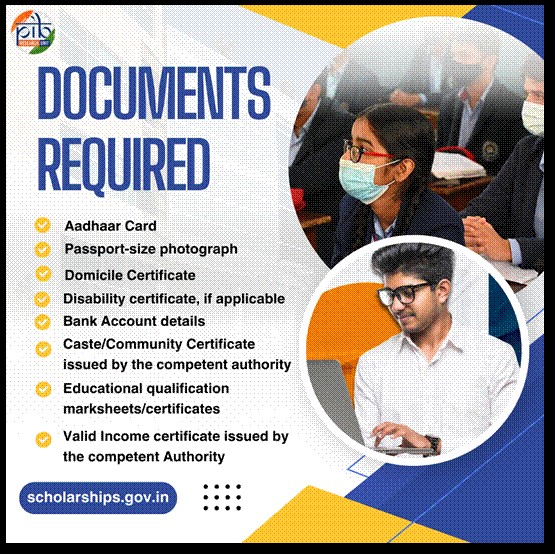
    • Caste certificate
    • Income certificate
    • Academic certificates
    • Bank passbook details
    • Aadhaar card
  3. Verification Process: Applications are verified by the educational institution and state authorities before approval.

7. State and Central Responsibility

  • The Central Government bears 100% of the expenditure for SC and ST scholarships in Union Territories and a significant portion in other states.
  • State Governments share the expenditure for OBC scholarships.

8. Challenges and Reforms

Some challenges with the scheme include delays in fund disbursement, non-compliance by institutions, and lack of awareness. Efforts are being made to simplify the process and ensure timely payments through technology-enabled platforms like the NSP and integrating Aadhaar for verification.


The Post Matric Scholarship Scheme plays a crucial role in enabling students from disadvantaged backgrounds to access higher education, thereby promoting social equity and empowerment. It has a significant impact on reducing drop-out rates and improving the socio-economic conditions of marginalized communities.

References

Lama, M. (2019). An Evaluation of the Post Matric Scholarship Scheme provided to the tribal students of Darjeeling Municipality. International Journal of Advanced Scientific Research and Management4(4), 155-161.

Sikligar, P. C., & Madurai, N. V. (2006). Provision of Post Matric Scholarship for Development of Weaker Sections: A Study in Andhra Pradesh and Pondicherry. Indian Journal of Public Administration52(2), 190-201.

Sharma, S. N. Unveiling the Benefits of Turnitin Software in Academic Writing.

Sharma, S. N. (2018). Transformation of Aspirational Districts Programme: A Bold Endeavor Towards Progress. Think India Journal21(4), 197-206.

Umapathi, A., & Venkatramana, C. Higher Education Opportunities in Enhancing Capabilities–The Case of Reimbursement of Tuition Fee Scheme under Post-Matric Scholarships in Andhra Pradesh, India (2008–2012).

Top Ten Scholarships in India

 India offers numerous scholarships to support students across various fields of study. While the availability and criteria for scholarships can vary, here are ten prominent scholarships for Indian students:

  1. National Talent Search Examination (NTSE): Conducted by NCERT, NTSE is a national-level scholarship program for students studying in Class X, providing financial assistance throughout their academic career.

  2. Central Sector Scheme of Scholarship for College and University Students: Offered by the Ministry of Education, this scholarship provides financial support to meritorious students from low-income families pursuing higher education.

  3. Dr. Abdul Kalam Scholarship for Medical/Engineering Aspirants: Provided by the Government of India, this scholarship supports financially disadvantaged students pursuing medical or engineering courses.

  4. INSPIRE Scholarship: Funded by the Department of Science and Technology, this scholarship supports students pursuing courses in natural and basic sciences at the Bachelor’s and Master’s levels.

  5. Jawaharlal Nehru Scholarship for Doctoral Studies: Offered by the Jawaharlal Nehru Memorial Fund, this scholarship assists Indian nationals for Ph.D. studies in India.

  6. Ishan Uday Scholarship Scheme: Implemented by the University Grants Commission (UGC), this scheme supports economically disadvantaged students from the northeastern region pursuing higher education.

  7. AICTE Pragati Scholarship Scheme for Girls: Initiated by the All India Council for Technical Education (AICTE), this scheme supports girl students pursuing technical education.

  8. Ramanujan Fellowship: Offered by the Science and Engineering Research Board (SERB), this fellowship supports highly qualified scientists and engineers from India and abroad.

  9. Santoor Women’s Scholarship: Provided by Wipro Consumer Care and Wipro Cares, this scholarship supports economically disadvantaged young women pursuing higher education in specific states.

  10. Kishore Vaigyanik Protsahan Yojana (KVPY): Conducted by the Indian Institute of Science (IISc), KVPY identifies and encourages students interested in research careers in science.

These scholarships cater to various academic levels, fields of study, and socio-economic backgrounds, aiming to support deserving students in pursuing their educational aspirations. Applicants should check the eligibility criteria and application process for each scholarship to apply successfully.