Navigating College Costs: The Critical Role of High School Scholarships

The rising cost of higher education has put a strain on the finances of families across the nation, creating a barrier to accessing college for many students. Scholarships, especially those awarded during high school, can play a pivotal role in overcoming this barrier, offering students the chance to lessen the burden of tuition fees and other college-related expenses. Identifying and applying for scholarships early in one’s high school career can lead to significant financial relief down the line. Keep reading to uncover the vital steps and strategies that high school students can deploy to reduce college expenses through scholarships.

Understanding the Importance of High School Scholarships in College Funding

As tuition rates climb, the pursuit of high school scholarships has morphed into a crucial strategy for prospective college students. These scholarships can cover a portion or even the entirety of tuition costs, depending on the award’s value. They offer a form of financial aid that doesn’t require repayment, unlike student loans, making them a highly attractive option.

Furthermore, high school scholarships can diminish the need for part-time jobs during college, allowing students to focus more on their studies and extracurricular activities. They also serve as a recognizant of academic or personal achievement, bolstering a student’s resume and college applications. In some cases, the prestige associated with scholarships can pave the way for additional opportunities, such as internships or research positions.

Meritorious and need-based scholarships can have far-reaching implications for students from economically challenged backgrounds. They act as a leveling field, providing equal opportunities for quality education regardless of a family’s financial standing. Scholarships reward initiative and hard work, encouraging other students to strive for excellence in their academic endeavors. The early pursuit of scholarships for juniors in high school is an excellent first step on this rewarding journey.

Exploring Types of Scholarships Available to High School Students

High school students may be surprised by the diversity of scholarships accessible to them, each with its own set of criteria and benefits. Academic scholarships are among the most well-known, typically awarded based on exceptional grades, test scores, or other scholarly achievements. These can spring from schools, private organizations, or federal and state governments.

Athletic scholarships are another type, earmarked for students who excel in sports. Universities often offer such scholarships to recruit top talent to their athletic programs. Creative merits, such as those in arts, music, and writing, can also be recognized through scholarships, supporting students with specific talents and aspirations in these fields.

Community service scholarships reward students who have made significant contributions through volunteer work, signaling a commitment to civic engagement and leadership. Additionally, many organizations support scholarships aimed at minority groups, intending to cultivate diversity and equal opportunity in higher education environments.

Strategies for Successfully Applying to High School Scholarships

Securing scholarships requires a strategic approach that begins with thorough research and organization. Students should start by mapping out scholarships that align with their strengths, interests, and career goals. This targeted approach can increase the chances of success and avoid the wastage of effort on unlikely matches.

Preparation is the key to a strong scholarship application. Students should collate all necessary documents, such as transcripts, letters of recommendation, and personal statements, well in advance of deadlines. It’s also essential to tailor applications to reflect the values and objectives of the awarding body, showcasing a well-rounded candidate.

Essays are a critical component of many scholarship applications, giving students the platform to articulate their achievements, aspirations, and the impact the scholarship will have on their futures. These essays should be crafted with care, undergoing multiple drafts and revisions to refine their messaging and clarity.

How to Integrate Scholarship Hunting Into Your High School Education Plan

Integrating scholarship hunting into a student’s high school education plan calls for a proactive and well-organized approach. Students should start early, identifying potential scholarship opportunities as soon as possible, even as early as their freshman year. Keeping abreast of scholarship deadlines and requirements should become a regular part of their educational routine.

High school counselors can be invaluable resources in the scholarship search, helping to identify opportunities that fit a student’s profile. They can also provide guidance on the application process and offer support in preparing necessary documents or practicing for interviews.

Academics should remain a priority, but students should also seek experiences that could strengthen their scholarship applications. Participating in clubs, sports, volunteer work, or internships could provide personal growth and also material for compelling applications that resonate with scholarship committees.

Overall, scholarships can dramatically transform a student’s college experience, alleviating financial pressures and broadening opportunities for personal and academic growth. By understanding the types of scholarships available, adopting successful application strategies, and managing awards effectively, students can step confidently into adulthood, well-equipped to succeed.

 United Nations Institute for Training and Research

Daily writing prompt
What’s your dream job?
The United Nations Institute for Training and Research is pleased to announce its 2025 portfolio of educational and training programmes, offered in partnership with world-class universities. These programmes, taught by UN experts and distinguished practitioners in their fields, offer flexible formats and a diverse array of learning opportunities, designed to equip diplomats, government officials, and professionals with the skills and knowledge needed to advance their careers.
Master’s ProgrammesComprehensive master’s degrees designed to provide in-depth knowledge in diplomacy and international relations, available in hybrid, online, or in-person formats. ● M.A. in Digital International Relations and Diplomacy In partnership with EU Business SchoolStart: October, January, April (In-person, Geneva, Full-time) | Deadline: Rolling Learn More >  

● M.A. in International Affairs and DiplomacyIn partnership with Open University of Catalonia Start: 12 March 2025 (Online, Full-time or Part-time) | Deadline: 21 February 2025Learn More >  

● Master’s Programmes in Diplomacy, International Law, Gender and DevelopmentIn partnership with the University for PeaceStart: July, August, September (Online, Hybrid, In-person, Full-time) | Deadline: April, June, August (Depending on the format)  |See related certificates >Learn More > 

● LL.M. in Public International Law In partnership with Sigmund Freud University ViennaStart: October 2025 (Online or In-person, Full-time) | Deadline: 14 April (Non-EU Citizens) / 31 August 2025 (EU/EFTA Citizens)Learn More >  

● M.S. in International Affairs and Diplomatic PracticeIn partnership with Seton Hall UniversityStart: August 2025 (Online, Full-time) | Deadline: RollingLearn More > | Join the info session (4 February) > 

● Professional Masters in Data Science and Artificial Intelligence ApplicationsIn partnership with the Asian Institute of TechnologyStart: August 2025 (Hybrid, Part-time)Learn More > 

● MBA in Alternative Dispute ResolutionIn partnership with the University of BoltonStart: September 2025 (Online Part-time, with 1-week in Geneva)Learn More > 

● MSc. Gender and Diplomatic PracticeIn partnership with the University of StirlingStart: September 2025 (In-person, Full-time or Part-time)Learn More > 

● M.A. in International Leadership and Negotiation In partnership with Universidad Europea de Valencia Start date: 2025 TBC (Online, Full-time)Learn More > 

* For programmes without confirmed deadlines, further details will be shared in upcoming communications.

Executive Diplomas Executive programmes for professionals seeking specialized knowledge in diplomacy, available in both in-person and online formats. 

● Executive Diploma in Cultural Diplomacy, International Relations and Global GovernanceIn partnership with the Center for Cultural Diplomacy StudiesStart: 9 February 2025 (Berlin or Online, 10 days) | Deadline: 8 February 2025Learn More >  

● Online Diploma in Multilateral Diplomacy Modules can also be taken separately as certified courses, with upgrade options toward the diploma.Start: 10 February/ 1 September 2025 | Deadline: 9 February/ 1 September 2025 (10 months)

Upcoming Courses Include:– The Art of Speechwriting- Overcoming Negotiation Deadlocks- United Nations Protocol- Public and Cultural Diplomacy- Cross-Cultural CommunicationLearn More >  

 Executive Diploma in Anti-Corruption and Diplomacy In partnership with the International Anti-Corruption Academy Start: March 2025 | Deadline: 21 February 2025 (Online, 5 months)Learn More >

Immersion Programmes 5-day field visits in the world’s multilateralism capitals, receiving expert lectures, training workshops, multilateral conferences, private guided tours, access to UN institutions, and career development sessions. 

● UN Geneva Immersion ProgrammeDates: February, May, July, August 2025Learn More >  

● UN Nairobi Immersion ProgrammeDates: 17 March – 21 March 2025 Learn More >  

● UN The Hague Immersion ProgrammeDates: 7 – 11 July 2025Learn More >  

● UN New York Immersion ProgrammeDates: 4 – 8 August 2025Learn More >  

● UN Vienna Immersion ProgrammeDates: 29 September – 3 October 2025Learn More >

Ministry of Education organises workshops on NMMSS in Uttar Pradesh

The Department of School Education and Literacy (DoSEL), Ministry of Education, organized a workshop/training for Institute Nodal Officers (INOs) and Heads of Institutes (HoIs) of Prayagraj and Varanasi districts of Uttar Pradesh, along with a state-level workshop for District Nodal Officers (DNOs) of the State in Lucknow under the National Means-cum-Merit Scholarship Scheme (NMMSS). This initiative aimed to facilitate the completion of the application and verification process on the National Scholarship Portal (NSP) which commenced its activity with effect from 30.06.2024 for the project year 2024-25.

A District-level Workshop for the Institute Nodal Officers (INOs) of NMMSS, Prayagraj was conducted on 10 September 2024 at the Bureau of Psychology, Prayagraj, which was presided over by Smt. Hema Malini SK Deepak, Under Secretary, DoSEL. The State Nodal Officer of NMMSS, Smt. Usha Chandra, Director, Bureau of Psychology, Government of Uttar Pradesh and the District Nodal Officer (Prayagraj) of NMMSS joined the Workshop in physical mode. The INOs of the District participated in the meeting in virtual mode.

The Workshop, a hand-holding session, was held to review the status of fresh and renewal NMMSS applications for the year 2024-25 and expedite the registration and verification process on NSP and troubleshoot the technical queries arising in the course of registration. A District-level Workshop with the INOs was also conducted on 12 September 2024 at Government Queens’ Inter College in Lahurabir, Varanasi. The District Inspector of Schools, the State Nodal Officer, DNO, Varanasi, and 137 INOs participated in the workshop.

The Ministry also conducted a State-level Workshop with the District Nodal Officers (DNOs) of NMMSS on 20 September 2024 in Lucknow under the Chairmanship of Smt. Sreekala P Venugopal, Deputy Secretary, DoSEL. Shri Shailesh Kumar, Joint Director, NSP (NIC) and DNOs of UP were present at the workshop. It was organized to expedite the registration and verification process on the portal and to handhold officials in operating on the NSP hassle-free. UP has a scholarship quota of 15143 in NMMSS.

NMMSS is a Central Sector Scheme of DoSEL boarded on the National Scholarship Portal (NSP) – a one-stop platform for scholarship schemes given to students. NMMSS scholarships are disbursed directly into the bank accounts of selected students by DBT.

*****

Applications (fresh & renewal) on National Scholarship Portal for 2024-25 under NMMSS

The last date for submission of applications by the selected meritorious students on the National Scholarship Portal (NSP) for the National Means-cum-Merit Scholarship Scheme (NMMSS) for the year 2024-25 has been extended up to 31.10.2024. The NSP portal is open for submission of applications by students with effect from 30th June 2024. In this project year 2024-25, the selected students are first to do a One-Time Registration (OTR) on the NSP, after which they have to apply for the scholarship scheme that they have selected. The FAQ details for registration on NSP can be accessed at https://scholarships.gov.in/studentFAQs.

Through the ‘National Means-cum-Merit Scholarship Scheme’ implemented by the Department of School Education & Literacy, scholarships are awarded to meritorious students from economically weaker sections to arrest their drop-out after elementary level, i.e., Class VIII and encourage them to complete their school education up to higher secondary level, i.e., Class XII.

The scheme provides one lakh fresh scholarships every year for Class IX students who clear the qualifying exam for the scholarship conducted by the State/UT governments. The scholarship is continued through renewal mode from Classes X to XII based on the student’s academic performance. The scheme is applicable only to students studying in State Government, Government-aided, and local body schools and the scholarship amount is Rs. 12000 per annum per student.

The National Means-cum-Merit Scholarship Scheme (NMMSS) is implemented through the National Scholarship Portal (NSP) – the one-stop platform for scholarship schemes disbursed to students by the Government of India. As of 15.10.2024, 84606 fresh and 158312 renewal applications have been finally submitted by applicants. NMMSS scholarships are disbursed directly into the bank accounts of selected students by electronic transfer through the Public Financial Management System (PFMS) following DBT mode. The eligibility parameters for availing the scholarship include parental income not more than Rs. 3.50 lakh per annum and a minimum of 55% marks or equivalent grade in the Class VII examination for appearing in the selection test for award of scholarship (relaxable by 5% for SC/ST students).

On the NSP portal, there are two levels of verification of the scholarship application of selected students: Level-1 (L1) verification is at the Institute Nodal Officer (INO) and Level-2 (L2) is with the District Nodal Officer (DNO). The last date for INO level (L1) verification is 15.11.2024 and for DNO level (L2) verification is 30.11.2024.

*****

National Scholarship Portal for 2024-25 under NMMSS

The last date for submission of applications by the selected meritorious students on the National Scholarship Portal (NSP) for the National Means-cum-Merit Scholarship Scheme (NMMSS) for the year 2024-25 has been extended up to 15.11.2024. The NSP portal is open for submission of applications by students with effect from 30th June 2024. In this project year 2024-25, the selected students are first to do a One-Time Registration (OTR) on the NSP, after which they have to apply for the scholarship scheme that they have selected. The FAQ details for registration on NSP can be accessed at https://scholarships.gov.in/studentFAQs.

Through the ‘National Means-cum-Merit Scholarship Scheme’ implemented by the Department of School Education & Literacy, scholarships are awarded to meritorious students from economically weaker sections to arrest their drop-out after elementary level, i.e., Class VIII and encourage them to complete their school education up to higher secondary level, i.e., Class XII.

The scheme provides one lakh fresh scholarships every year for Class IX students who clear the qualifying exam for the scholarship conducted by the State/UT governments. The scholarship is continued through renewal mode from Classes X to XII based on the student’s academic performance. The scheme is applicable only to students studying in State Government, Government-aided, and local body schools and the scholarship amount is Rs. 12000 per annum per student.

The National Means-cum-Merit Scholarship Scheme (NMMSS) is implemented through the National Scholarship Portal (NSP) – the one-stop platform for scholarship schemes disbursed to students by the Government of India. As of 01.11.2024, 86323 fresh and 162175 renewal applications have been finally submitted by applicants. NMMSS scholarships are disbursed directly into the bank accounts of selected students by electronic transfer through the Public Financial Management System (PFMS) following DBT mode. The eligibility parameters for availing the scholarship include parental income not more than Rs. 3.50 lakh per annum and a minimum of 55% marks or equivalent grade in the Class VII examination for appearing in the selection test for award of scholarship (relaxable by 5% for SC/ST students).

On the NSP portal, there are two levels of verification of the scholarship application of selected students: Level-1 (L1) verification is at the Institute Nodal Officer (INO) and Level-2 (L2) is with the District Nodal Officer (DNO). The last date for INO level (L1) verification is 30.11.2024 and for DNO level (L2) verification is 15.12.2024.

*****

PM Young Achievers’ Scholarship Award Scheme for Vibrant India (PM YASASVI)

Daily writing prompt
What food would you say is your specialty?

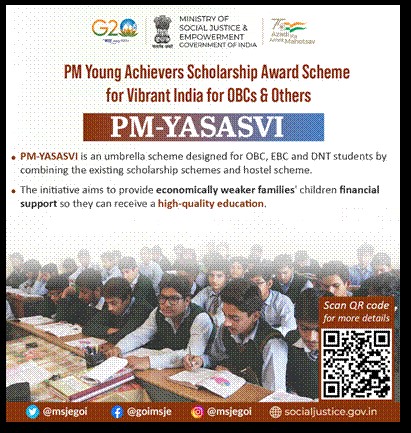
With a vision of “Sabka Sath, Sabka Vikas”, the Ministry of Social Justice and Empowerment has implemented the PM Young Achievers Scholarship Award Scheme for Vibrant India (PM-YASASVI). This comprehensive umbrella scheme is aimed at uplifting students from Other Backward Classes (OBC), Economically Backward Classes (EBC), and Denotified Tribes (DNT) by providing them with access to quality education during their formative years.

The PM YASASVI scheme consolidates and enhances several earlier initiatives, including the Dr. Ambedkar Post-Matric Scholarship Scheme for EBCs and the Dr. Ambedkar Pre-Matric and Post-Matric Scholarship Scheme for DNTs, which were subsumed under this program starting from 2021-22. By integrating these schemes, PM YASASVI aims to ensure a more streamlined and impactful approach to supporting the educational needs of socially and economically disadvantaged students.

Objective

The overarching goal of the scheme is to promote educational empowerment among these vulnerable groups, helping them overcome financial barriers and complete their education. This initiative not only fosters individual academic growth but also contributes to the broader vision of creating a more inclusive and equitable society.

Under this Scheme students can avail Pre-Matric Scholarship from Class 9 to 10 and Post Matric Scholarship for their higher studies at post-matriculation or post-secondary stage. Students who excel in their studies also get an opportunity of Scholarship to study in Top Class Schools and Colleges under the Scheme of ‘Top Class School Education’ and ‘Top Class College Education’. Hostel facilities are also provided to OBC students under the ‘Scheme of Construction of Hostels for OBC boys and girls.’

PM –YASASVI for OBC, EBC and DNT students has been formulated having following five sub-schemes:

  • Pre-Matric Scholarship for OBC, EBC and DNT Students
  • Post-Matric Scholarship for OBC, EBC and DNT Students
  • Top Class School Education for OBC, EBC and DNT Students
  • Top Class College Education for OBC, EBC and DNT Students
  • Construction of Hostel for OBC Boys and Girls

Scope

The Pre-Matric Scholarship is designed for students in classes IX and X attending government schools, offering an annual academic allowance of Rs. 4,000 to families with an income below Rs. 2.5 lakh. For the 2023-24 academic year, Rs. 32.44 crore has been allocated to states and Union Territories for its implementation. The Post-Matric Scholarship supports students pursuing post-secondary education, providing academic allowances ranging from Rs. 5,000 to Rs. 20,000 based on the category of the course. For this scheme, Rs. 387.27 crore has been released for the current year.

Additionally, the Top Class School and College Education schemes are designed to support meritorious students from OBC, EBC, and DNT categories. These programs cover tuition fees, hostel expenses, and other academic costs, with school students (Class 9-12) eligible for funding up to Rs. 1.25 lakh annually. College students at top institutions receive full financial support, including tuition, living expenses, and educational materials. To further enhance access to education, Rs. 12.75 crore has been allocated in 2023-24 under the ‘Construction of Hostels for OBC Boys and Girls’ scheme, which aims to provide accommodation for socially and educationally backward students near government schools and institutions, ensuring they have better access to quality education.

Benefits

The PM YASASVI aligns with the government’s broader vision of fostering inclusivity, equity, and societal upliftment. By offering comprehensive support to students from OBC, EBC, and DNT categories, it directly addresses the systemic barriers that prevent many from accessing quality education. This initiative not only ensures financial assistance but also promotes educational empowerment for some of the most vulnerable sections of society, thereby creating opportunities for upward mobility and self-reliance.

The scheme’s focus on supporting students at both school and college levels helps to nurture talent from an early age and carry it through to higher education, laying a strong foundation for personal and professional growth. Moreover, by integrating earlier scholarship initiatives into a single, streamlined program, PM YASASVI enhances the impact of these efforts, contributing to the creation of a more inclusive and equitable education system. PM-YASASVI is ensuring that no student is left behind in the pursuit of academic and social progress. This scheme is playing a crucial role in the welfare and upliftment of marginalized communities, enabling them to contribute meaningfully to the vision of Viksit Bharat @ 2047.

Impact

The PM YASASVI (Young Achievers Scholarship Award Scheme for Vibrant India) scheme has made significant strides in providing financial assistance to students from Other Backward Classes (OBC), Economically Backward Classes (EBC), and De-Notified Tribes (DNT). In Financial Year 2023-24, a substantial sum of ₹ 193.83 cr. was allocated for the Pre-Matric Scholarship, benefiting 19.86 lakh students during 2023-24, with further beneficiaries for 2023-24 expected. Similarly, under the Post-Matric Scholarship scheme, ₹988.05 cr. was released, benefiting 27.97 lakh students in 2023-24. These scholarships aim to empower underprivileged students by alleviating financial burdens, thereby promoting education across marginalized communities.

Additionally, the government has invested in other educational support initiatives. ₹14.30 cr. has been released for the construction of hostels, accommodating 1146 students in 2023-24. Top-class education programs and overseas study interest subsidies have also seen significant funding, reaching thousands of students. For example, ₹ 111.18 cr. was allocated to support 4762 students in top Class education in college scheme and Rs. 6.55 Cr. Was allocated to support 2602 students in Top Class education in Schools for OBC, EBC & DNT Students and ₹ 56.24 Cr. was granted as interest subsidies to 2789 students pursuing overseas education. These efforts reflect the growing impact of the PM YASASVI scheme, which is transforming the educational landscape for disadvantaged students, enabling them to achieve their academic potential and contributing to overall societal upliftment.

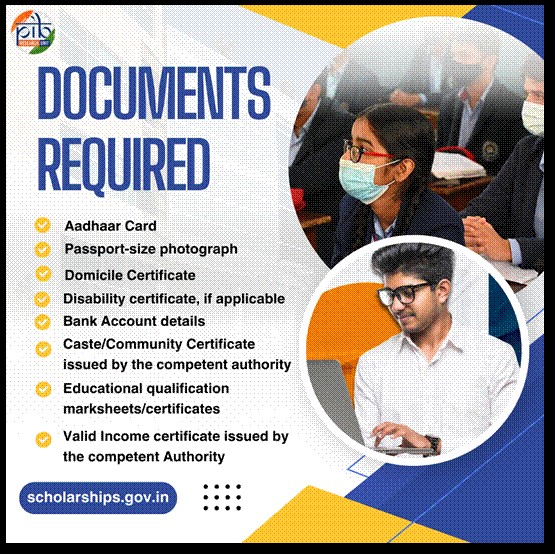
*Any additional documents specified in the application form

Key Points

  • Selection Process: The YASASVI Entrance Test (YET) 2023 is the basis for candidate selection, conducted by the National Testing Agency (NTA) under the direction of the Ministry of Social Justice and Empowerment (MSJ&E), Government of India.
  • Eligibility: Open to OBC, EBC, and DNT students with a total annual family income of up to ₹2.50 lakhs. Additional eligibility criteria may apply, depending on the specific scholarship scheme.
  • Where to Apply: Eligible students can apply online at the National Scholarship Portal: scholarships.gov.in.

Conclusion

By offering a comprehensive array of scholarships and support programs, PM-YASASVI is addressing the financial constraints that often hinder access to education for marginalized communities. The integration of various earlier schemes into one streamlined initiative ensures that students are supported from their school years through to higher education, creating pathways for personal and professional growth. With the government’s ongoing commitment to expanding access to quality education, the PM YASASVI Scheme is making a tangible impact on the lives of thousands of students, helping to create a more inclusive and prosperous India.

References:

Click here to see in PDF:

Scholarship for Study in Australia

Studying in Australia is an appealing option for international students due to its high-quality education system, vibrant culture, and beautiful landscapes. Many scholarships are available to help offset the costs of studying, including options from the Australian government, universities, and other organizations. Below is a detailed overview of major scholarships available to international students for studying in Australia.

1. Australia Awards Scholarships (AAS)

Eligibility: Students from developing countries, particularly from Asia, the Pacific, Africa, and the Middle East. Level: Undergraduate, Postgraduate (Master’s, Ph.D.) Description: Funded by the Australian government, the Australia Awards Scholarships aim to promote development in partner countries through education. These scholarships are highly competitive and target students who will contribute to the development of their home countries upon their return.

Financial Coverage: Full tuition, return air travel, establishment allowance, health insurance, and a living allowance.

Duration: Full duration of the chosen course.

Fields of Study: Wide range of academic fields that align with Australia’s development goals.

2. Destination Australia Scholarship

Eligibility: Domestic and international students Level: Undergraduate, Postgraduate Description: The Destination Australia Program is an initiative by the Australian Government to encourage students to study in regional Australia. It aims to support both domestic and international students to undertake their studies in regional areas, thus promoting economic growth and community diversity.

Financial Coverage: Up to AUD 15,000 per year.

Duration: Depends on the course length.

Fields of Study: Available for a variety of courses in regional universities.

3. Research Training Program (RTP)

Eligibility: International and domestic students Level: Postgraduate Research (Master’s, Ph.D.) Description: The Australian government’s Research Training Program (RTP) provides block grants to universities to fund students’ tuition and living expenses during their research degrees. RTP scholarships are primarily for students undertaking research-based master’s and doctoral degrees.

Financial Coverage: Tuition fees, a stipend for living costs, and allowances for research expenses.

Duration: 2 years for a master’s by research and 3-4 years for a Ph.D.

Fields of Study: Various research areas are covered, depending on the university.

4. Australia Research Council (ARC) Scholarships

Eligibility: High-achieving postgraduate researchers Level: Ph.D. Description: The ARC offers funding opportunities for research-focused students pursuing doctoral programs in Australia. These scholarships support research in a wide range of disciplines and are typically offered in collaboration with universities and research institutions.

Financial Coverage: Research grants, living stipends, and tuition fee waivers (depending on the program).

Duration: 3 to 4 years.

Fields of Study: Science, engineering, health, and social sciences.

5. Australian Government Endeavour Scholarships

Eligibility: International students from the Asia-Pacific region, the Americas, Europe, and the Middle East. Level: Postgraduate (Master’s, Ph.D.), short-term research programs, professional development. Description: The Endeavour Scholarships, funded by the Australian government, aim to build international relations and promote Australia as a destination for education. The program supports postgraduate study and research in various fields.

Financial Coverage: Tuition, travel allowance (up to AUD 3,000), establishment allowance, and monthly stipend (up to AUD 3,000 per month), plus health and travel insurance.

Duration: 2 to 4 years for long-term programs.

Fields of Study: Open to various academic disciplines.

6. University-Specific Scholarships

Many Australian universities offer scholarships to international students based on academic merit, research potential, or financial need. Some prominent university-based scholarships include:

a. University of Melbourne Scholarships

Eligibility: International students

Level: Undergraduate, Postgraduate, Research

Description: The University of Melbourne offers a range of scholarships, including the Melbourne International Undergraduate Scholarship and the Melbourne Graduate Research Scholarship. These are based on academic merit.

Financial Coverage: Full or partial tuition waivers, living allowances, and health coverage.

b. Australian National University (ANU) Chancellor’s International Scholarship

Eligibility: International students

Level: Undergraduate, Postgraduate

Description: The Chancellor’s International Scholarship recognizes academic excellence and provides financial support to high-performing international students.

Financial Coverage: Tuition fee reductions of up to 50%.

c. University of Sydney International Scholarship

Eligibility: International students

Level: Postgraduate (Master’s, Ph.D.)

Description: This scholarship supports outstanding international postgraduate students undertaking research at the University of Sydney.

Financial Coverage: Tuition fees and a living allowance.

d. Monash University International Scholarships

Eligibility: International students

Level: Undergraduate, Postgraduate

Description: Monash University offers several scholarships, such as the Monash International Merit Scholarship, for high-achieving students.

Financial Coverage: Up to AUD 50,000 over the duration of the course.

e. University of Queensland (UQ) Global Scholarships

Eligibility: International students

Level: Undergraduate, Postgraduate

Description: UQ provides several scholarships, including those for high-achieving students from specific regions, such as India, Hong Kong, and Latin America.

Financial Coverage: Partial or full tuition fee waivers.

7. ACIAR (Australian Centre for International Agricultural Research) Fellowships

Eligibility: Citizens from developing countries Level: Postgraduate (Master’s, Ph.D.) Description: ACIAR provides scholarships to students from partner countries to pursue agricultural research that aligns with Australia’s development cooperation priorities. The scholarship aims to build research capacity in agricultural sciences and related fields.

Financial Coverage: Tuition fees, travel expenses, living allowance, and research costs.

Duration: Up to 4 years.

Fields of Study: Agricultural sciences, environmental management, and related fields.

8. Rotary Peace Fellowship

Eligibility: International students committed to promoting peace and conflict resolution. Level: Master’s Description: This prestigious fellowship is awarded to students studying peace and conflict resolution at one of the Rotary Peace Centers, including the University of Queensland.

Financial Coverage: Tuition fees, travel, living stipend, and field-study expenses.

Duration: 1 to 2 years.

Fields of Study: Peace and conflict studies.

9. Macquarie University Vice-Chancellor’s International Scholarship

Eligibility: International students Level: Undergraduate, Postgraduate Description: Macquarie University offers this partial scholarship to academically outstanding students from around the world. The scholarship is aimed at supporting students financially while also promoting cultural diversity on campus.

Financial Coverage: Up to AUD 10,000 towards tuition fees.

Duration: Varies depending on the course.

Fields of Study: All fields.

How to Apply for Australian Scholarships:

1. Research: Begin by identifying which scholarships you are eligible for based on your country of origin, field of study, and academic level.

2. Check Eligibility: Review each scholarship’s specific requirements, such as academic qualifications, English language proficiency, and professional experience (for some postgraduate scholarships).

3. Prepare Documents: Ensure you have all necessary documents, such as academic transcripts, recommendation letters, a personal statement, and proof of English proficiency (IELTS/TOEFL).

4. Apply Early: Scholarship deadlines often precede admission deadlines, so it’s crucial to apply well in advance.

5. Follow Guidelines: Adhere strictly to the application guidelines provided by the scholarship or university to maximize your chances.

Conclusion:

Australia offers a wide variety of scholarships for international students, many of which provide full or partial financial support for tuition, living expenses, and research. With careful planning and thorough research, you can find scholarship opportunities that will make your dream of studying in Australia a reality.

Know About Common Wealth Nations Scholarship

The Commonwealth Scholarship is a prestigious and competitive scholarship offered to students from Commonwealth countries, enabling them to pursue higher education in the UK or other Commonwealth nations. The scholarship aims to promote cultural and academic exchange, foster development, and provide educational opportunities for students with outstanding academic merit and potential. Here is a detailed overview of the Commonwealth Scholarship:

1. Types of Commonwealth Scholarships

The Commonwealth Scholarship Commission (CSC) offers several types of scholarships, each tailored to different academic levels and fields of study:

Commonwealth Master’s Scholarships: These are for students from low and middle-income Commonwealth countries who want to pursue a full-time Master’s degree at a UK university.

Commonwealth PhD Scholarships: These scholarships are for students from eligible Commonwealth countries who wish to pursue a PhD in the UK.

Commonwealth Split-site Scholarships: These scholarships support PhD candidates to spend time at a UK institution while pursuing their research.

Commonwealth Shared Scholarships: These are for students from developing Commonwealth countries who would not otherwise be able to afford to study in the UK, focusing on themes related to development.

Commonwealth Distance Learning Scholarships: These are for candidates from least developed and lower middle-income countries to study for a Master’s degree while living and working in their home country.

Commonwealth Professional Fellowships: These are for mid-career professionals from low- and middle-income countries to spend time at a UK organization for professional development.

2. Eligibility Criteria

Eligibility varies based on the specific scholarship type, but generally, applicants must meet the following criteria:

Nationality: Must be a citizen of a Commonwealth country (specific countries are eligible for different scholarships).

Academic Qualification: For Master’s scholarships, candidates typically need a first degree of at least upper second-class honors or equivalent. For PhD scholarships, candidates generally require a Master’s degree or equivalent.

Development Themes: Applicants need to demonstrate how their proposed studies will contribute to the development of their home country, in alignment with one of the CSC’s six themes:

1. Science and technology for development

2. Strengthening health systems and capacity

3. Promoting global prosperity

4. Strengthening global peace, security, and governance

5. Strengthening resilience and response to crises

6. Access, inclusion, and opportunity

3. Application Process

The application process for Commonwealth Scholarships typically follows these steps:

1. Check Eligibility: Ensure you meet the specific eligibility criteria for the scholarship you’re applying for.

2. Apply through National Agencies or Universities: Applications must be submitted through a national nominating agency (for certain countries) or directly through UK universities. Some scholarships, like the Commonwealth Shared Scholarship, involve direct application to the institution offering the course.

3. Prepare Supporting Documents: These may include academic transcripts, references, a personal statement, and a detailed study plan.

4. Deadline: The deadlines vary by type of scholarship, usually between October and December each year.

5. Shortlisting and Interview: Some applicants may be shortlisted for an interview as part of the selection process.

4. Selection Criteria

The selection process is highly competitive, and candidates are assessed based on:

Academic Merit: The academic qualifications and track record of the applicant.

Potential Impact: How the study or research proposal aligns with development needs of the applicant’s home country and the potential to contribute to its growth.

Study Plan: The feasibility and quality of the applicant’s study or research plan, including how it fits with CSC’s objectives.

5. Benefits

The Commonwealth Scholarship covers a variety of costs, ensuring that financial constraints do not inhibit the student’s ability to study. These include:

Tuition Fees: Full coverage of tuition fees.

Airfare: Round-trip airfare from the scholar’s home country to the UK.

Living Allowance: Monthly stipend to cover living expenses (usually between £1,000 to £1,500 depending on the location).

Thesis Grant: Assistance with costs related to thesis or dissertation production.

Warm Clothing Allowance (if applicable).

Additional Allowances: Some scholarships may offer an additional grant for travel related to study, fieldwork, or attending conferences.

6. Post-Scholarship Obligations

Upon completion of their studies, Commonwealth Scholars are often expected to return to their home countries to contribute to their development. They are encouraged to implement the skills and knowledge gained during their study to impact local communities and industries positively.

7. Impact and Opportunities

The Commonwealth Scholarship is highly regarded globally. It opens doors to academic and professional networks, enhances career prospects, and fosters international cooperation. Scholars also become part of the Commonwealth Alumni Network, which provides lifelong access to professional development opportunities and networking platforms.

8. How to Apply

The application process for Commonwealth Scholarships typically begins online. The steps usually involve:

Online Application: Through the CSC’s application system or partner organizations.

Supporting Documentation: Providing the necessary academic records, references, and study/research proposals.

Interview and Final Selection: In some cases, shortlisted candidates may be invited for an interview.

Conclusion

The Commonwealth Scholarship is an invaluable opportunity for students from eligible Commonwealth countries to pursue higher education in the UK or other member countries. It not only helps students advance their academic careers but also equips them with the skills to contribute to the development of their home countries.

To Scholarships for Scholarships in Europe

Prominent scholarships for African students to study in Europe based on what was available up to my last update in January 2022. It’s important to note that scholarship availability, eligibility criteria, and application deadlines may change over time, so it’s a good idea to verify the information on official scholarship websites.


Here’s a table format you can use to organize details about scholarships:

Scholarship Name Description Eligibility Criteria Application Deadline Website
Erasmus Mundus Joint Master’s Degrees Offers full scholarships to students worldwide, including Africans, for select joint master’s programs offered by European universities. Eligibility criteria vary depending on the specific master’s program. Typically, applicants must have completed a Bachelor’s degree and meet language proficiency requirements. Varies depending on the program. Deadlines typically fall between December and February for programs starting the following academic year. Erasmus Mundus
DAAD Scholarships The German Academic Exchange Service (DAAD) offers various scholarships for international students, including those from Africa, to study in Germany. Programs include undergraduate, graduate, and doctoral scholarships. Eligibility criteria vary depending on the specific scholarship program. Generally, applicants must have completed their previous academic degrees with excellent grades and demonstrate language proficiency. Deadlines vary depending on the scholarship program. DAAD Scholarship Database
Swedish Institute Scholarships for Global Professionals Offers scholarships to highly-qualified professionals from eligible countries, including African nations, to pursue master’s degree programs in Sweden. Applicants must have work experience and leadership skills. Eligibility criteria vary depending on the specific master’s program. Usually in December for programs starting the following academic year. Swedish Institute Scholarships

These are just a few examples, and there are many other scholarships and funding opportunities available for African students to study in Europe. It’s important to thoroughly research each scholarship program for specific details regarding eligibility, application requirements, and deadlines.

Top Scholarship for African Scholars in Asia


  1. Japanese Government Scholarships (Monbukagakusho): These scholarships are offered by the Japanese government to international students, including Africans, for various academic programs at Japanese universities.

  2. Chinese Government Scholarship – Belt and Road Program: China offers scholarships to students from countries along the Belt and Road, including many African nations. These scholarships cover a wide range of academic fields and degree levels.

  3. Korean Government Scholarship Program (KGSP): The Korean government provides scholarships to international students, including Africans, for undergraduate and postgraduate studies in South Korea.

  4. TaiwanICDF Scholarship Program: The Taiwan International Cooperation and Development Fund (TaiwanICDF) provides scholarships for students from developing countries, including African nations, to pursue higher education in Taiwan.

  5. The Asia Foundation Development Fellows Program: While not a traditional scholarship, this program provides opportunities for professionals from Asian countries, including African nations, to enhance their leadership skills and contribute to positive social change.

  6. Malaysia International Scholarship (MIS): The Malaysian government offers scholarships to international students, including Africans, for postgraduate and postdoctoral studies in Malaysia.

  7. INSEAD Africa Leadership Fund: INSEAD, a business school with campuses in France, Singapore, and Abu Dhabi, offers scholarships to students from Africa. Check the specific eligibility criteria and application process on their official website.

It’s important to note that scholarship programs and eligibility criteria may change, so it’s recommended to visit the official websites of the respective scholarship providers for the most up-to-date information. Additionally, you may want to explore scholarship opportunities offered by specific universities or organizations in the Asian countries you are interested in.

Top Scholarships in America for African scholars

 Several scholarships in the United States specifically target African students. Here are some of the top ones:

  1. Mastercard Foundation Scholars Program: This program provides full scholarships to African students to pursue undergraduate and master’s degrees at partner universities in the United States. It focuses on leadership development and community engagement.

  2. Fulbright Foreign Student Program: Administered by the Bureau of Educational and Cultural Affairs of the United States Department of State, the Fulbright Program provides funding for graduate-level study, research, and teaching in the United States for students from various countries, including African nations.

  3. African Women in Agricultural Research and Development (AWARD) Fellowship: This fellowship program aims to strengthen the research and leadership skills of African women in agricultural sciences. It provides opportunities for postgraduate training and research at various institutions in the United States.

  4. Aga Khan Foundation International Scholarship Program: While not exclusively for African students, this program provides scholarships to outstanding students from developing countries, including many African nations, to pursue postgraduate studies in the United States.

  5. Master’s in Development Practice Fellowship at Columbia University: This fellowship program at Columbia University offers partial to full tuition scholarships to students from low and middle-income countries, including African nations, to pursue a Master’s in Development Practice degree.

  6. Rotary Foundation Global Grant Scholarships: These scholarships support graduate-level coursework or research for one to four academic years. Rotary Clubs and Districts worldwide offer these scholarships to students pursuing careers in fields related to Rotary’s mission, including peace and conflict resolution, disease prevention and treatment, water and sanitation, maternal and child health, basic education and literacy, and economic and community development.

  7. The Africa-America Institute (AAI) Scholarships: AAI offers scholarships to African students for undergraduate, graduate, and doctoral studies in the United States. The scholarships are awarded based on academic achievement and financial need.

  8. Joint Japan/World Bank Graduate Scholarship Program: This program awards scholarships to individuals from World Bank member countries, including several African nations, to pursue graduate studies in development-related fields at universities around the world, including the United States.

These scholarships provide opportunities for African students to pursue higher education in the United States and contribute to their home countries’ development upon completion of their studies.

Top 20 Scholarship and Grants in Europe

 Here are some of the top 20 scholarship and grant opportunities available in Europe:

  1. Erasmus Mundus Scholarships: These prestigious scholarships are funded by the European Union and support international students for joint master’s and doctoral programs across European universities.

  2. Fulbright Program: Administered by the U.S. Department of State, the Fulbright Program offers grants for academic exchange between the United States and over 160 countries, including European nations.

  3. DAAD Scholarships: The German Academic Exchange Service (DAAD) provides a wide range of scholarships for international students, researchers, and academics to study and conduct research in Germany.

  4. Marie Skłodowska-Curie Actions: These EU-funded research grants support researchers at all career stages, from PhD candidates to experienced professionals, in pursuing research projects across Europe.

  5. Chevening Scholarships: Funded by the UK government, Chevening Scholarships offer fully-funded master’s degree programs to outstanding scholars and future leaders from around the world, including European countries.

  6. Swiss Government Excellence Scholarships: Offered by the Swiss government, these scholarships support international students and researchers for postgraduate studies or research in Switzerland.

  7. Eiffel Excellence Scholarship Programme: Administered by the French Ministry for Europe and Foreign Affairs, the Eiffel scholarships support outstanding international students pursuing master’s and doctoral degrees in France.

  8. VLIR-UOS Scholarships: These scholarships, funded by the Belgian government, support students from developing countries for master’s and training programs in Flanders, Belgium.

  9. Netherlands Fellowship Programs (NFP): Managed by Nuffic, the NFP offers scholarships for professionals from eligible countries to pursue short courses, master’s, and PhD programs in the Netherlands.

  10. Erasmus+ Master Loans: This initiative provides loans for master’s students from participating countries to finance their studies abroad within the Erasmus+ program.

  11. Türkiye Scholarships: Offered by the Turkish government, Türkiye Scholarships support international students for undergraduate, master’s, and PhD studies in Turkey.

  12. Santander Scholarships: Santander Bank offers various scholarships and mobility grants to support students and researchers from participating countries in pursuing studies or research in Europe.

  13. Central European University Scholarships: CEU offers a range of scholarships and financial aid options for international students pursuing master’s and doctoral studies in fields such as social sciences, humanities, law, and public policy.

  14. Amsterdam Excellence Scholarships: These scholarships are awarded to exceptionally talented students from outside the EU/EEA for master’s programs at the University of Amsterdam.

  15. Sciences Po Master’s Scholarships: Sciences Po in France offers merit-based scholarships for outstanding international students applying to master’s programs in various disciplines.

  16. Rotary Foundation Global Grants: Rotary International provides global grants for graduate-level academic studies, humanitarian projects, and vocational training to individuals and communities around the world, including Europe.

  17. Aga Khan Foundation International Scholarship Programme: This program provides scholarships and fellowships to outstanding students from developing countries, including those in Europe, to pursue higher education at reputable institutions worldwide.

  18. Gates Cambridge Scholarships: These prestigious scholarships support outstanding international students from outside the UK for graduate studies at the University of Cambridge.

  19. INSEAD Scholarships: INSEAD, one of the world’s leading business schools, offers a range of scholarships and financial aid options for MBA and executive education programs, attracting diverse talent from around the globe, including Europe.

  20. Erasmus Mundus Joint Doctorates: In addition to master’s programs, Erasmus Mundus also offers joint doctorates for international PhD candidates, providing opportunities for collaborative research and mobility across European universities.

These are just a few examples of the many scholarship and grant opportunities available in Europe, catering to a diverse range of academic disciplines, backgrounds, and career goals. Applicants are encouraged to thoroughly research eligibility criteria, application deadlines, and selection processes for each opportunity to maximize their chances of success.


Top Grants and Scholarships for African Students in India

 As globalization continues to foster international collaboration and exchange, India has emerged as a hub for higher education, offering a wide range of academic opportunities for students from across the globe, including African countries. Recognizing the importance of diversity and cross-cultural engagement, several grants and scholarships are available to support African students pursuing educational endeavors in India. This essay explores some of the top grants and scholarships specifically tailored for African students seeking to study in India.

1. Indian Council for Cultural Relations (ICCR) Scholarships:
The ICCR offers scholarships to foreign students, including those from African countries, for undergraduate, postgraduate, and doctoral studies in various disciplines at Indian universities and institutions. These scholarships cover tuition fees, accommodation, and a monthly stipend, enabling African students to pursue their academic aspirations in India while experiencing its rich cultural heritage.

2. Africa Scholarship Scheme (ASS) by Indian Government:
The Government of India, through its Ministry of External Affairs, offers the Africa Scholarship Scheme to students from African countries for undergraduate, postgraduate, and higher education courses in India. This scheme aims to strengthen bilateral ties between India and African nations by providing financial assistance to deserving students, covering tuition fees, accommodation, and other related expenses.

3. Jawaharlal Nehru Memorial Fund Scholarships:
The Jawaharlal Nehru Memorial Fund provides scholarships to foreign nationals, including African students, for doctoral studies in India in the fields of science, technology, humanities, and social sciences. These scholarships support research-oriented academic pursuits, covering tuition fees, living expenses, and research grants, thereby fostering academic excellence and innovation among African scholars in India.

4. Indian Government Scholarships for African Students (IGSA):
The Indian Government offers scholarships to African students under the IGSA program, which covers undergraduate, postgraduate, and doctoral studies in various disciplines at Indian universities and institutions. These scholarships aim to promote educational cooperation and cultural exchange between India and Africa, providing financial support to deserving students for their academic pursuits in India.

5. India-Africa Forum Summit Scholarships:
In line with the India-Africa Forum Summit initiatives, scholarships are offered to African students by the Indian Government to pursue higher education in India. These scholarships aim to strengthen diplomatic relations and foster mutual understanding between India and African countries, enabling students to access quality education and cultural exposure in India through financial assistance and support services.

Conclusion:
Grants and scholarships play a vital role in facilitating access to higher education for African students in India, contributing to academic excellence, cultural exchange, and diplomatic relations between nations. Programs such as the ICCR Scholarships, Africa Scholarship Scheme, Jawaharlal Nehru Memorial Fund Scholarships, Indian Government Scholarships for African Students, and India-Africa Forum Summit Scholarships provide valuable opportunities for African students to pursue educational pursuits in India and contribute to their personal and professional development. By availing themselves of these opportunities, African students can enrich their academic experience, broaden their horizons, and become catalysts for positive change in their communities and beyond.

2024 Commonwealth Masters Scholarship tenable in the United Kingdom

 The Commonwealth Scholarship is a program that offers financial support to students from Commonwealth countries to pursue postgraduate studies in member countries. These scholarships are aimed at promoting educational exchange and collaboration among Commonwealth nations.

Key features of Commonwealth Scholarships for Masters programs may include:

  1. Eligibility Criteria:

    • Applicants must be citizens of a Commonwealth country.
    • Typically, candidates should have completed their undergraduate education and hold a bachelor’s degree or its equivalent.
    • Some programs may have additional requirements based on the specific field of study.
  2. Fields of Study:

    • Commonwealth Scholarships cover a wide range of academic disciplines, allowing students to pursue master’s degrees in various fields such as science, technology, engineering, humanities, social sciences, and more.
  3. Host Country:

    • Commonwealth Scholarships are often tenable in Commonwealth member countries. In the case of the United Kingdom, the Commonwealth Scholarship Commission in the UK (CSCUK) is responsible for managing and awarding these scholarships.
  4. Application Process:

    • Interested candidates typically need to apply directly to the relevant scholarship program or commission. The application process may include submitting academic transcripts, letters of recommendation, a personal statement, and proof of citizenship.
  5. Selection Process:

    • Applications go through a rigorous selection process, including academic assessment and interviews. Successful candidates are chosen based on their academic achievements, potential impact in their home countries, and the relevance of their proposed studies to the development goals of their home nations.
  6. Financial Support:

    • Commonwealth Scholarships usually cover full or partial tuition fees, living expenses, travel expenses, and other allowances. The exact financial support may vary depending on the specific scholarship program.
  7. Duration of Scholarship:

    • Scholarships are typically awarded for the duration of the master’s program, which is usually one or two years.

To obtain the most accurate and up-to-date information on the “2024 Commonwealth Masters Scholarship” or any other Commonwealth Scholarship program, I recommend checking the official website of the Commonwealth Scholarship Commission in the UK or contacting relevant authorities in your home country responsible for managing Commonwealth Scholarships.

How to apply

Applications for Commonwealth Master’s scholarships for the 2024/25 academic year are now closed.

Applications to the CSC must be made using the CSC’s online application system.

The CSC is unable to accept any applications or documentation not submitted via the online application system.

Applicants are advised to complete and submit applications as early as possible, as the online application system will be very busy in the days leading up to the application deadline.

As well as applying to the CSC, applicants must apply to a nominating agency.

There are two types of nominating agency for Master’s scholarships:

Nominating agencies put forward candidates to the CSC for consideration. The CSC does not accept direct applications for these scholarships.

Each nominating agency oversees its own selection process and may have additional eligibility criteria. Applicants must check with the nominating agency for their specific advice and rules for applying, and their own eligibility criteria.

Look for More Scholarships https://cscuk.fcdo.gov.uk/scholarships-filter-search/

Bridging Continents: Opportunities for African Scholars in Asian Scholarships

 In recent years, the global landscape of higher education has witnessed a surge in opportunities for international students, particularly African scholars, seeking to broaden their academic horizons. Asia, with its diverse cultures, rich history, and rapid economic development, has become a hub for educational exchange. This essay explores the various scholarship opportunities available for African scholars in different Asian countries, highlighting the unique offerings each destination provides.

Scholarships in Singapore:

Singapore, a thriving city-state known for its innovation and technological prowess, has emerged as a beacon for African scholars. The government of Singapore, in collaboration with prestigious institutions like the National University of Singapore (NUS) and Nanyang Technological University (NTU), offers scholarships covering a wide array of disciplines. These scholarships not only support academic pursuits but also provide exposure to cutting-edge research and technology.

Opportunities in China:

China, with its ancient civilization and modern dynamism, presents an array of scholarships for African scholars. The Chinese government, through initiatives like the Belt and Road Scholarship, invites students from Africa to study in fields such as engineering, medicine, and the humanities. Renowned institutions like Tsinghua University and Peking University actively engage in fostering international collaboration, creating a melting pot of knowledge and cultural exchange.

Scholarly Pursuits in Japan:

Japan, a nation known for its technological innovations and traditional values, attracts African scholars through various scholarship programs. The Japanese Government (MEXT) Scholarship, offered at multiple levels, supports students in diverse fields. Additionally, universities like the University of Tokyo and Kyoto University provide research opportunities and academic mentorship, fostering a rich learning environment.

Educational Avenues in India:

India, with its vast and diverse academic landscape, welcomes African scholars through numerous scholarship schemes. The Indian Council for Cultural Relations (ICCR) Scholarship and various programs from Indian universities open doors in fields ranging from science and technology to arts and humanities. Institutions like the Indian Institutes of Technology (IITs) and Indian Institutes of Management (IIMs) offer world-class education and research facilities.

Malaysia’s Melting Pot of Cultures:

Malaysia, known for its multicultural society and economic vibrancy, invites African scholars through scholarship programs such as the Malaysia International Scholarship (MIS). Universities like the University of Malaya and Universiti Teknologi Malaysia offer opportunities in fields like business, engineering, and social sciences, contributing to a rich cross-cultural academic experience.

While I can provide information on some well-known scholarships, it’s essential to note that scholarship offerings may change, and it’s advisable to visit official websites for the most up-to-date information. Here are a few scholarship programs for international students, including those from Africa, along with their official links:

  1. Chinese Government Scholarship:

  2. Japanese Government (MEXT) Scholarship:

  3. Singapore International Graduate Award (SINGA):

  4. Indian Council for Cultural Relations (ICCR) Scholarship:

  5. Malaysia International Scholarship (MIS):

    • Official Link: MIS
  6. Taiwan Scholarship Program:

  7. South Korean Government Scholarship Program (KGSP):

  8. Commonwealth Scholarship and Fellowship Plan (CSFP):

  9. Australia Awards Scholarships:

  10. New Zealand Scholarships:

Please note that this list is not exhaustive, and there may be additional scholarship opportunities available. Always refer to the official websites for the most accurate and current information. Additionally, consider checking with specific universities in the respective countries, as they often offer their scholarship programs for international students.

Conclusion:

The diverse scholarship opportunities for African scholars in Asia reflect the continent’s commitment to fostering global collaboration in education. Each country, with its unique cultural tapestry and academic strengths, provides a platform for African scholars to not only gain knowledge but also contribute to the global academic community. As these scholarship programs continue to flourish, they build bridges across continents, creating a harmonious exchange of ideas, cultures, and perspectives. The future of education lies in such collaborative endeavors, where scholars from Africa and Asia come together to shape a world enriched by diversity and intellectual synergy.