Grand Finale of National School Band Competition 6.0 starts at Major Dhyan Chand National Stadium

Daily writing prompt
Describe your most ideal day from beginning to end.

The Grand Finale of the National School Band Competition 6.0 was inaugurated today at the Major Dhyan Chand National Stadium, New Delhi. Secretary, Department of School Education and Literacy (DoSEL), Ministry of Education, Shri Sanjay Kumar; Defence Secretary, Shri Rajesh Kumar Singh; Additional Secretaries, DoSEL, Shri Anil Kumar Singhal and Shri Anandrao V. Patil; Chairperson, CBSE, Shri Rahul Singh; Commissioner, Kendriya Vidyalaya Sangathan, Smt. Nidhi Pandey; Joint Secretary, DoSEL, Dr. Amarpreet Duggal; Joint Secretary, Ministry of Defence, Shri Amitabh Prasad, and other officials of Ministry of Education and Ministry of Defence were present at the event.

Shri Sanjay Kumar, in his address, highlighted the significant importance of a band, particularly in fostering a sense of discipline and teamwork among participants, which nurtures a collective spirit to excel. He further emphasized the relevance of this collective spirit in educational pursuits. He noted that more schools would join the Band System, with support from the Army Regional Centres, opening new opportunities for children. Shri Sanjay Kumar also expressed his heartfelt gratitude to the Ministry of Defence for their invaluable support and assistance.


Shri Rajesh Kumar Singh, while addressing the gathering, highlighted the rich tradition of military music in the Armed Forces, which boosts morale, adds dignity to ceremonies, and provides talented individuals with an opportunity to showcase their prowess. He also mentioned how, since 2023, the Government has been involving and encouraging talented school children to actively participate in the Republic Day celebrations. The objective of organizing the National School Band Competition, he added, is to inspire a sense of unity, esprit de corps, and a profound feeling of belonging among school children towards their schools and the nation.

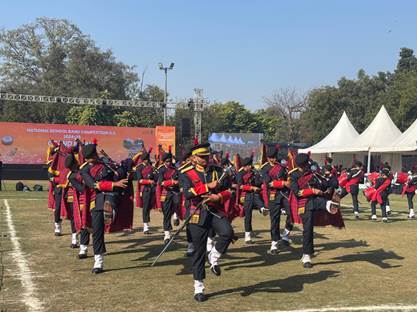
Ministry of Education, in collaboration with the Ministry of Defence, is organising the grand finale of National School Band Competition 6.0 on 24-25 January 2025 at Major Dhyan Chand National Stadium, New Delhi. This year 16 band teams from 13 States with 463 children have been shortlisted for the finale (list annexed) through State- and Zonal-level competitions. At the State-Level Competitions, 568 teams comprising 13,999 children participated; while at the Zonal Level, 84 teams comprising 2,337 children took part.

For the first time:

1.   Band Teams from three government schools have got the opportunity to participate in the Republic Day Parade.

2.   PM SHRI KGBV Patamda, Purbi Singhbum, Jharkhand school students will be giving their performance at the rostrum in front of the Presidential stage.

3.   Two band teams (Kendriya Vidyalaya and Government Sr. Sec. School West Point, Sikkim) will be performing at Vijay Chowk in the Republic Day Parade.

4.   In tandem with the “whole of Government approach”, initiative has been taken for training of PM SHRI school band teams by the band instructors/teams of Army Regimental Centres. Training has begun in 11 States/UTs and will commence shortly in the rest of the States/UTs. This is a step towards imparting holistic education to students of PM SHRI schools and developing them into well-rounded personalities.

The National Education Policy 2020 is the first education policy of the 21st century and aims at large-scale transformational reforms in the education sector. In that direction, this program will not only instil a sense of patriotism and national pride but will also enhance the musical skills of the students and inculcate discipline among them. This initiative aims to rejuvenate the spirit of patriotism and unity amongst school students throughout the country and help in the furtherance of holistic education.

List of Participating Teams at the Grand Finale

Sl. No.State/UTNo. of SchoolsName and Address of the SchoolCategory
BandBoys/Girls
 Andhra Pradesh1Monte CBSE School Kurnool, Pandipadu Village, Kallur Mandal-Kurnool, Andhra PradeshPipeGirls
 Chhattisgarh1St. Xavier’s English Medium School, Pathalgaon, ChhattisgarhBrassBoys
 Himachal Pradesh1Pinegrove School, Kuthar Road, Subathu, Distt. Solan, Himachal PradeshBrassBoys
 Jharkhand1PM Shri KGBV Patamda, Purbi Singhbhum, JharkhandPipeGirls
 Karnataka1PM SHRI Kendriya Vidyalaya No.2 Belagavi Cantt, KarnatakaPipeBoys
 Kerala1St Joseph’s Anglo Indian Girl’s Higher Secondary School, Kozhikode, KeralaBrassGirls
 Madhya Pradesh1St. Joseph’s Convent Sr. Sec. School, Edgah hills, Bhopal, Madhya PradeshBrassGirls
 Maharashtra2Bhonsala Military School Girls, Nasik, MaharashtraPipeGirls
RBP Military School Sports Academy Sangli, MaharashtraPipeBoys
 Rajasthan1Prince Lotus Valley Sikar, RajasthanBrassBoys
 Sikkim2Government Sr. Sec. School West Point, Gangtok, East Sikkim, SikkimBrassGirls
North Sikkim Academy, Nangan (private CBSE affiliated), North Sikkim, SikkimPipeBoys
 Tripura1St. Xaviers Higher Secondary School, Pathaliyaghat, Sepahijala, TripuraBrassBoys
 Uttarakhand1Gayatri Vidyapeeth, Shantikunj, Haridwar, UttarakhandBrassGirls
 Uttar Pradesh2Shri Thakurdwara Balika Vidyalaya, Hapur Mod Tiraha, G.T Road, Ghaziabad, Uttar PradeshPipeGirls
City Montessori School, Kanpur Road Campus, Sec – D LDA Colony Kanpur Road, Lucknow, Uttar PradeshPipeBoys
Total13States / UTs16   

*****

APAAR ID Card, The One Nation One Student ID 2025

Daily writing prompt
What do you enjoy doing most in your leisure time?

APAAR ID Card, the One Nation One Student ID: The Ministry of Education in conjunction with the Government of India has introduced the APAAR ID program, which stands for “One Nation One Student ID Card.” This initiative is set to greatly benefit students by digitally consolidating their complete academic records, including degrees, scholarships, rewards, and other credits into a unified APAAR ID. If you have enrolled in a school or college, you will need to complete the One Nation One ID Registration at abc.gov.in and then access your APAAR ID in PDF format from the official website. This program is open to all students, allowing them to participate and complete their ABC Bank Registration on the official website.

In this article, we provide comprehensive information about the advantages of the ABC Card and include  from abc.gov.in. It is important to obtain your One Nation One ID Card using this provided link, as it grants you access to a variety of benefits offered by the card. By pursuing different courses and developing skills, you can accumulate various rewards and credits through the ABC Card program.

The One Nation One Student ID, APAAR ID Card, is a significant step towards a more organized and accessible academic experience for students in India. By registering and downloading your APAAR ID Card, you can unlock various benefits and conveniently store your academic records. With thousands of institutes and millions of students already benefiting from this program, it’s a promising development in the education sector.

APAAR ID Card 2025: One Nation One Student ID Overview

SchemeAPAAR ID Card : One Nation One Student ID
Full form of APAAR IDAutomated Permanent Academic Account Registry
AuthorityMinistry of Education and Government of India
Portal NameABC Bank
BeneficiariesStudents in India
Purpose of the SchemeStudent Mobility, Academic Flexibility, Unified Student ID and Easy Transfers
Total Registered Students2 Crore + Students
How to RegisterUsing Mobile Number
Details RequiredAadhar Card Number, Mobile Number, University Name

Apaar Id Full Form

APAAR ID stands for Automated Permanent Academic Account Registry. This system aims to create a unique and permanent identification number for every student in India, storing their academic records securely and digitally. While online applications aren’t yet available, it’s important to be aware of the initiative and its future developments.

Use of APAAR ID for students, parents and schools

  1. APAAR ID will be unique nature and will work as One Nation, One Student ID giving identify to students across all use purpose and will be easy for transfer of students from one school to other school, state etc.
  2. It will empower students with their own ID.
  3. This unique ID will be lifelong and help in accessing the educational resources too.
  4. APAAR ID will be useful for tracking educational progress and achievement of students;
  5. APAAR ID will be useful for monitoring the dropout students and mainstreaming them.
  6. APAAR ID will be gateway for accessing Digilocker ecosystem which will store digitally all achievements of students like exam results, holistic report card, health card, learning outcomes besides other achievements of students be it OLYMPIAD, Sports, Skill training or any field.
  7. Students can use the credit score for their higher education or employment purpose in future.
  8. APAAR ID will also be used for multiple use cases e.g., Entrance tests conducted by NTA, admissions, Scholarship disbursement, transfer of government benefit, issue of awards, recognition etc for students, teachers and other users.

APAAR ID Card Key Features

  1. Preserving student achievements
  2. Streamlines credit recognition
  3. Enhance educational flexibility
  4. Credit transfer across institutions

APAAR ID Card Registration Form

  • Government Initiatives: Explore how the Government of India and the Ministry of Education continue to introduce initiatives that benefit citizens.
  • Registration Process: Understand the significance of completing the APAAR ID registration and how to download the APAAR ID card for use.

APAAR ID Card Apply Online

There are two main ways to apply for an APAAR ID Card online:

1. Through the Academic Bank of Credits (ABC) website:

Here’s the step-by-step process:

  • Visit the ABC website: https://www.abc.gov.in/
  • Choose “My Account” and then “Student.”
  • If you don’t have a DigiLocker account:
    • Click “Sign up” and enter your mobile number, address, and Aadhaar card details.
    • Agree to share your Aadhaar details with ABC for KYC verification.
  • If you have a DigiLocker account:
    • Log in using your credentials.
    • DigiLocker will ask for your consent to share your Aadhaar card details with ABC. Select “I agree.”
  • Enter your academic details: school/university name, class, course name, etc.
  • Submit the form.
  • Your APAAR ID card will be generated.

2. Through DigiLocker:

  • Open your DigiLocker account.
  • Search for “Education” in the categories.
  • Select “Academic Bank of Credits” service.
  • Choose “Create APAAR/ABC ID.”
  • Select your University and click “Generate APAAR/ABC ID.”
  • Your ID will be displayed. You can download it.

How to Download the ABC Card PDF

We have some exciting news to share with you! The Academic Bank of Credits, which was talked about in the National Education Policy (NEP), has been launched.

With this special portal, all students can sign up and enjoy the benefits of the ABC Card.

Here’s how to get your ABC Card PDF:

  1. Follow the steps outlined in the ABC Card PDF Download Process.
  2. After you’ve downloaded the APAAR Card PDF @ abc.gov.in, take a moment to check the details on it. Make sure your Name, APAAR ID, QR Code, and other information are correct.
  3. Right now, thousands of schools and two crore (20 million) students have already signed up online for the ABC Card or APAAR ID Card. It’s a big deal!

APAAR ID Card: One Nation One ID Card Registration

We want to let you know that the ABC Bank registration through Digilocker is currently open, and we encourage all students to complete it to enjoy the benefits.

Here’s how to do it:

  1. Use Digilocker to open an ABC Bank Account. You can then access your APAAR Card using your Mobile Number.
  2. Provide your University Name, Academic Qualifications, and other required details.
  3. Submit the form, and your APAAR Card will be generated.
  4. Your ABC Card will be available online for you to download. You can use it for various services.
  5. As an ABC Card Holder or APAAR Card user, you can also enjoy discounts and special offers available to students.

Instructions for Online APAAR ID Registration @ abc.gov.in

To complete your APAAR ID registration online at abc.gov.in, follow the steps below:

  1. Visit the website mentioned above and wait for the homepage to load.
  2. Click on the “Login” option and then select the “Signup” button.
  3. Provide your Mobile Number and Aadhar Card Number to complete the registration process.
  4. Next, choose your School or University and specify your Class or Course.
  5. Submit the registration form, and your APAAR ID Card will be generated.
  6. Download the card online and utilize it to access and manage your academic credits.

ABC ID Card Overview

The ABC ID Card, also known as APAAR ID, is a digital document issued by the Academic Bank of Credits (ABC) in India. It acts as a unique identifier for students, storing and managing their academic information in a central location. Here’s a quick overview:
Purpose:

  • Serves as a digital record for students’ academic achievements, including:
    • Degrees
    • Diplomas
    • Certificates
    • Training details
    • Co-curricular accomplishments
  • Functions as a link to DigiLocker, a secure online document storage platform.
  • Streamlines the verification process for admissions or job applications by providing easy access to academic credentials.

Benefits:

  • Enhances student mobility: Enables seamless transfer of credits between or within higher education institutions.
  • Promotes flexibility: Allows students to pursue courses from various institutions and build their qualifications at their own pace.
  • Simplifies record management: Eliminates the need for physical documents and ensures secure storage of academic records.

Key Points:

  • Each student receives a unique 12-digit ID.
  • Information is stored in digital format on the ABC platform.
  • Students can access and manage their records through the user-friendly interface.

APAAR ID Card: One Nation One Student ID FAQ

Automated Permanent Academic Account Registry (APAAR) ID has sparked significant interest and raised numerous questions. This FAQ aims to address common queries regarding the APAAR ID, also known as “One Nation, One Student ID,” and provide a clear understanding of its purpose and implementation.

Q1: What is the APAAR ID, and why is it significant?
A. The APAAR ID, or Automated Permanent Academic Account Registry ID, is a unique identification number assigned to students across India. It is part of the “One Nation, One Student ID” initiative under the National Education Policy (NEP) 2020. The APAAR ID is significant because it provides a lifelong identifier for students to track their educational journey and achievements, from pre-primary to higher education.

Q2: How does the APAAR ID work?
A. The APAAR ID is a unique alphanumeric code linked to an individual student. It will be used to centralize and maintain a record of the student’s academic achievements, certificates, and other educational data throughout their academic career.

Q3: Is the APAAR ID linked to Aadhaar?
A. Yes, the APAAR ID will be linked to the student’s Aadhaar ID, which is a unique identification number issued by the Indian government. However, it’s important to note that the APAAR ID does not replace the Aadhaar ID but complements it for educational tracking purposes.

Q4: Who will be assigned an APAAR ID, and what is the process for obtaining one?
A. All students in both private and government schools will be assigned an APAAR ID. The process for obtaining an APAAR ID involves consent from parents. Schools will seek consent from parents before creating an APAAR ID for their child. Parents can choose to withdraw their consent at any time.

Q5: What information will be included in the APAAR ID?
A. The APAAR ID will include a variety of academic data, including information about the student’s educational journey, achievements, certificates, and other relevant details. It may also include additional information such as the student’s blood group, height, and weight.

Q6: When will the APAAR ID be implemented, and is it mandatory for all students?
A. The implementation of the APAAR ID is an ongoing process. State education departments have directed educational institutions to conduct meetings between teachers and parents to discuss the importance and relevance of the APAAR ID. While it is being actively encouraged, participation is not always mandatory, and parents have the choice to provide consent for their child’s APAAR ID.

Q7: How can parents and students ensure the security of their data linked to the APAAR ID?
A. The government has assured that student data linked to the APAAR ID will remain confidential and will only be shared with government agencies when deemed necessary. Parents and students should be vigilant about how their data is handled and ensure it is used solely for educational purposes as intended.

Q8: Can students or parents access and update information linked to the APAAR ID?
A. Students and parents may have the option to access and update certain information linked to the APAAR ID, but this will depend on the specific policies and systems in place at the educational institutions and government agencies handling the APAAR ID.

Q9: How will the APAAR ID benefit students and the education system?
A. The APAAR ID is expected to benefit students by providing a unified record of their academic journey, making it easier to access and share educational credentials and achievements. For the education system, it streamlines the management of student data and can assist in assessing educational progress and needs more efficiently.

Q10: Are there any concerns or criticisms regarding the APAAR ID?
A. While the APAAR ID initiative has garnered support, it has also raised concerns about data privacy, consent, and the potential for misuse of student data. Some individuals and organizations have raised questions about the implementation and the need for clear policies to protect student information.

Top Schools in Asia: An Overview of Academic Excellence

Asia, a continent known for its rich history, diverse cultures, and rapid economic growth, is also home to some of the world’s top-performing educational institutions. With an increasing emphasis on global competitiveness, the quality of education in many Asian countries has risen to new heights in recent decades. Schools in Asia are recognized for their academic rigor, innovative teaching methods, and focus on developing global citizens. This essay will explore some of the top schools in Asia, highlighting the factors that contribute to their success and influence.

1. The International School of Beijing, China

The International School of Beijing (ISB) is one of the premier international schools in China. Located in the capital city, ISB offers an education primarily based on the International Baccalaureate (IB) curriculum, with an emphasis on inquiry-based learning. It serves students from pre-kindergarten through grade 12, drawing families from over 50 countries. One of ISB’s key strengths is its commitment to fostering cultural diversity and international-mindedness. The school offers a wide range of extracurricular activities, including sports, music, drama, and Model United Nations (MUN), which help develop leadership and communication skills.

ISB’s strong academic results are also a testament to its high standards. The school’s high school students consistently perform well in the IB Diploma Programme, and its university placement record is excellent, with graduates attending prestigious universities across the globe.

2. Singapore American School (SAS), Singapore

The Singapore American School (SAS) is widely regarded as one of the best schools in Asia. Founded in 1956, SAS offers a rigorous American-style education from pre-kindergarten to grade 12. The school is renowned for its high academic standards, exceptional facilities, and outstanding faculty. SAS is particularly known for its focus on developing well-rounded individuals, with a strong emphasis on both academics and extracurricular activities.

The school offers Advanced Placement (AP) courses, and its students routinely perform well in these exams, with many going on to attend top universities in the United States, such as Ivy League schools. SAS is also known for its focus on STEM (science, technology, engineering, and mathematics) education, with state-of-the-art laboratories and robotics programs. Its commitment to character development and service learning makes it a leader in educating global citizens. You can view website to get an in-detailed idea of international schools in Singapore.  

3. The International School of Hong Kong (ISHK), Hong Kong

The International School of Hong Kong (ISHK) is one of the top international schools in the region. It offers the International Baccalaureate (IB) curriculum, catering to students from early childhood through to high school. ISHK is particularly known for its personalized approach to education, focusing on individualized learning paths that meet the needs of each student. The school emphasizes inquiry-based learning, which allows students to actively engage with the material and develop critical thinking skills.

ISHK’s strong emphasis on cultural diversity is also a standout feature. Hong Kong is a melting pot of cultures, and ISHK fosters a global perspective, encouraging students to understand and appreciate different cultures and backgrounds. Its high school students consistently achieve impressive results in the IB Diploma Programme, which enables them to gain entry to top universities around the world.

4. Nanjing International School (NIS), China

Nanjing International School (NIS) is another top international school in Asia, located in Nanjing, China. NIS offers a challenging and well-rounded education, focusing on both academic excellence and holistic development. The school follows the IB curriculum and places a strong emphasis on inquiry-based learning, which nurtures independent thinkers and problem solvers.

NIS has a reputation for offering a well-integrated approach to education, with a robust arts and sports program. The school also encourages service learning and social responsibility, helping students develop a sense of global citizenship. NIS graduates regularly gain acceptance into prestigious universities worldwide, making it one of the top choices for expatriate families in China.

5. Seoul Foreign School, South Korea

Seoul Foreign School (SFS) is one of the top international schools in South Korea, offering a curriculum that blends American and international standards. Established in 1912, SFS has a long history of providing an excellent education to expatriates in Seoul. The school serves students from preschool through to grade 12 and offers a diverse range of extracurricular activities in addition to its rigorous academic programs.

SFS offers both the Advanced Placement (AP) and IB Diploma Programmes, allowing students to choose the educational pathway that best suits their needs. The school has consistently high academic standards, and its graduates have gone on to attend prestigious universities, particularly in the United States. SFS’s commitment to developing well-rounded individuals is reflected in its strong focus on sports, arts, leadership, and community service.

6. The British International School, Phuket, Thailand

The British International School (BISP) in Phuket is a prominent institution in Thailand, known for its high academic standards and focus on developing global citizens. Following the British curriculum, BISP offers a strong academic program from early childhood through to the A-levels. The school is particularly well-regarded for its emphasis on extracurricular activities, including sports, music, drama, and outdoor education.

BISP’s commitment to holistic education is demonstrated by its focus on both academic achievement and personal development. The school boasts a strong university placement record, with graduates attending top institutions in the United Kingdom, United States, and other parts of the world. Its picturesque location in Phuket provides a conducive learning environment, and its international community ensures a diverse, inclusive atmosphere.

7. Jeddah International School, Saudi Arabia

Jeddah International School (JIS) is one of the top international schools in the Middle East and has earned a strong reputation for its academic excellence. Offering both the IB and American curriculums, JIS provides a rigorous academic environment for its students, alongside a diverse array of extracurricular activities. The school places a strong emphasis on moral values, social responsibility, and leadership.

JIS has a highly dedicated teaching staff and offers a range of extracurricular activities, such as sports, arts, and community service, that encourage students to grow in a well-rounded manner. Its university placement program is highly successful, with many students gaining entry to prestigious universities in the US, UK, and other countries.

8. Tata Institute of Social Sciences (TISS), India

While India is home to a multitude of prestigious schools, Tata Institute of Social Sciences (TISS) stands out due to its unique focus on social sciences and social work education. Based in Mumbai, TISS offers undergraduate, postgraduate, and doctoral programs in various fields, including social work, education, health systems, and public policy. TISS is known for its rigorous academic curriculum, combined with a strong emphasis on social responsibility and community engagement.

Although TISS is more of a university-level institution, its influence and reputation for academic excellence make it a leader in higher education in Asia. The university has consistently ranked among the top in India and offers a transformative educational experience.

Conclusion

The top schools in Asia exemplify excellence in education, each with its unique approach to developing students into successful, well-rounded global citizens. Whether following international curriculums like the IB or offering specific country-based systems, these schools are shaping the future of education in Asia and beyond. With their emphasis on academic rigor, cultural diversity, and holistic development, these institutions set the stage for the next generation of leaders, thinkers, and innovators. As Asia continues to play a central role in global development, the quality of education in its schools will undoubtedly remain a critical factor in shaping the future of the continent and the world. Visit the website to get more insights on international schools in Asia.

Top Schools in Singapone

Daily writing prompt
Do lazy days make you feel rested or unproductive?

Singapore is home to some of the top schools offering a diverse range of educational approaches, including local and international curricula. Here are a few highly regarded schools:

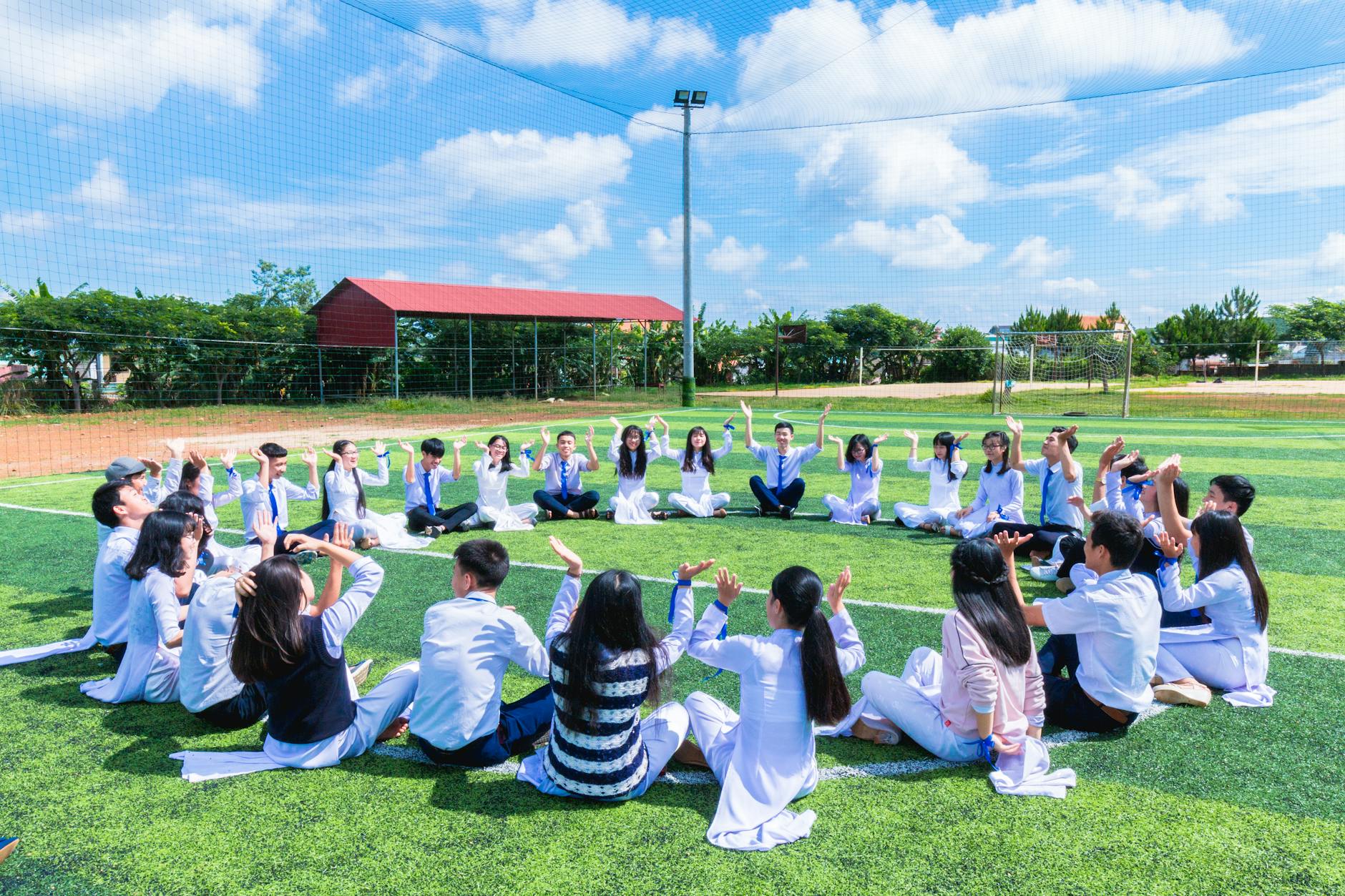
Photo by Chu Chup Hinh on Pexels.com
  1. International Community School (Singapore) – This Christian school offers a U.S.-based college preparatory curriculum for kindergarten through high school, with a strong emphasis on values and community. It’s well-known for academic rigor and extracurricular opportunities​Which School Advisor.
  2. Tanglin Trust School – Established in 1925, Tanglin provides a British-based education with options for A-levels or the International Baccalaureate (IB) Diploma Programme. It’s a well-established institution with a long history in Singapore​Which School Advisor.
  3. Dunman High School – Known for academic excellence and a wide array of co-curricular activities, Dunman focuses on holistic development and leadership in its students. It has strong science and humanities programs​HereSingaporeTutor City.
  4. Nanyang Girls’ High School – One of Singapore’s top girls’ schools, offering an education that fosters leadership and character development alongside academic success. It emphasizes both personal growth and service to the community​HereSingapore.
  5. UWC South East Asia – Part of the United World Colleges network, UWCSEA offers an IB-based education and is known for its holistic approach, offering extensive extracurricular activities in the arts, sports, and more​Which School Advisor.

These ib schools in singapore, among others, highlight Singapore’s commitment to providing a high-quality education system that caters to a wide range of interests and talents.

Eklavya Model Residential School (EMRS)

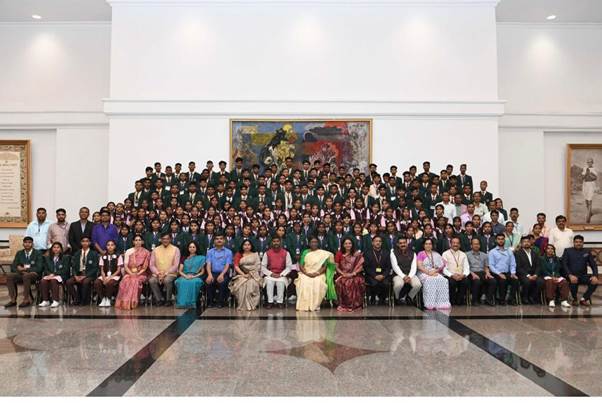
 As part of an educational visit organised by the Ministry of Tribal Affairs and NESTS on 22nd September 2023, Eklavya Model Residential School (EMRS) students interacted with the Union Minister of Tribal Affairs, Shri Arjun Munda at the Dr BR Ambedkar International Centre in New Delhi.

During the day, the students also received the opportunity to visit Rashtrapati Bhawan and meet with the President of India, Smt. Droupadi Murmu. In addition, the students received a guided tour of the Amrit Udyan, Rashtrapati Bhawan Museum and Library.


460 students and 40 teachers from  Eklavya Model Residential Schools from six states, namely Rajasthan, Uttarakhand, Jharkhand, Madhya Pradesh, Odisha, and Chhattisgarh participated in the programme.

Speaking on the occasion, Union Minister, Shri Arjun Munda remarked, that tomorrow is an important day and Chandrayaan 3 will land on the moon and by this landmark feat India will reach the skies. He urged the students they should have the courage to aim for the sky but keep their feet on the ground. He also asked the students to watch the landing of the Chandrayaan 3.

He added that the Culture of tribals  is inspired from the connectivity they feel for the mother earth.  He also added that Constitution ensures new opportunities for tribals and their empowerment and in the similar terms, EMRS aims to give opportunities for all round development of students and provide quality education to the tribal students.


He asked students to meet their seniors who have benefitted from the scholarship schemes and are pursuing higher education in field of medical, education, or are preparing for civil services, and add their own hard work in the guidance received to touch the sky. He urged the students to reflect on their goals and achieve these with the hard work and patience. He asked the students to have personal and collective goals for society and nation also.

He mentioned that EMRS number will reach 740 and which will help education reach the grassroots level. He also said that teachers are being recruited for old and new schools.

On the occasion, Secretary, Ministry of Tribal Affairs, Shri Anil Kumar Jha said that our Ministry is focused on giving impetus for the overall education of tribal youth through our Eklavya Model Residential Schools in various states. He added that students are invited to explore our educational schemes and opportunities to the fullest, as these will benefit you in the future.

During the interaction, the students and scholarship recipients from the various EMRSs shared their experiences in a candid manner with the Ministers, dignitaries, and the students. EMRS Students and EMRS Scholarship beneficiaries also put forth various questions and concerns to the Ministers.

Further, Shri Asit Gopal, Commissioner, NESTS delivered a brief background about the objective of establishing Eklavya Model Residential Schools across the country.

This was followed by a brief overview about Scholarship Schemes of the Ministry of Tribal Affairs by Dr Navaljeet Kapoor, Joint Secretary, MoTA.

EMRS students of Odisha, Jharkhand, Chhattisgarh, Uttarakhand, and Madhya Pradesh presented scintillating performance in a Cultural Program organised at the venue in the spirit of Ek Bharat Shrestha Bharat.

A photo session of the students with the Ministers during the closing ceremony was also organised.

The students are scheduled to visit the Parliament House on August 23, 2023, in the morning hours. Their visit to this prestigious institution will provide them with a unique opportunity to familiarise themselves with Parliament House’s functioning and gain a comprehensive understanding of the duties and responsibilities related to the Parliament.

*******

ROLE OF FAMILY,SOCIETY AND EDUCATIONAL INSTITUTIONS IN INCULCATIONG VALUES

Family, society, and educational institutions play a very major role in building one’s character or personality. These institutions impart value to an individual and help them become a better person in society. One learns what one listens. Young children very much learn what they see around them. If they see good they learn good and if they see bad they will learn that as well. The role of family is important because an individual lives there and learns from there, society influences an individual’s behaviour and educational institutions are where an individual learns. Now we’ll see how these factors help in inculcating values in an individual.

ROLE OF FAMILY

Family is a place where one grows, and learns the most. Just like the saying charity begins at home similarly an individual’s education starts from home. It is like a foundation where values are built. Values like respecting elders, honesty, justice, respect for both genders all taught at home. If within a family there are differences or if the home environment is not healthy then this also affects the individual. The values practised by the other members of the family also shapes the child’s attitude towards other people or towards the society. Values like love, care, protection all these start from family. If a child experiences love, care, comfort then he/she will have a positive attitude toward others and will behave the same with others and will inspire others as well. Family’s environment will help a child to socialise and progress in the society.

The system of joint family that is the presence of elder family members also has a great influence on an individual. It helps in developing social and moral values. They learn human values and respecting elders and this will help in eradicating negative mental tendencies when they are among elders. In a family an individual not only learns about values but also about their customs and culture and enhancing one’s culture proudly is also a very good value. The attitude of one family member towards another also affects individual behaviour. For example if child see his father not respecting his mother then he may feel that this is how it is supposed to be and he may also do the same thing with his wife but if he sees his father respecting her mother, giving her importance which she deserves the he will also treat his wife in respective manner so it is very important for a family to not just inculcate good values to the younger generation but they themselves should have good value so the future generation could learn from them.

The values that are taught in the family helps a child to learn, grow and progress in the society. Family values enhance a child’s personality and character and help them in becoming a better human being.

ROLE OF SOCIETY

When we grow older our social world also expands, now not only family but we become a part of society. Society also plays an important role in inculcating values. When a child grows it goes outside to make friends and share each other’s thoughts. Society also shapes an individual’s character. Societies follow certain traditions and customs and being a part of the society, we are also a part of these customs and traditions. These customs and traditions are being followed from generations and these are based on values such as loyalty, courage, love and brotherhood. We celebrate different festivals together which portray love and happiness and we not only celebrate festivals of one tradition or religion, but being part of such a diverse country we get to enjoy festivals and customs of different religions which shows mutual respect towards each other and toward different individuals in a society. Religion is a very important social institution in our Indian society and these religions are embedded with cultural values. Society creates social order, the diversity present in our society teaches mutual love, respect and inculcates a variety of values and holistic development of individuals. The social influence and the urge to become an inspiring personality in a society helps in developing good values in an individual. The great inspiring personalities, influencer leaders and celebrities also have a great influence in society. Young individuals learn and get inspired by them so it is also an important job for these powerful personalities to set a good example for the younger generation.

ROLE OF EDUCATIONAL INSTITUTIONS

Apart from home, a child spends most of his/her time at school. The first formal place of socialisation and the first and foremost important value that it teaches is discipline. The educational institutions have a proper disciplined environment. In an educational institution, the day starts with the prayer which teaches gratitude. Different school activities inculcate different values such as teamwork, sportsmanship spirit, competitiveness, etc. Different programs of Community work help in inculcating values like empathy, care, unity, etc. Peer groups also play an important role, students often get feedback about their behaviour from their fellow classmates or friends. Teachers also act as role models for the students, when a teacher asks students to behave in a certain manner then they tend to take it more seriously as compared to any family member or friend. The reward and punishment system also helps as children behave in a good manner for rewards and to protect their self esteem from getting punished. Every school or educational institution has their philosophy or motto and these help in inculcation of good values.

“Intelligence plus character, that is the true goal of education”. – Martin Luther King

Value is something that is not restricted to a certain age or gender or place. It is something which is lifelong, it can be learned at any age and be practiced throughout one’s life. Good values build one character and make an individual a better human being . A man with good values is respected everywhere in the society so it is very important to inculcate good values in life. There are different characters in an individual life that add to his/her character and personality. The influence of family, society and educational institutions have the strongest influence upon an individual and thus it affects in developing an individual personality whether positively or negatively.  

Sources: diyethics.forumias.com

School of Engineering and AtalBihari Vajpayee School of Management and Entrepreneurship at J.N.U

 Union Education Minister of India, ShriRameshPokhriyal ‘Nishank’ laid the foundation stone of the buildings for School of Engineering and Atal Bihari Vajpayee School of Management and Entrepreneurship at Jawaharlal Nehru University today through a virtual program.Vice Chancellor, JNU, Prof. M. Jagdish Kumar,Rector I Prof.ChintamaniMahapatra, Rector II Prof. Satish Chandra Garkoti, Rector III Prof. Rana Pratap Singh and the deans of the new schools, Prof. UnnatPandit and Prof. SatyavratPatnaik were present on the occasion.

ShriPokhriyal expressed his delight at the  naming the School of Management on the name of late Atal Bihari Vajpayee, who was not only an efficient and visionary Prime Minister of India, but an inspiring author too. The Minister mentioned that engineering and management education will complement each other and willinspire the youth to become entrepreneurs and self-reliant.He hoped that the proposed building with world-class facilities will be endowed with technology-based pedagogy and development of learners.

ShriPokhriyalalso congratulated Prof. M. Jagadesh Kumar for taking the University to new heights of progress and initiating realization of National Education Policy 2020 with new initiatives.

Is Homework Good or Bad for students?

Why Homework Is Good

Here are 10 reasons why homework is good, especially for the sciences, such as chemistry:

  • Doing homework teaches you how to learn on your own and work independently. You’ll learn how to use resources such as texts, libraries, and the internet. No matter how well you thought you understood the material in class, there will be times when you’ll get stuck doing homework. When you face the challenge, you learn how to get help, how to deal with frustration, and how to persevere.
  • Homework helps you learn beyond the scope of the class. Example problems from teachers and textbooks show you how to do an assignment. The acid test is seeing whether you truly understand the material and can do the work on your own. In science classes, homework problems are critically important. You see concepts in a whole new light, so you’ll know how equations work in general, not just how they work for a particular example. In chemistry, physics, and math, homework is truly important and not just busywork.
  • It shows you what the teacher thinks is important to learn, so you’ll have a better idea of what to expect on a quiz or test.
  • It’s often a significant part of your grade. If you don’t do it, it could cost you, no matter how well you do on exams.
  • Homework is a good opportunity to connect parents, classmates, and siblings with your education. The better your support network, the more likely you are to succeed in class.
  • Homework, however tedious it might be, teaches responsibility and accountability. For some classes, homework is an essential part of learning the subject matter.
  • Homework nips procrastination in the bud. One reason teachers give homework and attach a big part of your grade to it is to motivate you to keep up. If you fall behind, you could fail.
  • How will you get all your work done before class? Homework teaches you time management and how to prioritize tasks.
  • Homework reinforces the concepts taught in class. The more you work with them, the more likely you are to learn them.
  • Homework can help boost self-esteem. Or, if it’s not going well, it helps you identify problems before they get out of control.
Sometimes Homework Is Bad

So, homework is good because it can boost your grades, help you learn the material, and prepare you for tests. It’s not always beneficial, however. Sometimes homework hurts more than it helps. Here are five ways homework can be bad:

  • You need a break from a subject so you don’t burn out or lose interest. Taking a break helps you learn.
  • Too much homework can lead to copying and cheating.
  • Homework that is pointless busywork can lead to a negative impression of a subject (not to mention a teacher).
  • It takes time away from families, friends, jobs, and other ways to spend your time.
  • Homework can hurt your grades. It forces you to make time management decisions, sometimes putting you in a no-win situation. Do you take the time to do the homework or spend it studying concepts or doing work for another subject? If you don’t have the time for the homework, you could hurt your grades even if you ace the tests and understand the subject.
Reference

https://www.thoughtco.com/why-homework-is-good-sometimes-bad-607848

Tips to get more marks in exams!

Just knowing the answers to the questions isn’t enough. Most of the time, it matters how you present your answer sheet. The person who will check your paper probably has about 50 – 100 other papers to go through. And that is a tedious job.

So, if he opens your answer sheet and finds all sorts of gibberish in there, well, you better be making sense. On the other hand, with neat paper, the checker might just go easy. So here are some tips on how to present your answers in a theory paper:

Starting with the topics you remember well

Start by answering those questions you can answer properly. The sequence of answering doesn’t matter as long as you write the correct question number to the answer. This way you will not only boost your confidence but also the person who checks your paper will get a good impression.

Draw diagrams wherever required

This will help you form your answers better and make your answer sheet more interesting. Teachers recommend drawing diagrams, especially in subjects like biology. Draw them neatly, label whatever is supposed to, and use a pencil(and preferably a scale) to draw.

Write answers in point form

Do not go on writing paragraphs after paragraphs after paragraphs. No one is going to sit and read every word of it. It’s always better to write the main point and elaborate it in minimum sentences. Underline the keywords in every answer. In the case of numerical- write the formulas used, show the final answer and always write the units wherever required.

Write as neatly as you can

Everyone appreciates good handwriting. So try to be neat. But, don’t let that slow down your speed.

Select the questions carefully

In case you have an option between which questions to solve. Once you get your question paper, spend the first five minutes analysing the questions. Don’t freak out after seeing the questions. Read the questions carefully and try to recall the answer points. You can write down the points in short at the back of your answer sheet (to help you recall later on). Select the questions that you are confident about and try to stick to them. You might not make the right choice later during the exam.

Recheck your paper at the end

Try reserving the last 10 minutes of your exam for rechecking your paper. You can come across silly errors that might’ve cost you your marks or there might be an instance where you forgot to write a particular answer. So, it’s always safe to go through your paper before submitting it.

REference

https://www.quora.com/How-do-I-write-answers-in-exams/answer/Ritija?ch=15&oid=173888791&share=a91c3689&srid=RDpYR&target_type=answer

Types of note taking

Outline note-taking method
Outline note-taking

The outline method of note-taking uses indentation to store information in a clear hierarchy. When applicable, the outline method is one of the most efficient note-taking formats as it creates meticulously well-organized notes. The method can also be used in both deductive and inductive order.

Outlined notes are some of the easiest to review, as it’s one of the few systems that allow you to see space relationships between topics. However, the method is not always suitable for taking notes during a live lecture and outlining requires a clear lesson structure to work.

Cornell note-taking method
Cornell note-taking

The Cornell method of note-taking, developed more than half a century ago, is a tried-and-true strategy for taking effective notes. It uses two top columns (the “cue” and “note” columns), together with a single bottom row (the summary section) to record notes.

The method is very versatile, usable for most subjects, and one of the simplest yet most effective note-taking methods out there. By mastering the Cornell system, you’ll always have at least one solid note-taking skill under your belt. The Cornell system is one of the most popular note-taking strategies in the world for good reason.

Box note-taking method
Box note-taking

The boxing method of note-taking uses boxes to visually separate topics within a page. While the boxing method was designed to be used for digital devices, it’s a technique that can be easily adapted to handwritten notes.

Using the boxing strategy results in notes that are visually pleasing and easy to review. The method also takes full advantage of digital-only features such as lassoing, resizing, and moving notes after writing. Together with mind mapping, it’s one of the most effective note-taking strategies for visual learners.

mappIng note-taking method
Mapping note-taking

The mapping method of note-taking connects different thoughts, ideas, concepts, and facts together through visualization. Both Leonardo Da Vinci’s and Albert Einstein notebooks reportedly contained mapping style notes that connected drawings to words and notes.

The mapping method starts with a main topic in the center of the page, before branching out into smaller subtopics, supporting topics, and smaller details. The method provides a one-of-a-kind graphical overview of lecture content that is irreplaceable for visual learners.

Mapping is best used in content-rich college classes where the information is structured. However, it’s very rarely possible to take notes of a live class with this method due to its time-consuming nature.

Reference

https://e-student.org/note-taking-methods/

How to take notes?

Preparing to take good notes in class


The first step to taking good notes in class is to come to class prepared. Here are some steps you can take to improve your note-taking before class even begins:

  • Preview your text or reading assignments before the lecture. Previewing allows you to identify the main ideas and concepts that will most likely be discussed during the lecture.
  • Look at your course syllabus so that you know the topic / focus of the class and what’s going to be important to focus on.
  • Briefly review notes from previous class sessions to help you situate the new ideas you’ll learn in this class.
  • Keep organized to help you find information more easily later. Title your page with the class name and date. Keep separate notebook sections or notebooks for each class and keep all notes for each class together in one space, in chronological order.

Note-taking during class

Now that you are prepared and organized, what can you do to take good notes while listening to a lecture in class? Here are some practical steps you can try to improve your in-class note-taking:

  • If you are seeking conceptual information, focus on the main points the professor makes, rather than copying down the entire presentation or every word the professor says. Remember, if you review your notes after class, you can always fill in any gaps or define words or concepts you didn’t catch in class.
  • If you are learning factual information, transcribing most of the lecture verbatim can help with recall for short-answer test questions, but only if you study these notes within 24 hours.
  • Record questions and thoughts you have or content that is confusing to you that you want to follow up on later or ask your professor about.
  • Jot down keywords, dates, names, etc. that you can then go back and define or explain later.
  • Take visually clear, concise, organized and structured notes so that they are easy to read and make sense to you later. See different formats of notes below for ideas.
  • If you want your notes to be concise and brief, use abbreviations and symbols. Write in bullets and phrases instead of complete sentences. This will help your mind and hand to stay fresh during class and will help you access things easier and quicker after class. It will also help you focus on the main concepts.
  • Be consistent with your structure. Pick a format that works for you and stick with it so that your notes are structured the same way each day.
  • For online lectures, follow the above steps to help you effectively manage your study time. Once you’ve watched the lecture in its entirety, use the rewind feature to plug in any major gaps in your notes. Take notes of the timestamps of any parts of the lecture you want to revisit later.

Determining what’s important enough to write down

You may be asking yourself how you can identify the main points of a lecture. Here are some tips for recognizing the most important points in a lecture:

  • Introductory remarks often include summaries of overviews of main points.
  • Listen for signal words / phrases like, “There are four main…” or “To sum up…” or “A major reason why…”
  • Repeated words or concepts are often important.
  • Non-verbal cues like pointing, gestures, or a vocal emphasis on certain words, etc. can indicate important points.
  • Final remarks often provide a summary of the important points of the lecture.
  • Consider watching online lectures in real-time. Watching the lecture for the first time without pausing or rewinding can help force you to focus on what’s important enough to write down.
Preference

https://learningcenter.unc.edu/tips-and-tools/effective-note-taking-in-class/

Career advice for university students

Seek internship opportunities

Internships are a great way to gain valuable, hands-on experience in your field. For your internship to be beneficial, it must apply to your career aspirations. For example, if you’re interested in becoming a veterinarian, it may be beneficial to work at a kennel or animal shelter where you can learn proper animal care and handling.

Grow your skills and knowledge

Employers want to hire candidates with a wide range of skills. Use your college years to expand your skills and overall knowledge. Consider elective courses relevant to your career aspirations. For example, if you’re a photographer, taking an art class can help you expand your creativity. If your school doesn’t offer classes in the skill you’re hoping to grow, consider investing in relevant software.

Get an early start

To ensure you get the most out of your career, start looking for opportunities before you graduate. Find jobs relevant to your major. For example, if you’re interested in becoming a graphic designer, consider working for a design agency. This opportunity can help you understand what daily life is like for fellow designers and help you better understand the industry. Similarly, if you’re an art major, consider working for a local gallery to gain knowledge about the art industry. The sooner you look for opportunities, the greater chance you have of getting a job.

Keep your skills up-to-date

When you apply for a job or internship, you’ll likely be competing with other candidates. Because of this, it’s important to keep your skills current regardless of your industry. This means staying up-to-date with various technology and industry trends to help you gain an advantage over other candidates and make you stand out to hiring managers. Stay current by doing online research, reading professional journals or visiting your school’s library.

Pursue your passion

The easiest way to find happiness in your career is to determine what you love doing. For example, if you enjoy woodworking or metalworking, consider becoming an engineer. This ensures you’re doing something that makes you happy every day and will help your job feel less like work and more like fun. Following your dreams can also help increase your productivity because you’ll likely be more excited about going back to work. This advice is crucial as you advance in your career because it ensures you stay encouraged and driven to be the best you can be in your industry.

Strive for excellence and stay motivated

Whether you’re in your first job or an internship, it’s important to aspire to be the best you can be. Identify your own mistakes and believe in yourself and your abilities. This can help you stay vigilant in pursuing your dreams and give you the ability to advance in your career. Ultimately, striving for excellence can help you find success.

Use your school’s career services

Before you graduate, take advantage of your school’s career services to help you jump-start your career. This campus resource can provide you with a wealth of information, from crafting a resume to getting a job. Your school’s career services can also put you in touch with alumni in your field. Your tuition also pays for these services.

Reference

https://www.indeed.com/career-advice/career-development/career-advice-for-college-students

Selection of our career after school

There are some major factors which influence the selection of our career

Selecting the right course and college is a very significant decision after 12th because the right selection will lead to a gratifying career as the wrong one is equal to ending up in studying a subject or a sphere that doesn’t really interest you. Moreover, the choice made after class 12 will be the one that will decide your future.

The contemporary and highly competitive world is giving the students a tough time to choose their career. Today, students are facing with plentiful options as there are several courses all of which look almost equally lucrative and interesting.

  1. Cultural background: The cultural background of an individual plays a massive role in influencing the career.
    • Example: if the parents are doctors the child may be very much inspired by their way of life or the respect that is being paid in the society. So the child may opt to become a doctor.
  2. Bad work experience:  A bad work experience of any family member in a particular field may also influence the teenage in a negative way. It may lead to loss of interest in that particular kind of job.
  3. Economic condition: It’s hard to believe that many dreams are killed every day as the economic condition of the family is one of the main reasons.
    • Example: A hefty amount is required to get admission in an architectural designing college.
  4. Potential: Different profession demand different kind of requirements.
    • Example: If you want to join the film industry and you don’t have the requirements such as height and various physical requirements than perusing a course on acting and dreaming to be actor may be a waste of time and money. Pursuing a career depending on the potential may lead to success.
  5. Parent’s dreams: Every parent has dreams and expectation for their child regarding their future. Sometimes children’s are being forced to fulfil their parent’s dream by killing their own dream.
  6. Social value of the job:  Some people get fascinated towards some jobs because of the respect and social value they carry.
    • Example: Being an IAS officer carries a lot of admiration in the society.
  7. Peer pressure: Peer also plays a very important role while choosing a career. Some people choose the same career as their friend to maintain the same level of status forgetting their own field of interest.
  8. Income: The future income of the job also plays a very important role while choosing a particular career. Some time running behind money kills the field that we are really interested in.
  9. Our tastes and interests: Career should be selected depending on our tastes and interest which will help to give 100% to the job.
Reference

https://www.thehighereducationreview.com/news/tips-to-choose-the-right-course-after-12th-nid-797.html

LAST DAY OF MY SCHOOL

Have u ever felt anxious about starting a new phase of your life? Leaving the secure portals of your school where you have spent the years of your life? There were your parents, teachers, friends yo have your back , protect your and guide you to tackle your problems; but now you have to leave your comfort zone and venture out in this world to play your part and make a name out of yourself in a play called “LIFE”.

The last day of my school was the last chapter of my memeroable book of my student life, but this time flows away quickly. Let me dedicate a poem(not best, but written with heart) to my school life;

I still remember the last day of my school.

Walking down the memory lane;

My mind was flooded with the departing thoughts,

Constraining back the tear of emotions;

Asking a question why time has to fly?

There was abrupt ache in my heart,

For the longing of the friends I made here.

My ears will be free from this annoying bell!

My school uniform will be kept away,

But still I will miss those wonderful days.

Those days were precious!

The only problem was our homework;

The regular faces which our eyes perceive,

Will be lost in the mist of forthcoming future.

The joy will be gone away with my departing friends.

There will be no argument between the two groups,

My friends will not gather together for a single tiffin.

There will be no discussion at the Rialto.

This valuable moments will be taken away by time.

Cherishing this beautiful moments till my last breath;

The only last wish if I get to make!

To live that dusted away life again.

Just a story on travel and language


When I was very little, I caught the travel bug. It started after my grandparents first brought me to their home in France and I have now been to twenty-nine different countries. Each has given me a unique learning experience.

At five, I marvelled at the Eiffel Tower in the City of Lights. When I was eight, I stood in the heart of Piazza San Marco feeding hordes of pigeons, then glided down Venetian waterways on sleek gondolas. At thirteen, I saw the ancient, megalithic structure of Stonehenge and walked along the Great Wall of China, amazed that the thousand-year-old stones were still in place. It was through exploring cultures around the world that I first became interested in language.

It began with French, which taught me the importance of pronunciation. I remember once asking a store owner in Paris where Rue des Pyramides was. But when I pronounced it PYR–a–mides instead of pyr–A–mides, she looked at me bewildered with more accent on the A.

In the eighth grade, I became fascinated with Spanish and aware of its similarities with English through cognates. Baseball in Spanish, for example, is béisbol, which looks different but sounds nearly the same. This was incredible to me as it made speech and comprehension more fluid, and even today I find that cognates come to the rescue when I forget how to say something in Spanish.

Then, in high school, I developed an enthusiasm for Chinese. As I studied Chinese at my school, I marvelled how if just one stroke was missing from a character, the meaning is lost. I loved how long words were formed by combining simpler characters, so Huǒ (火) meaning fire and Shān (山) meaning mountain can be joined to create Huǒshān (火山), which means volcano. I love spending hours at a time practising the characters and I can feel the beauty and rhythm as I form them.

Interestingly, after studying foreign languages, I was further intrigued by my native tongue. Through my love of books and fascination with developing a sesquipedalian lexicon (learning big words), I began to expand my English vocabulary. If you want your child to become prompt in English, visit the website.  Studying the definitions prompted me to inquire about their origins, and suddenly I wanted to know all about etymology, the history of words. My freshman year I took a world history class and my love for history grew exponentially. To me, history is like a great novel, and it is especially fascinating because it took place in my own world.

But the best dimension that language brought to my life is interpersonal connection. When I speak with people in their native language, I find I can connect with them on a more intimate level. I’ve connected with people in the most unlikely places, finding a Bulgarian painter to use my few Bulgarian words within the streets of Paris, striking up a conversation in Spanish with an Indian woman who used to work at the Argentinian embassy in Mumbai, and surprising a library worker by asking her a question in her native Mandarin.

I want to study foreign language and linguistics in college because, in short, it is something that I know I will use and develop for the rest of my life. I will never stop travelling, so attaining fluency in foreign languages will only benefit me. In the future, I hope to use these skills as the foundation of my work, whether it is in international business, foreign diplomacy, or translation.

I think of my journey as best expressed through a Chinese proverb that my teacher taught me, “I am like a chicken eating at a mountain of rice.” Each grain is another word for me to learn as I strive to satisfy my unquenchable thirst for knowledge.

Today, I still have the travel bug, and now, it seems, I am addicted to language too.