HOW WELL ARE STUDENTS TAKING ONLINE EDUCATION?

The outbreak of the COVID-19 pandemic in 2020 brought many dramatic changes in our social as well as personal lives. Our routines are changed, our habits and majorly our system of education.

Source: Google

Though the work from home culture is in its second year, the schools and universities are still trying to adapt themselves to the online mode of education. The introduction to digital classes was first seen as a major setback for the aged teachers who are not gadget-friendly or prefers an interactive physical class as the sole place for good teaching.

Over the course of time, these teachers have become quite familiar with the online teachings, yet, that special gap that will always tend to loom and show the differences of physical classes over the virtual ones.

Yes, it is quite true and agreeable that digital classrooms pave the way for the education of the future when most of the world has turned online in every sphere. But, how truly does it help students, especially the pre-primary or the primary ones? They are the ones who are most dependent on the ‘touches’ of the teachers, or be in a classroom- their first step to the world beyond home, socializing with others.

Major drawbacks online education brings:

Not affordable for all families in India:

Money stands a major factor here, in India. It is not a hidden fact to us that India is home to people of different social strata and financial standing. A handful of people across the nation cannot afford schools for their children. The Hindu in 2019 reported that 30 out of 100 children complete their school. The reasons may vary but we can’t deny the reality. The monetary conditions of families can be counted as a major reason. Well, this is the calculation done before the pandemic happened. As we see many children cannot afford proper schooling, we can predict how tough would it be for them to do classes “online”.

Online education could not serve to educate a major part of India because the poor folks cannot afford a smartphone in many parts of the country- leave alone a laptop or personal computer.

Network Accessibility:

India is a country of diversities, even geographically. Thus some groups of the population tend to live in extremely remote places like forests, or foothills of the Himalayas, or deltas of the Sundarbans. Such remote villages lack basic amenities to survive like proper water supply or electricity. To make a phone call one has to travel miles. So, this leaves us with the question, how can the children attend online classes?

This makes us think, is education moving from a basic right to a privilege?

Less personal interaction:

The virtual classes, how much fun it seemed at the beginning, could not hide its one of the major drawback for long. The lack of personal touch makes us the students detached from the school/ university vibe.

Yes, we hated the monotony of attending regular classes, but can’t deny the fact the monotony, the disciplined life, the constant monitoring of our mentors helped us in our studies. Secondly, school/university isn’t only about what we learn from books, we met real people, made friends and learn to live. But, beginning a session with online classes has made this quite impossible, we are making friends, but a part of the puzzle is missing.

Practicals:

Some of the subjects of the curriculum cannot be done with the help of online classes. In schools, physics, chemistry, biology practicals, or when we move up to the higher education subjects which require the teaching of gadget handlings like cinematography, engineering, or medical field is quite difficult on the students’ part.

The strain on eyes:

Since childhood, we came across our parents warning us not to watch too much television or going close to it, as it would harm our eyes. So, 2020 brought us to the days where most of our time is being spent staring at our mobile or laptop screens, not just adults but nursery children as well. This extended screen-time is causing eye strains, headaches and sometimes migraines to many.

 

Though throughout our school and college lives, we used to brood, What if we can attend our classes staying at home and not miss the attendance( tbh after passing school, it’s the attendance we mostly care about). But now, the one year of being in a virtual class, a part of us do miss the hustle and bustle of college life. We crave being back in those classrooms, feel those benches, or plan mass bunking our classes. Yes, though being a necessity now, online classes seem to take away a major part of our student life.

BIHAR SCHOOLS TO OPEN PARTIALLY FROM 28TH SEPTEMBER FOR HIGHER CLASSES

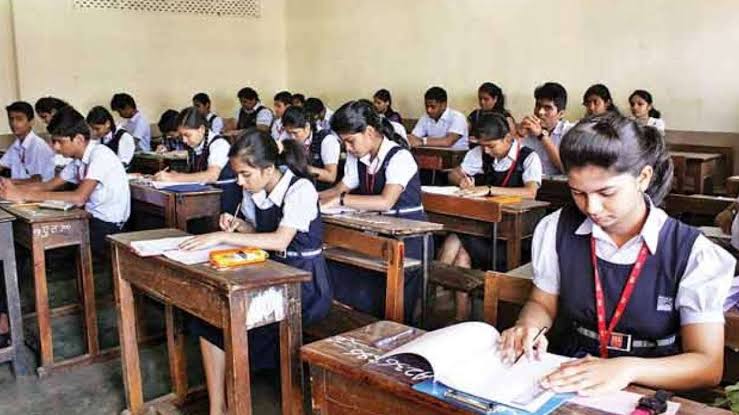
Schools in Bihar will partially reopen from September 28, for students of Class 9 to Class 12 belonging to non-containment zones. An order issued by the state education department on Tuesday said that Classes 9-12 students will be allowed to visit schools for seeking academic guidance, following health advisories and SOPs issued by the Central Government.

However, hostels and coaching institutes in the state will continue to remain closed. Classes 9-12 students visiting schools will be subject to written consent from parents, the order said.

Bihar School Reopening Guidelines & SOPs

  1. No students or teachers from containment zones to be permitted to attend the school
  2. Proper sanitization protocol, as laid out by the Health Ministry, has to be followed before the schools reopen and thereafter.
  3. Only 50 per cent teaching and non teaching staff allowed to schools on any given day
  4. Only one third of students allowed to attend classes
  5. School management would be required to prepare a schedule for the classes such that students are allowed to attend the classes for two days in a week
  6. Wearing for face mask is mandatory for students whilst in schools – in classrooms as well as on the campus
  7. Instructions to manage social distancing properly to be provided to students and strictly maintained
  8. Students will have to carry their own hand sanitisers and wash their hands at regular intervals

85% of the parents of this state are in favor of the school opening from September, the education department told the plan.

The biggest question among the Corona virus epidemic is about the opening of schools and colleges. Some people are in favor of opening the school and many are against it. Meanwhile, a survey has revealed shocking results. The survey has been conducted by the Education Department of the state Haryana adjacent to Delhi.

In this survey of Haryana Education Department, it has been found that about 85% of the students of class 10th and 12th in the state are in favor of opening school from September 2020. Despite the dangers of the Corona epidemic, these parents are ready to send their children to school.

The survey was conducted online by the state school education department. In this, parents of a total of 76,019 students of class 10th and 12th of various government schools of the state attended. It included a few schools from all the 22 districts of the state.

What questions were asked from parents
These four questions were asked by the education department to all parents –

  • Should schools be opened by September 2020?
  • Are parents ready to send their children to school from September 2020?
  • Have any of your family members conducted the Kovid test?
  • Have any of your family members been found to be Kovid positive? … so how will the schools be opened now.

An Education Department official said that ‘most of the students of 10th-12th students are in favor of opening of schools. Therefore, the department has decided to run trial run by opening two schools in different districts first. Government Senior Secondary School in Karnal and Government High School in Sonepat will be opened for four days. Dates will be revealed soon. ‘ In these four days, every movement of the school will be recorded on cameras. How students come to school, how they enter, how classes attend, or not touch each other, how they get out of school .. All these things will be recorded. Classes will be held in small groups instead of classrooms. After the trial, a team of seven members of the education department, including health and hygiene experts, will watch these video recordings to see if all the rules are being followed. If there is a shortage, teachers will be asked to remove it the very next day. These recordings will be shown to every teacher before school opens. The education department is preparing to open schools for class 10th and 12th from September 21.

Students have to submit written consent of their parents for this. An official of the Directorate of School Education has told that the ‘School Management Committee will conduct a survey from the parents of all the students from class 9th to 12th. If 60 percent or more of the parents are in favor of opening the school, it will be recorded in the school register. However, all these things are still in the planning stage.

Boon of the Mid-Day Meal

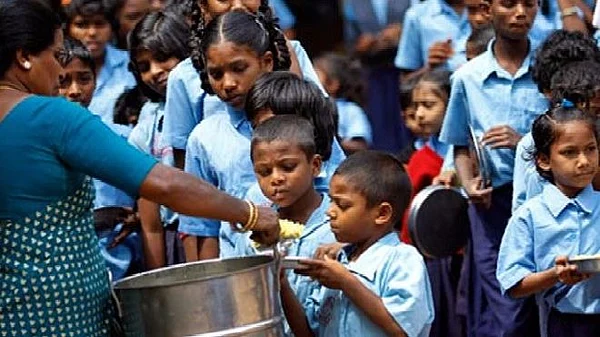
The very concept of Mid-Day Meal scheme was introduced on the year of 2000 by Akshaya Patra Foundation and was later passed as a mandate by Supreme Court of India on the year 2001. The sole purpose of the scheme is to provide wholesome freshly cooked hot lunch to all the students in the government and government aided schools in India. Usually the meal should be a whole mix of carbohydrates, proteins and various vegetables as per the bodily requirements of the children. The goal of such a scheme was to encourage the parents to send their wards to schools, to increase the school attendance and to do away with the norm of child labour, to prevent the child from being hungry at the time of attending the classes and thus to avoid malnutrition, and finally to improve the socialisation among the castes and last but not the least, to promote women empowerment.

The ultimate goal – to provide at least one of the three daily meals required for the proper growth of the children.

The scheme was institutionalized by the designated states and the schools and things were going fine until the pandemic hit the world. During the month of March, the lockdown was declared by the nation and there rose comprehensions among the low wage workers. They were worried about one of the most important thing on earth – what will happen to our mid-day meal and how can we arrange food for our children? The reason being the mid-day meal was one of the main reason as to why their parents sent their wards to school and they were worried about how to relinquish their daily requirements. But, like a godsend, the Government of India declared that even though the schools will be closed owing to the social distancing, the schools will still have to arrange the benefit of mid-day meal or any other substitute of equal value to the children and their families. Not only that, the Government also passed that if and when necessary, required assistance will be rolled out for the underprivileged.

Mid Day Meal: Latest news updates on Mid Day Meal - The Quint
Mid-Day Meal Scheme

The Government of India rolled out various schemes under which various states had to provide the mid-day meal scheme to the students. Some of such initiative are:

  • West Bengal – Ensured the distribution of the meals to their wards’ home amidst the curfew.
  • Odisha – Facilitation of Public Distribution System (PDS).
  • Chhattisgarh – Provision of mid-day meal to the parents of the children for about 40 days, with the difference in quantity by the primary and higher secondary school.
  • Kerala – Delivery of meal supplies to homes of their children.
  • Bihar – Transfer of the monetary amount of the mid-day meal, as a substitute of the food, to the accounts of their parents.
  • Maharashtra – Provision of the meals only to rural children.
  • Assam – Provision of mid-day meals to about 40 lakhs students.

Each and every state has taken the initiative to make sure that the meal reaches their students at times of distress. There also exists an underlying fear among the administration that if the meal is stooped, then it will automatically lead to the un-enrolment of the students whose attendance is already irregular and this will definitely push up the levels of illiteracy and unemployment.

States are putting in continuous efforts to make this journey smooth for the students. For instance, West Bengal has announced the decision to provide masks, sanitizer, as well as basic protein items such as pulses, soya bean which will be handed to the parents. They are going an extra length by providing stationery items to those students affected by Amphan.

It is very responsible on the part of Government of India to ensure the provision of mid-day meal and this help will definitely go a long way to build the future of India.

Source: https://timesofindia.indiatimes.com/india/bengal-government-to-add-mask-soap-to-mid-day-meal-items-in-covid-19-time/articleshow/76328492.cms

https://www.biharedpolcenter.org/post/covid-19-how-are-states-ensuring-midday-meals

Schools

 School, in its essence, serves as the foundational institution where young minds are nurtured, knowledge is imparted, and character is shaped. It’s a pivotal part of a person’s formative years, laying the groundwork for their future endeavors and shaping their perspectives on learning, society, and themselves.

In India, schools are diverse, ranging from government-run institutions to private schools, each with its unique characteristics, challenges, and advantages. These schools play a critical role in shaping the educational landscape of the country.

Government schools, despite striving to provide free education and cater to a large population, often grapple with issues like inadequate infrastructure, lack of resources, and teacher shortages. However, they play a crucial role in extending education to children from economically disadvantaged backgrounds, ensuring that education remains accessible to all.

On the other hand, private schools, known for better infrastructure and resources, often cater to a more affluent section of society. They generally offer a wider array of extracurricular activities and amenities, focusing not only on academics but also on holistic development. However, the accessibility of these schools to the masses remains a concern due to the associated costs.

The curriculum in Indian schools typically includes a mix of subjects ranging from mathematics, sciences, languages, social sciences, arts, and physical education. However, the emphasis on rote learning and examination-based assessment methods has been a longstanding criticism. This approach tends to prioritize memorization over conceptual understanding and critical thinking, posing a challenge to students’ overall development.

Beyond academics, schools also play a vital role in shaping students’ values, ethics, and social skills. They serve as spaces where students learn to interact, collaborate, and navigate social dynamics. Extracurricular activities, such as sports, arts, debates, and clubs, contribute significantly to a student’s holistic development, fostering skills like teamwork, leadership, and creativity.

The role of technology in schools has been evolving rapidly. Many institutions are incorporating digital tools and online resources to enhance learning experiences. The integration of technology, if used effectively, has the potential to personalize learning, make it more engaging, and broaden educational access.

Moreover, schools in India are gradually acknowledging the importance of mental health and well-being in a student’s overall growth. Initiatives focusing on counseling services, stress management, and creating a supportive environment for students are gaining traction.

As India progresses, the evolution of its school system is essential. Reforms that focus on revamping the curriculum, adopting more interactive teaching methodologies, empowering teachers through training and support, bridging the urban-rural educational divide, and promoting a more inclusive and holistic approach to education are vital for the future.

In essence, schools in India serve as the cornerstone of education, shaping young minds and preparing them for the challenges and opportunities of the world. Improving their quality, accessibility, and inclusivity is crucial for fostering a generation equipped with the skills, knowledge, and values to thrive in an ever-evolving society.

School

 Universities in India stand as the pinnacle of higher education, serving as hubs of knowledge, innovation, and cultural exchange. These institutions play a pivotal role in shaping the academic, professional, and personal growth of individuals while contributing significantly to the nation’s intellectual capital and development.

India boasts a rich tapestry of universities, from esteemed ancient institutions with centuries-old legacies to modern, specialized universities catering to diverse fields of study. The Indian higher education system comprises central universities, state universities, deemed universities, and private universities, each contributing uniquely to the academic landscape.

Historically, institutions like the University of Calcutta, established in 1857, and the University of Mumbai, founded in 1855, were pioneers in shaping modern education in India during the colonial era. Post-independence, institutions like the Indian Institutes of Technology (IITs) and Indian Institutes of Management (IIMs) have gained international recognition for their excellence in engineering, technology, and management education, respectively.

India’s university system encompasses a wide array of disciplines, offering programs in arts, sciences, engineering, medicine, law, humanities, social sciences, business, and more. These institutions serve as hubs for research and innovation, contributing to advancements in various fields and nurturing the next generation of scholars and leaders.

However, the higher education landscape in India faces several challenges. Despite the existence of renowned institutions, there’s a stark contrast in quality and resources among different universities. Some struggle with inadequate infrastructure, outdated curricula, and a shortage of qualified faculty members, affecting the overall educational experience.

Additionally, there’s a need for greater emphasis on research and innovation. While some universities excel in research output, there’s room for improvement in fostering a culture of innovation, encouraging interdisciplinary collaborations, and providing adequate funding and resources for research initiatives.

Another concern is the employability of graduates. The gap between industry requirements and academic curriculum often leads to graduates lacking practical skills and job readiness. Bridging this gap through industry-academia partnerships, internships, and skill development programs is crucial.

Furthermore, the accessibility and affordability of higher education remain significant challenges. Many talented individuals, especially from marginalized communities, lack access to quality higher education due to financial constraints and limited opportunities.

In recent years, efforts have been made to address these challenges. Initiatives like the National Institutional Ranking Framework (NIRF) aim to assess and rank institutions based on various parameters, encouraging healthy competition and quality enhancement. The implementation of new education policies, such as the National Education Policy 2020, focuses on holistic and multidisciplinary education, flexibility in curriculum, and the integration of technology.

The role of technology in higher education has been transformative, especially with the rapid adoption of online learning during the COVID-19 pandemic. Virtual classrooms, e-resources, and online courses have expanded educational access, enabling flexible learning opportunities and reaching a broader student base.

In conclusion, universities in India stand as pillars of higher learning and intellectual growth, contributing to the country’s intellectual capital and societal development. While progress has been made, there’s a need for continuous reforms, investment in infrastructure, faculty development, research, and inclusivity to ensure that higher education in India remains globally competitive and accessible to all deserving individuals.