To MARS, Or Not To MARS ?

Strap yourself in, we are going on a trip in our favorite rocket ship, steering through the clouds like little Einsteins. Climb aboard and get ready to explore, the Red Planet- Mars. From hostile deserts, to lonely islands and the highest mountains, wherever there is space to expand into, humans do so.

Hence it is hardly surprising that we are all ready to set foot into Mars and create the first permanent colony outside of Earth maybe even terraform another planet and turn it into a second blue home.

If you don’t know who is Elon Musk, then you better start googling his name and get to know him. Not only is he the billionaire founder of Tesla Motors, this a.k.a. Iron man superhero Tony Stark has ambitious plans to send humans to Mars by 2025.

If this is a trip then like any other, there is a need for a checklist with list of items to be taken to Mars and items we can conveniently leave back on Earth. Let’s get started fellow Martians.

A MARS COLONY CHECKLIST :

  • PORTABLE OXYGEN GENERATOR- You need to breathe. In case of emergency, a standby kit to generate oxygen is required. But considering humans, we might need a mask too because air is our favourite natural element to pollute.
  • PORTABLE SOLAR POWER KIT- Low battery and no charger sounds as scary as the trip itself. Whatever electronics you are bringing, as long as there is no electricity, forget about your entertainment. You don’t want to die of boredom.
  • PORTABLE WATER FILTER- We know there is frozen water on the planet. But we dont know if ita drinkable. All the ice deserves a drink, so bring a filter and soda-making machine if excess luggage permits (check with your airline)
  • PLANT SEEDS- Once you run out of your snacks you should look into farming. Be prepared, bring some seeds and check some tutorials on gardening (preferably in space).
  • LONELINESS- Self isolation might be needed to avoid radioactive exposure, well looks like the year 2020 is indeed a good practice for it. Also aren’t we all lonely from inside (No? just me? Okay…. *crawls back into my hole*)
  • NUCLEAR REACTORS- For creating a safe atmosphere and not the nuclear weapons that Nations own for “defense purposes” Let those weapons stay on Earth along with the people who threaten to use them because there isn’t much spice in their lives.
  • MULTIMILLION DOLLAR SPACESHIP – So large that it could fit the 150 Million homeless around the world, people who have been disappointed by the Politicians and their promises.
  • A HIGH TOLERENCE – A tolerance level higher than what we have to everything on social media and to the lifestyle of new generations.
  • MAA KE HAAT KA KHANA – A nice Tupperware tiffin box with food made by your Moms because, The M.O.M on Mars doesn’t cook or do ALL your work. (M.O.M –Mars Orbiter Mission also called Mangalyaan)

Lastly a desire to get away from it all. Elon Musk is not crazy, but a visionary, a modern adventurer who dares to dream. NASA is behind him by committing to send the first batch of astronauts on his mission. More than 200,000 people have signed up for the one-way ticket to Mars including Leonardo DiCaprio. Musk hopes to send 1 million people to the Red Planet and a ticket is estimated to cost around USD200,000 for each passenger (Hefty I know, but you get to travel with Leo as your travel buddy, hopefully this space- SHIP doesn’t sink).

Well as scary and uncertain as everything sounds it all comes down to one very important factor, Does Mars have Wi-Fi?
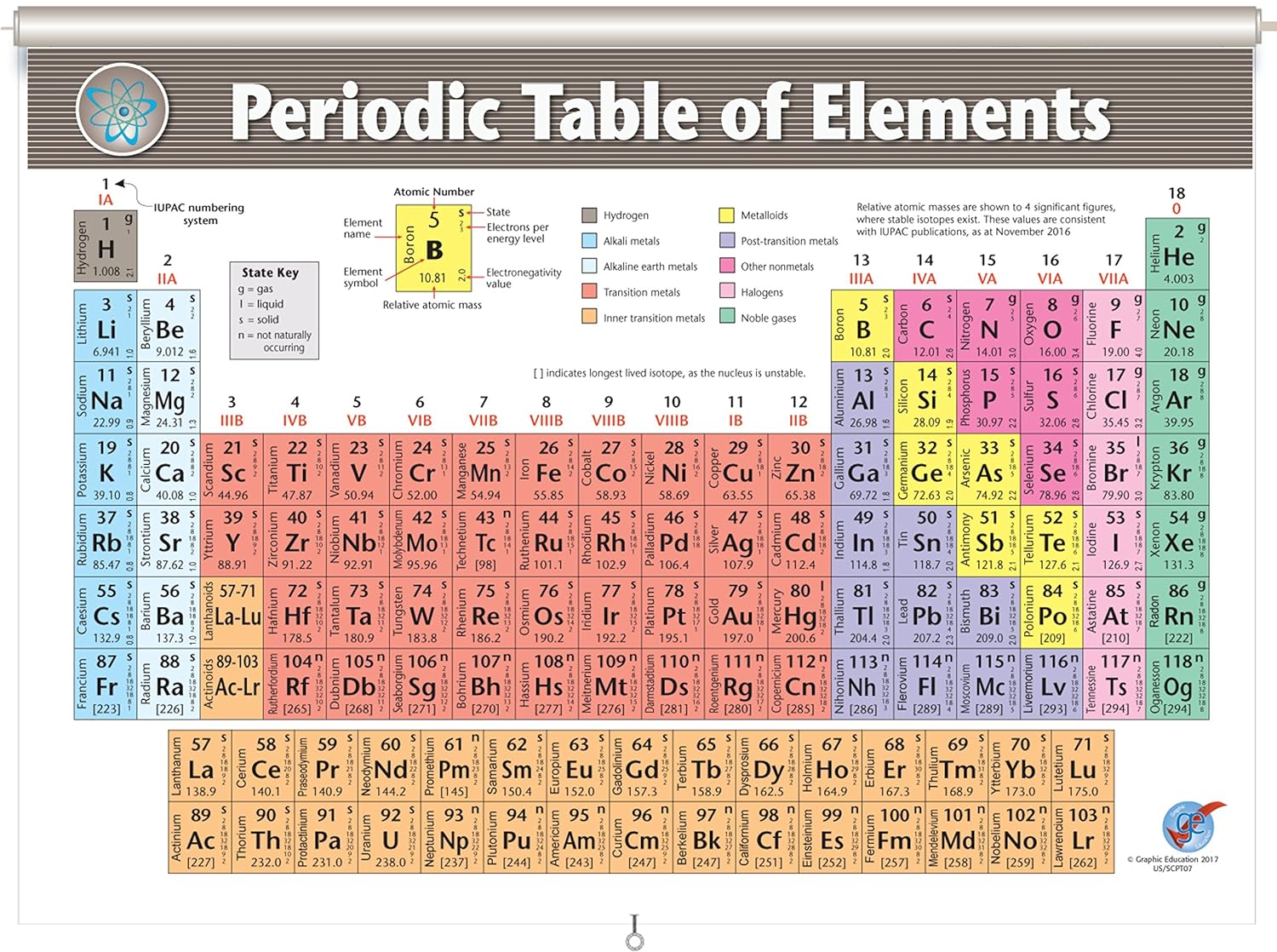

The Development of Periodic Table

Periodic Table of Elements Wall Chart (2020) on Spring Roller with ...


What is a Periodic Table ?

Periodic Table is a tabular arrangement of elements, based on their electronic configurations, increasing atomic number and chemical proper

Need of Periodic Table ?

The periodic table is important because it is organized to provide a great deal of information about elements and how they relate to one another in one easy-to-use reference .It describes the atomic properties of every known chemical element in a concise format, including the atomic number, atomic mass and relationships between the elements. Elements with similar chemical properties are arranged in columns in the periodic table.

History of Periodic Table

  1. Dobereiner’s Triads – When elements are arranged in the order of their increasing atomic masses, the atomic mass of the middle element was approximately the average of the atomic masses of the other two elements. Eg – Li(6.9),Na(23),K(39)
  2. Newlands’ Law of Octaves – According to this ‘when elements are placed in order of increasing atomic masses, the physical and chemical properties of every 8th element are a repetition of the properties of the first element.’

Limitations of NewLands’ law of Octaves –

  • Newland could arrange elements only up to calcium, out of the total 56 elements known.
  • Same Elements were arranged in 2 slots which differed in property.
  • Law of octaves was applicable only upto calcium (only for lighter elements)
  1. Mendeleev’s Periodic Table –Mendeleev believed that the atomic mass of an                      element was the most fundamental property in classifying elements. He arranged              elements in the increasing order of their atomic masses and observed that the
    elements showed repetition after certain intervals in their physical and chemical                properties.

Merits of this arrangement – 

  •   Vacant spaces were left for undiscoverd elements like eka-aluminium and eka-         silicon.
  • Left Space for Noble Gases
  • Mendeleev’s periodic table was predicted properties of several undiscovered elements on the basis of their position in Mendeleev’s periodic table.

 Demerits of this arrangement :-

  • A correct position could not be assigned to hydrogen in the periodic table.
  • Position of Isotopes was ambiguous.
  • At certain places, an element of higher atomic mass was placed before an element of lower atomic mass.
  1. Modern Periodic Table – In 1913, Moseley, a student of Mendeleev, showed that                the periodicity was a property of Atomic Number and not Mass Number.Modern                periodic table is based on atomic number of elements.

Advantages of Modern Periodic Table –

  • All elements are fundamentally arranged according to their atomic number. So it becomes easy to understand and compare their properties, thereby making it easier to remember the position of the elements
  •  The position of the elements in the periodic table makes it easy to predict and compare their properties, and explains the reason for their specific position in the periodic table
  • It gives explanation for the periodicity of elements and tells the reason why all elements in a group having similar properties, which differ between the gropus and periods
  • Positions of isotopes are taken care of within the element itself, unlike in Mendeleev periodic table.
  • In the Modern periodic table, the metals, non-metals, transition metals, gases are separately placed in a specific location with a specific identity.


Facial recognition technology and how its affecting us.

Technology, evolving everyday getting smarter and smarter in order to ease our daily lives. One such technology is the facial recognition technology. It is the not only a hot brand on the tech market but also on the television front, it has been showcased in Tv shows and movies for years. Like any other technology it grows sophisticatedly and its usage has also expanded accordingly. These sensors have been upgraded to such a level that they can uniquely identify not just faces or animals but every individual fish that it can scans. That is the level of sophistication the facial recognition technology has achieved, but with its expanse it also brings about numerous privacy and civil liberty issues that need to be addressed. The biggest users of this technology worldwide are the Law enforcement departments. The use of this is so blatant that in an estimate around one in every two American has had their photos searched in this manner. Whenever this issue is raised not just in America but in any of the countries that this is so widely used, the authorities use the “we want to prevent atrocities” line, which would be sufficient if it did not come at the price of personal freedom.

Photo by Andrea Piacquadio on Pexels.com

 Many countries have used this extensively but none other than china, the leading brand for infringing people’s right. They use a project called “Skynet” to monitor nearly every person’s movement, which includes whom you meet, where you go and even track all your movement for the past week. What makes this technology even worse is that even though it is still being used it is still a work in progress, which means its error rate is very high with only a measly 20% success rate. Even though this has such a large failure rate, nations worldwide continue to use it. Just a few years back Sri Lankan authorities mistakenly linked a Brown university student to a terrorist attack. With all of these concerns, a public domain company Clearview.ai has launched its services. To put this into perspective, Clearview.ai has collected data from nearly 3 billion images, which to this date is larger than any other facial recognition database on this planet. The founder Hoan Ton-That has scrapped photos from nearly all publicly available domains, and has become a front runner in the worst possible way. With their below the belt techniques and illegal means of acquiring photos of people, the company has also received cease-and-desist order from Facebook, YouTube and twitter this year. However, they have refused to do so and in fact even going so far as to claim that they have a first amendment right to harvest data, which is completely false. What is of a greater concern is that Hoan has previously developed apps like ViddyHo which tricked its users into sharing their emails and then spammed their contacts. Not only this but since its emergence Clearview.ai has tried to pitch itself to white supremacist candidates to ensure their victory. They have even quietly tried to offer their services to entities in Saudi Arabia and the United Arab Emirates who have had a history of human rights violations. With such a large freehand to companies like Clearview.ai we seem to be headed to some dark times indeed.

What could be done to limit these companies are stringent laws to be placed so that companies are required to acquire permission from the person they are collecting data from. We individually cannot do much for this however with a comprehensive nation-wide policy some measure can be taken to ease the illegal flow of information that companies like Clearview.ai seem to obtain.

What happens next is for all of us to see.

Department of Science & Technology (DST)

Department of Science & Technology (DST) was established in May 1971, with the objective of promoting new areas of Science & Technology and to play the role of a nodal department for organising, coordinating and promoting S&T activities in the country. The Department has major responsibilities for specific projects and programmes as listed below:

  1. Formulation of policies relating to Science and Technology.
  2. Matters relating to the Scientific Advisory Committee of the Cabinet (SACC).
  3. Promotion of new areas of Science and Technology with special emphasis on emerging areas.
    1. Research and Development through its research institutions or laboratories for development of indigenous technologies concerning bio-fuel production, processing, standardization and applications, in co-ordination with the concerned Ministry or Department;
    2. Research and Development activities to promote utilization of by-products to development value added chemicals.
  4. Futurology.
  5. Coordination and integration of areas of Science & Technology having cross-sectoral linkages in which a number of institutions and departments have interest and capabilities.
  6. Undertaking or financially sponsoring scientific and technological surveys, research design and development, where necessary.
  7. Support and Grants-in-aid to Scientific Research Institutions, Scientific Associations and Bodies.
  8. All matters concerning:
    1. Science and Engineering Research Council;
    2. Technology Development Board and related Acts such as the Research and Development Cess Act,1986 (32 of 1986) and the Technology Development Board Act,1995 (44 of 1995);
    3. National Council for Science and Technology Communication;
    4. National Science and Technology Entrepreneurship Development Board;
    5. International Science and Technology Cooperation including appointment of scientific attaches abroad (These functions shall be exercised in close cooperation with the Ministry of External Affairs);
    6. Autonomous Science and Technology Institutions relating to the subject under the Department of Science and Technology including Institute of Astro-physics, and Institute of Geo-magnetism;
    7. Professional Science Academies promoted and funded by Department of Science and Technology;
    8. The Survey of India, and National Atlas and Thematic Mapping Organisation;
    9. National Spatial Data Infrastructure and promotion of G.I.S;
    10. The National Innovation Foundation, Ahmedabad.
  9. Matters commonly affecting Scientific and technological departments/organisations/ institutions e.g. financial, personnel, purchase and import policies and practices.
  10. Management Information Systems for Science and Technology and coordination thereof.
  11. Matters regarding Inter-Agency/Inter-Departmental coordination for evolving science and  technology missions.
  12. Matters concerning domestic technology particularly the promotion of ventures involving  the commercialization of such technology other than those under the Department of  Scientific and Industrial Research.
  13. All other measures needed for the promotion of science and technology and their  application to the development and security of the nation.
  14. Matters relating to institutional Science and Technology capacity building including setting  up of new institutions and institutional infrastructure.
  15. Promotion of Science and Technology at the State, District, and Village levels for grass- roots development through State Science and Technology Councils and other mechanisms.
  16. Application of Science and Technology for weaker sections, women and other disadvantaged sections of Society.