
First step by India to become a major semi-conductor manufacturing hub, Vedanta-Foxconn project .

Semiconductors are materials that have electrical conductivity between conductors generally metals and non-conductors or insulators. Due to their role in the fabrication of electronic devices, semiconductors are an important part of our lives. Anything that’s computerized or uses radio waves depends on semiconductors. Semiconductors are an essential component of electronic devices, enabling advances in communications, computing, healthcare, military systems, transportation, clean energy, and countless other applications.

The country responsible for the most semiconductors in the world is China, Taiwan, South Korea, and Japan. The Indian semiconductor market was valued at USD 27.2 billion in 2021 and is expected to grow at a healthy CAGR of nearly 19 percent to reach $64 billion in 2026. But none of these chips is manufactured in India so far.

A joint venture of the Indian conglomerate Vedanta and Taiwanese electronics manufacturing giant Foxconn signed a Memorandum of Understanding on September 14 2022 with the Gujarat government to set up a semiconductor and display manufacturing unit in the state. The project is worth around 20 billion USD. This upcoming facility will mark the beginning of chip manufacturing in India. This is also strategically important for India because it will reduce our dependence on other countries.

Out of the total investment of Rs 1,54,000 crore, Rs 94,000 crore will go into setting up the display manufacturing unit while Rs 60,000 crore will be invested for the semiconductor manufacturing facility, the official said in event of MoU. The FAB (fabrication facility) manufacturing unit in the state facility in Gujarat would create one lakh job opportunities.

As per the MoUs signed by both parties, the Gujarat government will facilitate the investor in obtaining necessary permissions and clearances from the state departments concerned. Among the subsidies and assistance under the state policy, Gujarat will provide additional capital assistance at 40 percent of the capital expenditure assistance extended by the Centre for the projects approved under the India Semiconductor Mission. One-time reimbursement of 100 percent stamp duty and registration fees paid to the government, fixed water tariff at Rs 12 per cubic meter for five years, and a capital subsidy of 50 percent for a desalination plant are the financial benefits under the new policy.

A massive shortage in the semiconductor supply chain last year affected many industries, including electronics and automotive. To cut dependence on imports from nations like Taiwan and China, the government brought a financial incentive scheme for manufacturing semiconductors in the country. Vedanata-Foxconn is one of the successful applicants for the Production Linked Incentive (PLI) scheme for semiconductors and is also a step towards achieving self-reliance in the semiconductor field for the country.

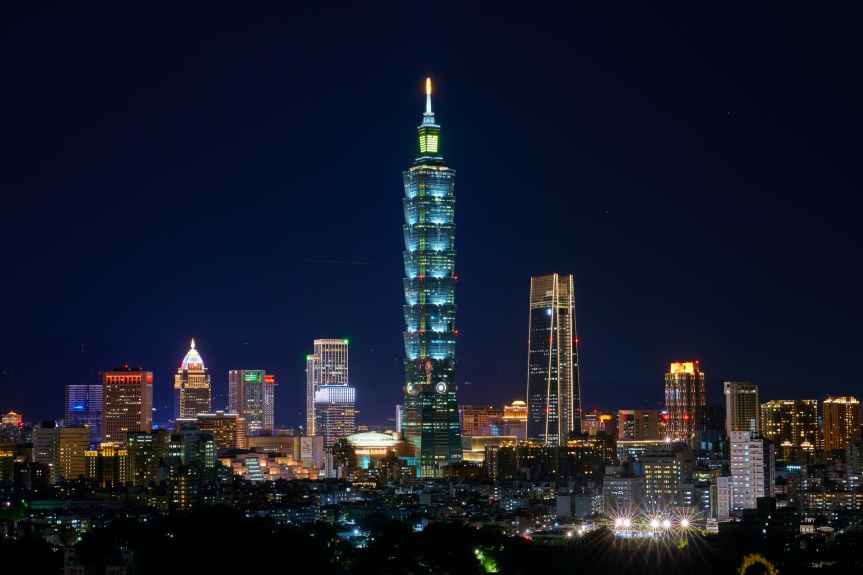
Prevailing Semiconductor Crisis.

Already under pressure due to the surging demand for semiconductors amid the COVID-19 pandemic followed by the Russia-Ukraine war and now inflation, the chip industry is now witnessing signs of stress following US House Speaker Nancy Pelosi’s visit to Taiwan.

The effects of the global chip shortage last year, highlighted the world economy’s reliance on Taiwan. The semiconductor shortage had massive knock-on effects for the auto industry, for example, forcing many large firms to halt production. Taiwan Semiconductor Manufacturing Company (TSMC) is the world’s largest chip foundry and it’s Apple’s main producer of chips. During her visit to Taiwan, Pelosi met Mark Liu, chairman of the TSMC.

Cutting TSMC off from the rest of the world would currently be a major threat to the global economy, so tensions are obviously high. If production were to stop at the Taiwanese manufacturer, supply shortages would inevitably occur. These shortages could cause a global recession and stock market crash, which would likely lead to a spike in unemployment numbers at a time when many countries like the UK are currently enduring an ongoing cost of living crisis. 

The negative consequences that dependencies such as these can have are currently being demonstrated more clearly than ever before by the war in Ukraine. To avoid the downside of globalization, countries are therefore increasingly turning to their own chip or semiconductor production. This is not only the case in China. In the USA and Europe, too, there are programs with the Chips Act for America and the European Chips Act, respectively, which are intended to ensure local semiconductor production.

Seeing the situation, the Indian government has launched the ‘Semiconductor Mission’ to establish a self-reliance and give boost to India’s fast-expanding electronics manufacturing and innovation ecosystem. The Union Cabinet has approved the ‘Semicon India’ programme with a total investment of Rs 76,000 crore in the growth of the country’s semiconductor and display manufacturing ecosystem. Through India Semiconductor Mission (ISM), the central government wants to encourage the use of secure microelectronics and the establishment of a reliable semiconductor supply chain, including raw materials, speciality chemicals, gases, and production equipment.

The Semiconductor shortage

Semiconductors are defined as  crystalline or amorphous solids that have electrical conductivity opposite at temperatures to those of metal, higher electrical resistance than typical resistant materials, but still of much lower resistance than insulators.  Semiconductors can be pure elements, such as silicon or germanium, or compounds such as gallium arsenide or cadmium selenide.

Some facts about Semiconductors :

1. Conducts electric current less than a conductor and higher than insulator.

2. Has high resistance and negative temperature coefficient.

3. Formed due to covalent bonds

4. A semiconductor chip is an electric circuit with many components such as transistors and wiring formed on a semiconductor wafer. An electronic device comprising numerous of these components is called Integrated Circuit (IC), and can be found in electronic devices such as computers, smartphones, appliances, gaming hardware and medical equipment.

Taiwan is the world’s leading producer of semiconductors and other electronic components.The Taiwan Semiconductor Manufacturing Company (TSMC) has more than 55 per cent of the global market share in the production of high-end custom-made chips.Of the two rival companies that have survived, US-based Intel is in trouble and Korea’s Samsung has challenges of its own.

Due to the pandemic and the series of lockdowns being imposed, the world has been facing a shortage of semiconductors which has been affecting the industries dependent on them.The increase in chip consumption over the last decade is also partly attributable to the rising contribution of electronic components in a car’s bill of materials.Especially the car manufacturers and consumer electronics manufactures, have not been receiving enough of this crucial input to continue production.

This shortage has caused delayed vehicle deliveries, as carmakers in order to make just in time car deliveries , typically kept low inventory holdings and relied on an electronics industry supply chain to feed production lines as per demand. This has not only affected the international markets , but also affected the India based vehicle manufactures to curtail the production.

Also due to geopolitical tensions in Taiwan , prominently from China, this has opened an opportunity for India to realize it’s capacity and make positive changes in it.It should make extra efforts to solidify strategic-economic cooperation between Delhi and Taipei and make them more stronger.

Trade has increased from about $1 billion in 2001 to about $7 billion in 2018 . India has made a special effort to woo Taiwanese companies that are moving some of their production away from China.

India should continue to make it’s presence in Indo- Pacific stronger, and also come to terms with Taiwan’s critical role in shaping the strategic future of Asia’s waters.