IAF CONCLUDES 3RD 'WARFARE & AEROSPACE STRATEGY PROGRAM' (WASP) WITH A CAPSTONE SEMINAR

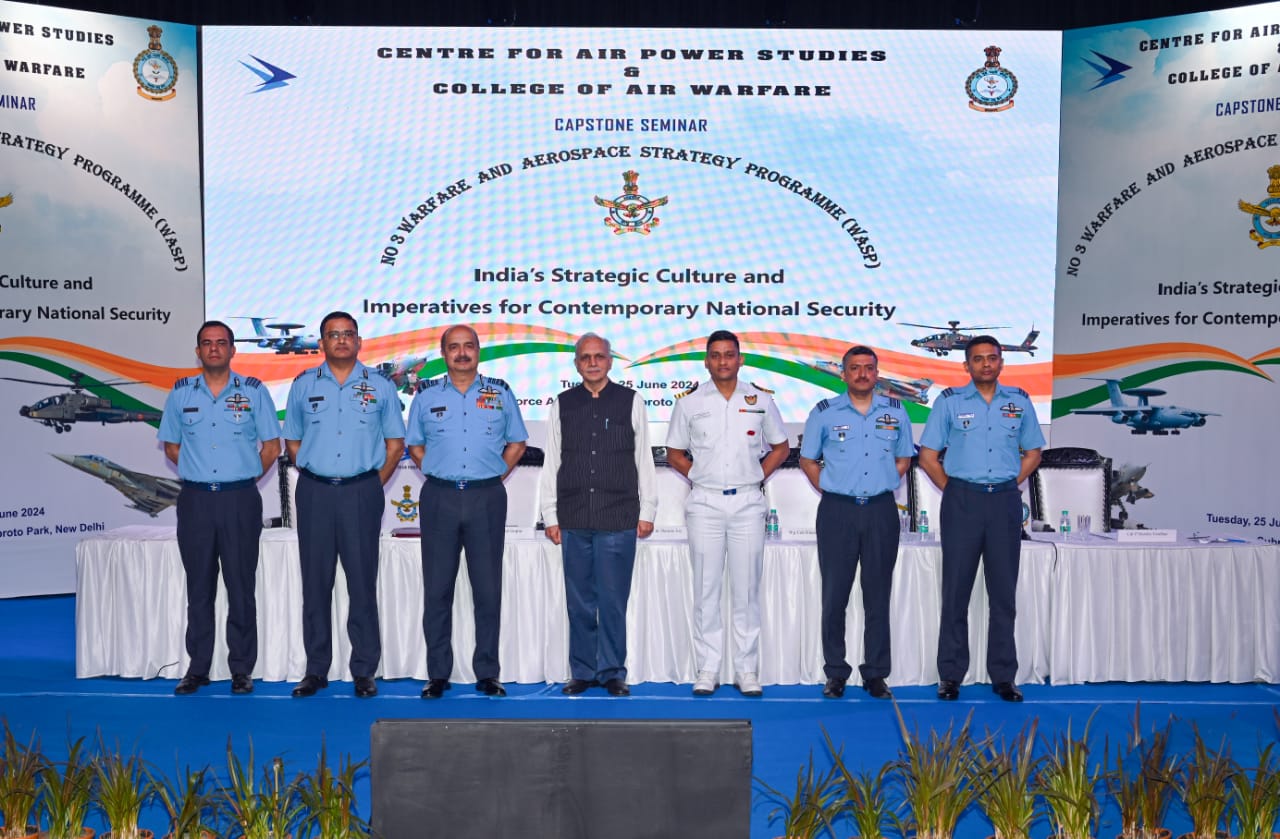
 Indian Air Force today conducted a capstone seminar marking the culmination of the No. 3 Warfare & Aerospace Strategy Program (WASP) at the Air Force Auditorium, New Delhi. The seminar with the theme “India’s Strategic Culture and Imperative for Contemporary National Security’ was conducted under the aegis of the College of Air Warfare and Centre for Air Power Studies.

 WASP is a strategic education programme of 15 weeks duration which was started in 2022 to provide the participants with a deep understanding of geo-politics, grand strategy and Comprehensive National Power. The broader aim is to nurture critical thinkers who can blend cross-domain knowledge to generate policy-driving ideas at the strategic level.

This edition of WASP saw tri-services participation for the first time. The participants comprised fourteen officers from Indian Air Force, two officers from the Indian Navy, one officer from the Indian Army and a research scholar. The participants underwent intensive training in the fields of Strategy, Military History, Civil-Military relations, Higher Defence Organisation, Aerospace Power, Information Warfare, Technology and Hybrid Warfare. The program was guided by an external faculty consisting of accomplished practitioner-scholars with extensive teaching and research experience. The graduates of the program were awarded a PG diploma in Strategic Studies by Rashtriya Raksha University.

Air Chief Marshal VR Chaudhari, Chief of the Air Staff (CAS), delivered the keynote address of the seminar which was attended by Gen Anil Chauhan, Chief of the Defence Staff, Gen Manoj Pande, Chief of the Army Staff, senior officers from all three services, aerospace power scholars, academia and established defence correspondents. He highlighted that the dynamic environment of modern warfare demanded that military leaders not only be adept at combat, but also possess strategic thinking ability and grasp of the evolving geo-political landscape. The CAS congratulated the course participants for successfully completing the rigorous program. While concluding, the CAS complimented the mentors who guided the participants through the programme and urged them to continue with the same zeal in the forthcoming editions of the WASP.

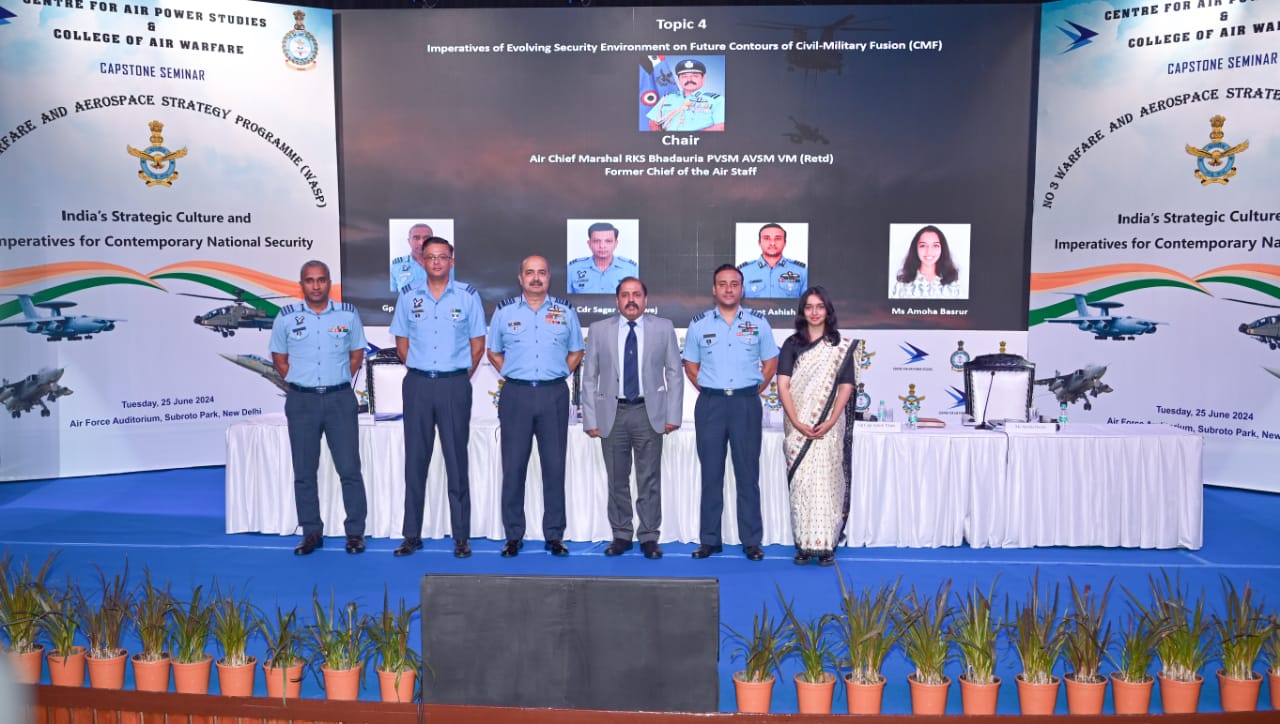
In the first session of the Seminar, the participants presented their papers on the topics of ‘Examining International Relations through India’s Strategic Culture’ and ‘Military Outlook through Strategic Partnerships’. This was followed by the second session, which saw them discussing ‘Evolution of Civil-Military Relations in India’ and ‘Imperatives of Evolving Security Environment on Future Contours of Civil-Military Fusion (CMF).

***

INDIAN ARMY CONDUCTS A SEMINAR CUM EXHIBITION ON THEME “YEAR OF TECH ABSORPTION, EMPOWERING THE SOLDIER”

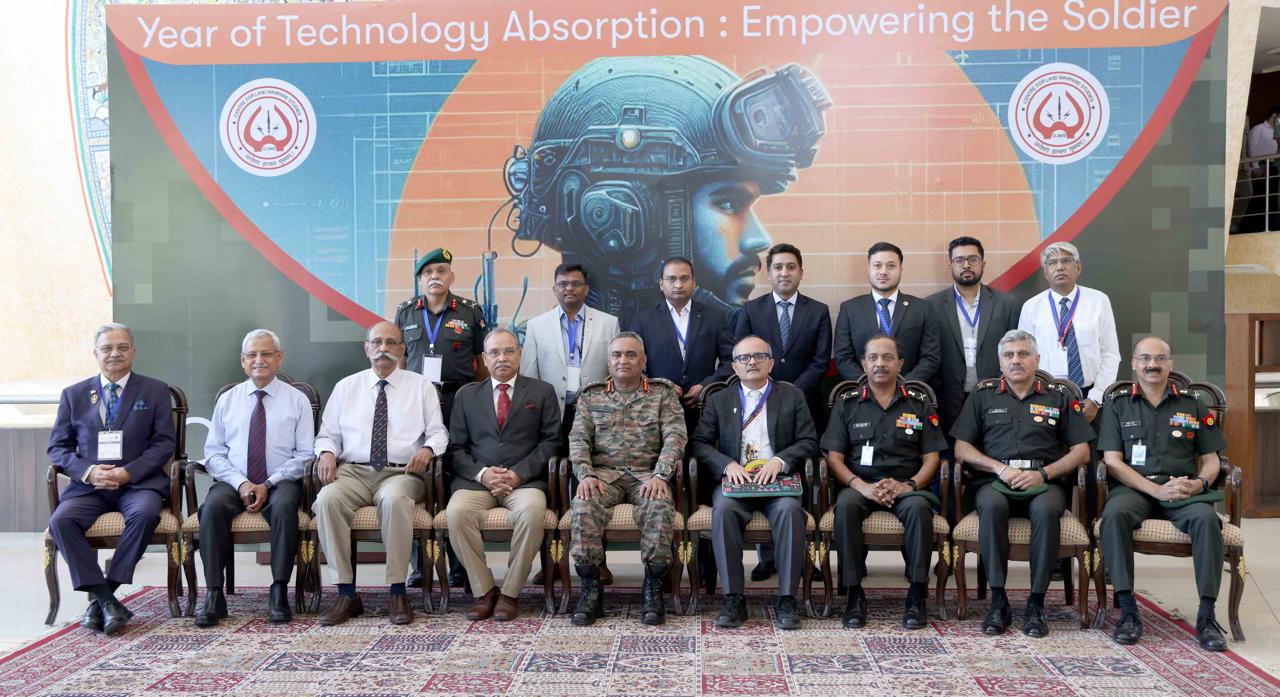
 A seminar cum exhibition was conducted today by the Indian Army on the theme “Year of Technology Absorption – Empowering the Soldier”. The event was conducted by the Centre for Land Warfare Studies (CLAWS), on behalf of the Indian Army in Manekshaw Centre.

The seminar brought together technology experts and industry professionals to deliberate on the adoption of modern technologies like Artificial Intelligence and advanced hardware in the military domain. It aimed at fostering a collaborative environment for academia and the defence industry to fast-pace the ongoing initiatives for technological absorption in the military.

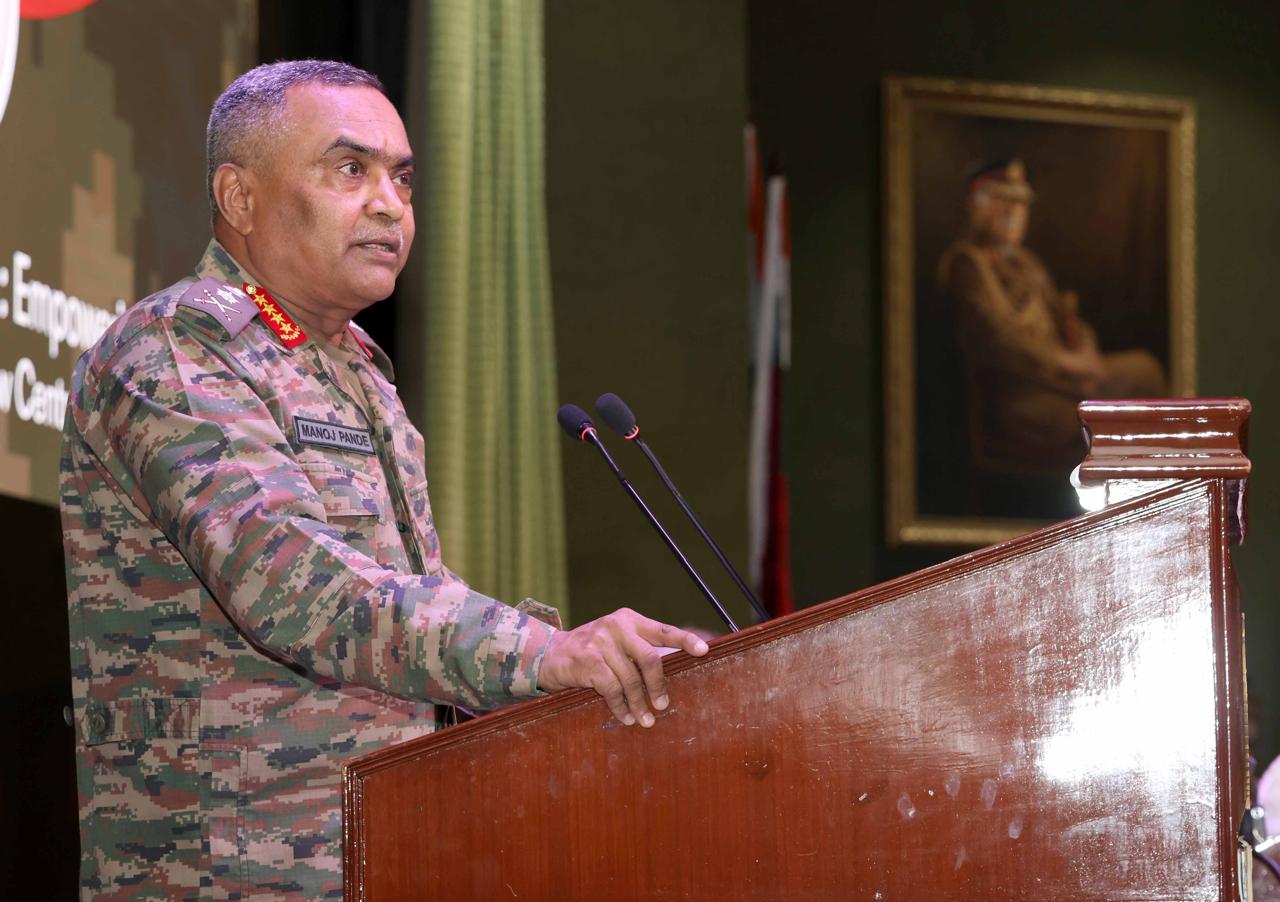
The event commenced with an inaugural address by General Manoj Pande, Chief of the Army Staff (COAS). Keynote Address was delivered by Dr Chintan Vaishnav, Mission Director, Atal Innovation Mission (AIM, NITI AAYOG). This was followed by an exhibition, demonstrating the progress and capabilities of India’s Defence Sector.

The COAS underscored the vital need of being self-reliant in warfighting platforms and systems besides achieving self-sufficiency in critical technologies through indigenous Research & Development. He emphasised that the Technology has emerged as the new strategic arena of competition which drives geo-political powerplay. He also said that technology is being leveraged for weaponisation of varied domains, ranging from Information to Supply Chains. Citing examples from recent conflicts, he mentioned that disruptive and dual use technologies are proliferating at unprecedented scale and transforming the Character of Modern Wars.  He mentioned that a suite of digital technologies encompassing Electronic Warfare, Micro-electronics, Drones, Precision Attack Systems, Loiter Munitions and Star-link Terminals are challenging traditional force multipliers.

The COAS reiterated the commitment of Indian Army to continue its pursuit towards transitioning into a modern, agile, adaptive and technology enabled future ready force. He urged all stakeholders, the Services, Industry Partners, Start-Ups, Research & Development institutions, Academia and Policy Makers to synergise their efforts and develop a vibrant national defence eco-system.           

The seminar was conducted in three sessions, with first session focussed on “Contemporary Technology and Industry Capabilities”. The session was moderated by Lieutenant General Vineet Gaur, Director General Capability Development and the speakers were eminent personalities from academia and industry such as Prof Mayank Vatsa (IIT Jodhpur), Dr Mandira Majumder, Shri Rajiv Mehrotra, Shri Vaibhav Gupta, and Colonel Karandeep Singh (Retired). This session analysed the emerging role of the Indian Defence Industry in strengthening of overall defence architecture. The speakers also deliberated upon the technology developed so far and future roadmap to build cutting-edge technologies for military usages.

The second session was moderated by Lieutenant General Subrata Saha (Retired) and focussed on “Empowering Soldiers: Amplifying Impact Through Modern Technologies”.  Major General Sunil Mehrotra from Signals Directorate and Shri SB Taneja from DRDO examined options to leverage present and next-generation technologies to enhance the capabilities of Indian Army. Looking beyond the domain of land, this session analysed the role of space and cyber domains in the present context and future scenarios.

The final session on “Maximising Technology Effectiveness & Soldier Preparedness” was moderated by Lieutenant General PR Shankar (Retired). The speakers were Lieutenant General Rajesh Pant (Retired), Mr Geo George Philip, Dr K Mohanavelu, and Major General Ajay Sharma. The participants brainstormed wide-ranging options ranging from military applications of cyberspace, impact of drones and satellites on the modern battlefield, besides delving upon hardware and software options to empower soldiers.

The seminar culminated with closing remarks by Lieutenant General Tarun Kumar Aich, Deputy Chief of the Army Staff (Strategy). Reflecting positive thoughts on impressive trajectory of Indian Army’s transformation, he reiterated that adoption of niche technology in tandem with agile doctrinal reforms is extremely crucial. He also stated that Indian Army will continue to foster a spirit of collaboration with the industry and academia to empower the soldiers.       

The proceedings underscored the importance of technology absorption in empowering soldiers besides providing a snapshot of available solutions and highlighted the contributions of the Indian Defence Industry, delineating their strengths, future trajectories, and their pivotal role in ensuring future ready armed forces. 

****

One Day Seminar on Cyber Security

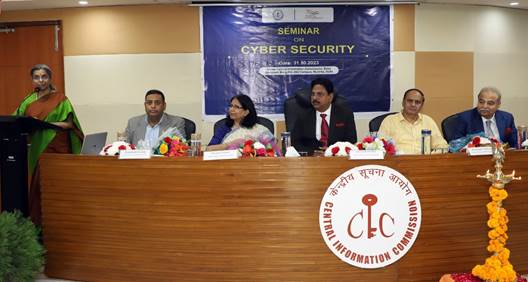
 The Central Information Commission organized a One Day Seminar on Cyber Security yesterday. Sh. Suresh Chandra, Information Commissioner graced the inaugural ceremony as Chief Guest, Mr. Heeralal Samariya, Ms Saroj Punhani and Mr. Uday Mahurkar, Information Commissioners were the Guests of Honour. Ms. Rashmi Chowdhary, Secretary, CIC welcomed all the Guests and participants. Mr. Somnath Banerjee, CISO & Sr. Vice President Global Services delivered the keynote address.

Ms Rashmi Chowdhary, Secretary CIC, in her welcome address emphasized about the importance of Cyber Security and encouraged the participants to actively engage in the discussions and reap the benefits of attending the informative Seminar.

Mr. Somnath Banerjee, CISO & Sr. Vice President Global Services, through his keynote address made the audience aware of the threats and challenges of Cyber Security.He also covered many interesting facts and anecdotes later in his session on the topic ‘Cyber Threats and Countermeasures’. The audience interacted with him and increased their knowledge on the topic.

Mr. Syed Hasan Mehmood, Joint Director, NIC-CERT enlightened the audience on the topic ‘Cyber Security Guidelines for Government Employees’. He explained the do’s and don’ts of Cyber world and importance of Cyber Hygiene.

Ms. Anjana Choudhary and Mr. Wadhawan spoke about the solution that can provided for the problems discussed so far in the name of threats and vulnerabilities.

Mr. Pawan Kumar, Sr. Vice President (Legal) and Head (Litigation), emphasized on importance and utmost need of Cyber Security in Financial matters through the topic ‘Scientific Analysis of Evidence in Cyber Crime Cases, Bank Frauds etc.’

Mr. Shiv Kumar, Sr. Director (IT) acted as a master of ceremony of the event. Ms. Roop Avtar Kaur, Additional Secretary, CIC proposed the Vote of Thanks to all. The Seminar was attended by approximately 170 Officers and staff of CIC.

*****

SNC/PK

Two-day training programme for chefs/cooks serving at various paramilitary and other government canteens

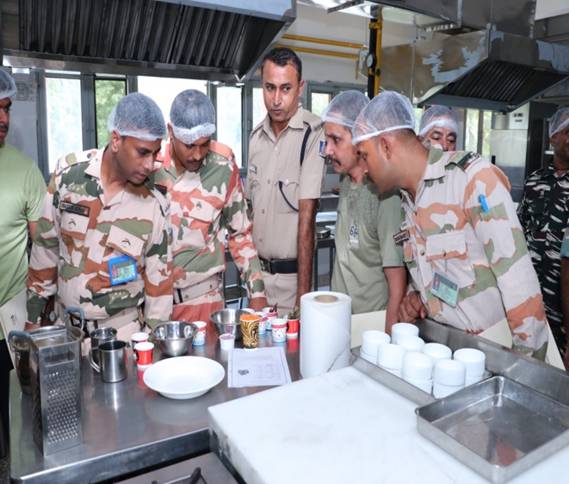
 Department of Agriculture and Farmers’ Welfare is organizing an immersive two-day training programme inviting more than 200 chefs/cooks serving at various paramilitary and other government canteens, focusing on millet-based recipes. The training programme commencing today, aims at encouraging the participant chefs to include simple yet nutritious millet-based items in their respective menus and promote the consumption of millets across wider population. It will familiarize the participants to a variety of millet-based recipes, ranging from simple snacks to wholesome meals, and will encourage them to include it in respective canteens that they work with.

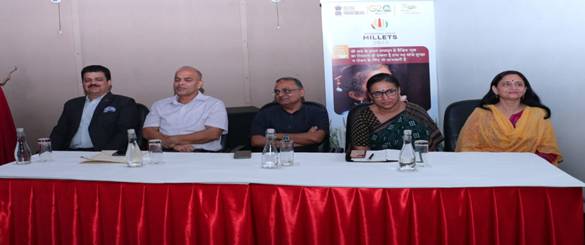
Additional Secretary, Shri Faiz Ahmed Kidwai, Additional Secretary, Smt. Maninder Kaur Dwivedi, and JS (Crops) DA&FW, Smt. Shubha Thakur, along with the other officials attended the event and encouraged the participants to adopt millets in their daily diet and join the ‘millet movement’ of the nation for the benefit of consumer, cultivator and climate.

2.jpeg

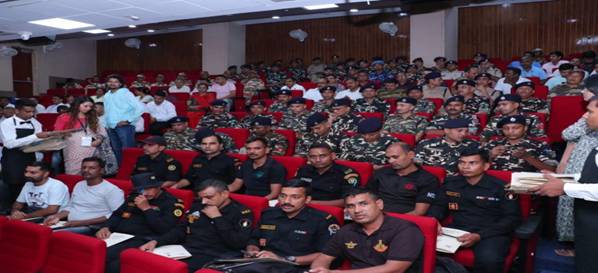
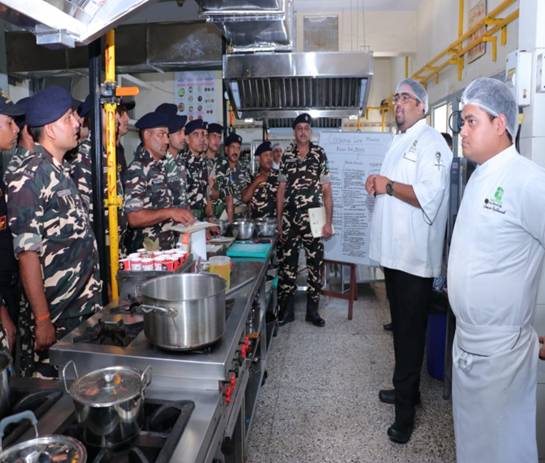
A culinary training session for more than 200 chefs and cooks working with the paramilitary forces, namely, Assam Rifles, Border Security Force (BSF), Central Industrial Security Force (CISF), Central Reserve Police Force (CRPF), Indo-Tibetan Border Police, National Security Guard, Sashastra Seema Bal, and various government canteens is being organized at the Institute of Hotel Management (IHM), PUSA, by the Department of Agriculture and Farmers’ Welfare (DA&FW), Ministry of Agriculture and Farmers’ Welfare.

 1.jpeg

Shri K.K. Pant, Principal, IHM welcomed dignitaries and participants in the auditorium and emphasized millets’ role in meeting holistic nutritional demands of the paramilitary forces. This training has been designed to cater to more than 100 participants each day. After the momentous decision taken by the Ministry of Home Affairs’ (MHA) to introduce Millets (Shree Anna) in the meals of all the forces, the training session will further amplify the overall ‘millet movement’ of India. The decision by MHA to introduce 30% Millets in the meals was taken to champion Millets as an energy-dense food option for paramilitary personnel and aid their physically strenuous routine. Millets are collectively considered to be a ‘superfood’, packed with fibre, minerals, antioxidants, and other essential nutrients critical to human health. The participation of chefs/cooks from the paramilitary forces will ensure that millets become a regular, healthy and delicious component of their diet.

3.jpeg

The participants learnt many interesting recipes, including Bajra Bisi belle Bhaat, Foxtail Millet Poori, Proso Millet Kofta Curry, Brown top Millet Pulao and Ragi Halwa. The training is also being attended by FPOs that displayed the samples of their various millet-based ready-to-cook and ready-to-eat items. It will further expose those present to the versatility of millets as a kitchen ingredient and the ways in which they can be put to culinary use.

  4.jpeg

The training is a part of the ongoing series of events that align with the celebration of 2023 as the International Year of Millets (IYM), undertaken by DA&FW. Millets thrive with minimal intervention, even in water scarce regions, making them a reliable ‘climate-friendly’ alternative to conventional crops. India is trying to encourage the consumption of millets in the country, integrating it with the regular diet of people.

****

Seminar on the ‘Role of Key Constitutional Functionaries of Rajasthan Legislature in Strengthening Democracy’ At Jaipur

 The President of India, Smt Droupadi Murmu addressed a seminar on the ‘Role of key constitutional functionaries of Rajasthan Legislature in Strengthening Democracy’ at Jaipur this evening (July 14, 2023). This Seminar was organized by the Rajasthan Legislative Assembly under the auspices of the Commonwealth Parliamentary Association (Rajasthan Branch) to celebrate the birth centenary of Shri Bhairon Singh Shekhawat. 

Speaking on the occasion, the President said that Shri Bhairon Singh Shekhawat has left an indelible mark of his towering personality not only in the politics of Rajasthan but the whole country. As the Chief Minister of Rajasthan, he envisioned and implemented many schemes for the development of the state and for the welfare of people. As the Vice-President of India, he carried out the high traditions of the Indian Parliament and also enriched them. He played an important role in shaping the destiny of Rajasthan and the country. His ideals are exemplary for all the people’s representatives of our country.

The President said that the democratic system in India is continuously getting stronger. Our country has been moving forward in its developmental journey with democratic methods while incorporating the world’s largest diversity. During the 75 years since independence, our country has kept its democratic values strong while facing all the challenges. She said that the biggest proof of the vibrancy of our democracy is the general elections. In the 17th Lok Sabha elections in 2019, 61.3 crore voters used their franchise, which was a record. She noted that for the first time, the number of women parliamentarians has crossed the 100 mark. She expressed confidence that this number would increase further.

The President said that in our democratic system, representation has been provided to all the people of society, especially the backward and weaker sections and women. The Panchayati Raj system is playing a fundamental role in our democracy. Today, out of more than 31.5 lakh elected representatives in more than 2.75 lakh local rural bodies, 46 percent are women.

The President said that the people of Rajasthan as well as their representatives have played an important role in the success of Indian democracy. She was confident that the people of Rajasthan would strengthen the values of parliamentary democracy and would continue to contribute in the development of the state and the country.

Please click here to see the President’s Speech


*****

Seminar on “Blue Hydrogen-Energy Security & Hydrogen Economy”


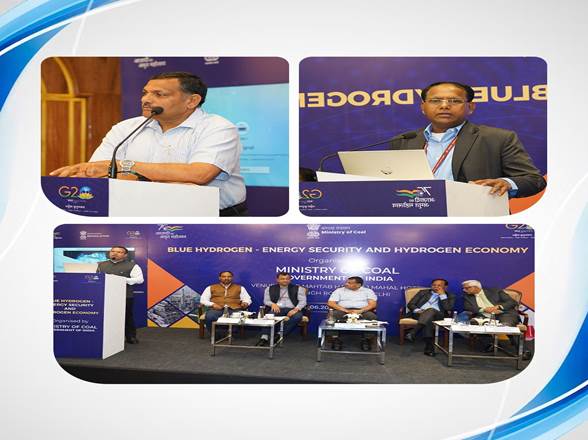
Considering abundance of coal availability in the country, it’s time to act on the diversified use of coal to ensure energy security of the country to support Government’s decarbonising mission”,  stated  Shri Amrit Lal Meena, Secretary,  Ministry of Coal  while delivering the key note address  on “Blue Hydrogen-Energy Security and Hydrogen Economy” organised by the Ministry  here today. The Secretary said that the session must deliberate on the technologies available for coal to hydrogen, cost competitiveness, global experience and the way forward strategy. He further mentioned that the recommendations of the committee constituted by the Ministry of Coal to identify actionable points for coal sector to support Green Hydrogen Mission should be deliberated and action plan finalised.  Shri Meena also advised to constitute an Advisory Committee in the Ministry with all experts to deliberate on the subject in a regular manner to promote gasification.

In his welcome address, Shri M. Nagaraju, Additional secretary, Ministry of Coal outlined the policy initiatives taken by the Ministry to promote coal gasification to meet the energy demands of the country in a sustainable way.

Shri Debasish Nanda, Director BD CIL and Chairman of the committee presented the committee report on the Green Hydrogen Mission offering comprehensive analysis of the current status, challenges and future prospects of green hydrogen production in the country.

Presentations were also made by Prof R R Sonde, IIT Delhi, Dr. Ranjit Rath CMD, Oil India Limited; Prof Arnab Dutta, IIT Bombay; Naveen Ahlawat, Head (CCUS) JSPL; Sh. Varun Jindal, MD Dev Energy and Shri Prasad Chaphekar Dy. Sec MNRE. Shri Rajnath Ram Adviser, NITI Aayog also expressed his views on development of clean coal technologies.

Panel discussion was also chaired by Shri Debasish Nanda and coordinated by Shri Peeyush Kumar, OSD, Ministry of Coal. During the presentations and discussions, many new ideas came up for way ahead strategy. The session was dedicated to discussing the potential of hydrogen in decarbonizing steel making processes and shared views on innovative approaches and technologies to reduce carbon emissions in the steel industry contributing to a greener and more sustainable future. The discussion was also on exploring the potential applications of hydrogen in scaling Direct Reduced Iron (DRI) projects.

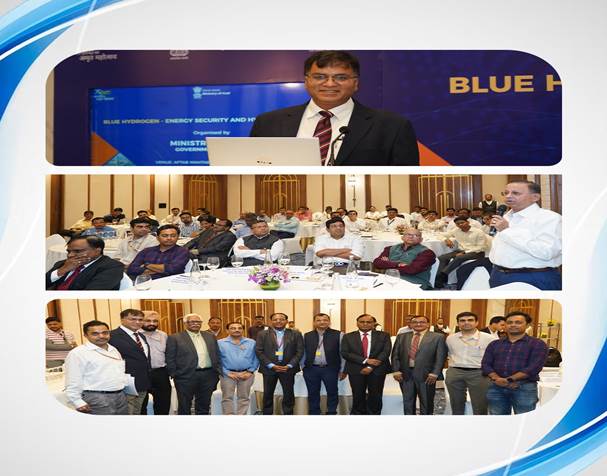
The program was attended by officials of NITI Aayog, Department of Science and Technology, Department of Fertiliser, Ministry of Steel, Ministry of Heavy Industries, IICT Hyderabad, CSIR besides officials from CIL, CMPDI, WCL, SECL, MCL, EIL, PDIL, BHEL, SCCL, NLCIL, SAIL, RIL, TATA STEEL, JSPL, Dev Energy, CGAI, CAPSEC and PSU watch. Discussion pertaining to development of Carbon Capture Utilization and Storage (CCUS) technology, which plays a crucial role in mitigating carbon emissions also held and emphasized the importance of sustainable practices.

The half-day session witnessed fruitful exchanges of ideas and knowledge on future uses of Hydrogen. The Ministry of Coal remains committed to promoting clean and sustainable energy solutions and will continue to facilitate such discussions to drive the nation’s progress toward a hydrogen-based economy.

*******

RKP

National Mission For Clean Ganga Organizes River-Cities Alliance Global Seminar

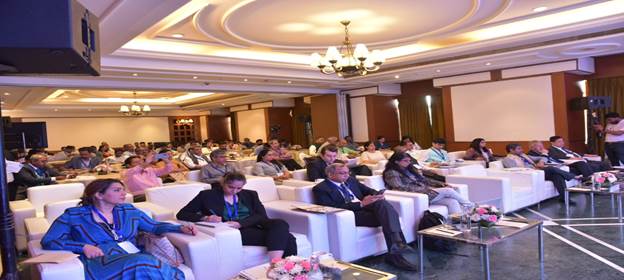
 National Mission for Clean Ganga (NMCG) in association with the National Institute of Urban Affairs (NIUA) organized the ‘River-Cities Alliance (RCA) Global Seminar: Partnership for Building International River-Sensitive Cities’ today in New Delhi. The purpose of the RCA Global Seminar was to provide a platform for officials of member cities and international stakeholders to discuss and learn good practices for managing urban rivers.

The RCA Global Seminar witnessed participation from Embassies/High Commissions of select countries and their respective river cities in order to highlight objectives, achievements, and potential collaborative outcomes of RCA. State Missions for Clean Ganga (SMCGs) and funding agencies like World Bank, ADB, JICA & KfW also were part of the discussions.
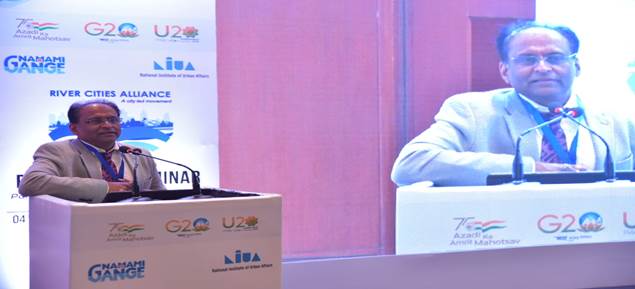
The RCA Global Seminar was presided over by Mr. G. Asok Kumar, Director General (NMCG).  

Addressing the gathering, Mr. G. Asok Kumar expressed happiness on the increase in number of cities joining the RCA and the immense interest NMCG has been able to generate on this issue. He noted that the trickle started with the Urban River Management Plan and has been flowing ever since. He emphasized the importance of issues related to climate change and urban water management, and how urban planners have a serious challenge at hand. “Climate change is a reality. We can see it now in Delhi where in the month of May we are needing blankets,” he said.

He informed that RCA started with 30 cities on the banks of the river and eventually it was decided to expand it to all cities not restricting to the Ganga Basin. “During the DHARA 2023 event in Pune, we were enthused to see the response from the city planners, who viewed water as something not important,” he said, adding, “People and administrators are now waking up to the reality as they have realized that issues related to water such as floods, droughts, inadequate waste management etc. can shut down cities.” DG, NMCG hoped that urban planners incorporate water management at the planning stage and start giving the priority it deserves.
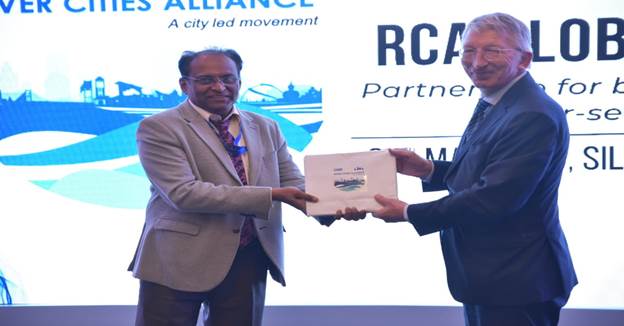
Mr. Kumar said that under the leadership of the PM, Swacch Bharat Mission and Jal Jeevan Mission are progressing well and creating positive impact on ground setting world class examples in the water and sanitation sectors. The stopping of Open Defecation ensured that the drinking water sources don’t get contaminated whereas household water supply under JJM is easing the pain of women in rural areas who had to walk several kilometres to fetch water. “With urbanization, if we don’t take care about the disposal of sewage then it is a major threat. The urban planners solely focussed on the infrastructure must take this into account to keep the rivers and other drinking water sources clean,” he said. 

He noted that the theme of RCA resonated in the UN Water Conference 2023 held in New York in March 2023. “The timely success in water sector in India is primarily because of people’s participation (Jan Bhagidari) and whole-of-government approach,” he said, adding, “The time has now come, as envisaged by the Union Minister for Jal Shakti, is to move towards whole-of-world approach to break the silos in which water has been divided.” 

He called for the world players to co-operate, work together, pick from each other’s best practices, share knowledge (Gyan Bhagidari), come up with transformational solutions and share in the success.
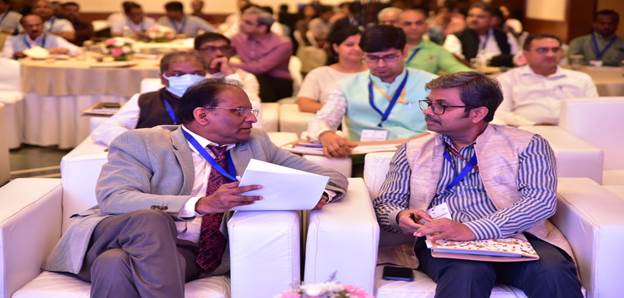
On RCA Global, he said that cleaning of rivers like Rhine and Thames in foreign lands is a lesson and inspiration for us and we should partner with international cities to create beautiful cities in India which can take pride in their rivers and people enjoy and have pleasant experience at the river fronts. “The experience of international cities in making their rivers clean, improving river properties, managing river flooding and increased aesthetic value can be seen as fruitful lessons for us. RCA Global platform should leverage the experience of foreign countries,” he added. He also said that it is not about aping anyone but taking the adaptable best practices as per requirements and using them to make our cities more beautiful.

DG, NMCG informed that Namami Ganga was recognized as the ‘Top 10 World Restoration Flagships to Revive the Natural World’ in Montreal, Canada and Clean Ganga, which seemed impossible, is now happening. He said that NMCG has committed to the SDG goals of equity in water distribution, access to safe drinking water, democratization of water etc.

Session 1 of the event saw a presentation from the Asian Development Bank Institute (ADBI) on ‘Decentralized Urban Wastewater Management System in Japan’, and an Embassy Round Table discussion.

Session 2 began with the context setting of RCA that incorporated an introduction to NMCG’s Urban Agenda, Urban River Management Plan (URMP) Framework with comments on RCA and future goals/actions pertaining to river management. Furthermore, there was a presentation from representatives of the India-Denmark Partnership, with a focus on the case study of Udaipur-Aarhus. Another presentation was made on RCA Cities – Ayodhya and Chhatrapati Sambhaji Nagar in this session.

NMCG c-Ganga facilitated presentations from International Cities – Greater Manchester by Mr. Mark Turner (National Course GM Team Leader, Greater Manchester Combined Authority), City of Hamburg by Mr. Christian Ebel (Desk Officer for Implementation of EU Water Framework Directive in Hamburg for the Elbe River Free and Hanseatic City of Hamburg), City of Copenhagen by Mr. Jan Burgdorf Nesilsen, Municipality of Copenhagen and City of Aarhus, Mr. Gitte Nordmand Andersen (Aarhus Municipality). The session 2 also witnessed an open house discussion and ended with a vote of thanks from Mr. Dheeraj Joshi, Deputy Secretary, NMCG.

Mr. D.P Mathuria, Executive Director (Technical), NMCG delivered the special address and spoke about how India is hugely investing in the water sector, but staring at twin challenges of water security and climate change. Both of these factors are interlinked in making water equitable. He noted the facets of water security being water management and water quality. NMCG has developed a large number of STPs that are able to address the issues of faecal contamination. He noted that nature-based solutions and decentralised systems shall be very important assets in terms of solution to organic waste falling into rivers.

Other participants included Mr. Mukul Verma (Senior Adviser – Infrastructure & Financial Services, Embassy of UK), Mr. Shayan Yousefi (Embassy of Austria), Mr. Beate Langset (Counsellor for Climate & Environment, Royal Norwegian Embassy), Ms. Anitha Sharma (Counsellor in Urban Development with focus on Water, Embassy of Denmark), Mr. R.K. Srinivasan (USAID’s Senior Water and Sanitation Advisor, US Embassy), Mr. Dirk Steffes-enn (Deputy Head of Economic Cooperation and Development, Embassy of the Federal Republic of Germany), Ms. Martina Burkard (Head of Programme, GIZ), Ms. Nishi  Pant (Senior Policy Advisor, Netherlands Embassy), Mr. Jun Tsumori (Counsellor, Economic Cooperation, Embassy of Japan), Mr. Kazushi Hashimoto (Consultant, ADBI), Prof Manabendra Saharia (Assistant Professor, IIT Delhi), and Prof. Ashish Pandey (HOD, Department of Water Resources Development & Management, IIT Roorkee).

NMCG-NIUA Collaboration
The NMCG-NIUA collaboration has witnessed the historic establishment of the ‘River Cities Alliance (RCA)’ of 110 river cities across India with one international member city – the city of Aarhus from Denmark. RCA was a significant initiative at NMCG’s Side Event during the ‘UN 2023 Water Conference – Water Action Agenda’ on March 23, 2023, which highlighted the importance of Germany as a key partner for the commitment related to ‘River Cities Alliance: Partnership for Building International River Sensitive Cities’.

NMCG has been tirelessly working on a joint initiative to propagate river-sensitive development in our cities with NIUA. This is in response to the Prime Minister’s call for new thinking in river cities at the 1st Meeting of the National Ganga Council (NGC) in December 2019. Hence, NMCG seeks to deepen the commitment through the inclusion of international cities as members of the RCA during the RCA Global Seminar. The intent is to facilitate knowledge exchange (online) for Indian cities to learn new practices and approaches for urban river management. Likewise, it will also be an opportunity for international cities to learn about experiences in Indian cities, which may be relevant to their contexts.

River Cities Alliance

The River Cities Alliance (RCA) is a joint initiative of the Department of Water Resources, River Development & Ganga Rejuvenation under the Ministry of Jal Shakti (MoJS) & the Ministry of Housing and Urban Affairs (MoHUA), with a vision to connect river cities and focus on sustainable river centric development. Beginning with 30 member cities in November 2021, the Alliance has expanded to 109 river cities across India and one international member city from Denmark.

DHARA 2023

The first annual meeting of the RCA – DHARA 2023 (Driving Holistic Action for Urban Rivers) was held on February 13–14, 2023, in Pune. DHARA 2023 featured key sessions on international best practices and examples for urban river management. DHARA 2023 was aimed to inspire members of the RCA to engage in progressive actions for urban river management in their cities. The event shone a light on the unaddressed issues and challenges for river management in cities, which helped NIUA and its partners formulate an effective work plan. The event also helped in developing a compendium of technological solutions that cities may adopt for enhancing the management of their local rivers.

****

ICMR2023 Conference

International Conference on Multidisciplinary Research (ICMR) 2023 – ICMR 2023 aims to improve its ability to bring together worldwide researchers and professionals, encourage intellectual development of scholars and provide network opportunities for conference attendees for making long lasting academic cooperation. To reach its goal, ICMR2023 benefits from its advisory board members consist of well-known academicians all around world and provide publication opportunities.


Any scholar or professional interested in engineering, science and education around the world is welcome to attend ICMR2023 conferences, which are held couple of times a year.

List of Topics

  • Engineering Topics 
  • Industrial Engineering
  • Textile Engineering
  • Civil and Architecture Engineering
  • Mining Engineering
  • Mechanical Engineering
  • Renewable Energy
  • Chemical Engineering
  • Electrical-Electronics Engineering
  • Metallurgical and Materials Engineering
  • Environmental Engineering
  • Computer and Informatics Engineering
  • Food Engineering
  • Geological Engineering
  • Science Topics 
  • Social Sciences
  • Theology
  • International Relations
  • Communucation Studies
  • Political Science and Public Administration
  • Linguistics
  • Medical Sciences
  • Applied Sciences
  • Law
  • Agriculture
  • Education Topics 
  • Vocational and Technical Education
  • Early Childhood Education
  • Science Education
  • E-learning
  • Secondary Science Education
  • Elementary Education
  • Primary Education
  • Professional Development & Teacher Training
  • Foreign Language Training
  • Educational Sciences
  • Mathematics Education

Venue

The conference will be held in Zoom meeting

Contact

All questions about submissions should be emailed to icmr2023@edupub.org or editor@edupub.org

Important Things to Note

Important Dates

Date for Submission of Papers

20 March 2023 (without Late fee)

30 March 2023 (with late fee)

Acceptance Mail for Papers

10 April 2023

Date of Online Conference

20-22 April 2023

Email id for Submission of Papers

Email: icmr2023@edupub.org

Special Issue for Conference Papers

Visit conference Official Site at https://icmr.edupub.org/

ISBN for Conference Proceedings 

ICMR 2023

International Conference on Multidisciplinary Research (ICMR) 2023 is one of the substantial and most reputable international events of Business, Economics, Social Sciences and natural sciences. Appealing outstanding researchers from over 100 countries worldwide, the conference exhibits a friendly, supportive environment to accept feedback, exchange ideas and find inspiration. The main aim is to provide a forum for people coming for different academic backgrounds to interact and present their researches. Moreover, the conference generates the possibility for publications of research papers in indexed and organized journals. International Conference on Emerging Trends in Multidisciplinary Research (ICMR-2023) will provide a platform for debating on issues and challenges in the aforementioned fields. The objective is to back discussions on strategies that will accelerate worldwide growth and economic recovery as well as evolution in technology and scientific research.  

EDUPUB® is an india based international consulting firm serving the world’s leading businesses, governments, public and private universities of world and not for profit organizations in every field of life. Its mandates is to develop stakeholders in diverse fields ranging from the basic necessities like sustainable health conditions, reduction in the poverty and the basic human rights to the more complicated and glittering demand of time like science and technology, entrepreneurship and telecommunication by focusing on the findings of extensive research conducted by researchers all around the world.

Conference Tracks

Academics from various fields, with an interest in the above themes, are welcome to present their papers. The conference has a multidisciplinary emphasis and, therefore, inviting contributions from across disciplines, e.g.

  •        Social Sciences,
  •        Development and Sustainable Development Studies,
  •        Education,
  •        Science and Technology,
  •        Business and Economics,
  •        Management,
  •        Philosophy,
  •        Psychology,
  •        Sociology,
  •        Political Science
  •        Others.


Send papers to editor@edupub.org

Publication

IJR – International Journal of Research with ISSN 2348-6848 and book with conference proceedings 

Important Things to Note

Important Things to Note

Important Dates

Date for Submission of Papers

20 March 2023 (without Late fee)

30 March 2023 (with late fee)

Acceptance Mail for Papers

10 April 2023

Date of Online Conference

20-22 April 2023

Email id for Submission of Papers

Email: icmr2023@edupub.org

Special Issue for Conference Papers

Visit conference Official Site at https://icmr.edupub.org/

ISBN for Conference Proceedings 

International Conference on Multidisciplinary Research (ICMR) 2023

International Conference on Multidisciplinary Research (ICMR) 2023 is one of the substantial and most reputable international events of Business, Economics, Social Sciences and natural sciences.It is jointly organized by Track2Training. Appealing outstanding researchers from over 100 countries worldwide, the conference exhibits a friendly, supportive environment to accept feedback, exchange ideas and find inspiration. The main aim is to provide a forum for people coming for different academic backgrounds to interact and present their researches. Moreover, the conference generates the possibility for publications of research papers in indexed and organized journals. International Conference on Multidisciplinary Research (ICMR) 2023 will provide a platform for debating on issues and challenges in the aforementioned fields. The objective is to back discussions on strategies that will accelerate worldwide growth and economic recovery as well as evolution in technology and scientific research. 

Conference Tracks

Academics from various fields, with an interest in the above themes, are welcome to present their papers. The conference has a multidisciplinary emphasis and, therefore, inviting contributions from across disciplines, e.g.

  •        Social Sciences,
  •        Development and Sustainable Development Studies,
  •        Education,
  •        Science and Technology,
  •        Business and Economics,
  •        Management,
  •        Philosophy,
  •        Psychology,
  •        Sociology,
  •        Political Science
  •        Others.


Send papers to icmr2023@edupub.org

Submission Deadline 30 March 2023

Publication

ICMR2023 proceedings will be published in conference proceedings and indexed with google scholar. Selected papers would be published in International Journal of Research (IJR) which is open access, peer reviewed. 

Contact

All questions about submissions should be emailed to icmr2023@edupub.org

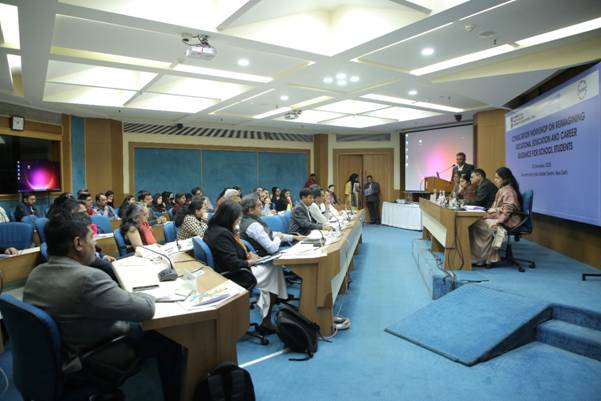
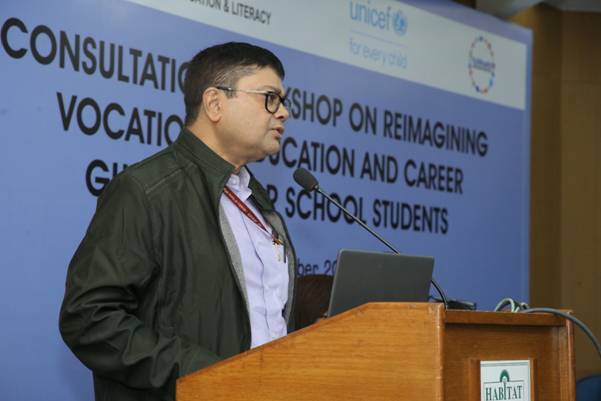
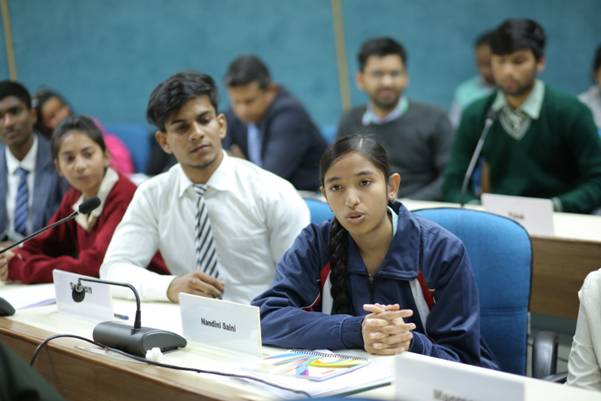
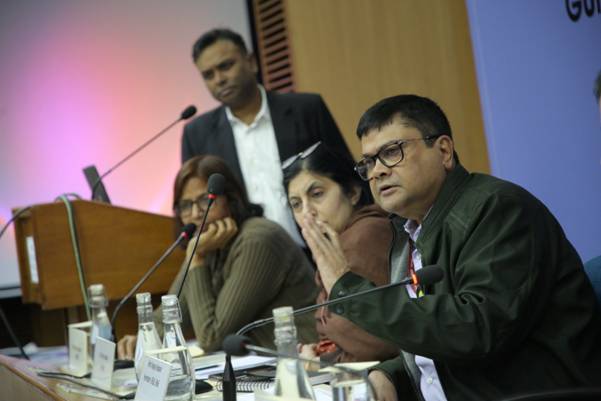
one-day Consultation Workshop on Reimagining Vocational Education and Career Guidance for School Students

 Key Highlights:

-NCrF will help dropouts from the formal education system to get reintegrated by aligning their practical experience with the appropriate Framework level- Shri Sanjay Kumar

-Discussions on career guidance reflected on the role of physical interventions and career counselling that could be done in schools itself.

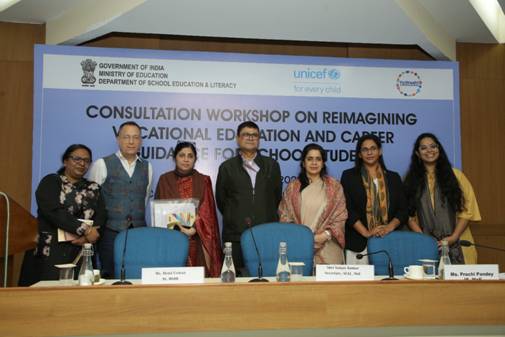
The Ministry of Education organized a one-day Consultation Workshop on Reimagining Vocational Education and Career Guidance for School Students in collaboration with UNICEF and YuWaah on 16th December 2022 at New Delhi.

WhatsApp Image 2022-12-17 at 8.24.57 PM (1).jpeg

WhatsApp Image 2022-12-17 at 8.25.53 PM (1).jpeg


Secretary, Department of School Education and Literacy, Shri Sanjay Kumar, chaired the consultation workshop and two roundtable interactions with Ministry of Skill Development and Entrepreneurship, Directorate General of Training (ITI), PSSCIVE,Bhopal, NCERT, CBSE, NCVET,AICTE etc. The workshop and roundtable interaction were also attended by various experts from PwC, YuWaah, Civil Society organizations, state education department, practitioners and organisations working in the fields of vocational education and career counselling, corporates and current and passed out students.

WhatsApp Image 2022-12-17 at 8.24.57 PM.jpeg

WhatsApp Image 2022-12-17 at 8.25.39 PM.jpeg

During the keynote address, Secretary, Department of School Education and Literacy, Shri Sanjay Kumar, pointed out that India needs to catch up with other countries in terms of skilling the workforce through formal vocational training during the student years. NEP 2020 has identified such issues and has suggested remedial measures, he added.

Shri Kumar pointed out that as per NEP, 2020 Vocational Education needs to be integrated into all schools and higher education institutions in a phased manner over the next decade. Trades and Courses shall be chosen based on skills gap analysis and mapping of local opportunities to make it demand driven. Concerted efforts from all stakeholders will be required to de-stigmatizeVocational Education and make it aspirational.  The National Credit Framework, currently under finalization by the Ministry of Skill Development and Entrepreneurship will also eliminate traditional hierarchies and silos between different areas of learning. It will help in removing complex separations between arts and sciences, between curricular and extra-curricular activities, between vocational and academic streams, etc. By providing credits for academic, extra-curricular and experiential learning, NCrF will help dropouts from the formal education system to get reintegrated by aligning their practical experience with the appropriate Framework level.

The consultations were also addressed by Ms. Dhuwarakha Sriram Chief of Generation Unlimited (YuWaah), Youth Development and Partnerships and Mr. Terry Durian, Chief of Education, UNICEF.  Various ideas related to reimagining, reinventing vocational education modules etc. were discussed at length. Importance of life skills – both vertical and horizontal, aspirational disconnect and information asymmetry in uptake of vocational education school,giving a gender perspective to vocational education, etc were also focus of these discussions.In the light of newly launched National Education Policy, 2020 the aim should be to empower students with skills such as cloud computing, artificial intelligence, machine learning, data analytics, robotic process automation, cybersecurity, etc. so that vocational graduates could compete in the global economy. The need to establish virtual labs, so that all students have equal access to high-quality practical and hands-on experience, was also stressed upon.  The Conference also benefitted from the feedback from students who have taken vocational courses like Multi-Skilling course and Information Technology course.

WhatsApp Image 2022-12-17 at 8.25.38 PM.jpeg

The 2nd Roundtable deliberated upon the current systems of career counseling in schools and what are the key learnings and best practices.  Secretary, DOSEL stated that solutions should focus on building an institutional model of career counseling in schools with scale, speed and sustainability utilising technological innovations including artificial intelligence.  He also stated that there was a need to map resources and build a database of the same.  Discussions on career guidance also reflected on the role of physical interventions and career counselling that could be done in schools itself.

*****

KASHI TAMIL SANGAMAM

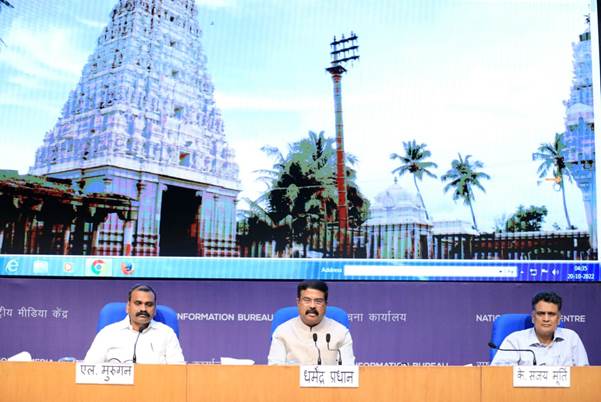
 Union Education and Skill Development & Entrepreneurship Minister Shri Dharmendra Pradhan along with MoS, I&B and Ministry of Fisheries, Animal Husbandry and Dairying Shri L. Murugan today announced the “KASHI TAMIL SANGAMAM” to be held from 16th Nov to 19th Dec 2022. Shri Dharmendra Pradhan also launched the website for registering for “KASHI TAMIL SANGAMAM”.

Bharatiya Bhasha Samiti (BBS) has come up with a proposal to   rediscover, reaffirm and celebrate the age-old links between the Tamil culture and Kashi that has existed since centuries. A month long “Kashi Tamil Sangamam” is to be organized in Varanasi (Kashi)  from 16th November to 19th December,2022  during which academic exchanges – seminars, discussions etc will be held between experts/ scholars on various facets of the two ancient manifestations of Indian Culture, with focus on bringing out the links and shared values between the two.  The broader objective is to bring the two Knowledge and Cultural traditions closer, create and understanding of our shared heritage and deepen the people-to-people bond between the regions.

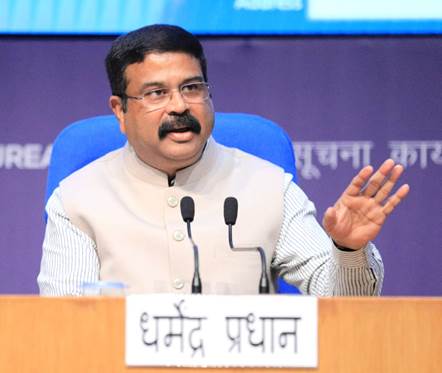
While addressing the press conference, Shri Dharmendra Pradhan said that India is a symbol of civilizational connectivity. The Kashi-Tamil Sangamam shall be an ideal platform to understand the unity in India’s civilizational assets through two historic centres of knowledge & culture. The Sangamam to be organised under the overall framework and spirit of “Ek Bharat, Shrestha Bharat” will create a bridge between ancient India and contemporary generation. Kashi Sangamam will rediscover the link between these two ancient centres of knowledge, culture and heritage, he further added.

Shri Pradhan informed that Kashi-Tamil Sangamam will be centred around a series of themes that cover various facets of knowledge – literature, ancient texts, philosophy, spirituality, music, dance, drama, yoga, Ayurveda, handlooms, handicrafts as well as the modern innovations, trade exchanges, edutech and other gen next technology etc. Seminars, discussions, lectures, lec-dems etc will be held on these themes, for which subject experts will be invited. This shall be unique learning experience for students, scholars, academics, practising professionals, etc. on various facets of Indian Knowledge Systems, Education & Training Practices, Arts & Culture, Language, Literature, etc, he added.


WhatsApp Image 2022-10-20 at 5.59.32 PM.jpeg


WhatsApp Image 2022-10-20 at 5.59.36 PM.jpeg


To ensure that the benefit of these discussions reaches the actual practitioners of these knowledge streams, it is proposed that in addition to experts, common practitioners from various groups from different parts of Tamil Nadu, can be brought for an 8-day visit of Varanasi and its neighbouring areas. Tentatively, 12 such groups have been identified including students, teachers, literary (authors, poets, publishers), cultural experts, professionals (practicing arts, music, dance, drama, folk art, yoga, Ayurveda), entrepreneurs, (SMEs, start-ups) business people, (community business groups, hoteliers,) artisans, heritage related experts (archaeologists, tour guides, bloggers etc) spiritual, rural, sampradaya organizations. These people will participate in the academic programs, interact with people of Varanasi associated with the same field, and visit places of interest in and around Varanasi.

It is proposed that around 210 people from different parts of Tamil Nadu can be taken in one group for a period of 8 days. 12 such groups, comprising around 2500 people can visit over a month.

At the end of the Sangamam event, people of Tamil Nadu shall get an immersive experience of Kashi and the people of Kashi shall also get to know the cultural richness of Tamil Nadu through a healthy exchange of knowledge sharing experiences – events, visits, conversations, etc.

******

“KASHI TAMIL SANGAMAM” and launches the website for the registration process

 Union Education and Skill Development & Entrepreneurship Minister Shri Dharmendra Pradhan along with MoS, I&B and Ministry of Fisheries, Animal Husbandry and Dairying Shri L. Murugan today announced the “KASHI TAMIL SANGAMAM” to be held from 16th Nov to 19th Dec 2022. Shri Dharmendra Pradhan also launched the website for registering for “KASHI TAMIL SANGAMAM”.

Bharatiya Bhasha Samiti (BBS) has come up with a proposal to   rediscover, reaffirm and celebrate the age-old links between the Tamil culture and Kashi that has existed since centuries. A month long “Kashi Tamil Sangamam” is to be organized in Varanasi (Kashi)  from 16th November to 19th December,2022  during which academic exchanges – seminars, discussions etc will be held between experts/ scholars on various facets of the two ancient manifestations of Indian Culture, with focus on bringing out the links and shared values between the two.  The broader objective is to bring the two Knowledge and Cultural traditions closer, create and understanding of our shared heritage and deepen the people-to-people bond between the regions.

While addressing the press conference, Shri Dharmendra Pradhan said that India is a symbol of civilizational connectivity. The Kashi-Tamil Sangamam shall be an ideal platform to understand the unity in India’s civilizational assets through two historic centres of knowledge & culture. The Sangamam to be organised under the overall framework and spirit of “Ek Bharat, Shrestha Bharat” will create a bridge between ancient India and contemporary generation. Kashi Sangamam will rediscover the link between these two ancient centres of knowledge, culture and heritage, he further added.

Shri Pradhan informed that Kashi-Tamil Sangamam will be centred around a series of themes that cover various facets of knowledge – literature, ancient texts, philosophy, spirituality, music, dance, drama, yoga, Ayurveda, handlooms, handicrafts as well as the modern innovations, trade exchanges, edutech and other gen next technology etc. Seminars, discussions, lectures, lec-dems etc will be held on these themes, for which subject experts will be invited. This shall be unique learning experience for students, scholars, academics, practising professionals, etc. on various facets of Indian Knowledge Systems, Education & Training Practices, Arts & Culture, Language, Literature, etc, he added.


WhatsApp Image 2022-10-20 at 5.59.32 PM.jpeg


WhatsApp Image 2022-10-20 at 5.59.36 PM.jpeg


To ensure that the benefit of these discussions reaches the actual practitioners of these knowledge streams, it is proposed that in addition to experts, common practitioners from various groups from different parts of Tamil Nadu, can be brought for an 8-day visit of Varanasi and its neighbouring areas. Tentatively, 12 such groups have been identified including students, teachers, literary (authors, poets, publishers), cultural experts, professionals (practicing arts, music, dance, drama, folk art, yoga, Ayurveda), entrepreneurs, (SMEs, start-ups) business people, (community business groups, hoteliers,) artisans, heritage related experts (archaeologists, tour guides, bloggers etc) spiritual, rural, sampradaya organizations. These people will participate in the academic programs, interact with people of Varanasi associated with the same field, and visit places of interest in and around Varanasi.

It is proposed that around 210 people from different parts of Tamil Nadu can be taken in one group for a period of 8 days. 12 such groups, comprising around 2500 people can visit over a month.

At the end of the Sangamam event, people of Tamil Nadu shall get an immersive experience of Kashi and the people of Kashi shall also get to know the cultural richness of Tamil Nadu through a healthy exchange of knowledge sharing experiences – events, visits, conversations, etc.

******

First seminar of Agni Tattva campaign under LiFE mission held in Leh

 Power Foundation of India in association with Vijnana Bharati (VIBHA) is currently running a campaign to create awareness on Agni Tattva under LiFE – Lifestyle for environment. This campaign includes conferences, seminars, events, and exhibitions across the country involving educational institutions, communities, and relevant organisations to create awareness of the core concept of Agni Tattva, an element that is synonymous with energy and is amongst the five elements of Panchmahabhoot.


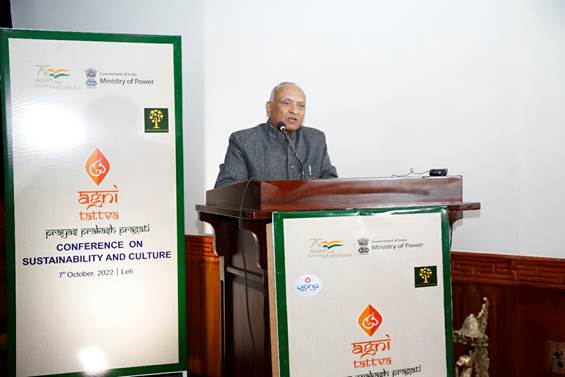
The first conference of the Agni campaign was organised in Leh yesterday, on the theme of ‘Sustainability and Culture’. It witnessed participation from key stakeholders working in the areas of energy, culture, and sustainability, from diverse fields such as administration, policymakers, academics, and start-ups.

The conference was inaugurated by Shri R K Mathur, Lieutenant Governor of Ladakh. Speaking on the occasion, he said that Ladakh always had a sustainable lifestyle, however, increased modernisation is leading to an imbalance in the ecosystem of the region, and this not only adversely impacts the region but could also alter the monsoon cycle of the entire country since it is inter-linked with the Himalayan ecosystem. He further added that the UT administration of Ladakh has laid out a clear roadmap to reverse this imbalance and move toward sustainable development. He emphasised several key areas.

Ladakh has immense solar energy potential, which should be harnessed. Ladakh should work towards generating systems to provide power to remote areas. The focus is to provide decentralized renewable solar power across Ladakh thereby reducing grid dependency. This is in line with the Prime Minister’s vision of a Carbon Neutral Ladakh.

Geothermal energy is another focus area that holds immense potential in the Ladakh region. Unlike other renewable energy sources, which are intermittent in nature, it is available throughout the day and the year and should be suitably harnessed.

Green Hydrogen is another option in Ladakh, as the region has plenty of solar energy. It also has water. The Hydrogen harnessed from this could be used to substitute petrol and diesel and the oxygen could be used in hospitals and by tourists.

Shri Jamyang Tsering Namgyal, MP of Ladakh emphasized on an interdependent world. He said that Indian philosophy views the world as one and everything in it as one, but in the development model so far, the oneness has been lost. Shri Namgyal underlined that the model being formulated by Hon’ble PM is based on Oneness, such as One Sun, One World, One Grid, and the efforts are on to promote and propagate a lifestyle that is conscious of the environment, based on this Indian philosophy of oneness. He said that Ladakh has always been in harmony with nature and has thrived on interdependency and coexistence. This is something that the rest of the country and the world can learn from, he added.

The other eminent speakers at the Conference highlighted sustainable construction practices, energy access for mountain areas, social behaviour, and its impact on electricity demand.

The Agni Tattva campaign – Energy for LiFE, an initiative under the umbrella campaign of Sumangalam, was launched by Shri R K Singh, Union Minister of Power and New & Renewable Energy, in New Delhi on 21st September 2022. A series of seminars spanning the length and breadth of the country have been planned as a part of the campaign.

Power Foundation of India is a Society formed under the aegis of the Ministry of Power, Government of India, and supported by leading CPSEs. The Foundation is involved in areas of advocacy and research, positively impacting the evolving energy landscape.

***

Workshop on “Interventions Required for Strengthening the PPP Ecosystem (Partners in Progress)”

 The Government of India envisions a major role of Public Private Partnership (PPP) to leverage private sector investment and operational efficiencies in the provision of affordable, qualitative, and sustainable public assets and services.

The Government of India has taken several interventions to encourage private sector investors to participate, leverage their resources, technology, and management skills to increase infrastructure investment and improve the delivery of public goods and services with a high level of efficiency and quality in light of the rising demand of infrastructure facilities.

Continuing with the interventions to encourage the private sector investment, Infrastructure Finance Secretariat, DEA with the support of British High Commission (BHC) organised a workshop on 14.9.2022, with an intent to provide a platform to the key stakeholders (specially the private players) to share their views about the current PPP landscape, their areas/ sectors of interest, and suggest interventions/initiatives required to further strengthen the current PPP ecosystem. The workshop, included sector specific sessions on Health, Education and Sports, Water Supply and Municipal Solid Waste Management, Urban Transport and Roads & Airports.

The Workshop was inaugurated by Shri Ajay Seth, Secretary, DEA, Ministry of Finance (MoF) with welcome address from Shri B Purushartha, Joint Secretary, (ISD), Infrastructure Finance Secretariat.  Special Addresses were also delivered by Dr. V. Anantha Nageswaran, Chief Economic Adviser, MoF, Ms. Sally Taylor, Minister Counsellor (Director Development, Climate, Science and Technology), and Ms. Wendy Werner, Country Head India, International Finance Corporation, World bank Group.

During the Sessions, the private players presented key issues/constraints faced by them during structuring and execution of PPP projects and suggested key interventions that may be required for enhancing private sector investments in the infrastructure sector.

The Workshop witnessed presenters  from infra sector private  players viz., Olympiados, Max Healthcare,  Apollo Hospitals,  Krsnaa Diagnostics,  Medanta,  GenWorks,  Apex Hospitals, Jindal Urban Infrastructure,  Vishwaraj Infrastructure,  VA Tec Wabag,  SUEZ India,  Re Sustainability Co.,  Tata Projects,  Abellon Green Energy,  Megha Engineering,  GreenCell Mobility,  Reliance Infrastructure Limited,  Hindustan Construction Company,  Cube Highways,  IRB Infrastructure,  GMR Infrastructure,  Noida International Airport,  Gammon India, Fortis Memorial Research Institute, and attendees from  Shapoorji Pallonji, L&T Infrastructure, PNC Infrastructure, Ashoka Buildcon, Boehringer Ingelheim, Kishan Agro Industries, Incredible Medtech LLP, Dynatom International GmbH, Innovative Technologies and Projects, Aggcon Equipments, Sekura, etc.

During the workshop Project Sponsoring Authorities (PSAs) presented successful PPP Projects executed in aforementioned sectors. Shri Manu Srivastav, Principal Secretary, Government of Madhya Pradesh presented successful REWA project. IDA Bihar gave a presentation on Jayaprabha Hospital on PPP mode, , Goa Waste Management Corporation presented on Solid waste management facility, Housing &Urban Development Department, Government of Odisha on Bhubaneswar Water Supply , Indore Municipal Corporation on Urban Public Transport , Pune Metro Rail Development Authority (PMRDA) on Pune Metro project , Uttar Pradesh Expressways Industrial Development Authority (UPEIDA)  on road projects undertaken on PPP mode  and Airport Authority of India (AAI)  on Leasing of Airports on PPP mode.

Each session was concluded by senior officials of the respective Central Infra Line Ministries wherein they assured full support from the Government in overcoming the existing challenges while implementation of PPP projects including remarks from, Shri Amit Ghosh, Additional Secretary of the Ministry of Road Transport and Highways, Shri Vishal Chauhan, Joint secretary, Ministry of Health and Family Welfare, Shri Kunal Kumar, Joint Secretary, Ministry of Housing And Urban Affairs, Smt. Rubina Ali, Joint Secretary, Ministry of Civil Aviation and Shri Vishwajeet Kumar, Director, Dept. of Higher Education, Ministry of Education.

The workshop witnessed an active participation of 150+ participants that include participants from Private sector infra players, representatives from FICCI, CII, ASSOCHAM , NIIF, Senior Government officials from Central Ministries and State Governments , officials from British High Commission and International Finance Corporation and Transaction Advisers empanelled by DEA.

****