Health education is a profession of educating people about health. Areas within this profession encompass environmental health, physical health, social health, emotional health, intellectual health, and spiritual health, as well as sexual and reproductive health education.
Health education teaches about physical, mental, emotional and social health. It motivates students to improve and maintain their health, prevent disease, and reduce risky behaviours. It also focuses on emotional, mental and social health too. Educating students on the importance of health builds their motivation.
Health education is one strategy for implementing health promotion and disease prevention programs. Health education provides learning experiences on health topics. Health education strategies are tailored for their target population. Health education presents information to target populations on particular health topics, including the health benefits/threats they face, and provides tools to build capacity and support behavior change in an appropriate setting.
History
From the late nineteenth to the mid-twentieth century, the aim of public health was controlling the harm from infectious diseases, which were largely under control by the 1950s. By the mid 1970s it was clear that reducing illness, death, and rising health care costs could best be achieved through a focus on health promotion and disease prevention. At the heart of the new approach was the role of a health educator.
Code of ethics
The Health Education Code of Ethics has been a work in progress since approximately 1976, begun by the Society for Public Health Education (SOPHE).
“The Code of Ethics that has evolved from this long and arduous process is not seen as a completed project. Rather, it is envisioned as a living document that will continue to evolve as the practice of Health Education changes to meet the challenges of the new millennium.”
Importance of Health Education .
Health education builds student’s knowledge, skills, and positive attitudes about health. Health education teaches about physical, mental, emotional and social health. It motivates students to improve and maintain their health, prevent disease, and reduce risky behaviours.
Health education curricula and instruction help students to learn skills so that they will use to make healthy choices throughout their lifetime.
Health education teaches people of all ages about how diet and exercise contribute to a healthy lifestyle. It also encourages positive changes in behaviour and lowers the risk of addiction to drugs, alcohol and unsafe sexual practices. The majority of schools around the country have courses aimed at teaching health education to students. These courses often revolve around the body, healthy eating, sex and exercising. Some students are taught basic health and physical fitness early on. More in-depth courses are designed for middle and high school students.
Health education encourages a person to make healthy choices. They are instructed to avoid unhealthy habits. ‘A sound mind lives in a sound body’. Rabindranath Tagore and C.V. Raman, if they were confined to sick bed, could not have won the Nobel Prize. In fact, a sickly student with all his talents and abilities lags behind in the race of life.
Health education also teaches about the emotional and mental health of the student. A healthy person is the happiest person in the world.
What did this POSH Act refer to ? So it commonly referred to, an Indian law enactment with the objective of making workplaces safer for women by preventing, prohibiting and redressing acts of sexual harassment against them in the workplace.
Why this act was needed ?The need for such legislation was observed first time by the Supreme Court, in Vishaka v State of Rajasthan. Sexual harassment at a workplace is considered violation of women’s right to equality( article 14 and 15) , life ( article 21) and liberty ( article 19(1)g) . It creates an insecure and hostile work environment, which discourage women’s participation in work, thereby adversely affecting their social and economic empowerment and the goal of inclusive growth. So there was much need for legislation against this sexual harassment at working place.
What is the objective behind POSH 2013 ? The Sexual Harassment of Women at Workplace (Prevention, Prohibition and Redressal) Act 2013 (“the Act”) was enacted with the objective to provide protection against sexual harassment of women at workplace and for the prevention and redressal of complaints of sexual harassment and for matter connected therewith or incidental thereto , that was mentioned under section 2(o) of the act .
What is sexual harrassment? Section 2(n) discribe a sexual harassment as unwelcome acts or behavior (whether directly or by implication) namely, physical contact and advances, a demand or request for sexual favors, making sexually colored remarks, showing pornography, any other unwelcome physical, verbal or non-verbal conduct of sexual nature .
Can a touch to women amount to sexual harrament ?
a women can commit sexual harrassment on another women ?
So both the question were answered in Shanta Kumar vs CSIR , where Delhi high court held that “undoubtedly, physical contact or advances would constitute sexual harassment provided such physical contact is a part of the sexually determined behaviour. a physical contact which has no undertone of a sexual nature and is not occasioned by the gender of the complainant may not necessarily amount to sexual harassment.
What are the offensive circumstances in which sexual harassment is done ?
The Act also provides the circumstances under which an act may amount to sexual harassment under section 6(2) . These are:
(i) implied or explicit promise of preferential treatment in her employment; or
(ii) implied or explicit threat of detrimental treatment in her employment ; or
(iii) implied or explicit threat about her present or future employment status; or environment for her; or
(iv) interference with her work or creating an intimidating or offensive or hostile work
(v) humiliating treatment likely to affect her health or safety.
Where the problem would be redressed under POSH : so section 4 provides for setting up of Internal Complaints Committee at every office of the organisation or institution, having more than 10 employees, to hear and redress complaints pertaining to sexual harassment. Section 11 reads that , The committee has to complete the inquiry within a period of 90 days. As per section 12, The committee can give certain interim reliefs to the aggrieved woman during the pendency of the inquiry.
What if the complaint by said victim is Mala fide ? case of filing of false or malicious complaint or false evidence the committee may recommend to the employer or District Officer to take action in accordance with the provisions of service rules or where no such service rules exist, in such manner as prescribed in Rule 10 of the Rules
Is identity of a women victim disclose ? No according to section 16 of posh 2013 , There is a prohibition on publication of identity of the aggrieved woman, respondent, witnesses, contents of the complaint, inquiry proceedings or recommendations of the committee, except information regarding the justice secured to any victim of sexual harassment.
In last what would be the punishment for accused ? When the employer fails to constitute an Internal Committee or breaches provisions of this Act or any rules made thereunder, they shall be punishable with fine of fifty thousand rupees (INR 50,000).
Laura Mulvey was born on 15 August 1941 and is a British feminist film theorist. She is best known for her essay on visual pleasure and narrative cinema.
I’m going to write about 4 films which clearly validates all the aspects or ideologies of the film industry which Laura Mulvey opposes and tries to teach us what is wrong with it and why.
In this part, Laura Mulvey tells us “how the fascination of film is reinforced by pre-existing patterns of fascination already at work” which basically tells us how we already have existing ideas and thoughts and also our thinking and cinema is what validates it. We also have a set of ideologies which movies reveal and we feel like we can put that into practice.
There is also a gender assymetry which is revealed to the common people and the movies validate them which makes people think that there is nothing wrong with it and it is what it is. From the beginning of time we see how women are being suppressed and not given their own voice and therefore even now, there are many films following the same pattern of filmmaking which is not justified as it gives the wrong idea to society.
We see how Laura Mulvey appropriately portrays psychoanalytic theory by demonstrating patriarchy has a structured film form.
Laura Mulvey in her essay also describes phallocentricism which is the idea of having a penis and how it is the central element of the world and how everything revolves around men. She also mentions “castrated woman” which talks about the lack of penis and because our society is a patriarch society, we do not give much importance to the ones which lack a penis. She tells this is a paradox as in order to enhance these male characters, a female is always necessary and how they are only used as a plot to forward the film. This shows us the concept of active male and passive female.
In every movie there is a concept of an active male and a passive female. An active male is when the main character has a very important role and given all the attention or importance and is also the central reason the film is being made. The male protagonist is given all the dominant roles or is portrayed in a way that makes the audience believe that he is the most important aspect of the movie. The filmmakers try to show that the movie would not have been possible if the male character was not present. A passive female is where in a movie, the female part is not given that much importance and is just used for the sole purpose of entertainment. It’s also how women are not given the lead roles or is just used to elevate the film, they are mostly used as foil characters, mostly to enhance the role of men. She is used as a plot and does not have any real importance in the film. It also shows how she needs a man to be protected and cannot be independent as that would hurt the ego of the man or make him feel less powerful.
An example for this would be the movie “Hero” release in 2015. The entire movie depicts how without the main protagonist which is Sooraj Pancholi, Athiya shetty would be in danger even though she is the daughter of a very well known police commissioner. It depicts how a woman would be in danger without a man, how she is dependent on him and how she “needs” him to protect her. The whole movie shows the man’s power and how he’s the only one who can save her from any problem or any situation. It shows how weak females are and how it is necessary for them to have a male by their side to be safe in this society.
Laura Mulvey talks about 2 things. The first one is how In a female’s life if there is an absence of a penis then there is a threat to her and secondly to overcome this threat she needs to raise a male child.
She tells how “woman’s desire is subjected to her image as bearer of the bleeding wound, she can only exist in relation to castration and cannot transcend it”. This tells us about how woman due to an absence of phallus is dependent on men or how she is identified as someone’s daughter or someone’s wife or a mother but she never has her own identity. They are also just displayed as objects and their appearance is in such a way that it cannot be anything apart from being erotic.
She tells how women are used to signify the men and how they are a bearer of meaning and not maker of meaning. This shows how women are always related to a male and how they lack individuality.
This essay reminds us of how we are being oppressed and how even though we are independent females, some people think that it is important to depend on men as it is a patriarchal society and that’s how it’s always been. This essay also talks about women as a “non- mother” where according to the society, in order to be complete, she needs to have a child or motherly instincts or she is not considered as a woman.
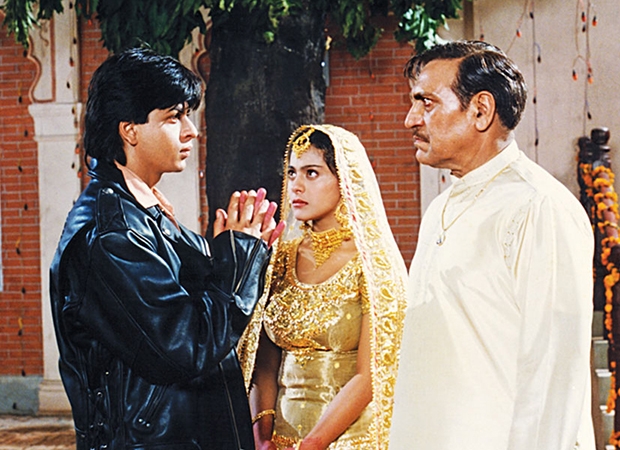
An example for this would be the movie “dilwaale dulhaniya le jaaenge” This movie shows the patriarchy of society where the female character ie Kajol is subjucated by her father, not allowed to listen to music,not allowed to go out with friends and is forced to marry a guy of his choice even though she was in love with Shah Rukh Khan. Futhermore, this concept is amplified when the male lead is the one who must save her from getting married.
Laura Mulvey talks about how cinema can offer a number of possible pleasure but she specifically talks about scopophilia. It is the pleasure of looking at another person in an active controlling sense or by objectifying others. In this, looking at something itself is a form of pleasure. She also mentions voyeurism which is the practice of obtaining sexual gratification from objectifying or observing others. When someone is looking at someone they are trying to find erotic basis by objectifying them.when we watch a movie, we tend to detach from the outside world or our surroundings and start to relate to the character and try to associate ourselves with them. She explains how we relate to the characters. She tells it is because we repress our emotions or thoughts and when we see the protagonist do the same, we feel like our thoughts are validated. An example for scopophilia is the song “Chikni Chameli”from the movie Agneepath. In this song we see how all the men take pleasure from watching a single woman dance for them which makes them feel dominant or powerful as they do it to make the woman feel like a object but she is told that she is “glorified” which is definitely problematic.
Male gaze is the term used to describe or objectify females and what their thought about an “ideal woman” is. This term was coined by Laura Mulvey. It is characterized by a tendency to sexualize women. Male gaze is problematic as women in our society are expected to be seen in a certain way and they fear of not being accepted if they don’t fulfill that criteria. The thought of “not being enough” is always at the back of their heads. This is shown from a male’s perspective keeping in mind the male audience and therefore everything is over sexualized. Female gaze is also quite similar to male gaze. This also talks about how we the women view men as an object but we don’t fully objectify them. Female gaze also talks about how we view things from our perspective and therefore even of it’s something which is sexualized, it still seems to be normal.
An example is the movie “Babadook” Directed by Jennifer Kent. In this movie, the main character Amelia who is in denial of being depressed was seen to pleasure herself in the bedroom and because this movie was directed by a female, this act of masturbation was completely normalises and it was not sexualized at all. This is also because it was seen from a female’s perspective. If the same scene was directed by a male director then it would be overly sexualized as it would be seen from a man’s perspective. This is the best example for male and female gaze.
Conclusion:
Laura Mulvey tries to tell us about how cinema is all about visual pleasure and how every movie is made just to satisfy the audience and how it is always filmed from a male perspective and how females lack major role in our society.
Sexism is an ideology which is used by men to victimize women.
“Sexism is the ideology that one sex is superior to the other. The term is generally used to refer to male prejudice and discrimination against women.”
Barbara Bovee Polk has stated that men in their own interest to maintain power and privilege over women are practicing sex differentiation. It is indeed a power game in which men want to establish their supremacy over women.
Economic cost of sexism:
In comparison with men the economic cost to women is greater. Even though women have equal qualifications on par with men, in many business establishments they are paid less than what men in the same profession get. In fact there are legislations such as the equal remuneration act of 1976 in India which remove wage discrimination between male and female workers but in actuality this legislation is remain in majority of the instances as that letters. Studies have proved that families that rely on female breadwinners are found to be poorer than the ones which have male breadwinners.
Psychological costs of sexism:
Women are treated as second class citizens and their experience becomes passive, rather than active they tend to be treated as thoughtless objects and not subjects in the social environment. Women are forced to forego many educational, political, cultural and economic opportunities and to accept the feminine ideal -a thing of beauty and perfect housewife.
Costs of the practice of sexism on men:
Sexism has created stereotypes in the long run which has a negative impact upon men as well. Men often find it embarrassing to reveal or show too much affection for stereotypically they are expected to exercise control over women, if a husband helps his wife in the kitchen it is generally considered weird.
Hence, sexism is a practice which needs to stop as as it stands in the way of the growth and progress of women who are an equal member of the society and so it has a negative impact upon the growth and development of the society as a whole.
Sandra and Daryl Bem’s views are worth mentioning: “…. when a boy is born it is difficult to predict what he will be doing twenty-five years later we cannot say whether he will be a doctor or a college Professor because he will be permitted to develop and fulfill his own identity, but if the newborn child is a girl, we can predict with almost complete certainty how she will be spending her time twenty-five years later. Her individuality does not have to be considered, it is irrelevant.”









 Eduindex
You must be logged in to post a comment.