Synergy between education and skills for making a future-ready workforce

 Addressing the CII’s virtual special plenary session on ‘Job Creation & Entrepreneurship – Way Ahead for Livelihood Generation’, Union Education and Skill Development Minister Shri Dharmendra Pradhan said that under the leadership of Prime Minister Shri Narendra Modi, the economy is growing at a rapid pace and the future of India is looking very promising. He added that building skill capacity is a key to enhance productivity and drive the economy ahead. 

Shri Pradhan highlighted that continuous efforts are being made to equip our youth with the 21st Century Skills. He said that as envisioned in the National Education Policy (NEP) -2020, the Government is working to create greater synergy between education and skills for making a future-ready workforce. NEP will contribute in creating a robust education ecosystem and eventually facilitating economic growth, he added.

The Minister informed that Educational institutions and skill development centers have been affected during the pandemic but Government ensured continuity of education by developing digital content at a large scale. He further informed that in the near future every village will be connected with high-speed Internet and these mass-scale digitization efforts are creating new education, skilling, and entrepreneurial ecosystems. 

Shri Pradhan stressed that teachers play an important role in building society and technology is reshaping society. With the greater advent of technology and changing society, our teachers need to be re-skilled and up-skilled, he added. 

Shri Pradhan urged that as we celebrate “Azaadi ka Amrut Mahotsav”, we must work together to make our youth future-ready who will lead India towards the goal of an Aatmanirbhar Bharat. He stated that with this goal, India is going to witness rapid economic growth and will become the engine of global growth. The Minister called upon the industry to contribute to this mission.

Shri Ajay Shriram, Chairman and Senior MD, DCM Shriram Ltd, Shri Chandrajit Banerjee, Director General, CII , Dr. Gayathri Vasudevan , Pratham Education Foundation and other industry experts attended the session.

*****

Kendriya Hindi Sansthan in Meghalaya

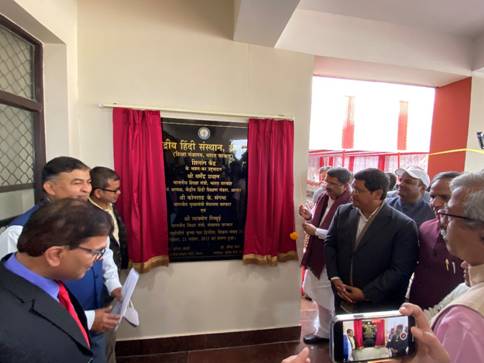
 Union Minister for Education and Skill Development Shri Dharmendra Pradhan inaugurated the newly constructed building of Kendriya Hindi Sansthan at Mawdiangdiang, East Khasi Hills today. Chief Minister of Meghalaya Shri Conrad K Sangma was also present during the inauguration programme. Union Ministerexpressed his gratefulness to the Government of Meghalaya for providing the necessary assistance including the required land for setting up of this Institute at Mawdiangdiang, Meghalaya. He expressed that this Institute will work for the benefit of teachers of Hindi and people eager to learn and do research in the language and will cater to states of Meghalaya, Tripura and Mizoram.

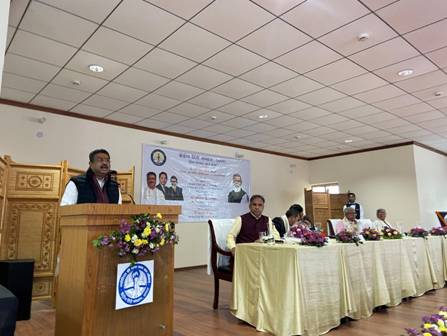
Speaking on the occasion the Union Minister said that NEP 2020 is a visionary approach to transform the education landscape of the country and to achieve the realistic goal and to percolate its ripple effect to the grassroots. One of most important salient features of NEP, the Minister said, is that NEP-2020 emphasised on imparting education in Mother language at the primary level and the government is striving to achieve the target within the stipulated time frame. 

Acknowledging the diversity of culture, language and tradition of this country and the co-existence amid this diversity, the Minister said that it because of this beauty of this language that people can share each others tradition and rich heritage. The Minister said that technology should be used extensively to preserve and enrich native languages so that people can use internet in their native languages and make people from other parts of the world about their rich culture and tradition.These practices will encourage innovation and creativity among the youths and may show light to world about many relevant issues concerning the people, the Minister added. 

The Minister while acknowledging the rich culture of this region said, “There are many things to learn from this region, it has a very rich heritage and is strong in natural resources. There has been many good educational institutions coming up in this region including IIM’s new campus.” The Minister said that there is a lot to do for the youths of the region and exhorted everyone to work for providing a better environment for the young generation. He said, “I have been informed that Meghalaya has around the 3.5 lakh college going students and it is the collective responsibility everyone to build a conducive environment to ensure their quality education, skilling, raising their employability capability and imbibing inside them the value of fundamental research. The first step towards this effort would be to simplify the process of learning languages”. 

The minister also referred to the North-East Education Conclave that was held in Guwahati on Saturday and said that the North East Region has nearly 180 languages and dialects spoken by various tribes and community and it is the mandate of the NEP to develop and preserve this heritage. In the days to come Kendriya Hindi Sansthan and English and Foreign Languages University (EFLU) will function as a Centre of Excellence and will work with the Government of Meghalaya to preserve and enrich Khasi, Garo and Jaintia languages with the help of technology, the Minister added. The Minister was categorical when he said that language is a tool that connect people from across the world and the availability of applications in the internet to learn languages of this region will enable people from outside the state to know about the rich culture and heritage of this region.  

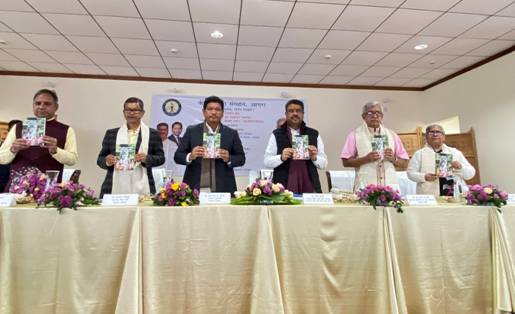
The Minister also released two books at the occasion- SamànvayPurvottarSanchayan and Hindi-khasi-Garo-Jaintia-English Concise Dictionary. The Minister was amused to come across the Concise Dictionary and exclaimed that this will help in enriching the languages.

The Chief Minister of Meghalaya Shri Conrad K Sangma expressed his happiness for the inauguration of the Kendriya Hindi Sansthan in his state and said that the presence of this institute will help the youths of Meghalaya and the entire Northeast region to learn Hindi and also to excel in this language.

New skills you can start learning today.


This is an image of New skills you can start learning today.

There’s a curiosity in all of us that acts as a driving force for learning new things. There are a variety of fields of specializations in the 21st century that kindle the curious cat inside us. Our desire can influence us to learn about almost everything that exists in this world. But the constraints of time and lengthy periods of learning a course can put the curious cat inside you to sleep. 

However, the 21st century that brought along with it the various fields of specializations has also brought some simple means of learning. There are several apps and websites that enable learning from the comfort of your home. You can begin learning online and learn at your own pace. Free demo lectures are also offered by many institutions to help you understand what you are signing up for. 

Following are some of the skills you can start learning today from the comfort of your home. 

1.Photography

This is an image of photography


Whether you want to learn some basic photography skills to post beautiful shots on your status, or you want to dive deep into the world of photography. Educational platforms such as Coursera, Skillshare and Shawacademy are here to offer both free and value added photography courses to aspirants. 

2. Try filmmaking

This is an image of filmaking


With video streaming platforms like YouTube welcoming small scale content creators and beginners, filming and editing has become much easier. Your mobile phone or a handycam is enough to get you started. You can start by looking for what’s trending and film a short video explaining your take on it. 

There are filming courses available on educational platforms like Udemy, Coursera and edX that you can learn from to gain more knowledge in this field. 

3. App making

This is an image of App making


If you have an idea that can be transformed into an app, or simply want to learn how to make an app. There are several app building courses available online that have got you covered. 

4. Writing a book

This is an image of Writing a book


Every reader dreams of writing his or her book which they can publish someday. So why not begin chasing that dream with a few pages at a time? Start by writing an outline based on the idea you have in mind. You can further add other interesting elements to it with the help of your feelings, emotions and experiences. 

5. Learning a new language

This an image of learning a new language.


There’s nothing more sassy than being able to speak in a foreign language, at a foreign place. Being well-versed with a few more languages other than your mother tongue puts you at ease with different people from different places. It also gives you the privilege of visiting different places without the fear of the unknown. 

There are several online applications such as Duolingo and Babbel that can aid you with your efforts. 

6. Learn Typing

This is an image of learning typing


Nothing wastes your time like having to search for the keys you need to press while typing an important document. Learning to type familiarises you with the positioning of the keys that can help you type faster than before. I would recommend the Typing Master portal to learn typing. It comprises tutorials, tests, and games to get you better acquainted with your keyboard. 

7. Learning a new sport

This is an image of learning a new sport

Unless you are looking up some tricks and moves of the game on the internet, this activity might require you to go beyond what an electronic device can offer. Learning a new sport can help build a rapport between you and your team. It improves your skill of coordination and sportsmanship. The pleasure of seeing the shuttlecock soaring in the air after swinging a badminton racket at it has always been incompatible for me.  

These are some of the activities you can start learning today. 


Communication, but non-verbal ones!

Source: Freepik

Communication is an important tool for us to share our thoughts and ideas with each other. When we use this tool to associate with strangers, it has to be done skillfully. Thus the term communication skills became generic and many people began teaching them or learning them. However, communication need not be confined to typical speech and verbal boundaries. Your facial expressions and gestures also communicate your thoughts to the intended audience. Thus, proving the existence of non-verbal communication. 

Non-verbal communication 

The key to a successful personal or professional relationship lies in your communication skills. But it is not simply the words you use that counts. The non-verbal communication you make with your facial expressions, mannerisms, and gestures brings a lot of difference in a situation. These non-verbal cues are often expressed in a subconscious state of mind. 

While communicating with a person, you send silent messages apart from a typical speech with your expressions, tone of speech and posture. These non-verbal cues have the power to attract and draw the audience’s attention towards you or leave them confused and withdrawn from you. 

Sometimes, the message we convey from our verbal communication is different from the one we express through our non-verbal communication. For example, saying you are happy as you put up a sad face. This renders the audience in a confused state of mind regarding believing the verbal or non-verbal cues.  Finally, they may choose to follow the non-verbal cues as it is often expressed in a subconscious manner. 

 Segments of non-verbal communication

Now that you may know the importance of non-verbal communication, let us look at some of the segments of non-verbal communication in detail. 

Facial Expressions

Whether you are happy or sad, most probably your peers can identify the way you feel. How is that possible? It’s your facial expressions that give your feelings away. Facial expressions are a significant part of non-verbal communication. There are so many things you convey with your smile or frown. People’s forms of expression differ across different regions and cultures. But facial expressions conveying basic emotions such as anger, fear, happiness or sadness are universal. 

Gestures

Although non-verbal communication is said to occur in a subconscious or an un-intentional manner. Some deliberate gestures also help convey a message or statement. We may wave our hand to gain someone’s attention or point a finger somewhere to give out directions to a person. These are some of the deliberate non-verbal communications we make in our day to day lives. 

Paralinguistics

Paralinguistics is a form of verbal communication that is seperate from the language quotient. It is inclusive of vocal factors such as tone of voice, pitch and loudness. To put it into perspective, the tone of voice alters the effect of the linguistic communication that you make. A statement being produced by a strong and confident tone gains approval and enthusiasm from the audience. The similar statement provided with hesitation receives lack of enthusiasm and support. 

When your friend asks you how you’re feeling, you may say you’re fine. But your certain degree of fineness is revealed by the tone in which you delivered your statement. 

Eye Gaze

Our eyes do speak volumes. When you see someone or something you love and adore, your eyes start to blink and your pupils begin to dilate. Thus forming an important segment of non-verbal communication. Blinking, staring and simply looking are some of the ways we communicate with our eyes. 

On the other hand, people may observe your eye gaze to determine your degree of honesty and trustworthiness.  By maintaining a steady and normal eye contact, you are perceived as an honest and trustworthy person. But the inability to maintain eye contact or having a shaky gaze may be considered as unreliable. 

Hoptics

Hoptics is a mode of communicating through physical touch. It also forms an important segment in non-verbal communication. A gentle touch or pat on the shoulder conveys warmth and affection. This form of communication is intense and must be treated with immense care. We tend to utilise this form of communication with people we know very well. A touch can be perceived as both appropriate and inappropriate based on where and how a person is touched. 

Appearances

Does the guy wearing a suit, sitting across you give out professional and business vibes? It is because that is what he communicated to you silently through his choice of clothing. Your choice of colour, clothing, hairstyle and overall appearance makes a non-verbal communication with others that allows them to have first impressions about you. That’s why we would prefer going shopping for a new attractive attire for a potential date or party to make a positive first impression. 

  “Few realize how loud their expressions really are. Be kind with what you wordlessly say,” says Richelle E. Goodrich, which stands true in regards to non-verbal communication. 

References

https://www.goodreads.com/quotes/tag/nonverbal-communication

https://www.verywellmind.com/types-of-nonverbal-communication-2795397

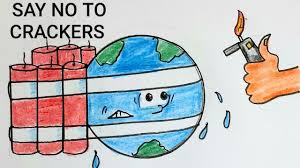
Say No To Crackers


By: Astha Raghav 

DIWALI and one can hear the sounds of firecrackers exploding from all directions. People of all age groups are fascinated with firecrackers, which form a prominent part of the Diwali celebrations. Firecrackers are known to cause air pollution as well as noise pollution and are extremely harmful for senior citizens and small children.   Pets such as dogs and cats also suffer on account of firecrackers as animals have a more sensitive sense of hearing than humans. 

Firecrackers can cause hearing loss, high blood pressure, sleeping disturbances and sudden exposure to loud noise can cause temporary or permanent deafness or even result in heart attack. 

Diwali is the biggest festival of India and its sanctity should not be blown away in smoke. This festival of goodwill can be celebrated in a number of ways other than bursting firecrackers.

Let each one of us take a pledge THIS DIWALI to “SAY NO TO CRACKERS” and invest in a safer and greener future. Diwali is the festival of lights and we must enlighten our lives with the sparkle of joy and goodwill, forget past grievances and look ahead towards a brighter and happier future.

Over the years several Bollywood celebrities have vowed against bursting crackers during Diwali and some have made good use of social media to raise awareness regarding the ills they cause not just to the environment but also humans and animals. In 2017, actress Alia Bhatt started the #PoochOverPataka campaign as she couldn’t bear to see her pet suffer due to the noise pollution. Anushka Sharma followed it with #PAWsitive. Each year, several artists speak of their concerns over health, pollution and the amount of waste bursting crackers causes.

“I remember as a boy I used to love firecrackers and I’m not going to be ashamed of that. But now I believe the time of crackers is over,” actor Boman Irani told MAIL TODAY. “One should understand that. Environmentally, for older people, for dogs, for your own lungs, for all the money that could have been put to better use Even the noise I can’t stand anymore. I find it tough to find a positive, except for the sparkling colours they give.”

Actress Isha Koppikar agreed and said celebrating a “green” Diwali is an excellent idea. “Instead donate your old stuff to the needy people, avoid plastic for gifts packaging, make rangoli with flowers, flour or rice products, gift herbal products or a plant. Buy earthen lamps or diyas and avoid using decorative electric lights. This Diwali let the Earth breathe,” she said.

But as they say charity begins at home and The Family Man actor Sunny Hinduja makes sure he doesn’t burst crackers and encourages his nephew and niece not to do it either.

“I was in Indore one Diwali with my brother and bhabhi, and I came home from the hostel to celebrate with them. I remember we were trying to burst what was known as the Laxmi Bomb’ but it wouldn’t light and we were scared because we had heard horror stories of it suddenly bursting when you went near it. So we waited for a long time and when I did go to check, it literally burst in my face,” recalled Hinduja. “If you don’t burst crackers on Diwali, it doesn’t mean you are breaking tradition. Traditions are made by us and it’s time we evolve, considering pollution, cutting down trees global warming, so much is happening. So even if it’s not such a big contribution from our side, we shouldn’t burst crackers and tell others not to do it either. That’s our responsibility as good citizens.”

Thank You!

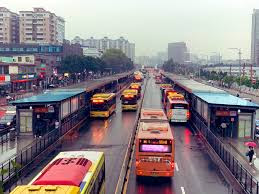
The importance of public transport


By: Astha Raghav 

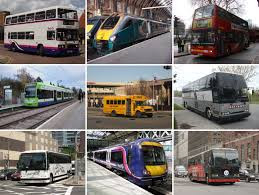
Public transportation contributes to a healthier environment by improving air quality and reducing oil consumption, and through better land-use policies. It also helps to expand business development and work opportunities. And, it is critical for emergency situations requiring safe and efficient evacuation. In terms of energy consumption, public transportation is better than individualtransport in a personal vehicle. In England, bus and rail are popular methods of public transportation, especially in London.

Public transportation is reducing energy consumption and harmful carbon dioxide (CO2) greenhouse gas emissions that damage the environment. Traveling by public transportation uses less energy and produces less pollution than comparable travel in private vehicles.

The increase in the number of cars and bikes has added to various pollution problems. The smoke emitted from vehicles has made the cities living gas chambers. The new policies of economic liberalisation has opened doors for the multinationals and the cars of various companies have become status symbols of the upper middle class. The amount of harmful gases in the air is alarmingly on the rise. They affect our eyes and lungs, giving rise to all kinds of cardiovascular and respiratory diseases.

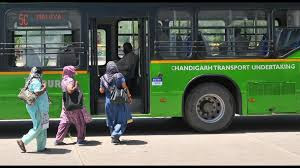
We, as the responsible citizens of India, must take steps to reduce these man-made problems and start using public transport as much as possible. The introduction of Metro Rail is a boon to the commuters as it saves time and money. These days, public transport have been made safe and secure. They are comfortable, clean and a cheaper alterative to personal vehicles for all office goers. Even the services of the Government road transport is good with GPS and A.C. installed for the convenience of the passengers.

Using public transport would definitely save fuel, reduce harmful gas emissions, further reducing one’s carbon footprint and eventually the causes and effects of global warming.

Thank You!

Digital India


By: Astha Raghav 

Digital India is a campaign launched by the Government of India in order to ensure the Government’s services are made available to citizens electronically by improved online infrastructure and by increasing Internet connectivity or making the country digitally empowered in the field of technology. The initiative includes plans to connect rural areas with high speed internet networks.It consists of three core components: the development of secure and stable digital infrastructure, delivering government services digitally, and universal digital literacy.

Launched on 1 July 2015, by Indian Prime Minister Narendra Modi, it is both enabler and beneficiary of other key Government of India schemes, such as BharatNet, Make in India , Startup India and Standup India, Industrial corridors, Bharatmala, Sagarmala.

As of 31 December 2018, India had a population of 130 crore people (1.3 billion), 123 crore (1.23 billion) Aadhaar digital biometric identity cards, 121 crore (1.21 billion) mobile phones, 44.6 crore (446 million) smartphones, 56 crore (560 million) internet users up from 481 million people (35% of the country’s total population) in December 2017, and 51 per cent growth in e- commerce. 

I dream of a Digital India, where Knowledge is strength and empowers the people.

Shri Narendra Modi

This was how the prime minister of India envisioned it, which led to the initiation of this movement and we can witness it becoming a reality today.

Thank You!

LIFE WITHOUT MODERN GADGETS

By: Astha Raghav
Technology today has revolutionalized our times in all possible ways. From dawn to dusk there is no time where we work without a gadget in our hand. Be it the global plague of mobile phones or our fingures struck on computers, i-pads,tabs, modern gadgets are such an integral part of our everyday life today that we can’t really imagine a world without them.
Today we are completely dependent on modern gadgets. Our mobile phone is like a personal secretary with accounts of all that we do everyday. The times when we remembered the phone numbers of important contacts have long gone, now that is the job of mobile to save it in its memory. Everywhere around, we can spot young people with headphones in their ear, connected to their i-pads and unaware of their surroundings. Modern gadgets seem to have helped to connect us virtually but in reality they have forced us to  an isolated life. The human connects, especially the amount of time we used to spend with family and friends in past has today reduced to watsApp messages and Facebook updates. Perhaps if we go back to such a time when we have our life without modern gadgets, we will be able to come close to our family and friends. The connect between two persons is a human bond. Messages and emails transfer our words but they can’t send the emotions which lie behind those words.

 Thus in today’s time, a life without modern gadgets will be one of human emotions and feelings and not of robotic expressions and methods. We will be able to build relationships and not increase the friends list. It will be a human life with sensitivity and love. Science has made life easy, convenient, comfortable, better and more beautiful. Its achievements, discoveries and inventions are wonderful. Friends and relatives living in different parts of the world seem a lot closer all thanks to modern gadgets, such as web cam, etc. Therefore, it is suffice to say that life without modern gadgets would slow down and become less efficient. Science has made life easy, convenient, comfortable, better and more beautiful. 

THANK YOU!

LAUGHTER IS THE BEST MEDICINE

 By: Astha Raghav

It should not take a doctor to tell you that laughing is good for health, a better way to cope with life than brooding over negative thoughts. Can there be a better way to greet the day than with a smile or a deep- bellied laugh? Laughingout loud helps more than endless rounds of medication. Not only is laughter therapy free and easy to practice, it can benefit in many ways. The benefits of laughter. It’s true: laughter is strong medicine. It draws people together in ways that trigger healthy physical and emotional changes in the body. Laughter strengthens your immune system, boosts mood, diminishes pain, and protects you from the damaging effects of stress.

Laughter is a good muscle-relaxant and reduces stress hormones, it increases the count of natural killer cells and raises antibody levels. 15 minutes of laughter is equivalent to 10 minutes of strenuous aerobic exercise. It is the enemy of anti-depressant pills and tranquillizers.

  Laughter improves lung capacity and oxygen levels in blood and cures chest infections. It is the best medicine. Do not waste time; join a laughter club and harvest rich benefits from the healing effects of laughter therapy. Laughter is the best medicine!: Humor is good for the health! idiom. This idiom suggests that laughter or good humor is beneficial to the health. The old cliche, “laughter is the best medicine,” may actually have some truth to it. According to legendary funny man Carl Reiner, “there isn’t anything more important than being able to laugh. When you can laugh, life is worth living.

THANK YOU!

TOURISM- THE MOVING FORCE


By: Astha Raghav 

In recent years, India’s tourism industry has made considerable progress. Tourism provides a travel based recreation with a change of place and a break from the monotony of daily life. It offers opportunities to move through the galleries of our glorious past, natural scenic beauty and brings people of different nations closer, offering them an opportunity to be familiar with the customs, traditions and culture of the society. In addition, the knowledge and experience gained can lead to harmonious and peaceful relationships.

Tourism has the power to transform the social, economic and cultural fabric of a country. 

The outlook for the tourism sector remains highly uncertain. The coronavirus (COVID-19) pandemic continues to hit hard, with international tourism expected to decrease by around 80% in 2020. Domestic tourism is helping to soften the blow, at least partially, and governments have taken impressive immediate action to restore and re-activate the sector, while protecting jobs and businesses. Many countries are also now developing measures to build a more resilient tourism economy post COVID-19. These include preparing plans to support the sustainable recovery of tourism, promoting the digital transition and move to a greener tourism system, and rethinking tourism for the future.

Coming off the worst year in tourism history, there’s little sense of optimism in the travel industry in early 2021. Following an estimated $1.3 trillion loss in export revenue in 2020, travel restrictions are being reintroduced at the start of the new year, as governments are trying to curb the spread of new, potentially more dangerous variants of the novel coronavirus.

Thank You!

WOMEN SAFETY IN INDIA


By: Astha Raghav 

Women in India, today, are becoming the most vulnerable section as far as their safety and security is concerned. 
When we turn the pages of a newspaper, we come across many headlines reporting cases of molestation, harassment, trafficking, ill treatment of women in house, violence against women in remote areas, etc.
Women feel unsafe and insecure and feel that their freedom and liberty are jeopardised.

It is unbearable to imagine the plight of women who are sufferers of such crimes. It is a jolt on the confidence of the women, of society and on our judicial system. 
We generally play the blame game for any such incidence and hence have not succeeded to reach the root cause of this issue.  An effective implementation of laws protecting women’s rights is the first step in this direction.  There should be stringent laws and the perpetrators of such crimes should be severely punished. We also need to create social awareness about these issues and ostracise those who commit such crimes and not the victims. 

Better surveillance by law enforcing authorities is also required.  The last but the most effective would be to compulsorily teach self defense techniques to girls and women in schools, colleges, offices and residential colonies. 

Only when these measures are taken, India can become a carefree and enjoyable place for women. 
Thank You!

COACHING INSTITUTES EXPLOIT STUDENTS

 By: Astha Raghav 

Coaching institutes have mushroomed in every nook and corner of all major cities over the past few years. These so called “temples of learning” are exploiting the young minds just for their financial grains. The misleading advertisements given by these Institutes act as  Magnets to attract the innocent, inexperienced students, who are seeking for sincere counseling and proper direction.

Coaching institutes have only one purpose while teaching their students: to get them to IITs, NITs or AIIMS, GMC, etc. Such beliefs and ideologies being inculcated in students at such a young age seriously compromise their prospects of being an effective member of the society in the future. We all are aware of how fancy coaching for engineering and medical courses are running all over the country. But I am not concerned about those foundation courses, rather for a seven-year-old child carrying 7kg heavy bag on his back and going to a coaching class.

Coaching has became an inevitable part of student life; be it second standard or 12th standard students. Earlier it was for those who found a school is not enough for clearing their doubts in studies. But now it’s religiously important to join a coaching institute.

Students pay thousands of rupees in school just to get the tag of a prestigious school and get the attendence marked. But what is the point of spending so much money that could not even clear the basics of the majority of the class?

Coaching is not only making parents’ money wash away like waves but also ruining the creative and thoughtful minds of a child. Nowadays, PM Modi is stressing very much over developing one’s skills. Perhaps that coaching for child below ninth standard is itself ruining the skillful mind of a child. They get everything cooked and served, every note and all answers. “The search of an answer is the essence of education”, which children are losing day by day.

<

p style=”border: 0px;color: #5c5c5c;line-height: 28px;margin: 0px;padding: 10px 0px;vertical-align: baseline”>The other dimension of the increasing dependency on coaching is the lack of attention of parents towards their child. Nowadays both the parents are earners of the house, which causes them to give less time to their child or you can say no time at all.
The need of the hour is to let the child search their answers on their own; let them be good learners on their own and let them be creative souls rather than making them robots whose whole day is spending in attending coaching and schools.

THANK YOU!

Friendship


Friendship is a precious gift which should not be easily given up. Even the acquaintance of an hour bears much meaning.  A friend is a person who understands us and sympathesis with our joys and sorrows. In times of trouble, this is a source of counsel, comfort and courage. Blessed is the man who is able to enjoy the fruits of such friendship. We should always keep it unbroken because if one lost, it can never be restored. 

Friendship is a beautiful bond that people take time to appreciate. Friendship comprises human values such as sympathy, mutual understanding and companionship. Above all, it is about honesty, truth and love with a degree of intimacy. Friendship is undoubtedly the central part of our lives, due to the concerns we have for our friends and also because our friends can shape as a person.
Friends are one of the most important beings we need in our lives. They are a source of not only personal happiness but also a shoulder to lean on when in need.True friends are a kind of gift we receive as we move through life. They listen, care, call or visit us when no one is around and they accept us for who we are. A friend can bean emotional oasis and can make a huge difference to our lives. Friendship transcends all material grains and selfish motives and values. The value of a true friend is immeasurable. It is a matter of heart more than of the mind and must be left to the heart for decision rather than subjecting it to the scanner of the mind which can sometimes play truant and spoil friendship. 
True friendship is based on mutual trust. It must be maintained at all costs and under all circumstances.  We can buy gold and diamonds if we have the required amount of money in our pocket, but a genuine  friend cannot be bought even with loads of money because true friends are priceless.
Thank you!
By:Astha Raghav 

Training and Internship

A young kid after his first encounter with a fictional world passionately years for more of it. Then, with the benefit of accessibility, voraciously consumes the stories be it books or cinema. This engagement not only feeds the young mind with new ideas, but also teaches it how to express. After umpteen fictional experiences, the mind learns the art of restrain and silence. Now the quietened mind begins to observe the aesthetics of a fictional world and the seeds of creation are sown in the mind. An artist is born.
This allegory in a way helps us to understand the role and importance of training and internship. A fledgling equipped only with knowledge and curiosity enters the place where it can fly. The opportunity to work in a practical setting teaches it the art of application and restrain. Here at this point, I believe l, it is important for it to experience a state called the ‘Flow’. The obligation of presenting the environment conducive to experience this state, a concept borrowed by me from Kalam’s autobiography, lies on the organization and the mentor.

The mentor’s role is to hold the hand of the intern so that his mind frees itself from fear and doubt and is in a better position to experience the Flow. Now the quietened mind learns the art of working in and observing an organizational setting. The observation results in creative output. The experience of the Flow builds the qualities of passion for work, commitment and effort. This ideal training benefits the organization through the performance of the intern and production of quality workforce. The person gains practical skills and builds his character through his experiences of working with others in an organizational setting. The fire is bestowed with the wings to fly.

BUSINESS COMMUNICATION

 UNDERSTANDING COMMUNICATION

COMMUNICATION MATTERS

Communication is so important in business, because business need people with good communication skills and our people need business. So, both are interconnected with one another. While communication has always been the Central to business, the nature of work today presents special communication challenges.

MEANING IS MIND

‘WE SEE THE WORLD AS WE ARE NOT AS WHAT THE WORLD IS’, stated by German philosopher Nietzsche. The statement comes true by that there is no meaning in signs, symbols, clues and objects around us, the meaning is just vested in the mind coming to us from uniqueness which is the result of experience. Programming by external environment fixes our mindsets, perspectives, biases, preconceived notions and beliefs. The audience can make sense and interpret the world around them only through individual filters.

CONTEXTS OF COMMUNICATION

The relationship of communicators also forms an important context of communication. 

Organizational contexts: The Organization to which your audience belongs – priorities, circumstances, slow or fast in pace of work can be strongly influenced by the way the message is going to be delivered.

Professional Contexts: Different professionals have different perspectives. Being aware of the internal and external ones makes you identify the priorities.

Personal Contexts: It all depends upon the current circumstances. Who you are, success, failure relationship, financial ups and downs, state of health and the physical environment all can affect communicative act. If you are aware eg. The intended recipient of your message is under stress or having a bad day, you can adapt your communication accordingly.

ADAPTATION

Choose the best words for your message. Adapting your message to one reader requires care, but addressing many needs to be considered carefully. In general, use familiar words for better understanding. Avoid words that are stereotyped by age. Avoiding words that are typecasted with the disabilities and negative descriptions. Understand an adapt to the different generations of people in the workplace.

IS NOT WHAT YOU SAY BUT HOW YOU SAY

Use positive words. Because people generally prefer positive to negative feelings, positive words are usually best for achieving your message goals. This is not to say that one should not use negative words, rather to use. Such words are powerful, and you will sometimes want to use them. They create some kind of effect to the opposite party.
Focus on what you do, it employes what one achieves the goal and desired effects. Do more than expected. Too many of us, however, stop switch simple messages, we include only bare essentials. 
Use the three major techniques for emphasizing the positive and the de-emphasizing the negative.  The three most important managing emphasis is structured one, position, sentence. Make sure that you built these kinds of things properly and achieve your objective in business.


        FOLLOW ETHICS WIN COMMUNICATION