

Top seed Novak Djokovic looked every bit the dominant player who is the defending champion in the Wimbledon championships. Djokovic beats kokkinakis by 6-1,6-4,6-2 to stay on course for fourth consecutive Wimbledon title to move level with Pete Sampras on seven and within one of men’s record holder Roger Federer, and on this form, it is hard to see anyone stopping him. It was the 23rd straight victory for Djokovic at the grasscourt grand slam. Djokovic dominated rallies with his precise groundstrokes at was eager to step forward for every opportunity, winning 30 out of 38 points at the net. Djokovic brought the crowd to their feet with the incredible drop shots and when kokkinakis chased a few of them down, Djokovic calmly played the overhead lob to keep pressure on the opponent. The only opportunity kokkinakis had when Djokovic was serving but he duly saved most of the breakpoints and closed out the win in two hours on his second match point in the second round. After completing victory in exactly two hours, Djokovic said, I’m happy with my performance today and quite pleased with the way i’ve raised the level of tennis in two days. Hopefully, I can keep that form, just thinking about the next match and hope things will get better as tournament goes on.
Tag: #sports
National Sports Day.

The national sports day in India is celebrated on 29 August on the birth anniversary of legendary hockey player Major Dhyan Chand Singh, Major Dhyan Chand Singh is regarded as India’s greatest hockey player of all time.
The late hockey player had led India to three Olympic gold medals in 1928, 1932 and 1936, he had scored over 400 goals in 22 years he was bestowed with India’s third-highest civilian owner Padma Bhushan in 1956
Dhyan Chand Singh also served in the Indian army and brought laurels to the country the first national sports day was celebrated on 29 august 2012. The day is observed also to spread awareness on the importance of sports to stay fit and healthy on this day the president of India honours eminent sports personalities with major awards including the Arjuna award major Dhyan Chand Khel Ratna award and the Dronacharya award.
Sport is very vital in the human’s life as it keeps us healthy, wealthy or active. There are several advantages of playing sports like it help us in building confidence, provides regular exercise, team-work, etc. Participating in sports also has psychological advantages like it relieves the stresses of everyday life.
The government understands the importance of national sports day & promoting sports as well. They have taken several initiatives for the development of sports like khelo India, National Sports Development Fund, and Scheme for Promotion of Sports among Persons with Disabilities, Scheme of Assistance for Anti-Doping Activities, etc. Khelo India is a very popular initiative taken by the government. The main aim of the Khelo India programme is to revive the sports culture in India at the grass-root level by building a strong framework for all sports played in our country and establishes India as a great sporting nation. This program was introduced by the ministry of sports and youth affairs.
The Sports Authority of India is the premier sports body of the country which will spearhead India’s sporting ambitions and develop the environment to promote the sports culture in the country and sporting excellence.
Sports Authority of India is now in the process of formulating and implementing a series of reforms in the Sports Sector which will build on a holistic approach to the development of Sports and Physical Education. Sports Promotional Schemes of Sports Authority of India:
- National Sports Talent Contest Scheme (NSTC) – for Sub-Junior level trainees
- Army Boys Sports Company Scheme (ABSC) – for Sub-Junior level trainees
- SAI Training Centres Scheme (STC) – for Junior level trainees
- Extension Centre of STC /SAG
- Special Area Games Scheme (SAG) – for Junior level trainees
- Centre of Excellence Scheme (COX) – for Senior level trainees
- COME and PLAY Scheme
Sindhu wins historic bronze; Beats He Bing Jiao to at Tokyo Olympics
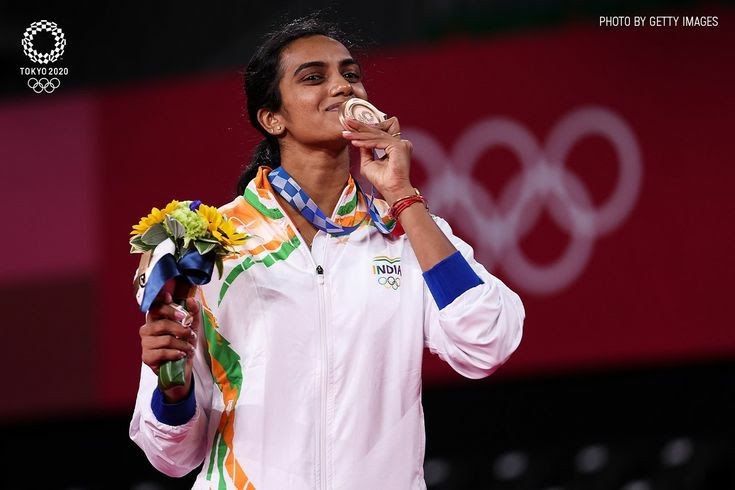
PV Sindhu created history on Sunday as she defeated He Bing Jiao of China to become the first Indian woman to win two individual Olympic medals. Sindhu defeated He Bing Jiao 21-13 and 21-15 in the bronze medal match. Sindhu was clinical throughout the contest and didn’t give her opponent any chance in the match. Sindhu had suffered a heart-breaking loss to world no.1 Tai Tzu Ying in the semi-final on Saturday. Sindhu lost the semi-final 18-21, 12-21.
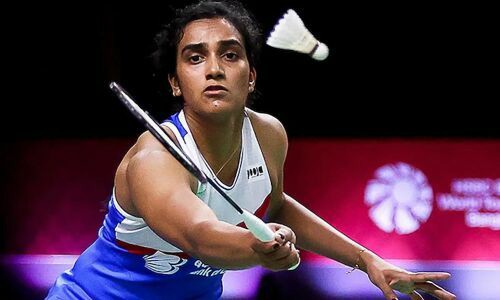
Saturday was a day of heartbreaks as India’s biggest medal hope PV Sindhu crashed out of the Gold medal race with a loss against her Chinese Taipei opposition. Kamalpreet Kaur in Discuss was the big story from Saturday. Participating in her maiden Olympics, she qualified for the Discuss final in the second position. Archer Atanu Das was knocked out and so were Amit Panghal and Pooja Rani in boxing. Another good news was the fact that the Rani Rampal-led women’s hockey team beat South Africa in a must-win match.
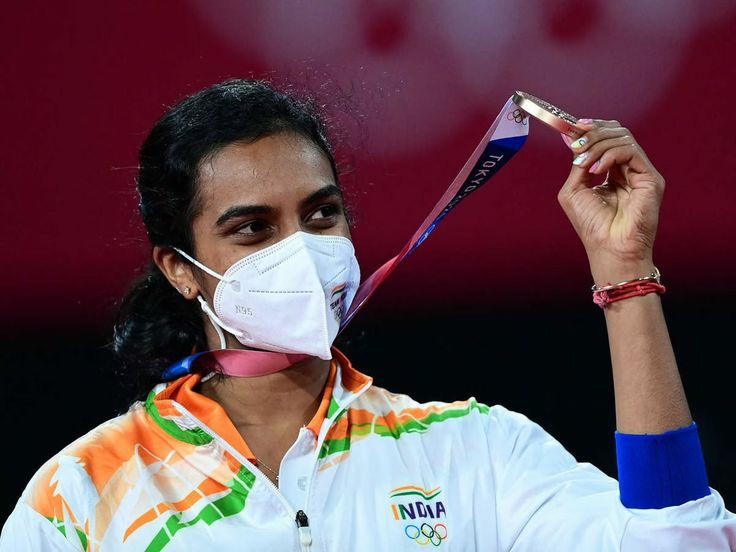
pv sindhu India’s pride,one of our most outstanding Olympian: pm Narendra Modi
Prime Minister Narendra Modi on Sunday hailed ace badminton player PV Sindhu as India’s pride after she won bronze in the Tokyo Olympics. He tweeted, “We are all elated by the stellar performance by PV Sindhu. Congratulations to her on winning the Bronze at @Tokyo2020. She is India’s pride and one of our most outstanding Olympians.”
Reaction over social media
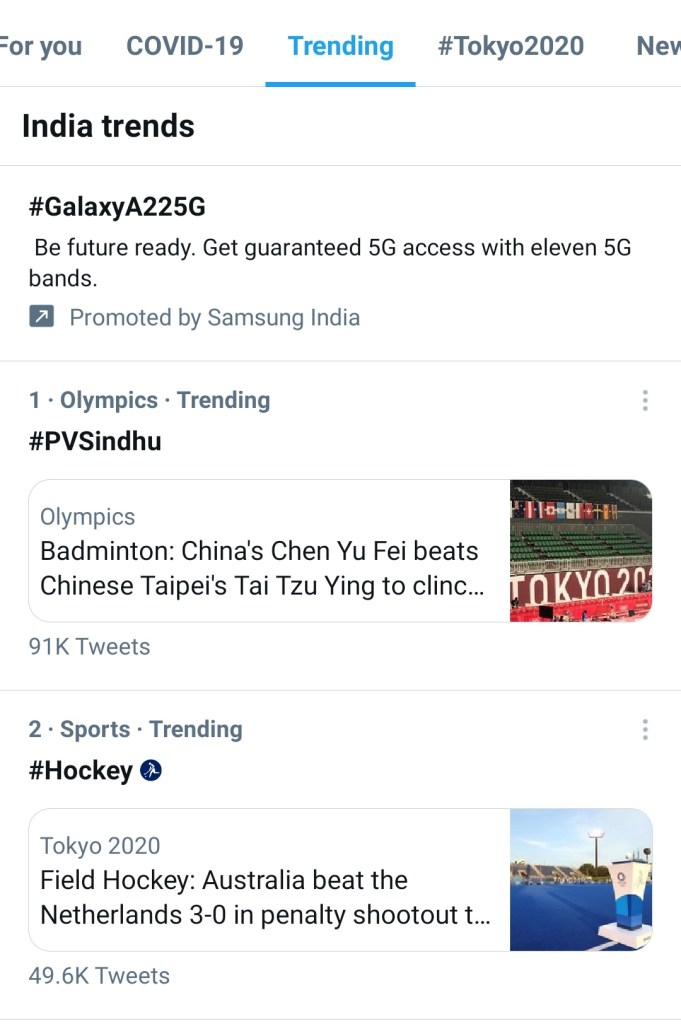
Within an hour of Sindhu’s historical victory, her name trends over the various social media plateform. #pvsindu lies at the top of twitter trend in india.
Do You Know This Indian Professional ‘GOLFER’?
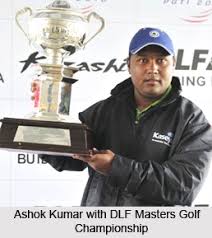
Ashok Kumar.
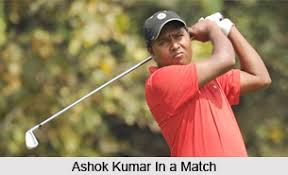
Rags- to- Riches story of Ashok kumar, who is a Professional Golfer of India.
Ashok Kumar, one of the country’s leading golfers who rose from the ranks of a caddie, remembers his very humble beginnings very distinctly. “The reason I am here in this swanky restaurant of the Oberoi, sipping coffee with you is because of golf. It has brought me name, fame and money and all that I could possibly ask for in life. Without golf, I am a zero ,” said the 27-year-old golfer with rare candour in a chat with Kalyan Ashok, a sports journalist working with Sportstar, one of India’s leading sports weeklies.
India’s No.3 golfer may not exactly be rolling in luxury at the moment, but he definitely leads a comfortable life-a far cry from the days when he used to sleep in a stable. “It’s destiny that brought me to this stage in life and I can’t sav that I deserve it, but it’s God’s gift to me through golf, sald Ashok. Not the one to forget his past, Ashok Kumar keeps reminding himself how he came up in life.
His story is stranger than fiction. Ashok was born into a poor family in Bihar that struggled to make both ends meet. (He has four brothers and two sisters.) In 1988, his parents sent him away with his elder brother to Delhi and he worked as an errand boy at the Jaipur Polo Club.
“I used to work in the day assisting my brother and sleep in the stable at night. The club also had the Air Force golf course and I wandered on to it one day and watched the players and caddies. I thought of becoming a caddie, but I was too young then. I did not get the job, but the club hired me a few years later,” recalls Ashok. It was then that he took to golf. He started practising in the club when no one was around. However, he was caught playing one day and was suspended from his job, as caddies were not allowed to practise golf.
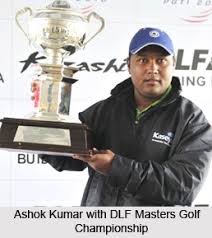
“I was back to square one. Then I went away to help a lorry owner who was transporting sand. I remember the days when I had to pay five rupees to hire a blanket during winter and sleep in Connaught Place,” Ashok said wistfully.
Six months later, when things cooled down, he moved back to the Air Force golt course and became a caddie to Amit Luthra, who was India’s top golfer and an Asian Games gold medallist. “Luthra saab spoke to the club authorities and got me in,” Ashok said with gratitude writ large on his face.
Ashok learnt a lot from Luthra and one day he challenged his mentor to a play-of “I don’t know what got into my head and I told him that I will beat him, to which Luthraji said that if I did that he would waive a month’s caddie fee. We played on the road, but I lost,” Ashok smiled.
Luthra, however, was very impressed with the young man’s talent and got him enrolled at the Delhi Golf Club, which allowed caddies to play. Seizing this opportunity with both hands, Ashok went on to improve his game by leaps and bounds and in 1995, DGC selected him to play in the All India Junior tournament in Kolkata.
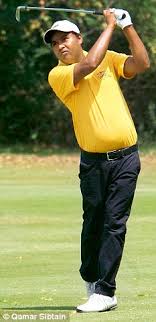
“I didn’t know where Kolkata was. I thought it was outside the country! I travelled in an unreserved compartment, spending most of the time sitting in the bathroom or just outside as there was no place elsewhere.” In Kolkata, he finished third and in the next two years he became the Junior Champion of the country. In 2000, he moved to the amateur ranks and two years later he became a pro, finishing his first season as India’s No.5 golf player. Riding a wave of success, Ashok held the No.1 spot in 2006 and 2008 and currently (2010) he is ranked No.3.
The moment he cherishes the most as a player is not the time when he won his first major title but when he finished 18th in the Hero Honda-DLF Tournament in 2002. It fetched him a cheque of Rs. 1 lakh. “I never looked back after that,”Ashok remarked.
In the early part of 2010, Ashok’s golfing career got a boost when the Bangalore- based business and software company, Kaseya India, run by golf enthusiast, Mr. Girish Krishnamurthy, decided to sponsor him. “I am a simple guy and with Kaseya around to take care of other things, I can concentrate better on my game now,” Ashok says with determination as well as gratitude. It is his ardent wish that all golf links in the country should support caddies, as he feels that many of them have a lot of inherent talent simply waiting to be tapped.
Ashok has modelled his game on his golfing idol, Tiger Woods. Incidentally, he had met Tiger when he was a caddie to Arjun Atwal in Bangkok a decade ago. “He hugged me when he was introduced by Atwal as a top amateur from India. I asked him for his advice, to which the legendary golfer simply said-‘don’t think of beating others, they should think of beating you,” Ashok’s eyes sparkled when he recalled his meeting with Tiger.
He faithfully follows that advice from the maestro and hopes to play with him one day. “For the moment, I eat, drink and sleep golf. There’s no distraction in my life. I relax with some music and watch CDs of Tiger Woods,” Ashok concluded.
How Much Does India Invest In Olympic Athletes?

Postponed by a year due to the pandemic, the Tokyo Olympics is now less than a month away. Last week, the Union Sports Minister Kiren Rijiju urged the people to extend their support to India’s Olympic-bound athletes, the same way they back India’s cricketers. However, India’s abysmal performances at the Olympics is in striking contrast to India’s immense success at cricket. The model of sports governance and financial irregularities are often blamed for the lack of competitive edge in sports other than cricket. So, the most obvious question that comes to our mind is, how much does India invest in the Olympics?
Money allocated for Sports
In the 2020-21 annual budget, the Government of India allocated Rs 2826.92 crore for sports, which meant an increase of mere ₹ 50 crore from the revised estimates of the financial year 2019-20. The Modi government’s flagship sports programme ‘Khelo India’ received a substantial hike of ₹ 312.42 crore and was allocated ₹ 890.42 crore compared to ₹578 crore in 2019-20. On the other hand, the National Sports Development Fund saw a reduction of ₹ 27.15 crore from ₹77.15 crore in 2019-20 to ₹ 50 crore in 2020-21. National Sports Federations saw the highest decrease after Finance Minister allocated ₹ 245 crore, ₹ 55 crore less than the previous financial year, according to The Wire. Even the budget for meritorious sportspersons saw a 40% reduction from the last financial year. It is important to note that the 2020-21 annual budget was presented in January 2020, when the government had no idea of the coming pandemic. It was also supposed to be the year of the Tokyo Olympics.
Target Olympic Podium Scheme
While these are the broad schemes under which Indian sportspersons are funded, the Target Olympic Podium Scheme (TOPS) provides financial assistance to potential Olympic medal winners. Launched in 2014, TOPS is the flagship programme of the Sports Ministry of India. The top-up funding scheme considers the performance of Indian athletes in the past three years. They are provided with personal coaches and other staff fees, cost of travel during competitions, purchase of equipment, and pocket allowance.
Looking Back At The Last Olympics
In the 2016 Rio Olympic, India spent ₹ 36.85 crore under TOPS, as per Financial Express. Nearly half of that amount was spent on shooting, which was India’s most successful Olympic sport in the previous three games. Shooting is also very expensive, which requires importing equipment from other countries. But shooting failed to bring any medal. Athletics received the second-highest funding of ₹ 7.80 crore in 2016, but India failed to make a mark in the sport. Unfortunately, out of the ₹ 36.85 crore, ₹30.49 crore had gone to disciplines that fell short of goals. Only 1.66 per cent of the total TOPS fund went to the fields that brought India two medals – PV Sindhu in Badminton and Sakshi Malik in wrestling.
Comparison With Other Countries
The United Kingdom allocated close to Rs 9000 crore on sports infrastructure and training in the annual sports budget, whereas India spent only one-third of the UK, Rs 3,200 crore, on youth affairs and sports, before 2016. The UK won 67 medals against India’s two at the Rio Games 2016. Abhinav Bindra had also tweeted back in 2016 that a medal cost UK 5.5 million pounds, and that is the kind of investment India needs to make. Otherwise, we cannot expect much. In the USA, a large number of athletes are privately funded. Individual athletes had started their own funding portal for donations from the general public. Therefore, only 10% of the US Olympic Committee’s finance was spent on athletes in Rio 2016, and the USA finished first. China, on the other hand, is known for its aggressive state-sponsored promotion of sports.
Private Investment In India
Before the 2016 Olympics, Indian Olympic Association (IOA) received donations from Reliance Jio, Amul, Tata Salt, Edelweiss Financial Services, Herbalife, Li Ning, and SBJ. Sakshi Malik had also thanked JSW Sport, a foundation funded by the OP Jindal group, after becoming India’s first medal winner in Rio Games, as reported by Hindustan Times.
However, unlike NSDF, where the contributions and sponsorships are open and documented, private funding to individual athletes is not. And most recently, the JSW Group has come on board to be the official sponsor of Team India in the Tokyo Olympics and has agreed to pledge sponsorship support of ₹ 1 crore to IOA. In 2018, the Sports Ministry earmarked ₹ 100 crore for funding of the athletes for the preparation of Tokyo Olympics 2020, which will take place this year. While the number of medals won cannot be equated to the investments made, since medals are not the only measure of success, India nonetheless needs to invest more and put in a new model of sports governance in action. A
USAIN “The Lightning” BOLT.
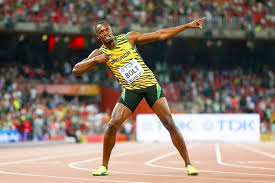
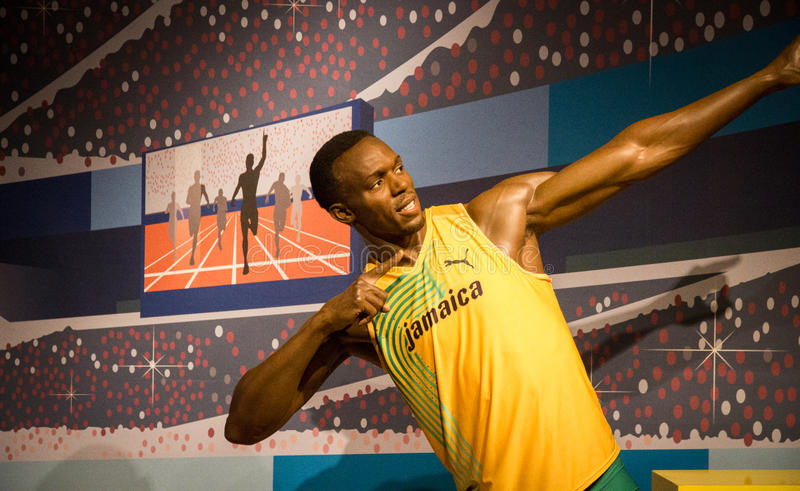
Full name – Usain St Leo Bolt
Nickname(s)- Lightning Bolt
Nationality – Jamaican
Born – 21 August 1986 (age 34),Sherwood Content, Jamaica
Height – 1.95 m (6 ft 5 in)
Weight – 94 kg (207 lb)
Sport – Track and field
Event(s) – Sprints
Club – Racers Track Club
Coached by – Glen Mills
Retired – 2017
Awards And Honors: Olympic Games.
About Usain Bolt:
The world’s fastest man has adopted the world’s fastest animal. As part of an effort to help protect this ‘endangered species’ in Kenya, Bolt formally adopted a three-month-old cheetah cub in Nairobi. Bolt bestowed one of his own nicknames upon the cub, naming him ‘Lightning Bolt’. Symbolic indeed!
One cheetah at a Cincinnati Zoo ran the 100 metres in just over 6 seconds, about 3.5 seconds faster than Bolt’s human world record of 9.58 seconds. Some scientists are trying to apply the physics of a cheetah’s running style in order to maximize the ability of human runners. Well, do not be surprised if Bolt does land another ‘bolt from the blue’ by equalling the cheetah’s feat.
Sportsmen like Bolt are like the Halley’s Comet, they come once in 76 years, nay, a hundred years. Bolt, a three-time Olympic gold medalist, distinguished himself with a 200 metres gold medal at the 2002 World Junior Championships, making him the competition’s youngest ever gold medalist. In 2004, at the CARIFTA Games, he became the first junior sprinter to run the 200 metre in under 20 seconds with a time of 19.93 seconds, breaking Roy Martin’s world junior record by two-tenths of a second.
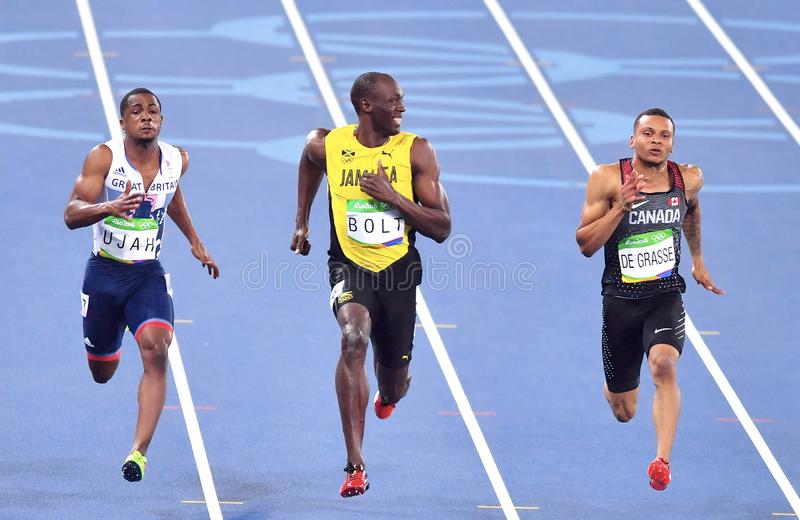
He turned professional in 2004, missing most of his first two seasons due to injuries. But he competed at the 2004 Summer Olympics.In his childhood, he loved to play Cricket and Football in the streets of Jamaica with his brother. In his school, he was the fastest runner in the 100-meter race. His primary coach, McNeil was sometimes got frustrated by his penchant jokes. At the 2001 IAAF World Youth Championships in Hungary, he made his first appearance at an international event. Bolt is one of only nine athletes in the world to win World Championships at the youth, junior, and senior levels.Bolt’s first sports choice was Cricket. He is a big fan of Football.
About his Life:
In 2007, he beat Don Quarrie’s 200 metres Jamaican national record with a run of 19.75 seconds. In May 2008, Bolt set his first 100 metres world record with a timing of 9.72 seconds. He set world records in both the 100 metres and 200 metres events at the Beijing Summer Olympics, recording 9.69 seconds in the former event. With a timing of 19.30 seconds in the 200 metres, he broke the previous record of 19.32 seconds by Michael Johnson at the 1996 Summer Olympics at Atlanta. A year after the Beijing Olympics, he lowered his 100 metres and 200 metres world records to 9.58 seconds and 19.19 seconds respectively at the 2009 World Championships. His record-breaking margin in the 100 metres is the highest since the start of digital time instruments. As a result of Bolt’s success in athletics, he was named the Laurens World Sportsman of the Year for 2009.
• He is an 11-time World Champion.– In Track and Field, he is considered the highest-paid athlete ever. – He has been with a number of honors and awards, including Track and Field Athlete of the Year, World Athlete of the Year, and Laureus World Sportsman of the Year (3 times). – He has collaborated with the Soul Electronics and has launched 2-types of Bolt edition in-ear headphones- Run-Free.
Bolt loves dancing and is a great admirer of Indian batsman Sachin Tendulkar, West Indian Opener Chris Gayle, and Australian opener Mathew Hayden. He is a football fan too, and supports Manchester United. What we can learn from a man like Bolt is the level to which one can reach if one works hard. Hours of hard and laborious training have gone into the making of this rare legend on the track, and countries with a billion strong population which cannot produce a single sensation on the track can do well to learn certain lessons from him.
A Great Martial Artist ‘Bruce Lee’.
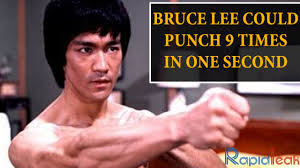
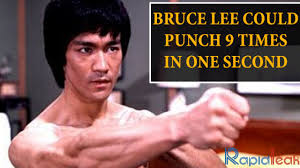
Born – Lee Jun-fan, November 27, 1940 ,San Francisco, California, U.S.
Died – July 20, 1973 ,(aged 32)Kowloon Tong,British Hong Kong.
Cause of death – Cerebral edema ,Resting place Lake View Cemetery, Seattle, Washington, U.S.
Other names – Bruce Lee Siu-Lung, Lee Yuen-cham, Lee Yuen-kam.
Citizenship – United StatesBritish Hong Kong
Occupation – Martial artist,philosopher, actor, director, screenwriter, producer.
Spouse(s) – Linda Emery (m. 1964).
About Bruce Lee:
Bruce Lee, the very name breathes enthusiasm and life euphoria in the minds of thousands of action movie lovers. When we talk about action movies today, particularly in the martial arts genre, it is impossible to forget, that Bruce Lee was the one who began it all with movies like The Big Boss (1971), Fist of Fury (1972), Way of the Dragon (1972), Enter the Dragon (1973) and The Game of Death (1978). Gone were the days when action movie lovers would be pleased with the gun fight of Clint Eastwood or the epic chariot races of Charlton Heston. Kung Fu had made its entrance in the world of entertainment, courtesy the silver screen. Bruce Lee was born on 27 November 1940. His father, Lee Hoi Chuen, was Chinese and his Catholic mother, Grace Ho, was of three-quarter Chinese and a quarter German ancestry. Lee and his parents went from the US to Hong Kong when he was three months old. Lee’s father was one of the leading Cantonese opera and film actors at the time.
At the age of thirteen, Bruce Lee took Kung Fu lessons with Yip Man. Having learnt the basics from his father, Bruce showed keen interest in the art and a year later, in 1955, had private training with the man who would later become the President of the Australian Federation of Kung Fu, William Cheung. At this time, the martial artist, Wong Shun Leung, who was consistently involved with dangerous and brutal competitions, had Bruce Lee privately train with him. Both Wong Shun Leune and William Cheung were students of Yip Man in his school at the same time as young Bruce Lee. Despite the advantages of his family’s high social status during his youth in Hong Kong, the neighbourhood where Bruce grew up was dangerous and full of gang rivalry. Bruce Lee evolved in these conditions as a dangerous street fighter. No wonder then that at the high school level at St Francis Xavier’s College in Kowloon, Lee was part of the school boxing team in inter-school tournaments.
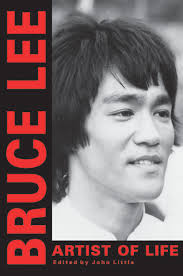
Through his father, Bruce was introduced into films, and by the time he was 18, he had acted in 20 films. While in the United States from 1959 to 1964, Lee abandoned thoughts of a film career in favour of pursuing a career in martial arts. Destiny had different plans for him and the lightning fast moves of Bruce Lee landed him the role of Kato in the TV series The Green Hornet. This led to a host of other television serials like Iron Side (1967) and Here Come the Brides (1969). Lee’s return to Hong Kong landed him in Raymond Chow’s The Big Boss and Fist of Fury, and Lee was a big star overnight. Lee became a god of action cinema with the Warner Brothers’ production Enter the Dragon, but a cruel and inexplicable death snatched him away from his fans six days before the release of this movie.
We remember Lee today as a man who redefined action on the silver screen. We remember his high kicks, his exceptionally fast punches and the spine-chilling fight sequences. ‘Lee, pound for pound, might well have been one of the strongest men in the world, and certainly one of the quickest,’ said Chuck Norris. When a child today watches Jackie Chan or Jet Li and gets excited to throw a punch, no father fails to remind him that these are compared to the master-Bruce Lee. hing Lee has left a unique legacy in the world of sports and cinema, imitated by millions but mastered by none.
Devoted Teacher:
Lee finished high school in Edison, Washington, and subsequently enrolled as a philosophy major at the University of Washington. He also got a job teaching the Wing Chun style of martial arts that he had learned in Hong Kong to his fellow students and others. Through his teaching, Lee met Linda Emery, whom he married in 1964. By that time, Lee had opened his own martial arts school in Seattle.He and Linda soon moved to California, where Lee opened two more schools in Oakland and Los Angeles. He taught mostly a style he called Jeet Kune Do, or “The Way of the Intercepting Fist.” Lee was said to have deeply loved being an instructor and treated his students like a clan, ultimately choosing the world of cinema as a career so as not to unduly commercialize teaching.Lee and Linda also expanded their immediate family, having two children — Brandon, born in 1965, and Shannon, born in 1969.
Mysterious Death:
Most of the people said that he died under mysterious circumstances .On July 20, 1973, just one month before the premiere of Enter the Dragon, Lee died in Hong Kong, China, at the age of 32. The official cause of his sudden and utterly unexpected death was a brain edema, found in an autopsy to have been caused by a strange reaction to a prescription painkiller he was reportedly taking for a back injury. Controversy surrounded Lee’s death from the beginning, as some claimed he had been murdered. There was also the belief that he might have been cursed, a conclusion driven by Lee’s obsession with his own early death.More rumors of the so-called curse circulated in 1993, when Brandon Lee was killed under mysterious circumstances during the filming of The Crow. The 28-year-old actor was fatally shot with a gun that supposedly contained blanks but somehow had a live round lodged deep within its barrel.
PSYCHOLOGICAL ASPECTS OF WOMEN ATHLETE

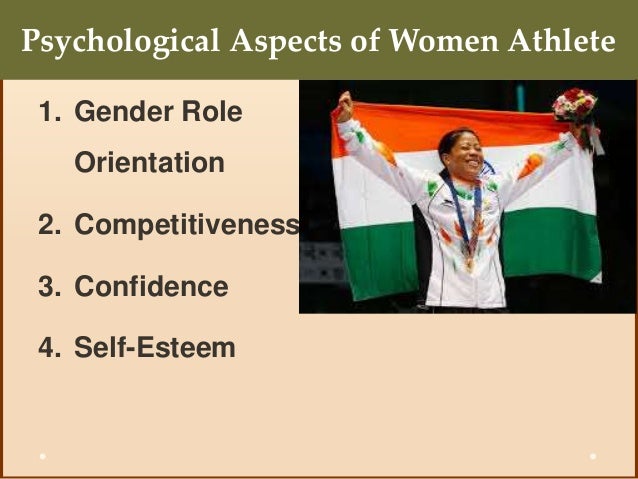
Over the past several decades , the role of women has changed drastically .However , gender beliefs and stereotypes still do exist across the world especially in sports . Most of the people in our society consider that sports are not meant for females but only for males .Social tradition , customs and cultures have great influence upon the psychology of women . In a male dominating society , males are expected to be aggressive , independent , dominating , robust and confident , whereas females are expected as well as considered to be emotional , sensitive , cooperative , sympathetic , loyal , etc. It is a well – known fact that participation of women in sports is increasing year after year .With this enhancement in female participation in sports , there is also renewed interest in the psychological characteristics of the female athletes and the effects of athletics on women . The various psychological traits of women athletes are stated below .
- Gender Role Orientation : It is an established fact that there has been an increase in the level of women’s participation in the types of sports that have been traditionally limited to only males , e.g., wrestling , weightlifting , kick boxing , body building , etc . However , many sports have been still considered inappropriate for women . For a long time it was considered that women should not take part in athletics because of the potentially harmful masculinising effects of sports .
- Competitiveness : It is evident that in the field of sports , both men and women are competitive in their own fields . In fact , women are more goal oriented and perform magnificently in artistic activities such as gymnastics . However , a number of research studies indicate that females who take part in sports are more competitive in comparison to the females who do not participate in sports .
- Confidence : As mentioned earlier , due to social pressures , women tend to have less confidence than men . Participation in sports , competitive environment , awards and recognitions increase confidence levels of sportspersons . However , a significant difference may exist between sportswomen and non- sportswomen .
- Self-esteem : Most of the research studies indicate that training plays a vital role in performance . Self -esteem improves with good performance . In the field of sports , intensive training helps in enhancing self-esteem . Research studies also show that those people who engage in sports have high self-esteem in comparison to non-participants .
- Aggression : Aggression is a forceful , goal- directed action that maybe verbal or physical . Participation in sports has many positive aspects which usually involve aggressive behavior . Various studies of aggression show that athletes who participate in contact sports , i.e., football players , judos or wrestlers are more aggressive than the athletes who participate in less contact sports . However , females who participate in contact sports show more aggression in comparison to females who do not participate in sports at all.
Manga Review: Haikyuu!
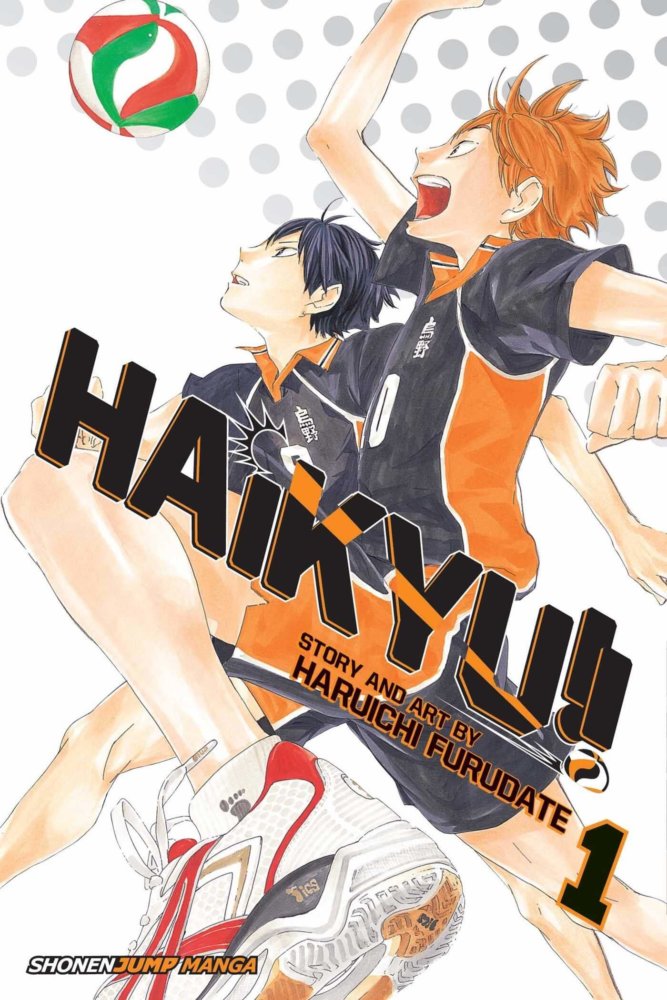
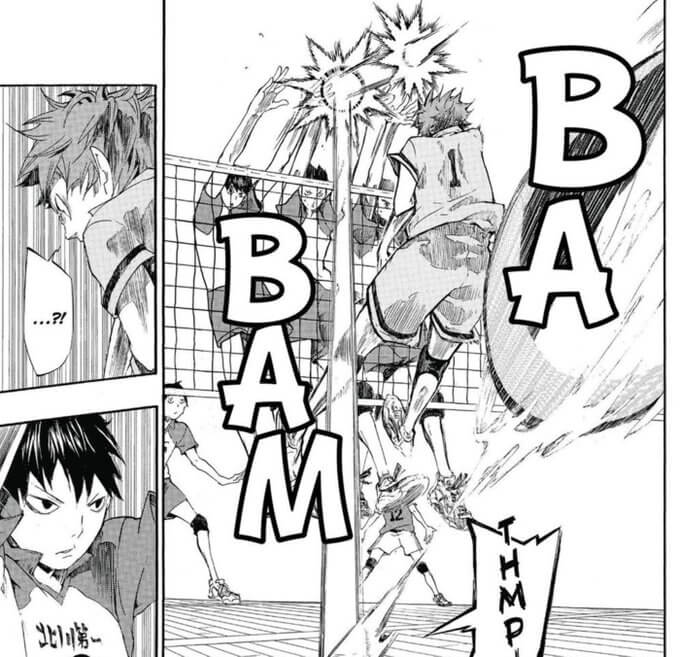
The premise of Haikyu!! is simple: middle schooler Shouyou Hinata happens to see a volleyball match on TV one day. He watches the Little Giant of Karasuno High School score point after point by jumping higher than anyone else, outplaying his tall opponents. And Hinata, short for his age, realizes that he could play volleyball too. When Hinata finally makes it to his first tournament in his third year of middle school, his team is crushed in the first round by a team led by setter Tobio Kageyama, a temperamental genius. Hinata vows to crush him the next time they meet on the court… only to walk into the volleyball gym on his first day at Karasuno, and see Kageyama practicing his serves. The rest of the series follows the unlikely pair and their teammates on their journey to the national championships and beyond.
What really makes Haikyu!! stand out, and what got me hooked despite my generally lukewarm attitudes towards sports stories and male protagonists, was the depth of character development everyone gets. It’s not just a story about Hinata and Kageyama. It’s also a story about their teammates, their coaches, their rivals, and everyone else around them who plays a role in their development. Many chapters feature flashback sequences showing the reader how a rival team member we were seeing for the first time got to where they are today, making it impossible not to care for every character the reader encounters.
Even though it’s a story about a boy’s volleyball team, the women in the story (the managers, sisters, and girls volleyball team members) have their own arcs and interests not centered around the men. In other sports manga I have read, the team managers were only interested in helping the team move forward. In Haikyu!!, first year manager Hitoka Yachi’s entire introduction to the story is about her discovering what she wants for herself, and how she wants to achieve that. Yachi and third year manager Kiyoko Shimizu have their own interests, goals and personalities separate from how they relate to the team.
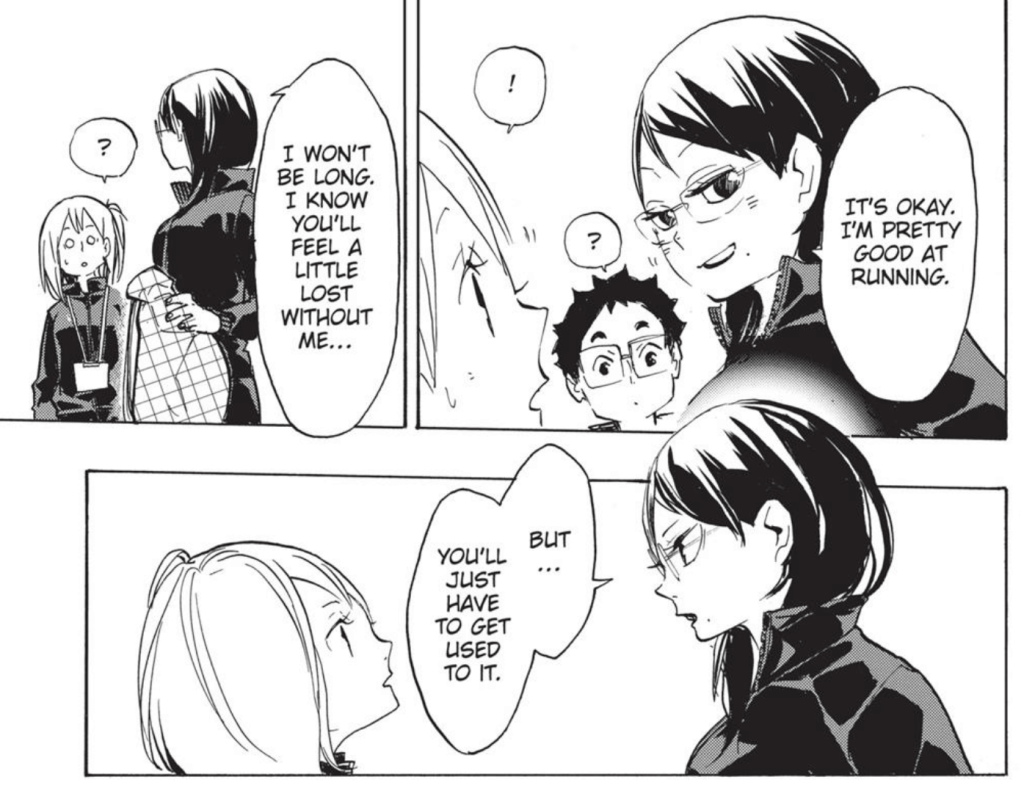
Where Haikyu!! sometimes falls short is its pacing. The weekly manga spent almost a full calendar year on a single match between Karasuno and another school, yet the transition into the final arc of the story felt very sudden and rushed. Without giving away too much, the characters’ high school life ends abruptly, and flashes forward to their lives several years later with no warning. The drastic shift in direction was entirely unexpected by most readers, yet many grew to welcome it as the story developed further and flashback sequences elaborated on the years in between. Furudate’s decision to continue the story beyond the typical high school sports manga confines was a bold choice, and while it may be alienating to some readers, others find it exciting and refreshing.
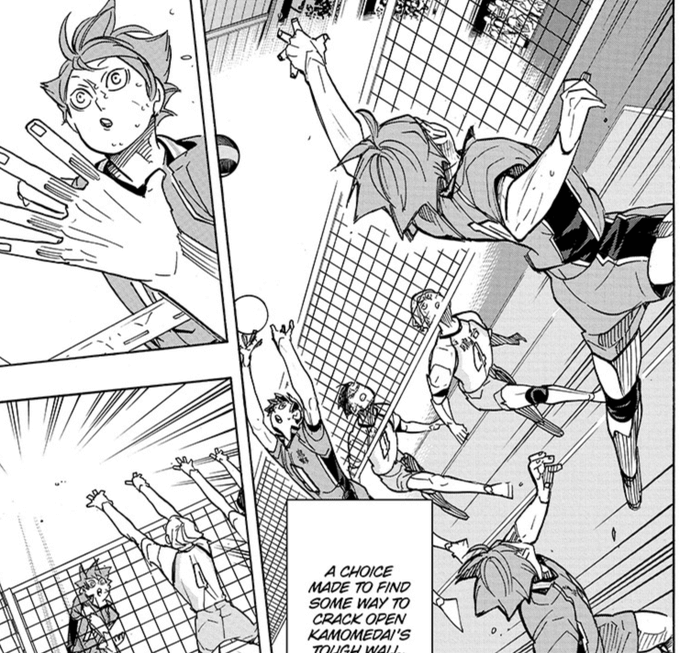
The art style also shifts dramatically as the comic goes on. The characters become more angular and stylized, and the action more exaggerated and expressive. It’s not as noticeable when reading archivally, but it is kind of surprising to see such style drift in a manga, even a long-running one.
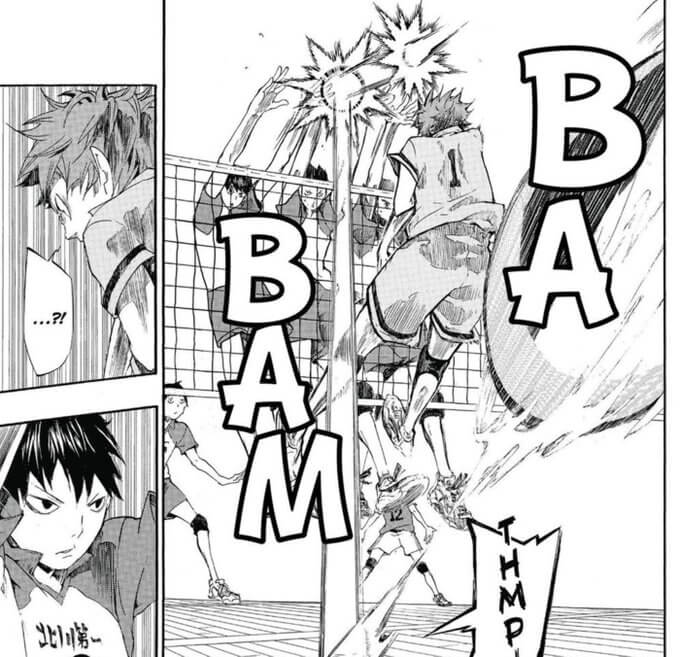
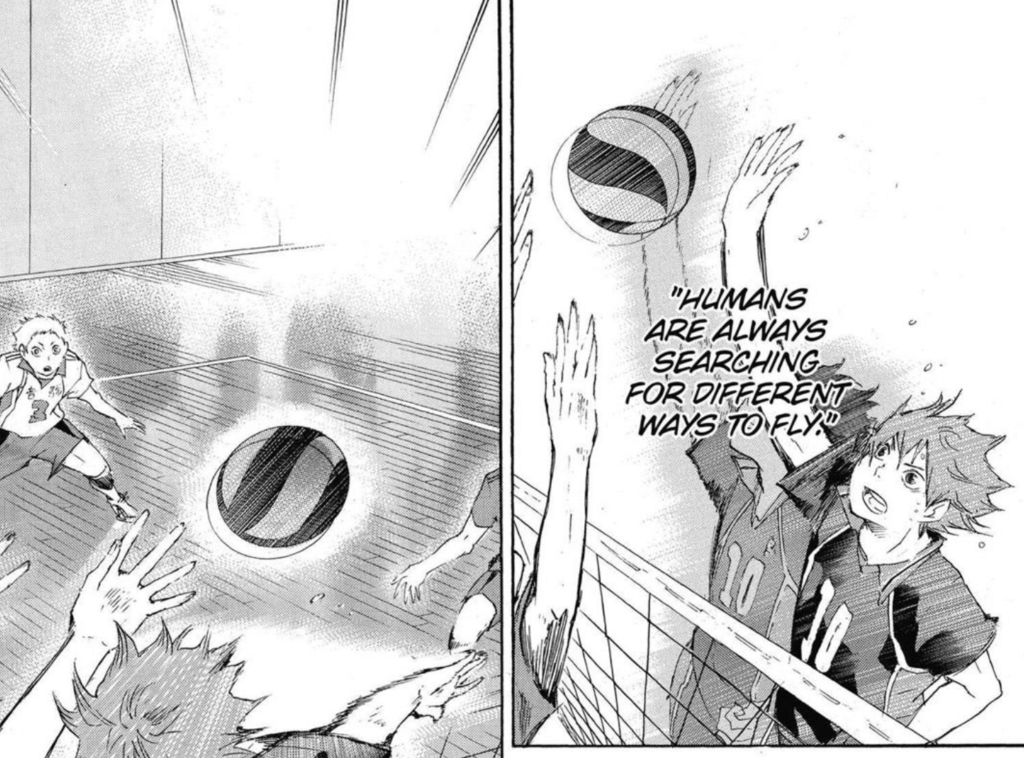
One of the recurring themes in Haikyu!! is the idea of flight. At first, Hinata seems too short to succeed at volleyball, a sport in which height is crucial to scoring points and winning games. But Hinata is capable of jumping extraordinarily high, and with the right teammates, he soars. In chapter 30, Karasuno’s coach says, “Because we don’t have wings, humans are always searching for different ways to fly.”
 Eduindex
You must be logged in to post a comment.