Role of Women in Shaping Society

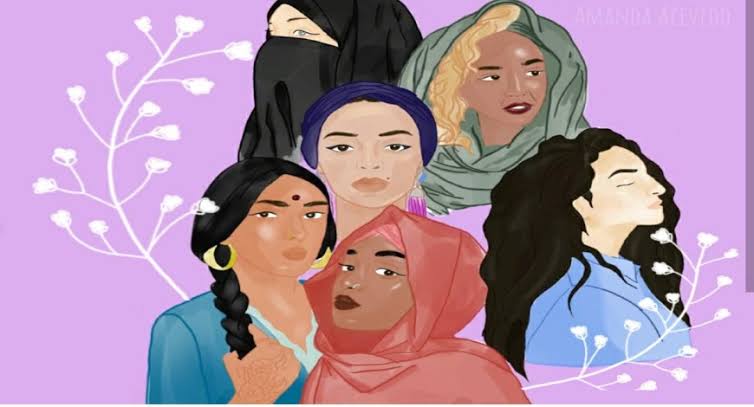
Women plays a crucial role in developing any society. Freedom of Independence has been suppressed from the ancient times but, the woman have fought for their rights in the history and fighting for themselves in today too. Now this need to be taken into consideration that even today the women have to prove themselves that they worth being treated equal to their mens counterpart.

Women have fight for everything which the men automatically gets as their birth privilege, because of which women they have value for each of these things. The situation good in urban areas but the womens in rural area face domestic violence, mental torture, not allowed to work or study. The are forced to limit their world in a small house.

In this I does not mean that every women are facing this level of injustice in rural area, but even if one of them is facing this that is going to impact the whole family of her, as if she have a daughter she will suppress her and if she have a son he will be learning same thing to disobey women. As one rightly said that have men gets educated he gets educated alone, but when women gets educated a whole family gets educated.

In some or the other sence always a women gets questioned for her deeds, she always has to prove herself better than a men to get appreciated. We have to actually change the mentality that be like a boy, no just be yourself. We have to change a stereotype that she walks like a men, he walks like a girl, this is the work of men, that is the work of women.

THE INFLUENCE OF GENDER ROLES ON HEALTH SECTOR INCLUDING REPRODUCTIVE RIGHTS

                                                                          (Photo: Singularity Hub)

  Men form one-third of a typical medical school’s population; Rest of the seats are all occupied by women. The pay gap in the healthcare sector is 25% higher than any other sector. Most women agree to work at low wages because of the financial crises they face. Gender inequality is leading to a shortage of healthcare workers in the sector. Women in India face “extensive gender discrimination” in access to healthcare. Gender inequality is leading to a shortage of healthcare workers in the sector because obviously only one-third of the seats were taken by men. 

Under the National Health Mission, the government has launched several schemes. The most important program launched by the government is Rashtriya Arogya Nidhi which provides financial assistance to the patients that are below poverty line and are suffering from life-threatening diseases.  Rashtriya Swasthya Bima Yojana is a government-run health insurance program for the Indian poor. It aims to provide health insurance coverage to the unrecognized sector workers belonging to the below poverty line.  National AIDS Control Organization was set up so that every person living with HIV has access to quality care and is treated with dignity.  Anganwadi Workers and the ASHA workers are the grassroots level functionaries under the umbrella ICDS Scheme and the National Health Mission respectively.  Both these functionaries being closely connected with the rural and urban poor families, play a pivotal role in addressing their nutrition and health related problems/issues.

How the Government has failed them ?

·        Do not have regular salaries, partly because their work is supposed to be voluntary and part-time.

·        Even though the Code on Social Security, 2020 aims to include formal and informal sectors under a social safety net, it excludes several categories of workers, including ASHA and Anganwadi workers. The Code on Wages, too, has left this constituency out of its coverage, depriving employees of a fixed minimum wage.

·        As per Modi government’s definition, Anganwadi and ASHA workers are not ‘workers’ but only ‘volunteers’, who do not receive any ‘wage’ but only an ‘honorarium’! So the principle of minimum wage would not apply to these scheme workers.”

Also a gender issue

·  Limited space for career progression is linked to low institutional recognition, demotivation, and curtailed opportunities for growth. ASHAs face sexual harassment by other health workers and community members, linked to their mobility and public profile. ASHAs have worked to further women’s interests, particularly in Chhattisgarh state where Mitanins(the name for ASHAs there) have mobilized protests against alcoholism, supported women’s collectives and taken action against gender based violence. ASHAs have begun taking action to mobilize their peers to reduce gender based violence. ASHAs have reported an increased sense of empowerment and personal growth, in part through their belief in the social value of their work.

     Gender as a social determinant of health

  •     The social determinants of health (SDH) are the non-medical factors that influence health outcomes. They are the conditions in which people are born, grow, work, live, and age, and the wider set of forces and systems shaping the conditions of daily life. These forces and systems include economic policies and systems, development agendas, social norms, social policies and political systems.
  •          The SDH have an important influence on health inequities – the unfair and avoidable differences in health status seen within and between countries. In countries at all levels of income, health and illness follow a social gradient: the lower the socioeconomic position, the worse the health.
  •        The following list provides examples of the social determinants of health, which can influence health equity in positive and negative ways:

              1.Income and social protection

              2. Education

              3.Unemployment and Job security

  •      Research shows that the social determinants can be more important than health care or lifestyle choices in influencing health. For example, numerous studies suggest that SDH account for between 30-55% of health outcomes. In addition, estimates show that the contribution of sectors outside health to population health outcomes exceeds the contribution from the health sector.
  •     Addressing SDH appropriately is fundamental for improving health and reducing longstanding inequities in health, which requires action by all sectors and civil .
  •      Social determinants of health are conditions in the environments in which people are born, live, learn, work, play, worship, and age that affect a wide range of health, functioning, and quality-of-life outcomes and risks. Conditions (e.g., social, economic, and physical) in these various environments and settings (e.g., school, church, workplace, and neighborhood) have been referred to as “place.”
  •      In addition to the more material attributes of “place, ” the patterns of social engagement and sense of security and well-being are also affected by where people live. Resources that enhance quality of life can have a significant influence on population health outcomes. Examples of these resources include safe and affordable housing, access to education, public safety, availability of healthy foods, local emergency/health services and, environments free of life-threatening toxins.
     Reproductive rights in India
     Reproductive Rights are rights of individual to decide freely and responsibly the number, spacing and timing of children. It is individual’s right to decide whether to reproduce and have reproductive health. The Supreme Court of India and several state high courts have recognized the importance of reproductive rights and have observed that the denial of reproductive rights is violation of women’s fundamental and human rights.
     Courts have been at the forefront of expanding, protecting, and promoting reproductive rights. court through its various judgements from time to time has promoted and protected the reproductive rights of women. for instance, Puttaswamy judgment, Suchita Srivastava V. Chandigarh Administration, Navtej Singh Johar V. UOI. 
     
     Role of socio-physical environment in health care
     Social determinants of health are the conditions in the environment where people sustain, i.e. they born, live, learn etc., which affects the health, functioning and quality of life outcomes and risks. Health starts from our localities, our homes, schools, communities where it is also examined by our access to social and economic opportunities. So, social determinants of health are designed to identity ways to create social and physical environment that promote good health.




Prejudices and Stereotypes

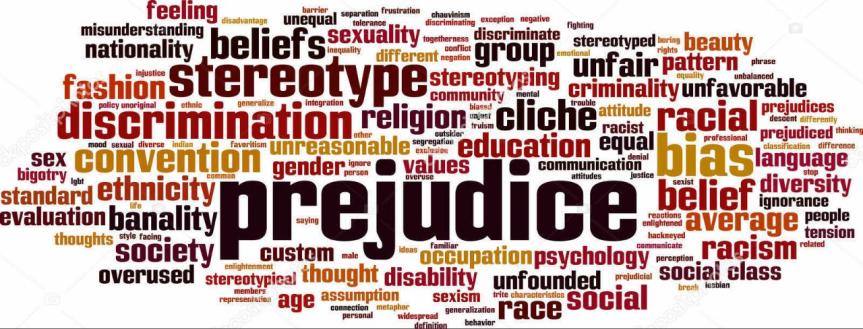
Prejudices refers to a set attitudes towards a particular group of people. They usually refer to negative attitudes. Attitude is a state of mind or set of views with an evaluative feature. Prejudices are often based on stereotypes about the specific group.
Stereotypes refers to fixed ideas regarding the characterstics of a specific group. Usually, stereotypes consist of undesirable characteristics about the target group. All members of the group are assumed to possess these characteristics which is often not true in reality.
Prejudice is often accompanied by dislike or hatred towards members of the group. Prejudice can be seen in behaviour through discrimination. Discrimination makes a distinction between the two groups by favouring one group over other. Sometimes prejudice can lead to excessive hatred and discrimination which may even lead to mass killing of innocent people. An example of this is the holocaust of Jews by Nazi Germany. Discrimination can controlled by law but attitudes and minds sets of people cannot.
Just like any other attitude, prejudices are also learned through observation, association, exposure to information or through culture. The family, groups, personal experiences, media also play a role in learning of prejudices. In some cases it has been observed that a strong social identity towards one’s own group may cause group bias and lead to negative attitudes towards other groups and lead to prejudice.
Another reason for prejudice is scapegoating. It is a group based way of expressing frustration towards the weaker group and it leads to negative attitudes. Here the stronger group places the blame for its problems on the weaker group. The weaker group is too weak to defend itself.
https://www.bbc.co.uk/bitesize/guides/zcb42hv/revision/3#:~:text=One%20bad%20experience%20with%20a,and%20can%20lead%20to%20prejudice
Sometimes people continue to hold stereotypes because they believe that after all, there may be some truth in what people say. These sorts of beliefs are rather difficult to change as they originate in response to other stronger beliefs.
Stereotypes are also learned in the similar manner as attitudes. Stereotypes are usually formed by hearing different things about the particular group. A single bad experience with the member of a group may lead to the assumption that all members of that group behave that way.
https://blogs.hope.edu/getting-race-right/our-context-where-we-are/the-history-we-inhaled/what-are-the-causes-of-stereotypes/
Stereotypes provide grounds for prejudices which lead to discrimination. This however, is not always true. Sometimes prejudices may develop without stereotypes or may not lead to discrimination. Similarly, discrimination may be seen without prejudice. But even so, these three are often considered to be connected.
Prejudices are attitudes and are not very easy to change if once formed. In order to control it, strategies should focus on minimising the opportunities for learning prejudices or changing such attitudes at an earlier stage. Narrow social identity based on the in-group should not be emphasised and people should be encouraged to seek out truth rather than blindly believing in what they hear.
These goals can be achieved through education and information. By correcting the stereotypes that are formed on false grounds. Emphasis should be given to individual identities rather than group identities. This can weaken strong in-group bias. Increasing the contact between the two groups can remove misunderstandings, mistrust and can lead to communication which may lead to discovery of positive characteristics.