

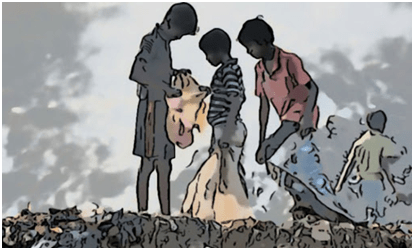
There is no reason. There is no excuse. Child labor is Child abuse.-The FreshQuotes
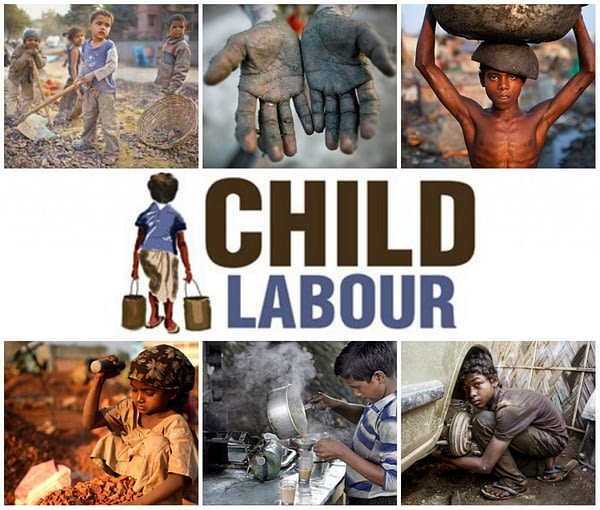
We have observed many times that at tea shops there are some children are serving tea to the customer or at different shops attending the customers. Some of you may have been served by these “workers”. This is how child labor looks like. The concern is not that children should not work at dangerous places like mines or factories but the concern is that children should not work at any places.
The Covid-19 pandemic led the world to economic and social crises. The most affected by these crises in society are vulnerable. As in the situation of the economic crisis in poor communities, children are at particular risk. The pandemic is forcing the children out of school and into the farms and factories to work.
Child labor has always been a matter of concern globally and the Covid-19 pandemic has worsened the situation. According to a report released by UNICEF and ILO, the progress to end the child labor has stalled for the first time in 20 years, reversing the previous downward trend that saw child labor fall by 94 million between 2000 and 2016. According to a new report by ILO and UNICEF, the number of children in child labor has risen to 160 million worldwide- an increase of 8.4 million children in the last four years- with millions more at risk due to the impacts of Covid-19.
Consequently, two waves of Covid-19 are affecting each stratum of society. The pandemic led to lockdown because of the risk to the life of people, they had to restrict their movement. Due to this many people lost their jobs especially daily wagers and laborers and this led to the economic crisis in their families. They fell into deep poverty. In a situation like this question arises to their survival and as a solution for themselves some family unwillingly sent their children to work which helps them to survive.
The risk of child labor also increased during Covid-19 because schools are closed for an indefinite period of time and it is not sure that when the schools will run offline. Due to the closing of schools children from poor communities are not able to continue their education. Lack of access to the internet and technology many children are unable to participate in self-guided learning during school closures. In India over three-fourths of children did not have access to online learning and over one-third of children did not have access to any learning material. Due to loss of learning some students may have decided to drop out of school permanently. It is always seen that children and youth not enrolled in schools are at a much bigger risk of child labor. After the reopening of schools, parents without jobs may not be able to pay for school fees, supplies, and uniforms.
According to UNICEF, more than 1.5 billion children missed their schooling due to Covid-19 restrictions, which has compelled the children to work to support their families.
In countries like India, it is very crucial to deal with child labor because “children belong to classes not workplaces”. The government needs to come with more effective programs to eradicate child labor. Coming from families with no financial resources, in this pandemic the children and their families are not left with choices. It is to be ensured that at least the affected families are provided with basic needs which will prevent their children from working. NGOs like CRY is providing children with learning material. According to the CEO of CRY in 2020, close to 4000 cases of child labor were prevented or referred to rescue and support. Organizations like these are coming forward but how many can they help? There is a need for large action to protect children from child labor. One most important thing is that mindset of people should be changed as there is a saying that “Garib ka baccha kamaega nahin to khaayega kya”. These kinds of things demotivate children and their families to stand against wrongs and accept things as their fate.
Also, the UN is planning to eradicate child labor by 2025, but the pandemic is impacting every positive step towards change.
 Eduindex
You must be logged in to post a comment.