Scholarship for Study in Europe

Studying in Europe can be a transformative experience, offering students exposure to world-class education, diverse cultures, and career opportunities. Scholarships are an excellent way to make studying in Europe more affordable. Here’s an overview of some key scholarships and funding opportunities for international students, including those from Asia, Africa, and other regions.

1. Erasmus+ Program

Eligibility: Students from EU and non-EU countries Level: Bachelor’s, Master’s, Ph.D., and professional training Description: The Erasmus+ program is a flagship EU initiative that offers scholarships to students from across the globe for study, training, and internships in Europe. Students can spend 3 to 12 months at an EU-based university or undertake internships. Erasmus Mundus Joint Master Degrees (EMJMD) are also available for students pursuing a master’s program in two or more European countries.

Financial Coverage: Full tuition, living allowance, travel costs, and health insurance.

Duration: Typically 1 to 2 years for master’s programs.

2. DAAD Scholarships (Germany)

Eligibility: International students Level: Master’s and Ph.D. Description: The German Academic Exchange Service (DAAD) offers numerous scholarships for international students to study in Germany. DAAD scholarships are available for a wide range of programs, including full-time master’s degrees and doctoral studies at German universities.

Financial Coverage: Monthly stipend (approximately €861 for graduates and €1,200 for doctoral candidates), health insurance, and travel allowances.

Additional Benefits: Free German language course and support for dependents.

Duration: Varies depending on the program, typically 1 to 3 years.

3. Chevening Scholarships (UK)

Eligibility: Citizens from Chevening-eligible countries Level: Master’s Description: Chevening is a prestigious UK government scholarship for international students to pursue a one-year master’s degree at any UK university. The scholarship focuses on leadership and networking opportunities in addition to academic achievements.

Financial Coverage: Full tuition fees, a monthly stipend, travel costs, and other allowances.

Duration: 1 year (master’s programs only).

4. Swedish Institute Scholarships (Sweden)

Eligibility: Non-EU/EEA citizens Level: Master’s Description: The Swedish Institute (SI) offers scholarships to talented students from select countries for master’s degree studies in Sweden. This scholarship is aimed at fostering future global leaders and is available for many programs offered in Swedish universities.

Financial Coverage: Full tuition fees, living allowance, travel grants, and health insurance.

Duration: 1 to 2 years.

5. Eiffel Excellence Scholarship Program (France)

Eligibility: International students from developing countries Level: Master’s and Ph.D. Description: The Eiffel Scholarship is offered by the French Ministry for Europe and Foreign Affairs. It is aimed at attracting international students to French institutions for studies in engineering, economics, law, and political science.

Financial Coverage: Monthly allowance of €1,181 (master’s) or €1,700 (Ph.D.), travel costs, health insurance, and cultural activities.

Duration: Up to 24 months for a master’s program and 36 months for Ph.D.

6. ETH Zurich Excellence Scholarship (Switzerland)

Eligibility: International students Level: Master’s Description: ETH Zurich, one of Europe’s top universities, offers the Excellence Scholarship & Opportunity Program (ESOP) for students wishing to pursue a master’s degree at the university. The scholarship is highly competitive and is awarded to students with excellent academic records.

Financial Coverage: Full tuition fee waiver and living allowance (CHF 12,000 per semester).

Duration: 3 to 4 semesters (depends on the program).

7. Holland Scholarship (Netherlands)

Eligibility: Non-EEA international students Level: Bachelor’s and Master’s Description: The Holland Scholarship is provided by the Dutch Ministry of Education, Culture, and Science in cooperation with Dutch universities. This scholarship supports international students who wish to pursue bachelor’s or master’s degrees in the Netherlands.

Financial Coverage: €5,000 for the first year of study.

Duration: 1 year.

8. Italian Government Scholarships

Eligibility: International students and Italian citizens abroad Level: Master’s, Ph.D., and research programs Description: The Italian government offers scholarships for foreign students to pursue master’s, Ph.D., or research programs in Italy. Priority is given to students from countries with which Italy has bilateral cultural agreements.

Financial Coverage: Tuition fee waiver, monthly allowance, and health insurance.

Duration: Varies depending on the program.

9. Norwegian Quota Scheme

Eligibility: Students from developing countries Level: Bachelor’s, Master’s, Ph.D. Description: The Quota Scheme provides scholarships for students from developing countries to study at Norwegian universities. The scheme focuses on building academic and institutional capacity in the students’ home countries.

Financial Coverage: Tuition fee waiver, living stipend, travel grants, and allowances.

Duration: Typically 2 to 4 years.

10. Visegrad Scholarship Program (Central Europe)

Eligibility: Students from select countries (e.g., Eastern Partnership countries, Western Balkans) Level: Master’s and Ph.D. Description: The International Visegrad Fund offers scholarships for students from Eastern Partnership countries and the Western Balkans to study at universities in Central Europe (Czech Republic, Hungary, Poland, Slovakia).

Financial Coverage: Monthly stipend of €2,500 for master’s students and €2,300 for Ph.D. candidates, with travel costs.

Duration: 1 to 4 semesters.

How to Apply for Scholarships:

1. Research: Identify scholarships that align with your educational goals and personal profile.

2. Eligibility: Check all requirements, including academic qualifications, country-specific rules, and deadlines.

3. Prepare Documents: Typically, you’ll need academic transcripts, letters of recommendation, proof of language proficiency (like IELTS/TOEFL), and a personal statement or essay.

4. Submit Early: Scholarship deadlines are often months before academic program deadlines, so plan well in advance.

Conclusion:

Europe is home to many prestigious scholarships that offer substantial financial support to international students. These scholarships are not just about tuition waivers but also cover living expenses and provide enriching cultural and academic experiences. By researching the right opportunities and preparing carefully, you can greatly enhance your chances of securing a scholarship to study in Europe.

Study in Hill Stations

Studying in the hills can be a unique and enriching experience. Here are some advantages:
1. *Serene environment*: Hills offer a peaceful and calm atmosphere, perfect for focused learning.
2. *Natural beauty*: Surrounded by nature, hills provide a stunning backdrop for academic pursuits.
3. *Less distractions*: Compared to urban areas, hills have fewer distractions, allowing for concentrated study.
4. *Health benefits*: The fresh mountain air and scenic views can improve mental and physical well-being.
5. *Cultural experiences*: Hills often have rich cultural heritage, offering opportunities to learn about local traditions.
6. *Adventure activities*: Hills provide scope for outdoor activities like trekking, hiking, and sports.
7. *Tighter community*: Hill towns tend to have close-knit communities, fostering camaraderie among students.
8. *Access to nature*: Proximity to nature allows for hands-on learning in subjects like botany, zoology, and environmental science.
9. *Reduced stress*: The tranquil atmosphere can help reduce stress and promote overall well-being.

10. *Unique perspective*: Studying in the hills can offer a fresh perspective on life and academics.
Some popular hill stations for studying in India include:
– Shimla (Himachal Pradesh)
– Mussoorie (Uttarakhand)
– Dehradun (Uttarakhand)
– Darjeeling (West Bengal)
– Ooty (Tamil Nadu)
– Mysore (Karnataka)
– Ladakh (Jammu and Kashmir)
These destinations offer a range of educational institutions, from schools to universities, catering to various academic needs.

Top Universities in Madhya Pradesh

 Madhya Pradesh is home to several esteemed universities known for their academic excellence, research contributions, and diverse range of programs. Here are some of the top universities in the state:

  1. Indian Institute of Technology (IIT) Indore: A premier engineering and technology institute known for its research-oriented approach and strong academic programs in engineering, sciences, and humanities.

  2. Maulana Azad National Institute of Technology (MANIT), Bhopal: A top engineering institute offering undergraduate, postgraduate, and doctoral programs in engineering, technology, and management.

  3. Rajiv Gandhi Proudyogiki Vishwavidyalaya (RGPV), Bhopal: A leading technical university in Madhya Pradesh, affiliating many engineering colleges and offering programs in engineering, technology, and applied sciences.

  4. Devi Ahilya Vishwavidyalaya (DAVV), Indore: One of the oldest and most respected universities in the state, offering a wide range of programs in arts, science, commerce, law, and management.

  5. Barkatullah University, Bhopal: A well-known university offering diverse programs in arts, science, commerce, law, and management, with a strong focus on research and development.

  6. Jiwaji University, Gwalior: Offers a variety of undergraduate, postgraduate, and doctoral programs in arts, science, commerce, and social sciences, and is known for its academic and research contributions.

  7. Madhya Pradesh Bhoj Open University, Bhopal: Specializes in distance education, providing flexible learning opportunities across various disciplines.

  8. Atal Bihari Vajpayee Indian Institute of Information Technology and Management (ABV-IIITM), Gwalior: A premier institute focusing on information technology and management education, with a strong emphasis on research and innovation.

  9. Makhanlal Chaturvedi National University of Journalism and Communication, Bhopal: A specialized university offering programs in journalism, mass communication, and media studies.

  10. Dr. Harisingh Gour University, Sagar: One of the oldest universities in Madhya Pradesh, known for its comprehensive programs in arts, science, commerce, law, and education.

These universities are well-regarded for their academic programs, research output, and contributions to higher education in Madhya Pradesh.

Top Scholarships in America for African scholars

 Several scholarships in the United States specifically target African students. Here are some of the top ones:

  1. Mastercard Foundation Scholars Program: This program provides full scholarships to African students to pursue undergraduate and master’s degrees at partner universities in the United States. It focuses on leadership development and community engagement.

  2. Fulbright Foreign Student Program: Administered by the Bureau of Educational and Cultural Affairs of the United States Department of State, the Fulbright Program provides funding for graduate-level study, research, and teaching in the United States for students from various countries, including African nations.

  3. African Women in Agricultural Research and Development (AWARD) Fellowship: This fellowship program aims to strengthen the research and leadership skills of African women in agricultural sciences. It provides opportunities for postgraduate training and research at various institutions in the United States.

  4. Aga Khan Foundation International Scholarship Program: While not exclusively for African students, this program provides scholarships to outstanding students from developing countries, including many African nations, to pursue postgraduate studies in the United States.

  5. Master’s in Development Practice Fellowship at Columbia University: This fellowship program at Columbia University offers partial to full tuition scholarships to students from low and middle-income countries, including African nations, to pursue a Master’s in Development Practice degree.

  6. Rotary Foundation Global Grant Scholarships: These scholarships support graduate-level coursework or research for one to four academic years. Rotary Clubs and Districts worldwide offer these scholarships to students pursuing careers in fields related to Rotary’s mission, including peace and conflict resolution, disease prevention and treatment, water and sanitation, maternal and child health, basic education and literacy, and economic and community development.

  7. The Africa-America Institute (AAI) Scholarships: AAI offers scholarships to African students for undergraduate, graduate, and doctoral studies in the United States. The scholarships are awarded based on academic achievement and financial need.

  8. Joint Japan/World Bank Graduate Scholarship Program: This program awards scholarships to individuals from World Bank member countries, including several African nations, to pursue graduate studies in development-related fields at universities around the world, including the United States.

These scholarships provide opportunities for African students to pursue higher education in the United States and contribute to their home countries’ development upon completion of their studies.

Four Benefits of Online Study

 With the onset of the coronavirus pandemic, the world moved online. Office workers were told to work from home, and universities and colleges in many countries closed their lecture halls, telling students to study online instead. This has led many to prefer working from home, and it’s easy to see why—there are so many benefits to remote work. The same is true for students; here are four benefits of online study.

Photo by Tima Miroshnichenko on Pexels.com

1. More Choice

One of the benefits of studying online is that students have more choice of course open to them. Whether you want to study an MBA in healthcare administration (like this one: https://online.carrollu.edu/mba-healthcare-administration/) or a bachelor’s degree in fine art or literature, there is so much choice when it comes to online study. 

Students are free to study the subject of their choice from anywhere they like, meaning there is greater accessibility as they don’t have to travel or move across the country to study a particular subject. 

2. Greater Flexibility

Another huge benefit of online study is the amount of flexibility that comes with a virtual course. Studying online means that you can study from anywhere without having to go onto campus or visit a library in person to learn. Everything is available online.

Virtual colleges are also usually more flexible in terms of timings, especially when compared with traditional in-person universities. You can learn on your own schedule rather than having to attend seminars, tutorials, or lectures that take place at pre-arranged times. This means you can fit your studies around your life and learn at a time that suits you.

3. Cheaper

Most online colleges offer better value for money than brick-and-mortar institutions, so you can save money over the course of your degree. As well as saving on tuition fees, you can save on accommodation costs and the general cost of living, as you won’t have to move or live close to campus—just stay where you are!

Another bonus is that you can fit your online studies around your existing life commitments, meaning you could find a way to balance studying and working, so you can continue to have a monthly income while you’re learning. 

4. Gaining Soft Skills

No matter what you’re studying, and whether it’s online or in-person, you’ll be gaining a huge amount of knowledge during any degree. As well as the ‘hard skills’ you’ll gain during your degree, though, you can also develop so-called ‘soft skills’—even more if you study online.

Soft skills are personal characteristics or attributes that allow you to be successful in day-to-day life and professional settings. Organization, communication, time management, adaptability, self-determination – these are all examples of the soft skills that you’ll gain while studying online. All of them will make you attractive to potential employers.

Studying online will show that you are particularly driven to succeed, as it does take a little more self-motivation to get through an online course than a traditional in-person degree program.

Once you’ve finished your online degree program, you’ll be able to show prospective employers that you have the hard and soft skills needed to succeed. It’s a great way to boost your career and get ahead in the world of work.

New Education Policy : Key Highlights.

The Union Cabinet chaired by the Prime Minister have approved the new National Education Policy 2020, making way for large scale, transformational reforms in both school and higher education sectors. This is the first education policy of the 21st century and replaces the 34-year-old National Policy on Education (NPE), 1986.

The New Education Policy 2020 has come up as a in the education sector as it aims at creating an equitable and vibrant knowledge for the society by providing high-quality education to all. Also it encourages to develop a deep sense of respect towards the fundamental rights, duties and Constitutional values, bonding with one’s country, and a conscious awareness of one’s role and responsibilities in a changing world. The New Education Policy believes in instilling skills, values, and dispositions that support responsible commitment to human rights, sustainable development and living, and global well-being, thereby reflecting a truly global citizen.

The key highlights of NEP are.

Early Childhood Care Education

The policy focuses on the importance of providing education to children between the age group of 3-6 years at an early age. The kids in the age group 3-5 years will be provided education through the current set-up of pre-schools and anganwadis, and those between the ages of 5-6 years will be included in the schooling system by 2025.

School Education for All

Aiming to make education from pre-primary level till the 12th grade universally accessible, NEP 2020 is looking to achieve 100% Gross Enrollment Ratio in providing the school education by 2030.
New Curriculum & Pedagogical Structure.

The new policy has eliminated the 10+2 education system and replaced it with a more organized 5+3+3+4 structure, that is, 5 years of primary education (for the age group 3-8 years), 3 years of preparatory stage (for the age group 8-11 years), 3 years of middle stage (for the age group 11-14 years), and 4 years of secondary stage (for the age group 14-18 years).

The Flexibility of Choosing Courses

There will be no rigid demarcations between vocational and non-vocational, science and arts, curricular and extra-curricular activities, thus providing equal emphasis on all the subjects and courses. Also, the students will have more choices and flexibility while picking up the subjects they want to study so that their educational path is more focused on their skills and interests.

Emphasis on Mother Tongue & Multilingualism

The policy emphasizes on the inclusion of local language in the curriculum with the medium of instructions in all the schools till at least class 5 (but preferably till 8th standard and beyond) to be either in mother tongue or regional language. Subsequently, foreign languages will be offered as options for students in secondary schools. It also states that Indian Sign Language (ISL) will be standardized across the country.

Assessment System

As per the new policy, though the board examination for 10th and 12th grades will continue to be in place, the structure of the exams will be reformed to make them easier by focusing on core competencies of the students, thus eliminating the need of coaching classes at these stages. Also, the school examinations will be conducted by proper authorities only in grades 3, 5, and 8.

Multidisciplinary Education

The students will be provided with multi-disciplinary holistic education at the undergraduate level to ensure an integrated exposure with multiple entry and exit options. The 3 or 4-year duration undergraduate degree will have exit options (with certifications) during the entire course – a certificate after 1 year, diploma after 2 years and/or a bachelor’s degree after 3 years.

History of India & Indian National Movement.

Early times the Indian subcontinent appears to have provided an attractive habitat for human occupation. Toward the south it is effectively sheltered by wide expanses of ocean, which tended to isolate it culturally in ancient times, while to the north it is protected by the massive ranges of the Himalayas, which also sheltered it from the Arctic winds and the air currents of Central Asia. Only in the northwest and northeast is there easier access by land, and it was through those two sectors that most of the early contacts with the outside world took place.

Within the framework of hills and mountains represented by the Indo-Iranian borderlands on the west, the Indo-Myanmar borderlands in the east, and the Himalayas to the north, the subcontinent may in broadest terms be divided into two major divisions: in the north, the basins of the Indus and Ganges (Ganga) rivers (the Indo-Gangetic Plain) and, to the south, the block of Archean rocks that forms the Deccan plateau region. The expansive alluvial plain of the river basins provided the environment and focus for the rise of two great phases of city life: the civilization of the Indus valley, known as the Indus civilization, during the 3rd millennium BCE; and, during the 1st millennium BCE, that of the Ganges. To the south of this zone, and separating it from the peninsula proper, is a belt of hills and forests, running generally from west to east and to this day largely inhabited by tribal people. This belt has played mainly a negative role throughout Indian history in that it remained relatively thinly populated and did not form the focal point of any of the principal regional cultural developments of South Asia. However, it is traversed by various routes linking the more-attractive areas north and south of it. The Narmada (Narbada) River flows through this belt toward the west, mostly along the Vindhya Range, which has long been regarded as the symbolic boundary between northern and southern India.

India’s movement for Independence occurred in stages elicit by the inflexibility of the Britishers and in various instances, their violent responses to non-violent protests. It was understood that the British were controlling the resources of India and the lives of its people, and as far as this control was ended India could not be for Indians.

On 28 December 1885 Indian National Congress (INC) was founded on the premises of Gokuldas Tejpal Sanskrit School at Bombay. It was presided over by W.C Banerjee and attended by 72 delegates. A.O Hume played an instrumental role in the foundation of INC with an aim to provide Safety Valve to the British Government.
A.O Hume served as the first General Secretary of INC.
The real Aim of Congress is to train the Indian youth in political agitation and to organise or to create public opinion in the country. For this, they use the method of an annual session where they discuss the problem and passed the resolution.
The first or early phase of Indian Nationalism is also termed as Moderate Phase (1885-1905). Moderate leaders were W.C Banerjee, Gopal Krishna Gokhale, R.C Dutt, Ferozeshah Mehta, George Yule, etc.
Moderates have full faith in British Government and adopted the PPP path i.e. Protest, Prayer, and Petition.
Due to disillusionment from Moderates’ methods of work, extremism began to develop within the congress after 1892. The Extremist leaders were Lala Lajpat Rai, Bal Gangadhar Tilak, Bipin Chandra Pal, and Aurobindo Ghosh. Instead of the PPP path, they emphasise on self-reliance, constructive work, and swadeshi.
With the announcement of the Partition of Bengal (1905) by Lord Curzon for administrative convenience, Swadeshi and Boycott resolution was passed in 1905.


ONE INDIVIDUAL MAY DIE; BUT THAT IDEA WILL, AFTER HIS DEATH, INCARNATE ITSELF IN A THOUSAND LIVES.

-Netaji Subhash Chandra Bose

Women organizations and their role in India

Women’s Organisations emerged in India as a result of the spread of education and the establishment of the notion of the new woman. There was an improved level of communication among women which made them aware of the different problems that they faced and their rights and accountabilities in society. This awareness led to the upsurge of women’s organizations that fought for and signified women’s causes

An exclusive feature of the Indian women’s crusade is the fact that early efforts at women’s liberation were set in motion by men. Social reformers such as Raja Ram Mohan Roy, Maharishi Karve, and Swami Dayanand Saraswati challenged the conventional subservience of women, stimulated widow remarriage, and supported female education and impartiality in matters of religion, among other issues. Mahila mandals organized by Hindu reformist organizations such as the Arya Samaj and Brahmo Samaj encouraged women to go out of the boundaries of their homes and interact with other members of society. Pandita Ramabai, who was considered as one of the innovators of the feminist movement, with the help of Justice Ranade established the Arya Mahila Samaj in 1882. She envisioned creating a support network for newly educated women through weekly lectures and lessons at homes, where women could learn and gain confidence through interactions.

Women’s auxiliaries of general reform associations also served as a ground for women to deliberate social issues, express opinions, and share experiences. The Bharata Mahila Parishad of the National Social Conference was the most protruding among such opportunities. Though the National Social Conference was formed at the third meeting of the Indian National Congress in 1887, the Mahila Parishad was launched only in 1905.

The pre‐Independence period saw women’s issues related to the nationalist agenda at various junctures. In this period, a major enhancement of women was in terms of political participation of women, calling for a redefinition of conventional gender roles. Women began openly demonstrating their opposition to foreign control by supporting civil disobedience actions and other forms of protest against the British. Opportunities to organize and participate in agitations gave women much‐needed confidence and a chance to develop their leadership skills. Cutting across communal and religious barriers, women associated themselves with larger problems of society and opposed sectarian issues such as communal electorates. Political awareness among women grew, owing to a general understanding that women’s issues could not be separated from the political environment of the country. During this period, the initial women’s organizations formed within the historical background of the social reform movement and the nationalist movement were as follows.

•The Women’s India Association (WIA).
National Council of Women in India (NCWI).
•The All India Women’s Conference (AIWC) in 1917, 1925, and 1927 correspondingly.
•Each of these organizations emphasized the importance of education in women’s progress.
•The WIA, created by Margaret Cousins in Madras, worked widely for the social and educational emancipation of women. •Associated with the Theosophical Society, it encouraged non‐sectarian religious activity and did creditable work in promoting literacy, setting up shelters for widows, and providing relief for disaster victims.
•Women in Mumbai, Chennai, and Kolkata through networks developed during World War I work, allied their associations together, and created the NCWI in 1925. A national branch of the International Council of Women, its most prominent member was Mehribai Tata, who aggressively campaigned against inert charity and advised men to support female education.
•The most important of the women’s organizations of the time was the All India Women’s Conference. Though its initial efforts were directed towards improving female education, its scope later extended to include a host of women’s issues such as women’s franchise, inheritance rights.

The Constitution of India enlisted in 1950 which permitted equal rights to men and women. Rights such as the right to vote, right to education, right to enter into public service, and political offices brought in satisfaction among women’s groups. In this period, there was limited activity in the area of women’s rights. Many women’s organizations such as the National Federation of Indian Women (1954) the Samajwadi Mahila Sabha (1559) were formed to work for supporting the cause of Indian women. Since the country was facing a social, political crisis after British rule, many demands of the women activists were not supported by the Government. But during this period from 1945, the Indian women got an opportunity to participate in confrontational politics.

In post-independent India, the women’s crusade was divided, as the common opponent, foreign rule, was no longer there. Some of the women leaders formally joined the Indian National Congress and took a powerful position as Ministers, Governors, and Ambassadors. Free India’s Constitution gave universal adult franchise and by the mid-fifties, India had fairly liberal laws concerning women. Most of the demands of the women’s movement had been met and there seemed few issues left to organize around. Women’s organizations now observed that there was an issue of implementation and consequently there was a pause in the women’s movement.

Some women organizations such as the Banga Mahila Samaj, and the Ladies Theosophical Society functioned at local levels to promote contemporary ideas for women. These organizations deal with issues like women’s education, abolition of social evils like purdah and Child marriage, Hindu law reform, moral and material progress of women, equality of rights and opportunities.

It can be believed that the Indian women’s movement worked for two goals.

•Uplift of women.
•Equal rights for both men and women.

Currently, there are many women organizations in India:

•All India Federation of Women Lawyers
•All India Women’s Conference
•Appan Samachar
•Association of Theologically Trained Women of India
•Bharatiya Grameen Mahila Sangh
•Bharatiya Mahila Bank
•Confederation of Women Entrepreneurs
Durga Vahini
•Friends of Women’s World Banking
•Krantikari Adivasi Mahila Sangathan

The major objective of this organization is:

•Strengthening and building new initiatives, networks, forums, etc., for protecting women’s rights
•Monitoring the Government of India’s commitments, implementing the Platform for Action with special focus on the eight-point agenda discussed at the Conference of Commitment, CEDAW, the Human Rights, and other United Nations Convention.
•Advocacy, lobbying, and campaigning on women-related issues.
•Information Dissemination and Documentation.
•Solidarity and linkages with other regional and global forums.


Another women organization in India is Swadhina (Self-esteemed Women) which was formed in 1986. It is principally a civil society organization focused on the Empowerment of women and Child Development based on Sustainable Development and Right Lively hood. At Swadhina, it is believed that positive social change has a direct effect on the lives of women and that change is possible only through equal and spontaneous participation of Women. Organization members are active in five states across the country in remote tribal districts of Singbhums in Jharkhand, Purulia, and West Midnapur in West Bengal, Kanya Kumari in Tamil Nadu, Mayurbhanj in Orissa, and East Champaran in Bihar.

Due to the women’s movement, several legislations were passed like the Equal Remuneration Act, Minimum Wage Act, Maternity Benefit Act, etc. to ensure equal status to women in society & more importantly at work. However, illiteracy amongst the major women workforce (87% of women are employed in the unorganized sector), fear of losing employment & lack of awareness of the laws enacted to protect them, make it difficult for women to benefit from them.


A girl should be two things:

who and what she wants.

Marine Biology

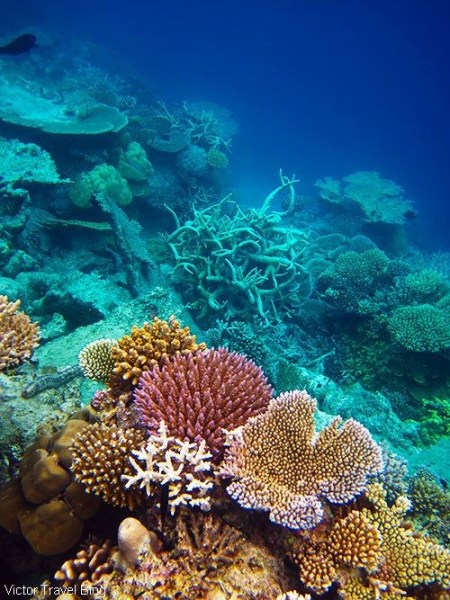
The ocean’s beauty, mystery, and variety of life, are the main attractions for people to study marine biology. Marine biology is the more general science of biology applied to the sea. Most of the disciplined in biology are represented in marine biology. Marine biology has many branches, viewpoints, and approaches. It is also closely related to oceanography, the scientific study of the oceans. Geological oceanographers study the sea floor, chemical oceanographers study ocean chemistry, and physical oceanographers study waves, tides, currents, and other physical aspects of the sea.


Life on earth is believed to be originated in the sea, therefore the study of marine life teaches us much about all life on earth, not just in the sea. Marine life helps determine the very nature of our planet. Marine organisms produce much of the oxygen we breathe and help regulate the earth’s climate. Thus, to make full and wise use of the sea’s living resources, to solve any kind of problems marine organisms may create, and to predict the effects of human activities on the life of the sea, we must learn all we can about marine life. In addition, marine organisms provide clues to the earth’s past, the history of life, and even our own bodies that we must learn to understand. This is the challenge, the adventure, of marine biology.

From the first time people saw the ocean, they started to learn about marine life. Archaeologists have found ancient harpoons and simple fishbooks of bone or shell. While they gathered food, people learned through experience which things were good to eat and which were bat-tasting or harmful. Knowledge of the ocean and its organisms expanded as people gained skills in seamanship and navigation.

The Phoenicians were the first accomplished Western navigators and by 2000 B.C. they were sailing around the Mediterranean Sea, Red Sea, Black Sea, eastern Atlantic Ocean, and Indian Ocean. Ancient Greeks had considerable knowledge of nearshore organisms in the Mediterranean region. They even used an electric ray (Torpedo) to deliver the first electrical simulation therapy. During the 4th century B.C., the Greek philosopher Aristotle described many forms of marine life. He even recognized, among other things, that gills are the breathing apparatus of fish. Therefore, Aristotle is considered by many the first marine biologist. During the 9th and 10th centuries the Vikings continued the exploration of the northern Atlantic Ocean and they discovered Vinland, what we now call North America. Furthermore, Arab traders and people in the Far East also continued to explore and learn about the sea.

During the Renaissance, a lot of voyages of exploration began by the Europeans. Christopher Columbus rediscovered the “New World” in 1492. In 1519 Ferdinand Magellan embarked on the first expedition to sail around the globe. Fairly accurate maps, especially of places outside Europe, began to appear for the first time. The explorers were soon interested and curious about the ocean they sailed and the things that lived in it. James Cook, an English sea captain, was one of the first to make scientific observations along the way and to include a full-time naturalist among his crew. Furthermore, Cook was the first to make use of a chronometer” that enable him to prepare reliable charts.

By the nineteenth century it was common vessels to take a naturalist along to collect and study the life forms that were encountered. Perhaps the most famous of these shipboard naturalists was the Englishman, Charles Darwin. He sailed around the world on HMS Beagle for five years, horribly seasick most of the time. The Beagle’s primary mission was to map coastlines, but Darwin used the opportunity to make detailed observations of all aspects of the natural world. This set off a train of though that led him, years later, to propose the theory of evolution by natural selection”. Darwin made many other contributions to marine biology. He explained, for example, the formation of the distinctive rings of coral reef called atolls.


“I felt the full breadth and depth of the ocean around the sphere of the Earth, back billions of years to the beginning of life, across all the passing lives and deaths, the endless waves of swimming joy and quiet losses of exquisite creatures with fins and fronds, tentacles and wings, colorful and transparent, tiny and huge, coming and going. There is nothing the ocean has not seen.”

-Sally Andrew

Marine Biology

The ocean’s beauty, mystery, and variety of life, are the main attractions for people to study marine biology. Marine biology is the more general science of biology applied to the sea. Most of the disciplined in biology are represented in marine biology. Marine biology has many branches, viewpoints, and approaches. It is also closely related to oceanography, the scientific study of the oceans. Geological oceanographers study the sea floor, chemical oceanographers study ocean chemistry, and physical oceanographers study waves, tides, currents, and other physical aspects of the sea.

Life on earth is believed to be originated in the sea, therefore the study of marine life teaches us much about all life on earth, not just in the sea. Marine life helps determine the very nature of our planet. Marine organisms produce much of the oxygen we breathe and help regulate the earth’s climate. Thus, to make full and wise use of the sea’s living resources, to solve any kind of problems marine organisms may create, and to predict the effects of human activities on the life of the sea, we must learn all we can about marine life. In addition, marine organisms provide clues to the earth’s past, the history of life, and even our own bodies that we must learn to understand. This is the challenge, the adventure, of marine biology.

The Phoenicians were the first accomplished Western navigators and by 2000 B.C. they were sailing around the Mediterranean Sea, Red Sea, Black Sea, eastern Atlantic Ocean, and Indian Ocean. Ancient Greeks had considerable knowledge of nearshore organisms in the Mediterranean region. They even used an electric ray (Torpedo) to deliver the first electrical simulation therapy. During the 4th century B.C., the Greek philosopher Aristotle described many forms of marine life. He even recognized, among other things, that gills are the breathing apparatus of fish. Therefore, Aristotle is considered by many the first marine biologist. During the 9th and 10th centuries the Vikings continued the exploration of the northern Atlantic Ocean and they discovered Vinland, what we now call North America. Furthermore, Arab traders and people in the Far East also continued to explore and learn about the sea.

During the Renaissance, a lot of voyages of exploration began by the Europeans. Christopher Columbus rediscovered the “New World” in 1492. In 1519 Ferdinand Magellan embarked on the first expedition to sail around the globe. Fairly accurate maps, especially of places outside Europe, began to appear for the first time. The explorers were soon interested and curious about the ocean they sailed and the things that lived in it. James Cook, an English sea captain, was one of the first to make scientific observations along the way and to include a full-time naturalist among his crew. Furthermore, Cook was the first to make use of a chronometer” that enable him to prepare reliable charts.

By the nineteenth century it was common vessels to take a naturalist along to collect and study the life forms that were encountered. Perhaps the most famous of these shipboard naturalists was the Englishman, Charles Darwin. He sailed around the world on HMS Beagle for five years, horribly seasick most of the time. The Beagle’s primary mission was to map coastlines, but Darwin used the opportunity to make detailed observations of all aspects of the natural world. This set off a train of though that led him, years later, to propose the theory of evolution by natural selection”. Darwin made many other contributions to marine biology. He explained, for example, the formation of the distinctive rings of coral reef called atolls.


“I felt the full breadth and depth of the ocean around the sphere of the Earth, back billions of years to the beginning of life, across all the passing lives and deaths, the endless waves of swimming joy and quiet losses of exquisite creatures with fins and fronds, tentacles and wings, colorful and transparent, tiny and huge, coming and going. There is nothing the ocean has not seen.”

-Sally Andrew, Writer

By Ajeetha.R

Study less study smart

  1. Break your study time down into chunks such as 30 minutes and then take a 5-minute break to keep your brain fresh and awake as you are studying.
  2. Teach what you learn to others. This is one of the big values from study groups.
  3. Know the difference between recollection and recognition. Recognition is when you are studying and you turn the page and read something and you think, ‘I know that.’ But what is going on is that you recognize it.
  4. Use specific locations for studying. Have a study chair and a study desk so you know when you are sitting there you need to be studying.
  5. Don’t listen to music when you are studying especially if it has lyrics.
  6. Understand the difference between concepts and facts. The goal of learning is understanding. It is important to learn and remember facts but make your goal of understanding concepts not learning facts.
  7. To remember more of what you learn in class you should take notes. Take enough notes to trigger your brain after class but don’t take so many notes that you can’t focus during class.
  8. Getting enough sleep is key to remembering more of what you study.
  9. Test your memory by writing what you can recall without looking at your notes.
  10. The Survey, Question, read, recite and review method is when you survey or look over what you are going to learn and then develop questions that focus your brain.
  11. Use memory training techniques to study less study smart! When you use memory techniques such as the mind palace or the memory palace you are going to remember more of what you studied.
Reference

https://brainathlete.com/study-less-study-smart-by-marty-lobdell/

Indiscipline in Schools


By: Astha Raghav. 

School discipline is one of the factors of good education in the country, therefore, it is necessary to train teachers to deal with their students and instill discipline at school. This issue is usually a problem for a lot of schools even in the most developed countries. Indiscipline can significantly affect the education of your child negatively, that is why you must know these top 10 causes of indiscipline in schools and how to deal with them!
Discipline in schools is a required set of rules administered to teachers and students, which they have to obey or expect to be punished for their disobedience. Discipline sets rules as guidelines and limitations for students; school rules are necessary to set up the basis of social behavior for young minds. 

Most of these rules are usually established by the government. The Ministry of Education provides certain necessary guidelines to schools; the schools also have the power to set up their own rules and punishment for disobedience according to the international standards and the government’s recommendations. These rules may include dress code, timekeeping, school schedule, work ethic, social behavior and so on. 

Indiscipline in schools is the violation of school rules; it is the complete opposite of discipline and it is necessary to stress that indiscipline is not welcomed in any school. Indiscipline in schools can be observed in different ways, including inside the classroom and outdoors. 
The student behavior policy is the fundament for adequate education in schools, therefore, it is always necessary to analyze and investigate the causes of indiscipline. 
Thank you!

Books- Our Real True Friends

 By: Astha Raghav 

Life is not easy to live without friends. When it comes to Books, they can be our best friends ever. Good Books enriches our mind with good thoughts and knowledge just like a good friend. We cannot feel alone in the company of books. We can learn many good things while reading a good book. Books written by famous and experienced people helps us to become a better human being and also teach us how to serve the society in the best possible way. When we are alone, we can always pick up a book and start reading to feel relax.

Books are our best friends because they inspire us to do great things in life and overcome our failures. We learn a lot from good books just like a good friend. Books can be good or bad, but it is our responsibility to choose them wisely. Friendship with Good books makes you Good person and friendship with Bad books make you bad person. Books will always be there for you in your bad times. Books teach us to have dreams. Books brings positive value to our life.


We all need friends who would be there for us when needed and who would understand us without being judgemental. And books can be our best friends for life, for all the right reasons. Good books enrich our mind and broaden our perspective towards life. What’s more, one can never feel lonely in the company of books. Here we list down ten top reasons why books are our best friends for life. There are so many Books and So little time to read them. Around 130 million books have been published in the history of humanity. There are somewhere between 600,000 to 1,000,000 books published every year in the US alone, I am a big lover of Books, Especially self-help books, Books has been an important part of my life, It is well said That Books can be your best and true companion, Books Simplifies our lives, Books allow its readers to internalize, respond, react and transform. Books are indeed more reliable.Books are important in various Unexpected ways, Books allow Readers to travel without using their feet, Books give wings to our imagination, books are full of knowledge, joy, happiness, wisdom and so much more into it, Books are more than enjoyment, Books have the capability to transform your life, Books can help you in your hardest time, books make you realize that you are not alone in this world who are struggling, Book gives a solution and gives you a new way and a new perspective to look at things and situations. Here are the Top 20 Books you should read before you die. Here you will find so many Book Summary Websites which will help you to choose your next book.

Books make our mind more healthy and fit,  one of the greatest importance of books, it protects you from Alzheimer’s Disease,  another importance of the book is that It improves your vocabulary, if your child or a toddler just learned the alphabet, then this is the perfect time to introduce your child to the wonderful world of books. because books play a very important and crucial role in your child’s total development, a child who forms a habit of reading books are better in almost all aspects of their lives, their total development is far better than the ones who are not involved in reading. What are the Best Books for the Kids?

Television, Internet, and TV Shows can look appealing but nothing can replace a Good Book, Reading is a Dream that you hold in your hands, Books are the best and the most loyal friend you can have, It gives you wisdom, solution, new perspective, imagination, improves your confidence, improves your mental health and most of all protect you from many problems and issues, Importance of books can never be ignored, Technology will change the world will change But Importance of books and reading can never change. Books hold such importance to me because books are the only thing which is constant in this ever-changing world. Here is the useful guide to Increase Reading Speed By 300%.

Books Inspire us, motivates us, encourage us and always make us see the right path, it makes us understand that nothing is impossible in this world, It allows us to take action and help us to know our true potential, Books illuminates our life, Books show us our passion and make us understand that all Limits are self-imposed, Limits are usually in our mind, Books have the potential to upgrade our conviction to match our destiny.

One of my friends asked me why Books are so heavy; for his question, I replied instantly “Because the whole world is inside them.” 

This is so true, Yes the whole world resides in one great book, There are many books available in the market, many books get published each Year, It is you who needs to know what exactly you want from a book, what answer you are searching for, and nowadays there are many sites and useful pages who  gives a gist about books, which makes choosing book easy for you, hence understand which Genre you are looking for, For example, I love to read Self-help Books, because it gives wisdom, knowledge and secret principles and lessons which can make us achieve all our goals and dreams, Self-help books help us convert our dream into reality, it helps in every aspect of our lives, health, wealth, relationships and communication.

Thank You!

Teacher's Day


By: Astha Raghav 

Teachers’ Day is a special day for the appreciation of teachers, and may include celebrations to honor them for their special contributions in a particular field area, or the community in general.

The idea of celebrating Teachers’ Day took root in many countries during the 19th century; in most cases, they celebrate a local educator or an important milestone in education. This is the primary reason why countries celebrate this day on different dates, unlike many other International Days. For example, Argentina has commemorated Domingo Faustino Sarmiento’s death on 11 September as Teachers’ Day since 1915. In India the birthday of the second president Sarvepalli Radhakrishnan (5 September) is celebrated as Teachers’ Day since 1962 and Guru Purnima traditionally observed as a day to worship teachers by Hindus.According to Hindu scriptures, it is very important to make a spiritual guru (guru), without a spiritual teacher one cannot attain salvation. The identity of a true Spiritual teacher is written in Adhyay 15 Shlok 1 to 4 of Holy Gita. Teacher’s Day was celebrated as “Abhar Diwas” in 2021.

Many countries celebrate their Teachers’ Day on 5 October in conjunction with World Teachers’ Day, which was established by UNESCO in 1994.

A day for homeschool teacher appreciation has been suggested, which several homeschooling groups subsequently organized. A United States “parents as teachers day” has existed on 8 November since the 1970s. While this initially focussed on the role of parents in early-childhood learning, some homeschoolers use it to acknowledge the primacy of the parental role in education.

Thank You!

THE USE OF MOBILE PHONES.

The invention of mobile phones is one of the greatest achievement of humankind. The first mobile phone service was started in Japan in 1979 and within 42 years it has revolutionized the lives of people. Mobile phones usage is growing at a rapid rate, today the world is unimaginable without mobile phones.

Mobile phones is one of the quickest means of communication device. A person can communicate with their friends or family who lives miles apart. It has eradicated the olden system of letter delivery. In morden generation assess to internet has acted as miracle to many tech company to accumulate wealth for their companies. We can take phones in our pocket and roam anywhere. By use of mobile phones life has become more comfortable also phones now do the work of laptop’s; we can do NetBanking, send our important documents to the required place through email and many more.

Parent’s encourage their children to use mobile phones as it promotes learning. People can assess to google or youtube for educational purposes. In the current pandemic situation the world has shifted to virtual meating and imparting knowledge as socializing is prohibited in peron/groups. Parents also encourage their children to use mobile phones as it has GPS system so that they are assured of their child safety when they venture out in the world alone. Phones also serves as an entertainment purposes. People can assess to different apps for movies and shows to keep themselves busy. People can save their money due to introduction of eBooks. Many important date can be stored in our phone which out mind can’t remember. It’s helps a person to captured their sweetest memory for them to cherish.

Mobile phones has connected the world digitally through internet. People can know what is happening around the world through news. The current scenario has changed a lot now the world is leading itself to globalization. Branding and advertising are done through online platform it’s has made growth in many different industries. Different countries set their own cyber security so that there is no breach of people’s privacy. Many tech company hires professional hackers for their companies digital data so that no one can hack into their companies system.

“Mobile phones are neither good or bad it depends on the individual how they use “.