
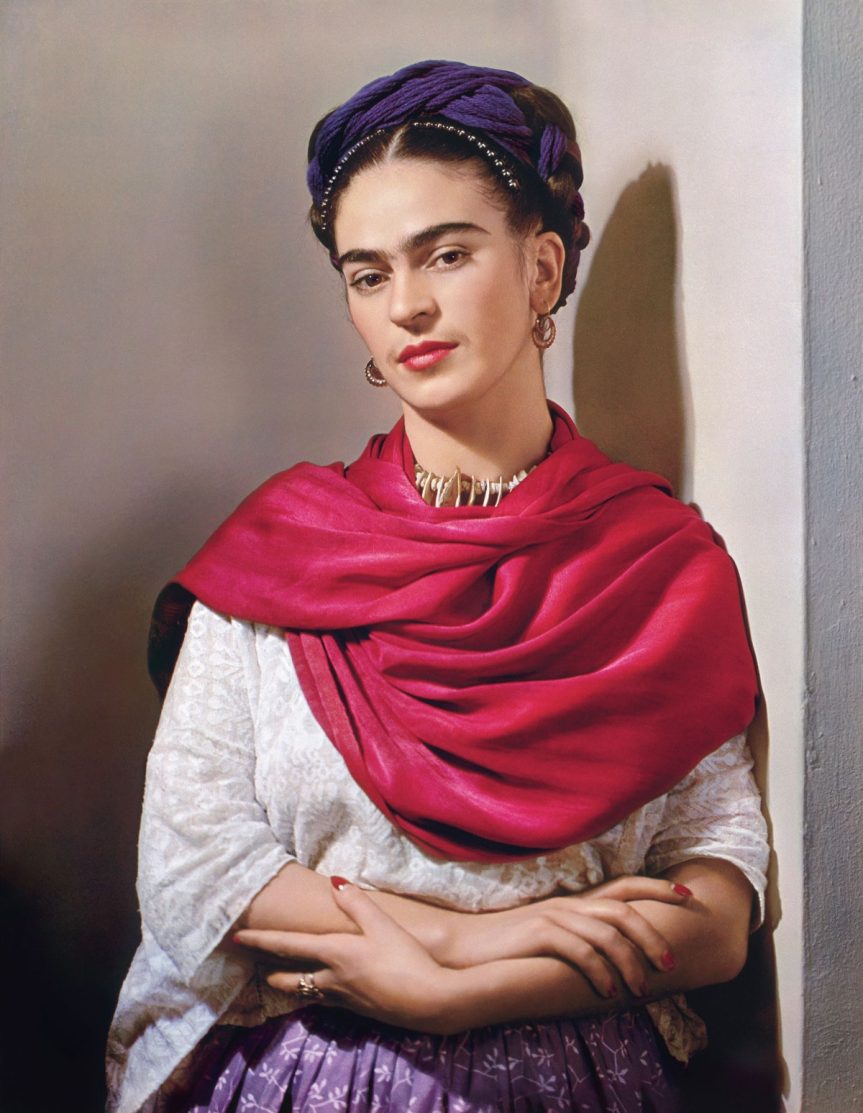
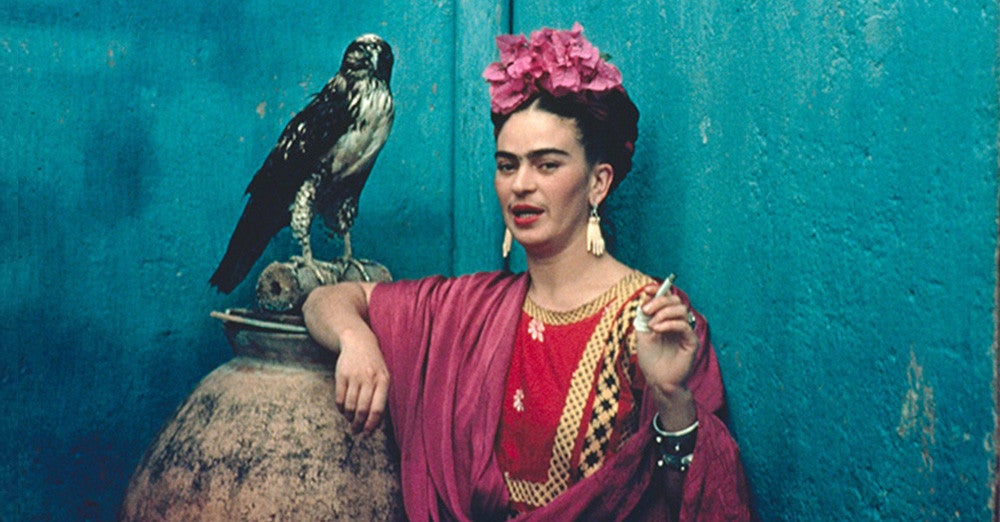
Frida Kahlo: Unconventional, Uncompromising and Unibrows

Frida Kahlo

Introduction

Even after years since Frida Kahlo’s demise, her charisma and powerful sense of style continue to captivate the world. The Mexican artist, famed for her self-portraits, is celebrated in her home country for her attention to indigenous culture, and by feminists worldwide for her depiction of the female experience and form. In fact, she was an advocate of feminism way before it became a staple in the social media age.
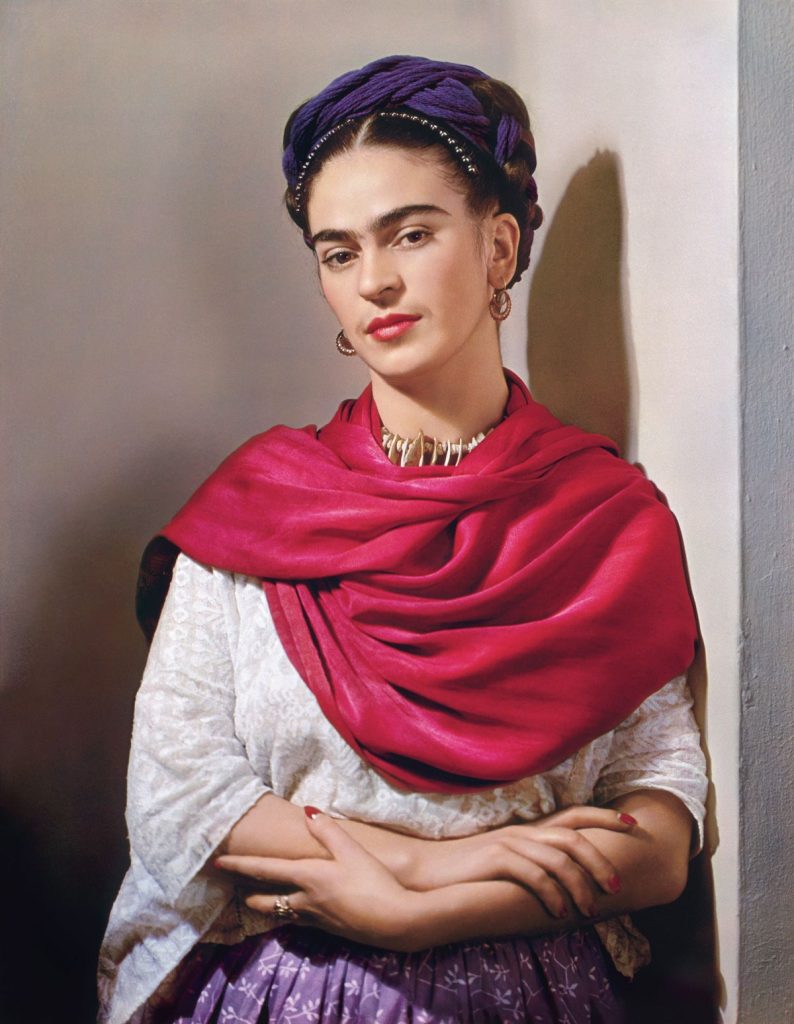
Frida

Early Life of Frida Kahlo

Magdalena Carmen Frida Kahlo y Calderón was born on 6 July 1907 in Coyoacán, a village on the outskirts of Mexico City. Born to a German father and a Mestiza  mother, Kahlo spent most of her childhood and adult life at La Casa Azul, her family home in Coyoacán  – now publicly accessible as the Frida Kahlo Museum. Although she was disabled by polio as a child, Kahlo had been a promising student headed for medical school until she suffered a bus accident at the age of 18, which caused her lifelong pain and medical problems. During her recovery, she returned to her childhood interest in art with the idea of becoming an artist.
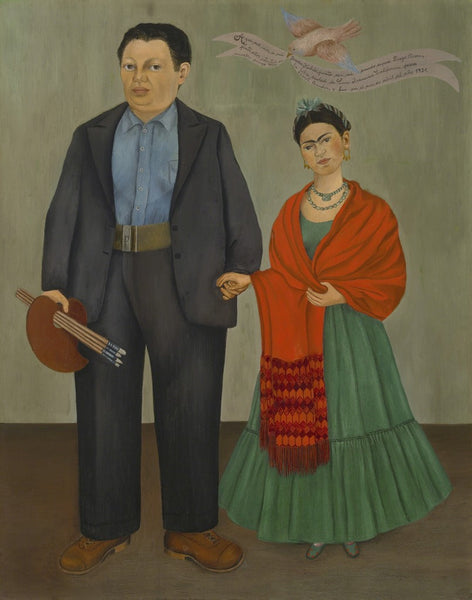
Diego and Frida, Self-Portrait With her Husband

Art Works of Frida Kahlo

Mexican artist Frida Kahlo is remembered for her self-portraits, pain and passion, and bold, vibrant colors. She is celebrated in Mexico for her attention to Mexican and indigenous culture and by feminists for her depiction of the female experience and form.

Life experience is a common theme in Kahlo’s approximately 200 paintings, sketches and drawings. Her physical and emotional pain are depicted starkly on canvases, because of her traumatic bus accident and multiple miscarriages depriving her of Motherhood and leading turbulent relationship with her husband, Mexican Mural artist Diego Rivera, who she married twice. Of her 143 paintings, 55 are self-portraits. She quoted, “I paint self-portraits because I am so often alone, because I am the person I know best.”

Kahlo’s first self-portrait was Self-Portrait in a velvet dress in 1926. It was painted in the style of 19th Century Mexican portrait painters who themselves were greatly influenced by the European Renaissance masters. She also sometimes drew from the Mexican painters in her use of a background of tied-back drapes. Self-Portrait Time Flies  (1929), Portrait of a Woman in White  (1930) and Self-Portrait  (1937) all bear this background.
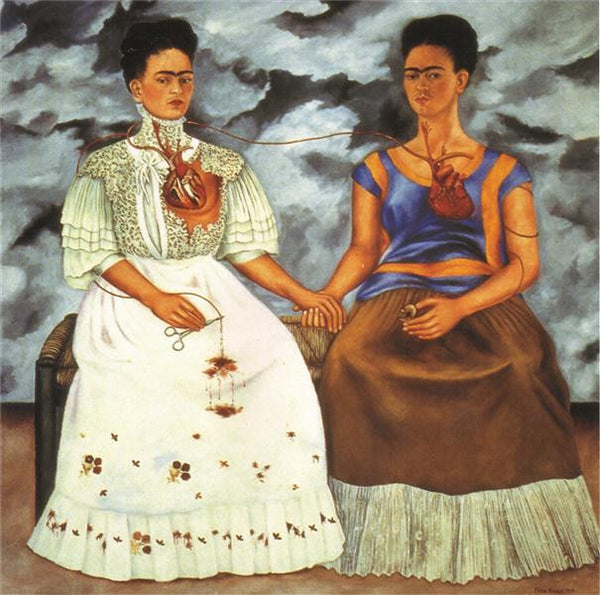
Two Fridas

Self-Portrait With cropped hair (1940), Kahlo is depicted in a man’s suit, holding a pair of scissors, with her fallen hair around the chair in which she sits. This represents the times she would cut the hair Rivera loved when he had affairs. The 1937 painting Memory, The Heart, shows Kahlo’s pain over her husband’s affair with her younger sister Christina. A large broken heart at her feet shows the intensity of Kahlo’s anguish. Frida Kahlo and Diego Rivera divorced in 1939, but reunited a year later and remarried. The Two Fridas  (1939) depicts Kahlo twice, shortly after the divorce. One Frida wears a costume from the Tehuana region of Mexico, representing the Frida that Diego loved. The other Frida wears a European dress as the woman who Diego betrayed and rejected. Later, she is back in Tehuana dress in Self-Portrait as a Tehuana  (1943). Pre-Columbian artifacts were common both in the Kahlo/Rivera home (Diego collected sculptures and idols, and Frida collected Jewelry) and in Kahlo’s paintings. She wore jewelry from this period in Self-Portrait Time Flies  (1926), Self-Portrait With Monkeys  (1938) and Self-Portrait With Braid  (1941), among others. Other Pre-Columbian artifacts are found in The Four Inhabitants of Mexico City  (1938), Girl With Death Mask  (1938).
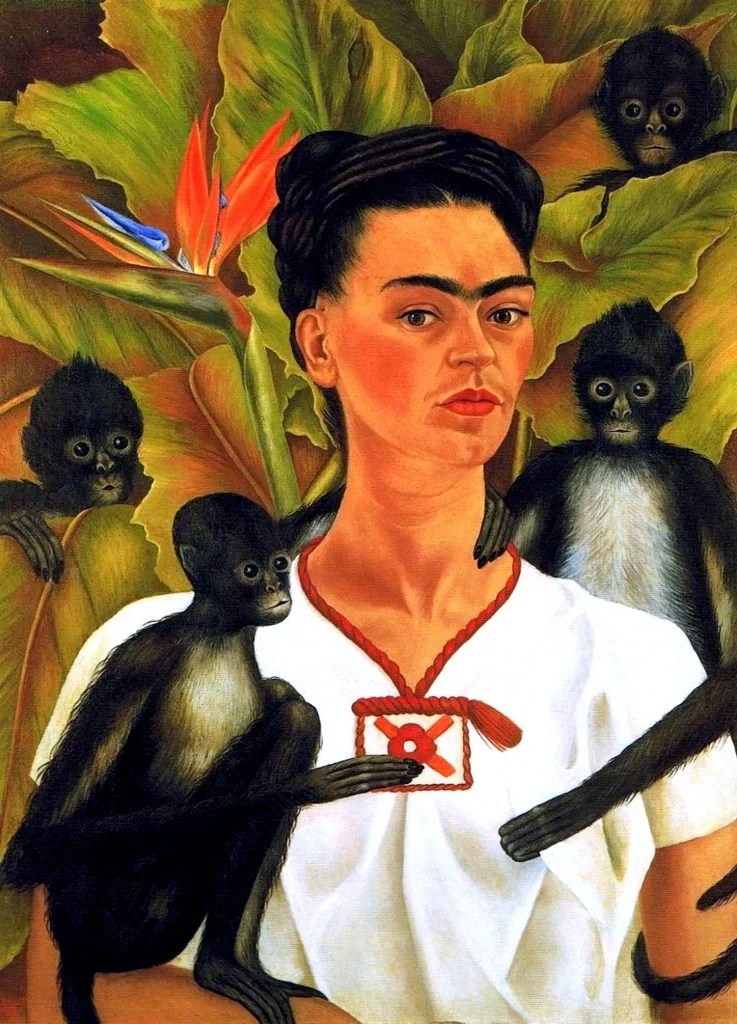
Frida‘s Self-Portrait With Monkeys

Analysis of Frida’s Artworks: Mexican Nationalism

Frida Kahlo was heavily influenced by the Mexicayotl movement, which sprung from the colonialist mindset that native Mexican culture is inferior and that Mexico should emulate Europe. The Mexicayotl movement aimed at protecting the indigenous culture and traditions among the Mexican people. In most of Kahlo’s self-portraits, she paints herself in traditional indigenous Mexican dress. She wears long, colourful skirts, huiplis (loose-fitting tunic), rebozos (shawls) and elaborate headdresses. Painting herself in the Tehuana dress was a chance for Kahlo to express her anti-colonialist ideas and pay homage to her indigenous ancestry.

Frida‘s Portrait of Deer with Human Face

Symbolism and Surrealism

After periods of depression and miscarriages in her life she gave herself to pets around her. She liked to use animals as models in her artworks. Her paintings are domesticated by monkeys, hummingbirds, dogs, and cats. One of her self-portraits depicts her with three spider monkeys. The animals became protective and tender symbols to Kahlo. On the contrary, Mexican Mythology suggests monkeys are symbols of lust. Frida’s significant self-portrait was Self- Portrait with Thorn Necklace and Hummingbird. According to some art historians, Kahlo wanted to show that she had been resurrected and had started a new life with this painting. As a symbol of this idea, the hummingbird was placed in her necklace. The hummingbird symbolizes hope and good luck in Mexican culture. However, the audience may notice the black cat – known as a symbol of bad luck – taking its place behind the right shoulder of Kahlo. Different interpretations say that the hummingbird pendant refers to Huitzilopochtli. It is the Aztec god of war and may refer to the pain Kahlo suffered all her life internally. Other important symbols of the painting were butterflies and the thorn necklace. Butterflies symbolize resurrection and it may refer to her rebirth in life after the accident. Furthermore, the thorn necklace she wears may be the symbol of Jesus’ crown of thorns, which he bore while being dragged to his crucifixion. In addition to these symbols, Kahlo created a painting that both uses Christianity and animal symbolism in one subject matter. Painting The Little Deer, 1946 made by Frida  depicts her as a deer with a human face. The artist portrayed herself in this painting. However, there is a much more important detail in this artwork – the deer wounded by the arrows reminds us of Andrea Mantegna’s depiction of Saint Sebastian from 1480. It may also be a reference to crucifixion and resurrection.
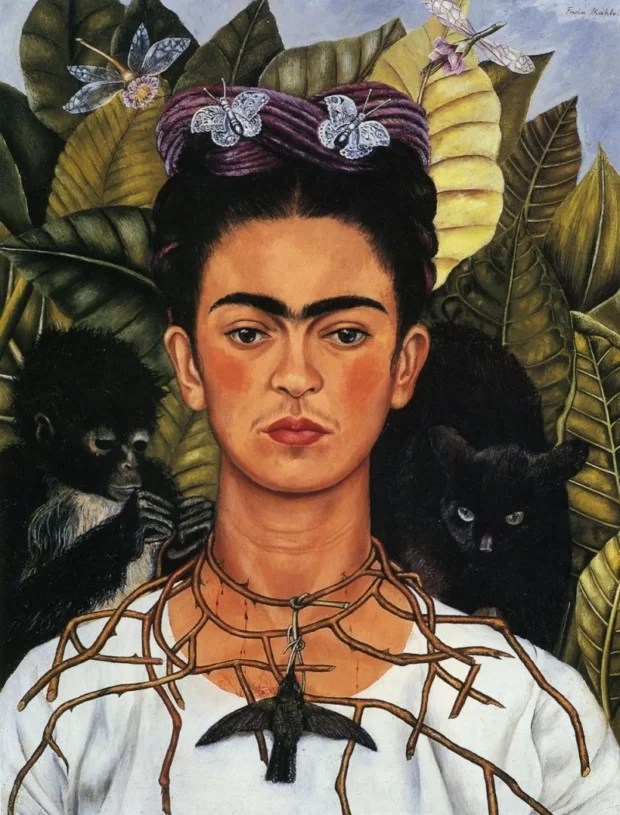
Frida‘s Self-Portrait With Thorn Necklace and Hummingbird

Conclusion

Women prior to Kahlo who had attempted to communicate the wildest and deepest of emotions were often labelled hysterical or condemned insane – while men were aligned with the ‘melancholy’ character type. By remaining artistically active under the weight of sadness, Kahlo revealed that women too can be melancholy rather than depressed, and that these terms should not be thought of as gendered.

Indian National Flag

Every free nation of the world has its own flag. It is a symbol of a free country. National flags serve not only as a means of identity but also as a symbol for a country’s history and ideals. During the 1600s, as groups of people began to organize into states and nations, flags became an important way to identify a country’s territories and possessions. For its citizens, the flag grew into a symbol of pride and identity of a people and government. 

Every country put an immense effort to design their flags as it is a great deal of their thoughts which reflect through country’s national flag. Colors, symbols, and layout of the design are all features that represent some principle or event that is significant to the country to which it belongs. Historically flag was originated in ancient India more than 5000 years ago and was called as Dhvaja. In the Rig Veda which is the worlds’ oldest book (4000-5000 BC), there is mention of Dhvaja hoisted on an elephant being ridden by Devraj Indra.

Flag mentioned in Rig Veda was triangular of black colour and had some inscription in white. Use of flag came into vogue all over the world after 600 BC. Indian “national” flag was hoisted first in Calcutta on August 7, 1906 by Sir Surindranath Banerjee demanding freedom for India from British rule. Independence Day, 15th August 1947, is the most significant day in India’s history, when India became one nation, despite partition, with one National Flag that was hoisted at 10:30 AM by Pandit Nehru. Pt. Nehru quoted ” a flag not only of freedom for ourselves, but a symbol of freedom for all people.” 

In India, the term ‘Tricolor or Tiranga’ refers to the Indian National Flag which was designed by Pingali Venkayyaand. It is designed in such a way that reflects country’s integrity, aim for growth and peace. It is a horizontal tricolor of deep saffron (kesaria) at the top, white in the middle and dark green at the bottom in equal proportion. The ratio of width of the flag to its length is two to three. In the centre of the white band is a navy-blue wheel which represents the chakra and it has 24 spokes. National flag of India is also the war flag of Indian Defense Forces. 

Each colour of flag has different significance and purposeful meaning.

• Saffron stands for courage, sacrifice and renunciation

• White stands for truth in action and purity in thoughts

• Green is the symbol of life, abundance and prosperity

• Chakra is the symbol of progress and of movement

A few days before independence, the constitution assemble was formed to select a flag of Independent India. On 23 June 1947, the assembly created a committee headed by Rajindra Prasad and other members including Maulana Abul Kalam, Sarojni Naidu, C, Raja Gopalachari, K.M.Munsi and Dr. B.R.Ambedkar. The committee recommended that the flag of the Indian national congress should be adopted as the National Flag of India. Committee also suggested some suitable modifications so that it should be acceptable to all political parties. Its main task was to select a flag that should not be a under stone of any political party and it should reflect an image of Azaad Bharat.  

​​​​​​​The flag symbolizes freedom .On 22 July 21, 1947, Pandit Jawaharlal Lal Nehru proposed Indian National Flag at the constituent assembly as a horizontal tricolor of deep saffron, white and dark green color bands in equal proportions, with Asoka wheel (Chakra) in blue in the centre of the white band.  

Nehru also presented two flags, one in Khadi-silk and the other in Khadi-cotton, to the assembly. The resolution was approved unanimously. Indian Flag, by law, is to be made of khadi. The manufacturing process and specifications for the flag are laid out by the Bureau of Indian Standards. The right to manufacture the flag is held by the Khadi Development and Village Industries Commission, who allocate it to the regional groups. As of 2009, the Karnataka Khadi Gramodyoga Samyukta Sangha was the sole manufacturer of the flag. Its use and display are regulated by a code. A Flag Code was outlined to maintain the dignity and honor of the National Flag. Flag code is a set of rules which need to be followed to give respect to Indian National Flag.  

On January 26, 2002, the new ‘Flag Code of India2002’ was released by the Union government. According to new code the citizens of India are allowed to hoist the Indian flag over their homes, offices and factories on any day and not just National days as was the case earlier. Now Indians can proudly display the national flag anywhere and anytime, as long as the provisions of the Flag Code are strictly followed to avoid any disrespect to the tricolor. 

Following are some rules and regulations of Flag Code of India 2002 :

• The National Flag may be hoisted in educational institutions (schools, colleges, sports camps, scout camps, etc.) to inspire respect for the Flag. An oath of allegiance has been included in the flag hoisting in schools.

• A member of public, a private organization or an educational institution may hoist/display the National Flag on all days and occasions, ceremonial or otherwise consistent with the dignity and honor of the National Flag.

• Section 2 of the new code accepts the right of all private citizens to fly the flag on their premises

• The flag cannot be used for communal gains, drapery, or clothes. As far as possible, it should be flown from sunrise to sunset, irrespective of the weather

• The flag cannot be intentionally allowed to touch the ground or the floor or trail in water. It cannot be draped over the hood, top, and sides or back of vehicles, trains, boats or aircraft

• No other flag or bunting can be placed higher than the flag. Also, no object, including flowers or garlands or emblems can be placed on or above the flag. The tricolour cannot be used as a festoon, rosette or bunting

The Indian National Flag represents the hopes and aspirations of the people of India. Over the last five decades, several people including members of armed forces have ungrudgingly laid down their lives to keep the tricolor flying in its full glory.  

The flag should be flown at half-mast as a sign of mourning. The decision to do so lies with the President of India, who also decides the period of such mourning. When the flag is to be flown at half mast, it must first be raised to the top of the mast and then slowly lowered. Only the Indian flag is flown half mast; all other flags remain at normal height. The flag is flown half-mast nationwide on the death of the President, Vice-president or Prime Minister. On occasions of state, military, central Para-military forces funerals, the flag shall be draped over the bier or coffin with the saffron towards the head of the bier or coffin. The flag shall not be lowered into the grave or burnt in the pyre. 

The Indian National Flag symbol of our national pride. Achievers feel proud to proclaim with the hoisting of the national flag when they break or make new world record for the nation.  The Indian national flag was hoisted on Mt. Everest, the highest peak in the world, on May 29 1953, along with the Union Jack and the Nepalese National flag. National flag flew to space in 1984when Wing Commander Rakesh Sharma went to the space. The flag was attached as a medallion on the space suit of Rakesh Sharma. Such achievements not only bring proud feeling to the country but also spread a massive feel of inspiration among young youth. 

In nutshell, to fly the national flag is a sign of pride and patriotism. It is a positive affirmation of loyalty and commitment. It marks out a country that has confidence in itself, and is comfortable with its place in the world, its history and its future.  

“It will be necessary for us Indians Muslims, Christians Jews, Parsis, and all others to whom India is their home-to recognizes a common flag to live and to die for.” –Mahatma Gandhi