
Goods and Services Tax

Everyone may have heard about GST up to this point. GST is for Goods & Services Tax, which is a national tax levied on the manufacture, sale, and consumption of goods and services that makes no distinction between goods and services for taxation. It will largely replace all indirect taxes levied by the Indian central and state governments on goods and services. In India, The Atal Bihari Vajpayee government proposed the introduction of GST in 2000. The Goods and Service Tax Act was passed by Parliament on March 29, 2017, and into effect on July 1, 2017. To put it another way, the Products and Service Tax (GST) is a tax that is levied on the provision of goods and services.

For the purpose of tax collection, it was split into five tax slabs: 0%, 5%, 12%, 18%, and 28 percent. Individual state governments tax petroleum goods, alcoholic beverages, electricity, and real estate separately. Rough precious and semi-precious stones are taxed at a special rate of 0.25 percent, while gold is taxed at 3%. Furthermore, a 22 percent cess or other charges on top of the 28 percent applies to few things, such as aerated drinks, expensive cars, and tobacco products, are subject to GST. Pre-GST, most commodities had a statutory tax rate of around 26.5 percent; post-GST, most goods are likely to have a tax rate of around 18 percent. 

OBJECTIVES OF GST:

One of the main goals of the Products and Service Tax (GST) is to avoid double taxation or the effects of taxes on the cost of production and delivery of goods and services. The elimination of cascading effects, i.e. tax on tax till ultimate consumers, will considerably improve the competitiveness of original goods and services in the market, resulting in a positive influence on the country’s GDP growth. It is not only desirable but also necessary, to implement a GST to replace the existing numerous tax structures of the federal and state governments. It would be conceivable to offer full credit for input taxes collected if multiple taxes were integrated into a GST system. GST, or Goods and Services Tax, is a destination-based consumption tax based on the VAT idea.

 GST Rate of other countries:-

Australia 10%

France 19.6% 

Canada 5%

Germany 19%

Japan 5%

Singapore 7%

New Zealand 15%

Types of GST :

1. CGST (Central Goods and Service Tax)

The Central Goods and Services Tax (CGST) is a federal tax on goods and services. It applies to vendors who do business within the state. The collected taxes will be shared with the central authority. 

2. SGST (State Goods and Service Tax) 

A state’s Goods and Services Tax (SGST) is a tax on goods and services. It applies to vendors who do business in the state. The collected taxes will be distributed to the appropriate state authority.

3. IGST (Integrated Goods and Service Tax)

The Integrated Goods and Services Tax (IGST) is a type of tax that applies to both goods and services. It is relevant to suppliers who do interstate and import operations. The collected taxes will be split between the federal and state governments.


4. UTGST (Union Territory Goods and Services Tax)

 The UTGST is levied on supplies made in the Union Territories of the Andaman and Nicobar Islands,

Chandigarh, Dadra and Nagar Haveli, Daman and Diu, and Lakshadweep.

GST Advantages

  1. GST is an easy-to-understand tax that also reduces the number of indirect taxes.
  2. There will be no hidden taxes and the cost of conducting business would be cheaper because GST will not be a burden to registered shops.
  3. People will benefit because prices will drop, which will boost businesses since consumption will rise.
  4. Separate taxes for goods and services, as is the current taxation system, necessitate the split of transaction values into the value of products and services for taxation, resulting in increased complexities, administrative, and compliance expenses.
  5. When all of the taxes are integrated into the GST system, the tax burden can be divided evenly between manufacturing and services.
  6. GST will be levied only at the ultimate point of consumption, following the VAT principle, and not at numerous stages along the way (from manufacturing to retail outlets). This will aid in the removal of economic distortions and the creation of a common national market.
  7. GST will also aid in the creation of a transparent and anti-corruption tax administration. Currently, a tax is assessed when a finished product leaves a factory, which is paid by the manufacturer, and it is levied again when the product is sold at a retail outlet.
  8. GST is supported by the GSTN, a fully integrated tax infrastructure that handles all aspects of the tax.

Disadvantages

According to some economists, GST in India might have a detrimental impact on the real estate sector. It would raise the cost of new homes by up to 8% and diminish demand by roughly 12%.

According to some experts, CGST (Central GST) and SGST (State GST) are simply new names for the Central Excise/Service Tax, VAT, and CST. As a result, the number of tax levels does not decrease significantly.

Currently, only 4% of retail products are subject to tax. Garments and clothing may become more expensive after the GST is implemented.

It would have an impact on the aviation sector. Currently, service taxes on airfares range from 6% to 9%. With GST, the rate will rise to over 15%, nearly doubling the tax rate.

The entire ecosystem would experience teething problems and learn as a result of the adoption and migration to the new GST system.
Taxation of the Rich

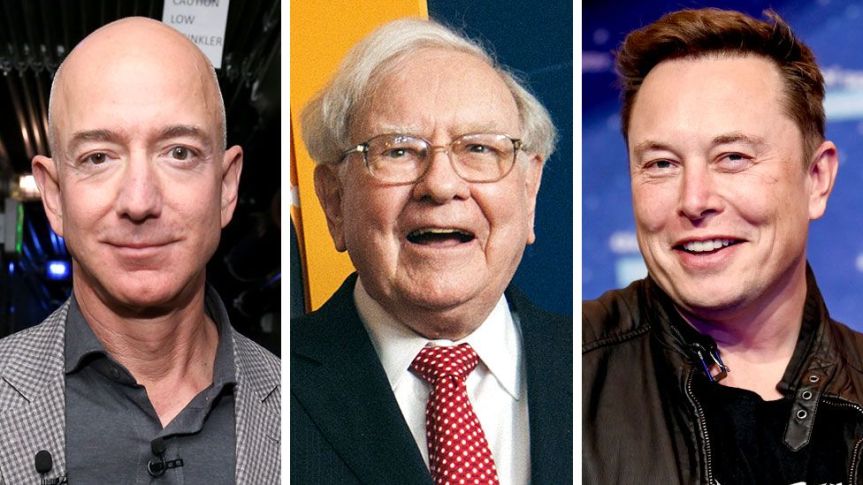
On July 20, 2021, the world’s richest man: Jeff Bezos flew to space alongside his brother Mark Bezos. The suborbital flight lasted over 10 minutes, reaching a peak altitude of 66.5 miles (107.0 km). The flight qualified him as an FAA commercial astronaut. It is estimated that this short flight cost Bezos $10-20 million, a mere drop in the bucket for the Amazon CEO who is reported to have a net worth of $177 billion. This minimal cost which only lifted a short flight could have lifted the burden of those struggling in the world. This brings up the question: Should the rich be taxed more?

But first what do we mean when we talk about “the rich”?

These are:

  • The well-off: About 9% of the households in the U.S. have income greater than $200,000, and they get almost 45% of all pre-tax income, according to the Tax Policy Centre.
  • The really rich: the top 0.4% of households—have incomes above $1 million a year and get 13% of all pre-tax income. Since the 1980s, those at the very top have enjoyed faster growing incomes than the rest of America. The Congressional Budget Office estimates that the best-off 1% of American households (average annual income $1.8 million in 2016) saw their inflation-adjust incomes before taxes nearly triple between 1979 and 2016; the next best-off 9% saw theirs grow by 75% while everyone else saw their pre-tax incomes rise by 33%.

The talk of tax rises is common — and there is a growing appetite for taxing the wealthy, which has been out of favour since the 1970s. In the US, the Democrats control all three branches of the federal government for the first time since the early Obama years. The Biden administration is planning the first major tax hike since 1993, which will include higher taxes on higher earners. The COVID-19 pandemic has ravaged the economy, and the high unemployment and extremely low interest rates provide ample justification for budget deficits. Still, in the years ahead, many feels that the U.S. government needs more revenue, in order to fund urgent fiscal priorities such as infrastructure, healthcare and education. As policy-makers search for new revenues, those at the top of the income distribution are natural targets for tax increases, since their incomes have grown the most rapidly in recent decades.

Several Democratic presidential candidates propose to raise taxes on the rich to raise money both to pay for their spending agenda and to reduce income inequality. They argue that the people who have benefited the most should bear the burden of the cost of programs that help the rest of the population. In light of the widening gap between economic winners and losers, they would use the tax code to reduce inequality more aggressively than today’s tax code does, and they devote some of the revenues to fund programs that benefit those less well-off. They also point out that the average tax rate paid by people at the top has fallen.

The arguments against progressive taxes on wealthier people are well-known: tax people less and you incentivise wealth creation. You prevent wealthy people from becoming tax exiles and stop money fleeing offshore; if you give the rich more, they spend more and everyone is richer. A related issue is the idea, that philanthropy from the rich can replace some of the work of taxation. An example is the Gates Foundation, which has given away more than $50bn since its inception. Yet, philanthropy as a substitute for government spending brings its own problems. One is that billionaires can choose their causes in a way that governments cannot. Philanthropy tends to benefit causes such as the arts and the environment over ones such as alleviating poverty and poor health. A further problem here is that allowing philanthropy to take over from taxation is another way of ceding power from the state to the wealthy whose influence is already cause for concern.

Senator Bernie Sanders described it as: “What kind of nation are we when we give tax breaks to billionaires, but we can’t take care of the elderly and the children.” Will the rich be taxed or will they continue basking in their well of wealth without a care in the world?

How Rich People Avoid Taxes

Taxes are those compulsory financial charges or some other type of levy imposed on a taxpayer by a governmental organization in order to fund government spending and various public expenditures. Everyone who is of a certain pay grade and receiving a certain amount of income has to pay taxes, and even corporations have to pay a certain amount of money in the form of taxes. Hence, there are various types of taxes that must be paid as a financial obligation to the government, to help in defraying government expenses for public welfare. The money given in the form of taxes are meant to be put to productive use, thereby benefitting all those people who have given tax in the first place. However, nowadays we can observe the trend of inequitable taxing in many countries, as the rich are getting away with tax avoidance while ordinary middle class and working-class people are being taxed unreasonably. Failure to pay taxes, as well as tax evasion/avoidance is punishable by law, but many rich people get away with these activities.

The Main Reason

While regular working-class people get paid wages and salary as their income, the rich do not get paid any such fixed remuneration. People with normal jobs get a pay check and pay income tax, ranging from 10-37%. However, wealthy people mainly have capital income, meaning they earn from investments like stocks and real estate. These investments are taxed as capital gains tax, and things like long-term stock have a maximum tax rate of only 20%. Thus, the capital gains tax is taxed at nearly half the rate as income tax. It is clear that there is a large discrepancy in taxation here. This is evidenced by the fact that a billionaire like Warren Buffet has said that he pays less tax than even his secretary.  

Hence, billionaires often face small and insubstantial tax amounts in comparison to what they are earning, and the main reason for these small tax rates is the fact that these people maintain their wealth differently than ordinary people. Their wealth is not being held in their wallets or in their bank accounts. Instead, it is being held in assets like stocks and real estate, which are only taxed when sold. Until then, they are considered ‘unrealized’ and cannot be counted as income. Even when they are sold, the capital gains tax that applies is minimal.

People like Warren Buffet and Jeff Bezos are worth so much money because of the stock they hold, but these stocks are not tangible, spendable or taxable money. This allows them to preserve their wealth effectively, and protect it from excessive taxation. Jeff Bezos, the richest man in the world, pays almost nothing in taxes because his holdings are not defined by U.S. laws as taxable income unless and until he sells them. So, even though he is worth around $200 billion, he is never taxed unless he sells a stock and turns it into real money. This is why we say billionaires are worth so much, but almost never have to pay taxes.   

Conclusion

The reality is that most rich people today do not pay taxes proportionate to their wealth or earnings. It is definitely a problem if wealthy people are not paying their fair share of taxes while normal people are bearing the burden of taxation. Such taxation systems allow the rich to keep getting richer without any real consequence, while everyone else is limited from increasing their financial position due to high tax obligations. To solve this, maybe taxes could be imposed on wealth, or on gains in the stock market. Wealth is the value of the things you own, such as stocks, bonds, houses, etc. Generally, there is no tax on wealth, but it should be implemented as a means of more justified taxation. Even things like increasing the income tax of those at the top, or increasing estate tax will help in taxing the rich more. Basically, taxation must become proportionate to wealth so as to keep a check on the rich, while staying fair to the people working normal jobs.

Taxation, Labour and Other Laws being simplified to boost the growth of the Corporate Sector

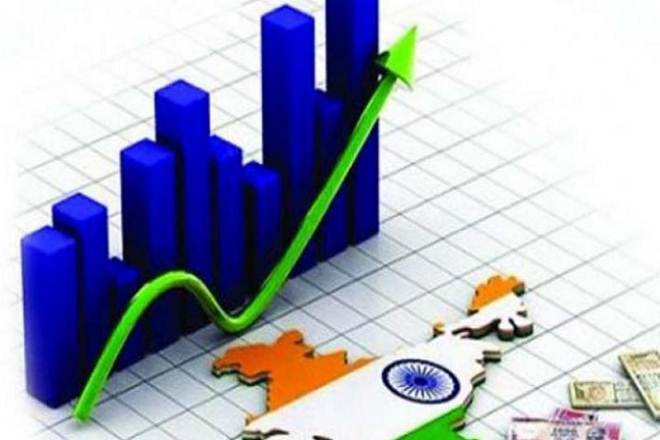
Prime Minister Shri Narendra Modi said that the goal of achieving the 5 Trillion Dollar Economy is achievable.

Indian Economy
Indian Economy

He was participating at the inaugural session of the Hundred Years of ASSOCHAM in New Delhi today.

Addressing a gathering of leaders from the Corporate World, Diplomats and others, the Prime Minister said that the idea of making India a 5 Trillion Dollar worth economy is not a sudden one.

He said that in the past five years the country had made itself so strong that it not only could set for itself such a target but also make efforts in that direction.

“Five years before, the economy was heading for disaster. Our Government not only stopped this but also brought in a discipline in the economy”

“We brought in fundamental changes in India’s Economy so that it can run with set rules in a disciplined manner. We have met with the decades old demands of the Industrial Sector and we have built a strong foundation for a 5 Trillion Dollar Economy”

He said, “We are building the Indian Economy on two strong pillars of formalisation and modernisation. We are trying to bring in more and more sectors into the horizon of formal economy. Along with this we are linking our economy with latest technology so that we can speed up the process of modernisation”

“Now instead of several weeks it merely takes a few hours to register a new company. Automation is helping quick Trading across borders. Better linking of Infrastructure is reducing the turn-around time at Ports and Airports. And these are all examples of a modern economy. “

“Today we have a Government that listens to the Industry, understands its needs and which is sensitive to its suggestions.

Prime Minister said that the country could make a significant jump in the rankings of Ease of Doing Business due to a sustained effort.

“Ease of Doing Business may sound just like four words, but in order to improve its rankings there is a lot of effort that goes into it including changing the policies and rules at the ground level”

Prime Minister also emphasised the efforts being made towards a faceless Tax Administration in the country in order to reduce the human interface between the tax payer and the authorities.

“In order to bring about transparency, efficiency and accountability in the Tax System, we are moving towards a faceless Tax Administration”, he said.

Prime Minister said that the Government has decriminalised several laws in the Corporate Sector in order to reduce the burden and allow the industry to function in a fearless ecosystem.

“You know that there were several provisions of the Company Act as per which even small deviations were also dealt as a Criminal Offence. Our Government has now decriminalised many such provisions. And we are trying decriminalise many other provisions.”

Prime Minister said that the Corporate Tax at this time in the country is the lowest ever and this would propel a boost in the economic growth.

“The Corporate Tax is the lowest at the moment, meaning if there is any Government that is taking the lowest Corporate Tax from the Industry, then it is ours”

Prime Minister also spoke about the efforts being made towards bringing about Labour Reforms.

He also spoke about the sweeping reforms in the Banking Sector to make it more transparent and profitable.

“Owing to the steps taken by the Government today 13 Banks are on the path of profit which 6 banks are out of PCA. We have also hastened the process of unification of the Banks. Today banks are expanding their countrywide networks and are in the direction of achieving Global recognition”

He said with this overall all round positivity the economy is propelling towards a 5 Trillion Dollar target. Prime Minister said that the Government would invest 100 Lakh Crore Rupees in the infrastructural sector and another 25 Lakh Crore Rupees in the Rural Sector in order to provide support to achieve the target.