JAMES WEBB SPACE TELESCOPE (JWST)

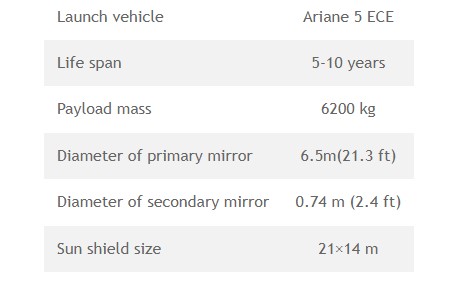
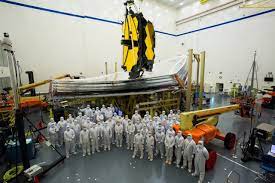
The European Ariane 5 rocket launched NASA’s James Webb Space Telescope (JWST), the biggest and most powerful space telescope yet constructed, from French Guiana, on the northeast coast of South America.

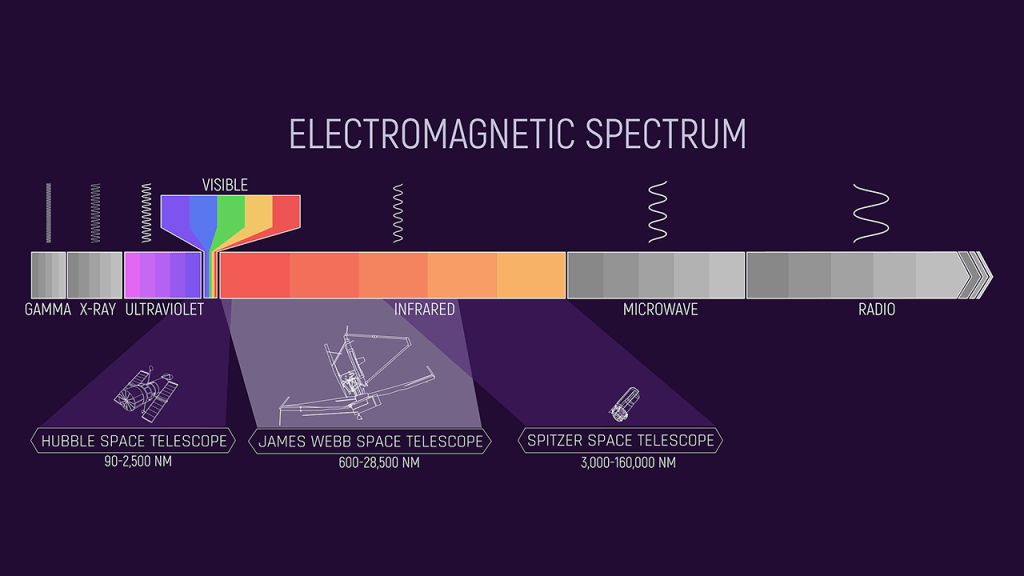
It is the successor of the Hubble Telescope and most powerful infrared telescope of National Aeronautics and Space Administration (NASA).
It is designed to explore a period known as the Epoch of Reionization, which came after the dark ages that followed the big bang. The telescope will study the atmospheres of a wide diversity of exoplanets. It will also search for atmospheres like Earth’s, and for the signatures of key substances such as methane, water, oxygen, carbon dioxide, and complex organic molecules, in hopes of finding the building blocks of life.

Goals 

  • Search for the first galaxies that formed after the Big Bang. 
  • Determine how galaxies evolved from their earlier formation until now.
  • Observe the formation of stars from the first stages to the formation of planetary systems.
  • Measure the physical and chemical properties of planetary systems and investigate the potential for life in such systems

ORBIT 
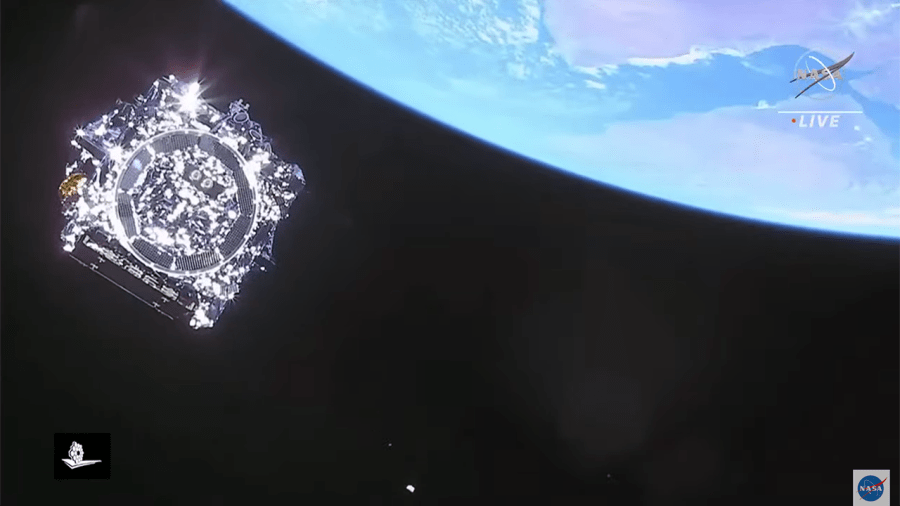
  • JWST will be finally placed in second Lagrange Point (L2).
  • Webb’s orbit follows a special path around L2 that allows it to stay on Earth’s night side (directly ‘behind’ the Earth as viewed from the Sun) and track along with Earth while moving around the Sun. 
  • As an infrared observatory, Webb must be protected from all bright, hot sources to see the faint heat signals of distant objects in the universe. Because Webb will always stay on Earth’s night side as it moves around the Sun, its orbit ensures that one side of its sunshield will continuously face the Sun, Earth and Moon to block their view from the telescope’s optics.

Features that make it special

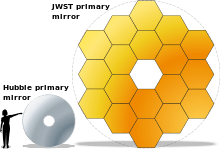
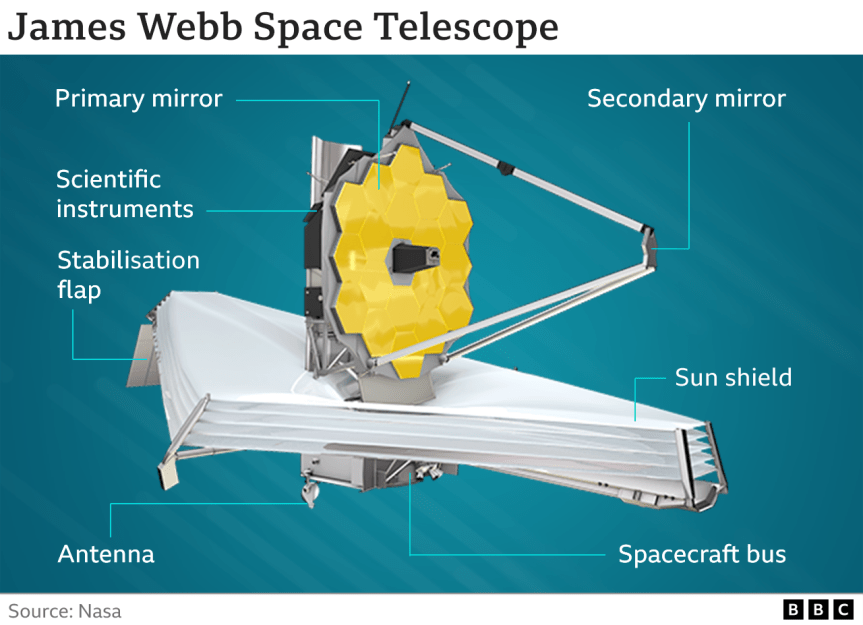
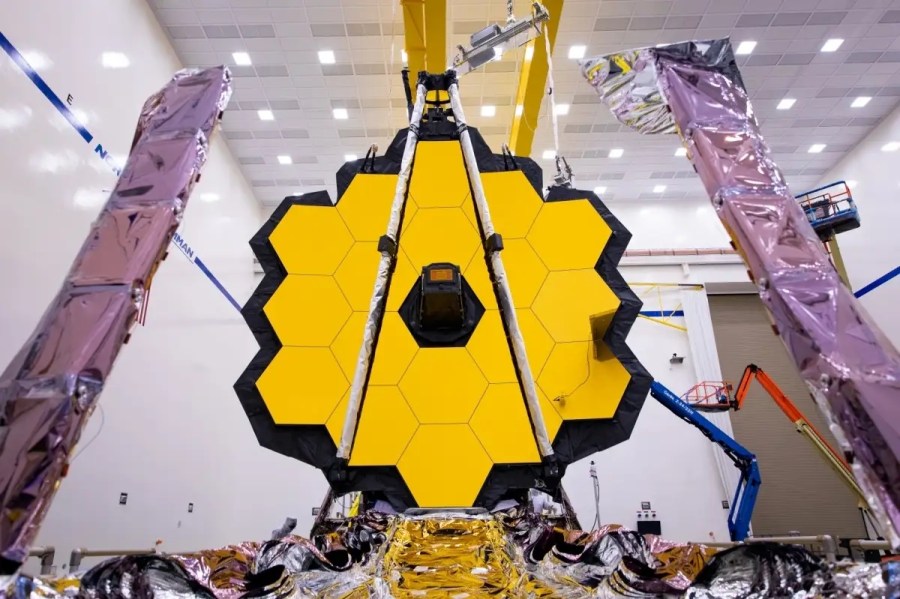
  • While looking away from the Sun, JWST features one huge mirror with a diameter of 21 feet (the height of a standard two-story structure) that will collect infrared light flowing in from the deep space. 
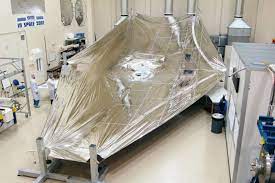
  • It will be protected by a five-layer, tennis court-sized, kite-shaped sunscreen that will block the sun’s heat and maintain the exceptionally cold temperatures that the sensors are meant to work at.
  • Temperatures on the sun-facing side may reach 110°C, while the temperature on the opposite side is kept at –200° to –230°C. 
  • To detect the exceedingly weak heat signals from faraway galaxies, extremely low temperatures are required. 
  • The mirror, as well as the sunscreen, are much too huge to fit inside any rocket. They were designed to be collapsible and would be unfolded in space. 
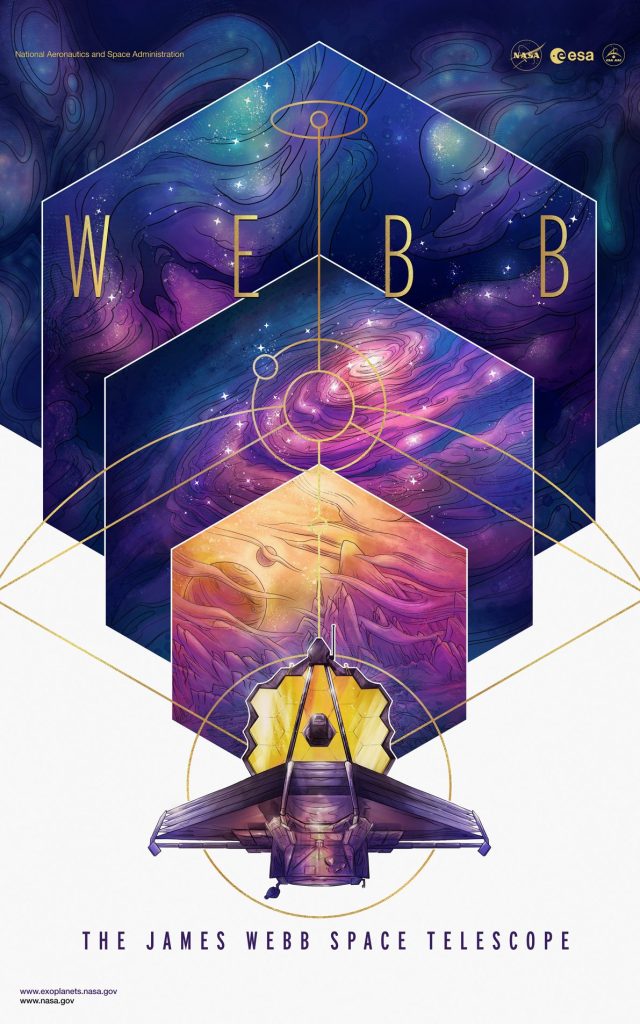
All about James Webb Space Telescope

History

The success of Hubble Space Telescope after its repair mission in 1993 motivated the organizations to make a larger infrared light telescope that could see the past better. Hubble telescope system’s temperature interfered with the infrared radiation it received from the outer space. A new innovative next generation telescope was needed which was faster , better and cheaper. In 2003, NASA’s initial contract for James Webb Space Telescope(JWST) was $824.8 million collaborating with European Space Agency (ESA) , Canadian Space Agency(CSA). in 2005 after major redesign and re-planning , the mission cost reached a hefty amount of $4.5 billion. The telescope has a history of major cost overruns and delays due to backlashes from people and lack of funds.

Nevertheless, JWST launched on December 25, 2021 in Ariane 5 rocket from NASA Goddard Space Flight Centre, French Guiana. this orbiting infrared observatory will complement and extend the discoveries of the Hubble space telescope.

The telescope will cover a wavelength of 0.6 – 28.5 microns for the light falling from red till mid infrared wave spectrum .

Location

JWST will not orbit earth but will be move in a orbit of second Lagrange point(L2 point) which is about 1.5 million km away from the earth. The L2 point is sufficiently near to the earth allowing proper signal communication and the sun shield will prevent any infrared radiation coming from the Sun.

Sun-shield protection

For it to make observation in the infrared spectrum , it must be kept under 50K (−223.2 °C) otherwise the infrared radiation from its system , the earth , moon and sun will interfere with the data. It uses a large 5 layered tennis court sized sun-shield to block that radiation and maintains its surface temperature. the single layer is as thin as a human hair and made with polyamide films . the membranes are coated with aluminium from both sides and a silicon doped layer facing the sun. the shield can be folded 12 times to fit in the Ariane rocket .

The Honeycomb mirrors

The primary optical mirror is beryllium reflector with area 25.4 m2 . gold is used to coat all the 18 mirror segments because it is a highly reflective material for infrared wavelength. The honeycomb pattern utilizes the best use of space available and are also deployable .

Mission goals

  1. Search for galaxies formed after the big bang . It can look 13.5 billion years into the past , about 400 million years after the big bang.
  2. How galaxies evolve.
  3. Observe the formation of stars.
  4. Measure physical and chemical properties of the planetary systems including the Solar System.

This mission will take the Space Science to the next level, thanks to our Scientists……