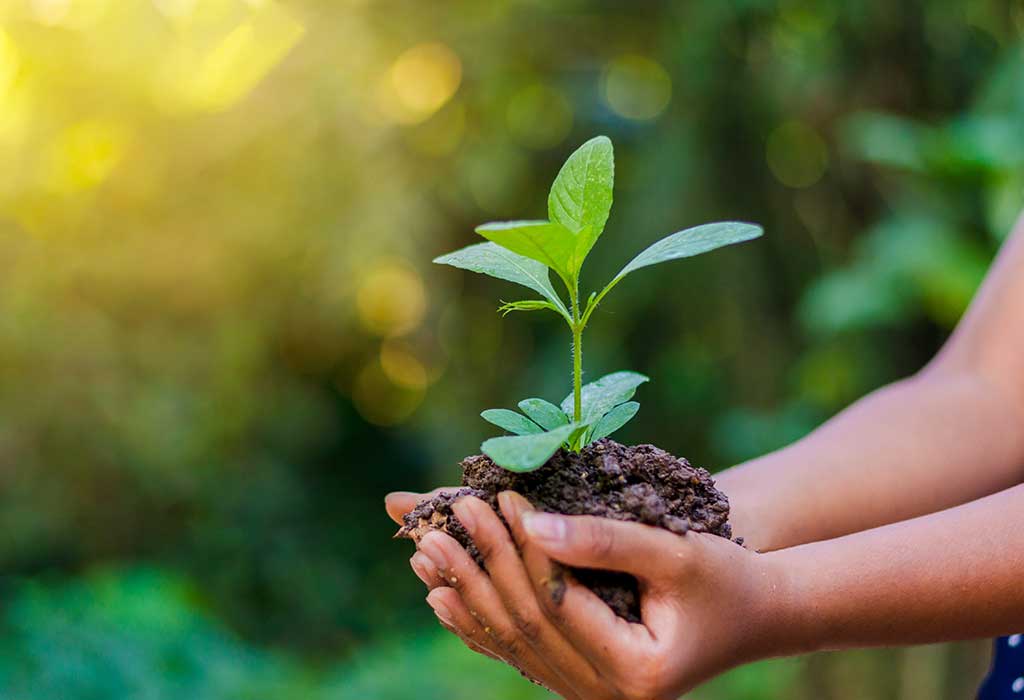
An Analysis of World Environment Day

Credit: Parenting

Introduction

World Environment Day is celebrated on the 5th of June every year. More than 100 countries Worldwide join in the celebration of World Environment Day. It was started by the United Nations Environmental Program in the year 1973 and has been continuing till now. The main purpose of celebrating this day is to spread awareness about the Environment.

Theme for 2022

World Environment Day 2022 will be held under the theme Only One Earth, highlighting the need to live sustainably in harmony with nature by bringing transformative changes – through policies and our choices – towards cleaner, greener lifestyles.

What is the Environment?

Scientifically speaking, everything around us constitutes our Environment. Both living and non-Types of the Equation of the Motion living things make up our Environment. The living or biotic components include plants, animals and microbes, while the non-living or abiotic components include air, water, soil and so on.

Why is the Environment in Danger?

The Environment is in danger because of the high levels of pollution. All the major components of the Environment such as the hydrosphere, the atmosphere, and the biosphere, are trapped with pollutants. The rising level of pollutants is destroying the normal Environmental conditions. These types of pollutants can be natural (for example volcanic eruptions, forest fires, etc.) or manmade (pollutants released from industries, emissions from cars). It is mainly man-made pollution that has caused rapid destruction of the Environment. The major forms of pollution are air pollution, water pollution, and soil pollution.

Why is it Necessary to Save the Environment?

The Environment is one of the most important tools for our survival on planet Earth. The Environment nurtures us and helps us survive. We cannot imagine life without air, water, and soil. The biotic components like plants and animals are also important survival tools. Plants help purify the air around us. We get food from plants and animals. All the components of the Environment are dependent on each other in a web of relations known as the ecological web. It is necessary to maintain this web in balance because if one component collapses then the entire web will crumble destroying all life forms. This is why we must choose to work towards preserving the Environment and undoing the damage we did.

Purpose of World Environment Day

The main purpose of World Environment Day is to spread awareness about the current conditions of the Environment. On this day people come together to join in efforts to improve our life. Every year there is one theme or Environmental problem which is focused upon and a pledge to combat that problem is taken that year. For example for the year 2019, the theme was air pollution. Organizations all around the world come together on this day, to take small steps to improve our future. Schools and offices encourage workers and students to plant trees or clean up some local land. These small efforts can leave a big impact on the Environment.

Conclusion

World Environment Day reminds us to consolidate our planet and ensure that the Environment is conserved at all costs. It illuminates the causes that cause the most damage to our environment. For example, industries and industries play a major role in polluting. They reduce the amount of air we breathe and the water we consume. Therefore, this Day serves as an eye-opener for many citizens who are unaware of all this. In other words, it spreads awareness to ordinary people about the current situation. In addition, it also encourages the community from different communities and communities to play an active role in celebrating this Day.
References

An Analysis of National Safe Motherhood Day

Credit: Eduwar

Introduction

The White Ribbon Alliance for Safe Motherhood is an alliance of organizations working together to increase awareness, build partnerships and act as a stimulus for action to decrease maternal mortality significantly. It was launched in India by the Centre for Development and Population Activities in 1999 and with a coalition of 1800 organizations, in 2003, it requested the Government of India to declare April 11th, Kasturba Gandhi’s birth anniversary, as National Safe Motherhood Day. India is the world’s first country to have officially declared a National Safe Motherhood Day.

Theme for 2022

Every year a nationwide advocacy theme is selected for Safe Motherhood Day, and activities and full-scale campaigns are carried out throughout the country to increase awareness of proper healthcare and maternity facilities for pregnant and lactating mothers. Also, the members, state associations, and non-profit organizations come together on National Safe Motherhood Day to share technical skills, expertise, and resources. This year’s theme is “Remain at home in the face of the Coronavirus; protect mother and child.”

Why this day is Celebrated?

India is the main country to have formally proclaimed a day committed to well-being and security, all things considered. Every year, WRAI individuals select a cross country topic for “Safe Motherhood Day.” They do crusades all across the country. The objective of these missions is to increment mindfulness that each lady has an option to live and endure pregnancy and labor.

Initiatives taken by Indian Government

In 2003, at the request of the WRAI, the Indian government designated April 11 (the anniversary of Kasturba Gandhi’s birth) as “National Safe Motherhood Day” (a coalition of 1,800 organizations). India is the world’s first country to establish a “National Safe Motherhood Day.” Every year, WRAI members choose a national publicity theme for “Safe Motherhood Day,” and WRAI members conduct activities and large-scale campaigns across the country. These annual campaigns, which are launched on “National Safe Motherhood Day,” aim to raise awareness that every woman has the right to survive and recover from pregnancy and childbirth. The White Ribbon Alliance of India was established in 1999.

Safe Motherhood Program

The aim of the National Safe Motherhood Program is to reduce morbidity and mortality rates of pregnant and lactating mothers and neonates and to improve their health through preventive strategies and activities related to health promotion as well as by addressing avoidable causative factors that can lead to death during pregnancy, childbirth and postpartum period. Nutritious snacks, such as vegetables, fruits, egg, yoghurt, cheese, pulses, sprouts, soya and milk products, along with proper hydration are ideal for a pregnant woman.

Significance of Motherhood Day

Our mothers are the only reason we were able to see the light of day and grow up to be strong people. Their numerous sacrifices, dedication, hard work, and blessings enable us to progress in life. Motherhood is one of the most special and important stages in a woman’s life, and she requires the greatest amount of care and affection during this time. Thus, National Safe Motherhood Day is observed in India on April 11 to raise awareness about motherhood and its importance. The entire period of pregnancy and delivery is critical and must be handled with extreme caution. Because of our government’s efforts, I can say with great pride and accomplishment that Madhya Pradesh has seen a significant decrease in Maternal Mortality Rate over the years.

Conclusion

Janani Express Ambulance has made it simple and quick to get to the hospital. Similarly, schemes such as Janani Suraksha Yojana, Surakshit Matritva Abhiyan, Mamta Abhiyan, and others have been launched to provide pregnant women with all necessary care and health facilities. The government is working around the clock to improve mothers’ health and hygiene. Motherhood, on the other hand, necessitates more than just medical and health advantages. As a result, it is critical to pay attention to her mental health and meet all of her needs. On this National Safe Motherhood Day, I humbly ask that everyone prioritize motherhood and pay special attention to pregnant and lactating women. In the absence of healthy mothers, we cannot envision a beautiful future.

References

An Analysis of World Haemophilia Day

Credit: Deccan Chronicle

Introduction

World Hemophilia Day was started by the World Federation of Hemophilia (WHF) and is annually observed on the 17th of April. The international community started observing WHD in 1989 and April 17 was chosen to recognize Frank Schnabel the founder of WHF. World Hemophilia Day is aimed at raising awareness about hemophilia and other bleeding disorders. It also helps to raise funds for patients who cannot afford hemophilia treatment as well as attract volunteers for the World Federation of Hemophilia.

What is Haemophilia?

Haemophilia is an inherited condition that causes bleeding for a long time after injury or surgery and painful swelling of the joints either after injury or even without injury. (“Inherited” means that the disease is passed from parents to children through their genes). Haemophilia is the commonest X-linked disorder affecting approximately 1 in 10,000 male births; whereas women act as carriers of Haemophilia. Haemophilia is an inherited blood disorder disease in which blood does not clot properly. It is caused due to defects in the blood vessels, the coagulation mechanism, or the blood platelets and by a deficiency in a gene that resolves how the human body will make factors VII, IX, or XI.

Types of Haemophilia

Haemophilia has three forms namely Haemophilia A, B, and C. Out of these, Hemophilia A is the most common.

– Haemophilia A patient is treated by prescribing a hormone desmopressin.

– Haemophilia B patient is treated by infusing the patient’s blood with the clotting factors of a donor.

– Haemophilia C patient is treated by plasma infusion which ceases down profuse bleeding.

Theme of World Haemophilia Day

April 17, 2022, is World Hemophilia Day. The theme of the event this year is “Access for All: Partnership. Policy. Progress. Engaging your government, integrating inherited bleeding disorders into national policy“. By raising awareness and bringing hemophilia and other inherited bleeding disorders to the attention of policymakers, we can increase sustainable and equitable access to care and treatment.

Significance of World Haemophilia Day

The World Federation of Haemophilia (WFH) started celebrating the day in 1989 and chose April 17 to celebrate it in honour of the founder of WFH Frank Schnabel. Haemophilia was discovered in the 10th century and was found mainly in males. The disease was then known as Abulcasis. In the year 1937, Haemophilia genetic disorder was divided into two types namely A and B, however, no proper treatment was found till that time. Then, it was decided to raise awareness about the disease among the people and make them understand the need to give the right attention to this serious health issue. In 1963, the WFM was established to improve treatment and care for all haemophiliac patients.

Awareness-raising campaigns, conferences, workshops, etc. are being organized on this day by several communities and people. various kinds of activities are being performed to inform the general public about Haemophilia disease. Also, landmarks and monuments in Australia and around the world change their colour to red at the night to support World Haemophilia Day.

Conclusion

When there is a family history of Haemophilia, it is now possible to identify females who carry the Haemophilia gene. Women, who know they are carriers, or might be carriers, may have options for prenatal diagnosis to obtain information on the fetal status. According to National Blood Transfusion Council under National Aids Control Organization (NACO) guidelines, all state/UTs administration patients suffering from thalassemia, sickle cell anemia, and Haemophilia should be provided blood free of cost. The Rashtriya Bal Swasthya Karyakarama (RBSK) launched under the National Health Mission (NHM), provides early detection and treatment of children suffering from genetic disorders.

References

An Analysis of International Women’s Day

Credit: iStock Photo

Introduction

International Women’s Day is a global day celebrating women’s social, economic, cultural, and political achievements. The day also marks a call to action for accelerating gender parity. Significant activity is witnessed worldwide as groups come together to celebrate women’s achievements or rally for women’s equality. Marked annually on March 8th, International Women’s Day (IWD) is one of the most important days of the year to celebrate women’s achievements, raise awareness about women’s equality, lobby for accelerated gender parity, and fundraise for female-focused charities.

Theme for 2022

The campaign theme for International Women’s Day 2022 is “Gender Equality Today for a sustainable tomorrow”. Whether deliberate or unconscious, the bias makes it difficult for women to move ahead. Knowing that bias exists isn’t enough. Action is needed to level the playing field.

History of Celebrating this day

The roots of International Women’s Day lie in the mobilization of women in the early decades of the 20th century for better pay and voting rights. In India, the republic’s founders placed trust in universal adult franchise, the Constitution made the promise of equality to all citizens, irrespective of gender or caste. But the journey of Indian women since Independence has been a struggle to grasp that equality, against the formidable weight of culture, patriarchy and economic deprivation ranged against them. To mark March 8 is to reckon with the present in the light of this history. In the here and now, there are reasons for both despair and hope.

Aim for Celebration

The purpose of the International Women’s Day website is to support the supporters, and in doing so it provides a platform to help forge positive change for women. 

Three central beliefs underpin and guide the purpose and provisions of the International Women’s Day include

  • identifying, celebrating, and increasing the visibility of women’s achievements can help forge equality.
  • strategic collaborations based on a foundation of shared purpose, trust, and appreciation can impact positive change for women.
  • worldwide awareness-raising via meaningful narratives, resources and activity can help combat gender bias and discrimination to accelerate gender parity.

Conclusion

All days must belong to women — not just one day in a calendar year. There is little in that aspiration to quarrel with. But it is not an argument against marking and celebrating International Women’s Day. True, like all remembrances, it is prone to be turned into an empty token or made palatable, pink, and powerless. But the day exists as a reminder that gender equality is a work in slow progress. And to recall that the vast majority of women in India, whose labor and skills keep institutions running, from the home.

References