

Tidal energy is a type of renewable that extracts power from the natural rise and fall of ocean tides and currents. In the 20th century, we have developed methods to harness this tidal movement to generate power where there are tidal variations. But as of now, tidal energy is still developing or in its baby steps. Until now the power generated by tides is almost negligible, a few plants around the globe can harness this power.
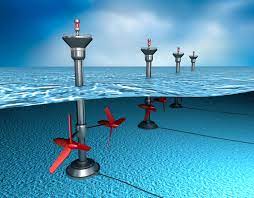
Currently, there are three methods of generating power from these tides: tidal streams, barrages, and lagoons. The most commonly used is a tidal stream as it consists of a fast-flowing body of water formed from tides. Turbines are used to generate electricity from these fast-flowing tides. A turbine is a device that uses energy from a fluid that has the potential energy to convert it to kinetic energy.
Recently, the world’s most powerful tidal turbine has commenced grid-connected power generation at the European Marine Energy Centre in Orkney, an archipelago that’s situated in the northern regions of Scotland. Called O2, and developed by Orbital Marine Power, the massive 680 metric ton turbine is anchored in a body of water dubbed ‘the Fall of Warness’ that’s connected to a subsea cable that links it back to a local electricity network on the ground.
The 74-meter-long turbine includes two fully integrated power trains attached on two wing-like legs. The twin-bladed rotors, each possessing a diameter of 21 meters are the largest ever on a single generating platform, driven by the tidal current to date. These retractable legs are designed to raise the nacelles, pitch hubs, and blades out of the water for making maintenance and repairs easy.
The construction of this turbine began in 2019 and is based on the company’s previous generation of large tidal turbines dubbed the SR2000. The whole rig is built from steel using fabrication methods that emphasize reducing costs and futureproofing of the turbine for mass production.
The massive power generator is expected to be functional for the coming 15 years and would be capable of powering over 2,000 UK homes every year.
 Eduindex
You must be logged in to post a comment.