PARLIAMENT QUESTION: Increase in Tiger Population

The tiger population has increased as per the All India Tiger Estimation done in 2022, with an estimated number of 3682 (range 3167-3925) as compared to the 2018 estimation of 2967 (range 2603-3346) and 2014 estimation of 2226 (range 1945-2491).  The tiger population is increasing at a rate of 6% per annum in India when consistently sampled areas are compared.  The details of tiger estimation pertaining to tiger landscapes in the country, for the years 2006, 2010, 2014, 2018 and 2022 is at Annexure-I.

The Government of India, through the National Tiger Conservation Authority, has advocated a three pronged strategy to manage human-wildlife negative interactions as follows:-

(i)         Material and logistical support: Funding support through the ongoing Centrally Sponsored Scheme of Project Tiger, is provided to tiger reserves for acquiring capacity in terms of infrastructure and material, to deal with tigers dispersing out of source areas. These are solicited by tiger reserves through an Annual Plan of Operation (APO) every year which stems out from an overarching Tiger Conservation Plan (TCP), mandated under Section 38 V of the Wildlife (Protection) Act, 1972. Inter alia, activities such as payment of ex-gratia and compensation, periodic awareness campaigns to sensitize, guide and advise the general populace on man-animal conflict, dissemination of information through various forms of media, procurement of immobilization equipment, drugs, training and capacity building of forest staff to deal with conflict events are generally solicited.

(ii)        Restricting habitat interventions: Based on the carrying capacity of tigers in a tiger reserve, habitat interventions are restricted through an overarching TCP. In case tiger numbers are at carrying capacity levels, it is advised that habitat interventions should be limited so that there is no excessive spill over of wildlife including tigers thereby minimizing man-animal conflict. Further, in buffer areas around tiger reserves, habitat interventions are restricted such that they are sub-optimal vis-à-vis the core/critical tiger habitat areas, judicious enough to facilitate dispersal to other rich habitat areas only.

(iii)       Standard Operating Procedure (SOPs): The National Tiger Conservation Authority has issued following three SOPs to deal with human-animal conflict, which are available in public domain:

i. To deal with emergency arising due to straying of tigers in human dominated landscapes

ii. To deal with tiger depredation on livestock

iii. For active management towards rehabilitation of tigers from source areas at the landscape level.

The three SOPs inter alia include the issue of managing dispersing tigers, managing livestock kills so as to reduce conflict as well as relocating tigers from source areas to areas where density of tiger is low, so that conflict in rich source areas does not occur.

Also as per Tiger Conservation Plans need based and site-specific management interventions are undertaken by the tiger reserves for improving the quality of wildlife habitat and funding support for these activities is provided under the Project Tiger Component of the ongoing Centrally Sponsored Scheme of Integrated Development of Wildlife Habitats.

As reported by States, the details of tigers lost due to confirmed unnatural causes (poaching, seizures and unnatural not poaching) during last three years and current year are at Annexure-II.

Annexure-I

Details of tiger estimation pertaining to tiger landscapes in the country, for the years 2006, 2010, 2014, 2018 and 2022 (As per All India Tiger Estimation Reports)

 StateTiger Population 
20062010201420182022
Shivalik-Gangetic Plain Landscape Complex
Uttarakhand178227340442560
Uttar Pradesh109118117173205
Bihar108283154
Shivalik Gangetic297353485646819
Central Indian Landscape Complex and Eastern Ghats Landscape Complex
Andhra Pradesh9572684863
Telangana2621
Chhattisgarh2626461917
Madhya Pradesh300257308526785
Maharashtra103169190312444
Odisha4532282820
Rajasthan3236456988
Jharkhand10351
Central India60160168810331439
Western Ghats Landscape Complex
Karnataka290300406524563
Kerala4671136190213
Tamil Nadu76163229264306
Goa535
Western Ghats4125347769811087
North Eastern Hills and Brahmaputra Flood Plains
Assam70143167190229
Arunachal Pradesh1428299
Mizoram65300
Nagaland00
Northern West Bengal10302
North East Hills, and Brahmaputra100148201219236
Sunderbans707688101
TOTAL14111706222629673682

Annexure-II

Details of tiger lost due to confirmed unnatural causes (poaching, seizures and unnatural not poaching) during last three years and current, State-wise

State2021202220232024(as on 20.11.2024)
PSUNPPSUNPPSUNPPSUNP
Andhra Pradesh121
Arunachal Pradesh
Assam23
Bihar111
Chhattisgarh2
Delhi
Goa
Gujarat
Haryana
Jharkhand
Karnataka13
Kerala311
Madhya Pradesh31511531
Maharashtra522213
Nagaland
Odisha1
Rajasthan
Tamil Nadu1121
Telangana
Uttar Pradesh12
Uttarakhand1111
West Bengal
Total8111122111249100

P – Poaching

S – Seizure

UNP – Unnatural not poaching
Wildlife crimes rise by 100% in a year in Kerala

KOCHI: Wildlife-related crimes have increased dramatically in the state and there has been a 100% rise in the number of cases registered in 2020 compared to the previous year.

According to data obtained under the Right to Information (RTI) Act, the state registered 303 cases in 2020 as against 151 in 2019 and 61 in 2018. As many as 156 cases were recorded in the state in 2021 till August 26 this year.


Most cases pertained to poaching of endangered animals and reptiles, hunting for meat and illegal trading and possession of horns, tusks, nails, and teeth. Removing tusks or nails and collecting meat from animals that died naturally is also an offence. More than 80% of the total cases registered each year are in connection with poaching of wild animals other than wild boars that cause extensive damage to standing crops.

Besides wild boars, sambar deer, spotted deer, porcupines, monitor lizards, pythons, civets and turtles are among those that fall prey to poaching. Occasionally, elephants, leopard, tigers and wild gaurs are also hunted down, say the data.


“Since movements were restricted during the Covid period, people living adjacent to forests got more opportunities to engage in poaching. Poachers have also improved their intelligence gathering. The presence of wild animals also increased in the fringe areas, leading to the rise in poaching incidents,” said a member of a flying squad of the forest department.


People also lay electric wires to electrocute the animals, besides using poisoning too.
Besides killing the animals, depriving them of food is also an offence, as the data show. Among the registered cases, two are in connection with freeing chickens from the mouth of a python forcefully.

Tiger conservation: Strides and hurdles

On International Tiger Day( July 29), Prime Minister Narendra Modi reaffirmed that the government is committed to ensuring safe habitats for tigers and nurturing tiger- friendly ecosystems in India, home to over 70% of the world’s tiger population.

Photo by Waldemar Brandt on Pexels.com

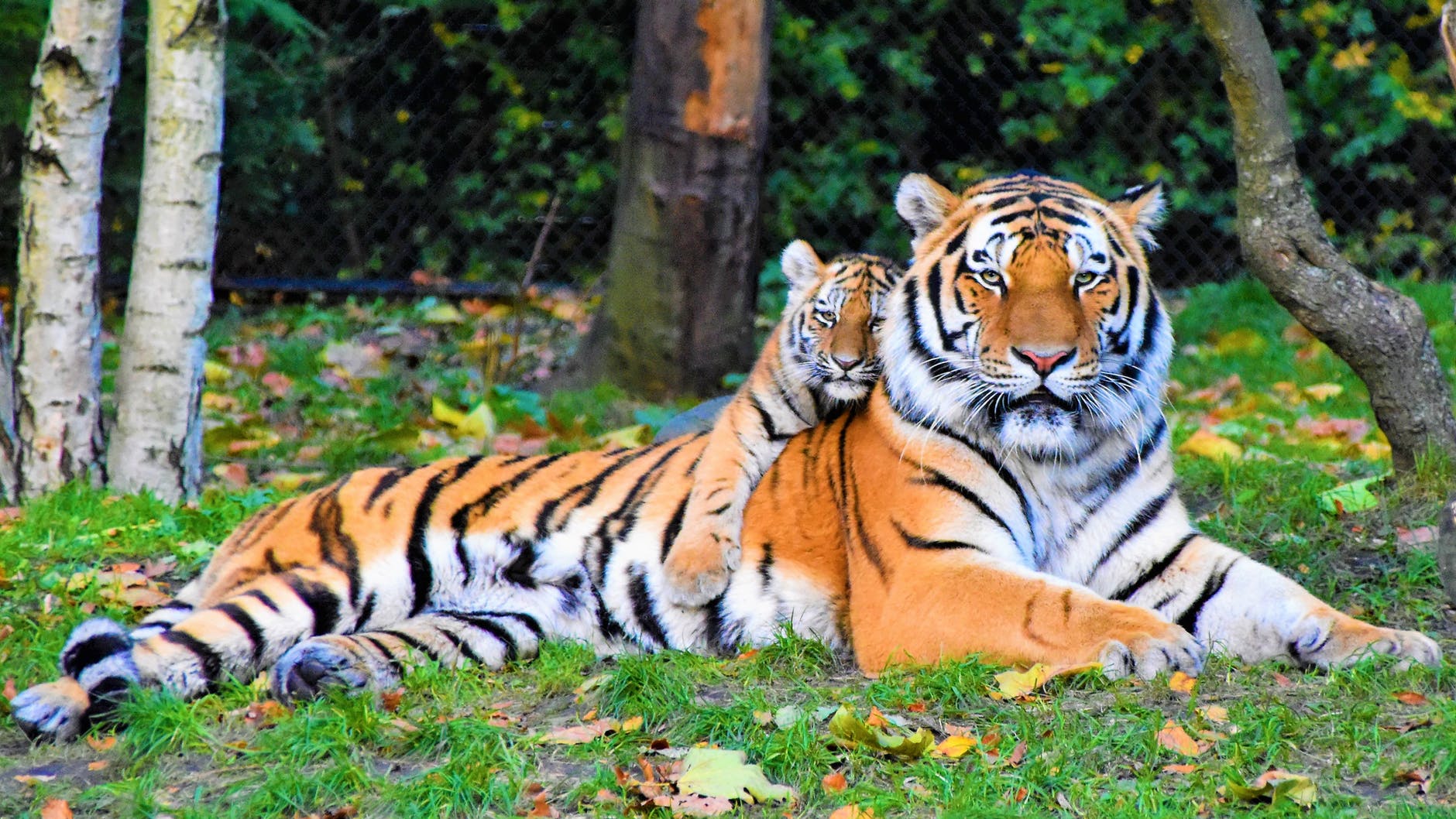
The last tiger census (2018) pegged the big cat’s population at 2967, marking an increase of about 30% compared to the 2014 report ( 2226). In 2010, India had 1706 tigers, while in 2006 it was 1411. India’s tiger conservation journey started in 1973 with Project Tiger with nine reserves; today, it has 50 tiger reserves in 18 states.

The steady growth in the number of tigers and reserves happened because of state support; vigilance and conservation efforts by the forest department, especially its frontline staff; and the involvement of local communities that help secure forests and participate in ecotourism activities in many of the popular and revenue – generating tiger reserves.

While increased protection has encouraged tigers to breed, it has also led to migration from the safety of reserves. Once they leave the park, big cats encounter a different world.

The Management Effectiveness Evaluation of Tiger Reserves 2018 report shows that at least half of the 50 tiger reserves are facing threats from linear infrastructure ( roads, highways, and railway lines), fragmented forest corridors, poaching, pressure of human – wildlife conflict, mining, improper garbage disposal, and pollution.

About 20% of the reserves have unsustainable pressure from pilgrims visiting temples inside them.

India has made progress, but must remain acutely conscious of the need for the need for the tiger conservation.

Tiger Shroff does another dance cover of a K-pop song

K-pop as usual is loved by a lot of people all around the world and recently there are many Indian celebrities that have come out about their love for k pop. All if these one is Tiger Shroff. Previously when most popular k-pop group BTS released their first full English song it was loved by fans all over the world and also sat up some new records. The band also got nominated for Grammys for dynamite.

Tiger Shroff did a dance cover to the song and it was appreciated by many fans of BTS.

And once again Tiger Shroff has done a dance cover of “Mmmh” BY kAI of the popular boy band EXO. The song was released a month ago and was a big hit.

where many fans are appreciatibng the fact that K pop is getting the recognisation it deserve there are some of the fans who are accusing the actor to grab attention by coverng the songs all of sudden. Acoording to them as Kpop is getting popular worldwide people are just getting around it for clout.

So, WHAT DO YOU THINK OF THIS. DON’T FORGET TO TELL YOUR THOUGHTS IN THE COMMENTS ABOUT DO YOU THIN THAT TIGER SHROFF IS DOING JUST CAUSE HE LIKES TO DO OR TO GRAB THE CLOUT ONLY??

Wonders of Western Ghats

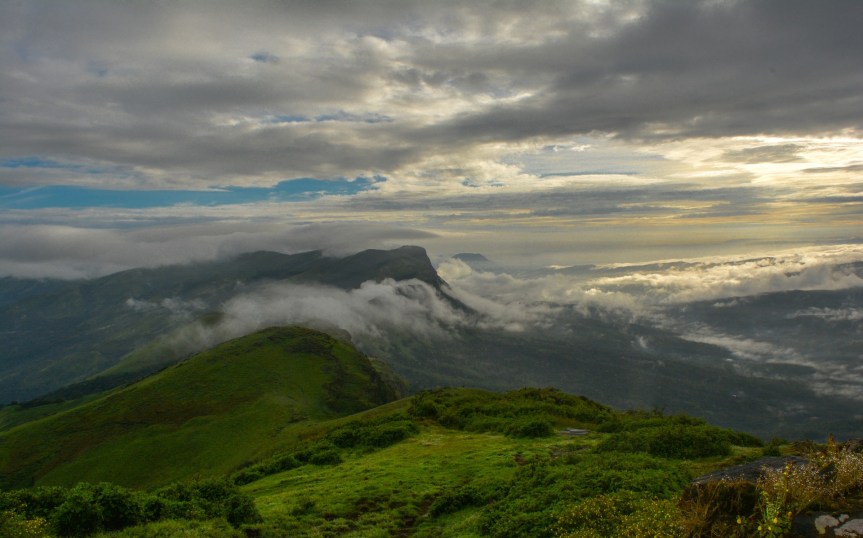
Western Ghats, mountain range which is older than the Himalayas, is present parallel to the western coast of Indian peninsula covering 160,000 square km area in a stretch of 1600km. Western Ghats travel through the states of Karnataka, Goa, Tamil Nadu, Kerala, Maharashtra, and Gujarat. UNESCO identifies it as a World Heritage site and it is one of the hotspots of biological diversity in the world. The mountain influences the country’s monsoon. Western Ghats has a rich biodiversity. There are so many species of flora and fauna endemic to the place and make it rich.

Western Ghats has over 7,402 flowering plants species, 1,814 non-flowering plant species, 139 species of mammals, 179 amphibian species, 6,000 insect species and 290 freshwater fish species. There are at least 325 globally threatened species present.

SOME OF THE WONDER SPECIES OF WESTERN GHATS
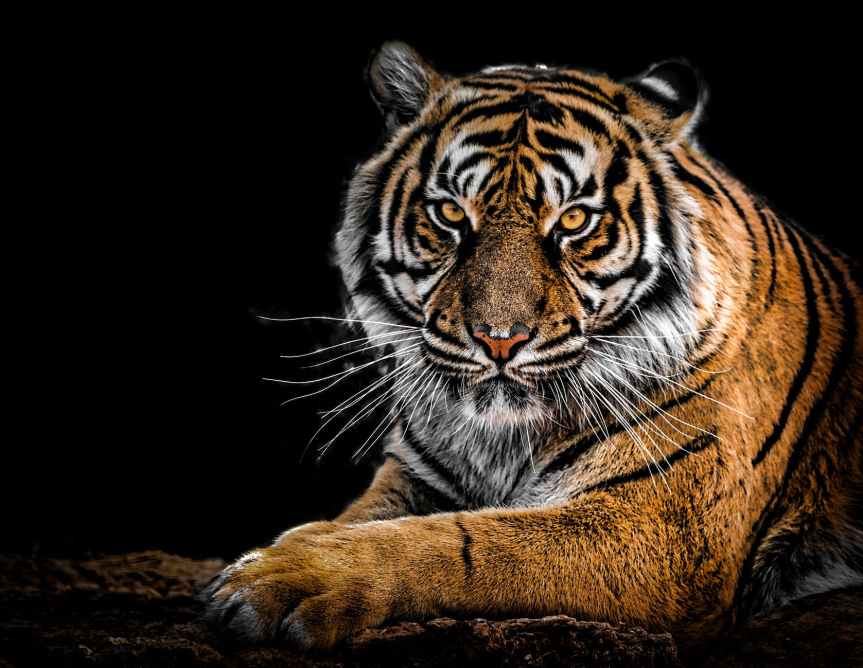
  1. BENGAL TIGERS: Bengal tigers are known for their beauty and power. they are native to Indian subcontinent. These predators are present in western Ghats also. Western Ghats are home to 10% of the tiger population. they live in the tiger reserve. Ranthambor national park has 585 tigers.
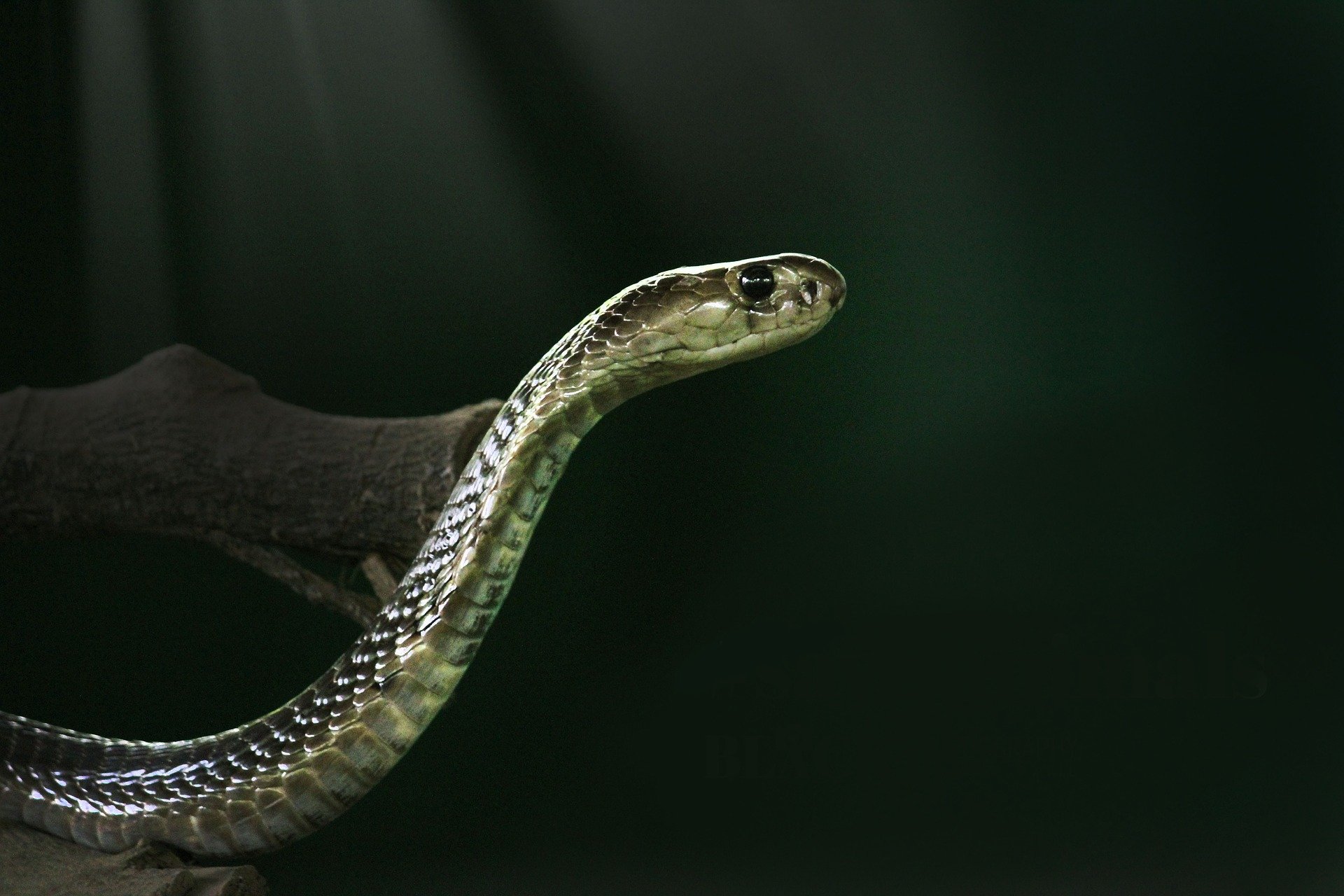
  2. KING COBRA: This is the worlds largest venomous snake. This lives in rainforests and scrubs and grasslands of western Ghats. Adult king cobras are 3.18-4m long and weigh between 11 and 20lbs. Male snakes are little longer than females. They are snake eaters and also eat lizards rats etc. This is the only snake that builds nest for its eggs. Their behavior include aggressiveness and shy nature. It has enough venom to kill an elephant.
  3. INDIAN WILD DOG: It is one of the most dangerous wild animal of Western Ghats. They are classified as endangered and the main reason is habitat destruction. They are also called as Dhole. They can be seen in jungle roads, river beds etc. It has large round ears and hooded eyes. It is a highly social and co-operative animal.
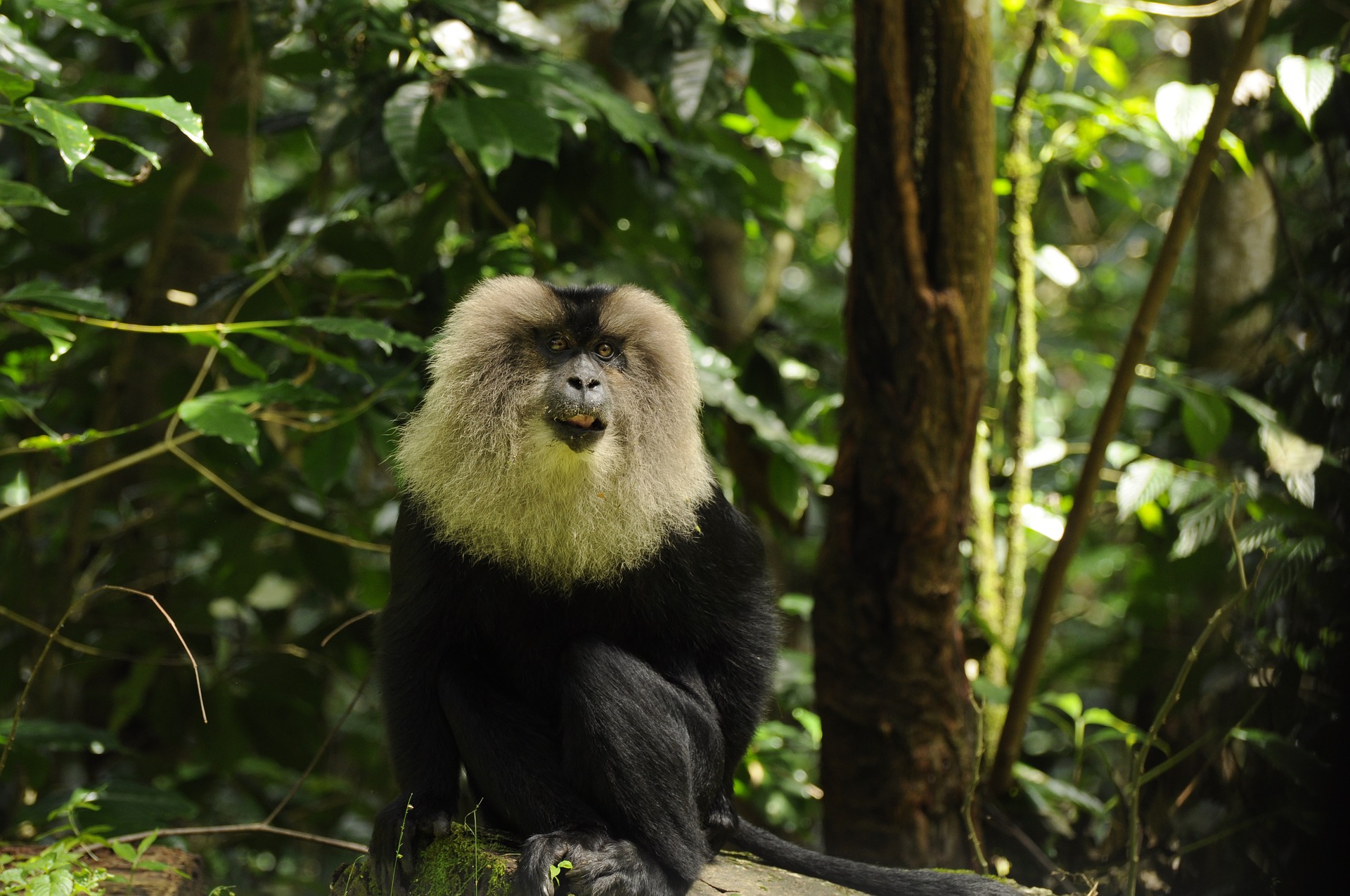
  4. LION TAILED MACAQUE: This animal is endemic to Western Ghats and it is one of the endangered species. their population is below 4000. They are an old world monkey. This magnificent animal is the proof for the wonderful biodiversity of the western Ghats. These are omnivores but fruits are the major part of their diet. These get a part of their required moisture by licking the leaves.
  5. INDIAN GIANT SQUIRRAL: They are also called Malabar giant squirrel. Bhima Shankar wildlife sanctuary has a noticeable population. They mostly live on trees. They build their spherical nest with leaves and twigs. they have a long bushy tail. They are mostly seen solitary or sometimes in pair. They feed on nuts, fruits and bird eggs.
  6. PURPLE FROG: It is also an endangered species because of habitat loss. this species is formally described recently in 2003. They have a bloated body, short hind legs and sucker like mouthparts. Local people consume tadpoles of this frog. These frogs are found in damp soil which is well aerated and loose. Only 135 individuals are identified in which only 3 are females.
  7. MALBAR GREY HORNBILL: This is also endemic to Western Ghats. They have large beak. They are found in dense forest and are mostly fungivores. They are mostly 45cm in length and weigh 240-340g.

51st @tiger reserve

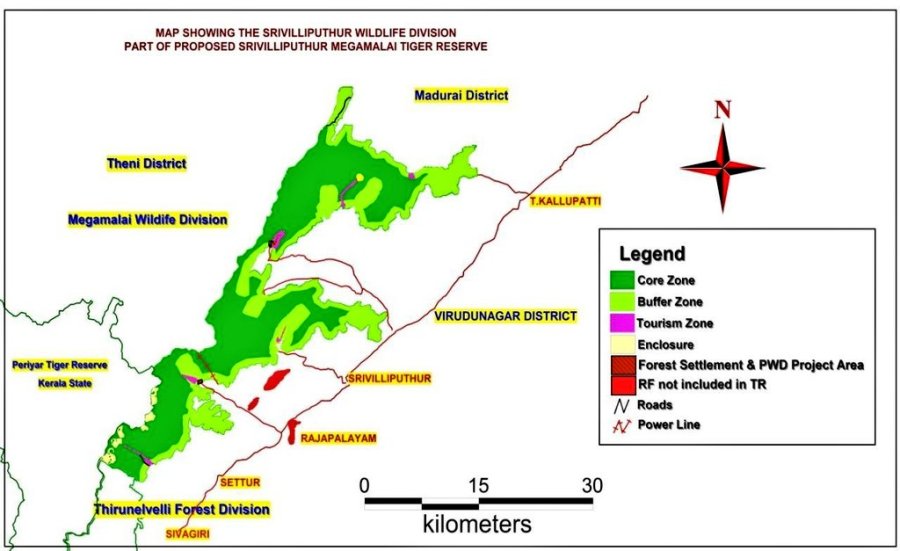
Indian government recently approved a new tiger reserve .Srivilliputhur Megamalai Tiger Reserve in Tamil Nadu is the latest addition. It’s 51st tiger reserve in the country & 5th in the state of Tamil Nadu. The 50th tiger reserve was Kamlang , which was the first & only tiger reserve of Arunachal Pradesh, & was approved 6 years ago.

The land encompassing the Meghamalai Wildlife Sanctuary (spread across the districts of Theni and Madurai) and Srivilliputhur Grizzled Squirrel Wildlife Sanctuary, which adjoins Kerala’s Periyar Tiger Reserve and Tirunelveli’s Kalakkad Mundanthurai Tiger Reserve is declared as the 51st tiger reserve of the country.

This land is habitat of 63 mammal species & 323 bird species.

Meghamalai Wildlife Sanctuary hosts ungulates (hoofed mammals), spotted deers, Indian gaurs, wild boars and other carnivores.Srivilliputhur on the other hand,  is habitat of grizzled giant squirrels, flying squirrels, leopards, Nilgiri tahrs, jungle cats, Sambars, elephants and many species of birds, including the lion-tailed macaque.

This new tiger reserve is spread over 1,016,57 sq km (core area – 641.86 sq km, buffer area – 374.70 sq km) with the potential to provide much needed habitat for tigers dispersing from neighbouring Periyar Tiger Reserve & Anamalai Tiger Reserve.

This new tiger reserve will act as a boost in direction of restoration of the health of forests & wildlife.

As a tiger reserve, illegal entry into the area becomes a punishable offence, with five years of imprisonment & it also gets a better team of dedicated officers , researchers & guards.

Conservationists believe that by declaring the Meghamalai Srivilliputhur Tiger reserve, there are great chances for the Vaigai River rejuvenation.

As per latest estimation , the number of tigers in India is 2,967 (range 2,603 to 3,346). And the largest tiger reserve of the country is Nagarjunsagar Srisailam Tiger Reserve which covers 5 districts of the states of Andhra Pradesh & Telangana.