8 Movies Based On Time Travel To Stream Right Now

When we talk about “Time Travel” movies, the 1985’s classic Back to the future has its place reserved at the top. And with good reason—considered one of the best films ever made, this sci-fi flick paved the way for several other time travel films that followed. Also, the classic Bill & Ted’s Excellent Adventure has reserved a place in our hearts forever. But there are countless other great time travel flicks that deserve our attention too. So, here is a list of 10 movies based on Time Travel that you should add on to your watch list right now.

1. The Terminator and Terminator 2: Judgement Day

The Terminator (1984) - Trailer (HD) - YouTube

Terminator 1 and 2 are really quite different movies. In the first sequel, Arnie—the terminator starring Arnold Schwarzenegger, acts as the bad guy. He’s sent back in time by a machine overlord to kill a woman who will give birth to a child that will lead the human resistance to victory. It’s a dark and weird story; a classic action film made on a stringent budget. The second, in contrast, is a big-budget, featuring perhaps the greatest special effects in movie history relative to their time. Here, Arnie, now a blockbuster star, demanded to play the good guy: He’s still a robot, but he’s defending the key kid from the icy, and more advanced, T-1000 robot.

2. Donnie Darko

Donnie Darko: Director Richard Kelly explains the cult classic's appeal,  Jake Gyllenhall, and the new 4k theatrical release — Quartz

You’ll probably never look at rabbits as some cute animal after you see this. The cult classic follows a troubled, sleepwalking teenager who barely escapes a jet engine crashing into his room. But after the accident, he has several visions of a creepy, black, giant rabbit; Frank, who claims to be from the future and reveals that the world will end soon.

3. Looper

Looper • Movie Review • Movie Fail

Looper marked Johnson’s first swoop into the sci-fi genre, and he did so with vigor, offers a twisty time-travel story rooted in character foremost. The film takes the presupposition of, “What would you do if you went back in time and met your younger self?” and spins it on its head, adding in terrifically tense action sequences and heady moral quandaries for good measure.

4. Interstellar

Interstellar Review | Movie - Empire

The thrilling scenes and thought-provoking plot will blow to be fair. This one feels more like a sci-fi space movie, but it has some time travel elements too. Set in the year 2067, where humanity is struggling to survive, Interstellar tells the story of a group of volunteers who travel through a wormhole near Saturn, hoping to find a safer world in a distant galaxy. The star-studded cast includes Matthew McConaughey, Anne Hathaway, Jessica Chastain and Matt Damon.

5. Groundhog Day

Groundhog Day Movies - The New York Times

This classic starring Star Bill Murray and directed by Harold Ramis has our hearts. Philosophical along with comedy and humour is always a win-win. Murray reportedly wanted the film to be more philosophical, while Ramis was always pushing the comedy. But it’s the push-and-pull between these two ideas that makes Groundhog Day a stone-cold classic. It’s hilarious, featuring some of Murray’s best comedic moments, but it’s also profoundly sad. The film doesn’t disregard the inherent loneliness of the premise—being stuck in the same day repeatedly.

6. 12 Monkeys

12 Monkeys (1995) | MUBI

Nearly four decades after a deadly virus gets released, destroying nearly all of humankind, James Cole (Bruce Willis), a criminal from the future, is chosen to travel back in time and help scientists create a cure. The movie also stars Madeleine Stowe, Brad Pitt and Christopher Plummer.

7. Primer
Primer (2004) | MUBI

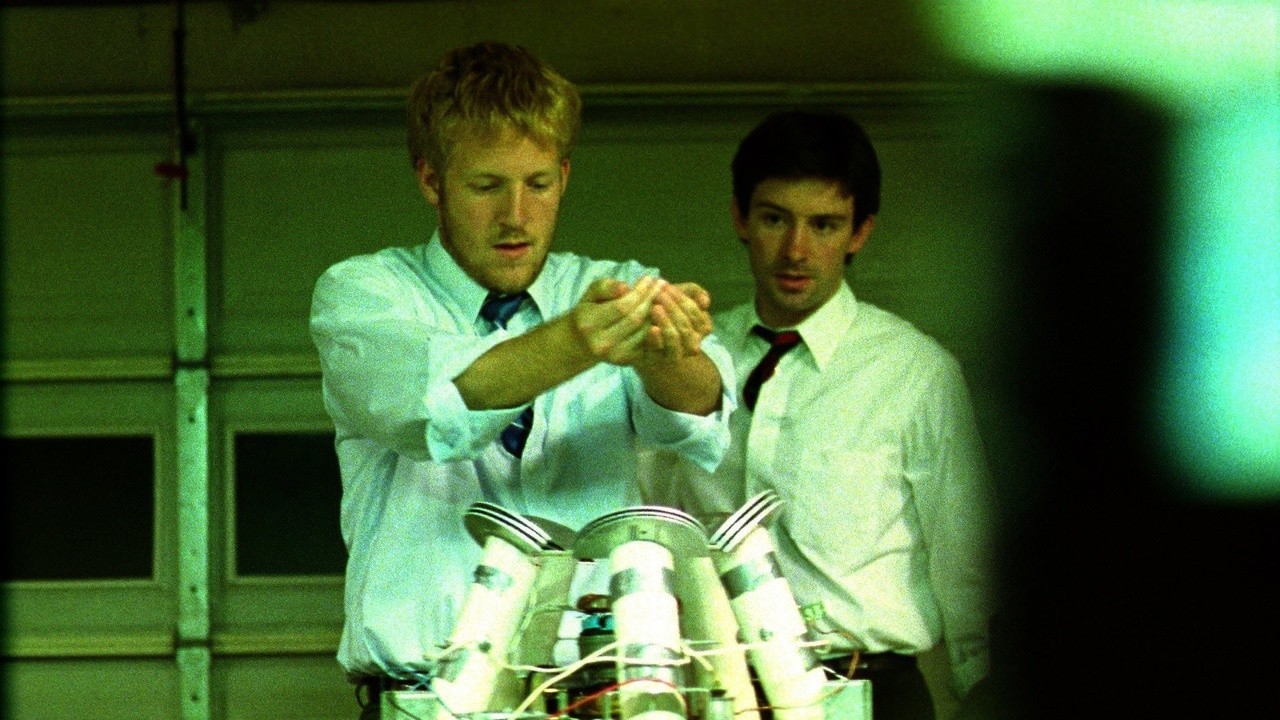
Although this film was made on a small budget (just $7,000), Primer is one of the smartest and most thought-provoking time travel films you’ll ever see. Two engineers, Aaron (Shane Carruth) and Abe (David Sullivan), accidentally invent a time machine, causing them to experiment with a technology that allows humans to time travel. However, it’s only a matter of time before they realize the consequences of their actions.

8. About Time

About Time' Review: Richard Curtis' Charming Time-Travel Romance - Variety

About Time is certainly the most emotional entry on this list. The time-travel genre offers the opportunity to wax philosophical about death and regret, and About Time seizes it uniquely by focusing on a very earnest relationship between a father and a son. The romantic comedy portion between Domhnall Gleeson and Rachel McAdams is the hook, but the relationship between time-traveling father and son Gleeson and Bill Nighy is this film’s tear-jerking heart.
TIME TRAVEL: THE ART OF PLAYING WITH TIME

Time travel is the concept of movement between certain points in time, analogous to movement between different points in space by an object or a person, typically with the use of a hypothetical device known as a time machine. Time travel is a widely recognized concept in philosophy and fiction, particularly science fiction. According to scientists time travel can be possible in recent years due to certain theories based on famous scientists.

Time travel.

HISTORY OF TIME TRAVEL

Some ancient myths depict a character skipping forward in time. In Hindu Mythology a king named kakudmi traveled to Time to meet Brahma and he was surprised when he saw time has passed when he returned to earth. The concept of universal time sphere was shown in the stories ages ago. In Jewish tradition, the 1st-century BC scholar Honi ha-M’agel is said to have fallen asleep and slept for seventy years. When waking up he returned home but found none of the people he knew, and no one believed his claims of who he was.

Time travel used to be thought of as just science fiction, but Einstein's general theory of relativity allows for the possibility that we could warp space-time so much that you could go off in a rocket and return before you set out.
Stephen Hawking

SCIENCE FICTION IN TIME TRAVEL

Christmas Carol by Charles Dickens has early depictions of mystical time travel in both directions, as the protagonist, Ebenezer Scrooge, is transported to Christmases past and future. Other stories employ the same template, where a character naturally goes to sleep, and upon waking up finds themself in a different time. A clearer example of backward time travel is found in the popular 1861 book Paris avant les hommes (Paris before Men) by the French botanist and geologist Pierre Boitard, published posthumously.

TIME TRAVEL IN PHYSICS

Some theories, most notably special and general relativity, suggest that suitable geometries of spacetime or specific types of motion in space might allow time travel into the past and future if these geometries or motions were possible. Many in the scientific community believe that backward time travel is highly unlikely. Any theory that would allow time travel would introduce potential problems of causality. The classic example of a problem involving causality is the “grandfather paradox“: what if one were to go back in time and kill one’s own grandfather before one’s father was conceived? Some physicists, such as Novikov and Deutsch, suggested that these sorts of temporal paradoxes can be avoided through the Novikov self-consistency principle or a variation of the many-worlds interpretation with interacting worlds.

The art of time

GENERAL RELATIVITY

Time travel to the past is theoretically possible in certain general relativity spacetime geometries that permit traveling faster than the speed of light, such as cosmic strings, traversable wormholes, and Alcubierre drives.:33–130 The theory of general relativity does suggest a scientific basis for the possibility of backward time travel in certain unusual scenarios, although arguments from semiclassical gravity suggest that when quantum effects are incorporated into general relativity, these loopholes may be closed.These semiclassical arguments led Stephen Hawking to formulate the chronology protection conjecture, suggesting that the fundamental laws of nature prevent time travel,but physicists cannot come to a definite judgment on the issue without a theory of quantum gravity to join quantum mechanics and general relativity into a completely unified theory

QUANTUM PHYSICS

THEORIES OF QUANTAM PHYSICS IN TIME TRAVEL

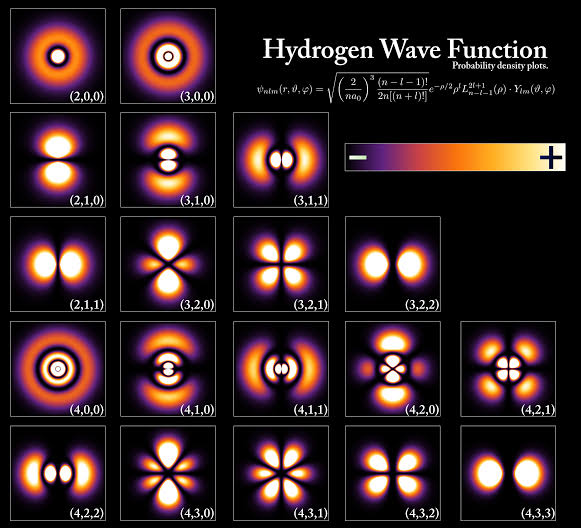
Coming up with a quantum version of time travel requires physicists to figure out the time evolution equations for density states in the presence of closed timelike curves (CTC). Two main routes has been taken in the application of self consistency in Quantam Physics.

LLOYD’s PRESCRIPTION

Based on path Integral and post selection Seth Lloyds proposed a new Alternative. In particular, the path integral is over single-valued fields, leading to self-consistent histories. He assumed it is ill-defined to speak of the actual density state of the CTC itself, and we should only focus upon the density state outside the CTC. His proposal for the time evolution of the external density state

“People like us, who believe in physics, know that the distinction between past, present and future is only a stubbornly persistent illusion.” – Albert Einstein.

WORMHOLE-That helps you to teleport

Wormhole theory

Wormholes were first theorized in 1916, though that wasn’t what they were called at the time. While reviewing another physicist’s solution to the equations in Albert Einstein’s theory of general relativity, Austrian physicist Ludwig Flamm realized another solution was possible. He described a “white hole,” a theoretical time reversal of a black hole. Entrances to both black and white holes could be connected by a space-time conduit.

In 1935, Einstein and physicist Nathan Rosen used the theory of general relativity to elaborate on the idea, proposing the existence of “bridges” through space-time. These bridges connect two different points in space-time, theoretically creating a shortcut that could reduce travel time and distance. The shortcuts came to be called Einstein-Rosen bridges, or wormholes.

“The whole thing is very hypothetical at this point,” said Stephen Hsu, a professor of theoretical physics at the University of Oregon, told our sister site, LiveScience. “No one thinks we’re going to find a wormhole anytime soon.”

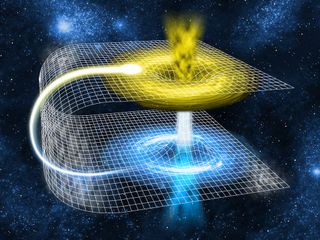
Wormholes contain two mouths, with a throat connecting the two. The mouths would most likely be spheroidal. The throat might be a straight stretch, but it could also wind around, taking a longer path than a more conventional route might require.

Einstein’s theory of general relativity mathematically predicts the existence of wormholes, but none have been discovered to date. A negative mass wormhole might be spotted by the way its gravity affects light that passes by.

Certain solutions of general relativity allow for the existence of wormholes where the mouth of each is a black hole. However, a naturally occurring black hole, formed by the collapse of a dying star, does not by itself create a wormhole.

Wormhole

Through the wormhole

Science fiction is filled with tales of traveling through wormholes. But the reality of such travel is more complicated, and not just because we’ve yet to spot one.

The first problem is size. Primordial wormholes are predicted to exist on microscopic levels, about 10–33 centimeters. However, as the universe expands, it is possible that some may have been stretched to larger sizes.

Another problem comes from stability. The predicted Einstein-Rosen wormholes would be useless for travel because they collapse quickly. 

“You would need some very exotic type of matter in order to stabilize a wormhole,” said Hsu, “and it’s not clear whether such matter exists in the universe.”

But more recent research found that a wormhole containing “exotic” matter could stay open and unchanging for longer periods of time.

Exotic matter, which should not be confused with dark matter or antimatter, contains negative energy density and a large negative pressure. Such matter has only been seen in the behavior of certain vacuum states as part of quantum field theory.

If a wormhole contained sufficient exotic matter, whether naturally occurring or artificially added, it could theoretically be used as a method of sending information or travelers through space. Unfortunately, human journeys through the space tunnels may be challenging.

“The jury is not in, so we just don’t know,” physicist Kip Thorne, one of the world’s leading authorities on relativity, black holes and wormholes, told Space.com. “But there are very strong indications that wormholes that a human could travel through are forbidden by the laws of physics. That’s sad, that’s unfortunate, but that’s the direction in which things are pointing.”

Wormholes may not only connect two separate regions within the universe, they could also connect two different universes. Similarly, some scientists have conjectured that if one mouth of a wormhole is moved in a specific manner, it could allow for time travel

“You can go into the future or into the past using traversable wormholes,” astrophysicist Eric Davis told LiveScience. But it won’t be easy: “It would take a Herculean effort to turn a wormhole into a time machine. It’s going to be tough enough to pull off a wormhole.”

However, British cosmologist Stephen Hawking has argued that such use is not possible. [Weird Science: Wormholes Make the Best Time Machines]

“A wormhole is not really a means of going back in time, it’s a short cut, so that something that was far away is much closer,” NASA’s Eric Christian wrote.

Although adding exotic matter to a wormhole might stabilize it to the point that human passengers could travel safely through it, there is still the possibility that the addition of “regular” matter would be sufficient to destabilize the portal.

Today’s technology is insufficient to enlarge or stabilize wormholes, even if they could be found. However, scientists continue to explore the concept as a method of space travel with the hope that technology will eventually be able to utilize them.

“You would need some of super-super-advanced technology,” Hsu said. “Humans won’t be doing this any time in the near future.”

Additional resources:

15 Mind Blowing Paradoxes

A paradox is a logically self-contradictory statement or a statement that runs contrary to one’s expectation. It is a statement that, despite apparently valid reasoning from true premises, leads to a seemingly self-contradictory or a logically unacceptable conclusion. A paradox usually involves contradictory-yet-interrelated elements that exist simultaneously and persist over time.

  1. Bentley’s paradox: In a Newtonian universe, gravitation should pull all matter into a single point.
  2. Boltzmann brain: If the universe we observe resulted from a random thermodynamic fluctuation, it would be vastly more likely to be a simple one than the complex one we observe. The simplest case would be just a brain floating in vacuum, having the thoughts and sensations you have.
  3. Fermi paradox: If there are, as various arguments suggest, many other sentient species in the Universe, then where are they? Shouldn’t their presence be obvious?
  4. Pinocchio paradox: What would happen if Pinocchio said “My nose grows now”? If Pinocchio were to say “I am getting sick,” this could be either true or false, but Pinocchio’s sentence “My nose grows now” can be neither true nor false; hence this and only this sentence creates the Pinocchio (liar) paradox.
  5. Heat death paradox: If the universe were infinitely old, it would be in thermodynamic equilibrium, which contradicts what we observe.
  6. Olbers’ paradox: Why is the night sky dark if there is an infinity of stars, covering every part of the celestial sphere?
  7. Bootstrap paradox (also ontological paradox): You send information/an object to your past self, but you only have that information/object because in the past, you received it from your future self. This means the information/object was never created, yet still exists.
  8. Predestination paradox: A man travels back in time to discover the cause of a famous fire. While in the building where the fire started, he accidentally knocks over a kerosene lantern and causes a fire, the same fire that would inspire him, years later, to travel back in time. The bootstrap paradox is closely tied to this, in which, as a result of time travel, information or objects appear to have no beginning.
  9. Schrödinger’s cat paradox: This is a well known paradox. According to the Copenhagen interpretation of quantum mechanics, a cat could be simultaneously alive and dead, as long as it remains unobserved.
  10. Black hole information paradox: Black holes violate a commonly assumed tenet of science that information cannot be destroyed.
  11. Temporal paradox: What happens when a time traveler does things in the past that prevent them from doing them in the first place? 
  12. Grandfather paradox: If one travels back in time and kills their grandfather before he conceives one of their parents, which precludes their own conception and, therefore, they couldn’t go back in time and kill their grandfather. Don’t even think about trying this.
  13. Polchinski’s paradox: A billiard ball can be thrown into a wormhole in such a way that it would emerge in the past and knock its incoming past self away from the wormhole entrance, creating a variant of the grandfather paradox.
  14. Hitler’s murder paradox: One can travel back in time and murder Adolf Hitler before he can instigate World War II and the Holocaust; but if he had never instigated that, then the murder removes any reason for the travel.
  15. Twin paradox: The theory of relativity predicts that a person making a round trip will return younger than his or her identical twin who stayed at home.

Paradoxes are very interesting in their own way which sometimes lead to new ideas and many a time confusion. I hope you found these paradoxes very mind-blowing. Share this with your friends and enjoy the look on their faces!

https://en.wikipedia.org/wiki/List_of_paradoxes
https://en.wikipedia.org/wiki/Paradox

TACHYON A PARTICLE THAT HELPS US TO TIME TRAVEL…

Tachyonhypothetical subatomic particle whose velocity always exceeds that of light. The existence of the tachyon, though not experimentally established, appears consistent with the theory of relativity, which was originally thought to apply only to particles traveling at or less than the speed of light. Just as an ordinary particle such as an electron can exist only at speeds less than that of light, so a tachyon could exist only at speeds above that of light, at which point its mass would be real and positive. Upon losing energy, a tachyon would accelerate; the faster it traveled, the less energy it would have.

The name ‘tachyon’ (from the Greek ‘tachys,’ meaning swift) was coined by the late Gerald Feinberg of Columbia University. Tachyons have never been found in experiments as real particles traveling through the vacuum, but we predict theoretically that tachyon-like objects exist as faster-than-light ‘quasiparticles’ moving through laser-like media. (That is, they exist as particle-like excitations, similar to other quasiparticles called phonons and polaritons that are found in solids. ‘Laser-like media’ is a technical term referring to those media that have inverted atomic populations, the conditions prevailing inside a laser.)

an experiment at Berkeley to detect tachyon-like quasiparticles. There are strong scientific reasons to believe that such quasiparticles really exist, because Maxwell’s equations, when coupled to inverted atomic media, lead inexorably to tachyon-like solutions.

“Quantum optical effects can produce a different kind of ‘faster than light’ effect (see “Faster than light?” by R. Y. Chiao, P. G. Kwiat, and A. M. Steinberg in Scientific American, August 1993). There are actually two different kinds of ‘faster-than-light’ effects that we have found in quantum optics experiments. (The tachyon-like quasiparticle in inverted media described above is yet a third kind of faster-than-light effect.)

“First, we have discovered that photons which tunnel through a quantum barrier can apparently travel faster than light (see “Measurement of the Single-Photon Tunneling Time” by A. M. Steinberg, P. G. Kwiat, and R. Y. Chiao, Physical Review Letters, Vol. 71, page 708; 1993). Because of the uncertainty principle, the photon has a small but very real chance of appearing suddenly on the far side of the barrier, through a quantum effect (the ‘tunnel effect’) which would seem impossible according to classical physics. The tunnel effect is so fast that it seems to occur faster than light.

“Second, we have found an effect related to the famous Einstein-Podolsky-Rosen phenomenon, in which two distantly separated photons can apparently influence one anothers’ behaviors at two distantly separated detectors (see “High-Visibility Interference in a Bell-Inequality Experiment for Energy and Time,” by P. G. Kwiat, A. M. Steinberg, and R. Y. Chiao, Physical Review A, Vol. 47, page R2472; 1993). This effect was first predicted theoretically by Prof. J. D. Franson of Johns Hopkins University. We have found experimentally that twin photons emitted from a common source (a down-conversion crystal) behave in a correlated fashion when they arrive at two distant interferometers. This phenomenon can be described as a ‘faster-than-light influence’ of one photon upon its twin. Because of the intrinsic randomness of quantum phenomena, however, one cannot control whether a given photon tunnels or not, nor can one control whether a given photon is transmitted or not at the final beam splitter. Hence it is impossible to send true signals in faster-than-light communications.

Pin on The Laws of Relativity

Nainital – The lake city of india

Enveloped in a thick foil of nature, accentuated by the scent of the flowering blossoms blending miraculously in the crisp fresh air, Nainital is truly the treasure trove of Kumaon. It is among the most visited hill stations of North India since British period.

perched at an elevation of 2,084 metres above sea level, the glittering city of Nainital is hailed for being a parent to the ravishing Naini Lake from which it has earned the epithet of being the lake city. The Nainital town not only lures the domestic travellers and tourists but also a number of foreign tourists. It shines as a glittering jewel in the Himalayan Mountains and is surrounded with lakes and nature’s bounty.

Rock Climbing and Rappelling

A 4 kilometre drive from Nainital takes you to the rock climbing area of Bara Pathar. Quite obviously named after the twelve huge rocks in this area, Bara Pathar attracts a decent number of climbers and trekkers. The climb on natural rock is fairly tough and requires a lot more resilience than a normal wall at an activity centre. With an experienced instructor to guide you through every step, making safety is the top priority, rock climbing at Bara Panther is compelling and exhilarating.

Ropeway to Snow View point

One of Nainital’s prominent factors of allure, the cable car is an opportunity not to be forsaken. It provides an irreplaceable offer of catching a bird’s eye view of the breath-taking Naini Lake and the entire Nainital hill station. A treat for the senses, relax as you glide across the air over such pristine landscapes.

Picnic by the Waterfall

Pull up a bit of rock and grass as you settle down for a rejuvenating lunch amidst the cascading waters of the waterfalls in Mukteshwar. Complete with the open valley views and unmatched serenity, this will come as a welcome break from the unending buzz which is the chaotic city life.

Planetarium Visit

Drop in for a spot of the stargazing at the Aryabhata Research Institute of Observational Sciences for an otherworldly experience. Lose yourself in the stars and beyond as you delve deep into the majestic unknown of the universe and its underlying mysteries.

Sunset at Hanuman Garhi Temple

A famous temple in the honour of Lord Hanuman, who is a much celebrated image of unwavering devotion himself, being one of the greatest worshippers of Lord Ram. Perched at an altitude of 6400ft above sea level, the whole case of divinity is multiplied by the sun making its gorgeous descent beyond the mountains silhouetting the statue of Hanuman, its palm open in blessing.

Best time to visit Nainital

March to June is the popular tourist season when the weather is perfect for outdoor activities and quite pleasant. If you’re the type to lace up your adventure boots, this is the time to visit here with paragliding, trekking, camping and rafting all up for grabs.

July to September sees heavy rainfall and quite a drop in visitors. On the up side the rains make the hills more luxuriant and if you’re the kind who prefers dripping weather and lonesome hikes, this time has your name all over it.

October to February gets chilly and January brings in snowfall too.

Although Nainital is a year-round destination, the activities open to you may vary based on when you visit. So, plan accordingly.

Things to carry

Pack as light as possible given the amount of road travel involved here.

• Cotton clothing for summer and a light jacket would work for when evenings get cooler. If you’re un[travel]ling in winter, warmer clothes complete with thick socks and warmer jackets. Carry your windcheater and umbrella if you’re here in the monsoons as well.

• Sturdy walking shoes, mandatory if you’re hiking, make sense given the amount of walking involved here.

• Sunscreen, especially if you’re going up to the higher reaches. Usual prescription medications.

• Mobile and tablet electronic chargers.

Best places to stay

• Manu Maharani, Nainital

• The Naini Retreat, Nainital

• Shervani Hilltop, Nainital

IS TIME TRAVEL POSSIBLE?- Yes and No.

Avengers endgame, back to the future, and so many amazing sci-fi movies are based on time travel. Apparently, everyone loves them, but have you ever wondered if it could happen in real life? Most people would say no and answer that it is just some fantasy. However, physicists would say differently. 

See the source image

There is something called ‘time dilation’ in relativity according to which time can slow down or move faster depending upon velocity(special relativistic time dilation) or gravity(gravitational time dilation). 

Special relativistic time dilation

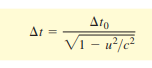
First, let’s talk about special relativistic time dilation. According to Einstein’s special theory of relativity, time in a moving frame appears to run slower. You may have heard this famous spaceship example. If you travel in a spaceship with speed closer to that of light, and return after 10 years of travel, on earth about 30 years would have passed! Talking in scientific terms, in a particular frame of reference, suppose that two events occur at the same point in space. The time interval between these events, as measured by an observer at rest in this same frame (which we call the rest frame of this observer), is  Δt0 . Then an observer in a second frame moving with constant speed relative to the rest frame will measure the time interval to be Δt where- 


The denominator is always smaller than 1( u<c), so  Δt   is always larger than  Δt0    .Thus we call this effect time dilation(time getting elongated).

Now, let’s come to the other type of time dilation- gravitational. Gravitational time dilation is a form of time dilation, where the difference in elapsed time is due to the gravitational potential. The lower the gravitational potential (the closer the clock is to the source of gravitation), the slower time passes, speeding up as the gravitational potential increases (the clock getting away from the source of gravitation). Albert Einstein originally predicted this effect in his general theory of relativity and it has since been confirmed by tests of general relativity. For example, imagine that you are approaching a black hole which has gravity due to its mass(the gravitational potential is decreasing as you are moving towards the source of gravity). If your friends observe your clock, it would be seen as running slower and slower as you move ahead. Since the gravity is so strong, for them it would appear that you are moving towards the event horizon forever!  In simple terms, the closer you are to some strong source of gravity, the slower time passes for you. 

Earlier, in our spaceship example, the spaceship is moving at very high velocity, and when it returns back, there is a 20 year gap. We can say that the spaceship traveled 20 years back in time. I get it, not quite fulfilling your expectations.

You see, time travelling has consequences. To further limit the possibility of time travel, we have Einstein’s equation- E=mc2 . To travel at high speeds we need a lot of energy to be synthesized within a fraction of a second, which is not possible currently. 

Conclusion

So, time travel is ‘possible’, we just haven’t figured it out yet. Don’t let down your childhood fantasies . Remember that once mobile phones were a fantasy but now they are a reality. I am sure that the future won’t let us down. 

https://en.wikipedia.org/wiki/Time_dilation
http://www.exactlywhatistime.com/physics-of-time/relativistic-time/#:~:text=In%20relativity%2C%20time%20is%20certainly%20an%20integral%20part,must%20be%20flexible%20and%20relative%20to%20accommodate%20this.