Top ten Book on Social Change

can recommend ten influential books on social change that have been widely recognized for their impact and insight.

  1. “The Power of Habit: Why We Do What We Do in Life and Business” by Charles Duhigg

    • This book explores the science behind habits and how they can be transformed to bring about personal and social change.
  2. “The Tipping Point: How Little Things Can Make a Big Difference” by Malcolm Gladwell

    • Gladwell explores the concept of the tipping point, examining how small actions can lead to significant societal changes.
  3. “Evicted: Poverty and Profit in the American City” by Matthew Desmond

    • This Pulitzer Prize-winning book sheds light on the impact of eviction on poverty in American cities, offering insights into social and economic challenges.
  4. “The New Jim Crow: Mass Incarceration in the Age of Colorblindness” by Michelle Alexander

    • Michelle Alexander critically examines the U.S. criminal justice system, highlighting its impact on racial inequality and advocating for social change.
  5. “Silent Spring” by Rachel Carson

    • Although originally published in 1962, this groundbreaking book by Rachel Carson played a crucial role in sparking the environmental movement by addressing the dangers of pesticides.
  6. “Nickel and Dimed: On (Not) Getting By in America” by Barbara Ehrenreich

    • Barbara Ehrenreich’s immersive journalism explores the challenges faced by low-wage workers in America, shedding light on economic inequality.
  7. “Pedagogy of the Oppressed” by Paulo Freire

    • A classic work in education and social change, Freire’s book explores transformative education and the liberation of oppressed individuals.
  8. “The Sixth Extinction: An Unnatural History” by Elizabeth Kolbert

    • Kolbert investigates the ongoing biodiversity crisis, examining the impact of human activities on the planet and advocating for environmental awareness.
  9. “Half the Sky: Turning Oppression into Opportunity for Women Worldwide” by Nicholas D. Kristof and Sheryl WuDunn

    • This book explores the challenges faced by women worldwide and offers solutions for empowering women as a means of creating positive social change.
  10. “The Audacity of Hope: Thoughts on Reclaiming the American Dream” by Barack Obama

    • Written by the 44th President of the United States, this book reflects on the themes of unity, social justice, and the potential for positive change in America.

These books cover a range of social issues, and reading several of them can provide a comprehensive understanding of different aspects of social change. Always check for more recent publications and reviews to find the most up-to-date and relevant works.

Book Review – Rich Dad Poor Dad

Book Review: Rich Dad Poor Dad

<span style="--tw-border-spacing-x: 0;--tw-border-spacing-y: 0;--tw-ring-color: rgba(69,89,164,.5);--tw-ring-offset-color: #fff;--tw-ring-offset-shadow: 0 0 transparent;--tw-ring-offset-width: 0px;--tw-ring-shadow: 0 0 transparent;--tw-rotate: 0;--tw-scale-x: 1;--tw-scale-y: 1;--tw-scroll-snap-strictness: proximity;--tw-shadow-colored: 0 0 transparent;--tw-shadow: 0 0 transparent;--tw-skew-x: 0;--tw-skew-y: 0;--tw-translate-x: 0;--tw-translate-y: 0;border: 0px solid rgb(217, 217, 227);color: var(--tw-prose-bold);font-weight: 600">Author: Robert T. Kiyosaki</span>


Rating: ⭐⭐⭐⭐⭐ (out of 5 stars)

Introduction:
“Rich Dad Poor Dad” by Robert T. Kiyosaki is a groundbreaking personal finance classic that challenges conventional wisdom about money and investing. With a narrative framed around the author’s upbringing with two father figures, Kiyosaki shares invaluable lessons that have the potential to transform the reader’s mindset about wealth and financial success.

Summary:
The book revolves around the dichotomy of “Rich Dad” and “Poor Dad,” representing two contrasting approaches to money. Kiyosaki contrasts the traditional, job-focused mindset (Poor Dad) with the entrepreneurial, wealth-building mindset (Rich Dad). Through anecdotes and practical advice, Kiyosaki introduces fundamental concepts such as assets, liabilities, and the importance of financial education.

Strengths:
Kiyosaki’s straightforward and engaging writing style makes complex financial concepts accessible to readers of all backgrounds. The book challenges the conventional path of education and employment, encouraging readers to think critically about their financial decisions. The emphasis on financial education as a key determinant of success is empowering, and the book serves as a wake-up call for those seeking financial independence.

Weaknesses:
While the book provides valuable insights, some critics argue that Kiyosaki oversimplifies certain aspects of wealth creation and may not offer a one-size-fits-all solution. Additionally, the narrative style, while compelling, may not resonate with everyone, as personal anecdotes and allegories are used extensively.

Characterization:
The characters of Rich Dad and Poor Dad serve as powerful symbols, representing contrasting approaches to money and life. The characterization is effective in conveying the author’s key messages and principles.

Writing Style:
Kiyosaki’s writing is clear, concise, and accessible. He combines personal anecdotes with financial principles, making the book engaging and relatable. The conversational tone helps demystify financial concepts and keeps the reader invested in the narrative.

Themes:
The primary themes revolve around financial education, the importance of assets over liabilities, and the mindset required for wealth creation. Kiyosaki challenges societal norms and encourages readers to break free from the traditional employment mindset.

Conclusion:
“Rich Dad Poor Dad” is a must-read for anyone seeking financial literacy and independence. It goes beyond mere financial advice and serves as a catalyst for a paradigm shift in how readers approach money. While not without its critics, the book’s impact on countless individuals worldwide is a testament to its enduring relevance and influence on the way we perceive and manage wealth. Highly recommended for those ready to challenge their financial beliefs and embark on a path toward financial freedom.

Book Review: Atomic Habits

 THE PHENOMENAL INTERNATIONAL BESTSELLER: OVER 1O MILLION COPIES SOLD WORLDWIDE


Transform your life with tiny changes in behaviour, starting now.

People think that when you want to change your life, you need to think big. But world-renowned habits expert James Clear has discovered another way. He knows that real change comes from the compound effect of hundreds of small decisions: doing two push-ups a day, waking up five minutes early, or holding a single short phone call.

He calls them atomic habits.

In this ground-breaking book, Clears reveals exactly how these minuscule changes can grow into such life-altering outcomes. He uncovers a handful of simple life hacks (the forgotten art of Habit Stacking, the unexpected power of the Two Minute Rule, or the trick to entering the Goldilocks Zone), and delves into cutting-edge psychology and neuroscience to explain why they matter. Along the way, he tells inspiring stories of Olympic gold medalists, leading CEOs, and distinguished scientists who have used the science of tiny habits to stay productive, motivated, and happy.

These small changes will have a revolutionary effect on your career, your relationships, and your life.
________________________________
NEW YORK TIMES AND SUNDAY TIMES BESTSELLER

‘A supremely practical and useful book.’ Mark Manson, author of The Subtle Art of Not Giving A F*ck

‘James Clear has spent years honing the art and studying the science of habits. This engaging, hands-on book is the guide you need to break bad routines and make good ones.’ Adam Grant, author of Originals

Atomic Habits is a step-by-step manual for changing routines.‘ Books of the Month, Financial Times

‘A special book that will change how you approach your day and live your life.’ Ryan Holiday, author of The Obstacle is the Way


  • Publisher ‏ : ‎ Random House Business (30 October 2018)
  • Language ‏ : ‎ English
  • Paperback ‏ : ‎ 320 pages
  • ISBN-10 ‏ : ‎ 1847941834
  • ISBN-13 ‏ : ‎ 978-1847941831
  • Reading age ‏ : ‎ Customer suggested age: 13 years and up
  • Item Weight ‏ : ‎ 390 g
  • Dimensions ‏ : ‎ 15.3 x 2.4 x 23.4 cm
  • Country of Origin ‏ : ‎ United Kingdom

Book Review 

1. Don’t set Goals : Writer kehte he ki goal set karne ki bajay ek system pe focus karna chaiye
Goals set krna achi bat he lekin us goal ko achieve karne k liye system ko behtar banana padega jo hame us goal tak pahuchayega.
Agar British Cycling team ki bat kare to gold medal jeetna to unka goal shuru re raha tha, lekin Dave ne jab system ko better banaya, to goal apne ap achieve ho gaya.
Maan lijiye apka room bikhra pada he. Ap ek goal set krte ho ki mujhe room clean karna hee to ek bar room clean ho jayega, lekin agar ap apni chijo ko sahi jagah rkhne ki adat bana lo to apka kamra kabhi bikhra milegha hi nai.

2 – Change your Identity :
Apni buri adato ko change krne ke liye hame adto ko chang karne s pehle apne aap ko change karna ki jrurt hoti he .
Hamari adte hamari identity ko follow krti he .
Example k liye –
Man lijiye ek insan cigarette chodne ki koshish krta he . Is douran jab use koi cigarette offer karta he to vo ye kahta he “ nahi yar, me cigg chodne ki kosis kar raha hu’
Usnea bhi tak apni identity nahi badli. Vo apne ap ko abhi bhi smoker manta he.
Lekin, agar vo ye kahe ki “ nahi yar, me cigg nahi pita” is se vo apni identity change kar leta he. Ab vo apne ap ko non smokere consider karta he . This new identity motivates that person to stick with it.

3 – Change your Environment –
Hamare sath akshar esa hota h ki ham kitchen me jate to paani pine k liye, lekin hamari nazar chips k packet pe padti he or ham use khane lagte he .
Hairani ki baat ye he ki hame na to bhookh lagi thi or na hi chips khane ki ichha hui thi.
Malls vale yahi technique use krte he, mehange or profitable products racks me upar or ankho ki range me rakhi jate he jo customer ko easily notice ho jate he .
And chances are that customers in products ko jrurt na hote hue bhi kharid lete he.
Isi technique se ham bhi kisi bhi habit ko abopt kar skte he ya kisi bad habit ko chord bhi skte he.
Fruits jyada khanee h ? to fruit basket ko vaha rkho jaha ap apna din ka sabs jyada time spnd krte ho. Jab fruits apki ankho k samne rahnge to ap automatically unhe consume krne lag jaoge.
Padhai krt krte distract hote h to padhai k liy alag room, ya room me alag table ko study zone bana do. Yani padhai bed pe nhi usi enviorment m kroge, to apka mind kam distract hoga qki usko pata h k aap study zone m ho.

4. Don’t run for the best: Ek choti si interesting si story share krta hu. Florida University ke ek professor ne apne photography students ko 2 groups me divide kiya. Pehle group ko yeh challenge diya ki unko pure semester jyada se jyada photos submit karne he , 100 photos submit krne vale ko A grade, 90 vale ko B.
Or dusre group ko challenge diya to submit only 1 photo but that has to be the perfect one. Jiska photo sabse perfect hoga usko A grade, or us se kam vale ko B grade milega.

Interesting.
At the end of the semester saare best photos surprisingly first group se aye.
Aap bhi soch rahe honge k esa kese hua, dusra group jisne pura semester ek photo ko perfect krne me lagaya unke photos best rank me q nahi aye ?

Because jaha dusra group ek hi photo ko perfect banana me laga raha, pehle group ne jab bahot sare photos click kiye to isi ke sath unki skills bhi enhance hoti rahi. Vo har photo me experiment karte rahe or apni hi mistakes se sikhte rahe.

Agar apko business krna he ya startup krna he or best idea ya best opportunity k liye ruke he to ap kabhi start hi nahi kar paynege,
Jo bhi idea he jesi bhi opportunity he uspe jab mehnat ki jayegi to vo hi best ban jayega.

Top Ten Books to Read on Indian History

Here are ten books that cover different aspects of Indian history and are widely regarded as essential reading:

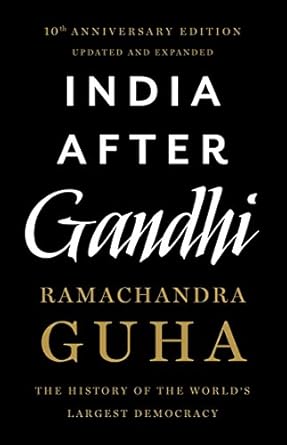
India After Gandhi: The History of the World’s Largest Democracy by Ramachandra Guha – A comprehensive account of India’s political, social, and economic history from 1947 to the present day.

The Wonder That Was India by A.L. Basham – A classic study of India’s cultural and intellectual history, covering topics such as religion, philosophy, literature, and art.
A History of Ancient and Early Medieval India by Upinder Singh – A detailed and accessible survey of India’s history from the Indus Valley Civilization to the rise of the Delhi Sultanate.
The Discovery of India by Jawaharlal Nehru – A philosophical and reflective exploration of India’s history, culture, and identity by India’s first Prime Minister.
The Great Partition: The Making of India and Pakistan by Yasmin Khan – A vivid and detailed account of the partition of India in 1947 and its aftermath.
The Last Mughal: The Fall of a Dynasty, Delhi, 1857 by William Dalrymple – A gripping account of the Indian Rebellion of 1857 and its impact on the Mughal Empire.
The Argumentative Indian by Amartya Sen – A collection of essays that explore the intellectual and cultural traditions of India, from ancient times to the present day.
India’s Struggle for Independence by Bipan Chandra et al. – A comprehensive and detailed account of India’s freedom struggle, covering the period from the early 19th century to 1947.
The Story of Indian Business: The East India Company by Tirthankar Roy – A detailed and engaging account of the East India Company and its role in shaping India’s economic history.
The Idea of India by Sunil Khilnani – A thought-provoking exploration of the idea of India and the various forces that have shaped its history and culture.
These books cover a wide range of topics and periods in Indian history, and offer different perspectives and approaches to understanding India’s past and present.

Top 10 Books to Read

Here are ten books across various genres that are widely considered as classics and are definitely worth reading:
To Kill a Mockingbird by Harper Lee – A Pulitzer Prize-winning novel that explores themes of race, justice, and morality in the Deep South of the United States.
1984 by George Orwell – A dystopian novel that portrays a totalitarian future society, where individualism and freedom are suppressed.
Pride and Prejudice by Jane Austen – A classic romance novel that explores social class, gender roles, and the importance of marrying for love.
Pride & Prejudice (2005 film) - Wikipedia
Crime and Punishment by Fyodor Dostoevsky – A psychological thriller that delves into the mind of a murderer and his inner struggles with morality and guilt.
The Catcher in the Rye by J.D. Salinger – A coming-of-age novel that explores teenage angst, alienation, and the search for meaning in life.
One Hundred Years of Solitude by Gabriel Garcia Marquez – A magical realist novel that follows the multi-generational saga of the Buendía family in a fictional South American town.
The Great Gatsby by F. Scott Fitzgerald – A novel that explores the excesses and decadence of the wealthy elite in the 1920s, set against the backdrop of the American Dream.
The Diary of a Young Girl by Anne Frank – A memoir that chronicles the life of a young Jewish girl during the Nazi occupation of the Netherlands, and her experiences in hiding.
The Lord of the Rings by J.R.R. Tolkien – A classic fantasy trilogy that follows the epic journey of hobbit Frodo Baggins and his companions as they attempt to destroy the One Ring and defeat the evil Sauron.

The Alchemist by Paulo Coelho – A philosophical novel that explores themes of destiny, purpose, and the importance of following one’s dreams.
These books have all had a lasting impact on literature and continue to be widely read and celebrated by readers across the world.