
Amritsar- The Holy City

 Amritsar- The Holy City

Amritsar also called Ambarsar and historically known as Ramdaspur, is located in the Punjab state of India. It derives its name from Amrit Sarovar which was built by Guru Ram Das in the village of Tung. Guru Ram Das believed that the waters of the lake had healing powers. Amritsar is the largest and most important city in Punjab and is a major commercial, cultural, and transportation center. It is also the center of Sikhism and the site of the Sikhs’ principal place of worship—the Harmandir Sahib which is popularly known as the Golden Temple. The hospitality of Amritsar is very good and the people here are so overwhelming.
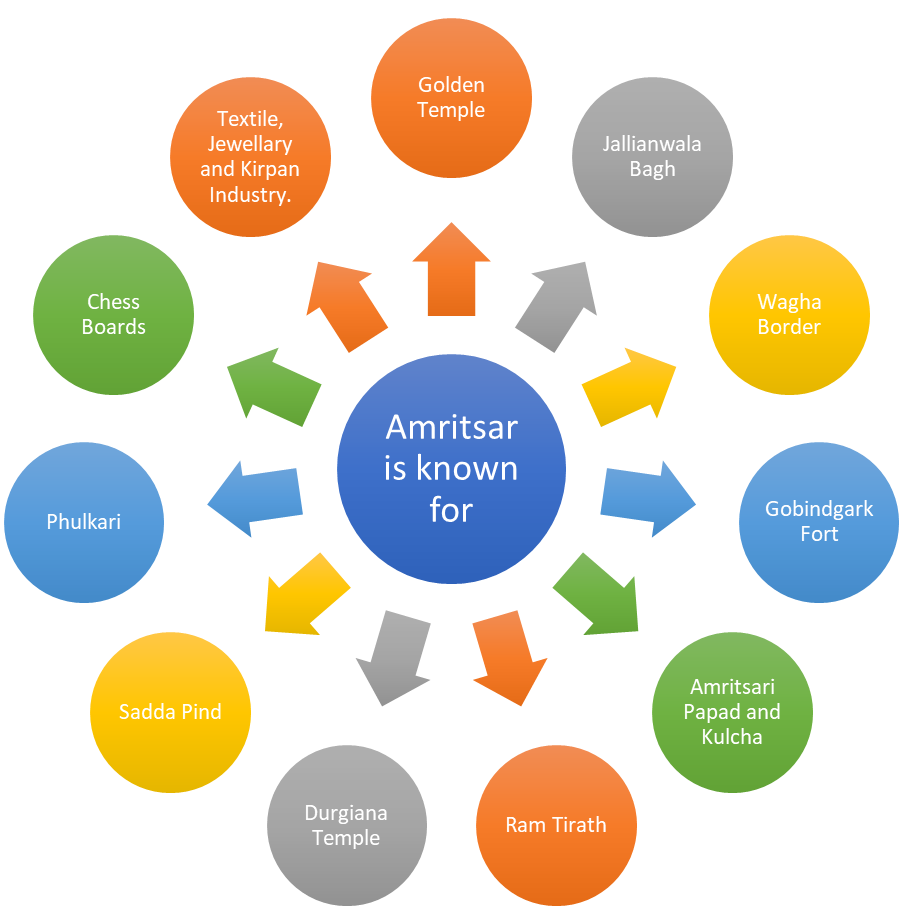
 5 most important reasons to visit Amritsar


1.    The very first reason to visit Amritsar is Golden Temple. The peace and tranquility of the temple is the main reason why travelers love visiting the temple. The langar served at the temple is yet another reason why this is a popular place to visit in Amritsar. The Architecture and ambiance of the temple will touch your heart.


2.    The second thing is the Wagah border. The Wagah Border is what divides India and Pakistan. Every evening, a ceremony called the ‘lowering of the flags’ is hosted half an hour before the sunset, and it sees a huge gathering on both sides of the border. The ceremony has been going on every day since 1959 and is worth an experience. 


3.    The third reason to visit Amritsar is Jallianwala Bagh. No Indian can forget the massacre and the tragic history of the Jallianwala Bagh during India’s struggle for freedom. The memorial is a tribute and a way to pay respect to everyone who lost their lives here. Still, you can see the signs of history here.


4.    The fourth thing is food, which is so good that you can’t stop yourself. You eat at one Dhaba, and you’ll find yourself eating at a Dhaba throughout your trip to Amritsar. Kesar Da Dhaba is one of the most popular Dhaba in the city, and you’ll be drawn to it the moment you’re anywhere near it. The smell of desi ghee and parathas will draw you to the Dhaba. It’s also one of the oldest dhabas in the city. You will find a lot of Dhabas in Amritsar and don’t forget to order a big glass of lassi while you’re at it. The chole, parathas, dal, and phirni are some of the other specialty food items you must try out.


5.    The fifth reason is locals and the market. Interacting with the locals is one of the best things to do in Amritsar. You will learn a lot about their culture, and you will leave with a bunch of friends and a wonderful experience. The people here are extremely hospitable and will become your best buddy very quickly and quite easily. Head over to Old Amritsar to experience what Amritsar is all about. You will find a lot of bazaars here and some that have been there for over a hundred years. 

 Thus, the reasons to visit Amritsar are endless. Once you visit the place you will connect with the place heartly. This place will teach you to how to enjoy your life happily and keep others happy too.


TOURISTS PLACES IN AGRA

THE OTHER NAME OF AGRA

Agra was also known as Akbarabad in the Mughal era. The name was coined by the emperor Shah Jahan, in honour of his grandfather Akbar.

 AKBARABAD 


Top Things to do in Agra!!
1.TAJ MAHAL:


One of the seven wonders of the world, Taj Mahal is located on the banks of River Yamuna in Agra. It was built by the Mughal Emperor Shah Jahan as a memorial for his third wife, Mumtaz Mahal. It also houses the tomb of Shah Jahan himself. Constructed entirely out of white marble in the 17th century, Taj Mahal is one of the most beautiful monuments in the world. Every year visitors numbering more than the entire population of Agra pass through the magnificent gates to catch a glimpse of this breathtaking monument!

2.FATEHPUR SIKRI:


Located at a distance of 40km from Agra, Fatehpur Sikri is a town in the Agra district and a famous tourist attraction. A city predominantly made of red sandstone, Fatehpur Sikri was founded in 1571 century by Mughal Emperor Akbar. It is essentially a fortified city built by the king and had been the capital of his Empire for fifteen years. Now a UNESCO world heritage site, it is home to Jodha Bai’s Palace, Jama Mosque, Buland Darwaza, and Tomb of Salim Chisti among many other famous monuments. Derived from Arab and central Asian tent encampments, the Imperial Complex is a work of pavilions arranged in formal geometry on a piece of land. 

3.JAMA MASJID AGRA:

This relatively simple mosque built almost entirely in red sandstone was built by Jahanara, the daughter of Shah Jahan. Seen in itself, this is still an imposing piece of architecture and one of the largest mosques in the country. This is still used as the main mosque in the city.

From the Taj Mahal to the Kinari Bazar, here are eight famous places in Agra that everyone should consider having on their travel itineraries.

  • Taj Mahal. Architectural Landmark, Historical Landmark. …
  • Agra Fort. Historical Landmark. …
  • Mehtab Bagh. …
  • Kinari Bazar. …
  • Tomb of Itimad-ud-Daula. …
  • Korai Village. …
  • Taj Nature Walk. …
  • Wildlife SOS.

Jaipur: The Ancient 'Pink City' of Rajasthan

     OUR PINK CITY!!😍

Jaipur – land of the Rajputs, is an exuberance of colour, dance and traditional arts and crafts. Known, as the ‘Pink City’, Jaipur is home to a wonderful selection of ancient forts and palaces. One of India’s most well planned cities, Jaipur is built in 9 rectangular sectors symbolising 9 divisions of the universe, as per Indian cosmology!


 The first planned city of India, Jaipur has a rich history of a clan of rulers who lived in magnificent forts and palaces. But, that’s not only what the capital of Rajasthan is famous for. The entire city of Jaipur is painted in the colour pink and there’s a really interesting story behind this. Here’s all you need to know about the ‘Pink Paint Culture’ of one of the most hospitable cities on the planet.

The Hawa Mahal 

The reason behind the terracotta-pink colour of the city was the influence of a king named Sawai Ram Singh. In 1876, Queen Victoria’s son, Albert Edward, Prince of Wales (who later became King Edward VII, Emperor of India) visited India and, since pink was considered the colour of hospitality at the time, Maharaja Ram Singh had the whole city painted pink to welcome the royal guests. Lord Albert was said to have described Jaipur as the ‘pink city’, hence creating the name Jaipur is known by today.