Why Mother Tongue is important?

Mother tongue is the language that a child gets to hear after birth and grows up listening to it and adapting it. Mother tongue is also called as the native language and it helps to give shape to our thoughts and beliefs. In today’s world where a child is expected to be proficient in not just one but rather two to three languages, knowing one’s mother language by heart becomes secondary. However, learning one’s mother tongue is not only important but is beneficial for the child as well. If a child wants to be well versed in any foreign language, he must be well versed in his mother tongue the first thing. Below are some of the reasons as to why one’s mother tongue is so important and hence should not be taken lightly.

1) Our Mother tongue helps us to stay grounded to our traditional culture and values. It is a means of keeping our culture alive. No matter what part of the world, one must always take pride in one’s culture and help to bring it forth to the outer world but that can only be done if one is well known with one’s mother tongue

2) If one is well versed in one’s own mother tongue, he can learn a secondary language faster. He will also be a better communicator and will have better writing and reading skills in other languages.

3) If one is aspiring to become an entrepreneur, then knowing his mother tongue will benefit him while interacting with local customers. The possibilities of making money with one’s mother tongue has also increased globally.

4) Knowing one’s mother tongue is a matter of pride and honor. It boosts our self esteem and confidence while making us connected with our cultural identity.

Dhakis of West Bengal: Where They Come From and Where They Go

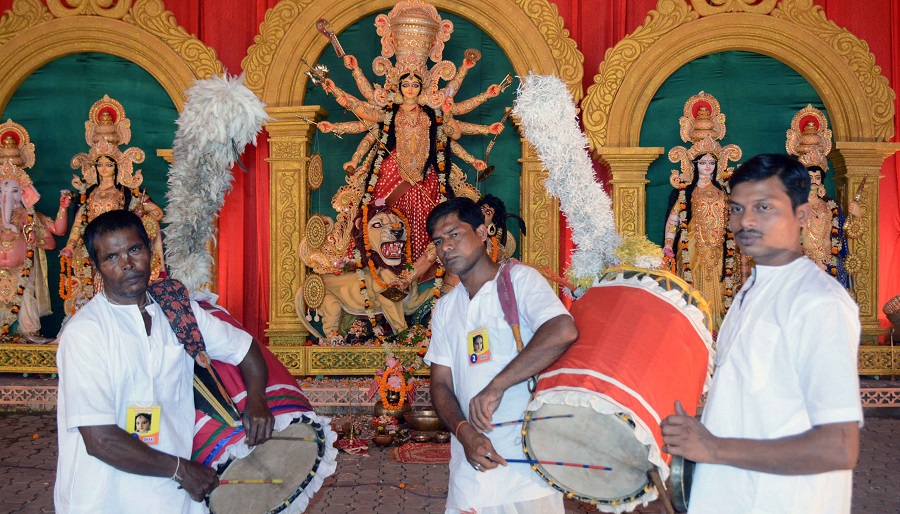
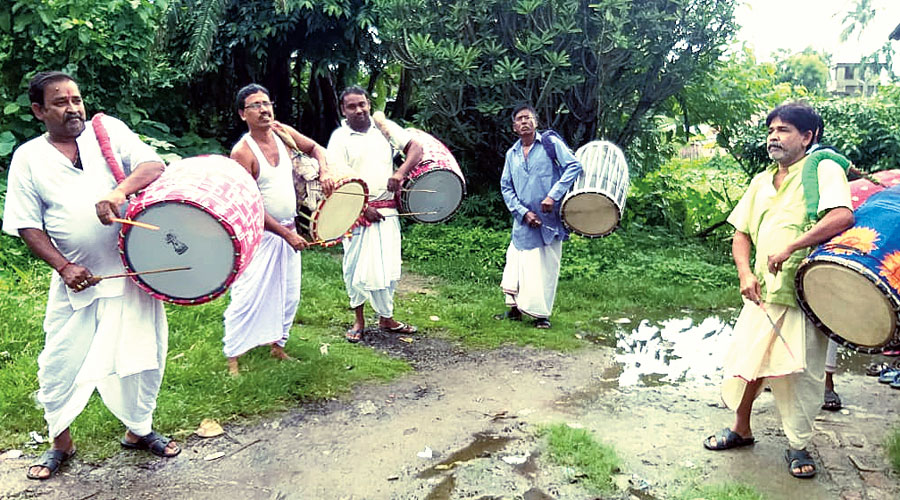
Dhakis playing dhaks in a Durga Puja pandal

Introduction

India is a country of rich cultural diversity and the essence of festivity for each Indian state is unique on its own. The main festival of the Indian state of West Bengal is Durga Puja, which is held during the auspicious Aashwin Durga Navtras in the months of September-October. During the festival the Mother Goddess is welcomed to her home on Earth with 9 long days of celebrations and joy. As a ritual of the festivity both her arrival and departure are rung by hundreds of thousands of “Dhaks” played by the professional drummers, locally called as “Dhakis”.

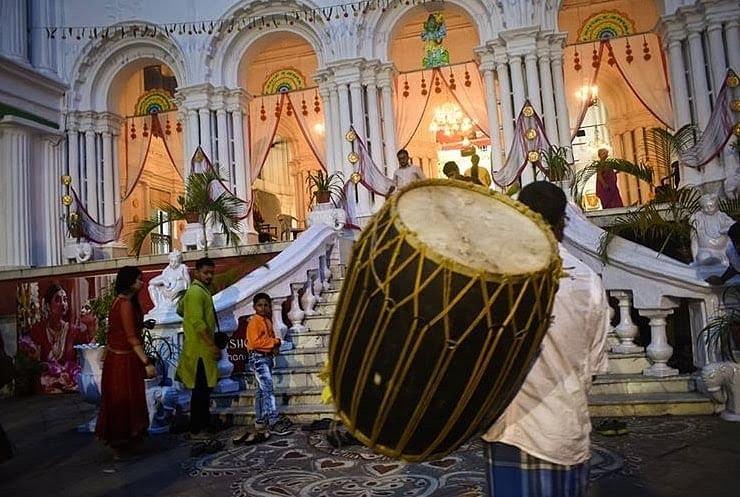
Dhak at a Puja Bari

What “Dhaks” Are: How They Are Made

The word “Dhak” comes from the Austric word “Dhaka” included in the Sanskrit language. The word later became a part of the Bengali script. The dhak is a big membranophone instrument that originally belongs to South Asia. The dhak has become an integral aspect of the widely loved Bengali festival of Durga Puja, other Bengali rituals and festivities. It would have no festive aura if not for the maddening rhythm of the dhak. The dhak is beaten with two sticks loudly to infuse the frenzied beats into the listeners. These beats are enough to raise the spirits and conjure up the feel of the Durga Puja. Without the instrument, the heavily celebrated festival would have felt sombre.

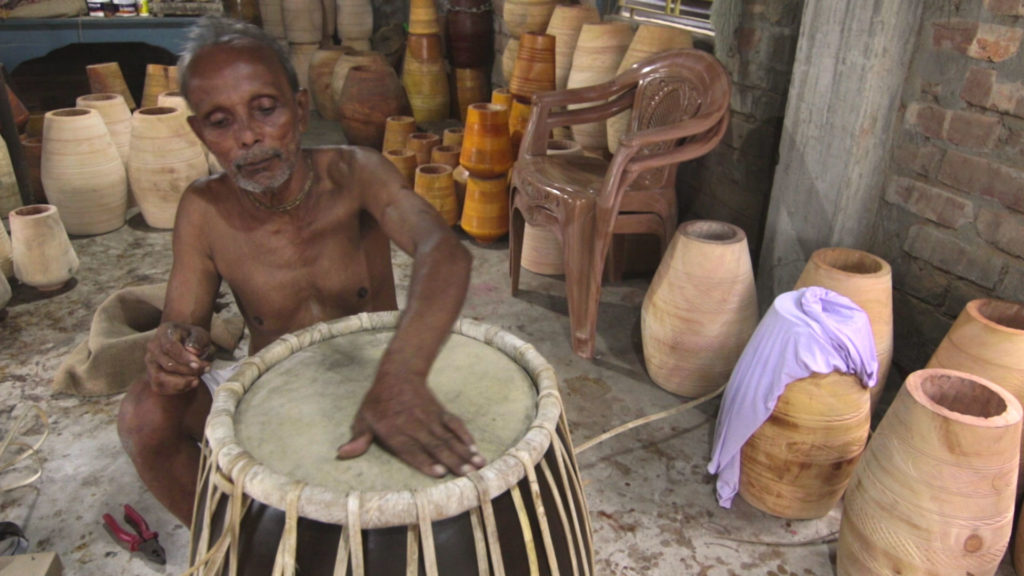
The sound of the dhak depends on a lot of factors like the shape. The shape varies from almost cylindrical to barrel-like. On one hand, the outer portion of the wood is shaved off and carved to create the barrel shaped instrument. On the other hand, the inner side of it is made to be absolutely hollow.The two ends of the dhak are wrapped up with goat skin on the top and calf skin at the bottom. It is said that using these two types of hides bring out the perfect sound texture of the dhak. The manner of stretching the skin over the mouth of the dhak and lacing it is also an important factor in the kind of sound that will be produced. The more the strings on the side of the dhak are pulled the higher the pitch of the dhak gets. The two sticks that are used to beat the dhak are carefully chiseled and formed out of thin cane or bamboo. Because of the drying session of the wooden structure and the intricate handwork and decoration, it takes around one month to reach the perfection in making the instrument.

Making of Dhaks

Who “Dhakis” Are: The Heritage follows

‘‘Dhakis’’ are integral to almost all festivities in Bengal but the art of playing the huge barrel-shaped membranophone instrument is considered as a staple of Bengal’s most celebrated Durga Puja. Most of the ‘dhakis’ or men who play the ‘dhak’ hail from humble rural backgrounds of Murshidabad, Hooghly, Malda, Bankura and Purulia districts of the state. Just like playing any other instrument that is highly associated with a centuries-old cultural heritage, the art of playing dhak, or the business of dhakis are often found to be ancestral and moving in the families since ages. The art of playing such instrument is considered as a living witness, bearing the tradition of the state of West Bengal. The art of playing dhak is passed on from one generation to the next though this art is gradually dying out and losing its focus. One of the reasons for this is the uncertain informal nature of this profession. They still teach the children to play the dhak is to preserve the culture and heritage.

Each part of Durga Puja rituals has a different and unique tune and beat of the dhak right from the arrival of the idols till their immersion. It is played when the idol enters the pandal and even when it exits the pandal on the last day of puja, Dashami. In fact, it is the deafening sound of the dhak that fills the air of immense celebration during the ‘Sandhya Arati’ on Ashtami. This ceremony is absolutely incomplete without the beats of the dhak. Along with that, the ‘Dhunuchi Nach’ is also an essential part where the dhak provides the musical rhythm to which people dance with the ‘dhunuchi’. Another popular tradition is the ‘Dhaker Lorai’ or ‘Fight between Dhaks’ where the grandeur is revealed the best when dhakis play in groups. It is usually a fascinating experience for the audience to see the feathered drums being played by the dhakis dancing to the music produced. Finally, on Dashami, the majestic beats of the dhak helps lift the air of sadness and gloom during the vermilion ritual and ultimately, the immersion.

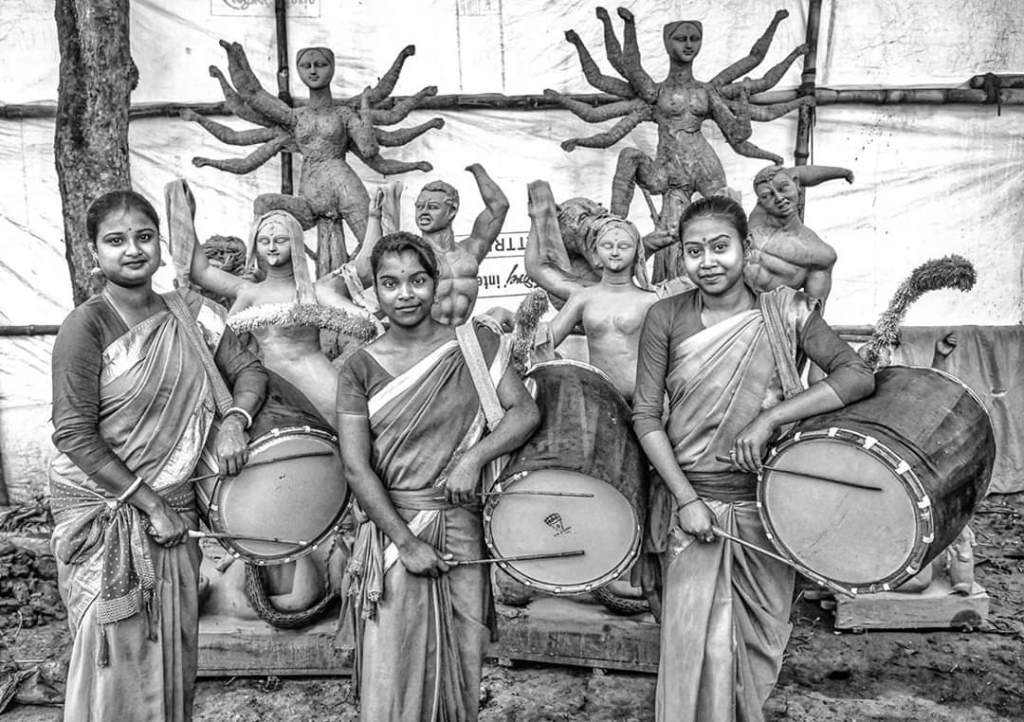
Female artists too have now taken up the responsibility to revive the age old art of playing the dhak. In such a male-dominated profession where carrying the dhak is a major issue, women have proved themselves to be no less than their male counterparts. Teams of women dhakis are finding fame and getting established slowly in their fields.

Dhakis of Bengal

COVID-19 and The Livelihood of Dhakis

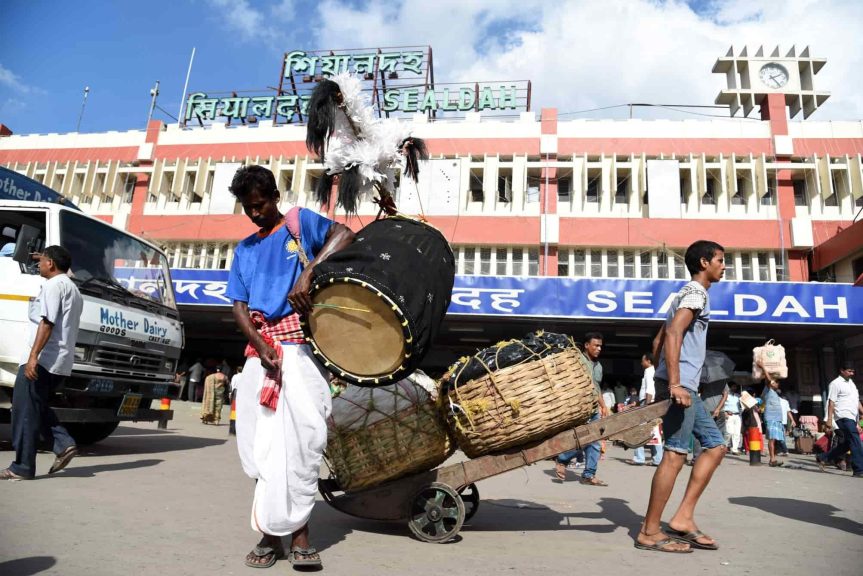
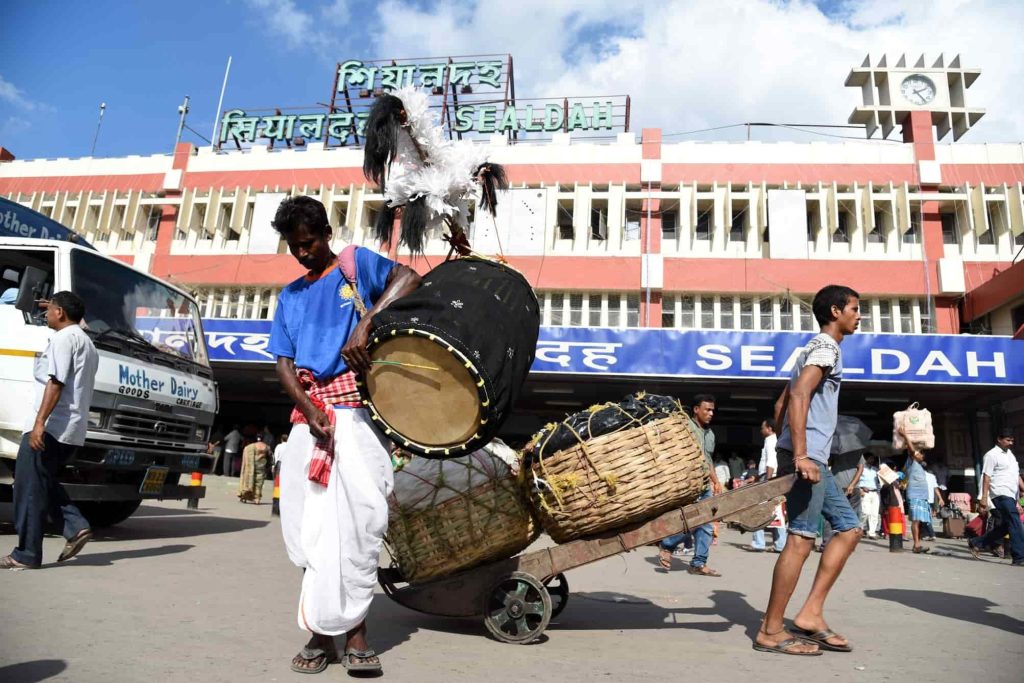
The Impact The drop in the number of Durga Pujas in and outside Bengal amid the novel coronavirus outbreak has taken the rhythm out of the lives of many dhakis (traditional drummers) who look forward to this festive season as their main source of earnings in the year. Every year, the dhakis from different districts and villages of Bengal use to appear at Sealdah station premises before Durga puja. The dhakis used to play the drums in front of Sealdah station every year before puja. From there, various puja committees used to take them in the puja pandals to play the ‘dhak’. But for the past two years the situation is very different, as Puja Committees and Organizers are tight in budget and have to follow a lot of restrictions . Moreover, thousands of dhakis from Bengal districts like East Burdwan, Birbhum, Purulia, Bankura and Hooghly would in other years travel to states such as Assam, Maharashtra, Delhi, Uttar Pradesh to perform at Durga Puja pandals and get higher pay than what they would have got in their home state. But, COVID-19 has restricted that option too for these drummers in past years.

Dhakis at Sealdah station, Kolkata

Where Are They At Now: How We Can Help

Acknowledging the fact that, playing dhak couldn’t be considered as a stable profession and is more inclined to be an occasional source of performing art and earning money, most of the dhakis are often associated with other rural jobs like farming, weaving, fishing to support their livelihood. During Pandemic, the dhakis hope that though they could not travel outside Bengal, they were still lucky if they got calls from Bengal puja organisers. When budgets are low, organisers play recorded beats of the dhaki in pandals. However, several organisers in Bengal have decided to go ahead with dhakis to add the traditional fervour to festivities with the state government offering a dole of Rs 50,000 to each puja committee.

A group of Women Dhakis in front of Goddess Durga idols

Conclusion

Just like of everyday’s, MachhBhaat, Bengal ’s essence of festivity is incomplete without the rhythmic beats of Dhaks. Along with everyone one of us, they are also looking forward for a better situation in the upcoming years, while we can celebrate together the joys of life without fearing for the safety of our health . With the constant effort of the Government and the citizens together , hope we are going to reach that phase very soon.

VEDANGAS – THE LIMBS OF THE VEDAS

Vedangas are the six forms i.e., the six auxiliary disciples of Vedas. It is said to be the six limbs of the Purusha called Veda. 

  1. Shiksha (Education) – Nose 
  2. Kalpa (Ritual) – Arms
  3. Vyakarana (Grammar) – Mouth 
  4. Nirukta (Etymology) – Ears 
  5. Chhanda (Metrics) – Feet 
  6. Jyotisha (Astronomy) – Eyes 

SHIKSHA

It is referred to as the nose of the body. Shiksha is related to giving instructions through recitation. It consists of instructions for correct pronunciation and accent of the Samhita texts. It mainly focuses on phonetics and gives the rules for the sound of syllables and pronunciation. Phonetics decides the sound changes while recitation and hence becomes very important for Vedic language. The aim is to attain 

  • Akshara suddhi – syllable purity
  • Swara suddhi – tone and pitch purity
  • Maatraa suddhi – durational purity
  • Balam – the force of articulation
  • Samam – evenness
  • Santana – continuity

KALPA

Kalpa is the arm of the Vedas. It speaks about rules for the right method of performing the rituals. These rules are followed in ceremonies such as weddings, naming functions, and other ceremonies. It has its origin from the brahmana texts of the Veda. These are written in sutra style, referring to sacrifices. Kalpa sutras are divided into 

  • Srautasutras – contains rules for performing different sacrifices and rituals.
  • Smarthasutras – further partitioned into 
    • Grihyasutras – gives domestic rites and rituals for the three castes namely – Brahmins, Kshatriyas, Vaisyas, and the responsibilities for the household life.
    • Dharmasutras – gives rules for behaviour and talks about the four stages of life

VYAKARANA

Vyakarana is called the grammar for the Vedas. It is essential for the formation of sentences, phrases, and words. It is the mouth of the Vedas. It is necessary for understanding the Vedas. It is related to the next Vedanga, Nirukta. It is written by scholars named Panini and Yaska. It consists of 4000 sutras which belong to the four padas of the eight chapters. The four divisions are 

  • Siva sutras – deals with phonetics and intonation
  • Ashtadhyayi – deals with sentence structure and construction
  • Dhatupadha – deals with root words
  • Ganapadha – deals with a group of nouns and phrases

NIRUKTA

Nirukta is the ear of the Veda purusha. It means etymology and tells why a word is chosen for the context and the meaning of the used word. It is generally called the Kosa or the dictionary. It deals with the interpretation of obscure and difficult words and provides insights into the hidden meaning delivered in the content. Hence, the study of Nirukta becomes essential to understand the concealed meaning and linguistic significance of the texts.

CHHANDA

It is regarded as the feet of the Veda Purusha. The word Chhanda is derived from the term Chad meaning to cover. It deals with the metrics to be used in the Vedic hymns. A sloka generally consists of four quarters called paadas. Based on the number of syllables in each paada, there are different meters.

  • Gayatri – 8 syllables
  • Trishtup – 11 syllables
  • Jagati – 12 syllables

JYOTISHA

Jyotisha is the eyes of the Vedas and it means astronomy or astrology. It gives knowledge about auspicious dates and times for the ceremonies and rituals to be performed. This is determined based on the position of the sun, the moon, the planets, and other heavenly bodies. It is believed that the rituals succeed when performed under the influence of a particular graha, nakshatra, or thithi. This is calculated using some mathematical calculations and hence mathematics forms an integral part of it.

VEDAS

The word Veda means Knowledge. Vedas are the earliest piece of literature that was written in the Sanskrit language. These were handed down from one generation to the other orally by the pandits who learned this from their ancestors. Even if there were no facilities to preserve the Vedas through the art of writing, it is preserved by transmitting to the generations orally. In Hindu culture, Vedas are considered spiritual and everlasting revelations. Vedas come under Shruti which means what is being heard. There are four Vedas, each of which was composed of different ages. However, it is believed that it always existed and sages chanted this in their deep meditative states. The four Vedas are – Rig Veda, Yajur Veda, Sama Veda and Atharva Veda.

RIG VEDA

The earliest of Vedas is the Rig Veda. It is a set of 1028 hymns in Vedic Sanskrit. Many of those are beautiful descriptions of nature. The prayers in this seek prosperity and well developed and cultured society. It is believed that these compositions are the natural outburst of Vedic rishis when they went through the mental transcendental stage. Some of the prominent rishis of this period are Vasistha, Gautama, Gritasamada, Vamadeva, Vishvamitra and Atri. Indra, Agni, Varun, Rudra, Aditya, Vayu, Aditi, and Ashwini twins are the eminent gods of this Veda whereas Usha (the goddess of dawn), Vak (the goddess of speech), and Prithvi (the goddess of earth) are the notable goddess of the Rig Veda. Do you know that the majority of the hymns spoke of universally recognized higher values of life like truthfulness, honesty, dedication, sacrifice, politeness, and culture? Rig Veda also provides knowledge about the social, political, and financial conditions of ancient India apart from religion.

YAJUR VEDA

The word Yajur means sacrifice or veneration. This Veda is mostly related to Rites and mantras of different sacrifices. It tells the directions and ways to conduct the yajnas. It is a mixture of both prose and poetry. Being a treatise on rituals, it’s the foremost popular of the four Vedas. Yajur Veda has two main divisions called Shukla and Krishna Yajur Veda i.e., Vajasaneyi Samhita and Taitriya Samhita. This mainly talks about the social and religious aspects of India at that time.

SAMA VEDA 

The term Sama means melody or songs. This contains the tunes for the recitation of Hymns. Sama Veda is mainly of 16,000 ragas and raginis which means musical notes. Only 75 verses out of 1875 verses are original and others belong to the Rig Veda. However, the Sama Veda gives the tunes for the recitation of the hymns of the Rig Veda. It may be called the book of Chants (Saman). This book stands as evidence of Indian music during this era.

ATHARVA VEDA

The Atharva Veda is also called the Brahma Veda. It talks about the treatment for ninety-nine diseases. This Veda is originated from the 2 rishis called Atharvah and Angiras. The Atharva Veda is of immense value because it represents the religious ideas at an early period of civilization. It consists of two main branches namely, Paipaddala and Saunaka. This book gives detailed information about the family, social and political life of the later Vedic period. To know the Vedas, it becomes mandatory to know the Vedangas, the limbs of the Vedas. The Vedangas talk about Siksha (education), Vyakarana (grammar), Kalpa (rituals), Nirukta (etymology), Chhanda (metrics), and Jyotisha (astronomy). 

Each Veda is composed of 4 parts: The Mantra-Samhitas or hymns, The Brahmanas or explanations of Mantras or rituals, Aranyakas, and Upanishads. The division of the Vedas into four parts is to suit the four stages during a man’s life.

ESSENCE OF INDIAN TRADITION

HERITAGE

The word heritage is defined as “Anything transmitted from ancestors or past ages”. The Indian heritage is often best appreciated concerning different historical periods. We are the inheritors of a cultural and non-secular tradition stretching over 4000 years.

CULTURE AND CIVILIZATION

The word ‘culture’ and ‘civilization’ are often used as the same. However, they have their own clearly defined meanings which differentiate them.

CIVILIZATION

‘Civilization’ means making better ways of living and making use of nature to satisfy daily needs. Civilization includes developing societies into politically well-defined groups that work together for improved conditions of life in terms of food, dress, and communication.

CULTURE

The English word ‘Culture’ is coined from the Latin word ‘cult or cultus’ which means tilling, or cultivating or refining and worship. ‘Culture’ refers to the inner self, a refinement of mind, soul, and heart. Culture includes various art forms and sciences, music and dance, and several higher activities of human life which also are classified as cultural activities. On the whole, it is cultivating and refining a thing to an extent such that its outcome evokes our admiration and esteem. This is often practically an equivalent as ‘Sanskriti’ of the Sanskrit language.

CHARACTERISTICS OF CULTURE

 • Culture is learned and purchased

 • Culture is shared by a cluster of individuals

 • Culture is cumulative

 • Culture changes

 • Culture is dynamic

 • Culture gives us a variety of permissible behaviour patterns

 • Culture is diverse

 • Culture is ideational

CULTURAL HERITAGE

Cultural development may be a historical process. Cultural heritage includes all those aspects or values of culture transmitted to citizenry by their ancestors from generation to generation. They’re cherished, protected, and maintained by them with unbroken continuity, and that they feel pleased with it. Architectural works like monuments, material artifacts, the intellectually achieved properties, philosophy, treasures of data, scientific inventions, and discoveries also are a part of heritage.

TRADITIONAL KNOWLEDGE

Traditional knowledge or ‘local knowledge’ may be a record of human achievement in comprehending the complexities of life and survival in often unfriendly environments. Traditional knowledge, which can be technical, social, organizational, or cultural was obtained as a part of the good human experiment of survival and development. We have to analyse, evaluate conserve, and revive the normal Knowledge Systems for the economic betterment of the planet in a holistic manner. It is that the knowledge system possessed by various communities across the world. Such knowledge has been accumulated, used, and has been bequeathed through several generations. It’s usually regarding the natural surroundings of the community and includes agricultural knowledge like manner of cultivation, environmental knowledge, and knowledge of natural medicines.

TYPES OF TRADITIONAL KNOWLEDGE

 • Cultural knowledge

 • Artistic knowledge

 • Biodiversity or natural resources

 • Agricultural knowledge

 • Sacred knowledge

CHARACTERISTICS OF TRADITIONAL KNOWLEDGE

 • It has been handed on from generation to generation.

 • In many cases, it’s transmitted orally for generations from person to person.

 • It is being considered by the communities as a gift of God and not as personal property.

 • This knowledge generally distinguishes one community from another community.

 • It is typically impossible to spot the first creator of the knowledge.

 • It is learned by observing continuously, experiencing, and practicing it.

 • It is inseparable a part of the communal and cultural life of its holders.

 • It is typically related to biological resources.

NEED FOR SHIELDING TRADITIONAL KNOWLEDGE

 • Lack of proper legal policy framework for the protection of traditions.

 • Exploitation of traditional knowledge and indigenous resources.

 • Patenting the medicinal plants and their derivatives.

 • Commercial interests violate indigenous property rights.

ARRANGED MARRIAGES

BY: VAIBHAVI MENON

Arranged marriage is a type of marital union where the bride and groom are primarily selected by individuals other than the couple themselves, particularly by family members such as the parents. In some cultures a professional matchmaker may be used to find a spouse for a young person. Arranged marriages have historically been prominent in many cultures. The practice remains common in many regions, notably South Asia, though in many other parts of the world, the practice has declined substantially during the 19th and 20th centuries. Forced marriages, practiced in some families, are condemned by the United Nations, and is not an arranged marriage. The specific sub-category of forced child marriage is especially condemned. In other cultures people mostly choose their own partner.

Arranged marriages were very common throughout the world until the 18th century. Typically, marriages were arranged by parents, grandparents or other relatives. Some historical exceptions are known, such as courtship and betrothal rituals during the Renaissance period of Italy and Gandharva Vivah in the Vedic period of India. In China, arranged marriages sometimes called blind marriages were the norm before the mid-20th century. A marriage was a negotiation and decision between parents and other older members of two families. The boy and girl were typically told to get married, without a right to demur, even if they had never met each other until the wedding day. Arranged marriages were the norm in Russia before the early 20th century, most of which were endogamous. Until the first half of the 20th century, arranged marriages were common in migrant families in the United States. They were sometimes called “picture-bride marriages” among Japanese-American immigrants because the bride and groom knew each other only through the exchange of photographs before the day of their marriage. These marriages among immigrants were typically arranged by parents, or relatives from the country of their origin. As immigrants settled in and melded into a new culture, arranged marriages shifted first to quasi-arranged marriages where parents or friends made introductions and the couple met before the marriage; over time, the marriages among the descendants of these immigrants shifted to autonomous marriages driven by individual’s choice, dating and courtship preferences, along with an increase in interracial marriages. Similar historical dynamics are claimed in other parts of the world. Arranged marriages have declined in prosperous countries with social mobility and increasing individualism; nevertheless, arranged marriages are still seen in countries of Europe and North America, among royal families, aristocrats and minority religious groups such as in placement marriage among Fundamentalist Mormon groups of the United States. In most other parts of the world, arranged marriages continue to varying degrees and increasingly in quasi-arranged form, along with autonomous marriages.

A woman who refuses to go through with an arranged marriage, tries to leave an arranged marriage via divorce or is suspected of any kind of immoral behaviour, may be considered to have dishonored her entire family. This being the case, her male relatives may be ridiculed or harassed and any of her siblings may find it impossible to enter into a marriage. In these cases, killing the woman is a way for the family to enforce the institution of arranged marriages. Unlike cases of domestic violence, honor killings are often done publicly for all to see and there are frequently family members involved in the act.

Embroidery of India

Hello guys!!Today’s topic is about embroidery of India.

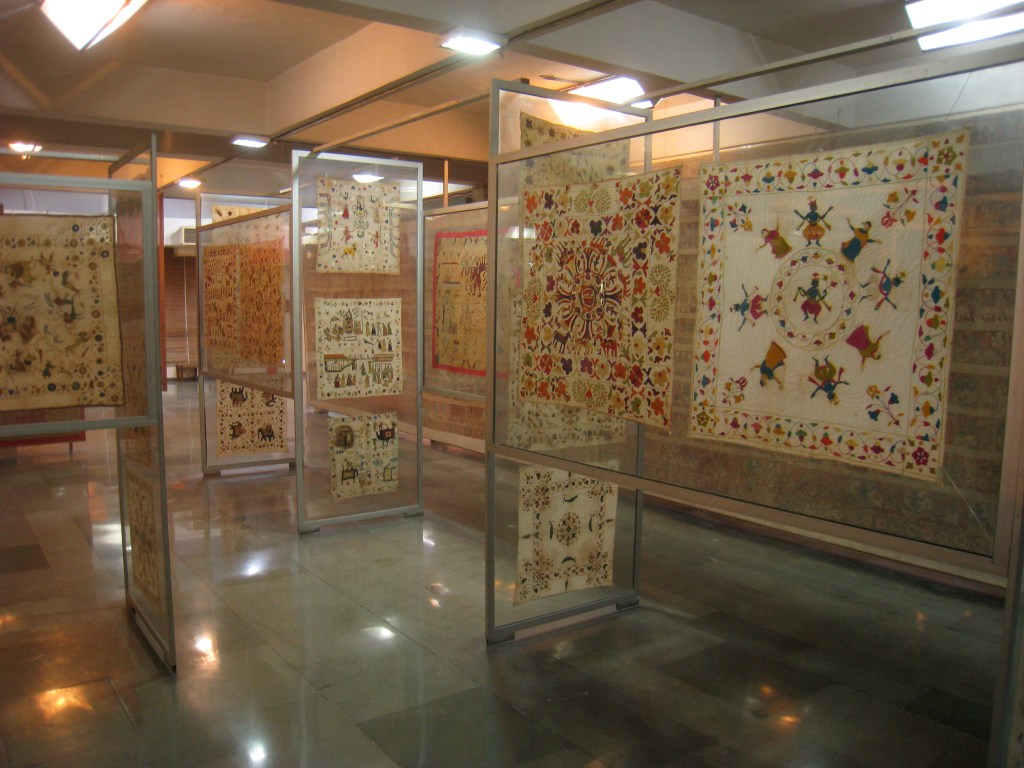
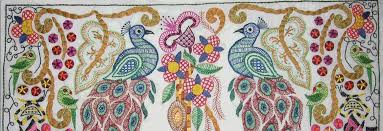
Embroidery is the craft of decorating fabric or other materials using a needle to apply thread or yarn.

In embroidery they use different materials such as pearls, beads, quills, and sequins and stitch them on the fabric enhancing it’s beauty.

From: wikipedia

In India the embroidery designs are formed on the basis of the texture and the design of the fabric and the stitch.

 They generally use  dot and the alternate dot, the circle, the square, the triangle, and permutations and combinations of these and develop the design .The range of varieties  is unlimited  and designing to stitching every step is different from each other .
  • Aari
  • Banjara embroidery
  • Banni or Heer Bharat (Gujarat)
  • Chamba Rumal (Himachal Pradesh)
  • Chikankari (Uttar Pradesh)
  • Gota (Jaipur, Rajasthan)
  • Kamal kadai(Andhra Pradesh)
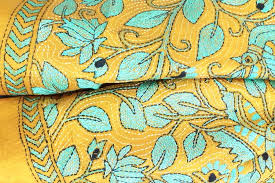
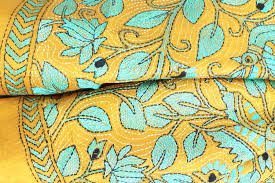
  • Kantha (Bengal)
  • Karchobi – Rajasthan
  • Kasuti or Kasuthi (Karnataka)
  • Kathi (Gujarat)
  • Kaudi(Karnataka)
  • Khneng(meghalaya)
  • Kutch or Aribharat
  • Kutchi bharat/Sindhi stitch (Gujarat)
  • Kashmiri embroidery
  • Mukaish Work- (similar to chikankari) -Lucknow
  • Phool Patti ka Kaam (Uttar Pradesh)
  • Phulkari (Punjab and Haryana)
  • Pichwai (Rajasthan)
  • Pipli (Odisha)
  • Rabari (Rajasthan and Gujarat)
  • Shamilami (Manipur)
  • Shisha or Mirrorwork (Gujarat, Haryana, Rajasthan)
  • Toda embroidery
  • Zardozi or Zari or kalabattu
  • From :wikipedia

There are all different styles developed in different states giving them a tinge. Depicting their own traditions and culture through their work

Each state style gives of an unique mix to the Indian embroidery.
From craftsvilla

Each style is influenced by the fashion and attire they follow ,these styles are developed from their ancestors and Indian embroidery is famous for its simple yet classy look.

Embroidery is an art of fabric they make art pieces from a single piece of cloth and thread .
From:fibre2fashion.com

The trend always changes but the roots must not change , embroidery may changes over years with time but the effort they put into is will always be conveyed to people through their art ,through their embroidery.

Thankyou^^

Indian Art Style

• Rajasthani miniature art

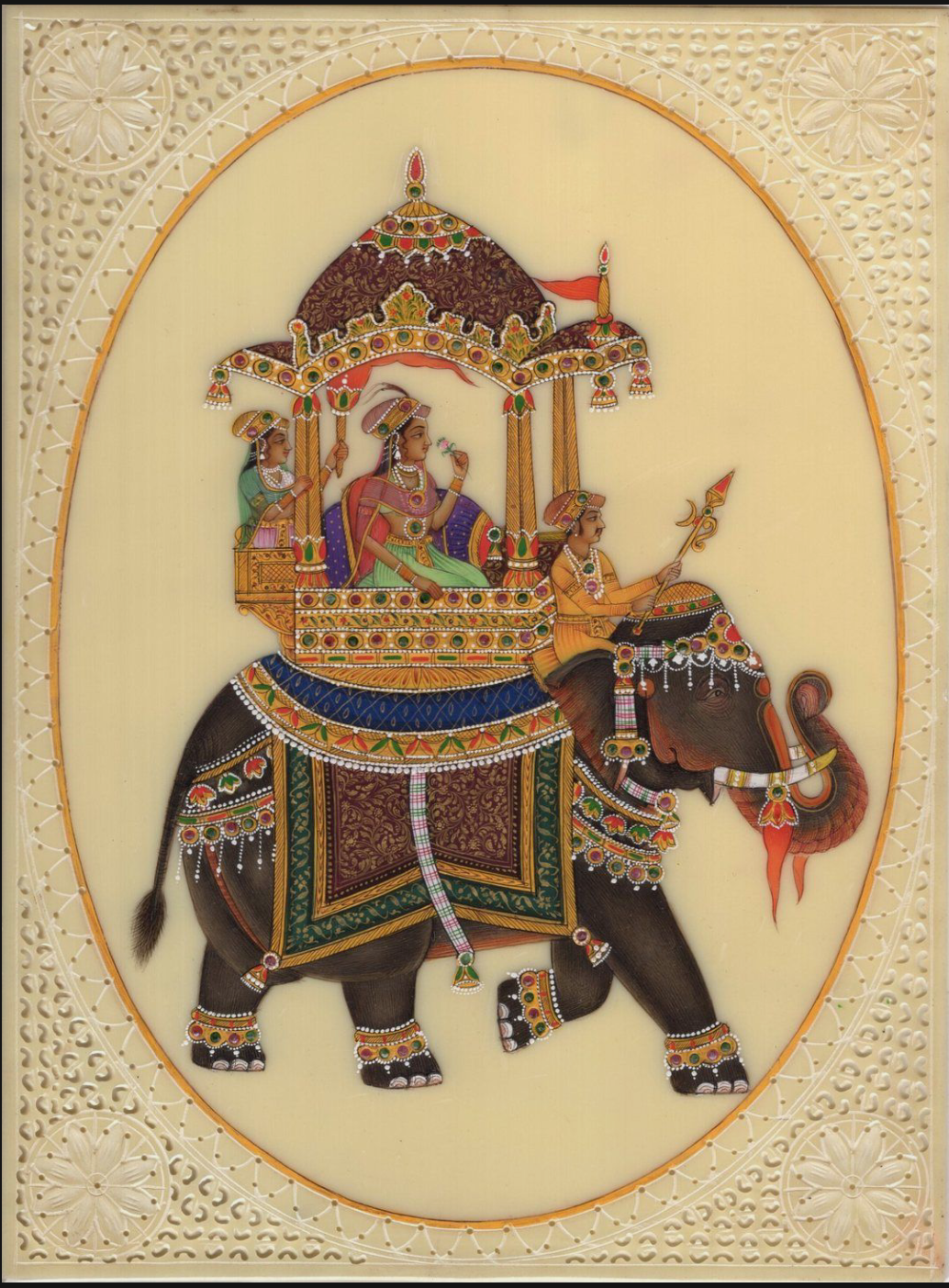
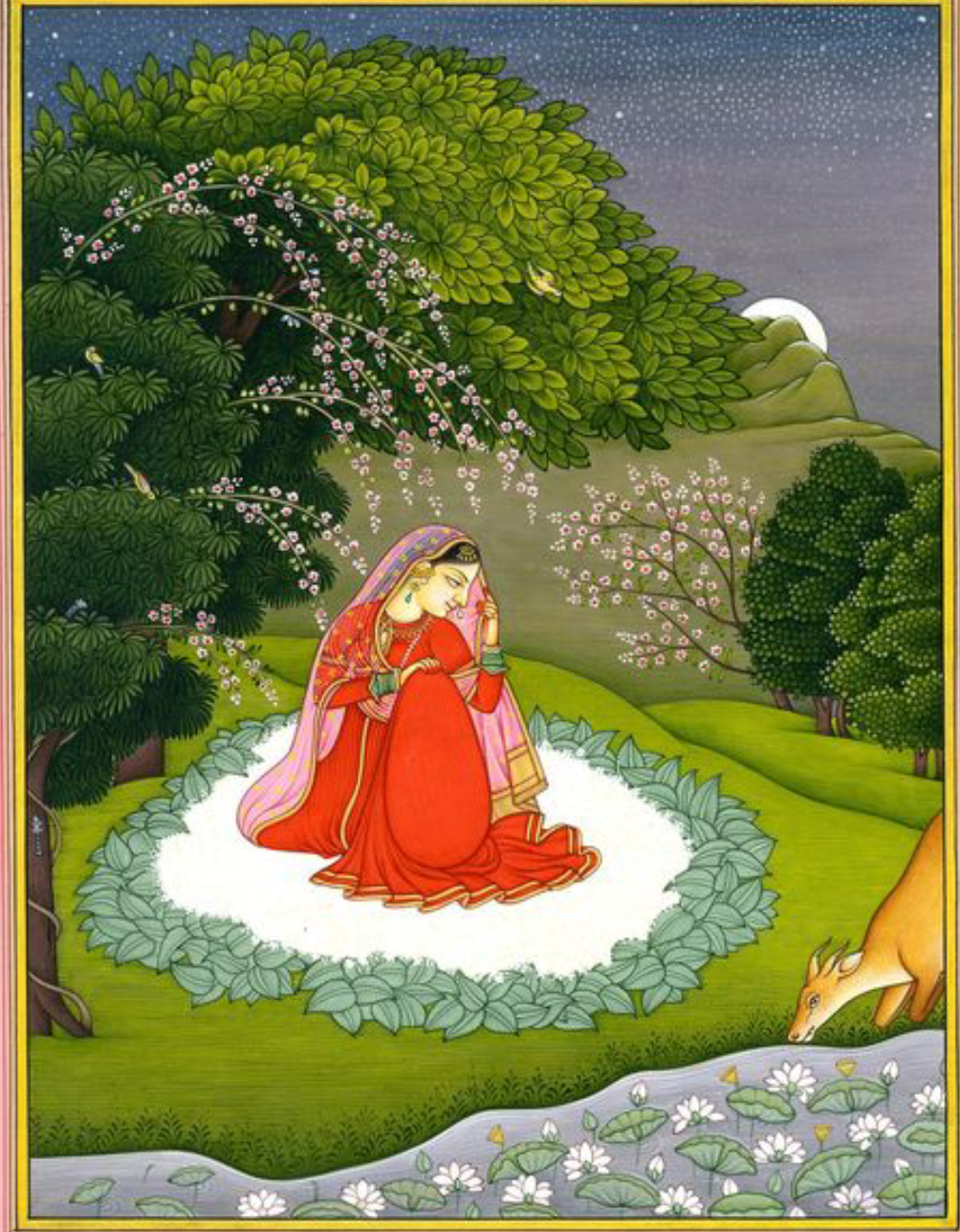
Rajasthan is one of the pioneer seats of miniature painting in India. Rajput painting, also known as Rajasthani painting, is a style of Indian painting evolved and flourished in the royal courts of Rajputana, India. Each Rajput kingdom evolved a distinct style but with certain common features. Rajput paintings depict a number of themes, events of epics like the Ramayana and the Mahabharata, Krishna’s life, beautiful landscapes and humans.

Miniatures in manuscripts or single sheets to be kept in albums were the preferred medium of Rajput painting but many paintings were done on the walls of palaces, inner chambers of the forts, havelis, particularly the havelis of Shekhawati, the forts and palaces built by Shekhawat Rajputs. The colours were extracted from certain minerals, plant sources and conch shells and were even derived by processing precious stones. Gold and silver were also used. The preparation of desired colours was a lengthy process, sometimes taking weeks. The brushes used were very fine.

• Pattachitra

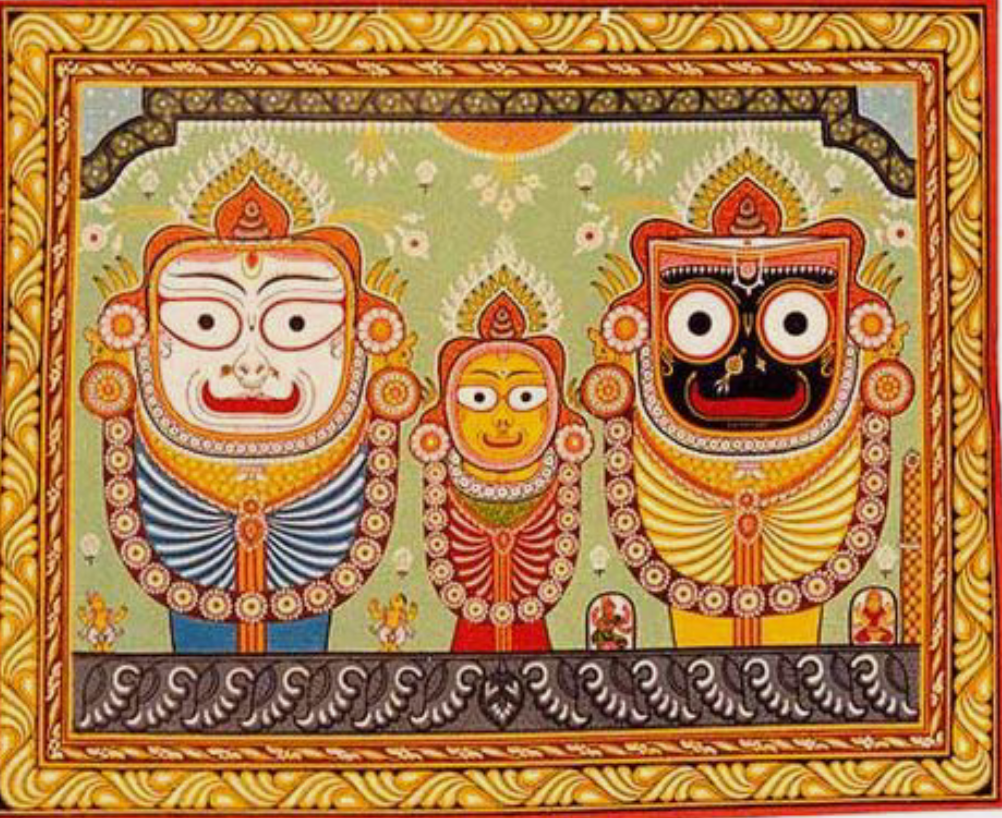
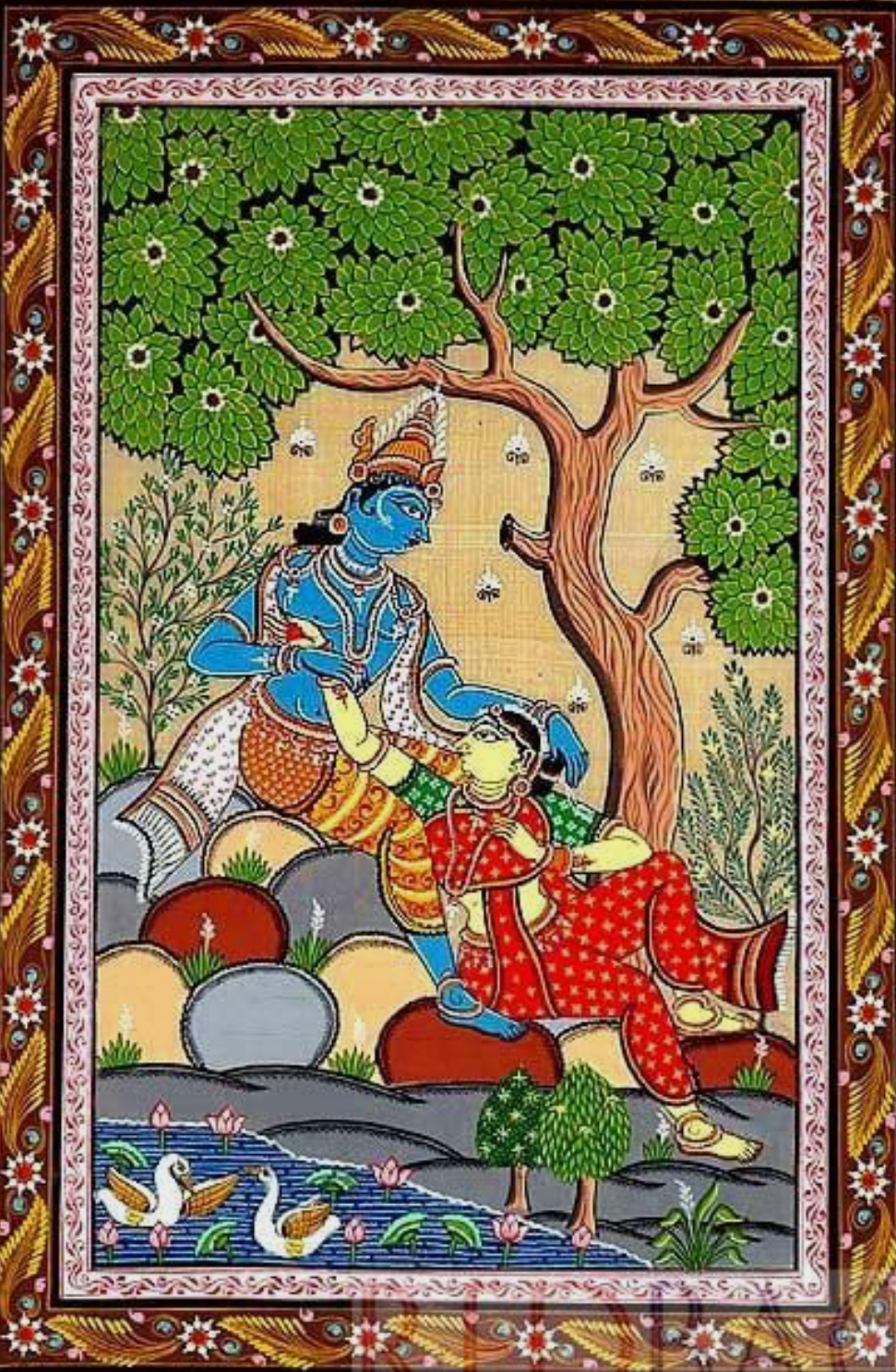
‘Pattachitra’ is a general term for traditional, cloth based scroll painting based in the eastern Indian state of Odisha. In the Sanskrit language, ‘patta’ literally means ‘cloth’ and ‘chitra’ means ‘ picture’. The pattachitra style of painting is one of the oldest and most popular art forms of Odisha.

All colours used in the paintings are natural and the paintings are made fully in the old traditional way by chitrakaras who are Oriya painters. Pattachitra is manifested by a rich colourful application, creative motifs and designs and portrayal of simple themes mostly mythological in depiction. The traditions of pattachitra paintings are more than a 1000 years old. Pattachitra paintings resemble the old murals of Odisha, especially those from the religious centres of Puri, Konark and Bhubaneswar regions, dating back to the 5th century BC. The best works are found in and around Puri, especially in the village of Raghurajpur. The theme of Oriya painting centers round the Jagannath cult and the Vaishnava cult. Since the beginning of pattachitra culture, Lord Jagannath, who is an incarnation of Lord Krishna, has been the major source of inspiration. In the 16th century, with the emergence of the Bhakti movement, the paintings of Radha and Krishna were painted in vibrant shades of orange, red and yellow. There are typical scenes and figures like Krishna, Gopi’s, elephants, trees and other creatures portrayed in these paintings. Krishna is always painted in blue and Gopis in light pink, purple or brown.

Thank you for reading. Have a nice day!🌼

Indian Folk Art

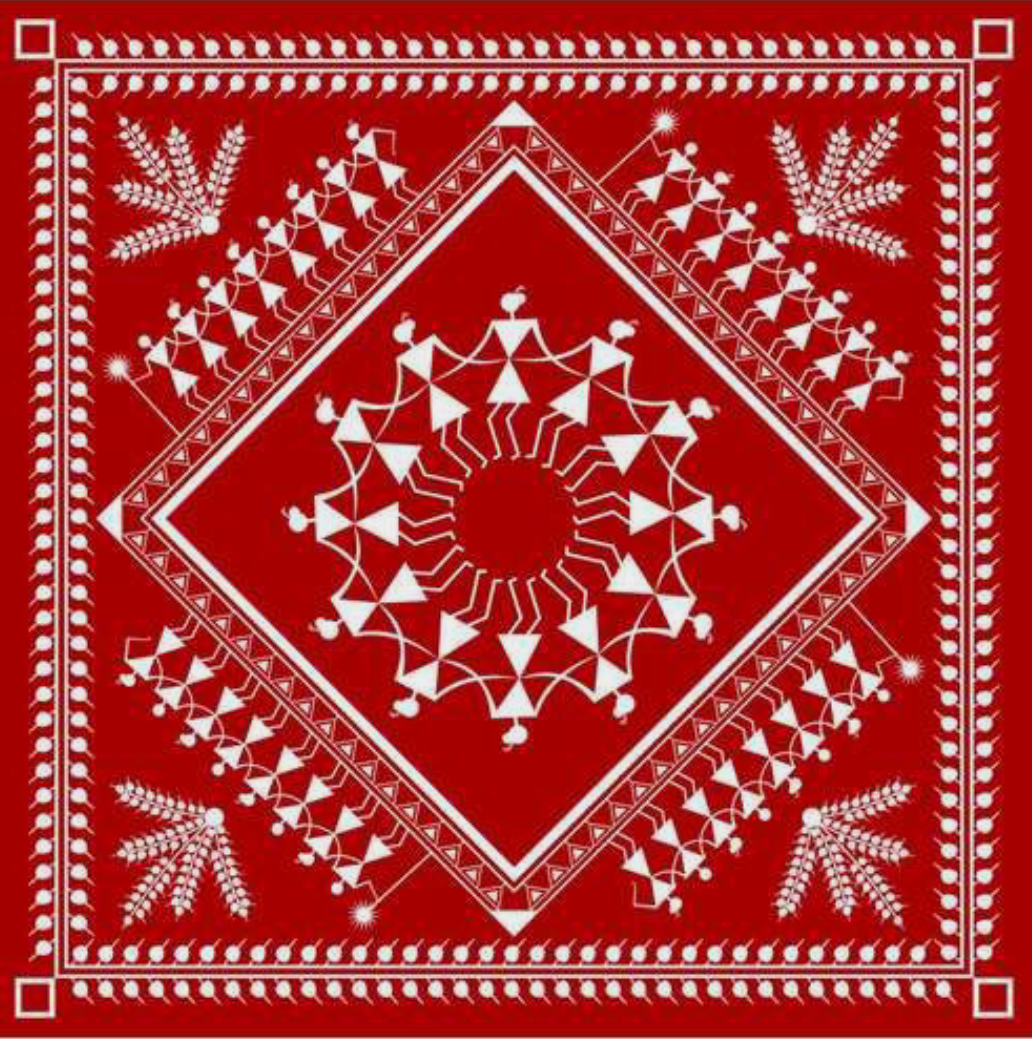
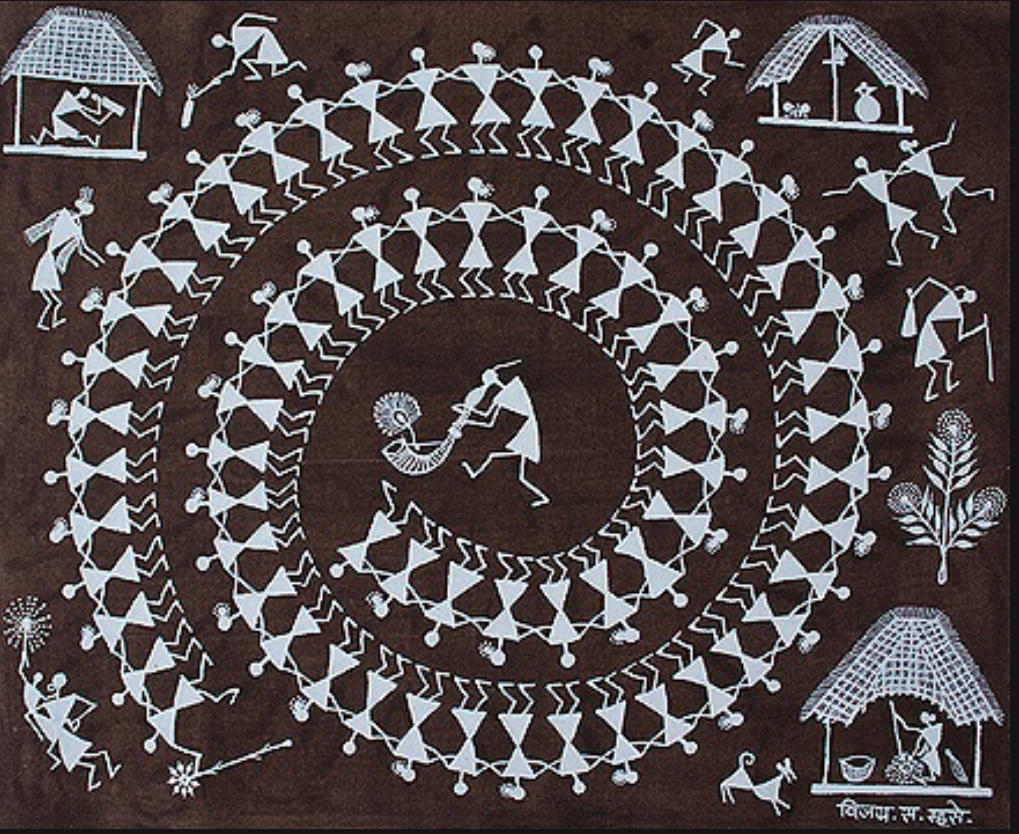
• Warli paintings

Warlis or Varlis are an indigenous tribes or adivasis living in the mountainous as well as coastal areas on the Maharastra-Gujarat border and surrounding areas. They have their own animistic beliefs, life, customs and traditions. As a result of acculturation, they have adopted many Hindu beliefs. Their extremely rudimentary Wall paintings use a very basic graphic vocabulary a circle, or triangle and a square. Their paintings were monosyllabic. The circle and the triangle come from the observation of nature, the circle representing the sun and the moon, the triangle derived from mountains and pointed trees. Only the square seems to be a different logic and seems to be a human invention, indicating a sacred enclosure or a piece of land.

The ritual paintings are usually done inside their huts. The walls are made of a mixture of branches, earth and cow dung making a red ochre background for wall paintings. Warlis use only white in their paintings. The white pigment used by them is a mixture of rice paste and water with gum as a binding. As the brush, they use a bamboo stick chewed at the end to make it as supple as a paintbrush. The wall paintings are done only on special occasions such as weddings or harvests. Warli art is the cultural intellectual property of the tribal community. Today, there is an urgent need for preserving this traditional knowledge in tribal communities across the globe. Now, Warli painting is registered with a geographical indication under the intellectual property rights act. With the use of technology and the concept of social entrepreneurship, tribals established the Warli Art Foundation, a non-profit company dedicated to Warli art and related activities.

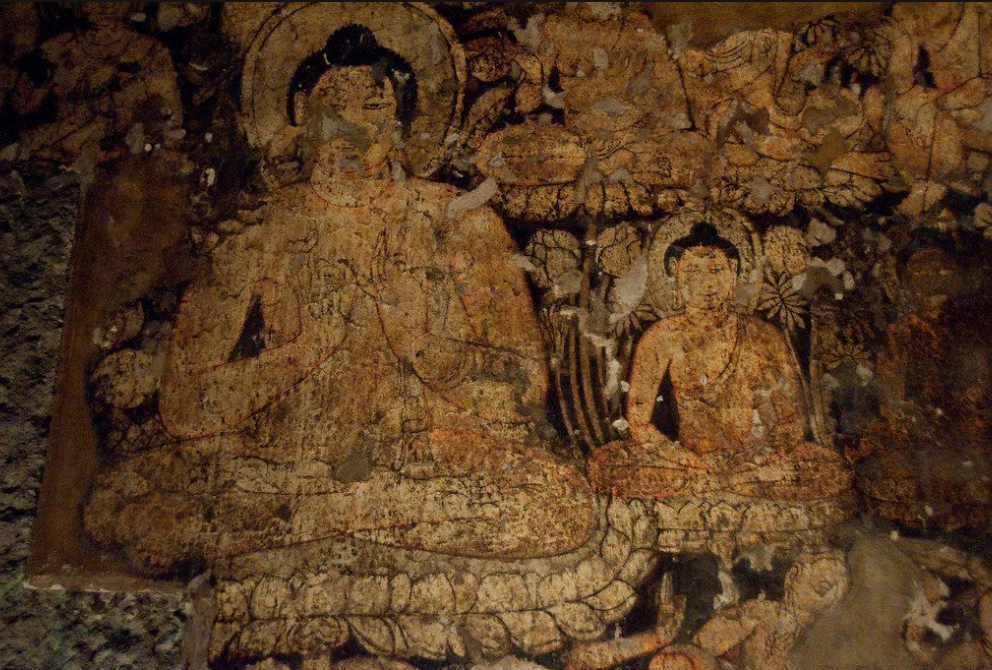
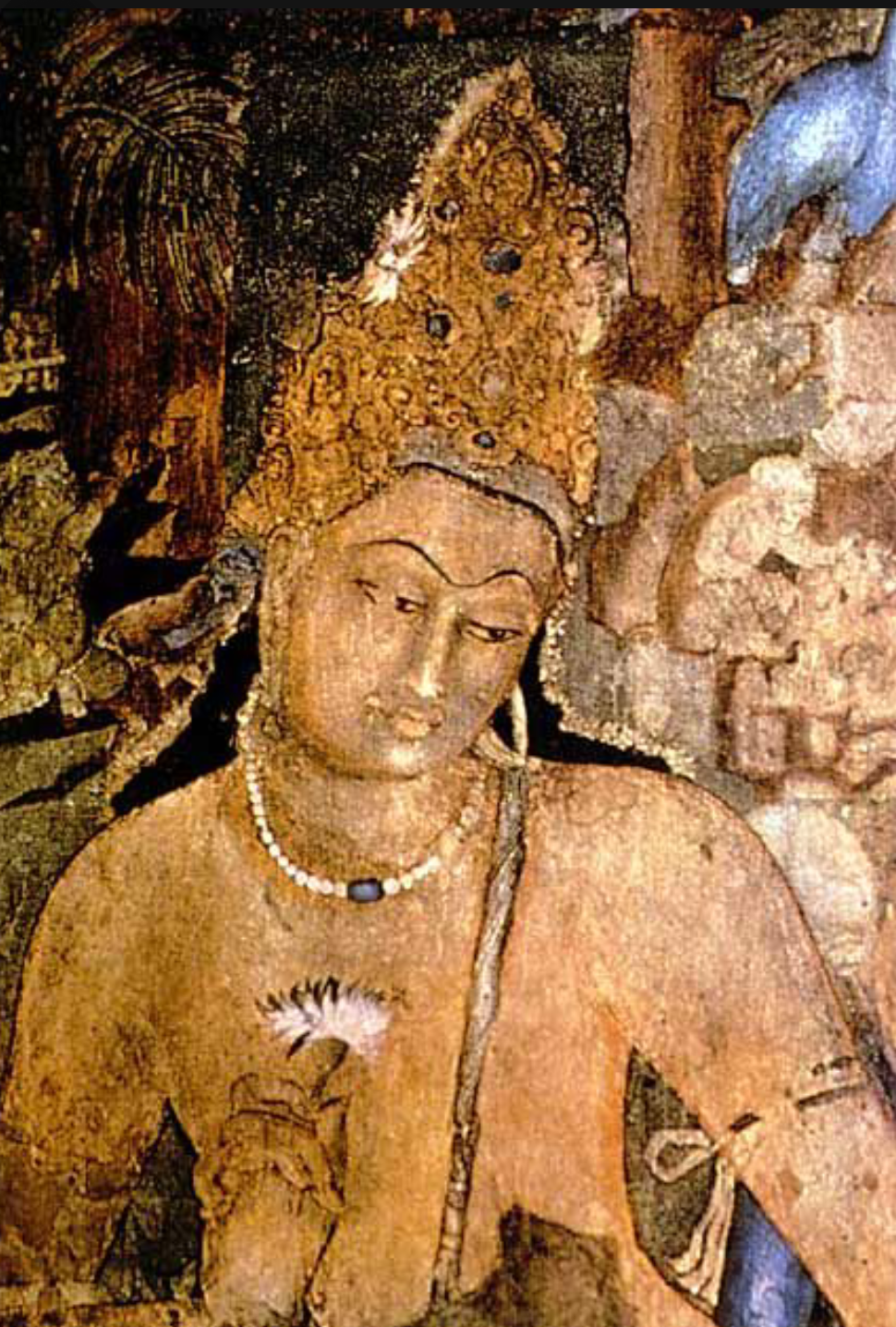
• Cave paintings in India

Almost all early painting in India survives in caves, as very few buildings from ancient India survive. The history of cave paintings in India or rock art range from drawings and paintings from prehistoric times – beginning around 30000 BCE in the caves of Central India, typified by those at the Bhimbetka rock shelters – to elaborate frescoes at sites such as the rock cut artificial caves at Ajanta and Ellora, prevalent as late as the 8th – 10th century CE. The frescoes of Ajanta are paintings in the Ajanta caves, which are situated near Aurangabad in Maharashtra. The caves are carved out of large rocks. Inside many of the caves are frescoes. Frescoes are paintings which are done on wet plaster in which colours become fixed on the walls and ceilings at Ajanta.

The paintings reflect different phases of Indian culture from Jain tirthankar Mahaveer’s birth to his Nirvana in the 8th century AD. The frescoes have degraded slightly due to the effect of flash photography. Photography here is not banned. The paintings depict themes of court life, feasting, processions, men and women at work, festivals and various natural scenes including animals and birds and flowers. The artists used shading to give a three-dimensional effect.

Similarly, beautiful frescoes have been found at the Bagh caves, 150 km away to the North of Ajanta. Though the themes in these paintings are both secular and religious, they do depict some aspects of Buddhist life and rituals. One of the most famous paintings show a procession of elephants. Another depicts a dancer and women musicians. These have been influenced by the Ajanta style of painting. These frescoes show a strong resemblance to the frescoes of Sigriya in Sri Lanka.

Thank you for reading. Have a nice day!🌼

A wedding story

My daughter got married this week. She and her husband had originally intended to have their wedding May 2, but the virus crisis clearly was going to prevent that gathering. Instead of delaying the wedding until the crisis passes, they chose to be married one month early in an essentially empty church. Their guests watched the wedding on YouTube.

My new son-in-law is in his last year of seminary. In a few days, he will be told where he will begin serving as pastor. The May 2 wedding was to have taken place in the seminary chapel. When the two of them first realized that the wedding would have to be rescheduled, their families considered the possibility they would just get the license and be married at the courthouse. In other words, they nearly eloped. (A future pastor and his bride, the daughter of a pastor, eloping—that would be humorous.) They were able, however, to arrange for a church wedding at a place that was already equipped to livestream its services on YouTube.

The groom and the best man were attired in formal Scottish garb—yes, including kilts. The bride wore a traditional white wedding dress. (She nearly had to improvise: the woman doing alterations on the dress had basically closed down her business because of the virus and could not be reached by phone. I don’t know the details of how my daughter finally got hold of the dress.) The bride’s sister was maid of honor. Because she works at a hospital, she was not able to take a day off for the wedding, so it was held at 8 p.m. In his homily, the pastor who married them commented on the unusual timing of the wedding—during the season of Lent, in the darkness of night, and during a pandemic.

So there were bride and groom, best man and maid of honor, pastor, musician, and one other woman who helped the bride and took part in the singing. They began with a traditional evening liturgy, then sang a hymn. We rushed around the house gathering hymnals and got to join in singing the fourth and fifth verses of the hymn. The pastor read from Genesis 2, delivered his homily, and then conducted the wedding ceremony. During the exchange of vows, the bride and groom had their hands bound together with a strip of cloth—another Scottish tradition.

As the father of the bride, I watched from the den. I was sitting in the same chair where I sat to watch the Chicago Cubs win the World Series. (We are never getting rid of that chair.) I was wearing a t-shirt, sweat shirt, blue jeans, and slippers. Other family members were present, as was the family cat. Popcorn was served.

This is not an April Fools prank. This is not First Friday Fiction. This is part of how the pandemic is rewriting life’s scripts for us all. I hope that you and those you love are well. J.