Recognizing the immense potential of rural tourism in the country, Ministry of Tourism has formulated National Strategies for Development of Rural Tourism and promotion of Rural Homestays in India.
The Ministry of Tourism promotes India in a holistic manner, through various initiatives. As part of the on-going activities, promotion of various tourism destinations and products including Rural tourism and Rural homestays are taken up.
In addition, the Ministry of Tourism has identified Rural Circuit as one of the thematic circuits under its Swadesh Darshan Scheme. The details of projects sanctioned under Rural Circuit of the scheme are given at Annexure.
The Swadesh Darshan 2.0 scheme has been initiated with the objective of developing sustainable and responsible destinations following a tourist & destination centric approach. Under this scheme, Rural Tourism Cluster Experience project has been sanctioned at Gunji, Uttarakhand.
The Government has approved the initiative to develop tribal home-stays under Swadesh Darshan Scheme, as part of ‘Pradhan Mantri Janjatiya Unnat Gram Abhiyan’. The said intervention includes development of 1000 homestays with support of upto Rs.5 Lakh per unit (for new construction), upto Rs.3 Lakh (renovation) and Rs.5 Lakh for village community requirement.
This information was given by Union Minister for Tourism and Culture Shri Gajendra Singh Shekhawat in a written reply in Lok Sabha today.
Annexure
PROJECTS SANCTIONED UNDER RURAL CIRCUIT OF SWADESH DARSHAN SCHEME
(Amount in ₹ crore)
S. No.
Name of State
Year
Project Name
Amount Sanctioned
Amount Released
1.
Bihar
(2017-18)
Development of Gandhi Circuit: Bhitiharwa- Chandrahia- Turkaulia
44.27
40.31
2.
Kerala
(2018-19)
Development of Malanad Malabar Cruise Tourism Project
Ministry of Tourism under its ‘Pilgrimage Rejuvenation and Spiritual Heritage Augmentation Drive’ (PRASHAD) Scheme provides Financial Assistance to the State Governments and Union Territories Administration for development of Tourism Infrastructure at the Pre-Identified Pilgrimage destinations/Heritage Cities. Under this Scheme, infrastructure interventions are carried out in consultation with the State Governments/UTs.
Ministry of Tourism, from time to time receives proposals from various sources regarding development of infrastructure under PRASHAD Scheme and these proposals are evaluated as per scheme guidelines and established procedures.
Ministry of Tourism has sanctioned 46 projects under its PRASHAD Scheme including 3 projects in Andhra Pradesh. A total of 29 sites are identified for development under the PRASHAD Scheme including 2 sites in Andhra Pradesh. The details of the projects sanctioned and sites identified are Annexed.
This information was given by Union Minister for Tourism and Culture Shri Gajendra Singh Shekhawat in a written reply in Lok Sabha today.
Annexure
List of projects sanctioned under PRASHAD Scheme of Ministry of Tourism given below:
(Rs. in Crore)
State/UT
S.No.
Project Name
Sanction Year
Approved Cost
Amount Released
Physical Progress%
Financial Progress%
Andhra Pradesh
Development of Pilgrim Amenities at Amaravati
2015-16
27.77
27.77
100
100
Development of Srisailam Temple
2017-18
43.08
43.08
100
100
Development of Pilgrimage Amenities at Sri Varaha Lakshmi Narsimha Swami Vari Devasthanam at Simhachalam
2022-23
54.04
13.69
28
25
Arunachal Pradesh
Development of Parshuram Kund
2020-21
37.88
21.95
86
58
Assam
Development of Pilgrimage amenities at Kamakhya Temple
2015-16
29.80
29.80
100
100
Bihar
Development at Patna Sahib
2015-16
29.62
29.62
100
100
Development of basic facilities at Vishnupad temple
2014-15
3.63
3.63
100
100
Chhattisgarh
Development of Pilgrimage amenities at Maa Bamleshwari Devi Temple
2020-21
48 .44
32.13
84
66
Gujarat
Development of Dwarka
2016-17
13.08
10.46
100
80
Development of Pilgrimage Amenities at Somnath
2016-17
45.36
45.36
100
100
Development of Promenade at Somnath
2018-19
47.12
47.12
100
100
Development of Pilgrim Plaza with Queue management complex at Somnath Gujarat
2021-22
49.97
0.00
0
0
Development of Pilgrimage Facilities at Ambaji Temple
2022-23
50.00
10.54
30
21
Haryana
Development of Mata Mansa Devi Temple and Nada Saheb Gurudwara
2019-20
48.53
34.68
74
71
Jammu and Kashmir
Development at Hazratbal Shrine
2016-17
40.46
34.30
90
85
Jharkhand
Development of Baba Baidya Nath Dham
2018-19
36.79
34.95
100
89
Karnataka
Development of Pilgrimage Amenities at Sri Chamundeshwari Devi Temple
2023-24
45.71
0.00
0
0
Kerala
Development at Guruvayur Temple
2016-17
45.19
45.19
100
100
Madhya Pradesh
Development of Amarkantak
2020-21
49.99
34.73
68
69
Development of Omkareshwar
2017-18
43.93
43.93
100
100
Maharashtra
Development of Trimbakeshwar
2017-18
42.18
29.93
93
57
Meghalaya
Development of Pilgrimage Facilitation at Nongswalia Church, Nartiang Shakti Peeth, Aitnar Pool and Charantala Kali Temple
2020-21
29.29
24.92
100
100
Mizoram
Development of Infrastructure for Pilgrimage and Heritage Tourism at Chite Vang, Zuangtai, Reiek and Aizawl
2022-23
44.89
13.18
22
29
Nagaland
Development of Pilgrimage Infrastructure at Molungkimong, Noksen Church, Aizuto, Wokha and Kohima
2018-19
25.20
21.33
100
84
Development of Pilgrimage Tourism Infrastructure at Zunheboto
2022-23
18.18
10.90
62
60
Odisha
Infrastructure Development at Puri
2014-15
50.00
10.00
–
20
Punjab
Development of Karuna Sagar Valmiki Sthal at Amritsar
2015-16
6.40
6.40
100
100
Development of Chamkaur Sahib
2021-22
31.57
17.49
79
55
Rajasthan
Integrated Development of Pushkar/Ajmer
2015-16
32.64
26.11
92
80
Sikkim
Development of Pilgrimage Facilitation at Four Patron Saints, Yuksom
2020-21
33.32
28.31
87
85
Tamil Nadu
Development of Kanchipuram
2016-17
13.99
13.99
100
100
Development of Velankanni
2016-17
4.86
4.86
100
100
Telangana
Development of Jogulamba Devi Temple
2020-21
38.90
33.07
72
85
Development of Pilgrimage and Heritage Tourism Infrastructure at Rudreshwara (Ramappa) Temple
2022-23
62.00
12.82
37
21
Development of Pilgrimage Infrastructure at Bhadrachalam
2022-23
41.38
8.43
15
20
Tripura
Development of Tripura Sundari Temple
2020-21
34.43
25.62
63
68
Uttar Pradesh
Development of Varanasi –Phase –I
2015-16
18.73
18.73
100
100
Development of Mathura-Vrindavan as Mega Tourist Circuit (Ph-II)
2014-15
10.98
10.98
100
100
Development of River Cruise Tourism at Varanasi
2017-18
9.02
9.02
100
100
Construction of Tourist Facilitation Centre at Vrindavan
2014-15
9.36
9.36
100
100
Development of Varanasi – Phase II
2017-18
44.60
31.77
100
71
Development of Infrastructure facilities at Govardhan
2018-19
37.59
30.97
99
78
Uttarakhand
Integrated Development of Kedarnath
2015-16
34.77
34.77
100
100
Development of Infrastructure for Pilgrimage Facilitation in Badrinath Ji Dham
2018-19
56.15
27.43
62
49
Augmentation of Pilgrimage Infrastructure Facilities at Gangotri and Yamunotri Dham
2021-22
54.36
10.22
100
18
West Bengal
Development of Belur Math
2016-17
30.03
23.39
92
78
Total
1605.20
1036.96
List of Identified sites under PRASHAD Scheme
S.No.
State/UT
Project / Subject
1
Andhra Pradesh
Annavaram, Kakinada District
2
Andhra Pradesh
Vedagiri Lakshmi Narasimhawamy Temple, Nellore District
3
Bihar
Simariya Ghat, Begusarai District
4
Bihar
Aami Mandir, Saran District
5
Chhattisgarh
Kudargarh Temple, Surajpur District
6
Goa
Bom Jesus, Old Goa District
7
Gujarat
Shri Nilkanth Mahadev Temple, Sunak, Mahesana District
8
Himachal Pradesh
Maa Chintpurni Temple, Una District
9
Jammu & Kashmir
Utterbehni and Purmandal, Samba District
10
Karnataka
Sri Renuka Yallamma Temple, Saudatti, Belagavi District
11
Karnataka
Papnash Temple, Bidar District
12
Madhya Pradesh
Shri Peetmbra Peetha, Datia District
13
Madhya Pradesh
Shanidev Temple, Morena District
14
Maharashtra
Shri Ghrushneshwar Shivalaya, Chhatrapati Sambhaji Nagar District
15
Maharashtra
Tuljapur, Dharashiv District District
16
Maharashtra
Shre Kshetra Rajur, Ganpati Temple, Jalna District
17
Mizoram
Vangchhia, Champhai District
18
Odisha
Chausath Yogini Temple, Ranipur, Jharial, Balangir District
19
Odisha
Maa Kichakeswari Temple in Kiching, Mayurbhanj District
20
Puducherry
Navagriha Temple- Sri Dharbaranyeswarar Temple & Spiritual Park, Karaikal District
21
Punjab
Durgyana Temple, Amritsar District
22
Rajasthan
Shri Karni Mata Mandir, Bikaner District
23
Rajasthan
Sun Temple, Budhahita, Kota District
24
Rajasthan
Malaseri Dungri
25
Tamil Nadu
Navagriha Temple at 8 places in Tamil NaduSri Kailasanathar Temple, Thingalur, Thanjavur DistrictGuru Bhagvan Temple, Alangudi, Thanjavur DistrictSri Naaganathar Temple, Thirunageshwaram, Thanjavur DistrictSri Suryanaar Temple, Thiruvidaimaruthur, Suriyanar Kovil, Thanjavur DistrictSri Agneeswarar Temple, Kanjanur, Thanjavur DistrictSri Vaitheeshwaran Temple, Vaitheeswaran Kovil, Mayiladuthurai District Sri Naganatha Swamy Temple, Keelaperumpallam, Mayiladuthurai District Suweathaaranyshwarar Temple, Thiruvenkadu, Mayiladuthurai District
26
Telangana
Goddess Yellamma Temple at Balkampet, Hyderabad District
27
Uttar Pradesh
Shri Kali Mandir established by Adiguru Shankaracharya, Chowk, Lucknow District
As per the 3rd Tourism Satellite Account (TSA), 2015-16, the percentage contribution of tourism sector to the country’s Gross Domestic Product (GDP) for 2018-19 to 2022-23 is given below:
Tourism GDP
2018-19
2019-20
2020-21
2021-22
2022-23
Total Share in GDP (in %)
5.01
5.18
1.50
1.75
5.00
Direct (in %)
2.61
2.69
0.78
0.91
2.60
Indirect (in %)
2.40
2.49
0.72
0.84
2.40
The above estimates are updated using National Account statistics 2024.
Ministry of Tourism has taken several initiatives over the years for development of tourism sector in the country. Some of these key initiatives are:
The Ministry of Tourism under the schemes of ‘Swadesh Darshan’, National Mission on ‘Pilgrimage Rejuvenation and Spiritual Heritage Augmentation Drive (PRASHAD)’ and ‘Assistance to Central Agencies for Tourism Infrastructure Development’ provides financial assistance to State Governments/Union Territory Administrations/ Central Agencies for the development of tourism related infrastructure and facilities at various tourism destinations in the country.
The Ministry of Tourism has revamped its Swadesh Darshan Scheme as Swadesh Darshan 2.0 (SD2.0) with the objective to develop sustainable and responsible destinations following a tourist & destination centric approach.
Financial assistance has also been provided to the State Governments/UTs for organizing fairs/festivals & tourism related events under Domestic Promotion & Publicity including Hospitality (DPPH) Scheme.
Dekho Apna Desh initiative launched with the objective to encourage citizens to travel within the country.
Thematic tourism like wellness tourism, culinary tourism, rural, eco-tourism, etc. amongst other niche subjects are promoted so as to expand the scope of tourism into other sectors as well.
With an aim to enable lawful inward movement of foreigners including foreign tourists, Government has taken a number of initiative over the last few years to liberalize, streamline and simplify visa regime with a view to facilitate the legitimate foreign travellers. Facility of e-Visa for 07 sub-categories i.e., e-Tourist visa, e-Business visa, e-Medical visa, e-Medical Attendant visa, e-Ayush Visa, e-Ayush Attendant Visa and e-Conference visa for the nationals of 167 countries has been provided. Visa fee has also been substantially reduced.
For improving air connectivity to important tourist destinations, Ministry of Tourism has collaborated with Ministry of Civil Aviation under their RCS-UDAN Scheme. As on date, 53 tourism routes have been operationalized.
Ministry of Tourism is running Pan-India Incredible India Tourist Facilitator (IITF) Certification Program, a digital initiative that aims at creating an online learning platform with the objective of creating a pool of well trained and professional Tourist Facilitators/Guides across the country and generating employment opportunities at local level.
Conducting Programmes under the ‘Capacity Building for Service Providers’ (CBSP) Scheme to train and up-grade manpower to provide better service standards.
Ministry of Tourism also launched a national responsible tourism initiative by the name of ‘Paryatan Mitra’ and ‘Paryatan Didi’. The initiative encompasses providing tourism related training and awareness to all individuals who interact and engage with tourists in a destination.
This information was given by Union Minister for Tourism and Culture Shri Gajendra Singh Shekhawat in a written reply in Lok Sabha today.
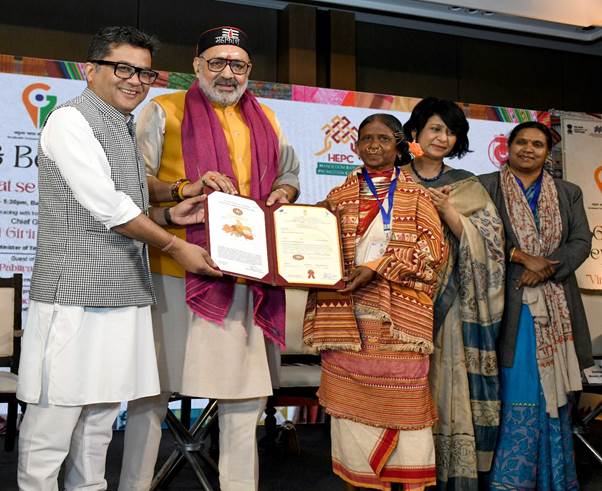
The “GI & Beyond 2024” Summit, organized by the Office of the Development Commissioner for Handlooms, Ministry of Textiles, in collaboration with the Handloom Export Promotion Council (HEPC), successfully concluded on 25.11.2024 at New Delhi. The event highlighted the exceptional skills of artisans who manufactured India’s Geographical Indication (GI) tagged handloom and handicraft products and their global significance.
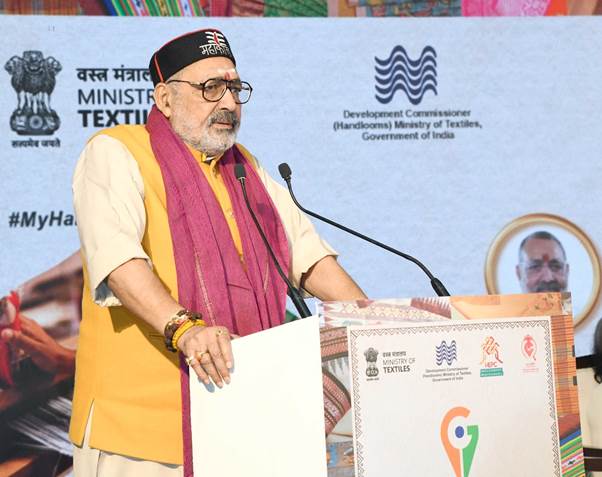
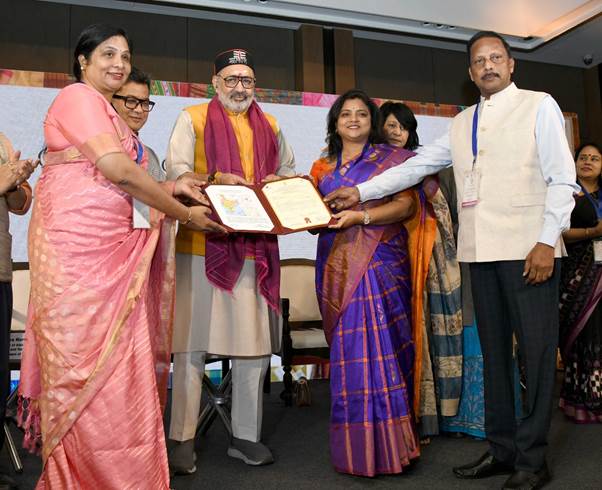
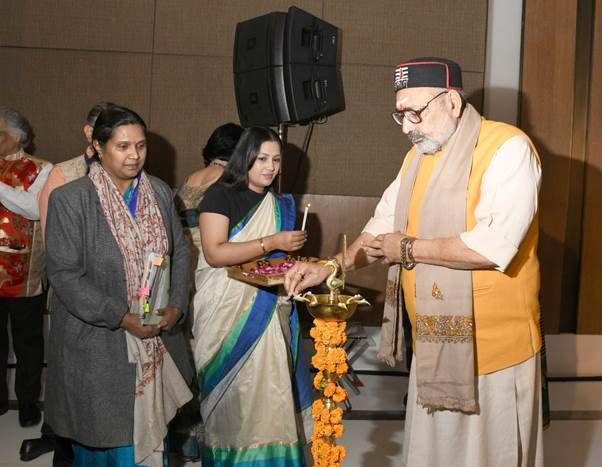
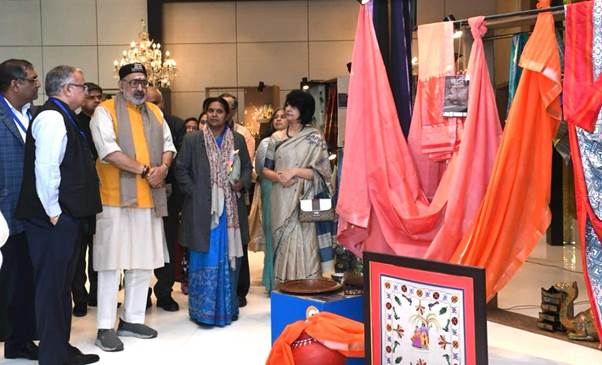
The event was inaugurated by Shri Giriraj Singh, Hon’ble Union Minister of Textiles as chief guest who highlighted the importance of GI products in promoting India’s rich cultural heritage and invited attention of the gathering on the attractive tourism concepts like heritage and cultural tourism for marketing GI goods. HMOT distributed GI certificates to 10 artisans from various parts of the country. Speaking on the occasion, Shri Giriraj Singh said that India received its 1st GI certification in 2004 and now our focus is to increase the income of artisans and how to make GI tagged products go global. The Minister exhorted that we should progress the GI tagged products from “Gaon to Global”. HMOT emphasised the importance of marketing and telling the world about the creativity of our artisans for the promotion of GI products and incorporate the GI tagged products as part of religious and cultural tourism. The Minister appealed the states having GI tagged products to collaborate with Textile Ministry to organize trade festivals exclusively for the promotion and marketing of the products, in the lines of Kutch festival. HMOT highlighted honourable Prime Minister’s vision of Atmanirbhar Bharat and emphasized that along with Vikas we need our Virasat as well. GI tag represents our heritage and as we heading towards Vikasit Bharat, our heritage is our capital, the Minister added.
Shri Pabitra Margherita, Hon’ble Minister of state for Textiles, Government of India graced the occasion as guest of Honour. Speaking at the occasion the MoS pointed out that handloom and handicrafts sector are not just industries, and they are the testament of our country’s diversity, creativity and legacy. Each craft and each artisan tell us a story of its people and its traditions.GI is a tool for empowerment and a shield of our heritage and a bridge to the global market., MOS added.
Smt.Rachana Shah, Secretary Textiles and Dr.M.Beena,Development Commissioner for Handlooms ,Ms. Amrit Raj,Development Commissioner for Handicraft, Ms.Roop Rashi, Textile Commissioner and Shri Unnat Pandit, Controller General of Patents, Trademark & GI also graced the occasion.
The event had representation from 13 countries spread across 4 continents and witnessed around 20 overseas buyers, 50 exporters & MNCs, 70 GI authorised users and 40 officials from various departments including state governments. The diverse representation from various stakeholder of the industry fostered meaningful discussions and collaborations to expand the market potential for GI-tagged products
The technical session on various domains of the trade emphasized the integration of traditional handwoven and handcrafted skill with modern business practices to enhance the global appeal of India’s traditional textiles and craft.
During the event, overseas buyers and domestic exporters interacted with the authorized users of Geographical Indications (GI). The overseas buyer applauded this event which beautifully narrated the tale of ethnic handwoven and handcrafted tradition of India. The domestic exporters stated that the products displayed are quite impressive and captivating. The exporters and overseas buyers expressed their willingness to extend possible support in promoting and to enhance the global presence of GI products.
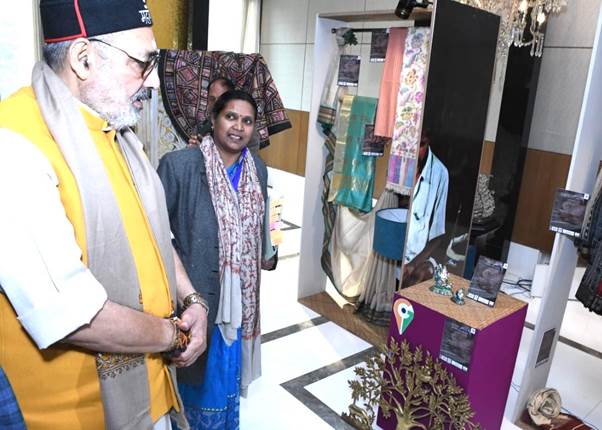
A special thematic display showcased an array of GI-tagged handloom and handicraft products across India, with participation from GI holders and authorized users. The display highlighted the regional uniqueness and cultural value of these artisanal products, attracting significant interest from attendees.
The summit concluded with a collective commitment to continue supporting India’s handloom and handicraft sector, ensuring that the legacy of GI products thrives both nationally and internationally.
The tiger population has increased as per the All India Tiger Estimation done in 2022, with an estimated number of 3682 (range 3167-3925) as compared to the 2018 estimation of 2967 (range 2603-3346) and 2014 estimation of 2226 (range 1945-2491). The tiger population is increasing at a rate of 6% per annum in India when consistently sampled areas are compared. The details of tiger estimation pertaining to tiger landscapes in the country, for the years 2006, 2010, 2014, 2018 and 2022 is at Annexure-I.
The Government of India, through the National Tiger Conservation Authority, has advocated a three pronged strategy to manage human-wildlife negative interactions as follows:-
(i) Material and logistical support: Funding support through the ongoing Centrally Sponsored Scheme of Project Tiger, is provided to tiger reserves for acquiring capacity in terms of infrastructure and material, to deal with tigers dispersing out of source areas. These are solicited by tiger reserves through an Annual Plan of Operation (APO) every year which stems out from an overarching Tiger Conservation Plan (TCP), mandated under Section 38 V of the Wildlife (Protection) Act, 1972. Inter alia, activities such as payment of ex-gratia and compensation, periodic awareness campaigns to sensitize, guide and advise the general populace on man-animal conflict, dissemination of information through various forms of media, procurement of immobilization equipment, drugs, training and capacity building of forest staff to deal with conflict events are generally solicited.
(ii) Restricting habitat interventions: Based on the carrying capacity of tigers in a tiger reserve, habitat interventions are restricted through an overarching TCP. In case tiger numbers are at carrying capacity levels, it is advised that habitat interventions should be limited so that there is no excessive spill over of wildlife including tigers thereby minimizing man-animal conflict. Further, in buffer areas around tiger reserves, habitat interventions are restricted such that they are sub-optimal vis-à-vis the core/critical tiger habitat areas, judicious enough to facilitate dispersal to other rich habitat areas only.
(iii) Standard Operating Procedure (SOPs): The National Tiger Conservation Authority has issued following three SOPs to deal with human-animal conflict, which are available in public domain:
i. To deal with emergency arising due to straying of tigers in human dominated landscapes
ii. To deal with tiger depredation on livestock
iii. For active management towards rehabilitation of tigers from source areas at the landscape level.
The three SOPs inter alia includethe issue of managing dispersing tigers, managing livestock kills so as to reduce conflict as well as relocating tigers from source areas to areas where density of tiger is low, so that conflict in rich source areas does not occur.
Also as per Tiger Conservation Plans need based and site-specific management interventions are undertaken by the tiger reserves for improving the quality of wildlife habitat and funding support for these activities is provided under the Project Tiger Component of the ongoing Centrally Sponsored Scheme of Integrated Development of Wildlife Habitats.
As reported by States, the details of tigers lost due to confirmed unnatural causes (poaching, seizures and unnatural not poaching) during last three years and current year are at Annexure-II.
Annexure-I
Details of tiger estimation pertaining to tiger landscapes in the country, for the years 2006, 2010, 2014, 2018 and 2022 (As per All India Tiger Estimation Reports)
State
Tiger Population
2006
2010
2014
2018
2022
Shivalik-Gangetic Plain Landscape Complex
Uttarakhand
178
227
340
442
560
Uttar Pradesh
109
118
117
173
205
Bihar
10
8
28
31
54
Shivalik Gangetic
297
353
485
646
819
Central Indian Landscape Complex and Eastern Ghats Landscape Complex
Andhra Pradesh
95
72
68
48
63
Telangana
–
–
–
26
21
Chhattisgarh
26
26
46
19
17
Madhya Pradesh
300
257
308
526
785
Maharashtra
103
169
190
312
444
Odisha
45
32
28
28
20
Rajasthan
32
36
45
69
88
Jharkhand
–
10
3
5
1
Central India
601
601
688
1033
1439
Western Ghats Landscape Complex
Karnataka
290
300
406
524
563
Kerala
46
71
136
190
213
Tamil Nadu
76
163
229
264
306
Goa
–
–
5
3
5
Western Ghats
412
534
776
981
1087
North Eastern Hills and Brahmaputra Flood Plains
Assam
70
143
167
190
229
Arunachal Pradesh
14
–
28
29
9
Mizoram
6
5
3
0
0
Nagaland
–
–
–
0
0
Northern West Bengal
10
–
3
0
2
North East Hills, and Brahmaputra
100
148
201
219
236
Sunderbans
–
70
76
88
101
TOTAL
1411
1706
2226
2967
3682
Annexure-II
Details of tiger lost due to confirmed unnatural causes (poaching, seizures and unnatural not poaching) during last three years and current, State-wise
Archaeological Survey of India (ASI) carries out upkeep of all Nationally protected monuments. Besides, Amenities and information has been provided at important monuments to enrich the experience of the visitors. Furthermore, the Government of India has launched Adopt A Heritage 2.0 Programme in 2023 to create framework for engaging public/private sector companies, NGOs, Trusts, Societies etc. to provide amenities at protected monuments to enhance visitors experience to make them visitor friendly.
Through the academies and ZCCs; the focus is on cultural preservation, documentation, research, publication, cultural exchange programmes, capacity building and conservation.
The Government of India promotes Indian folk Arts and Culture abroad through Global Engagement Scheme under which Festivals of lndia are organized in other countries showcasing folk art and other cultural events as exhibitions, dance, music, theatre, food fest, film fest, yoga etc. and through grant-in-aid to lndo-Foreign Friendship Cultural Societies for organizing programmes and activities including folk art and other cultural activities for their promotion abroad
The Government of India has taken several initiatives for enrich India’s cultural heritage during last 5 years. An Umbrella Scheme ‘Kala Sanskriti Vikas Yojana’ comprising several sub-schemes has been developed to provide financial assistance for the promotion of Arts and Culture, such as:Promotion of Guru Shishya Parampara.Promotion of Art and Culture.Construction of Tagore Cultural Complex.Scheme for Scholarship and fellowship for Promotion of Art and Culture. The Details of funds disbursed under Kala Sanskriti Vikas Yojana in the last five years and are given as under:- (Amount Rs. in Crores)S. No.Years Total funds disbursed1.2020-21100.312.2021-22126.183.2022-23182.254.2023-24166.955.2024-25(Up to 21.11.2024)59.98
MoUs have been signed under ‘Adopt A Heritage 2.0’ for the following monuments in the State of Bihar and Maharashtra: S. No.Name of StateName of Monument1.BiharBuddhist Stupa, Kesariya, Champaran2.MaharashtraElephanta Caves, Raigarh (Maharashtra) The details of financial assistance to the States of Maharashtra and Bihar under “kala Sanskriti Vikas Yojana” scheme is given below: – (Amount Rs. in Crores)S. No.YearsTotal funds disbursedBiharMaharashtra1.2020-212.694.482.2021-223.406.983.2022-236.288.544.2023-248.1916.285.2024-25(up to 21.11.2024)1.454.79
The Government of India has set up seven Zonal Cultural Centres (ZCCs) in the country with headquarters at Patiala (Punjab), Nagpur (Maharashtra), Udaipur (Rajasthan), Prayagraj (Uttar Pradesh), Kolkata (West Bengal), Dimapur (Nagaland) and Thanjavur (Tamil Nadu) to protect, promote and preserve various forms of folk art & culture throughout the country and also to set up mechanism for development of the cultures of various regions. The mandate behind setting up of these ZCCs was to bind the nation culturally while retaining the individuality of the regions that comprise them. The aims and objectives of establishing these ZCCs are:
to preserve and promote the projection and dissemination of arts in the concerned zone;
to develop and promote their rich cultural diversity;
to encourage folk & tribal arts and preservation of vanishing arts;
to involve youth in creative cultural communication and lay special emphasis on the linkages between different areas and their contribution to Indian culture.
A Corpus Fund was provided to each ZCC towards cost of equipment and infrastructure including buildings. Government of India provided Rs. 10.00 crore each to all the seven ZCCs in 7th & 10th Plan. During 2014-15, an additional amount of Rs. 10.00 crore each was provided to six (6) ZCCs viz. North Zone Cultural Centre, Patiala; South Zone Cultural Centre, Thanjavur; South Central Zone Cultural Centre, Nagpur; West Zone Cultural Centre, Udaipur; North Central Zone Cultural Centre, Prayagraj & Eastern Zonal Cultural Centre, Kolkata and Rs. 20.00 crore was provided to North East Zone Cultural Centre (NEZCC), Dimapur towards corpus enhancement, taking the total corpus to Rs. 30.00 crore for NEZCC, Dimapur and Rs. 20.00 crore each for the remaining six ZCCs. All the administrative expenses of these ZCCs are being met by the interest accrued on this Corpus Fund. Land required by each Centre was provided free of cost by the State Governments wherein the headquarters of ZCCs are located.
For the promotion of art & culture in the country, these ZCCs organize various cultural activities and programmes on regular basis throughout the year for which annual grant-in-aid is provided to them. Besides, Ministry of Culture also organizes Rashtriya Sanskriti Mahotsavs (RSMs) through these ZCCs where a large number of artists from all over India are engaged who showcase their talents during these programmes. From November, 2015 onwards, fourteen (14) RSMs and four (04) Zonal Level RSMs have been organized by Ministry of Culture across the country. In addition, a minimum number of 42 Regional Festivals are organized by these ZCCs every year for promotion of art and culture.
The Ministry of Culture is committed to the preservation, conservation and promotion of India’s rich cultural heritage, including regional languages, traditional art forms, and performing arts that are at risk of extinction. Through its autonomous bodies and Zonal Cultural Centres (ZCCs), several targeted initiatives are carried out by the ministry.
Sahitya Akademi (SA)works for the promotion of literature in24 recognized languages and various unrecognized and tribal languages by organizing language conventions and awarding the Bhasha Samman to scholars for their contributions to unrecognized languages like Haryanvi, Koshali-Sambalpuri, Paite, Magahi, Tulu, Kurukh, Ladakhi, Halbi, Saurashtra, Kumauni, Bhili, Warli, Banjara/Lambadi, Khasi, Mising, Kodava, Chakma, Rajbanshi, Awadhi, Bundeli, Garhwali, Kachchhi, Himachal, Ao, Karbi, Angami, Gondi, Ho, Chhattisgarhi, Gojri, Bhojpuri, Ahirani, Lepcha, Mundari, Garo, Bhili, Kui, Khasi, Mizo, Pahari, Kokborok.
Sangeet Natak Akademi (SNA) and Lalit Kala Akademi (LKA) undertake initiatives to preserve endangered performing arts and visual arts, respectively, by organizing workshops, exhibitions, and residencies, and creating platforms like Museum of Performing Arts and the PARI project to showcase regional art and talent. Several other initiatives like Kala Deeksha, Kala Dharohar, Museum of Performing Arts, Kala Pravah (Temple Festival Series), Jyotirgamaya, camps for puppetry, Dokra Casting, Mask Making, Rangoli Workshop, Tribal art conclave, have been undertaken by these autonomous bodies for the preservation of the dying and rare performing art forms across the country.
Indira Gandhi National Centre for the Arts (IGNCA) focuses on documenting endangered languages and art forms through films, texts, digital archives, and workshops. National Mission on Manuscripts undertakes the works of conserving manuscripts to tap into the vast potential of Indian Knowledge Systems (IKS) and to make rare manuscripts accessible to scholars, researchers, and the general public.
Zonal Cultural Centres (ZCCs) play a pivotal role in reviving rare and vanishing art forms through schemes like Guru-Shishya Parampara, which trains disciples under eminent Gurus, and the Young Talented Artists Award to encourage young talents. Other notable initiatives include Theatre Rejuvenation, which supports stage shows and workshops, Shilpgram, which promotes rural crafts and organizes fairs, and National Cultural Exchange Programme (NCEP), which fosters cross-cultural understanding.
The Ministry’s plan of action includes sustained documentation of endangered art forms and languages, expanding digital archives for research, and ensuring intergenerational transmission through training programs like Guru-Shishya Parampara. It is envisaged to organize cultural festivals, exhibitions, and exchange programs across the country through public-private collaborations, and state-level partnerships to enhance awareness and appreciation of India’s diverse heritage with a view to safeguard the country’s cultural legacy for future generations. Honouring artists and scholars with awards like Bhasha Samman and promoting North-East cultural heritage through initiatives like Octave are among the integral parts of the Ministry’s strategy.
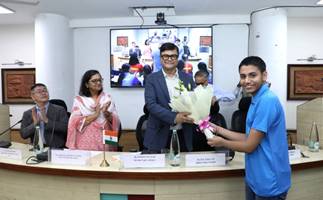
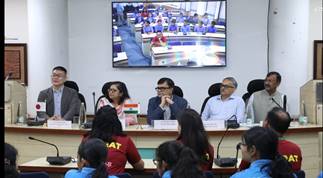
The Department of School Education & Literacy, Ministry of Education (DoSEL), is sending 20 school students and 2 supervisors to Japan to participate in the Sakura Programme 2024 along with 5 other countries from 20-26 October 2024. The enthusiastic and excited children were flagged off by Shri Charanjt Taneja, Deputy Secretary, DoSEL; Dr. Amarendra Prasad Behera, Joint Director, CIET-NCERT; and Ms. Kirti Panwar, Deputy Commissioner, Navodaya Vidyalaya in a ceremony at CIET-NCERT organised by DoSEL. The event was also attended by Mr. Kemmochi Yukio, Manager of the Japan Science and Technology Agency, and officials from DoSEL-MoE. These 20 students (10 boys and 10 girls) are from Navodaya Vidyalayas and alumni of the PRERANA program from across the country.
To develop the intellectual horizon and scientific exploration among young learners, the Japan Science and Technology Agency (JST) has been implementing the “Japan-Asia Youth Exchange Program in Science” also known as the “Sakura Science Programme” since 2014. India was added to the Sakura Program in 2015. The students are invited under the programme for short-term visits to Japan, giving them the opportunity to experience Japan’s cutting-edge science and technology as well as its culture.
The National Education Policy (NEP) 2020, while emphasizing the importance of curriculum and pedagogy in schools, endorses that “Learning should be Holistic, Integrated, Enjoyable and Engaging in itself. Also, NEP-2020 states that in all stages, experiential learning will be adopted as standard pedagogy within each subject, and with explorations of relations among different subjects. It is in this context that educational trips and excursions to various places of importance in terms of historical, cultural, social and technological development are of paramount importance. Japan as a developed nation, a friendly country, along with technological advancements, is also a favourite destination for educational exposure. Therefore, visiting a country like Japan is always enriching and provides an opportunity for the exploration of innovative practices.
India participated in the program for the first time in April 2016. So far, 553 students and 85 supervisors have visited Japan under this programme. The last batch visited Japan in June 2024.
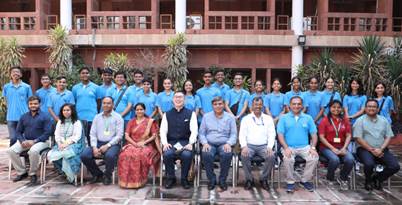
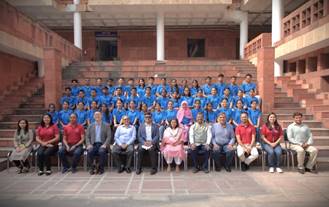
Shri Sanjay Kumar, Secretary, (DoSEL), Ministry of Education, flagged off a group of 47 enthusiastic and excited school children, who have been invited to participate in Sakura Programme 2024 from India along with 5 countries (Indonesia, Marshall Islands, Micronesia, Palau and Peru) from 10th-16th November 2024. The ceremony at CIET-NCERT, New Delhi, was organised by DoSEL and was attended by Prof. Dinesh Prasad Saklani, Director, NCERT; Smt. Archana Sharma Awasthi, Joint Secretary, DoSEL; Mr. Kemmochi Yukio, Manager, Japan Science and Technology Agency, Japan; Dr. Amarendra Prasad Behera, Joint Director, CIET-NCERT; and officials from DoSEL.
In this group, Japan Science and Technology Agency (JST) has invited 47 school students and 4 supervisors. These 47 students (18 boys and 29 girls) are from Kasturba Gandhi Balika Vidyalaya and Government Schools of Telangana, Jharkhand, Sikkim, Chandigarh, Kerala, Manipur, Meghalaya, Haryana, Arunachal Pradesh, Jammu & Kashmir, Uttar Pradesh and Maharashtra and Kendriya Vidyalayas.
To develop the intellectual horizon and scientific exploration among young learners, the JST has been implementing the “Japan-Asia Youth Exchange Program in Science” also known as the “Sakura Science Programme” since 2014. India was added to the Sakura Program in 2015. The students are invited under the programme for short-term visits to Japan, giving them the opportunity to experience Japan’s cutting-edge science and technology as well as its culture.
The National Education Policy (NEP) 2020, while emphasizing the importance of curriculum and pedagogy in schools, endorses that “Learning should be Holistic, Integrated, Enjoyable and Engaging in itself. Also, NEP-2020 states that in all stages, experiential learning will be adopted as standard pedagogy within each subject and with explorations of relations among different subjects. It is in this context that educational trips and excursions to various places of importance in terms of historical, cultural, social and technological development are of paramount importance. Japan, as a developed nation, a friendly country, along with technological advancements, is also a favourite destination for educational exposure. Therefore, visiting a country like Japan is always enriching and provides an opportunity to explore innovative practices.
India participated in the program for the first time in April 2016. So far, 572 students along with 87 supervisors have visited Japan under this programme. The last batch visited Japan in October 2024.
Department for Promotion of Industry and Internal Trade (DPIIT) today celebrated the 8th anniversary of 4 new industrial corridors namely Amritsar-Kolkata Industrial Corridor (AKIC), Chennai-Bengaluru Industrial Corridor (CBIC), East Coast Economic Corridor (ECEC), and Bengaluru-Mumbai Industrial Corridor (BMIC) being added to India’s Industrial landscape— that have accelerated India’s journey towards becoming a global manufacturing powerhouse.
Earlier, India’s first corridor Delhi Mumbai Industrial Corridor (DMIC) spanning Uttar Pradesh, Haryana, Rajasthan, Madhya Pradesh, Gujarat and Maharashtra was solely leading the Silent Industrial revolution in the country.
Approved on 20 November 2019, these corridors represent the Government of India’s pioneering vision to boost manufacturing and drive planned urbanization nationwide, creating significant socio-economic benefits.
The establishment of these corridors has been a critical step toward transforming India’s industrial landscape. Spread across key regions in India, each corridor was strategically designed to integrate industry and infrastructure, establishing world-class connectivity that supports rapid industrialization. With high-speed rail networks, modern ports, dedicated logistics hubs, and advanced airports, these corridors are setting new standards in infrastructure development.
Each of the five corridors has played a distinctive role in shaping India’s economic narrative:
Delhi-Mumbai Industrial Corridor (DMIC) has emerged as a flagship of industrial and urban development. Anchored by advanced infrastructure, DMIC’s Dholera Special Investment Region in Gujarat, Shendra-Bidkin Industrial Area in Maharashtra, Integrated Industrial Townships- Greater Noida and Vikram Udyogpuri have created a benchmark in high-tech manufacturing, offering ‘plug-and-play’ infrastructure that facilitates ease of doing business. As a joint initiative between Japan and India, DMIC also exemplifies international collaboration for industrial growth.
Amritsar-Kolkata Industrial Corridor (AKIC) connects Delhi, Amritsar, and Kolkata, spanning over 1,800 km and impacting 20 cities. This corridor benefits 40% of India’s population, supporting regional industrial development in one of the world’s most densely populated areas. Regions like Khurpia in Uttarakhand and Rajpura-Patiala in Punjab have seen a surge in industry interest, driven by tailored investment incentives and robust connectivity.
Chennai-Bengaluru Industrial Corridor (CBIC) is planned to achieve accelerated development and regional industry agglomeration in the states of Tamil Nadu, Karnataka and Andhra Pradesh. It is enhancing trade between East Asia and Southern India, with nodes stretching from Chennai to Bengaluru, and planned extensions to Mangalore.
East Coast Economic Corridor (ECEC), India’s first coastal corridor, has amplified the nation’s trade and export capacities. Several ports located across the corridor not only serve as international gateways but, more importantly, act as critical links in the supply chain. By supporting logistics, packaging, and other services for production clusters and distribution centers, they are a valuable source of economic activity and development. The Vizag-Chennai Industrial Corridor (VCIC) has been designated as the first phase of the ECEC.
Bengaluru-Mumbai Industrial Corridor (BMIC) has prioritized regions with high industrial potential, such as Dharwad in Karnataka and Satara in Maharashtra. As one of the latest corridors, BMIC is establishing high-tech, multi-modal logistics and manufacturing hubs that complement existing industrial zones, ensuring balanced regional development and bridging the north-south economic axis.
On 28 August, 2024, the Cabinet Committee on Economic Affairs chaired by the Prime Minister Shri Narendra Modi approved 12 new project proposals under the National Industrial Corridor Development Programme (NICDP) with an estimated investment of Rs. 28,602 crore. Spanning across 10 states and strategically planned along 6 major corridors, these projects represent a significant leap forward in India’s quest to enhance its manufacturing capabilities and economic growth.
Some of these new projects are situated directly on the five corridors.
On DMIC, the Dighi node in Maharashtra and Jodhpur-Pali node in Rajasthan will amplify the corridor’s capacity for high-tech manufacturing and logistics.
On AKIC, Khurpia in Uttarakhand, Rajpura-Patiala in Punjab, Agra and Prayagraj in UP, Gaya in Bihar will further integrate northern states into the nation’s industrial landscape, leading to inclusive regional economic growth.
On CBIC, Palakkad in Kerala will enhance connectivity with southern manufacturing hubs, promoting trade and export potential.
On ECEC, The nodes of Kopparthy and Orvakal in Andhra Pradesh will strengthen coastal supply chains, bridging export-driven industries with inland clusters.
These industrial smart cities, like jewels in India’s economic necklace, represent the next generation of connected, self-sustaining hubs that will support local communities and elevate India’s global standing. As the nation marks five years of significant industrial progress, the recent approval of 12 new nodes signals a strong future for India’s industrial landscape, strengthening the country’s capacity for innovation, self-reliance, and sustainable economic development.
As India celebrates this milestone, the significance of the industrial corridors becomes ever more evident. These corridors are not just roads and factories; they are arteries of growth, pumping life into the nation’s industrial ambitions. They are a testament to India’s potential and its commitment to innovation, resilience, and progress. As the nation steps into the future, the corridors stand as both a foundation and a promise of what lies ahead.
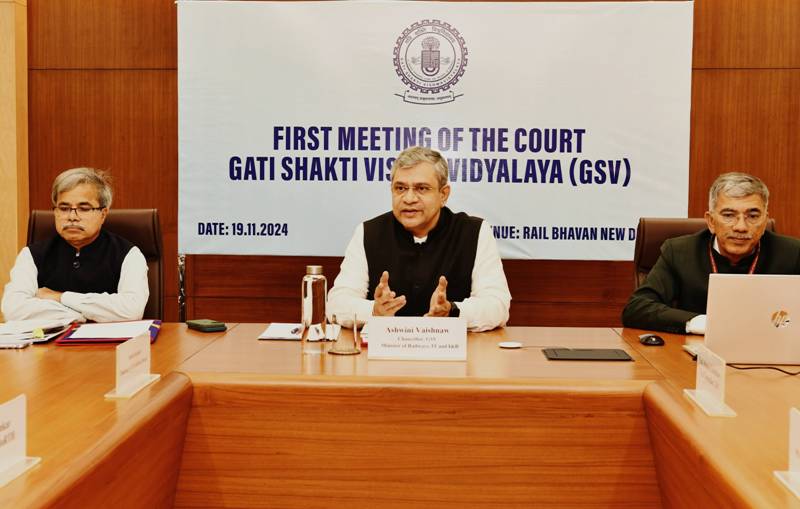
Gati Shakti Vishwavidyalaya (GSV) held its 1st Court meeting in Rail Bhawan in New Delhi today. Chairing the meeting, Sh. Ashwini Vaishnaw, Union Minister of Railways, Information & Broadcasting and Electronics & Information Technology said “GSV is set to emerge as the best university in India and World, in line with PM Shri Narendra Modi’s vision, with its focus on Industry-driven approach and employability-oriented courses for the entire transportation and logistics sectors, including railways, aviation, marine engineering, highways, shipping, logistics and defense sectors. He further said “All the newly-recruited officers of Indian Railway Management Service (IRMS) Officers shall undergo their probationary training designed by Gati Shakti Vishwavidyalaya, a combination of theoretical and practical experiences at CTIs and industry, resulting in an MBA degree from GSV. Further, new programs shall be added for Bridge and Tunnel Engineering, Aviation Operations, Maritime Infrastructure, Highway Engineering and for defense forces”.
This event was graced by Shri Satish Kumar Chairman & CEO, Railway Board, Shri V Uma Shankar, Secretary, Ministry of Road Transport and Highways, Shri Amardeep Singh Bhatia,Secretary, DPIIT, Vice-Chief of Army Staff Lt. Gen. NR Raja Subramani, Sunil Mathur,MD & CEO, Siemens India, Olivier Loison MD, Alstom India, Jaya Jagadish,MD, AMD India, Shri Sushil Kumar Singh, Chairman, Deendayal Port Authority, Prof. Manoj Choudhary,Vice-Chancellor, Gati Shakti Vishwavidyalaya, representatives of Ministry of Higher Education, Ports Shipping and Waterways, Civil Aviation, AICTE and the leading functionaries of Gati Shakti Vishwavidyalaya.
At the occasion, Prof. Manoj Choudhary Founding Vice-Chancellor, Gati Shakti Vishwavidyalaya presented a detailed progress and status report of the university since its inception on 06 Dec 2022. All the members wholesomely praised the huge strides and progress of GSV in such a short time, particularly its Industry-driven and innovation-led approach, focus and results achieved within such a short time, setting the foundation of a top-class university. The members of the Court offered several suggestions and collaborative inputs for future programs in highway engineering, ports infrastructure, artificial intelligence, green hydrogen and ports modernization, defense sectors logistics and supply chain, affiliating national academies in the infrastructure sectors, being a nodal center to other universities/institutions, infrastructure project management etc. The Annual Reports and Annual Accounts of the university were also approved to be tabled before the Parliament.
Gati Shakti Vishwavidyalaya (GSV) has quickly emerged as a game changer in the higher education sector, particularly for the transportation, logistics and infrastructure sectors. GSV Vadodara was established as a Central University through an Act of Parliament in 2022, for creating best in class manpower and talent for the entire transportation and logistics sectors. This Central University is sponsored by the Ministry of Railways, Govt. of India and is mandated to work across railways, shipping, ports, highways, roads, waterways, and aviation etc. Following a demand-driven curriculum and leveraging state of the art infrastructure of all the Centralized Training Institutes of Indian Railways, the GSV shall create a resource pool of professionals across technology, economics, management and policy comprising multidisciplinary teaching (bachelors/masters/doctoral), executive training and research. GSV shall also undertake training for Indian Railways probationers and serving officers. Being an Industry-driven and Innovation-led university, GSV has a very strong focus on collaborations with leading institutions and industries across the world.
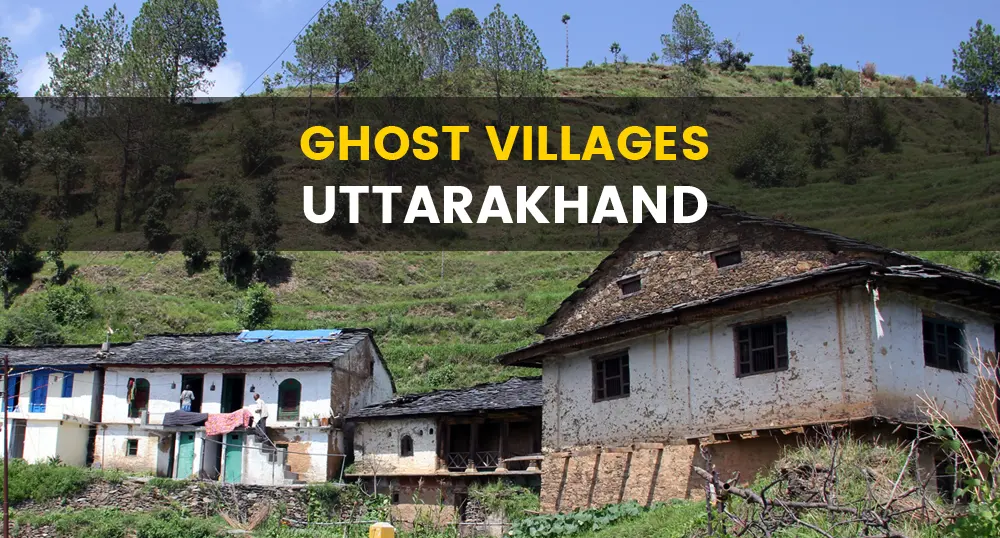
Migration from the hill areas of Uttarakhand is a concerned issue. Many people especially from far-flung rural areas migrate to nearest towns or cities within or outside the state in search of employment and better educational and health facilities. The continuous migration from some villages have resulted in the absolute desertion of those villages with no inhabiting population left behind. These un-inhabited villages are being termed as Ghost Villages.
As per 2011 Census, there are 1048 villages with zero population and another 44 villages have population less than 10 persons.
Browse the list of ghost villages in Uttarakhand by each districts. Pauri district in Garhwal region and Almora district in Kumaon region contain the most number of ghost villages in Uttarakhand.
The film, inspired by Devi’s own life, tells the story of an elderly couple’s love. PITHORAGARH: Hira Devi, 80, is an unlikely film heroine from one of Uttarakhand’s ghost villages, Gadtir, which has several empty houses because of migration. Hira Devi, 80, is an unlikely film heroine from one of Uttarakhand’s ghost villages, Gadtir, which has several empty houses because of migration. The octogenarian, who is illiterate and has lived in the mountain village most of her life, recently got a chance to star in ‘Pyre’, a film inspired by a story similar to her own, which will have its world premiere on Tuesday (Nov 19) at the 28th Tallinn Black Nights International Film Festival in Estonia.
The Importance of Traveling with a Valid Train Ticket: Understanding the Legal, Ethical, and Practical Implications
Traveling by train is one of the most popular and convenient modes of transportation, especially in countries like India where the rail network spans the length and breadth of the country. Millions of people rely on trains for their daily commute, long-distance travel, and even leisurely trips. However, amidst the convenience, there is an important legal and ethical responsibility that every passenger must observe: traveling with a valid ticket.
While it may seem trivial to some, not having a valid train ticket has serious repercussions. Let’s explore the different dimensions of why traveling with a valid ticket is important.
1. Legal Implications
Traveling without a ticket is illegal in most countries, and India is no exception. Under the Indian Railways Act of 1989, traveling without a ticket can lead to serious legal consequences. A ticketless traveler is considered a violator of the law and can face the following:
Fines: Ticketless travelers are usually fined on the spot by a traveling ticket examiner (TTE). The fine often includes the fare of the journey along with an additional penalty, which can vary based on the class and distance of travel. In some cases, the fine can be substantial.
Legal Action: If the offender is unable to pay the fine, legal action may be taken. In extreme cases, such passengers may face imprisonment or be taken to court for further proceedings.
Blacklisting: Repeated offenses might lead to blacklisting, preventing travelers from using train services in the future.
The strict regulations are meant to deter fare evasion and ensure that everyone using the service contributes to its maintenance and functioning.
2. Ethical Considerations
Beyond the legal aspect, traveling without a ticket is ethically wrong. Here’s why:
Fair Contribution: Public transportation systems like railways are heavily subsidized and maintained through public funds and the revenue generated by ticket sales. When a passenger evades fare, they are, in essence, stealing from the system and putting an undue burden on others who pay their fair share.
Undermining the System: Evading fares can lead to losses for the railway system, impacting the quality of services. When everyone contributes by purchasing tickets, the system can invest in improving infrastructure, cleanliness, and safety measures.
Moral Responsibility: As a responsible citizen, one has a duty to follow the rules and regulations that ensure societal harmony. Bypassing the system by not buying a ticket sets a bad example, especially for young travelers and future generations.
3. Practical Risks of Traveling Without a Ticket
In addition to legal and ethical consequences, traveling without a ticket can lead to several practical inconveniences:
Embarrassment and Discomfort: Getting caught without a ticket can be highly embarrassing, especially if it happens in a crowded compartment or in front of fellow passengers. The subsequent confrontation with the TTE, followed by the payment of fines, can create an unpleasant experience that could have been easily avoided.
Uncertainty of Travel: Ticketless travel creates a constant fear of getting caught. It can also lead to anxiety and discomfort throughout the journey, detracting from the overall travel experience.
Risk of Missing Your Train: For those who try to board without a ticket at the last minute, there’s always a risk of being deboarded at the next station by the TTE or being asked to leave the train. This could result in significant delays and disruption to personal or professional commitments.
4. Social and Economic Impact
Revenue Loss for Railways: Railways operate on a thin margin, with much of their revenue dependent on ticket sales. When passengers travel without tickets, it leads to a revenue shortfall, making it harder for the railway authorities to maintain and improve services. This could lead to higher fares for legitimate travelers or a reduction in the quality of services offered.
Strain on Resources: The railway system already struggles with overcrowding and limited resources. Ticketless travelers add to the burden, often leading to overcrowding in compartments, which diminishes the comfort and safety of law-abiding passengers.
Increased Vigilance and Costs: The presence of ticketless travelers forces railway authorities to increase vigilance, hire more ticket checkers, and enforce stricter measures. This comes at an additional cost to the system, which could otherwise be used for improving passenger facilities and services.
5. How to Avoid the Temptation of Traveling Without a Ticket
Sometimes, people are tempted to travel without a ticket due to the urgency of their travel plans or the unavailability of tickets. However, there are legal and safer alternatives to consider:
Tatkal Booking: Indian Railways offers a Tatkal ticket booking system that allows passengers to book tickets at the last minute for an additional charge. This system is designed for those who need to travel urgently.
Waiting List and RAC Tickets: Even if confirmed tickets are unavailable, you can opt for a waiting list or RAC (Reservation Against Cancellation) ticket, which offers a legitimate chance of getting a seat before the journey starts.
General Class Travel: For short-distance travel, general-class compartments are available, where tickets are often available until the last minute. Purchasing a general-class ticket is a much better option than risking the consequences of traveling without one.
Online Ticket Booking: With the advent of digital ticketing, buying a ticket has never been easier. You can book tickets from the comfort of your home through the IRCTC website or mobile apps, ensuring you always have a valid ticket before traveling.
Conclusion
Traveling without a train ticket may seem like a minor infraction, but it has wide-reaching consequences that affect not just the individual but also the larger society. Legal penalties, ethical considerations, and practical inconveniences make it clear that buying a ticket is always the right choice. In addition to being law-abiding citizens, travelers who purchase tickets contribute to the development and sustainability of the railway system, ensuring that everyone can enjoy safe, comfortable, and reliable transportation.
Ultimately, responsible travel habits make for a better journey for everyone.
The occurrence of rape incidents involving tourists in India is a deeply concerning issue that has significant repercussions, not only for the victims and their families but also for the reputation and image of the country as a tourist destination. These incidents tarnish the perception of “Incredible India,” which is known for its rich cultural heritage, diverse landscapes, and warm hospitality. However, the prevalence of such crimes casts a shadow over these positive attributes and raises serious questions about safety and security for visitors.
Firstly, each incident of rape involving tourists erodes trust and confidence in India as a safe destination. Travelers, especially women, may become apprehensive about visiting the country due to fear for their personal safety. This fear can deter potential tourists from choosing India as their travel destination, resulting in a significant loss for the tourism industry. Moreover, repeated incidents contribute to negative media coverage, amplifying the perception of India as an unsafe place for tourists.
Secondly, the failure to effectively address and prevent these crimes reflects poorly on the authorities’ ability to ensure the safety of visitors. It highlights systemic issues such as gaps in law enforcement, inadequate infrastructure, and cultural attitudes towards gender-based violence. The lack of swift and decisive action to address these underlying issues undermines the credibility of India’s commitment to ensuring the well-being of tourists.
Additionally, the impact of rape incidents on the victims cannot be overstated. Beyond the physical and emotional trauma they endure, these incidents often result in long-lasting psychological effects, shattered confidence, and a reluctance to seek justice in a foreign legal system. The failure to provide adequate support and justice for victims further damages the perception of India as a compassionate and just society.
To mitigate the tarnishing of India’s image and restore trust in its tourism sector, comprehensive measures are required. This includes improving safety infrastructure, increasing police presence in tourist areas, enhancing awareness and sensitivity training for law enforcement officials, and implementing stringent legal measures to ensure swift and effective prosecution of perpetrators. Additionally, promoting a culture of respect and gender equality is essential to address the root causes of violence against women.
In conclusion, the occurrence of rape incidents with tourists in India not only inflicts harm on the victims but also undermines the country’s reputation as a welcoming and safe destination. Addressing these issues requires concerted efforts from the government, law enforcement agencies, tourism stakeholders, and society as a whole to ensure that India remains truly incredible in every aspect.
References
Dubey, P. (2018). No Nation for Women: Reportage on Rape from India, the World’s Largest Democracy. Simon and Schuster.
Kennedy, K. M., & Flaherty, G. T. (2015). The risk of sexual assault and rape during international travel: implications for the practice of travel medicine. Journal of travel medicine, 22(4), 282-284.
Thomas, T. K., & Mura, P. (2019). The ‘normality of unsafety’-foreign solo female travellers in India. Tourism Recreation Research, 44(1), 33-40.
Rao, N. (2012). The dark side of tourism and sexuality: trafficking of Nepali girls for Indian brothels. In Sex and tourism (pp. 155-165). Routledge.










 Eduindex
You must be logged in to post a comment.