Sergey Tokarev from Roosh: AI HOUSE Camp 2023 for Ukrainian IT specialists

 The Ukrainian IT sector needs strong support and assistance, especially after the full-scale invasion of Russia. With this in mind, many companies, organizations, and entrepreneurs, in particular international ones, gathered their forces to create powerful supportive IT communities. AI HOUSE is one of those initiatives that has actively operated since the war started. Sergey Tokarev, the co-founder of the tech company ROOSH, comments on the forthcoming event for IT specialists in Ukraine.

<img alt="" class="wp-image-96542" data-attachment-id="96542" data-comments-opened="1" data-image-caption="

Photo by Pavel Danilyuk on Pexels.com

” data-image-description=”” data-image-meta=”{“aperture”:”0″,”credit”:””,”camera”:””,”caption”:””,”created_timestamp”:”0″,”copyright”:””,”focal_length”:”0″,”iso”:”0″,”shutter_speed”:”0″,”title”:””,”orientation”:”0″}” data-image-title=”a couple walking in the office” data-large-file=”https://eduindex.org/wp-content/uploads/2023/09/pexels-photo-8112154.jpeg?w=667&#8243; data-medium-file=”https://eduindex.org/wp-content/uploads/2023/09/pexels-photo-8112154.jpeg?w=300&#8243; data-orig-file=”https://eduindex.org/wp-content/uploads/2023/09/pexels-photo-8112154.jpeg&#8221; data-orig-size=”1880,1255″ data-permalink=”https://edupediapublications.org/2023/09/12/sergey-tokarev-from-roosh-ai-house-camp-2023-for-ukrainian-it-specialists/pexels-photo-8112154/&#8221; height=”1255″ sizes=”(max-width: 1880px) 100vw, 1880px” src=”https://eduindex.org/wp-content/uploads/2023/09/pexels-photo-8112154.jpeg&#8221; srcset=”https://eduindex.org/wp-content/uploads/2023/09/pexels-photo-8112154.jpeg 1880w, https://eduindex.org/wp-content/uploads/2023/09/pexels-photo-8112154.jpeg?w=150&h=100 150w, https://eduindex.org/wp-content/uploads/2023/09/pexels-photo-8112154.jpeg?w=300&h=200 300w, https://eduindex.org/wp-content/uploads/2023/09/pexels-photo-8112154.jpeg?w=768&h=513 768w, https://eduindex.org/wp-content/uploads/2023/09/pexels-photo-8112154.jpeg?w=1024&h=684 1024w” style=”border: 0px; box-sizing: border-box; display: block; height: auto; max-width: 100%; vertical-align: bottom;” width=”1880″ />

Photo by Pavel Danilyuk on Pexels.com

A new project of AI HOUS

AI HOUSE initiative is launching a five-day camp for IT specialists in Ukraine. The organizer prepared a fruitful time for different specialists to improve their products and generate innovative ideas to put into practice. The camp is to be held offline in Lviv from 11 to 15 September.

According to Sergey Tokarev, the candidate selection is going to be pretty tough. The camp invites engineers, researchers, marketing specialists, project managers, and enthusiasts in Machine Learning and Artificial Intelligence. People who want to build their careers in this area also have an opportunity to participate. But only 35 candidates are eligible to join the camp. The key criteria in candidate selection are their ideas and experiences.

“AI HOUSE Camp 2023 is an important initiative to achieve our mission to promote creating new AI product companies and developing artificial intelligence in Ukraine. We want to combine AI and ML enthusiasts from all over the country with experienced mentors to create new Generative AI solutions and implement ideas that will shape the future,” says the AI HOUSE team.

AI HOUSE Camp 2023: What to expect?

The project’s objective is to help specialists and startups generate innovative ideas and level up their skills in the IT area. The participants have time to apply for it till 28 August 2023.

The selected candidates will receive a range of tasks to do. Together, they will group seven teams, and each team will have to develop a particular idea with the mentor’s assistance. The best teams with the best technological solutions will be rewarded. The reward involves being considered by the tech company ROOSH  for further investment and scaling.

Sergey Tokarevnotes that special guests will evaluate every work created by each team. Among them are CTO and co-founder of Reface Oles Petriv, Investment Analyst at Roosh Ventures Anna Melnychuk, Head of Research at SQUAD Oleksandr Zarechkovy, and co-founder and Head of R&D of ZibraAI startup Vlad Zavadsky.

Does the initiative offer a fixed prize?

The AI HOUSE Camp 2023 organizer does not offer any fixed prize for participating. They encourage candidates to donate 1000 hryvnia or more, as they cover the rest of the expenses. Sergey Tokarev mentions that all proceeds are going to be transferred to Reaktivna Poshta. It is a charitable organization that has been operating since 2014. It has provided gunners with spare parts, equipment, and other necessary materials.

The leading partner of the event is ROOSH. The Faculty of Applied Sciences of the Ukrainian Catholic University and one of the largest R&D centers in Ukraine SQUAD are among other partners.

Ukraine President&#39;s request to FIFA ahead of the final match.

World Cup organizers have rejected a request from Ukrainian President Volodymyr Zelensky to deliver a message ahead of the tournament’s final. Zelensky had asked to share a plea for world peace ahead of Sunday’s World Cup final but was turned down by FIFA, soccer’s governing body, CNN reported.

FIFA has gone to significant lengths to try and remove elements of politics from the 2022 World Cup, despite the very tournament being a political issue itself due to the nature of where it is being held.

Addressing to the situation, the FIFA authority quoted  “We are defending values, we are defending human rights and rights of everyone at the World Cup. Those fans and the billions watching on TV, they have their own problems. They just want to watch 90 or 120 minutes without having to think about anything, but just enjoying a little moment of pleasure and joy. We have to give them a moment when they can forget about their problems and enjoy football.”

Best and Cheapest Medical Colleges in the World

                                                                  (Photo: Jeduka.com)

Are you an MBBS aspirant looking for Best and Cheapest MBBS in the World? You must drop your research work right here!

 In the world, there has been significant growth in the field of medicine and healthcare. No doubt it’s been the most essential and satisfying profession. Doctors are equated to God. A selfless job of curing illness. Listening to words of gratitude is a treasure for doctors. How to become a doctor? questions lingering around the mind of MBBS aspirants.

You should know about the role of doctors, their duties inside and outside the hospital. A doctor’s duty is to treat and cure sick people. In this profession one must have an intention of serving humanity. This is one of the professions which earn too much respect in society. Unlike many other professions, a doctor treats people belonging to different religions, castes and creeds. He never discriminates among his patients nor ever he lets patient feel their religion, caste or creed.

Beyond the numerous advantages and desire to acquire the medical qualification of Bachelor of Medicine and Bachelor of Surgery MBBS, we also understand that the financial implication of taking on studies in this field of medicine can be discouraging due to the lack of cheapest MBBS universities and colleges in the world.

See the list of the best and cheapest medical colleges and universities in the world below.

1.     AIIMS, Delhi

All India Institute of Medical Sciences (AIIMS) Delhi is a medical college and medical research public university based in New Delhi, India. The Institute was established in 1956 and operates autonomously under the Ministry of Health and Family Welfare. The Institute has comprehensive facilities for teaching, research and patient-care. Teaching and research here are conducted in 42 disciplines. AIIMS offers various best-in-class medical graduation and post-graduation courses and awards degrees under its own name. AIIMS has been consistently ranked the top medical college in India. The total fee paid is INR 8,140 for the 5-year MBBS programme.

2.     Maulana Azad Medical College, Delhi

Maulana Azad Medical College, New Delhi was established in 1958. It is also known as MAMC. It is a medical college in New Delhi affiliated to the University of Delhi. Maulana Azad Medical College offers various undergraduate, postgraduate and super speciality courses in different streams that include Medicine and Allied Sciences, Pharmacy, and Sciences. The college has various departments that are  Anatomy, Anesthesiology, Biochemistry, Community Medicine, Dermatology, STD and Leprosy, ENT, Forensic Medicine, General Medicine, General Surgery, Medical Education, Microbiology, Neonatology and many more. The total fee paid is INR 13,820 for MBBS programme.

3. R.G Kar Medical College and Hospital, Kolkata

Established as the Calcutta School of Medicine in 1886, this institution is alleged to be one of Asia’s oldest private colleges. The college is affiliated with the University of Health Science of West Bengal and ranked 11th on India Today’s (2017) list of the best medical colleges in the country. The total fee paid is INR 66,520 for the 5-year MBBS programme.

4.  Bangalore Medical College and Research Institute, Bangalore

BMCRI, affiliated with the Rajiv Gandhi University of Health Sciences, was brought up in the AIIMS league under a centrally sponsored scheme. The college is one of the few offering hands-on microsurgery training and is ranked 12th in India Today’s and Outlook India’s list of the best medical schools. It has also been ranked 10th on The Week’s list of the best medical schools. The total fee paid is INR 72,670 for the 5-year MBBS programme.

5. Bukovinian State Medical University, Ukraine

The University was founded in 1944. Bukovinian State Medical University has 7 faculties of which there are four medical faculties, stomatological, pharmaceutical, and the faculty of post-graduate training. The University consists of 47 departments. It is Chernivtsi’s oldest and largest university. This university is modern and it is recognized by WHO and NMC. The annual fee of MBBS programme is INR 2,73,000.

6. Kyiv Medical University of UAFM, Kiev

The University was established in 1992 by Dr. Pokanevich Valeriy. It is the best medical university of Ukraine. Ecological problems, development, and applications of medical in life are the fields of work of the university. Among the top medical universities in Ukraine, ‘Kyiv Medical University of UAFM’ officially ranks 3rd. Practical programs which this university provides make students study deeply. It is the only university which send its students to practice in Poland or Germany. The annual fee for MBBS programme is INR 2,45,000.

One of the important decisions of your life after completing high school is to select a University. The brutal truth, in India there are very few limited seats for medical aspirants. Many Indian medical aspirants choose MBBS in Abroad after facing rejection from Indian Medical Colleges. So, the other option is studying in abroad. Research about the College or University up to an extent. Make sure the University has a good reputation in the market. Research must include the departments of the college, laboratories, and other facilities. Choose a country where the fees and lifestyle are affordable. Your first and foremost priority should be education.

Go step by step for taking admission not just jump into a Low Fee college. The most important factors to choose University is to look for reputation, overall students experience and finances related to Colleges and Living Abroad. Applying this method of selecting a college, thousands of options will be narrowed down to one single option.


Stories of Tragedy: Chernobyl

Sky documentary The Real Chernobyl tracks the true tragedy | Metro ...

Hello Reader.

Today we look back at one of the worst man made disasters of our civilization. The Chernobyl Nuclear Accident. Late 20th century, times of nuclear expansion. Soviet Union, under the leadership of General Secretary Mikhail Gorbachev, was steaming forward with their nuclear policy. Several nuclear plants were setup to harness clean energy. But several policy decisions and human elements came back to haunt mankind after the reactor 4 of the Vladimir Ilyich Lenin Nuclear Power Plant, Chernobyl, Ukraine, exploded early in the night of April 26, 1986, giving out huge quantities of radiation in the surrounding areas.

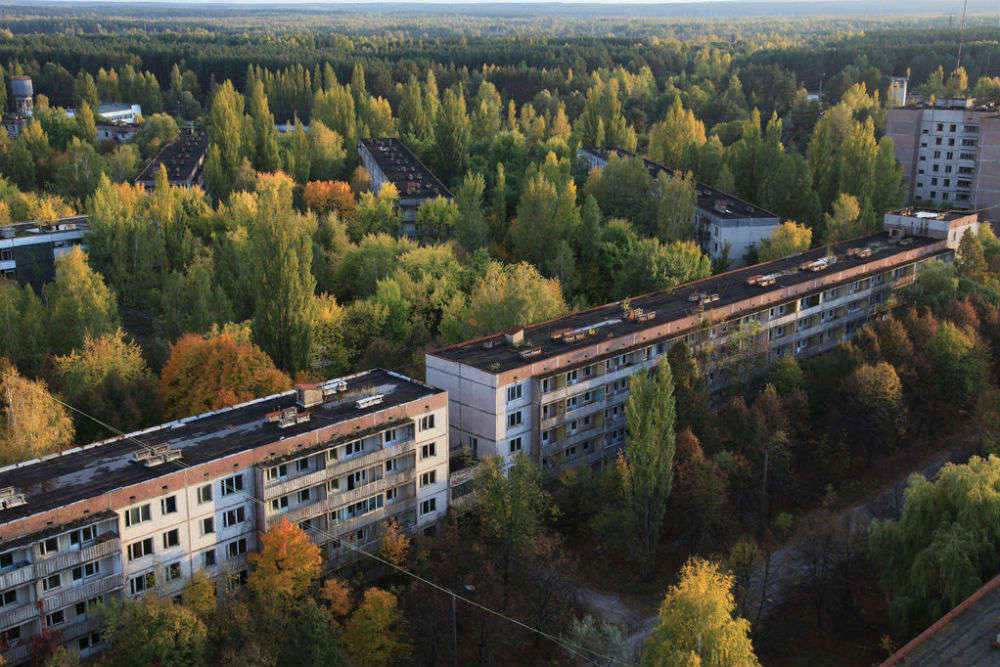
Town of Pripyat

Chernobyl and Pripyat: where time came to a standstill in 1986 ...

The plant was located 130 km North of Ukraine capital Kiev, near the Belarusian border. To accommodate the families of people working at the plant, a new town was built about 3 km away in 1970. They called it Pripyat. During the accident it was host to nearly 49,000 souls. The town was surrounded by woodland and was a pleasant place. There were several schools, parks, theaters, hospital. Everything a town can ask for. This was the worst affected human settlement in the accident. Everyone was forced to evacuate within three days of the accident. People were told it would be for a couple of weeks. But they never returned. Radiation level to this day remains too high for this place to be inhabited. Today this town stands covered by the woods, infested by wild animals and everything it’s inhabitants left behind, a true ghost town.

April 26, 1986

What went wrong on that fateful night? Some human error coupled with some huge design flaws of the reactor put a question mark in global nuclear safety for decades to come. Chernobyl, like most Soviet nuclear power plants back in the day, used Soviet made RBMK-1000 reactors with Uranium as it’s chief fuel. This fuel when starts reacting through fission generates huge amount of energy in form of heat. That heat is used to convert water into pressurized steam and then steam is channeled on to turbines to generate electricity. Simple. But there’s a catch. The energy rising from fission is too high if remained unchecked and this energy release is continuous as Uranium neutrons doesn’t stop reacting. So to control this high rate they had something called Control rods. These are columns made of Boron which enters the reactor and reduces this huge energy surge. So when there was too much output, you simply push the control rods in and reduce reactivity.

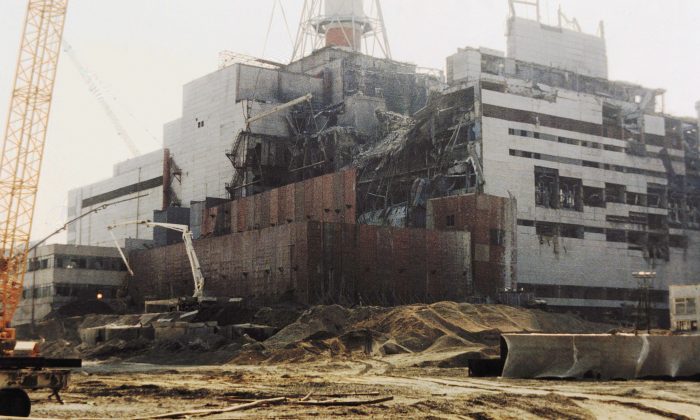
Scientists Develop New Theory on Chernobyl Blasts

But this system had a design flaw. For a fraction of second control rods increased reactivity, instead of reducing it. They were lined with graphite as a measure to cut costs. This was not known to the operators. And on the day of accident, a test was going on to reduce the output of the reactor to see if it can still support the water pumps through turbine. The output went too low, but the management still went ahead with the test and the result was a huge surge. Seeing this, the operator decided to push the control rods to kill the reactor function, unaware of the hidden consequence. Just as he pushed the button, the reactivity skyrocketed, converting every bit of water into steam and under high pressure there was an explosion. Hydrogen was produced from the fuels reaction with the steam and another explosion blew the roof off. Oxygen from outside rushed in and several fires started. Reactor with a capacity of 3200 MW output showed a last recorded output of 12000 MW before going off. Open roof carried the radioactive vapor into the atmosphere and wind distributed it all over Europe. It was felt in far away places like Sweden and England.

Consequences

Chernobyl New Safe Confinement - Wikipedia

2 operators died due to the explosion. 28 others died due to radiation related causes within few weeks. Thousands were exposed to radiation. There was an instant spike in cancer rates in the areas of Ukraine and Belarus after this accident. A 30 km Chernobyl exclusion zone was declared by Soviets. Thousands had to leave never to return. State did their best to hide the actual causes and consequences. Eventually had to give in and review the safety norms. The world scientific community blamed the Soviet isolation policy of the cold war era as a catalyst for this disaster. Maybe they were right. 34 years have passed since. Life has moved on. A steel structure, called New Safe Confinement, has recently been mounted over the old sarcophagus of Reactor 4 to keep the radiation in check. But Chernobyl still stays one of the most costly and haunting tragedies of the era.

Until next time…