Law Commission of India solicits views & ideas of the public and recognized religious organizations about Uniform Civil Code

 The 22nd Law Commission of India is inter alia examining the Uniform Civil Code, a reference sent by the Ministry of Law & Justice.

Initially the 21st Law Commission of India had examined the subject on Uniform Civil Code and solicited the views of all the stakeholders through its appeal along with a questionnaire dated 07.10.2016 and further public appeals/notices dated 19.03.2018, 27.03.2018 and 10.4.2018. Pursuant to the same, overwhelming responses have been received by the Commission. The 21st Law Commission has issued the consultation paper on “Reforms of Family Law” on 31.08.2018. Since more than three years have been lapsed from the date of issuance of the said Consultation Paper, bearing in mind the relevance and importance of the subject and also the various Court orders on the subject, the 22nd Law Commission of India considered it expedient to deliberate afresh over the subject. 

Accordingly, the 22nd Law Commission of India decided again to solicit views and ideas of the public at large and recognized religious organizations about the Uniform Civil Code. Those who are interested and willing may present their views within a period of 30 days from the date of Notice through “click here” button or by Email at membersecretary-lci[at]gov[dot]in to the Law Commission of India.

************

Uniform Civil Code (UCC)

 The question of whether India needs a Uniform Civil Code (UCC) is a complex and debated topic. Here are some reasons that I wish to share in favor of implementing a UCC in India:

  1. Equality: UCC will ensure equality and non-discrimination among citizens, irrespective of their religion. India is a diverse country with multiple personal laws governing matters such as marriage, divorce, inheritance, and adoption based on religious affiliation. Implementing a UCC would provide a common set of laws applicable to all citizens, regardless of their religion, promoting equality before the law.

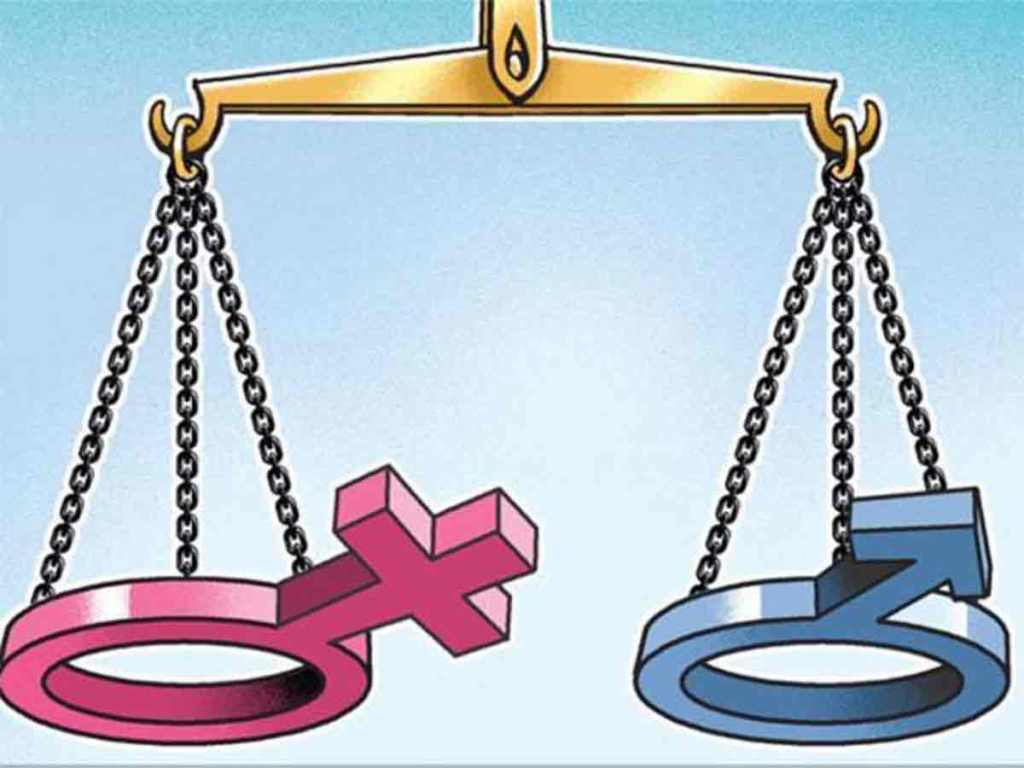
  2. Women’s Rights: UCC will help address gender inequality prevalent in personal laws. Some religious laws in India, such as those governing marriage, divorce, and inheritance, have been criticized for being discriminatory against women. A UCC could potentially ensure equal rights and protections for women across all communities, safeguarding their fundamental rights and promoting gender justice.

  3. Social Cohesion: India is a secular and diverse nation with a multitude of religions and faiths. The existence of different personal laws based on religious affiliations may create divisions and hinder social cohesion. Implementing a UCC could foster a sense of national unity by providing a common legal framework that applies to all citizens, irrespective of their religious beliefs.

  4. Simplification and Efficiency: Currently, the existence of different personal laws can lead to complexity and confusion in legal matters, particularly in cases involving interfaith marriages or inheritance across different religious communities. A UCC could simplify the legal process, reducing administrative burden, and making it easier for citizens to navigate legal matters.

It’s important to note that the implementation of a UCC in India is a highly sensitive and debated issue. The diverse religious and cultural fabric of India should be respected, but laws should be uniform for all citizen of the country. 

UNIFORM CIVIL CODE

In areas like as marriage, divorce, inheritance, and adoption, the Uniform Civil Code (UCC) advocates for the creation of a single law for India that would apply to all religious sects. The law is based on Article 44 of the Constitution, which states that the state must work to ensure that citizens throughout India have access to a uniform civil code.

For over a century, the subject has been at the forefront of political discourse and discussion, and it is a top priority for the Bharatiya Janata Party (BJP), which has been pressing for legislation in Parliament. The saffron party was the first to vow that if it wins power, it will adopt UCC, and the subject was included in its Lok Sabha election program for 2019.

The central family law acts were extended to Jammu and Kashmir when Article 370 was repealed. Although this is another step toward adopting UCC across India, there is still a long way to go in this endeavor. 

Human rights and the values of equality, fairness and justice all support the creation of a standard civil code. Article 44 of the Indian constitution’s directive principle is important because its goal is combat discrimination against vulnerable groups and to bring disparate cultural groupings together across the country. While drafting the Constitution, the father of our constitution “Dr. B R Ambedkar” stated that while a UCC is desirable, it should remain voluntary for the time being, and so Article 35 of the draft Constitution was added as part of the Directive Principles of State Policy in Part IV of the Constitution of India as Article 44. It was included into the Constitution as a condition that would be met when the nation was ready to embrace it and the UCC could gain societal acceptability.

The UCC aims to provide the following:-

  1. Protection of Vulnerable Portions of Society: The UCC strives to safeguard vulnerable sections of society, like women and religious minorities, as envisioned by Ambedkar, while simultaneously encouraging nationalistic ardour via unity.
  2. Rules will be simplified: The code will make the complicated laws of marriage ceremonies, inheritance, succession, and adoptions more accessible to everyone. All citizens, regardless of their faith, shall be subject to the same civil law. When passed, the code would strive to simplify laws that are now divided based on religious views, such as the Hindu code bill, Sharia law, and other similar legislation.
  3. Secularism: A goal established in the Preamble, and a secular republic requires a single law for all people rather than differentiating regulations based on religious customs.
  4. Gender justice: Each religion in India has its own set of personal rules covering weddings, divorce, succession, adoption, and maintenance. Women’s rights, however, are typically restricted by religious legislation, whether Hindu or Muslim. A famous example is the practice of triple talaq which is now been held unconstitutional.

All personal laws will be abolished if an unified civil code is established. 

Therefore, the people’ fundamental rights to equality before the law and equal protection under the law, as guaranteed by the Constitution, need a comparable response throughout these regions. Article 44, which requires the state to make reasonable efforts to ensure that citizens have access to an unified civil code across India, has the same effect.

What is Uniform Civil Code?

See the source image

Article 44 directs the state to secure a uniform civil code for the citizens applicable throughout the territory of India. Its main motive is to establish gender justice in India. Even though the state has not shown any efforts towards the enactment of uniform civil code but the judiciary considers it essential to lookout the necessity of the code in the country so as to establish gender justice. Also, the uniformity in the application of laws such as marriage laws, divorce and maintenance laws, etc.    

Article 44 states that, “The state shall endeavor to secure for the citizens a uniform civil code throughout the India.” 

The above article was looked upon by the historical judgment in Sarla Mudgal vs. Union of India[1]. The Court had directed the government through the Secretary of Ministry Law and Justice, to file an affidavit, and issue a Uniform Civil Law. There had been many cases witnessed that involved such incidents. In the cases, the husband of the plaintiff had converted his religion to Islam and married another woman. The problems were not confined to this but had a large scope, for instance in a case the man had married to a Muslim woman and later left her and converted to Hinduism again. By this, the grievance of the woman was that she could not claim and ask for any protection under the Muslim law as she continued to be a Muslim.  In another case, the petitioner was threatened by her husband that he would embrace Islam and marry another woman.  She had asked for a restraining order by the court for preventing her husband to marry another woman.

On the facts, the court held that a Hindu marriage continues to exist even after conversion to Islam. And the husband as declared by the court under the section 494 of IPC will be held liable under the practice of bigamy.

Uniform Civil Code seeks to replace personal laws that were based on the scriptures and holy books and customs of each specific religion and community in India by a common set of rules and law. As discussed before, the list of marriage, divorce and the maintenance comes under the list.

Recently, the Supreme Court considering the judgments held that:

  1. The constitution in Article 44 requires the state to enact the common civil code throughout the but till date no action has been taken in this regard.
  2. The Hindu personal laws have been modified but there has been no attempt to frame a uniform civil code for the citizens of the country.  
  3. Even after the conclusions made and the judgments delivered in the case of Shah Bane in 1985[2], there has nothing been done to enact a common law for all.
  4. The Supreme Court has enshrined the state of Goa as a ‘Shining Example’ where Uniform Civil Code has been implemented for every religion while protecting certain limited rights.

“Goa as a shining example”

Goa has a common civil code for all which follows the Portuguese civil code 1867.  It includes certain provisions:

  1. A Muslim man residing in the state of Goa who has registered marriage in the state cannot practice polygamy.
  2. If a married couple share property equally, in a pre-nuptial order the assets are divided equally between man and woman on divorce.

Personal laws

The laws that are applicabe to a certain class or group of people based on their religion, faith and culture are the personal laws. In a country like India, there are many religions and the people belong to different castes, having their own faith and belief. The set of laws prescribed for their religion is based on their belief. These laws were made considering the customs followed by the people and their religion. In India, people follow these laws since colonial period. Earlier the British had implemented these laws as they were a foreign Nation and it was an approach to prevent any kind of protests that they could have faced by imposing a common civil code for all.

The main subjects of personal law were marriage, divorce and maintenance. The Hindu law, initially had a lot of discrimination towards the women. But later, with the actions and voices raised against, they were largely modified and secularized by the statutory enactments. It was codified by the parliament in 1956 . It was applicable to Sikhs, Jains and the Buddhists too. The Hindu code bill has been split in four parts:

  1.  The Hindu Marriage Act, 1955
  2. The Hindu Succession Act, 1956
  3. The Hindu Minority and Guardianship Act, 1956
  4. The Hindu Adoption and Maintenance Act, 1956

The Muslim personal laws are unmodified and has a traditional approach in their content and laws. They have not been changed considering the opposition. The Muslim laws are governed by the Shariah Law of 1937. There hasn’t been much change in those laws. There are only some enactments till the date. The law clearly states that in the matters of personal disputes, the state shall not interfere and a religious authority would pass a declaration on the basis of interpretation of the Quran and the Hadith.

The Christian and Jews apart from these have their own personal laws.

Are the personal laws Fault-less?

The Supreme Court has recently declared the act  triple-talaaq as illegal which is a big step towards the gender equality and has raised a question on religion-based personal laws in the country.

Thirty-two years ago Shahnaaz Shaikh filed a public interest litigation (PIL) challenging the triple talaq provisions as she was given divorce by her husband at midnight, which acquired attention. The petition stated that Sharia law had given unequal rights to the Muslim women by imposing purdah, also allowing polygamy and the unilateral divorce and depriving the divorced Muslim women of maintenance rights.

The women activists had soon discovered that this kind of discrimination existed for all the personal laws,and all the religions. For instance, the hindu daughters were also deprived of the property rights. They were not entitled to their patriarchal property. After Lata Mittal filed a case in 1985 and won a 20-year legal battle in the Supreme Court was only that Hindu daughters were provided equal rights in the ancestral property.

Similarly, the Christian women were not allowed to divorce their husbands on the claim of adultery committed by their husbands. But on the other hand the Christian men could simply pronounce their wives as adulteress and issue a divorce. It was only a few years ago that the proposal to amend the Christian divorce act, 1869 was accepted.


[1] (1995) 3 SSC 635.

[2] 1985 AIR 945, 1985 SCR (3) 844