Give out the major sources of terror funding in India and the efforts being made to curtail these sources. In the light of this, also discuss the aim and objective of the No Money for Terror (NMFT)' Conference recently held at New Delhi in November 2022.

Here are the major sources of terror funding in India and the efforts being made to curtail these sources

*Major sources of terror funding in India:*
– *State Sponsorship*: States sponsor crimes and support terrorist organizations to further their diplomatic interests.
– *Counterfeit Currency*: Counterfeit Indian currency is used by neighboring states to destabilize the Indian economy.
– *Organized Crime*: Criminal organizations work in nexus and are often connected to bigger terrorist groups.
– *Extortion*: Extortion remains the biggest source of funding of terrorism in India, especially in the North-East.
– *Hawala System*: This is an illegal method of transferring money, generally through international borders that is used by criminal networks.
– *Donations*: Contributions from sympathetic individuals and organizations.
– *Proxy organizations*: Funding from non-profit or charitable institutions which are put up as fronts.
– *Fake Currency Network*: Manufacturing counterfeit currency.
– *Hawala Operations*: Charge a fees for transfer of funds through an informal system.
– *Use of digital assets*: Such as cryptocurrencies.
*Efforts to curtail sources:*
– *National Investigation Agency (NIA)*: The premier agency in India for combating terror across states without special permission from the states.
– *Unlawful Activities Prevention Act*: This anti-terror legislation seeks to designate an individual as a “terrorist”.
– *National Intelligence Grid (NATGRID)*: A centralized data library of terror and crime-related information.
– *SAMADHAN Doctrine*: Developed specifically for the Left-Wing Extremism problems, it also aims to curb the access of terror organizations to funds.
– *Prevention of Money Laundering Act*: Focuses on preventing and controlling money laundering, with the Financial Intelligence Unit (FIU-IND) receiving reports on suspicious transactions.
– *Enforcement Directorate*: Investigates money laundering offenses and coordinates internationally.
– *Combating Financing of Terrorism (CFT) Cell*: Addresses terror funding cases.
– *Terror Funding and Fake Currency Cell*: Constituted in National Investigation Agency (NIA) to tackle terror funding cases.
– *Amendments to the Unlawful Activities (Prevention) Act*: Expanded its scope in 2013.
– *India is a member of international bodies*: Like FATF, EAG, and APG, to combat terror funding.
*Aim and objective of the No Money for Terror (NMFT) Conference:*
– *Collaborate with countries*: To curtail terror and extremist funding.
– *Set up a secretariat*: To operate on the concept of collaboration and cooperation.
– *Investigate new and emerging threats*: To understand and counter new methods of propagating terrorism.
The No Money for Terror (NMFT) Conference aimed to bring countries together to combat terror funding and to set up a secretariat to collaborate and cooperate in this effort. The conference also aimed to investigate new and emerging threats and methods of propagating terrorism. India has been actively working to combat terror funding through various efforts, including the NIA, UAPA, NATGRID, and SAMADHAN Doctrine. Despite facing challenges from its neighbors, India stands firm against terrorism.
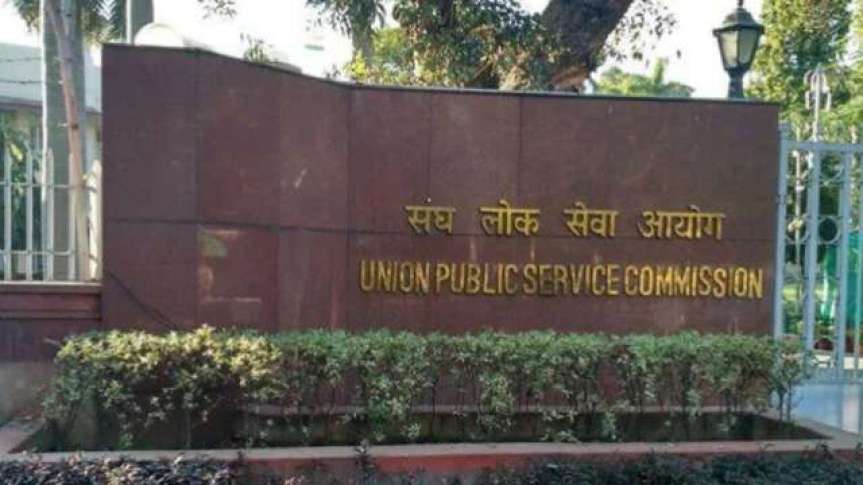

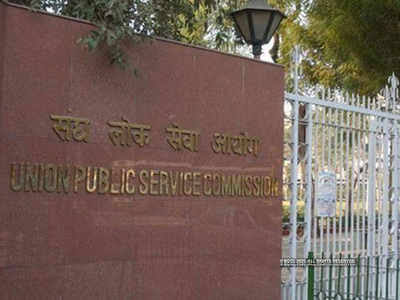
Union Public Service Commission announces written results of National Defence Academy and Naval Academy Examination, (I) 2024

 On the basis of the result of the written part of the National Defence Academy and Naval Academy Examination, (I) 2024 held by the Union Public Service Commission on 21st April, 2024, candidates with the under mentioned Roll Nos. have qualified for interview by the Services Selection Board (SSB) of the Ministry of Defence for Admission to Army, Navy and Air Force Wings of the National Defence Academy for the 153rd Course and for the 115th Indian Naval Academy Course (INAC) commencing from 2nd January, 2025. The result is also available at Commission’s website www.upsc.gov.in.

2. The candidature of all the candidates, whose Roll Nos. are shown in the list is provisional. In accordance with the conditions of their admission to the examination, “candidates are requested to register themselves online on the Indian Army Recruiting website joinindianarmy.nic.in within two weeks of announcement of written result. The successful candidates would then be allotted Selection Centers and dates, of SSB interview which shall be communicated on registered e-mail ID. Any candidate who has already registered earlier on the site will not be required to do so. In case of any query/ Login problem, e-mail be forwarded to dir-recruiting6-mod[at]nic[dot]in.”

“Candidates are also requested to submit original certificates of Age and Educational Qualification to respective Service Selection Boards (SSBs) during the SSB interview.” The candidates must not send the Original Certificates to the Union Public Service Commission. For any further information, the candidates may contact Facilitation Counter near Gate ‘C’ of the Commission, either in person or on telephone Nos. 011-23385271/011-23381125/011-23098543 between 10:00 hours and 17:00 hours on any working day. In addition for SSB/Interview related matter the candidates may contact over telephone no. 011-26175473 or joinindianarmy.nic.in for Army as first choice, 011-23010097/ Email: officer-navy[at]nic[dot]in or joinindiannavy.gov.in for Navy/ Naval Academy as first choice and 011-23010231 Extn. 7645/7646/7610 or www.careerindianairforce.cdac.in for Air Force as first choice.

3. The mark-sheets of the candidates will be put on the Commission’s website within fifteen (15) days from the date of publication of final result. (After concluding SSB Interviews) and will remain available on the website for a period of thirty (30) days.

Click here for Complete Result.

***

All about Civil Services Exam

UPSC has declared the final result for Civil Services 2021 in which Shruti Sharma, Ankita Agarwal and Gamini Singla have secured the first, second and third rank respectively.

Civil Services Examination (CSE) is one of the examinations conducted by the Union Public Service Commission to recruit suitable candidates into civil services of India including IAS, IPS, IFS, and other allied services.

The prescribed UPSC exam eligibility criteria are that the candidate should be a graduate and must have attained 21 years of age. There is also an upper age limit and a number of attempts restriction based on the candidate’s category. Generally, the upper age limit is 32 years, but the commission gives age relaxation for OBC, SC, ST and PH candidates.

The UPSC exam is held in three stages. The three stages are Prelims, Mains and Interview/personality test. The prelims exam consists of two papers of objective type questions. Paper 1 is GS paper Paper 2 is CSAT (Qualifying in nature- 33%). The mains exam consists of nine descriptive type papers. The last stage consists of an interview round with the UPSC board. Candidates should clear each round in order to qualify for the subsequent round. Final merit is based on combined marks obtained in Mains and Interview.

In Mains there is one Essay Paper, 4 GS papers and 2 Papers for Optional Subject (all of 250 marks) which a candidate has to select from a prescribed list according to his/her interest. Some of the optional subjects are – Agriculture, Animal Husbandry and Veterinary Science, Anthropology, Botany, Chemistry, Civil Engineering, Commerce and Accountancy, Economics Electrical Engineering, Geography, Geology, History, Law, Management, Mathematics, Political Science and International Relations, Public Administration, Sociology etc.

  • PAPER-I: Essay: 
  • PAPER-II: General Studies-I: Indian Heritage and Culture, History and Geography of the World and Society. 
  • PAPER-III: General Studies- II: Governance, Constitution, Polity, Social Justice and International Relations. 
  • PAPER-IV: General Studies-III: Technology, Economic Development, Biodiversity, Environment, Security and Disaster Management. 
  • PAPER-V: General Studies- IV: Ethics, Integrity, and Aptitude 
  • Paper-VI and VII: Optional Paper-I and Optional Paper-II

There are to more papers which are qualifying in nature.

Service Profile of an IAS Officer

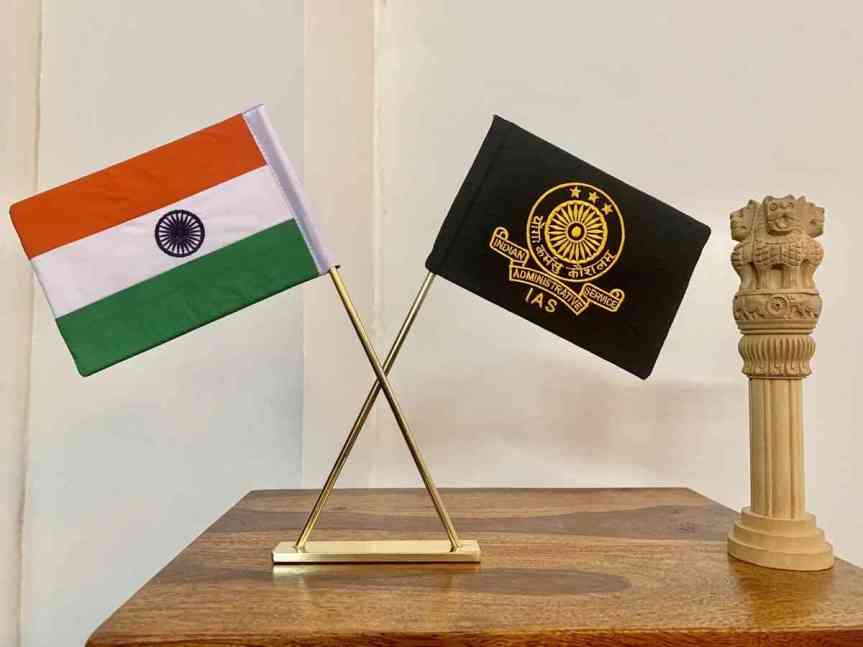
Indian Administrative Service (IAS), the premier service of the Government of India was constituted in 1946. Prior to that Indian imperial Service (1893-1946) was in force. As on 1.1.2013, sanctioned strength of IAS was 6217, comprising of 4313 posts to the filled by direct recruits and 1904 posts to be filled by promotion /appointment of State Civil Services officers/ Non-State Civil Service officers. The civil services have been a hallmark of governance in India. The Constitution provides that without depriving the States of their right to form their own Civil Services, there shall be an All India service recruited on an All- India basis with common qualifications, with uniform scale of pay and the members of which alone could be appointed to these strategic posts throughout the Union.”
No wonder Sardar Vallabhbhai Patel, one of the eminent leaders of the freedom struggle, referred to the. ICS as ‘the steel frame. Of the ‘country. The civil services, therefore, represent the essential spirit of our nation — unity in diversity.

Recruitment

UPSC – Civil Services Exam

At present there are three modes of recruitment to IAS viz

(i) Through Civil Services Examination conducted by UPSC every year;

(ii) Through promotion of State Civil Service officers to IAS

(iii) Through selection of non – State Civil Service officers.

Roughly 66 (1/3)% posts are meant for Direct Recruitment and 33 (1/3%) are
meant for promotion quota.

Training

LBSNAA

Both Direct Recruit as well as promotee IAS officers are imparted probationary training at Lal Bahadur Shastri National Academy of Administration (LBSNAA). After completion of successful probation, they are confirmed. Also, there is a Provision for mandatory Mid-career Training for IAS officers spread across the entire service span.

Functions of IAS officer

IAS officer is responsible for the maintenance of law and order, revenue administration and general administration in the area under him. His functions broadly include:


(i) Collection of revenue and function as Courts in revenue matters;
(ii) Maintenance of law and order;
(iii) Function as Executive Magistrate;
(iv) Function as Chief Development Officer (CDO)/District Development Commissioner;
(v) Supervision of implementation of policies of State Government and Central Government;
(vi) To travel to places to oversee the implementation of policies;
(vii) Supervision of expenditure of public funds as per norms of financial propriety;
(viii) In the process of policy formulation and decision making, IAS officers at various levels like Joint Secretary, Deputy Secretary etc. make their “contributions and the give final shape to policies;
(ix) To ‘handle the daily affairs ‘of the government, including framing and implementation of policy in ‘consultation with the minister-in-charge of the concerned Ministry.

Source : DoPT website

MSME


In India, MSMEs contribute nearly 8% of the country’s GDP, around 45% of the manufacturing output, and approximately 40% of the country’s exports. It won’t be wrong to refer to them as the ‘Backbone of the country.’ The Government of India has introduced MSME or Micro, Small, and Medium Enterprises in agreement with the Micro, Small, and Medium Enterprises Development (MSMED) Act of 2006. These enterprises primarily engaged in the production, manufacturing, processing, or preservation of goods and commodities.MSMEs are an important sector of the Indian economy and have contributed immensely to the country’s socio-economic development. It not only generates employment opportunities but also works hand-in-hand towards the development of the nation’s backward and rural areas. According to the annual report by the Government (2018-19), there are around 6,08,41,245 MSMEs in India.

Key Takeaways of New MSME Definition introduced in Aatm Nirbhar Bharat Abhiyan‘ or Self-reliant India Scheme 2020 by Government of India.

  1. Collateral Free Loans to MSMEs
  2. MSME Loans worth Rs. 3 lakh crore
  3. The moratorium period offered is 12 months
  4. Manufacturing and Service MSMEs shall be considered as the same entities
  5. Repayment Tenure of 48 months
  6. 100% Credit Guarantee
  7. To benefit approx. 45 lakh units

Features of Ministry of MSME (MoMSME)

  1. Works for the welfare of artisans and workers
  2. Provides credit limit or funding support from banks
  3. Promotes entrepreneurship development and skill up-gradation via specialized training centers
  4. Supports technology up-gradation, infrastructural development, and modernization
  5. Offers assistance for improved access to domestic and export markets
  6. Provides modern testing facilities and quality certification
  7. Supports packaging, product development, and design intervention


MSME was launched in 2006 to become an integral part of the supply chain for products and services; moreover, a creator of large-scale employment opportunities in rural India. MSMEs contribute to approximately 8% of India’s GDP, employs over 60 million people, has an enormous share of 40% in the exports market and 45% in the manufacturing sector.

FINANCE COMMISSION


Finance Commission is constituted to define financial relations between the center and the states. Under the provision of Article 280 of the Constitution, the President appoints a Finance Commission for the specific purpose of devolution of non-plan revenue resources. It was formed in 1951. Shri Ajay Narayan Jha recently joined the Fifteenth Finance Commission as its member. The 15th Finance Commission has released a report titled ‘Finance Commission in COVID Times’ on 1st February 2021.

Article 280 of the Indian Constitution

  • After two years of the commencement of the Indian Constitution and thereafter every 5 years, President has to constitute a Finance Commission of India.
  • It shall be the duty of the Commission to make recommendations to the President concerning the:
    • The distribution between the Union and the States of the net proceeds of taxes which are to be, or maybe, divided between them and the allocation between the States of the respective shares of such proceeds;
    • The principles which should govern the grants in aid of the revenues of the States out of the Consolidated Fund of India;
    • Any other matter referred to the Commission by the President in the interests of sound finance
    • The Commission shall determine their procedure and shall have such powers in the performance of their functions as Parliament may by law confer on them

Article 281 of the Indian Constitution

  • It is related to the recommendations of the Finance Commission:
    • The President has to lay the recommendation made by the Finance Commission and its explanatory memorandum before each house of Parliament


Functions of Finance Commission

The Finance Commission makes recommendations to the president of India on the following issues:

  • The net tax proceeds distribution will be divided between the Centre and the states, and the allocation between states.
  • The principles governing the grants-in-aid to the states by the Centre out of the consolidated fund of India.
  • The steps required to extend the consolidated fund of a state to boost the resources of the panchayats and the municipalities of the state are based on the recommendations made by the state Finance Commission.
  • Any other matter referred to it by the president in the interests of sound finance.
  • The Commission decides the basis for sharing the divisible taxes by the center and the states and the principles that govern the grants-in-aid to the states every five years.
  • Any matter in the interest of sound finance may be referred to the Commission by the President.
  • The Commission’s recommendations along with an explanatory memorandum concerning the actions done by the government on them are laid before the Houses of the Parliament.
  • The FC evaluates the rise in the Consolidated Fund of a state to affix the state Panchayats and Municipalities resources.
  • The FC has sufficient powers to exercise its functions within its activity domain.
  • As per the Code of Civil Procedure 1908, the FC has all the powers of a Civil Court. It can call witnesses, ask for the production of a public document or record from any office or court.


Finance Commission Chairman and Members

  • Chairman: Heads the Commission and presides over the activities. He should have had public affairs experience.
  • Four Members.
  • The Parliament determines legally the qualifications of the members of the Commission and their selection methods.

Qualifications of Finance Commission Chairman and Members

  • The 4 members should be or have been qualified as High Court judges, or be knowledgeable in finance or experienced in financial matters and are in administration, or possess knowledge in economics.
  • All the appointments are made by the President of the country.
  • Grounds of disqualification of members:
  • found to be of unsound mind, involved in a vile act, if there is a conflict of interest
  • The tenure of the office of the Member of the Finance Commission is specified by the President of India and in some cases, the members are also re-appointed.
  • The members shall give part-time or service to the Commission as scheduled by the President.
  • The salary of the members is as per the provisions laid down by the Constitution.

Administrative Law


Definitions:-

According to the definition of Sir Ivon Jennings” Administrative Law can be defined as a law relating to administration. It determines the organization, powers and duties of administrative authorities.” According to Britanica,

Administrative law, the legal framework within which public administration is carried out. It derives from the need to create and develop a system of public administration under law, a concept that may be compared with the much older notion of justice under law. Since administration involves the exercise of power by the executive arm of government , administrative law is of constitutional and political, as well as juridical in nature.

Austin has defined administrative law as one which determines the ends and modes to which the sovereign power shall be exercised. According to him sovereign power should be either exercised directly by the monarch or entrusted to subordinate political agents holding a position of trust.

Holland regards Administrative law as “one of the six divisions of public law”.

Bernard Schawartz has defined it to be the law applicable to those administrative agencies which possess adjudicatory authority of a delegated legislation.

The three main stages led to the expansion of the meaning of the term Administrative law-
1. Laissez Faire

2. Dogma of Collectivism

3. Social-Welfare State


Indian context:

The moving of a state from the laissez faire to welfare state.

Administration has been in the forefront in indian history.Akbar and Ashoka’s court provide classic examples of the same.Later on the British administration was adapted and embibed in India.After independence, After independence, India adopted to become a welfare state, which henceforth increased the state activities. As the activities and powers of the Government and administrative authorities increased so did the need for ‘Rule of Law’ and ‘Judicial Review of State actions’.

Henceforth, if rules, regulations and orders passed by the administrative authorities were found to be beyond the authorities legislative powers then such orders, rules and regulations.

Result of The Civil Services (Preliminary) Examination, 2020

On the basis of the result of the Civil Services (Preliminary) Examination, 2020 held on 04/10/2020, the candidates with the following Roll Numbers have qualified for admission to the Civil Services (Main) Examination, 2020.

The candidature of these candidates is provisional. In accordance with the Rules of the Examination, all these candidates have to apply again in the Detailed Application Form-I (DAF-I)  for the Civil Services (Main) Examination, 2020, which will be available on the website of the Union Public Service Commission (https://upsconline.nic.in) during the period from 28/10/2020 to 11/11/2020 till 6:00 P.M. All the qualified candidates are advised to fill up the DAF-I ONLINE and submit the same ONLINE for admission to the Civil Services (Main) Examination, 2020 to be held from Friday, the 08/01/2021. Important instructions for filling up of the DAF-I and its submission will also be available on the website. The candidates who have been declared successful have to first get themselves registered on the relevant page of the above website before filling up the ONLINE DAF-I.  The qualified candidates are further advised to refer to the Rules of the Civil Services Examination, 2020 published in the Gazette of India (Extraordinary) of Department of Personnel and Training Notification dated 12.02.2020.

It may be noted that mere submission of DAF‑I do not, ipso facto, confer upon the candidates any right for admission to the Civil Services (Main) Examination, 2020. The e‑Admit Card along with the Time Table of the said Examination will be uploaded on the Commission’s Website for the eligible candidates around 3‑4 weeks before the commencement of the Examination.   Changes, if any, in the postal address or email address or mobile number after submission of the DAF-I may be communicated to the Commission at once.

Candidates are also informed that marks, cut off marks and answer keys of screening test held through CS (P) Examination, 2020 will be uploaded on the Commission’s website i.e. https://upsc.gov.in only after the entire process of the Civil Services Examination, 2020 is over i.e. after the declaration of final result. 

The Union Public Service Commission has a Facilitation Counter near the Examination Hall Building in its Campus at Dholpur House, Shahjahan Road, New Delhi.  Candidates may obtain any information/clarification regarding their result of the above mentioned Examination on all working days between 10.00 AM to 5.00 PM, in person or on Tel. No. 011-23385271, 011-23098543 or 011-23381125 from the Facilitation Counter. 

Click here for the results:

Not possible to postpone civil service exams: UPSC tells SC

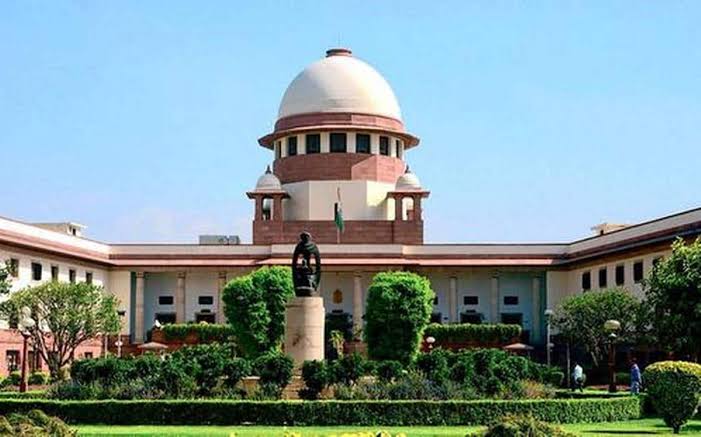
The Union Public Service Commission (UPSC) on Monday informed the Supreme Court that it is impossible to defer the Civil Services Preliminary 2020 as all logistical arrangements have already been made. A 3-judge bench headed by Justice AM Khanwilkar asked UPSC to put this stand in affidavit along with the arrangements made. The matter will be heard on Wednesday.

The bench comprising Justices AM Khanwilkar, BR Gavai, and Krishna Murari has directed the UPSC to file its affidavit in the case by tomorrow.

Twenty civil services aspirants had approached the Supreme Court, seeking the crucial exam to be deferred by two to three months due to the flood situation in several parts of the country along with the coronavirus crisis. The exam, which was earlier scheduled on May 31, was rescheduled to October 4 due to the pandemic

The plea said the Civil Services Exam, being a recruitment examination, is altogether different from an academic examination and in the event of its postponement, there would not be any question of delay or loss of any academic session.

It said that due to non-availability of exam centres in their home towns, many aspirants are facing unimaginable hardship due to non-availability of or unsafe health conditions in, the PG accommodation/ hostels/ hotels etc, where they are forced to stay with their family members, once they are travelling to an outstation Examination Centre.

It is pertinent to mention here that despite alarming spurt in COVID-19 pandemic, UPSC did not increase the number of Examination Centres, resulting into a situation where many candidates from rural areas will be forced to travel for around 300-400 Kilometres, in order to reach to their Examination Centres and there will be high probability of such aspirants, getting affected while using public transportation for such travel, the plea said.