
Concept of New Towns

 World civilization is growing and cities are expanding to their outer city limit which leads to an urban sprawl and the formation of suburbs. Specialized city suburbs have been developed over time which eventually separates the inhabitant’s social connection from the main city center. As a result, the city has exceeded its outer boundaries and leaves limited space for further urban development. When population and housing demands increased, government authorities, sought out for new and other options; the development of new towns. 

New town, a form of urban planning designed to relocate populations away from large cities by grouping homes, hospitals, industry and cultural, recreational, and shopping centres to form entirely new, relatively autonomous communities. The first new towns were proposed in Great Britain in the New Towns Act of 1946; between 1947 and 1950, 12 were designated in England and Wales and 2 in Scotland, each with its own development corporation financed by the government. The new towns were located in relatively undeveloped sites. Each was to have an admixture of population so as to give it a balanced social life. 

A new town is a new settlement built on either rural land transformed to urban land use or on new reclaimed land. The objective of developing new towns is to become a self-sufficient town. New towns seem to be the answer to the urban sprawl and suburban dilemma where there are low economic job opportunities creating a high percentage of commuting. This however becomes a mutual problem for new towns as they evolve making them dependent on neighboring towns and cities for employment and various types of social services. Another issue that new towns have to deal with is the identity crisis which links to its lack of history. This therefore leads people to the misconception of new towns as suburbs.
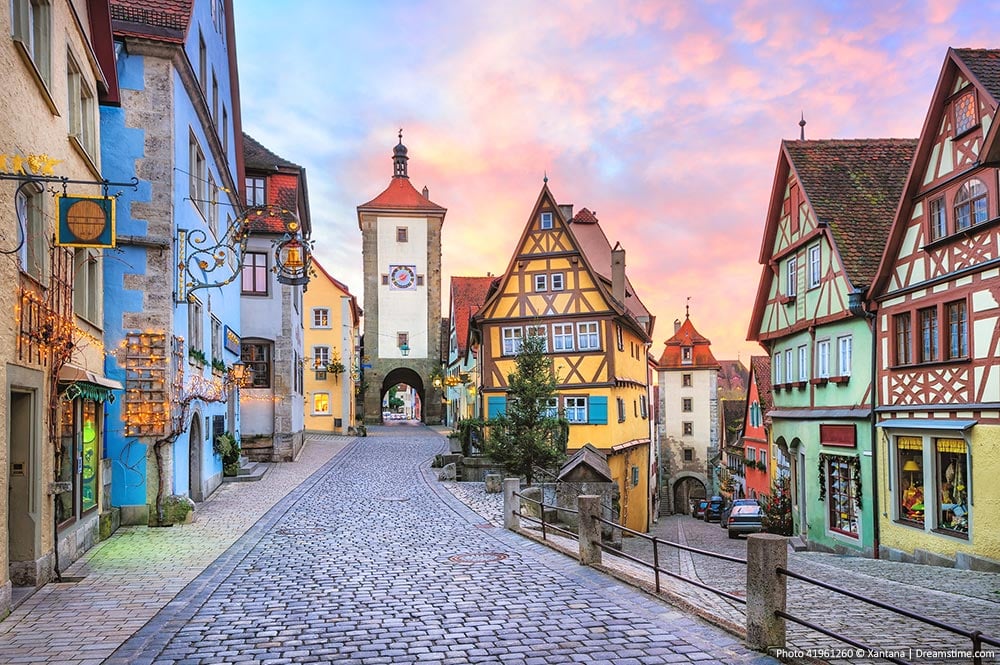
A more consistent definition of a new town is best described by the International New Town Institute as (INTI) human settlements that were founded at a certain moment in history by an explicit act of will, according to a preceding plan and aiming to survive as a self-sustaining local community and independent local government, able to play a role in the ongoing development of the region in which the new town is located. 

A new town has been interpreted as a relocation of housing for overpopulated cities or a safe suburban living area for the middle class family. A new town is not an extension of an existing town or city. It is a blueprint plan of a new settlement before it was built. New towns were also characterized as a new concept of lifestyle: ‘living in a green and healthy environment’ after much destruction to existing cities and towns during World War II. New Towns became the answer to divert over populated and congested cities to a new location of a new town. The development of new towns has served as relocation for the over spill of existing cities. It should not be forgotten that new towns also exploits rural land that may have served for other land use developments such as for farmland or nature and recreation area.

Urbanization & Urban Development


City or Town is a place of urban living. Urban means an environment in which natural surroundings  have been dominated by manmade or artificial  surroundings, which man made for himself, or his working, living and recreation. As per the census of  India, a place becomes urban if it has more than 5000 population, more than 75% of which are engaged in non –agricultural occupation and the density is more than1000 persons per sq.km.

Urbanization is the physical growth of rural or natural land into urban areas as a result of population immigration to an existing urban area. Urbanization refers to the population shift from rural to urban residency, the gradual increase in the proportion of people living in urban areas, and the ways in which each society adapts to this change. 

The Causes of Urban Growth

Push Factors

· Lack of educational facilities

· Lack of job opportunities 

· Lack of health facilities 

· Lack of electricity and sewerage system 

· Land lord system 

· Inequality

· Low living standards

· Old traditions

Pull Factors 

·  Better and higher educational facilities 

·  Better and more of job opportunities 

·  Better health facilities 

·  Availability of electricity and sewerage system 

·  Better living standards

Global Trends in Urbanization

In 1960, the global urban population was 34% of the total; however, by 2014 the urban population accounted for 54% of the total and continues to grow. By 2050 the proportion living in urban areas is expected to reach 66%. Fig. 1.5 shows the change in the rural and urban populations of the world from 1950 through to projected figures up to the year 2050.

Urbanism started in the caves themselves, where people gathered for protection against the elements or for the defence against rival tribes. These places of communal living gave way  to  the village. The village was a by-product of development of agriculture in areas of adequate water supply and fertile soil. The village was also a sanctuary for the altar of their deity, a meeting place for assembly and a centre for trade. This environment became increasingly populated  and resulted in urbanisation. With the development of diversified economy not totally dependent of food production attracted people into labour pool, providing employment  in a variety of forms. This in turn brought about the enlargement of village or hamlets into towns  and cities.


                        Urban and rural population of the world, 1950–2050

Population residing in urban areas in India, according to 1901 census, was 11.4%. This count increased to 28.53% according to 2001 census, and crossing 30% as per 2011 census, standing at 31.16%. In 2017, the numbers increased to 34%, according to The World Bank. The data shows that Goa is the most urbanised state with 62.17% of the population living in urban areas. But if one goes by geographical area and total population, Tamil Nadu is the most urbanised state. In Kerala, 47.72% of people live in urban areas and in Maharashtra 45.23%.

Factors that influence in the development and growth of urban areas

·  Population density

·  Density of physical development

·  Possession of formal plan

·  Proportion of inhabitants engaging in  non agricultural occupation

·  Functional characters

·  Services

·  Political or legal, administrative 

·  Life style  

Causes of urbanization

·  Economic development  

·  Industrialization

·  Job opportunities

·  Availability of easy transportation

·  Agglomeration economics

·  Political, cultural and social influences

Problems of Urbanization 

· Pressure on resources and social services Eg. Water, transport, health and education

· More unemployment

· Increased crime rate, especially since the typical migrant may be young, unskilled or inexperienced

· Development of slums (ghettos) due to inadequate housing. This will add to the problem of pollution

· Traffic congestion

· Competition on limited resources

· Noise pollution

· Epidemics

· High levels of stress

· Poverty

· Air quality worsens

Solution to problems of urbanization

·  Limit the size of cities by setting boundaries and controlling population size

·  Put a stop to using agricultural lands for non-agricultural purposes such as housing

·  Develop the rural areas by providing recreation, education, health care and other social services

·  Develop basic infrastructure in the rural areas eg. roads, water and electricity

·  Encourage rural population to participate in community activities and use community facilities

·  Create jobs in rural areas by building more factories to employ more people

JNNURM (Jawaharlal Nehru National Urban Renewal Mission) is the first massive urban development programme in India and has established the foundation for large-scale central assistance to the urban sector. It was launched as a reform-driven and fast-track programme to catalyze planned development of identified cities. The programme has been operating in mission mode by facilitating large scale investments in the urban sector and policy and institutional reforms, leading to sustainable socio-economic growth in cities. The mission has sought to achieve this by integrating the development of infrastructure services and accelerating the flow of investment into urban infrastructure; through planned development, redevelopment and renewal of cities, inner-city areas, peri-urban areas, outgrowths, urban corridors and through universal service delivery for the urban poor. A number of urban projects were sanctioned under JNNURM during 2005–2014, and central assistance of approximately 48,000 crore INR was committed during this period through the mission. During 2014–15, the central government launched four new schemes to expedite urban infrastructure and service provision and replace JNNURM. These schemes are the Atal Mission for Rejuvenation and Urban Transformation (AMRUT), focusing on water supply and sewerage improvement; Smart Cities Mission (SCM), aimed at developing smart solutions for selected urban areas; Swachh Bharat Mission (SBM), focused on waste management and sanitation; and Heritage City Development and Augmentation Yojana (HRIDAY), for addressing the development of heritage cities.