NEW DELHI: The end of the Diwali week marked a steady increase in new Covid-19 infections. India recorded 80,614 new cases of the coronavirus this week. With 10,789 new cases in the last 24 hours.
While cases in the southern states, namely Kerela and Tamil Nadu continue to gradually drop, a number of states observed a significant spike in cases. Jammu & Kashmir recorded a 34% increase in new cases in the past week.
Other states where the count increased in the current week are Karnataka, with a 17% increase, Maharashtra, Punjab, Delhi, Uttar Pradesh, Bengal, Rajasthan. Experts claim the increase in cases is a result of increased contact among people in the festive period. A major credit for the over-all spike can also be credited to increase in population in the markets. As most people connect the festival with an incentive to shop.
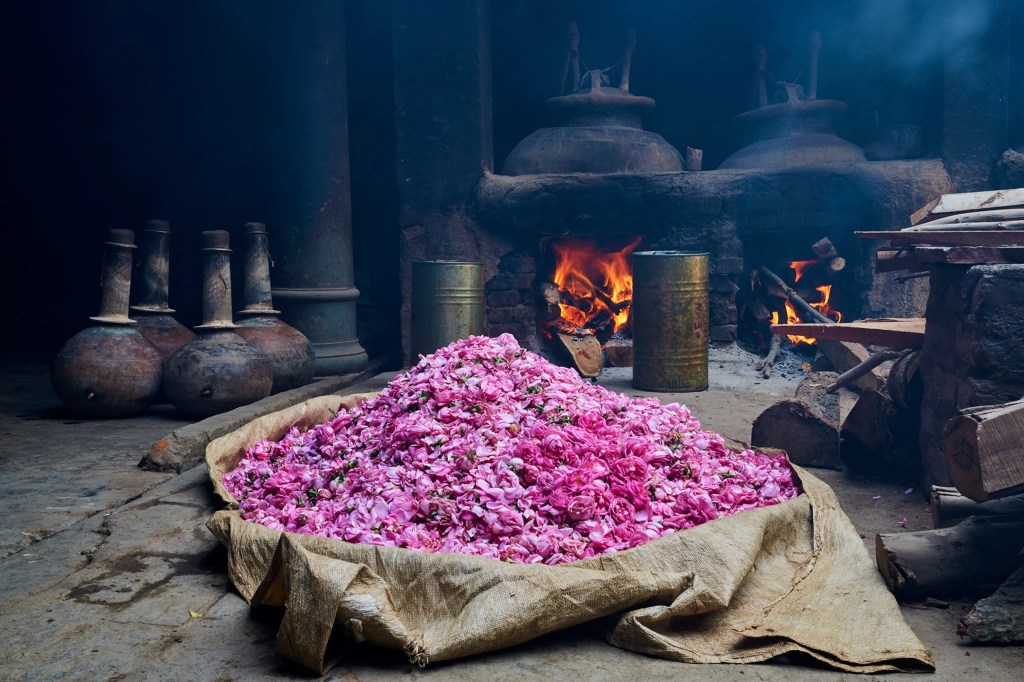
Kannauj, India’s Grasse, has been producing attar (Perfumes) for over four centuries, well over 200 years before France’s Grasse rose to prominence. In the old days, this town had over 800 perfume distilleries. Around 85,000 folks dwell in this city, with about 4,000 employed in the attar business. Ittar making is a skill that’s been passed down through generations.
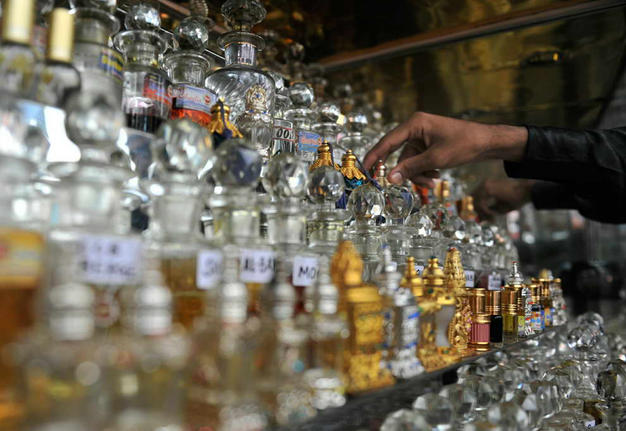
Attar is an aromatic oil derived from natural sources like roses, musk, camphor, saffron, or agarwood. Except in rare cases, these natural perfumes are free of alcohol and chemicals.
Both men and women are drawn to attars. They possess rich flowery, earthy, musky, smoky, or grassy notes. Attars can be both warming (cloves, cardamom, saffron) and cooling (jasmine, vetiver, marigold) depending on the season.
Kannauj, the fascinating mitti attar, conjures the aroma of the earth after a downpour.
Shamama, a distilled blend of 40 or more flowers, herbs, and resins that takes days to prepare and months to age, is another sought-after concoction. The scent combines sweetness, spice, smoke, and dampness to create an ethereal experience for the wearer.
White jasmine blossoms and vetiver plants are used in summer varieties. The soil is utilized for monsoon varieties like Mitti ittar, which smells of damp earth, and winter varieties include Heena ittar and musk ittar.
ATTAR MAKING PROCESS
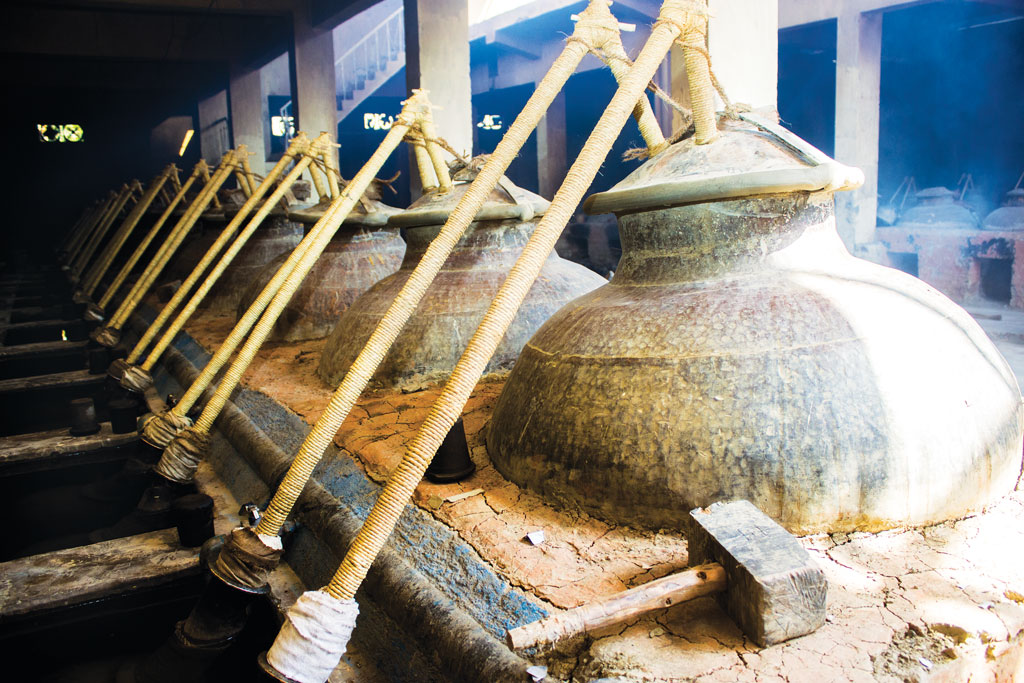
Attar is made by skilled craftsmen known as ‘dighaas‘ using a traditional steam distillation method called ‘deg and bhapka,’ which translates to ‘large pot and little pot.’
The dighaas begin by pouring the key ingredient into the deg, followed by cold water, then sealing it with a special clay. The concoction is brought to a boil by logs burning under the deg. The dighaas must ensure that the temperature remains constant during the process and that the attar doesn’t overheat or become contaminated.
Next, the steam travels from the ‘deg’ to the ‘bhapka’ (receiver) via a bamboo pipe known as the ‘chonga’. A layer of oil traps the evaporating scent molecules there, Sandalwood oil was formerly utilized for this layer, but because of its hefty price and scarcity, alternative oil-like substances are now employed instead.
Depending on the intended concentration of the final attar, the distillation process is repeated numerous times. It may take up to 25 days to complete the process.
CURRENT CRISIS
The number of perfume distilleries has dwindled from over 800 to just over 100 in recent years, as synthetic fragrances outpace attars in popularity. Kannauj is witnessing a crisis at present. Demand for attar started plummeting as power transferred to British India. Pure Mysore sandalwood was and still is expensive, but when the Indian government banned the trade of sandalwood in the late 1990s, the price of attar soared. In place of sandalwood, natural replacements such as liquid paraffin are used, and although this kind of attar is similar to the original, it falls short. At the same time, affluent Indians transferred their loyalty to imported Western fragrances and deodorants to portray themselves as modern and upper class.
Only a few people in India still purchase attars. It is crucial to resolve the issue for these historic perfume industries to sustain their uniqueness and viability.
In the United Kingdom, a well-known textbook on the foundations of criminal law methodically develops numerous theoretical basis for explaining what should be a crime – that it should include some harm, must be of a particular degree of gravity, and so on. But then, in a single passage, it deconstructs this structure by reminding us that, at the end of the day, criminal law and crimes are whatever the state says they are. This political linkage is probably more pronounced in India: A majority government creates the laws and controls the investigative apparatus, which means it may not only define what constitutes a criminal but also selectively pursue just those offences that it is concerned about, forgetting the rest.
Across India, chaos reigns.
To what end should those offences be pursued, you could wonder. In the end, the concept of “crime” is meaningless without the associated penalty. We are all trained to fear losing our liberty when we are imprisoned. However, it is sometimes overlooked that this punishment may only be imposed upon a conviction at the conclusion of a trial. As a result, there is a synergy between the crime, the investigation, and the accountability of those found guilty, which is referred to as the criminal justice system. And everywhere you turn in India, it’s in chaos.
The heinous events in the Indian state of Uttar Pradesh are only one illustration of how awful things may become. After a confrontation with police, a prominent mobster fled and was subsequently apprehended in another state. Meanwhile, the news was saturated with tales suggesting the accused’s corrupt ties to public officials. An “encounter” occurred when his party was returning to Uttar Pradesh, and the accused was shot and killed.
There had been a crime, perhaps multiple crimes. It was determined to pursue it by the State Police. However, there was no need to wait for a trial to convict and sentence the guilty; punishment was immediately administered by the police. So much so that one ex-Supreme Court Judge said the State’s version of events made it look as though it didn’t care whether or not the encounter account was believed.
The extremities in Uttar Pradesh
If the death of Vikas Dubey indicated a readiness to punish without a trial, Uttar Pradesh has also shown a readiness to condemn without a trial. It enacted a legislation allowing the publication of enormous hoardings including the names and personal information of anyone accused of destroying property during the anti-Citizenship Act rallies. But here’s the thing: all of this happened before a court found them guilty of their crimes. Rather than a judicial ruling, the authority to condemn was derived from the ability to make claims, which is entirely executive in nature. In this way, the cops took on the roles of judge, jury, and executioner.
Of course, there are cases when the state has chosen to pursue alleged criminal activity. Many times, it turns a blind eye to acts of violence, either indefinitely or for a lengthy period of time. When her relatives discovered her on September 14 in the hamlet of Hathras, Uttar Pradesh, she had been viciously abused and left to die. The same family did what any reasonable person would do: they called the cops and took their daughter to the hospital. Despite the obvious injuries, the police did not file a report for many hours, and even then did not mention the major crime of rape. Naturally, when the police refused to file this one instance of rape, they quickly recorded at least 19 cases involving an alleged conspiracy to utilise the incident for political objectives in order to cast the State in a negative light.
Disconnect between the government and the judiciary.
These examples from Uttar Pradesh merely help to highlight that there are definite, obvious patterns. The first is the widening chasm between the government and the judiciary in questions of criminal justice; the second is the boosting of executive authority as a result of this chasm; and the third is the judiciary’s predictable copying of executive-mindedness. As a result, I suggest, the criminal justice system will be transformed into a problem-solving system.
The 2019 Crime in India numbers reinforce a trend that has been seen for decades: our police appear to be super-efficient, but our courts appear to be super-slow. Let’s stick with Uttar Pradesh for a while. Its police have a case pending rate of just over 15%, whereas its courts have a case pending rate of just over 90%. (for IPC crimes). Worryingly, they aren’t the worst data available. This implies that, as police departments continue to add cases to their dockets year after year, the courts’ capacity to conduct trials and make judgements is deteriorating.
The inherent time gap between the incident and any potential punishment is exacerbated, and the role of courts in the criminal justice system is diminished. This gap, among other things, undermines the significance of any conviction based on a trial, since individuals move on and life moves on in virtually all circumstances. It’s impossible to say how much this inclination is amplified in an era dominated by the 24-hour news cycle.
How can a system bridge the gap between an incidence and a final decision? By gradually legitimising the concept of penalties without repercussions or accountability. All that counts is that the situation is solved and that we move on.
The president obtains more authority in this system where judges have less authority. The arrest, not the conviction, is the turning point in the criminal justice system. At times, victims do not even consider proving anything in court; all that counts is arrest and indefinite imprisonment, or even an encounter if the charge is serious enough. At the same time, the government wants to legalise pre-trial detention and incarceration while simultaneously granting itself new powers to punish without conviction, including asset forfeiture.
The presumption of innocence.
When judges attempt to reclaim some of their lost ground by imitating the suddenly popular branch, the transition is complete. At the time of bail, courts are more than willing to examine the facts in great detail. Furthermore, by utilising jail as a negotiating weapon to push wrongly accused individuals to pay amends, judges become more ready to assist in reaching settlements during this stage. Because even courts no longer have the time for the procedure, courts deliberately replace facts established during cross-examination of a witness with her unproven charges that the police opted to pursue. So long as the problem is fixed and a victim is pleased, the assumption of innocence can be ignored.
There has been a soothing background tune playing steadily throughout this outbreak and the spiralling devastation it has caused. This is the systematic disintegration of any criminal justice system worth its name across India, and its gradual replacement with a problem-solving system in which initial accusations and their handling by the executive branch become most important, and values like presumption of innocence and establishing truth through trials have long vanished. The fact that certain states are in the forefront of this growth may be viewed cynically as another indicator of their success that makes many others envy.
India has the second highest population in the world and is the most populous democracy in the world. India with land area of 3.287 million kilometre square, needs to realise that its high time to put in population control measures. Well, being a leftist, i need to accept and applaud for the fact that the modi government{Bharatiya janata party} did realise the need of the hour is population control. The BJP in Uttar pradesh headed by the honourable chief minister, Yogi Adityanath has launched the “Uttar Pradesh population policy 2021-2030”. The Chief minister also claims that this policy was put forward keeping in mind all the sections of the society in mind. The CM claims to have put forward this policy because according to his conscience, rising population is the root of major problems, to which i agree.
Key aspects
The Uttar prades population policy 2021-2030 defeaningly aims to reduce maternal deaths and infant deaths, the policy aims to ;
– Decrease the fertility rate of women in Uttar pradesh from 2.7 to 2.1 by the year 2026 and to 1.7 by the year 2030.
*Fertility Rate – The total fertility rate (TFR), sometimes also called the fertility rate, of a population is the average number of children that would be born to a woman over her lifetime*
– Increase in modern contraceptive prevalence rate, from the present 31.7 percent to 45 percent by the year 2026 and to 52 percent by the year 2030.
*Modern Contraceptive Prevalence Rate – The percentage of women aged 15–49 years, married or in-union, who are currently using, or whose sexual partner is using, at least one modern method of contraception. Modern methods of contraception include: oral contraceptive pills, implants, injectables, contraceptive patch and vaginal ring, intrauterine device (IDU), female and male condoms, female and male sterilization, vaginal barrier methods (including the diaphragm, cervical cap and spermicidal agents)*
– Increase in male methods of contraception use from the present 10.8 percentafe to 15.1 percent by the year 2026.
*Male of methods of contraception use include use of condoms, getting vasectomy surgery done, etc*
– Decrease the maternal mortality rate from the present 197 to 150 by the year 2026 and to 98 by 2030. The maternal morality rate is calculated per 100000 live births.
*The maternal mortality ratio (MMR) is defined as the number of maternal deaths during a given time period per 100,000 live births during the same time period.*
– Decrease infant mortality rate from the present 43 to 32 by the year 2026 and further to 22 by the year 2030. It is calculated for every 1000 births.
*Infant mortality rate (IMR) is the number of deaths per 1,000 live births of children under one year of age*
– Decrease under 5 mortality rate from the present and worrisome 47 to 35 by the year 2026 and further decrease it to 25 by the year 2030
*The probability of a child born in a specific year or period dying before reaching the age of five, if subject to age-specific mortality rates of that period*
Further measures
There has been information that similar bills related to population control will be pushed in the parliament in the forthcoming monsoon session of the parliament.
BJP MPs like Rakesh Sinha and Anil Aggarwal are among those who have put in notice to table Bills related to population control.One of them could be taken up in the Rajya Sabha on August 6, say sources.





 Eduindex
You must be logged in to post a comment.