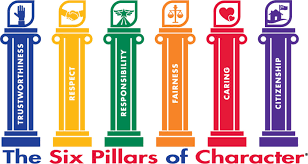
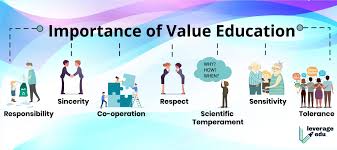
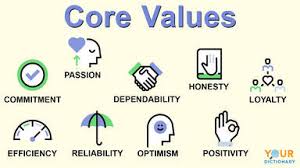
ROLE OF FAMILY,SOCIETY AND EDUCATIONAL INSTITUTIONS IN INCULCATIONG VALUES

Family, society, and educational institutions play a very major role in building one’s character or personality. These institutions impart value to an individual and help them become a better person in society. One learns what one listens. Young children very much learn what they see around them. If they see good they learn good and if they see bad they will learn that as well. The role of family is important because an individual lives there and learns from there, society influences an individual’s behaviour and educational institutions are where an individual learns. Now we’ll see how these factors help in inculcating values in an individual.

ROLE OF FAMILY

Family is a place where one grows, and learns the most. Just like the saying charity begins at home similarly an individual’s education starts from home. It is like a foundation where values are built. Values like respecting elders, honesty, justice, respect for both genders all taught at home. If within a family there are differences or if the home environment is not healthy then this also affects the individual. The values practised by the other members of the family also shapes the child’s attitude towards other people or towards the society. Values like love, care, protection all these start from family. If a child experiences love, care, comfort then he/she will have a positive attitude toward others and will behave the same with others and will inspire others as well. Family’s environment will help a child to socialise and progress in the society.

The system of joint family that is the presence of elder family members also has a great influence on an individual. It helps in developing social and moral values. They learn human values and respecting elders and this will help in eradicating negative mental tendencies when they are among elders. In a family an individual not only learns about values but also about their customs and culture and enhancing one’s culture proudly is also a very good value. The attitude of one family member towards another also affects individual behaviour. For example if child see his father not respecting his mother then he may feel that this is how it is supposed to be and he may also do the same thing with his wife but if he sees his father respecting her mother, giving her importance which she deserves the he will also treat his wife in respective manner so it is very important for a family to not just inculcate good values to the younger generation but they themselves should have good value so the future generation could learn from them.

The values that are taught in the family helps a child to learn, grow and progress in the society. Family values enhance a child’s personality and character and help them in becoming a better human being.

ROLE OF SOCIETY

When we grow older our social world also expands, now not only family but we become a part of society. Society also plays an important role in inculcating values. When a child grows it goes outside to make friends and share each other’s thoughts. Society also shapes an individual’s character. Societies follow certain traditions and customs and being a part of the society, we are also a part of these customs and traditions. These customs and traditions are being followed from generations and these are based on values such as loyalty, courage, love and brotherhood. We celebrate different festivals together which portray love and happiness and we not only celebrate festivals of one tradition or religion, but being part of such a diverse country we get to enjoy festivals and customs of different religions which shows mutual respect towards each other and toward different individuals in a society. Religion is a very important social institution in our Indian society and these religions are embedded with cultural values. Society creates social order, the diversity present in our society teaches mutual love, respect and inculcates a variety of values and holistic development of individuals. The social influence and the urge to become an inspiring personality in a society helps in developing good values in an individual. The great inspiring personalities, influencer leaders and celebrities also have a great influence in society. Young individuals learn and get inspired by them so it is also an important job for these powerful personalities to set a good example for the younger generation.

ROLE OF EDUCATIONAL INSTITUTIONS

Apart from home, a child spends most of his/her time at school. The first formal place of socialisation and the first and foremost important value that it teaches is discipline. The educational institutions have a proper disciplined environment. In an educational institution, the day starts with the prayer which teaches gratitude. Different school activities inculcate different values such as teamwork, sportsmanship spirit, competitiveness, etc. Different programs of Community work help in inculcating values like empathy, care, unity, etc. Peer groups also play an important role, students often get feedback about their behaviour from their fellow classmates or friends. Teachers also act as role models for the students, when a teacher asks students to behave in a certain manner then they tend to take it more seriously as compared to any family member or friend. The reward and punishment system also helps as children behave in a good manner for rewards and to protect their self esteem from getting punished. Every school or educational institution has their philosophy or motto and these help in inculcation of good values.

“Intelligence plus character, that is the true goal of education”. – Martin Luther King

Value is something that is not restricted to a certain age or gender or place. It is something which is lifelong, it can be learned at any age and be practiced throughout one’s life. Good values build one character and make an individual a better human being . A man with good values is respected everywhere in the society so it is very important to inculcate good values in life. There are different characters in an individual life that add to his/her character and personality. The influence of family, society and educational institutions have the strongest influence upon an individual and thus it affects in developing an individual personality whether positively or negatively.  

Sources: diyethics.forumias.com

Introducing Indian Values in School Education

The National Council of Educational Research and Training (NCERT) has developed the National Curriculum Framework (NCF) 2005, which emphasizes on ethical development, inculcating the values, attitudes and skills required for living in harmony with oneself and with others.  NCERT has developed curriculum, syllabi, textbooks and other curricular materials for elementary and secondary stages, integrating different aspects of value education and at the same time providing adequate space to study the contents of different subjects. NCERT textbooks have integrated concerns related to environment, peace oriented values, gender, SC/ST Minority in all its textual materials and supplementary reading materials.  The module prepared on Pedagogy on Social Sciences at the elementary and secondary stage for NISHTHA Programme also attempts to inculcate Indian values through participatory approaches in the teaching and learning of Social Sciences. 

The National Education Policy (NEP), 2020 provides to include in the curriculum ethical reasoning, traditional Indian values and all basic human and Constitutional values (such as seva, ahimsa, swachchhata, satya, nishkam karma, shanti, sacrifice, tolerance, diversity, pluralism, righteous conduct, gender sensitivity, respect for elders, respect for all people and their inherent capabilities regardless of background, etc. The NEP, 2020 also provides that all curriculum and pedagogy, from the foundational stage onwards, will be redesigned to be strongly rooted in the Indian and local context and ethos in terms of culture, traditions, heritage, customs, language, philosophy, geography, ancient and contemporary knowledge, societal and scientific needs, indigenous and traditional ways of learning etc. – in order to ensure that education is maximally relatable, relevant, interesting, and effective for our students. 

The Ministry of Education through NCERT organizes Kala Utsav every year to promote indigenous arts and culture in education, by nurturing and showcasing the artistic talent of school students in the country. Kala Utsav is a unique celebration of its kind where students get an opportunity to understand, and celebrate cultural diversity at school, district, state and national levels and helps in creating awareness of our regional cultural heritage and its vibrant diversity among different stakeholders of education. Since Kala Utsav involves all schools of States and Union Territories (UTs), it covers Madhya Pradesh also. 

The “Ek Bharat Shrestha Bharat” programme, launched by the Hon’ble Prime Minister on Rashtriya Ekta Diwason 31st October, 2015 to commemorate the birth anniversary of Sardar Vallabbhai Patel, aims to celebrate the Unity in Diversity of our Nation,promote the spirit of national integration through a deep and structured engagement between all Indian States and UTs, and showcase the rich heritage and culture, customs and traditions of either State for enabling people to understand and appreciate the diversity that is India, thus fostering a sense of common identity. The States carry out activities to promote a sustained and structured cultural connect in the areas of language learning, culture, traditions & music, tourism & cuisine, sports and sharing of best practices, etc.The State of Madhya Pradesh is paired with the States of Manipur & Nagaland and students of these States are encouraged to learn about each other’s culture, Arts, etc., through activities in schools in accordance with the guidelines for the programme. 

VALUE EDUCATION- A REMEDY FOR SOCIAL EVILS

Education is provided everywhere in today’s world but the concept of value education is not provided. No one feels the need of providing value education to the students, no one teaches that. The institutions and schools only provide education to their students, how to learn and write, but no one gives the knowledge of values to them. There is no stress in the educational institutions to uplift the students morally, spiritually and physically. The need of the hour is to impart value based education. Morals, ethical values, performance of duty, regard and consideration for fellow human beings, sympathy and compassion seem to have gone with the wind in this modern, complex and fast competitive era. We should realise the real aim of education, which is to provide moral values, to follow the concept of value education in every small and large educational institution.

Modern education simply prepare students to acquire degrees or diplomas in general or specialized fields but value education helps for the all round development, inculcate moral values. It teaches a person to handle their responsibilities well, be compassionate and a decent human being. It makes a person sacrificing and empathetic in nature which can decrease the crime rate and all the social evils happening in our society. The students must be learned to keep values as top priority.

WHAT IS SOCIAL EVIL?

Social evil is any pain or suffering brought by the evil intentions or actions of many individuals. It harms a person and even toxics their life to death. Common social evils include- caste system, poverty, dowry system, domestic violence, no education for girls, illiteracy etc. These are happening from a very long time and if no value education is provided within a right time, these evils continue to happen.

ROLE OF EDUCATION IN PREVENTING SOCIAL EVILS-

Education enables people to distinguish good and bad and become a good person in the society. Value education provides the overall learning to the people. It makes them go through the various areas of knowledge, the individual becomes able to distinguish good from the evil and right from the wrong. It helps the students to become more sensible and responsible towards their work. It generates a feeling of compassion to other human beings and develop a sense of belongingness in them. It makes a person helping in nature and they try to help people and not to harm them in any way. It helps them to understand the perspective of life in a better way and lead a successful life. They become a responsible citizen of the country and make their country secure from any social evil. It also help students to develop a strong relationship with family and friends. Education also empowers women to fight for their rights and challenge inequality. It gives them learning about their various rights and duties and how should they exercise it. Value education can cure economic inequality and poverty, racism and sexism. It can make the life and future of a person better and act as backbone in society. It develops the character of a person and improves the inner personality. If it is rightly exercised in every institution, then the social evils will come to an end.

CONCLUSION-

Our education should lay stress on cultivating human values. A really educated person has the capacity of self-sacrifice. A dedicated individual is a boon to the society and the nation. In fact value education can help in removing all social and cultural evils. We need vigilant men and women to help India march forward. Thus, it is very important to include the concept of value education to remove all the social evils happening in our country.

” The aim of education is the knowledge not of facts but of values.”- William Ralph Inge

Values

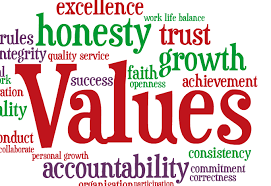
Values are the positive teachings provided to help us and tread the right path in life. Every parent wants his child to imbibe these. These can even be referred to as good qualities. A person who imbibes good values grows on to become a responsible individual and he is capable of demarcating right and wrong. Also, he is able to make wiser decisions in life.

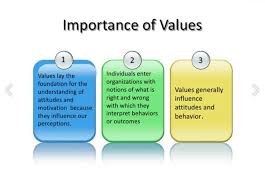
Importance of Values

For an individual, values are most important. An individual with good values is loved by everyone around as he is compassionate about others and also he behaves ethically.

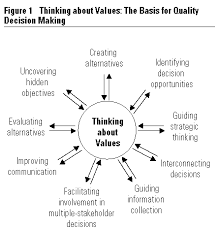
Values Help in Decision Making

A person is able to judge what is right and what is wrong based on the values he imbibes. In life at various steps, it makes the decision-making process easier. A person with good values is always likely to make better decisions than others.

Values Can Give Direction to Our Life

In life, Values give us clear goals. They always tell us how we should behave and act in different situations and give the right direction to our life. In life, a person with good values can take better charge.

Values Can Build Character

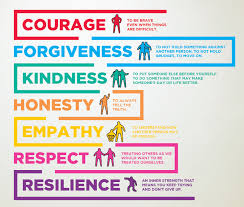
If a person wants a strong character, then he has to possesses good values such as honesty, loyalty, reliability, efficiency, consistency, compassion, determination, and courage. Values always help in building our character.

Values Can Help in Building a Society

If u want a better society then people need to bear good values. Values play an important role in society. They only need to do their hard work, with compassion, honesty, and other values. Such people will help in the growth of society and make it a much better place to live.

Characteristics of Values

Values are always based on various things. While the basic values remain the same across cultures and are intact since centuries some values may vary. Values may be specific to a society or age. In the past, it was considered that women with good moral values must stay at home and not voice their opinion on anything but however, this has changed over time. Our culture and society determine the values to a large extent. We imbibe values during our childhood years and they remain with us throughout our life.

Family always plays the most important role in rendering values to us. Decisions in life are largely based on the values we possess. Values are permanent and seldom change. A person is always known by the values he possesses. The values of a person always reflect on his attitude and overall personality.

The Decline of Values in the Modern Times

While values are of great importance and we are all aware of the same unfortunately people these days are so engrossed in making money and building a good lifestyle that they often overlook the importance of values. At the age when children must be taught good values, they are taught to fight and survive in this competitive world. Their academics and performance in other activities are given importance over their values.

Parents, as well as teachers, teach them how to take on each other and win by any means instead of inculcating good sportsman spirit in them and teaching them values such as integrity, compassion, and patience. Children always look up to their elders as their role models and it is unfortunate that elders these days have a lack of values. Therefore the children learn the same.

Conclusion

In order to help him grow into a responsible and wise human being, it is important for people to realize that values must be given topmost priority in a child’s life because children are the future of the society. There can be nothing better in a society where a majority of people have good values and they follow the ethical norms.

“VALUES ARE LIKE FINGERPRINTS. NOBODY’S ARE THE SAME, BUT YOU LEAVE THEM ALL OVER EVERYTHING YOU DO.”

— ELVIS PRESLEY

Gandhigiri With Munna Bhai: Valuable Lessons From The Film

Released in 2006, Lage Raho Munna Bhai is a movie directed by Rajkumar Hirani, screenplay by Vidhu Vinod Chopra, and starring talented actors like Sanjay Dutt, Arshad Warsi, Vidya Balan, Boman Irani, etc that proved to be a massive hit on the box office. The story begins with Munna Bhai being in love with the radio jockey Jhanvi. To win a chance to meet her, he cheats his way through the Mahatma Gandhi quiz and passes. When he finally meets Jhanvi, Jhanvi requests him to give a lecture on Mahatma Gandhi to the old people in her house. Munna who pretended to be a History professor and a Mahatma Gandhi fan has no choice left but to study all about Mahatma Gandhi for the remaining 3-4 days that he has left until the fixed date. This causes an extensive load on his brain due to which Munna Bhai starts hallucinating about Mahatma Gandhi’s persona.

The whole story moves forward with a battle against the corrupt Lucky Singh who deceives Munna and takes over the 2nd Innings House (of the old men) versus Munna Bhai who fights back using Gandhigiri. All along the movie Munna’s hallucinations of Gandhi continue to help him win and showcases Gandhi’s ethics that were long forgotten. Lage Raho Munna Bhai leaves its viewers with a deep sense of morality and Gandhigiri along with bouts of humor and comedy that keeps the audience engaged throughout the end, making it such a massive hit.!

The movie succeeds in reminding the long-forgotten ethics laid by Mahatma Gandhi for the country that he visioned. Below are the major matters that the movie tackles by implementing the concept of Gandhigiri. A neologism that refers to implementing and following the methods and guidelines laid and preached by Mahatma Gandhi. Throughout the movie, Munna acts as a spokesperson for Gandhiji’s values.

Here are some of the valuable lessons from the movie:

1. Truth – Truth is one of the fundamental teachings of Mahatma Gandhi. In this movie too, the value to always speak the truth no matter what is depicted firmly. There are 3 major instances when the characters are encouraged to speak the truth. The first instance is when Munna hides his real identity from Jhanvi and is later persuaded by Gandhi to tell Jhanvi the truth.

The second instance is when Munna and Jhanvi start their ‘Gandhigiri’ program to help people and a caller explains his desire to die as he doesn’t have the courage or way to return the hard-earned money of his father. To this Munna convinces the caller to tell his father the truth honestly and work hard to return the money. No matter how small the amount he earns or how long it takes to return the money Munna requests the caller to speak the truth.

The last instance is when Lucky’s daughter runs away from her wedding because she is upset about the lie that her father told her in-laws about her not being ‘Manglik’. Munna advocates her to face whatever it is and to tell the truth to her in-laws. Further, he comforts her by saying that if the boy loves her then he will not care about such stuff and will still marry her regardless of all this.

2. Non-Violence – This is the 2nd fundamental teaching of Mahatma Gandhi. Non-violence is also preached through the movie in a very subtle and effective way. The first example of non-violence in the movie is when Gandhi advocates Munna to turn to non-violence rather than hurting his enemy.

The second example is when another caller asks Munna for help to stop his fellow neighbour from spitting on his entrance wall. Munna suggests him to adopt the Non-Violent way and instead of beating or spewing bad words, he should clean up the spit every day with a smile on his face. This will reduce the hatred in the enemy’s heart and make him realize his mistake. And so, it happens!

3. Importance of values and respect for elders – At the start of the film, we see how children abandon their parents in their old age. This is a very heart-wrenching scene. Later Munna is seen remarking and rebuking the son of one of the old men. He scolds him saying that the parent who raised him with everything he got, is being abandoned today by his son when he needs him the most. This is a strong criticism towards people who, in their selfishness forgets the values and morals that one needs to follow in life.

4. Satyagraha and peaceful methods of protests – The very core theme of Lage Raho Munna Bhai movie explores the aspects of corruption and bribery. Gandhi Ji advocated the concept of Sarvodaya for everyone’s progress however, we know that the present world does not focus on equity but greed.

Corruption in the system is growing at a stark rate. By adopting the Gandhigiri way to fight against this, the peaceful methods of protests preached by Mahatma Gandhi are ignited again in this movie. First, Munna adopts the peaceful method of Satyagraha to fight against Lucky Singh’s corruption. In another instance, again through one of the callers, we are reminded about how to fight bribery and corruption in the system i.e. by making the other person feel ashamed in the most non-violent way.

5. Superstitious beliefs in India Lage Raho Munna Bhai smoothly tackles the superstitious problems that are still common in India. We see the plot of the movie revolve around Lucky Singh’s daughter being ‘Manglik’ and how Lucky Singh lies about it, which in the end is revealed to the in-laws by Lucky Singh’s daughter. It shows how most of the superstitions that Indians have is nothing but a way for the so-called ‘pandits’ and ‘Jyotish’ to extract money from people. Mahatma Gandhi never showed support for superstitious beliefs and always asked people to walk with reason, empathy, truth, and non-violence. Thus, this also remains an important point in Gandhian Philosophy.

The film succeeds in lining up with the expectations of people. Lage Raho Munna Bhai proves to be a great movie to convey the message of Gandhigiri to the audience in a serious yet humoristic way without being didactic. It not only shows Gandhi’s principles of thought but also shows a way to employ them in the present situations in India. The film is a great medium for anyone who wants to explore Gandhi Ji’s ideals without needing to have any prior knowledge about it.

Universal Human Values

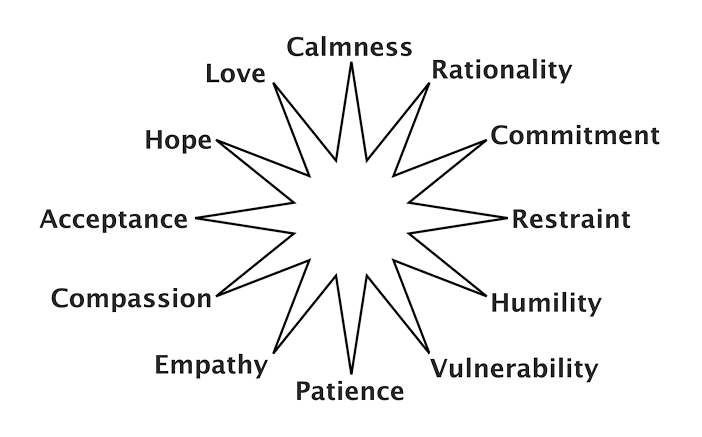
Human values are necessity in today’s society and business world. Human values are the features that guide people to take into account the human element when one interacts with other human. They have many positive characters that create bonds of humanity between people and thus have value for all human beings. They are strong positive feelings for the human essence of the other. These human values have the effect of bonding, comforting, reassuring and procuring serenity. Human values are the basis for any practical life within society. They build space for a drive, a movement towards one another, which leads to peace. In simple term, human values are described as universal and are shared by all human beings, whatever their religion, their nationality, their culture, and their personal history. By nature, they persuade consideration for others. These are described below:

Co-operation

It is the procedure to work jointly to attain some goal, but many scholars visualize co-operation as a luxury and not an important human value. It is unquestionably one of the most vital assets one can have when working through a problem. Having the opinions and voice of another person will not only draw out a discussion of the topic, but also lead person to good solution. Co-operation has been under-appreciated for years in its importance and should be held in high regard.

Caring

This human value is viewed as exhibiting kindness and concern for others, the true importance of this value comes from the work or practice of looking after those unable to care for themselves. Caring for others both physically and spiritually is an extremely important value to have; people will always rely on someone else for help at one point or another, but we often fail to realize how much of a difference caring for another person can make.

Honesty

Honesty is also vital human values. Presently, adopting an honest approach can often feel intimidating and impossible, but people fail to realize is that it is not the act of simply telling the truth that makes someone honest rather the quality of person who is being honest. An honest person is often straight, upright, sincere and fair and being an honest person brings more reward to the soul than the damage a lie could do.

Love, Respect & Faith

The presence of love in human life, the love they have for their families, friends, our faith and for themselves is important source of energy to lead smooth life. Respect is a feeling of deep esteem for someone or something elicited by their abilities, qualities, or achievements. Faith is complete trust or confidence in someone or something.

Beauty

Beauty is something that has really been spoiled by human society. The way we think about something that is beautiful is judged on a purely physical response, but the true meaning of beauty is being in balance and harmony with nature. Many researchers would argue that beauty is not a human value and, although beauty is a subjective experience, when they analyze what a subject of beauty is, it becomes anything that resonates with personal meaning, not just emotion. The prominence of this Human Value is clear when people think about the things that bring meaning into their life such as family and friends, these things become beautiful in a greater sense.

Wisdom

Wisdom is also significant human value in many ways; under-appreciated in its importance, in its value in our lives and in its true meaning. Wisdom is also very often confused with words like knowledge or intelligence but the word wisdom is defined as the quality of having experience and good judgment and the resulting soundness of that action or decision.

Role of family and society in teaching values

Moral values such as truthfulness, happiness, peace, justice are inculcated in children’s thoughts, feelings and actions and they function as ideals and standards that govern their actions in their life. The value system practiced in the family becomes automatic to the young family members if they are taught moral values thoroughly. The family has a great responsibility to pass on to the children many truths and values, and competencies to accomplish their place in life, whatever the society, whatever the culture or times. The family, forms the child’s viewpoint towards people and society, and helps in mental development in the child and supports his desires and values. Delightful and joyful atmosphere in the family will develop the love, affection, tolerance, and generosity. A child learns his behaviour by demonstrating what he sees around him.

Role of educational institutions

Value education is important to help everyone in improving the value system that he/she holds and puts it to use. Once, one has understood his/ her values in life he/she can examine and control the various choices he/she makes in his/ her life. Many reports signify that the aim of educational institutions should not only be to teach education alone but should also be to inculcate values and improving skills of children and teens. In school, children are affiliates of a small society that exerts a great influence on their moral development. Teachers serve as role model to students in school. They play a major role in inculcating their ethical behaviour.

International Nelson Mandela Day 2021!

Why do we celebrate this day and its significance, his life and theme for 2021.

‘This day is also known as 67 Minutes Mandela Day, as for 67 years he fought for social justice.

The theme for 2021 Nelson Mandela International Day is “One Hand Can Feed Another.”

To further this recognition of his legacy, the month of July is also unofficially recognized as “Mandela Month” in South Africa.

About Nelson Mandela:

Nelson Rolihlahla Mandela was a South African anti-apartheid revolutionary, who served as President of South Africa from 1994 to 1999. He was also a statesman and philanthropist. Influenced by Marxism, he secretly joined the banned South African Communist Party (SACP). Although initially committed to non-violent protest, in association with the SACP he co-founded the militant Umkhonto we Sizwe in 1961 and led a sabotage campaign against the government. He was arrested and imprisoned in 1962, and subsequently sentenced to life imprisonment for conspiring to overthrow the state following the Rivonia Trial. Mandela served 27 years in prison

He was the country’s first black head of state and the first elected in a fully representative democratic election.

Over the course of his life, Mandela was given over 250 awards, accolades, prizes, honorary degrees, and citizenship in recognition of his political achievements. Among his awards were the Nobel Peace Prize, Bharat Ratna, the Soviet Union’s Lenin Peace Prize, and many more. Within South Africa, he was widely considered “The Father of the Nation” and “The Founding Father of Democracy.” Worldwide, he was regarded as a “Global Icon” and was described as “One of the most revered figures of our time” by Rita Barnard.

In the 1950s, he was elected as the leader of the youth wing of the African National Congress (ANC) liberation movement. He first resorted to peaceful protests. But he was met with violence by the government, he went on to support an armed movement. Mandela was an important symbol for the oppressed in South Africa who were fighting for their rights. He was extremely instrumental in tearing down the oppressive government and laid the foundation of democracy.

He started the Nelson Mandela Foundation to combat HIV or AIDS, support educational and rural development. In 2009, the United Nations proclaimed July 18th to be International Nelson Mandela Day. On this day, people are asked to spend 67 minutes doing something good for others, which represents all the 67 years he spent working towards change.

The 1st UN Mandela Day was held on 18th July 2010.

WHY ?

We celebrate this day to remember his struggle and contribution to the world which helped to pave a path for growth from the 20th – 21st century. It is a movement for all of us to renew and imbibe the values that inspired Nelson Mandela.

 "It is easy
 to breakdown and destroy.
  The heroes are those
 who make peace and build."
                                                              - Nelson Mandela

Things to do:

  • Learn about human rights!
  • Get acquainted with what you can do to fight alongside communities you most connect with.
  • Read about what inspired Nelson Mandela and the steps to took to fight injustice.
  • Talk with NGOs nearby you and find out how can you help the cause they are working on.
  • Talk to the friend you miss!
  • Find shelters, volunteer, or contribute food, amenities to help our beloved furbabies!!
  • Take a minute and appreciate everything that made you who you are.
  • Look into your strengths and use them to give back to the world.
  • Never underestimate the words, actions that you put out in the world! You matter!

Refences:

https://en.wikipedia.org/wiki/Nelson_Mandela

https://www.dosomething.org/us/facts/11-facts-about-nelson-mandela