

The Archaeological Survey of India (ASI) has 3696 monuments under protection, which are spread, throughout the country. These monuments not only exhibit the rich cultural heritage of India but also play a significant role in fostering the economical growth. In order to sustain the rich cultural legacy, the heritage sites require time to time enhancement of the amenities. To this end and to further enhance the experience of visitors, ASI launched “Adopt a Heritage 2.0” programme on 4th September 2023 at Samvet Auditorium, IGNCA, New Delhi. Union Minister of Culture, Tourism and DoNER Shri G Kishan Reddy, who attended the launch programme virtually, urged all entities to come forward and help in better upkeep and rejuvenation of India’s rich cultural heritage, in line with the vision of ‘Virasat Bhi, Vikas Bhi’.
He further said that ‘Adopt a Heritage 2.0’ programme seeks to foster collaboration with corporate stakeholders through which they can contribute to preservation of these monuments for the next generations.
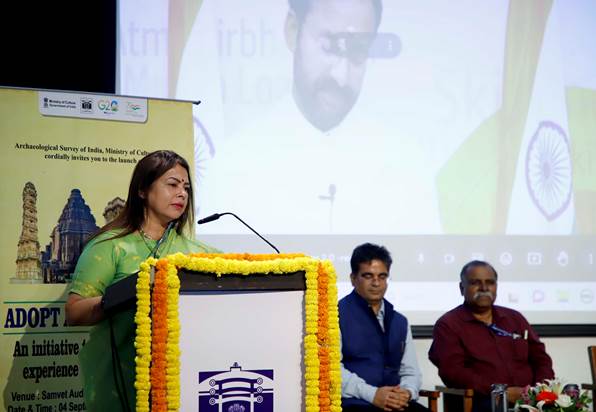
Under this programme, ASI invites corporate stakeholders to enhance the amenities at the monuments by utilizing their CSR funds. The programme is a revamped version of the earlier scheme launched in 2017 and clearly defines the amenities sought for different monuments as per AMASR Act 1958. The stakeholders can apply for adopting a monument or specific amenities at a monument through a dedicated web portal with URL http://www.indianheritage.gov.in, which contains details of monuments sought for adoption along with gap analysis and financial estimation of amenities. Union Minister of State for Culture Meenakashi Lekhi, Union Culture Secretary Govind Mohan and Director General of ASI, K. K. Basa, were present on the occasion.
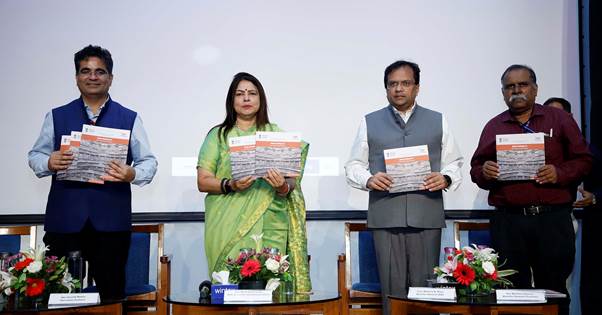
Minister of state for Culture, Smt. Meenakashi Lekhi, elaborates the importance of cultural heritage in shaping the identity. She said that G20 Presidency is an opportunity to showcase the Cultural heritage of our country. She said that he process for selection will be carried out after due diligence and discussions with various stakeholders and assessing the economic and developmental opportunities at each monument.
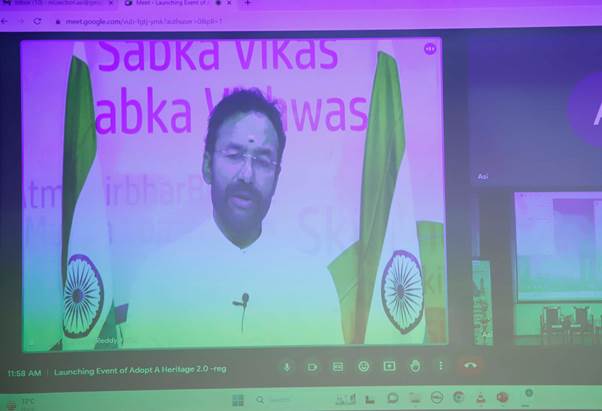
The ‘Adopt a Heritage 2.0’ programme seeks to foster collaboration with corporate stakeholders through which they can contribute in preserving these monuments for our upcoming generations”, said the minister. The process for selection will be carried out after due-diligence and discussions with various stakeholders and assessing the economic and developmental opportunities at each monument.
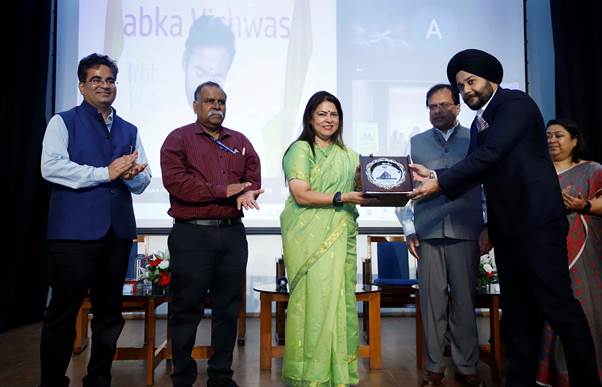
The selected stakeholders will develop, provide and maintain amenities in hygiene, accessibility, safety and knowledge categories. In doing so, they will get an opportunity to be recognized as a responsible and heritage-friendly entity. The term of the appointment will be for a period of five years initially, which may be further extended up to five years.
Further, a user-friendly mobile app, named ‘Indian Heritage’ also launched on the same day, which will showcase the heritage monuments of India. The app will feature state-wise details of monuments along with photographs, list of public amenities available, geo-tagged location and feedback mechanism for citizens. The launch will be in a phased manner, with the ticketed monuments launched in Phase I, followed by the remaining monuments. An e-permission portal, with URL http://www.asipermissionportal.gov.in for obtaining permission for photography, filming and developmental projects on monuments was also launched. The portal will fast-track the process for obtaining various permissions and solve operational and logistical bottlenecks involved.
www.asipermissionportal.gov.in
***

 Eduindex News