AICTE Lilavati Awards 2020 on women empowerment

 Union Minister of Education Shri Ramesh Pokhriyal ‘Nishank’ presented the AICTE Lilavati Awards 2020 on women empowerment to the winners in New Delhi today.
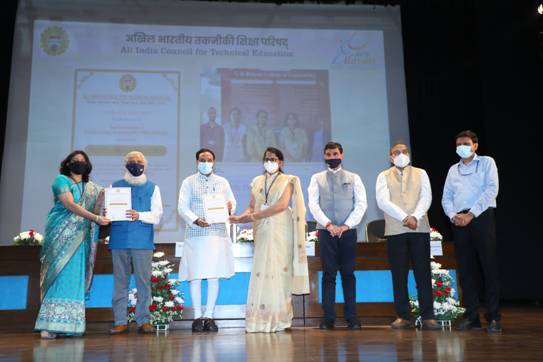
Speaking on the occasion Shri Pokhriyal congratulated all the 456 teams who participated in the contest. The Minister said that India is a country where ‘Nari Tu Narayani’ has been an integral part of our ethos and culture. In line with the vision of our Prime Minister, the govt has launched several welfare schemes for the overall development of girls and women in various fields, including Sukanya Samriddhi Yojana, Beti Bachao – Beti Padhao Yojana, etc, he added. Shri Pokhriyal also informed that Government launched Udaan scheme which aims to enable girls of weaker socio-economic status at school level to gain access to higher education. We also started Pragati Yojana to give young women opportunity to further their technical education, he added. Shri Pokhriyal highlighted that the new National Educational Policy has greatly emphasised on gender equality and students should participate in such initiatives to promote women empowerment.

 He welcomed the initiative of AICTE for instituting the Lilawati Awards and stressed that such innovative steps shall be great motivation for girls to join higher education. This initiative will pave a path towards equality in education and innovation, for women

AICTE Chairman Professor Anil Sahasrabudhe said, “I thank Honorable minister Shri Ramesh Pokhriyal ‘Nishank’ for attending the event. AICTE is so happy to present this year’s Lilawati award aimed at empowering womanhood in the nation. Moreover, I congratulate all the teams who submitted the entries. India is a country known for respecting and celebrating the glory of womanhood, and with initiatives like these, AICTE is also contributing its bit to empower the women in our country,” said Sahasrabudhe.

Based on the theme ‘Women Empowerment’, AICTE finalized the winners from a total of 456 entries who competed across 6 sub themes, which include, Women’s Health, Self-Defense, Sanitation and Hygiene, Literacy, Women Entrepreneurship, and Legal Awareness. After analyzing the initial entries, the top 10 entries under each sub-theme were invited for presentation before the two committees headed by Prof Sushma Yadava, Vice-Chancellor, B.P.S. Mahila Vishwavidyalaya Khanpur Kalan, Haryana and Dr. Vinita S. Sahay, Director, IIM Bodh Gaya. 

SWEAT (Sona Women Entrepreneurship and Training) from Sona College of Technology, Tamil Nadu won the contest in the ‘ Women Entrepreneurship’ sub theme. Under the ‘Digital Literacy’ sub theme, Bharatiya Vidyapeeth won the contest. Institute of Management and Entrepreneurship Development Pune won the award under the ‘Literacy’ sub theme. WIT Women Health Coalition from Walchand Institute of Technology, Maharashtra won the award under the ‘Women’s Health’ sub theme. Radiant Seetha from Thiagarajar Polytechnic College won the contest in the ‘Legal Awareness’ sub theme. Finally, Paritrana from St. Joseph’s College of Engineering, Tamil Nadu won the award for the ‘Self Defense’ sub theme. 

Bharatiya Vidyapeeth, who won the award under the digital literacy subtheme suggested that internet revolution that has happened in India post-2014 has played a crucial role in empowering women in the nation. “Post-2014, the internet revolution happened in India, and it has helped women in the country to grow, as information is accessible at their fingertips. However, even now, there are several women in the country who do not have sufficient digital literacy, and we should bring them too to the forefront of the society,” said Bharatiya Vidyapeeth.

LIST OF AWARDEES


Legal Awareness-


Sr. No

Position

Name Of Institute

Name of Team

Team Members

  1.  

Winner

THIAGARAJAR POLYTECHNIC COLLEGE,

TAMIL NADU

RADIANT SEETHA

  1. R. MAHESWARI
  2. M. PONNI
  3. P. KARUNYA DEVI
  4. S. SARANYA
  5. SISTER A.S. CELINE AUGUSTINE MARY
  1.  

1st Runner –Up

NAVODAYA INSTITUTE OF TECHNOLOGY, RAICHIUR, KARNATAKA

WOMEN EMPOWERMENT CELL-NITR


  1. HARSHITA GANGAKHED
  1. M TEJASWINI
  1. GEETA K.M
  1. SHALINI K
  1. CHANNAVEERAMMA E
  1.  

2nd Runner –Up

PONDICHERRY ENGINEERING COLLEGE,

PUDUCHERRY

MALAR

  1. RAJATHY RATHINASAMY
  1. SANTHI GURUSAMY
  1. PALLAVHEE TAMIZHCHELVAN
  1. GUEJALATCHOUMY KOTHANDAPANI
  1. KAVITHA KUMAR RAJENDIRAN
  1.  

LAKSHMI NARAIN COLLEGE OF TECHNOLOGY, MADHYA PRADESH.

UDAAN

  1. AYUSH PURWAR
  1. GARGI DUBEY
  1. MEGHA CHOUBEY
  1. PALAK JAIN
  1. PRAGYA JAIN


Self Defence-

  1.  

Winner

ST. JOSEPH’S COLLEGE OF ENGINEERING,

TAMIL NADU.

PARITRANAS

  1. S. AKSHAYA
  1. DELLECTA JESSY RASHMI
  1. VADAVANNUR CHELLAN RAMAKRISHNAN JAYARAMA PRADEEP
  1. RAMASAMY SREEKANTH
  1. GUNASEKARAN BRINDHA
  1.  

1st Runner –Up

THIAGARAJAR POLYTECHNIC COLLEGE,

TAMIL NADU

SHAKTHI

  1. THEJESWINI V
  1. JAYANTHI C
  1. BHOVANAASHWARI T
  1. UDHAYAKUMAR P
  1. J. AMUL RAJ
 
  1.  

SRI SAI RAM ENGINEERING COLLEGE,

TAMIL NADU.

MAHILA PRATHIRAKSHA ABHIYAAN

  1. K. L. NITHISH RAJA
  1. S. SRIVIDHYA
  1. Dr. M.NITHYA
  1. Dr. K.LATHA
  1. S. SUBHA
  1.  

2nd Runner –Up


VIVEKANANDA INSTITUTE OF TECHNOLOGY,

RAJASTHAN

WARRIORS

  1. DEEPIKA JANGID
  1. TANUSHREE MEHARWAL
  1. RUCHI SHARMA
  1. VANDANA AGARWAL
  1.  

G. H. RAISONI COLLEGE OF ENGINEERING, NAGPUR, MAHARASHTRA

SURAKSHA CHAKRA

  1. MD. AASHIM KHAN
  1. KANCHAN DIYEWAR
  1. VIBHA BORA
  1. BHAKTI PATANKAR
  1. ISHA KHEDIKAR

Sanitation & Hygiene-

  1.  

Winner

SMT. KISHORITAI BHOYAR COLLEGE OF PHARMACY, MAHARASHTRA

SKBCOP ECO CLUB

  1. TANISHKA RANDIVE
  1. PRANJAL TIDKE
  1. DR. RENUKA DAS
  1. SHRUTI NASRE
  2. MR. MANISH AGLAWE
  1.  

1st Runner –Up 

SONA COLLEGE OF TECHNOLOGY, TAMIL NADU

SWSAH (SONA WOMEN SANITATION AND HYGIENE)

  1. PRIYALATHA S
  1. GULSHAN TAJ M N A
  1. PARAMASIVAM S
  1. KANIMOZHI J
  2. RASHMA M
  1.  

ST. JOSEPH’S COLLEGE OF ENGINEERING, TAMIL NADU

VOW –   VIRANGANA OF WASH (WATER SANITATION  HYGIENE)

  1. N HEMAPRIYA
  1. VENKATESAN MUTHULAKSHMI
  1. GANDHIMARUTHIAN LATHASELVI
  1. RENUKA VISWANATHAN
  2. K RAJARAMAN
  1.  

2nd Runner –Up

SRI KRISHNA COLLEGE OF ENGINEERING AND TECHNOLOGY, TAMIL NADU

SKCET SANITATION AND HYGIENE TEAM

  1. KAVIYA S
  1. SUDHIR SOPHIA
  1. KARPAGAM MYLSAMY
  1. R GEETHAMANI R
  2. P A THIRUNAVUKARASU

Women Health-

1.

Winner

WALCHAND INSTITUTE OF TECHNOLOGY,

MAHARASHTRA

WIT WOMEN HEALTH COALITION

  1. DR. RUPALI J.SHELKE
  1. Dr. PRATIBHA YALAGI  ALADEEP
  1. RASHMI DIXIT
  1. DIPALI DILIP AWASEKAR
  2. ROHINI MERGU

2.

1st Runner –Up

POONA COLLEGE OF PHARMACY, MAHARASHTRA

BHARATI PCP SAKHEE

1.VARSHA POKHARKAR

2.ARULMOZHI SATHIYANARAYANAN

3. ASAWARI RAUT

4. MANJUSHA SAJITH

5. SAVITA GOWEKAR

3.

2nd Runner –Up


KUMARAGURU COLLEGE OF TECHNOLOGY,  TAMIL NADU

NATURAL PRODUCTS FOR HEALTHCARE

1. THIYAGARAJAN SATHISH KUMAR

2. KUMARESAN KUPPAMUHTU

3. SOUNDARARAJAN NITHYA PRIYA

4. S. VASUKI

5. S. BHARTHI KAMALA

4.

BIYANI INSTITUTE OF SCIENCE AND MANAGEMENT, RAJASTHAN

BIYANI INSTITUTE OF SCIENCE AND MANAGEMENT

1. SANJAY BIYANI

2. NEETA MAHESHWARI

3. NEHA PANDEY

4. POONAM SHARMA

5. ANJU BHATT

Women Entrepreneurship

1.

Winner

SONA COLLEGE OF TECHNOLOGY TAMIL NADU

SWEAT (SONA WOMEN ENTERPRENURSHIP AND TRAINING)

  1. RAMALINGAM MALATHY
  1. SRINIVASAN PADMA
  1. DHANAKODI RAJA
  1. KRISHNASWAMYPILLAI RANGANATHAN KAVITHA
  2. ARUMUGAM RANJITHKUMAR

2.

1st Runner –Up

ENTREPRENEURSHIP DEVELOPMENT INSTITUTE OF INDIA, GUJARAT

WOMEN EMPOWERMENT

  1. RAJESH GUPTA
  1. BAISHALI MITRA
  1. NIKITA TA
  1. SATYA ACHARYA
  2. RAMAN GUJRAL

3.

2nd Runner –Up

BHILAI INSTITUTE OF TECHNOLOGY

UNMUKTA

  1. MANISHA SHARMA
  1. SHUBHRATA NAGPAL
  1. ARPANA RAWAL

4.

G. H. RAISONI COLLEGE OF ENGINEERING, NAGPUR, MAHARASHTRA.

AATMANIRBHAR

  1. SWAPNA CHOUDHARI
  1. ATUL DESHMUKH

  1. ARCHANA RAUT
  2. BHARGAVI KAKIRWAR
  1. MADHAVI CHAVHAN

Literacy –

1.

Winner

BHARATI VIDYAPEETH ( Deemed to be University) INSTITUTE OF MANAGEMENT & ENTREPRENEURSHIP DEVELOPMENT, PUNE

DIGITAL LITERACY

  1. MS SHWETA TATE
  2. KIRTI GUPTA
  3. ANURADHA YESUGADE
  4. RAJITA DIXIT
  5. HEMA MIRJI

2.

1st Runner –Up

SRI SAI RAM ENGINEERING COLLEGE, TAMIL NADU

SAI STHREE VIDYA ABHIYAAN

  1. S.VASUPRADHA
  2. Dr. SOMA PRATHIBHA
  3. Dr. N. MANI
  4. B. PRIYA
  5. M. SIVA  SANKARI

3.

2nd Runner –Up

HYDERABAD INSTITUTE OF TECHNOLOGY AND MANAGEMENT, HYDERABAD

We-Lit

  1. DEVIKA SUGGUBODI VENKATESWARLU
  1. ARVIND SIDDAPURAM
  1. SURESH AALURI
  1. JOYTHSNA K
  2.    SMT. SUSHEELA DEVI 

4.

SRI MANAKULA VINAYAGAR ENGINEERING COLLEGE, PUDUCHERRY

SUPER SONIC

  1. PAVITHRAN.T
  2. ARVIND.K
  3. BALAMURALI.M
  4. HARINI.G
  5. JASMINE.A


*****
Advancement of Women in India

Advancement of Women

Introduction

In India, where women are considered as mothers, women are being enslaved and abused. It is a pity that women seek to destroy women. 

The Status of the Woman

In ancient times women were proud. That is why all the rivers of the motherland were called by the name of the woman. From the fact that many female poets lived during the Sangam period and from the heroic life of Lakshmibai, the Rani of Jhansi and Rani Mangammal, we can know that women excelled in all fields. 

But over time, that is likely to change. The oppression of women began to grow. Women began to be enslaved.

The custom of having his wife jump into the fire with him if the husband dies came from the name of conspiracy. Reformers like Rajaram Mohan Roy slammed it and removed it. 

Women today have the same responsibilities as men in a family. Many families depend on women. But even today, in the name of dowry, women are given and gold is given. It is painful to note that many of these women are abused by the groom’s house. If the wife dies, the widow is denied marriage while the groom remarries.

Femininity in Society 

To this day, women are given second place in society. Gandhiji said he would accept that peace prevails in the country if a young woman walks the streets alone in the midnight. But in the daytime, the news about men abusing women is the same.  

 Female infanticide still exists in many families today. The family does not provide adequate education for women. Similarly, it is painful to portray women as mere objects in movies and advertisements. 

Women today are proving that we can achieve in any field. However, violence against women continues today. No one can deny this. But the comforting news is that many women’s organizations are emerging and listening to these atrocities.

Government Programs

It is to be welcomed that the government has come up with several legal schemes and shown interest in the advancement of women. The State Government and the Central Government have enacted laws such as the Dowry Prohibition Act, the Maternity Allowance Act, the Industrial Rules, the Sharda Act and the Equal Pay Act and are making arrangements for data on reservations for women. 

The government and the general public must protect women’s rights by providing them with education and equal rights. We must remember that men and women are equal.

Conclusion

We will realize Bharati’s dream that this world will flourish only because men and women are equal. Understand the fact that the two wheels of the cart of society are male and female and everyone should participate in the advancement of women.

WORKING WOMEN AND THE GLASS CEILING

PROLOGUE

The discriminatory limitation is certainly not a commonplace roof made of glass! All things being equal, it is a representation addressing the upper-level labor force openings that are impervious to most ladies. It represents the theoretical hindrance that keeps ladies from making high level proficient progress. The term was first utilized during the 1980s to portray ladies’ difficulties when arriving at higher initiative or chief jobs. Albeit imperceptible and immaterial, the discriminatory limitation is valid.

A GLANCE AT SIMILAR TERMS

PINK-COLLAR GHETTO

During the 1970s, more broad conversations emerged around the compensation inconsistency among people for comparative jobs. Thereupon, the expression “pink-collar ghetto” was authored. Pink-collar occupations were paid not exactly white and blue-nabbed occupations, which were ordinarily held by men.

MATERNAL WALL

Pregnant ladies and working moms might confront a “maternal divider.” Various generalizations identified with going on vacation after kid origination ladies at a disadvantageous situation in their professions.

BAMBOO CEILING

The term Bamboo roof was instituted by Jane Hyun. It was utilized to depict the obstructions Asians and Asian Americans looked in making upper-level proficient progress.

Substantial CEILING

The term discriminatory limitation alludes to all ladies overall. Interestingly, the substantial roof portrays the more imposing obstacles ladies of shading face in getting an upper-level or top administration job. This term was begat by Jasmine Babers.

WHAT DO THE STATS SAY?

The discriminatory limitation isn’t only an illustration. It is a tragic reality.

Different insights back this reality. Chiefs are twice as prone to enlist men over ladies while selecting representatives. Incidentally, at organizations where 90% of administration is men, a big part of the men feel that the initiative well addresses ladies. Unfortunately, just 38.6% of top chief positions are held by ladies. Shockingly, ladies address just 10% of administration in the working environment. Accordingly, 34% of individuals consider male to be as better danger assessors with no rationale to back something very similar. Additionally, ladies make up just 23% of C-Suites. Ladies make up only 4.1% of Fortune 500 CEOs. Subsequently, ladies get increases in salary 5% less frequently than men.

WHAT CEMENTS THE GLASS CEILING?

GENDER ROLES

Gender jobs are extraordinary to various societies. They are characterized the second a kid is conceived.The average generalizations anticipate that girls should be ladylike, respectful and sustaining, though young men are relied upon to be manly, serious, forceful, and valiant. In the work environment, administrators and pioneers should be serious and striking to settle on imperative choices. Such contrasts in sexual orientation jobs limit ladies and take away their freedom. Moreover, ladies are characteristically expected to bring up kids and take care of family errands. Having this heap of assumptions doesn’t allow them to find some kind of harmony at a vocation, construct a family and have an individual life.

GENDER BIAS

Gender predisposition alludes to the inclination given to one sex over another. In the work environment, this predisposition influences ladies actually contrarily. As referenced before, people are twice as liable to recruit a man over a lady. The inclination doesn’t stop after the meeting. All things considered, it heightens further. As indicated by an examination, over 42% of ladies experience separation in the work environment. Those demonstrations of segregation come as inconsistent compensation for a similar obligation, ladies being treated as bumbling, passing up sufficient freedoms, not getting an advancement. Shockingly, on normal for each 100 men advanced just 79 ladies are elevated to similar levels. As referred to previously, at organizations where ladies make up 10% of authority, half men see ladies as being very much addressed.

Sexual Harassment

The U.S. Equivalent Employment Opportunity Commission (EEOC) characterizes inappropriate behavior as: “Unwanted sexual solicitations and verbal or actual behaviors of sexual nature establish inappropriate behavior when this direct influences a person’s business.” While all kinds of people experience lewd behavior, almost 75% of cases are capable by ladies. Unfortunately, practically 68% of ladies experience the ill effects of inappropriate behavior. Out of the ones who experience lewd behavior, 70% of them share it at their working environment. Shockingly, 47% of female respondents accepted that lewd behavior is endured at their working environment.

Moreover, 45% of ladies aren’t certain that administration at their association will resolve the issue. To add to the troubles, 3 out of 4 inappropriate behavior casualties experience counter in the wake of announcing the issue. Subsequently ladies secure stopping their positions simpler than announcing the provocation. 80% of ladies who experience inappropriate behavior inside the initial two years at a new position quit their positions. These frightening encounters make it practically inconceivable for ladies to arrive at more significant level jobs in their professions.

THE FINAL THOUGHT

The unreasonable impediment may not be noticeable through the unaided eye, however it is unquestionably apparent through a sympathetic brain. People are equivalent, so the chances they persuade should be indistinguishable. It is about time to comprehend that sex balance can be accomplished whenever we allow people an equivalent opportunity to vanquish their fantasies.

ARUNIMA SINHA

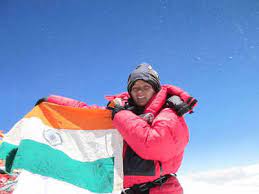
Arunima Sinha was born on 20 July 1989 in Lucknow, Uttar Pradesh. She is the World’s first female amputee to scale Mount Everest, Mount Kilimanjaro (Tanzania), Mount Elbrus (Russia), Mount Kosciusko (Australia), Mount Aconcagua (South America), Carstensz Pyramid (Indonesia) and Mount Vinson, she is additionally seven time Indian volleyball player.

EARLY LIFE AND TRAIN ACCIDENT

Arunima preferred football and furthermore was a public volleyball player. She needed to join paramilitary powers. Be that as it may, when she was going to Delhi in a train a few burglars entered in train mentor to take her pack and gold chain. She had a go at opposing yet they pushed her out of the train and fell on the track. She attempted to get up yet couldn’t and afterward the train run over her leg.

She was raced to the clinic with genuine leg and pelvic wounds and lost her leg after specialists removed it to save her life.

She was offered remuneration of ₹25,000 (US$350) by the Indian Sports Ministry. Following public shock, the Minister of State for Youth Affairs and Sports Ajay Maken declared an extra ₹200,000 (US$2,800) remuneration as clinical help, along with a suggestion for a task in the CISF. The Indian Railways additionally extended to her an employment opportunity.

On 18 April 2011, she was brought to the All India Institute of Medical Sciences for additional therapy, going through four months at the Institute. She was given a prosthetic leg liberated from cost by a private Delhi-based Indian organization.

MOUNT EVEREST ASCENT

While as yet being treated in the All India Institute of Medical Sciences, she set out to climb Mount Everest. She was propelled by cricketer Yuvraj Singh (who had effectively struggled malignant growth) and other TV programs, “to accomplish something” with her life. She dominated in the essential mountaineering course from the Nehru Institute of Mountaineering, Uttarkashi, and was urged by her mom to ascend Everest. She climbed Mount Everest with a prosthetic leg, which was orchestrated by raising assets with the assistance of a master of Ramakrishna Mission, Vadodara.

She reached Bachendri Pal. When she met Pal and Arunima disclosed to her story to her, Bachendri Pal said to Arunima “My youngster You chose to climb Mount Everest in these circumstances with Prosthetic (Artificial) leg. You had climbed, accomplished Mount Everest my youngster now the date is staying to the World to know”.

Furthermore, after that Arunima join essential mountaineering course from Nehru Institute of Mountaineering and TATA Steel Adventure (TSAF) in Uttarkashi (India) and she was energized or roused by her senior sibling Omprakash to ascend Mount Everest.

Sinha climbed Island Peak (6150 meters) in 2012 as groundwork for her rising of Everest.

Sinha and Susan Mahout, a USAF educator, who had together climbed Mount Chaser Sangria (6,622 meters or 21,726 feet) in 2012 under the direction of Hendrick Pal began their rising of Mount Everest.

After a hard work of 17 hours, Sinha arrived at the highest point of Mount Everest at 10:55 am on 21 May 2013, as a component of the Tata Group-supported Eco Everest Expedition,becoming the primary female amputee to scale Everest. She required 52 days to arrive at the highest point. She composed a little message saying thanks to the Almighty on an enveloped fabric and squeezed it by the snow. Relating the occurrence, she said:

It was my recognition for Shankara Bhagawan, and Swami Vivekananda who has been a motivation for the duration of my life.

The Chief clergyman said that Sinha had made history, because of her persistent effort and assurance, by climbing Mount Everest. She was complimented by the Indian Sports Minister Jitendra Singh on her accomplishment.

Arunima Sinha is presently devoted towards social government assistance and needs to open a free games foundation for poor people and distinctively abled individuals. She is giving every one of the monetary guides she is overcoming grants and courses for a similar reason. The foundation would be named Shaheed Chandra Shekhar Vikalang Khel Academy.

She composed the 2014 book Born Again on The Mountain.

She is a motivation to every one of the ladies and individuals with handicap. She demonstrated that one requires difficult work and energy to achieve objective. She has a solid resolve which caused her to achieve her objective even get-togethers around her pity her. She genuinely demonstrated that “the sky is the limit”.

THE INFLUENCE OF GENDER ROLES ON HEALTH SECTOR INCLUDING REPRODUCTIVE RIGHTS

                                                                          (Photo: Singularity Hub)

  Men form one-third of a typical medical school’s population; Rest of the seats are all occupied by women. The pay gap in the healthcare sector is 25% higher than any other sector. Most women agree to work at low wages because of the financial crises they face. Gender inequality is leading to a shortage of healthcare workers in the sector. Women in India face “extensive gender discrimination” in access to healthcare. Gender inequality is leading to a shortage of healthcare workers in the sector because obviously only one-third of the seats were taken by men. 

Under the National Health Mission, the government has launched several schemes. The most important program launched by the government is Rashtriya Arogya Nidhi which provides financial assistance to the patients that are below poverty line and are suffering from life-threatening diseases.  Rashtriya Swasthya Bima Yojana is a government-run health insurance program for the Indian poor. It aims to provide health insurance coverage to the unrecognized sector workers belonging to the below poverty line.  National AIDS Control Organization was set up so that every person living with HIV has access to quality care and is treated with dignity.  Anganwadi Workers and the ASHA workers are the grassroots level functionaries under the umbrella ICDS Scheme and the National Health Mission respectively.  Both these functionaries being closely connected with the rural and urban poor families, play a pivotal role in addressing their nutrition and health related problems/issues.

How the Government has failed them ?

·        Do not have regular salaries, partly because their work is supposed to be voluntary and part-time.

·        Even though the Code on Social Security, 2020 aims to include formal and informal sectors under a social safety net, it excludes several categories of workers, including ASHA and Anganwadi workers. The Code on Wages, too, has left this constituency out of its coverage, depriving employees of a fixed minimum wage.

·        As per Modi government’s definition, Anganwadi and ASHA workers are not ‘workers’ but only ‘volunteers’, who do not receive any ‘wage’ but only an ‘honorarium’! So the principle of minimum wage would not apply to these scheme workers.”

Also a gender issue

·  Limited space for career progression is linked to low institutional recognition, demotivation, and curtailed opportunities for growth. ASHAs face sexual harassment by other health workers and community members, linked to their mobility and public profile. ASHAs have worked to further women’s interests, particularly in Chhattisgarh state where Mitanins(the name for ASHAs there) have mobilized protests against alcoholism, supported women’s collectives and taken action against gender based violence. ASHAs have begun taking action to mobilize their peers to reduce gender based violence. ASHAs have reported an increased sense of empowerment and personal growth, in part through their belief in the social value of their work.

     Gender as a social determinant of health

  •     The social determinants of health (SDH) are the non-medical factors that influence health outcomes. They are the conditions in which people are born, grow, work, live, and age, and the wider set of forces and systems shaping the conditions of daily life. These forces and systems include economic policies and systems, development agendas, social norms, social policies and political systems.
  •          The SDH have an important influence on health inequities – the unfair and avoidable differences in health status seen within and between countries. In countries at all levels of income, health and illness follow a social gradient: the lower the socioeconomic position, the worse the health.
  •        The following list provides examples of the social determinants of health, which can influence health equity in positive and negative ways:

              1.Income and social protection

              2. Education

              3.Unemployment and Job security

  •      Research shows that the social determinants can be more important than health care or lifestyle choices in influencing health. For example, numerous studies suggest that SDH account for between 30-55% of health outcomes. In addition, estimates show that the contribution of sectors outside health to population health outcomes exceeds the contribution from the health sector.
  •     Addressing SDH appropriately is fundamental for improving health and reducing longstanding inequities in health, which requires action by all sectors and civil .
  •      Social determinants of health are conditions in the environments in which people are born, live, learn, work, play, worship, and age that affect a wide range of health, functioning, and quality-of-life outcomes and risks. Conditions (e.g., social, economic, and physical) in these various environments and settings (e.g., school, church, workplace, and neighborhood) have been referred to as “place.”
  •      In addition to the more material attributes of “place, ” the patterns of social engagement and sense of security and well-being are also affected by where people live. Resources that enhance quality of life can have a significant influence on population health outcomes. Examples of these resources include safe and affordable housing, access to education, public safety, availability of healthy foods, local emergency/health services and, environments free of life-threatening toxins.
     Reproductive rights in India
     Reproductive Rights are rights of individual to decide freely and responsibly the number, spacing and timing of children. It is individual’s right to decide whether to reproduce and have reproductive health. The Supreme Court of India and several state high courts have recognized the importance of reproductive rights and have observed that the denial of reproductive rights is violation of women’s fundamental and human rights.
     Courts have been at the forefront of expanding, protecting, and promoting reproductive rights. court through its various judgements from time to time has promoted and protected the reproductive rights of women. for instance, Puttaswamy judgment, Suchita Srivastava V. Chandigarh Administration, Navtej Singh Johar V. UOI. 
     
     Role of socio-physical environment in health care
     Social determinants of health are the conditions in the environment where people sustain, i.e. they born, live, learn etc., which affects the health, functioning and quality of life outcomes and risks. Health starts from our localities, our homes, schools, communities where it is also examined by our access to social and economic opportunities. So, social determinants of health are designed to identity ways to create social and physical environment that promote good health.


FEMINISM : Good or Bad ?

Feminism is the advocacy of the equality of the sexes. It does not seek exploitation and harassment of men by women in any field as many ‘intellectuals’ think! It only seeks to eradicate the violence against women and their poor treatment by their male counterparts wherever it is happening. People think feminism is giving women another superpower through which they can rule others , but this is not the true side , Feminism means equality in education & professional fields , equality in terms of rights , & this equality is not only for women but for men also . Feminism seeks to achieve the political, economic, personal, and social equality of BOTH the sex & not just females. Societies around the world often give exclusive rights and privileges to men (like standing up for themselves without being branded as being ‘loud’ and ‘bossy’, doing what they love to do, not being responsible for bringing up the kids and many more!) while women, in general, are treated unfairly. Feminism fights against gender stereotypes and seeks equal educational and professional opportunities for women. Feminists work for women’s rights, like the right to work, to remove the gender pay gap, to get an education, to have equal rights and respect within marriage, and to have paid maternity leave , to do what ever they want to , etc.

FIVE REASON WHY FEMINISM IS STILL A NEED OF THE HOUR ARE :

  1. Gender inequality is very bad for women health : Gender inequality is bad for women health , it makes them think that they are not superior to others , which leads to bad mental health . Further mental health leads to many diseases like PCOD, heart diseases, etc.
  2. Equal pay for all genders : Since work hours are same , so should be the pay range is the moto of feminism. Women are often paid less as compare to men & gives the reason that they work less , this belief should be removed & females should be paid equal to men .
  3. Education : Girls are pressurized to marry , then what about their dreams & education ? This is why we need feminism , just like men are asked to study so do women should have been asked too .
  4. Right to work : Still there is this stereotype in our brain that women can not do this job or this job is not meant for women . to remove this thinking from the society , feminisms is the need of the hour.
  5. Have equal rights & respect within the marriage .

At last i would like to conclude this article with a quote , ” Feminism is not a dirty word. It does not mean you hate men. It does not mean you hate girls that have nice legs and a tan, and it does not mean you are a bitch or a dyke, it means you believe in equality.”

– Words of REBBICA WEST

Domestic violence


                                                        (Photo: Bar and Bench)

Domestic violence (also named domestic abuse or family violence) is violence or other abuse in a domestic setting, such as in marriage or cohabitation.  Domestic violence may be used as a synonym for intimate partner violence, which is committed by a spouse or partner in an intimate relationship against the other spouse or partner, and can take place in heterosexual or same sex relationships, or between former spouses or partners. In the broadest sense, domestic violence can also involve violence against children, parents, or the elderly. It takes a number of forms, including physical, verbal, emotional, economic, religious, reproductive and sexual abuse, which can range from subtle, coercive forms to marital rape and to violent physical abuse such as choking, beating, female genital mutilation, and acid throwing that results in disfigurement or death. Domestic murders include stoning, bride burning, honor killing and dowry death(which sometimes involve non-cohabitating family members). 

FORMS OF DOMESTIC VIOLENCE

Physical abuse is that involving contact intended to cause fear, pain, injury, other physical suffering or bodily harm. In the context of coercive control, physical abuse is to control the victim. Physical violence can be the culmination of other abusive behavior, such as threats, intimidation, and restriction of victim self-determination through isolation, manipulation and other limitations of personal freedom. Denying medical care, sleep deprivation, and forced drug or alcohol use, are also forms of physical abuse.

Sexual abuse, is defined by World Health Organization as any sexual act, attempt to obtain a sexual act, unwanted sexual comments or advances, or acts to traffic, or otherwise directed, against a person’s sexuality using coercion. Aside from initiation of the sexual act through physical force, sexual abuse occurs if a person is verbally pressured into consenting, unable to understand the nature or condition of the act, unable to decline participation, or unable to communicate unwillingness to engage in the sexual act. This could be because of underage immaturity, illness, disability, or the influence of alcohol or other drugs, or due to intimidation or pressure.

Emotional abuse includes minimizing threats, isolation,  public humiliation, unrelenting criticism. Stalking is a common form of psychological intimidation. Victims tend to feel their partner has nearly total control over them, greatly affecting the power dynamic in a relationship, empowering the perpetrator, and disempowering the victim. Victims often suffer from depression, putting them at increased risk of eating disorders, suicide, and drug and alcohol abuse.

Economic abuse (or financial abuse) is a form of abuse when one intimate partner has control over the other partner’s access to economic resources. Marital assets are used as a means of control. Economic abuse diminishes the victim’s capacity to support themselves, increasing dependence on the perpetrator, including reduced access to education, employment, career advancement, and assets acquirement. Forcing or pressuring a family member to sign documents, to sell things, or to change a will are forms of economic abuse.

 CAUSES

A partner’s domination may take the form of emotional, physical or sexual abuse. Studies suggest that violent behavior often is caused by an interaction of situational and individual factors. That means that abusers learn violent behavior from their family, people in their community and other cultural influences as they grow up. They may have seen violence often or they may have been victims themselves. Some abusers acknowledge growing up having been abused as a child.

Children who witness or are the victims of violence may learn to believe that violence is a reasonable way to resolve conflict between people. Boys who learn that women are not to be valued or respected and who see violence directed against women are more likely to abuse women when they grow up. Girls who witness domestic violence in their families of origin are more likely to be victimized by their own husbands. Although women are most often the victim of domestic violence, the gender roles can and are reversed sometimes.

Alcohol and drugs may contribute to violent behavior. A drunk or high person will be less likely to control his or her violent impulses toward their partner, so keeping such drinking or drug use episodes to a minimum may be valuable for a person living in a domestic violence situation.

No cause of domestic violence, however, justifies the actions of the abuser, nor should it be used as a rationale for their behavior. These possible causes are only to better understand why an abuser believes it is acceptable to abuse their partner physically, sexually, psychologically or emotionally. Ultimately an abuser needs to get help for their unhealthy and destructive behavior, or find themselves living a solitary and lonely life.

 STATISTICS OF DOMESTIC VIOLENCE

        1 in 4 women and 1 in 7 men will experience severe physical violence by an intimate partner in their lifetime. (CDC, 2017)

        1 in 10 women in the United States will be raped by an intimate partner in her lifetime. (CDC, 2010)

    Approximately 16.9% of women and 8.0% of men will experience sexual violence other than rape by an intimate partner at some point in their lifetime. (CDC, 2010)

        Data on sexual violence against men may be underreported.

        An estimated 9.7% of women and 2.3% of men have been stalked by an intimate partner during their lifetime. (CDC, 2017)

        Nearly half of all women and men in the United States will experience psychological aggression by an intimate partner in their lifetime. (CDC, 2017)

GOVERNMENT SCHEMES TO CURB DOMESTIC VIOLENCE

  • Beti Bachao, Beti Padhao, meant for uplifting women in the sphere of women’s education
  • Sukanya Samriddhi Account, meant to help families’ save for their daughters
  • One Stop Center scheme meant to offer easy access for women suffering from domestic abuse or violence, and needing support
  • Pradhan Mantri Ujjwala Yojana meant to offer free LPG connections to women living below poverty line
  • Mahila Haat meant to support women entrepreneurs and women self-help groups
  • Rajiv Gandhi National Crèche Scheme for Children of Working Mothers meant to provide affordable daycare services to working women
  • Maternity Benefit Scheme meant for pregnant women and lactating mothers
  • Women’s Helpline 1091 meant to provide emergency assistance to women in trouble, especially those facing violence of any kind
WHAT CAN WE DO?

        Calling the police if you see or hear evidence of domestic violence.

        Speak out publicly against domestic violence.

        Consider reaching out to your neighbor, friends, family.

        Educating others on domestic violence.

        Organize campaigns special in rural areas.

  •   Donating to domestic violence counselling programs


Women Empowerment

Women empowerment refers to making women powerful to make them capable of deciding for themselves. Women have suffered a lot through the years at the hands of men. In earlier centuries, they were treated as almost non-existent. As if all the rights belonged to men even something as basic as voting. As the times evolved, women realized their power. There on began the revolution for women empowerment.

Photo by William Fortunato on Pexels.com

As women were not allowed to make decisions for them, women empowerment came in like a breath of fresh air. It made them aware of their rights and how they must make their own place in society rather than depending on a man. It recognized the fact that things cannot simply work in someone’s favor because of their gender. However, we still have a long way to go when we talk about the reasons why we need it.

Need for Women Empowerment

Almost every country, no matter how progressive has a history of ill-treating women. In other words, women from all over the world have been rebellious to reach the status they have today. While the western countries are still making progress, third world countries like India still lack behind in Women Empowerment.

In India, women empowerment is needed more than ever. India is amongst the countries which are not safe for women. There are various reasons for this. Firstly, women in India are in danger of honor killings. Their family thinks its right to take their lives if they bring shame to the reputation of their legacy.

Moreover, the education and freedom scenario is very regressive here. Women are not allowed to pursue higher education, they are married off early. The men are still dominating women in some regions like it’s the woman’s duty to work for him endlessly. They do not let them go out or have freedom of any kind.In addition, domestic violence is a major problem in India. The men beat up their wife and abuse them as they think women are their property. More so, because women are afraid to speak up.

Similarly, the women who do actually work get paid less than their male counterparts. It is downright unfair and sexist to pay someone less for the same work because of their gender. Thus, we see how women empowerment is the need of the hour. We need to empower these women to speak up for themselves and never be a victim of injustice.How to Empower Women?There are various ways in how one can empower women. The individuals and government must both come together to make it happen.

Education for girls must be made compulsory so that women can become illiterate to make a life for themselves.Women must be given equal opportunities in every field, irrespective of gender. Moreover, they must also be given equal pay. We can empower women by abolishing child marriage. Various programs must be held where they can be taught skills to fend for themselves in case they face financial crisis.Most importantly, the shame of divorce and abuse must be thrown out of the window. Many women stay in abusive relationships because of the fear of society. Parents must teach their daughters it is okay to come home divorced rather than in a coffin.

Important Constitutional Rights granted exclusively for women

These are some important rules that EVERY INDIAN must know!

Human’s rights are Woman’s rights and Woman’s rights are Human’s rights

Hillary Clinton

Legal provisions for women that everyone should know

We live in a world where gods and goddesses are worshipped and women are harassed, tortured, abused and abducted every single day. The Government of India confers important rights to Indian women, investigating cases related to many women. Unfortunately, many women in India are not aware of their rights which are provided in different Indian laws.

On the basis of gender equality, an Indian woman has 11 rights in India.

1. Women have a right to Zero FIR

A FIR that can be filed at any police station irrespective of the location where the incident occurred or a specific jurisdiction it comes under, the Zero FIR can later be transfered to the Police Station in whose jurisdiction the case falls under. This ruling was passed by the Supreme Court to save the victim’s time and prevent an offender from getting away scot-free.

2. Women have the right against being stalked

Section 354D of the IPC makes way for legal action to be taken against an offender if he/she follows a woman, tries to contact her to foster personal interaction repeatedly despite a clear indication of disinterest; or monitor the use by a woman of the internet, email or any other form of electronic communication.

3. Female sexual assault victims have the right to keep their identity anonymous

To ensure the protection of privacy of a woman, a woman who has been sexually assaulted may record her statement alone before the district magistrate when the case is under trial, or in the presence of a female police officer.

4. Women have the right against workplace harassment

The Sexual Harassment of Women at Workplace Act gives a female the right to file a complaint against any kind of sexual harassment at her place of work. Under this act, she can submit a written complaint to an Internal Complaints Committee (ICC) at a branch office within a period of 3 months.

5. Women have right not to be arrested at night

Unless there is an exceptional case on the orders of a first class magistrate, a woman cannot be arrested after sunset and before sunrise. In addition, the law also states that the police can interrogate a woman at her residence only in the presence of a woman constable and family members or friends.

6. Women have a right against domestic violence

Section 498 of the Indian Constitution looks to protect a wife, female live-in partner or a woman living in a household like a mother or a sister from domestic violence (including verbal, economic, emotional and sexual) by the hands of a husband, male live-in partner or relatives. The accused shall be punished with a non-bailable imprisonment for a term which may extend to three years and shall also be liable to fine.

7. Women have the right to get free legal aid

Under the Legal Services Authorities Act, female rape victims have the right to get free legal aid or help from the Legal Services Authority who has to arrange a lawyer for her.

8. Women have the right to equal pay

According to the provisions listed under the Equal Remuneration Act, one cannot be discriminated on the basis of sex when it comes to salary, pay or wages. Working women have the right to draw an equal salary, as compared to men.

9. Women have the right to dignity and decency

In an event of accused being a woman, any medical examination procedure on her must be performed by — or in the presence of another woman.

10. Women have the right against indecent representation

Depiction of a woman’s figure (her form or any body part) in any manner that is indecent, derogatory, or is likely to deprave, corrupt or injure the public morality or morals, is a punishable offence.

11. Women have the right to register virtual complaints

The law gives women the provision for filing virtual complaints via e-mail, or writing her complaint and sending it to a police station from a registered postal address. Further, the SHO (Station House Officer) has to a police constable to her place to record her complaint. This is in case a woman is not in a position to physically go to a police station and file a complaint.

It is high time Women become aware of their rights and Stand up strong! Rise up together against the injustices happening against Women!!

References: India Today

Female emancipation!

Feminism

Women’s empowerment can be defined to promoting women’s sense of self-worth, their ability to determine their own choices, and their right to influence social change for themselves and others.

‘There should be gender equality’ —a familiar line uttered repeatedly by many self-claimed modern era intellectuals .I think I will use the term that ‘men and women are complementary to each other’. Neither can survive without the other. Nature has created women and men in such a way that mankind will only survive if both genders coexist. Thus, the genders complement each other. I think this definition makes more sense .My argument is that gender equality means equal respect and equal remuneration in the same performance in their exclusive domain.

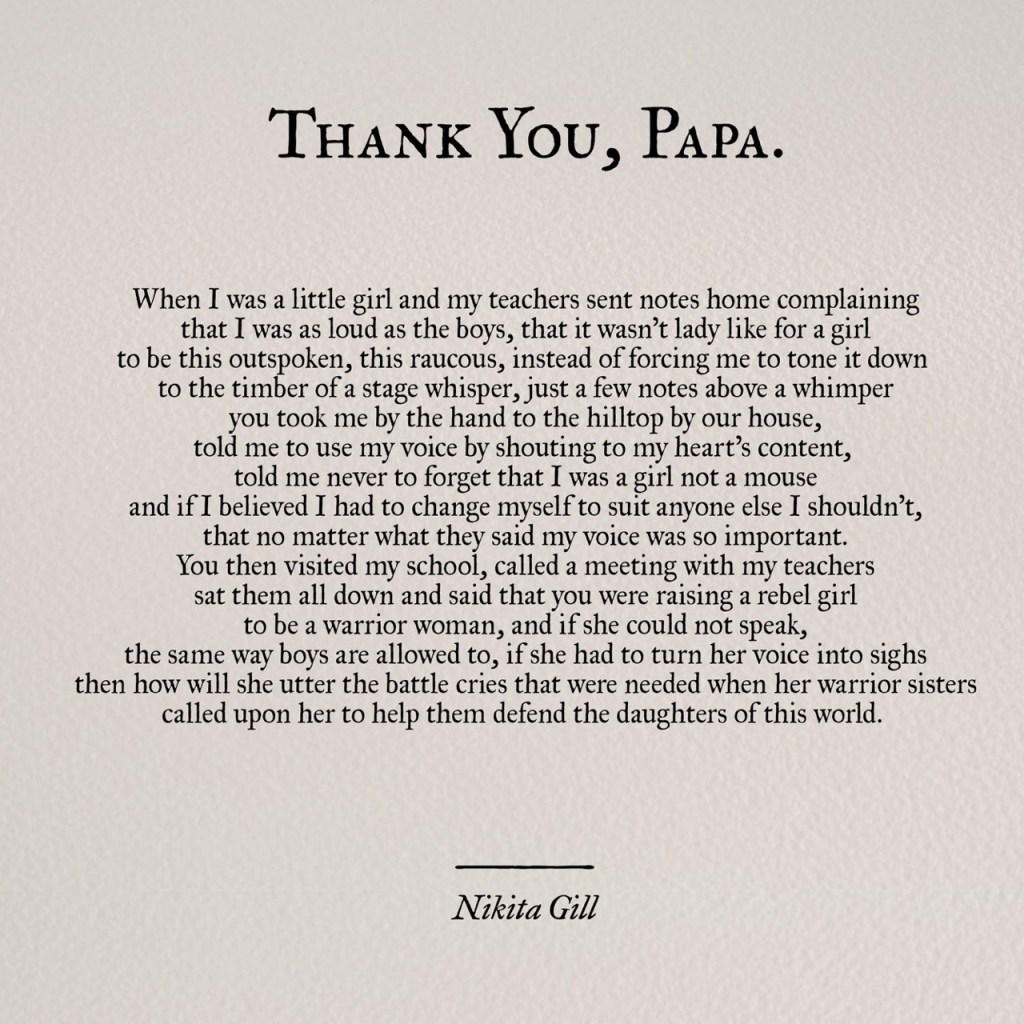
               Not all girls are made of sugar
               and spice and all things nice.
            There are girls made of dark lace
         and witchcraft and a little bit of vice.
          There are daughters made claw-first
        and story-mad, tiger roar and wolf-bad.
     There are women made of terrible tempests
    and savage storms and the untamed unwanted.

   These are damsels made of flawless fearlessness
 made of more bravery than knights have ever seen.
These are princesses made of valour and poison alike 
 and they are here to hold court as your queens.

                             -Nikita gill
  • Why should the men’s championship get more sponsorship than women’s, and why should the winner be paid more? Why is it that men cricketers get paid more, receive more appreciation and more respect than their women counterparts? Why is Sachin Tendulkar treated as the God of cricket but Mithali Raj simply a good Indian woman cricketer? Why do male hockey players get more money and respect than women players?
  • The bottom line is, and I repeat myself here, nature has made men and women differently. They compliment each other but can’t be equal physically and cannot compete with each other in every area. But gender equality can be achieved if we can extend the same respect, offer the same pay scale and the same status to champions of both genders in their domain. Personally, I respect Sachin Tendulkar and Mithali Raj equally. I do watch women cricket matches with the same enthusiasm as I watch men’s cricket. Are you ready to do that? If yes, then you are encouraging gender equality. Else, you are going down a darker path, with no respect and no equality.
  • Also, being called “beautiful” is nice, don’t get me wrong. But hearing the words, “You’re brilliant” means so much more. Because beauty won’t get me a college diploma. Curves won’t get me a secure job and a sufficient salary. Being pretty won’t get me respect.
  • Beauty doesn’t encompass the person you are. All women have natural beauty, but beauty can only take you so far. When I am most insecure, I don’t want confirmations of my physical appearance. I want confirmation that my work, mind and strength are recognized. We grow up thinking beauty and male validation was the ultimate goal. Now, as a young woman, my greatest goal is to be successful in my career. I strive for knowledge, not perfect hair. I want respect, not a skinny waist. Being educated and opinionated will get you so much farther than just a pretty face. “Screw beautiful. I’m brilliant. If you really want to appease me, compliment my brain.”

” I WOULD RATHER STRUGGLE EVERYDAY OF MY LIFE THAN TO EVER GIVE A MAN THE POWER TO SAY ‘ YOU WOULDN’T HAVE THAT IF IT WASN’T FOR ME’ “

Rating: 1 out of 5.

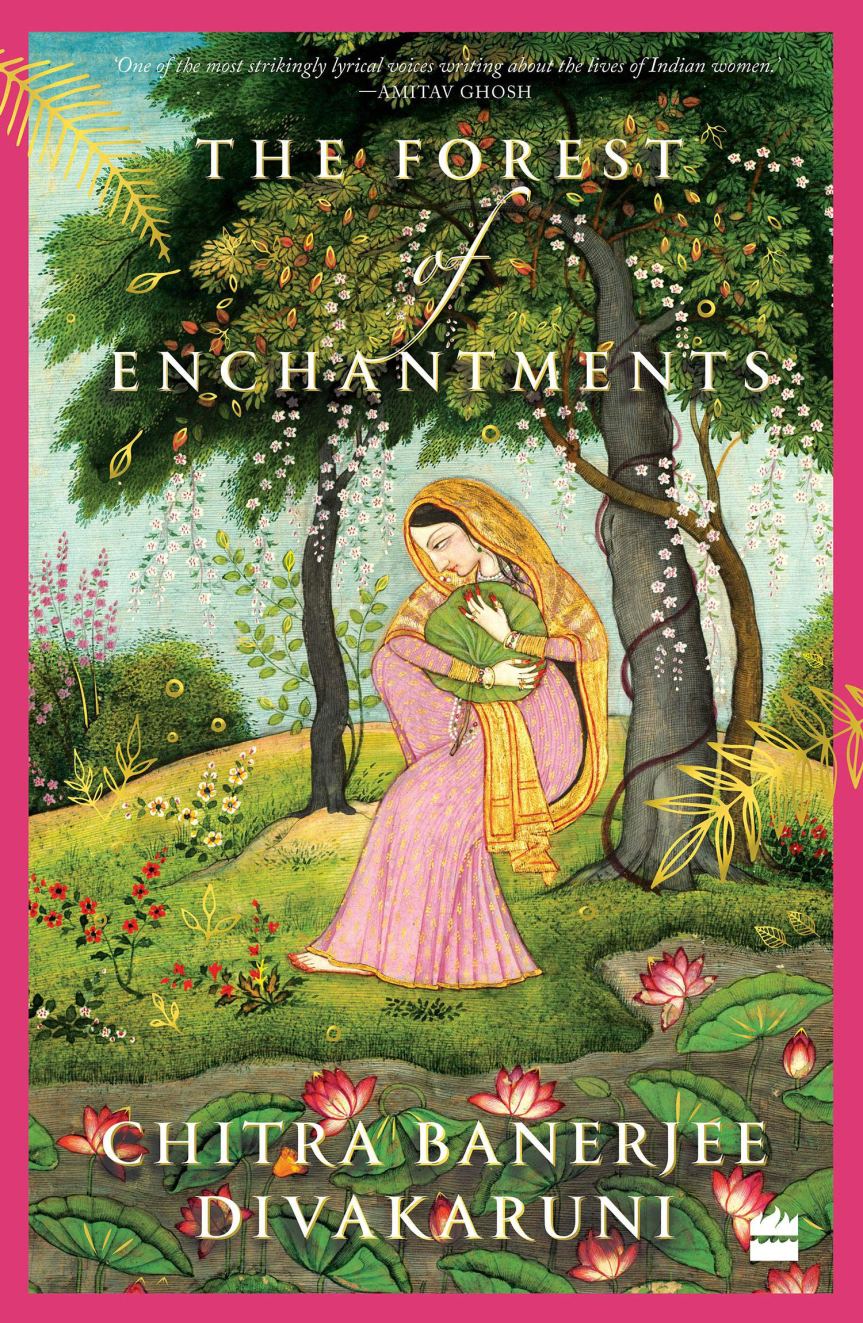
‘The Forest of Enchantments’ – A Sitayan

“Sita’s story haunted me. Because it was one of the first stories I was told, and because I sensed there was a disconnect between the truth of Sita and the way Indian popular culture thought of her. I sensed that Sita was more than what we took her to be. But who she was I didn’t yet know.”

   Chitra Banerjee Divakaruni has made a well-written Author’s note right before the prologue to the novel begins. She tells us one big truth which is to a great extent a commonality among three-fourth of the world’s population who is familiar with the great epic ‘Ramayana’ – who real Sita is, is untold.

      Despite Sita being considered as the incarnation of Goddess Lakshmi herself, she is often regarded as a meek woman who is an epitome of sacrifice and unending love, with no temper or hatred. The ‘ideal-woman concept’ idolizes Sita for she is considered the perfect wife with silent stoicism and the ability to long endure without whimpering. This is of course a prominent reason why many name their daughters ‘Sita’ and asks them to look up to the goddess to learn subservience, sacrifice and ‘perfection’. Sita is indeed to be idolized but not in a way most people perceive.

                     ‘The Forest of Enchantments’ is brilliantly feministic in writing. It retells Ramayana through Sita’s eyes, making us analyse the story through a gynocentric perspective. Thus, it indubitably makes Ramayan a ‘Sitayan’.  The author sets to bring out the version of Sita nobody knows, a Sita who is much more than a mere daughter, a loyal wife and a loving mother, a Sita who is a woman, an equal to Ram, one who refuses to give her dignity away even for love. Chitra Banarjee also tries to sympathize with some of the other female characters of Ramayana, who we consider evil, flawed or obnoxious, through Sita. We see Sita musing about whether Shurpanaka had deserved to get mutilated by Ram just for declaring her love for him. Similarly Sita chats with Ahalya asking her a question that most of us would’ve asked if gotten an opportunity to meet Ahalya in real- ‘why did she forgive Gautam?’. Sita is left answerless by Ahalya but it is quiet clear from her countenance that it is what women are supposed to do, forgive and endure.  Sita herself had to go through a similar situation, when Ram refused to accept her, doubting her chastity after Ravan abducted her, she performed the agni-pareeksha and the gods itself declared her innocence. Sita got the answer as to why Ahalya forgave her husband when she found herself forgiving Ram inspite of how cruel he had been to her. The author draws a picture of how women are taught to endure and forgive when men are never blamed for their actions. She also points out how love can be blinding. Ram’s consecutive injustices to Sita like abandoning her while she’s pregnant and making her do fire test is often celebrated by people as the spirit of kingship and the duty of a husband but ‘The Forest of Enchantments’ questions Ram on how he’s going to pay for his actions. The epilogue to the novel is heart-wrenching, especially for the female audience, for it shows how extreme a woman can get insulted, how her dignity is at stake and her indecisiveness whether to choose love or self-respect. Sita lets go the love of her life and chooses to be dignified and decides not to settle for anything less.

             Chitra Banerjee’s ‘Sita’ is what every woman should be. Loving, caring yet resilient and dignified. The author walks us through every little detail on ‘How to be a Sita’, not the stoic one but the strong one. The book is indeed a must-read if you are ever asked to be like Sita.

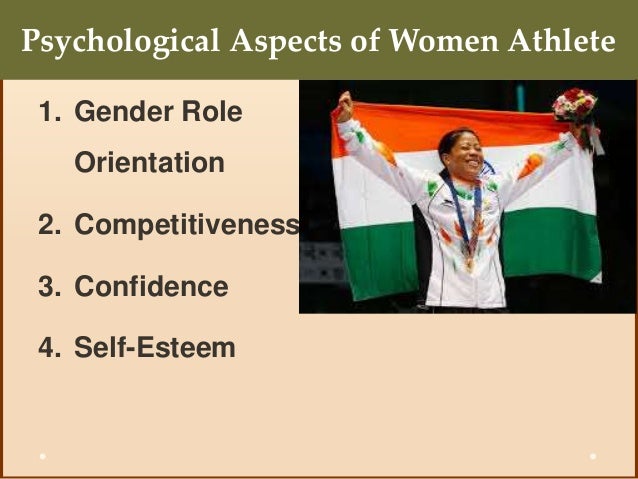
PSYCHOLOGICAL ASPECTS OF WOMEN ATHLETE

Lesson 6 women and sports

Over the past several decades , the role of women has changed drastically .However , gender beliefs and stereotypes still do exist across the world especially in sports . Most of the people in our society consider that sports are not meant for females but only for males .Social tradition , customs and cultures have great influence upon the psychology of women . In a male dominating society , males are expected to be aggressive , independent , dominating , robust and confident , whereas females are expected as well as considered to be emotional , sensitive , cooperative , sympathetic , loyal , etc. It is a well – known fact that participation of women in sports is increasing year after year .With this enhancement in female participation in sports , there is also renewed interest in the psychological characteristics of the female athletes and the effects of athletics on women . The various psychological traits of women athletes are stated below .

  1. Gender Role Orientation : It is an established fact that there has been an increase in the level of women’s participation in the types of sports that have been traditionally limited to only males , e.g., wrestling , weightlifting , kick boxing , body building , etc . However , many sports have been still considered inappropriate for women . For a long time it was considered that women should not take part in athletics because of the potentially harmful masculinising effects of sports .
  2. Competitiveness : It is evident that in the field of sports , both men and women are competitive in their own fields . In fact , women are more goal oriented and perform magnificently in artistic activities such as gymnastics . However , a number of research studies indicate that females who take part in sports are more competitive in comparison to the females who do not participate in sports .
  3. Confidence : As mentioned earlier , due to social pressures , women tend to have less confidence than men . Participation in sports , competitive environment , awards and recognitions increase confidence levels of sportspersons . However , a significant difference may exist between sportswomen and non- sportswomen .
  4. Self-esteem : Most of the research studies indicate that training plays a vital role in performance . Self -esteem improves with good performance . In the field of sports , intensive training helps in enhancing self-esteem . Research studies also show that those people who engage in sports have high self-esteem in comparison to non-participants .
  5. Aggression : Aggression is a forceful , goal- directed action that maybe verbal or physical . Participation in sports has many positive aspects which usually involve aggressive behavior . Various studies of aggression show that athletes who participate in contact sports , i.e., football players , judos or wrestlers are more aggressive than the athletes who participate in less contact sports . However , females who participate in contact sports show more aggression in comparison to females who do not participate in sports at all.

May Malala Come in Every Lap!

Let’s peep in the alleys of the most promising international icon with exceptional zeal:

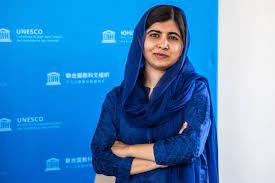
Malala Yousafzai (Pic Source: Google)

We Human beings are succumbing every minute to fear & bigotry since the mysterious accident by which life sprang on Earth .And also every era-produced Malala pick up the flag of humanity with the brave philanthropic hymns. The world which is now somehow livable, is about to celebrate the 24th birthday of an exceptional mental strength as well as of such a magnificent lens and throw a glance on the pager of her life:

The journey of an ordinary human to an extraordinary one started on July 12 , 1997 at Mingora in Pakistan. Since childhood, with the touch of her father. Ziauddin Yousafzai, a school owner and an educational activist himself (whom Malala termed as the ‘Falcon’) Malala got herself involved in human rights advocacy, especially education of women in her native swat valley in Khyber Pakhtunkhwa where the local  Taliban had banned girls from attending schools . Then the little mind rarely couldn’t take so much time to realize the bluffing of terror patriarchy and resolved to eradicate it for a harmonious life of every girl with a backbone.

When she was only 11 years old, She gave a speech in Peshawar on “How dare the Taliban take away our Basic Right to Education” In 2009 , She started blogging as a short step towards the zenith of her life. In 2011 , She was awarded ‘Pakistan’s  National youth peace prize’ In that year, Archbishop Desmond Tutu, a south African activist, nominated her for the International Children’s Peace Prize of the Dutch International children‘s advocacy group kids Rights Foundation.

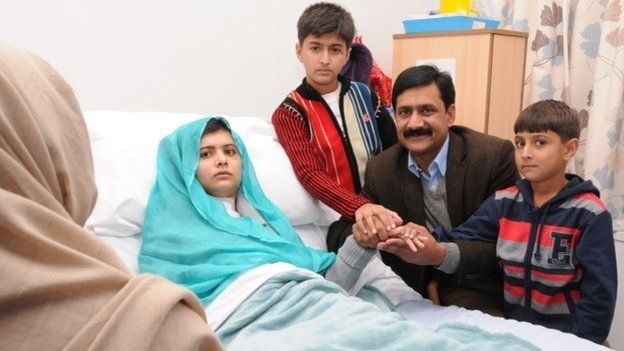
With Malala’s growing popularity, dangers too stealthily came along her way. On October 09, 2012, the Taliban ascended to the peak of inhumanity by shooting this 15-year old child  returning from school by bus. One bullet went through her head, neck and ended in her shoulder. Though her health was critical, her fighting spirit made her recover from the malign wounds and after almost 1 year restarted attending school.

Malala with her lovely Family, during her hospitalization (Pic Source: Google)

Eventually, Malala got a massive outpouring of support in the limelight. On July 12, 2013 on her 16th birthday Yousafzai delivered a speech at the United Nations. There she sad:

“The terrorists thought that they would change our aims and stop our ambitions but nothing changed in my life except this weakness, Fear and hopelessness died ; Strength, power and courage were born.”

–Malala

There Malala challenged orthodoxy, illiteracy & terrorisms:

“The extremists were and they are, afraid of books and pens… They are afraid of women… Let’s speak of our books and pens — our most powerful weapons.”

–Malala

On that very auspicious day, Ban Ki-moon, Secretary General of the UN, pronounced “Malala Day” in honor of The young leader’s activism. He assured that no child should have to die for learning and nowhere should teachers to teach.

When the second voyage of Malala’s life had just started to roll out the wheels, European parliament awarded her the ‘Sakharov Prize’ in 2013.

In the next year, conches of ‘Satyam’ blew when Malala became the youngest ever Nobel Prize Laureate. She received the award along with Kailash  Satyarthi, Indian children’s rights activist. This unparalleled and unequal ‘Global Teacher‘ became a gentle advocate of Peace.

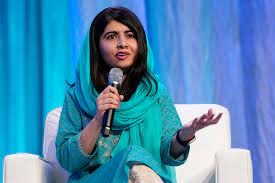
Malala Yousafzai (Source: Google)

In April 2017, United Nations secretary general Antonio Guterres appointed Yousafzai as a UN messenger of peace to promote girls’ education. She was also given Honorary Canadian Citizenship in 2017.

In the meanwhile, Yousafzai family launched the Malala fund in 2014 to ensure girls around the world have access to 12 years of free, safe & quality education, though later she revealed her extreme grief:

“The shocking truth is that world leaders have the money to fully fund primary AND secondary education around the world – but they are choosing to spend it on other things, like their military budgets. In fact, if the whole world stopped spending money on the military for just 8 days, we could have the $39 billion still needed to provide 12 years of free, quality education to every child on the planet.”

Malala wrote in her Website (https://malala.org/)

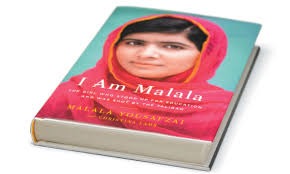
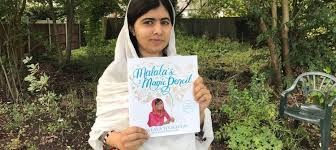
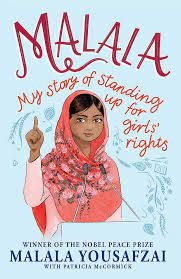
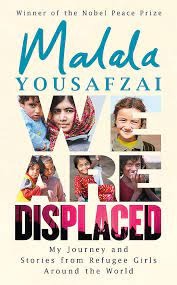
This torch bearer of Pakistan as well as of the enter world have offered the opportunity to go through the reviews by publishing books:

However Malala has taught all the Homo sapiens sapiens what education is, what consciousness is, what backbone is and what fearlessness is. We all are hopeful — this gene of Brave is/will be straight at the nook and corner of this world — every mother will stealthily smile, seeing her fearless child crying in its subconscious mind.

Books Written By Women For Women

Women are capable of accomplishing anything. Create great ideas, build businesses, and make a great difference in the world. Nonetheless, we don’t see enough of this message in mainstream media. However, the realm of literature has provided us with many incredible stories of women’s perseverance, knowledge, wit, boldness, and drive.As such, here are some excellent novels written by women authors for women.

I Know Why the Caged Bird Sings by Maya Angelou

The caged bird attempting to escape has long been a symbol of resistance to injustice. Maya Angelou employs this sign to express her desire to leave a life of strife, racism, and misogyny. I Know Why the Caged Bird Sings is an autobiographical novel about Angelou’s childhood in the 1930s. 

We encounter prejudice, rape, and rejection from her community, even from her own mother, as we follow this impoverished, disenfranchised black girl. Maya Angelou discovers as an adult how her own strong spirit, compassion, and generosity to others is the greatest way to be free. The book is a strong and beautiful storey of courage and breaking free from one’s captivity.

We Should All Be Feminists by Chimamanda Ngozi Adichie

We Should All Be Feminists is an interesting piece on women’s rights and equality. This book-length article discusses how the term “feminism” is sometimes connected with misunderstandings and prejudices like brainwashing.

To counterbalance this, Chimamanda Ngozi Aidchie provides the reader with a simplistic yet compelling description of feminism: equality for women in social, political, and economic terms. She confronts common feminist misconceptions front on. Even after her own friends called her a terrorist supporter, Aidchie continued to clarify that the term “feminist” has little to do with hostile, resentful, and men-hating women. The central theme of this novel is a narrative of a life-long battle to achieve equality between the sexes. 

According to the author, feminism is important since it helps to tackle women’s silence and exploitation.By how successive generations educate their children, the concepts of gender equality and feminism continue to struggle with all these terms.

The Terrible by Yrsa Daley-Ward

The Terrible is a novel about a lady attempting to manage her life on her own. Yrsa Daley-Ward recounts personal aspects of her childhood without her father and the terrible facts she had to discover in this stunning piece of painfully honest prose.

These realities are referred to as “the terrible.” As a young lady, the writer couldn’t comprehend the mental strain of having encountered tremendous pessimism and tribulations so early on in life. Having grown up as the only kid of colour in a white area, she was educated by a family of radical Christians, and witnessed her mother being devastated by several bad relationships.

Later in the book, the book relates Daley-Ward’s life as an adult, when she, too, had to deal with “the terrible.” She discovered it was continually expanding and having a much more huge psychological strain on her as she became hooked to narcotics and experienced repeated mental breakdowns.

The author reaches the climax and confronts “the terrible” after suffering all of the negative stuff that has occurred to her. She can only break free and recover if she recognises the consequences of her trauma and embraces her self-sustaining positivity.

The Girl with the Louding Voice by Abi Daré

The title of this novel hints at the main character. The tale of Adunni, a young Nigerian girl who aspires to acquire an education but ends up in an arranged marriage, is told in “The Girl with the Loud Voice.” As she escapes her violent husband and her native town, her resolve to attend school, which her mother encouraged Adunni to accomplish, triumphs.

The plot follows Adunni on her trip, which is packed with perilous, life-changing, and remarkable experiences. On her journey, she gains access to literature such as English dictionaries when she finds herself working as a maid in Lagos. Eventually, she comes upon an opportunity to learn. Her irrepressible attitude and perseverance drive her on the path to the “louding voice,” making this book a fantastic piece of how battling for your ambitions will be rewarded.

Notwithstanding the many difficulties in her journey, she never quits on her aim of escaping poverty. The end result reminds readers of the author’s message: pursue your goals, and you might just bring about change.

Wow, No Thank you: Essays by Samantha Irby

Wow, No Thank You is an essay collection in which Samanth Irby describes her life as a married woman in her forties. She compiles a fantastic series of stories in which she finds herself in situations that many people can relate to. All throughout the novel, humour is a recurring motif, as Irby makes amusing comments on her own behaviour and life choices.

The author’s inner voice, however, is at the heart of the book, pushing us to be more sensitive to things. That discourse also enables us to notice these things that no one else notices, which frequently results in pretty funny circumstances. Irby demonstrates how her internal thoughts influences her clothing and footwear, food preferences, cleansing items, and so much more.

Dowry Continues To Remain A Menace In Indian Society

Despite the fact that dowry has been banned in India since 1961, a research found that it is still being given on a regular basis, with over 95% of weddings including the exchange of money.

Dowry is correctly represented as a societal evil since it is the practise of paying and accepting articles of worth (such as clothes, jewellery, furniture, cash, and other items) between two households. Typically, the bride’s family is obligated to pay these items to the groom’s family.

The World Bank carried out the study, which examined almost 40,000 marriages that occurred between 1960 and 2008 in 17 Indian states that account for 96% of the nation’s population.

Researchers calculated “net dowry” to study the difference as to what was paid by the bride’s family to the groom’s family and vice versa, and the results revealed that, in the vast majority of instances, it was the bride’s family who paid more compared to the groom’s family, rather than the other way around.

According to the estimated amount confessed by families, a groom’s family spends Rs. 5,000 on presents to the bride’s family on average. The bride’s family, on the other hand, pays about Rs. 32,000 on presents and other monetary contributions to the groom’s family, taking the net dowry to roughly Rs. 27,000.

It has also been noticed that the dowry value is typically 14 percent of the annual income and includes a significant portion of the family’s savings.

While much has started to change since 2008, experts think the tendency of dowry is still highly prominent in India, since the notion is quite widespread in all major religious groups, with Christians and Sikhs exhibiting a “dramatic increase in dowry.”

Dowry inflation was seen in certain states, including Kerala, Haryana, Punjab, and Gujarat, with Kerala having the highest average dowry in recent years. On the other side, average dowry decreased in states such as Orissa, Tamil Nadu, Maharashtra, and West Bengal.

This venom affects people of all castes and socioeconomic classes. Neither the husband’s nor the wife’s educational background protects them from dowry harassment. Currently, dowry-related fatalities in Kerala have been documented, with the majority of victims coming from the upper strata of society. The culprits come from well-educated and wealthy families, and the victims are also well-educated. If this is the situation of women in a culture that was matriarchal a few decades earlier and claims of high social indicators in women empowerment, it’s anybody’s imagination how it will be in many Indian states that have numerous social indicators that are much worse than those of war-torn Syria or Sub-Saharan Africa. According to the NCRB study, Uttar Pradesh and Bihar top the list of dowry-related deaths, accounting for roughly 30 percent.

It is time to reform these retrograde societal standards in 2021. Receiving dowry should be considered a societal shame, and all generations should be taught. Young people should also make a stand. Women should explicitly refuse to pay dowry as part of a marriage , and men should also refuse to accept it in any way. Why should brides’ parents be obliged to give pricey “gifts” that are essentially a dowry by another name? 

The wider background for dowry is women’s low labor-force participation and, as a result, their lack of financial independence. Women should be encouraged to work and earn their own money.

Discrimination is present in all parts of life. To combat gender inequality, States should examine gender-disaggregated statistics across the life cycle — birth, early childhood, schooling, nourishment, employment, healthcare access, and so on. Teachers and textbooks shape students’ views and values. Children should be routinely educated on the fundamental ideal of gender equality.