Delhi Half Marathon on 15th October to raise public awareness about its initiatives for Women Safety

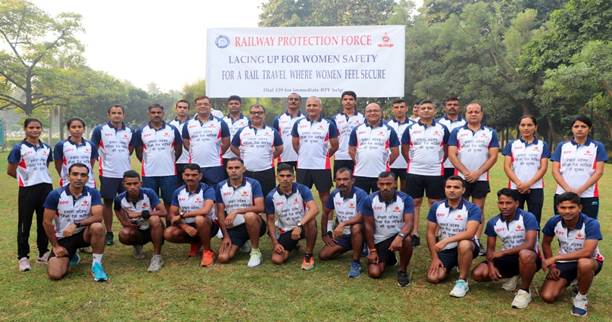
 With a view of raising public awareness regarding safety of women rail travellers, Railway Protection Force (RPF) personnel will participate in Delhi Half Marathon on 15th October in New Delhi. A team of 25 RPF officers & personnel to participate in Delhi Half Marathon being organized on Sunday.

In alignment with the Prime Minister’s vision of empowering women, the Ministry of Railways has undertaken various initiatives to enhance the travel experience for women across the Indian Railways network. These efforts primarily focus on ensuring the safety and security of female passengers. Railway Protection Force with the primary objective of ensuring safe journeys for women, especially those traveling alone or with children in selected long distance trains has introduced many initiatives like “Meri Saheli”, “Operation Matrishakti” etc.

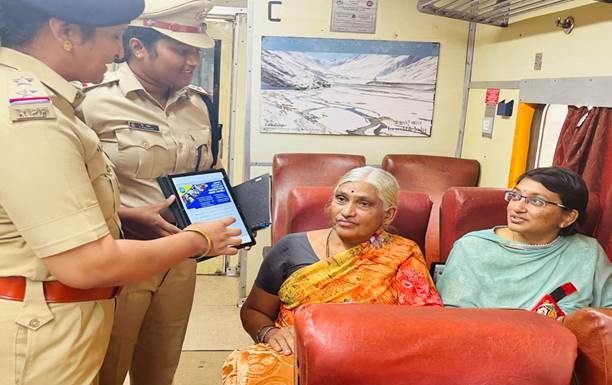
‘Meri Saheli’ teams ensure safety of women travelers traveling alone in long distance trains throughout their train journey, from the point of origin to their final destination by responding swiftly to any situation that may arise during their journey.

Currently, more than 230 dedicated “Meri Saheli” teams consisting of female RPF personnel have been deployed at various railway stations across the country, covering over 400 trains and providing assistance to more than fourteen thousand female passengers on an average each day. This underscores the dedication and effectiveness of the initiative in making train travel safer for women across India. These teams play a vital role in educating passengers about security measures to be taken during their journey and provide information about the available channels for seeking assistance in case of distress.

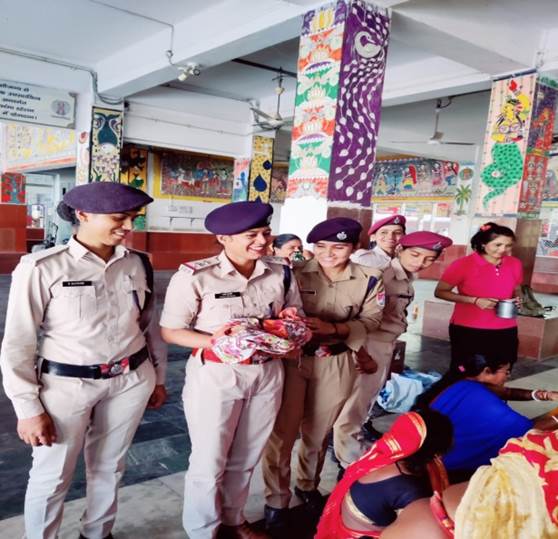
Women in distress find it easier to confide in women rather than men. Therefore, lady RPF personnel play a pivotal role in ensuring security of women in trains. Railway Protection Force is proud to have the highest percentage of women in its ranks among all Central Armed Police Forces (CAPF). Newly recruited women are being inducted into ‘Meri Saheli’ teams to enhance their effectiveness. RPF lady personnel not only provide security to women train passengers, but help women passengers in distress. Many women undertake train journeys in advance stage of pregnancy and some of them go into labour while traveling. RPF women provide facility to safe and dignified child birth for these women protecting their privacy under “Operation Matrishakti”.

RPF has provided assistance in 130 such cases of childbirth on trains or railway premises during the current year so far.


***

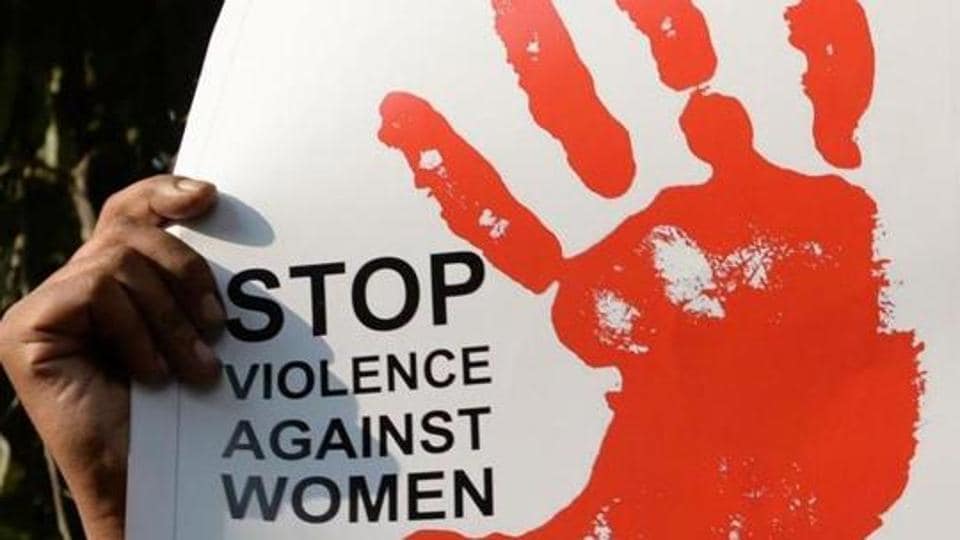
WOMEN SAFETY

Top 100 Motivational Quotes on Women Safety in 2021

India is a country known for its rich beautiful culture and tradition. Women are given the place of goddess Lakshmi in the Indian culture.Women in India have been given equal rights as men; however, people do not follow this rule. They contribute to the growth and development of our country; still, they are living in fear. Women are now on respected positions in the country, but if we take a look behind the curtains, we see even then they are being exploited. Each day we read about horrific crimes being committed against women in our country like it’s a norm.

CRIMES

The list of crimes against women is quite long, to say the least. Acid attack is becoming very normal is various parts of the country. The criminal throws acid on the face of the victim to destroy their lives completely. Nonetheless, India has a lot of strong acid attack survivors who are battling for their lives and trying to lead their lives independently.

Domestic violence  and honor killings are very common. The wife stays in an abusive relationship because of the fear of society. The family kills their daughters in the name of honor to keep up with the reputation of their family. Similarly, female foeticide is yet another common crime. Due to the regressive thinking, people kill daughters before they are born.

In India domestic abuse, sexual assault and murder are common forms of violence against women. Dowry death is an ultimate form of murder. Indians are still with the psychology that dowry is tradition and girls’ father loses everything to pay it. Domestic violence or domestic abuse is done by one partner with the other partner in a relationship. The rate of domestic violence is increasing in India. 70% of women are victims of domestic violence. It leads to depression and suicides. It’s not a direct murder but it is a cause of murder for sure. Moreover, girls are forced into marriage at a young age. This child bride is not even mature enough to understand her responsibility. Acid throwing is a form of violent assault which ruins the beautiful girl’s life. ‘Cheat in a relationship’ is the other commonly found crime against women. A man easily breaks up with his wife and starts a new life with another bride. 

The list continues as crimes against women are on the rise. Other crimes also include child marriages, child abuse, rape, trafficking and many more.

WAY TO ENSURE WOMAN SAFETY

Quotes about Protect Women (59 quotes)

Although the list of crimes is very long, we can take measures to ensure women’s safety in our country. Firstly, the government must make stringent laws that ensure the punishment of criminals immediately. Fast track courts must be set so the victim gets justice instantly. This will serve as a great example for other men to not commit crimes against women.

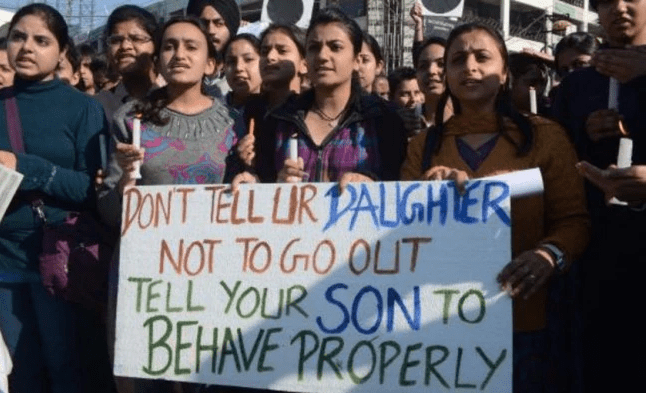
Most importantly, men must be taught to respect women from an early age. They must consider women as equals so they don’t even think of harming them. When you consider someone inferior, you tend to oppress them. If this thinking goes away, half of the crimes will automatically end.

In short, crimes against women are stopping the growth of our country. We must not put the blame on women and ask them to be extra careful. Instead, we must ask the men to change their thinking and work to make the world a safer place for women.

FIGHT BACK ! BE ALERT!

About Teen Pregnancy

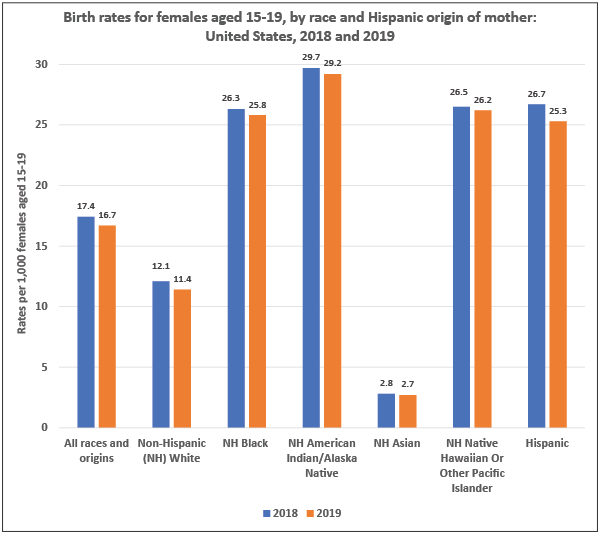
The US teen birth rate (births per 1,000 females aged 15 to 19 years) has been declining since 1991.  Teen birth rates continued to decline from 17.4 per 1,000 females in 2018 to 16.7 per 1,000 females in 2019.  This is another record low for US teens and a decrease of 4% from 2018. Birth rates fell 7% for females aged 15 to 17 years and 4% for females aged 18 to 19 years.

Although reasons for the declines are not totally clear, evidence suggests these declines are due to more teens abstaining from sexual activity, and more teens who are sexually active using birth control than in previous years.

Still, the US teen pregnancy rate is substantially higher than in other western industrialized nations, and racial/ethnic and geographic disparities in teen birth rates persist.

Disparities in Teen Birth Rates

Teen birth rates declined from 2018 to 2019 for several racial groups and for Hispanics. Among 15- to 19-year-olds, teen birth rates decreased:

  • 5.2% for Hispanic females.
  • 5.8% for non-Hispanic White females.
  • 1.9% for non-Hispanic Black females.

Rates for non-Hispanic American Indian/Alaska Natives (AI/AN), non-Hispanic Asians, and non-Hispanic Native Hawaiian, and other Pacific Islander teenagers were unchanged.

In 2019, the birth rates for Hispanic teens (25.3) and non-Hispanic Black teens (25.8) were more than two times higher than the rate for non-Hispanic White teens (11.4). The birth rate of American Indian/Alaska Native teens (29.2) was highest among all race/ethnicities.

Birth Rates for Females Aged 15 to 19 Years, by Race and Hispanic Origin of Mother: United States, 2018 and 2019

Birth Rates per 1,000 Females Aged 15 to 19 Years, by Race and Hispanic Origin of Mother: United States, 2018 and 2019.  All races and origins, 2018: 17.4; 2019: 16.7 Non-Hispanic White, 2018: 12.1; 2019: 11.4 Non-Hispanic Black, 2018: 26.3; 2019: 25.8 Non-Hispanic American Indian/Alaska Native, 2018: 29.7; 2019: 29.2 Non-Hispanic Asian, 2018: 2.8; 2019: 2.7 Non-Hispanic Native Hawaiian or Other Pacific Islander, 2018: 26.5; 2019: 26.2 Hispanic, 2018: 26.7; 2019: 25.3

Data source: Martin JA, Hamilton BE, Osterman MJK, Driscoll AK. Births: final data for 2019. Natl Vital Stat Rep. 2021;70(2):1–50.

Geographic differences in teen birth rates persist, both within and across states. Although among states with low overall teen birth rates, some counties have high teen birth rates.

Social determinants of health, such as low education and low income levels of a teen’s family, may contribute to high teen birth rates. Teens in certain settings are at higher risk of teen pregnancy and birth than other groups. For example, young women living in foster care are more than twice as likely to become pregnant than young women not in foster care.

To improve the life opportunities of adolescents facing significant health disparities and to have the greatest effect on overall US teen birth rates, CDC uses data to inform and direct interventions and resources to areas with the greatest need.

The Importance of Prevention

female  and male teen

Teen pregnancy and childbearing are associated with increased social and economic costs through immediate and long-term effects on teen parents and their children.

  • Pregnancy and birth are significant contributors to high school dropout rates among girls. Only about 50% of teen mothers receive a high school diploma by 22 years of age, whereas approximately 90% of women who do not give birth during adolescence graduate from high school.
  • The children of teenage mothers are more likely to have lower school achievement and to drop out of high school, have more health problems, be incarcerated at some time during adolescence, give birth as a teenager, and face unemployment as a young adult.
  • On a positive note, between 1991 and 2015, the teen birth rate dropped 64%, which resulted in $4.4 billion in public savings in 2015 alone.

Feminism in India

A feminist is anyone who recognizes the equality and full humanity of women and men.”-Gloria SteinemSo, what is feminism? Feminism is an action of the society to bring rights to women and treat them equally regardless of their gender. Feminism is not something that should be endorsed by a woman only ,it can be carried forward by a man too. As said by G.D Anderson,” Feminism isn’t about making women strong, women are already strong, it’s about changing the way the world perceive that strength.” The fact itself is so confusing to understand the imbalance between two genders despite of any human being who is born with the same type of skin and color of blood. A woman deserves the same respect a man has without facing the question about their gender. Needless to say , patriarchy runs deep in our Indian society . A woman is forced to feel weak and small in front of a man and enforced to stay within a certain boundary. The long injustice in the name of gender has led to the topic of  feminism.
The importance of feminism in India is utmost. History has been an evident of feminism culture and its significance. The first and the foremost reason to bring this revolution is to change the mentality and to achieve a society free from male dominance. It has been a long battle for women to fight for their rights even if it’s about their decision. It is sad that till today a girl has to accept a man as her husband without her consent. A married woman is forced to do the household work and do not have the right to have a job hand in hand. Feminism plays an important part in the society because it demands equality among genders. Every year lakhs of female fetus get buried due to the burden of carrying a responsibility and the fear of giving dowry in marriage. Do you know Indian culture also discriminate working profession in regard of gender? Yes, in the past women could only do a job if that is approved by the male society and not judged by her talent. Feminism helps to remove such inequality. Today because people are giving importance to it, women like Mirabai Chanu and Lovlina Borgohain could outshine in their own field. No doubt with different kind of body framework and organs women have to undergo certain changes to meet the reproductive life. Menstruation is a big taboo, where women are considered impure during period cycle. Also there needs to have a stoppage of peoples hindering nature. Needless to say, women sometimes give rise to the inequality they once suffer from. Her mother-in-law force her to behave in a certain way, to cover her face whole life, to dress decently and ultimately it turns to be a social practice in a community.With change in generation and people advancing mindset things are changing and women are getting their rights. Topics like women empowerment, Beti bachao Beti padhao making people aware of the crucial role of a woman in balancing the atmosphere. Now a days, highly restricted states like Haryana is producing Miss world, wrestler like Geeta Phogat and Nirmala Devi. With the hope that one day the country would be free of gender inequality. Thus, people need to carry this journey forward and bring a change where both men and women could walk in the street without having the fear of getting killed or molested as a girl rather with the feeling safety to chase their dreams.

ReplyForward

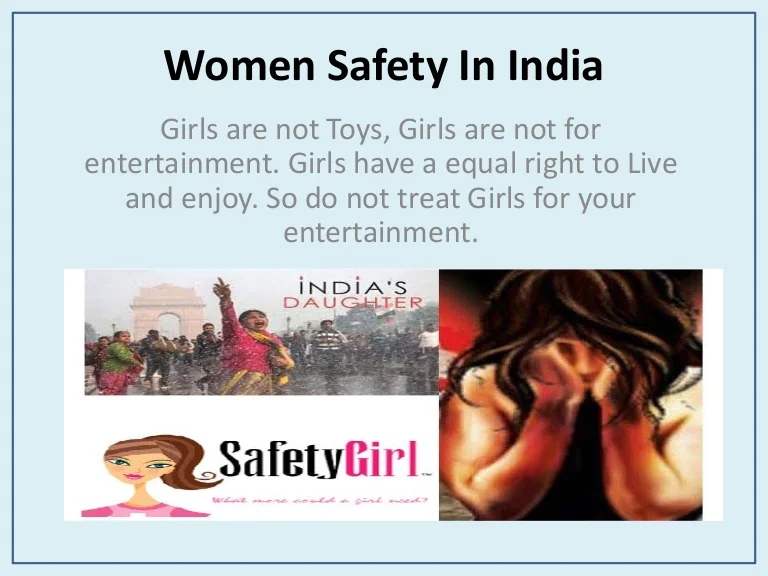
WOMEN SAFETY IN INDIA

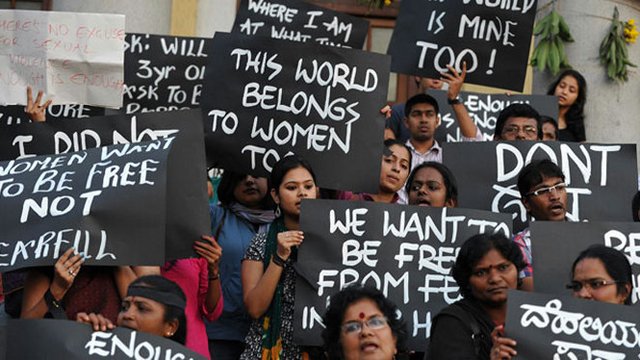
Women in India, today, are becoming the most vulnerable section as far as their safety and security is concerned. Women are the greatest strength of our society and it is so disheartening to see that they are getting unsafe day by day as the number of crimes against them are increasing. According to a poll by Reuters, India has been ranked the most dangerous country out of the world’s 10 worst countries for women. When we turn the pages of a newspaper, we come across many headlines reporting cases of molestation, harassment, trafficking, ill treatment of women in houses, violence against women in remote areas etc. Women feel unsafe and unsecure and feel that their freedom and liberty are expose to risk. It is unbearable to imagine the plight of women who are sufferers of such crimes. It is a shake on the confidence of the women of the society and on our judicial system.

According to the National Crimes Records Bureau(NCRB), India recorded 88 rape cases every day in 2019 and crimes against women increased by 63.3% in the first six months of 2021. NCRB report highlights that rape vulnerability of a girl or woman has increased up to 44% in the last 10 years. As per the latest NCRB data, KOLKATA comes out on top in safety, not just for women, but overall as well. To protect women from domestic violence THE PARLIAMENT OF INDIA passed ‘The Protection of Women from Domestic Violence Act 2005’.

IMPORTANCE OF WOMEN SAFETY-

Safety of women is very important in this cruel and evil society. As the number of cases are arising against women, it is very important to exercise the laws and get the criminal arrested and punished as soon as possible. It helps women be calmer, understanding and they feel protected. They will trust the government if the criminal gets required punishment in time. It will develop body and mind control in them. They will take active part in every thing if proper safety is ensured to them. There are laws but there should be proper safety measures which we have to follow strictly to protect the women from violence.

We generally play the blame game for any such incidence and hence have not succeeded to reach the root cause of this issue. An effective implementation of loss protecting women’s rights is the first step in this direction. There should be stringent loss and the criminals of such crime should be severely punished.

CRIMES AGAINST WOMEN-

In India, sexual harassment, rapes, domestic violence, dowry cases and murder are common forms of violence against women. It is found in some places that even today, there is a tradition of taking dowry from the girl’s family and the father sacrifices and loses everything to pay it. Domestic violence is also increasing very badly where one partner or a man abuses another another partner or a girl in a relationship. It leads to depression and suicides. It’s not a direct murder but it is the cause of murder for sure. Cheating in a relationship and giving divorce is also a crime against women which destroys the whole life of a women and the man easily finds a new girl and marries her. Acid throwing is considered to be the most heinous crime against women which ruins the beautiful girl’s life and left her in a state of shock.

HOW CAN WE SAFEGUARD WOMEN OF OUR SOCIETY?

We also need to create social awareness about these issues and ostracise those who commit such crimes and not the victims. Women safety is a crucial concern in India and a lot of organisations started working on it after Nirbhaya’s case. Women should be taught some self-defence tips and tricks in schools, colleges, offices and residential colonies, so that if anyone tries to harm them, they can apply these tricks to protect them and hurt the person trying to attack her. Also, various videos of self-defence techniques are uploaded online, on various social media platforms for educating women’s safety. Women should always put some chilly powder, ginger-garlic paste or some harming materials while going out to harm the attacker. To ensure the security of the women in the country, the entire population should be well-educated and the laws should be very tough against every kind of crime. Both the men and women of the society should be empowered with proper education and income so that they can fight against any harm to them. There are also various helpline numbers for ensuring women safety in India. Only when these measures are taken, India can become a carefree and enjoyable place for women when they can go where ever they like to without any fear of being stared at, molested or discriminated.

”It took me quite a long time to develop a voice, and now that I have it, I am not going to be silent”. – Madeleine Albright

Women Safety in India: Still a Major Concern?

Women Safety in India - An Unending Struggle? – BloggerBunny

Protection of women in India has become a crucial issue. We cannot assure the safety of the women nowadays because if we read a newspaper or go on social media, the news of girls getting raped by cab drivers, acid burning, child marriage, domestic violence, molestation is flooded from different parts of India. Such incidents have created fear and fright among young girls and women. They don’t feel safe in their own country. In rural areas, the conditions are worse where women are burned and killed by in-laws or tortured for dowry. Moreover, female infanticide is still practised in some remote areas.

The most dreadful event that the country faced was the Nirbhaya gang-rape incident. To curb such horrendous crimes against women, the government has passed laws for women’s safety. They are Child Marriage Restraint Act 1929, Hindu Marriage Act 1955, Dowry Prohibition Act 1961, Deaths and Marriages Registration Act 1886, Indian Divorce Act 1969, Equal Remuneration Act 1976, Prohibition of Sex Selection Act 1994, Protection of women from Domestic Violence Act 2005, Sexual Harassment of Women at Work Place Act 2013 etc. and many more.

How to Ensure Women Safety in India?

Everyone requires to determine and willingly agree that every person has the freedom to feel safe. Indian constitution states that every person is even before the law. But unfortunately, it is not practiced everywhere. Women and girls around the world should be given access to education, freely walk at any place, reach to hospitals, the opportunity of choosing a career, freedom of choice of marriage partner and also the freedom to wear their own choice of clothes. They should not be punished for the selection of garments, friends, and other extra-curricular activities.

Education is the demand for the hour to eradicate such problems and to help individuals in the nation recognize and respect limits, and approval in order not to dishonor women’s rights. As individuals, we can regard each other with respect. Let us stand as active bystanders where we stop sexual violence and interfere if any such incidence happens anywhere with the women. Most importantly, do not perpetuate it.

Role of the Government:-

The Government must ensure that the law in force is activated. What is the point of having women’s security law if the order is definitive and inhibiting? There is a requirement to improve the infrastructure to secure women’s freedom. Notwithstanding the production of various efficient laws and ordinance by the Government of India to trade with and set assaults against females, the volume and repetition of sins against females are growing daily. The state of women in the country has been metal assault and offensive in the past few years.

Women’s belief in their protection in their country has decreased. Women are in questionable conditions for their security and anxiety while going everywhere or outside their houses (such as office, market, etc.). We should not criticize the government, because it is not just the duty of the government to safeguard women but of every citizen of India, especially the people who require it. Research that put India as the most unsafe place due to its raised incidence of sexual violence, deficiency of access to trial in rape instances, child wedding, female feticide and trafficking in human beings. India surpassed nations that have a high rate of women’s criticism.

The safety of women in India is a significant concern today. We cannot say that women are safe in India by going through crimes against women in the past few years. Women feel frightened to move out and roam around by themselves.

Some Major Safety Tips:-

  • Self-defense routines are the first and foremost method that every woman must be mindful of and have sufficient self-defense practice for their security.
  • Women need to be mindful of some efficient defense techniques, such as crotch kicks, blocking punches, etc. Usually, most women should be trained well to recognize the issue.
  • Women should at once limit any situation that they feel wrong about.
  • Escape and operate is also an excellent way to mitigate some of the risks women face whenever they are in trouble.
  • They should never travel alone with an unknown person in some strange location.
  • Women must know and feel their dynamic power and practice it subsequently. They should nevermore think that they are more insecure than men and get some self-defense practice.
  • Women should be alert to interact with someone on the Internet in cyberspace.
  • Pepper spray can also be used as a self-defense tool, but it may be not effective for some people who cannot be harmed by even full-face spraying. It may not obstruct the attacker; thus women should not depend completely on it and use other methods as well.
  • Women should carry all the emergency numbers with them to tell their family members and the police immediately, in case of any emergency.

Conclusion:-

Though we had a woman prime minister, a woman president and a woman finance minister, and a woman defense minister, still we have a gender non-inclusive legislature primarily. At 12%, India is one of the stragglers among its associates in the portrayal of women in Parliament.

Free India represents women as half of the population, which is observed in the Chinese bureaucracy. The situation is not very promising yet in the state of the judiciary, where, as a nation, we are glorifying only the first instance of three female judges sitting in the 68-year tale of the nation’s Supreme Court. Notwithstanding repeated crimes against women and young girls, India still does not have a wide database of physical offenders. Registration and information systems for sex offenders have been created around the world over the past 20 years. Since 1994, 18 more countries have launched new laws on the recording of sex offenders.

Women, in the past years, have made an extraordinary contribution to the world whether she is Mother Teresa, Marie Curie, Virginia Woolf, Betty William, and the most present one is Malala Yousafzai. They fought for their freedoms and stood up for their convictions against all the odds. Few more women such as Kalpana Chawla, Sania Mirza, Saina Nehwal, Indra Nooyi, etc. are the examples in the history of India, who broke down all the obstacles in their routes to progress and impact.

Women empowerment in the nation encourages equality between women and men and supports women by allowing them with power and courage to be the decision-maker of their individual life. Women’s empowerment in India has achieved power with the support of women’s welfare organizations by giving them all the required support.


Important Constitutional Rights granted exclusively for women

These are some important rules that EVERY INDIAN must know!

Human’s rights are Woman’s rights and Woman’s rights are Human’s rights

Hillary Clinton

Legal provisions for women that everyone should know

We live in a world where gods and goddesses are worshipped and women are harassed, tortured, abused and abducted every single day. The Government of India confers important rights to Indian women, investigating cases related to many women. Unfortunately, many women in India are not aware of their rights which are provided in different Indian laws.

On the basis of gender equality, an Indian woman has 11 rights in India.

1. Women have a right to Zero FIR

A FIR that can be filed at any police station irrespective of the location where the incident occurred or a specific jurisdiction it comes under, the Zero FIR can later be transfered to the Police Station in whose jurisdiction the case falls under. This ruling was passed by the Supreme Court to save the victim’s time and prevent an offender from getting away scot-free.

2. Women have the right against being stalked

Section 354D of the IPC makes way for legal action to be taken against an offender if he/she follows a woman, tries to contact her to foster personal interaction repeatedly despite a clear indication of disinterest; or monitor the use by a woman of the internet, email or any other form of electronic communication.

3. Female sexual assault victims have the right to keep their identity anonymous

To ensure the protection of privacy of a woman, a woman who has been sexually assaulted may record her statement alone before the district magistrate when the case is under trial, or in the presence of a female police officer.

4. Women have the right against workplace harassment

The Sexual Harassment of Women at Workplace Act gives a female the right to file a complaint against any kind of sexual harassment at her place of work. Under this act, she can submit a written complaint to an Internal Complaints Committee (ICC) at a branch office within a period of 3 months.

5. Women have right not to be arrested at night

Unless there is an exceptional case on the orders of a first class magistrate, a woman cannot be arrested after sunset and before sunrise. In addition, the law also states that the police can interrogate a woman at her residence only in the presence of a woman constable and family members or friends.

6. Women have a right against domestic violence

Section 498 of the Indian Constitution looks to protect a wife, female live-in partner or a woman living in a household like a mother or a sister from domestic violence (including verbal, economic, emotional and sexual) by the hands of a husband, male live-in partner or relatives. The accused shall be punished with a non-bailable imprisonment for a term which may extend to three years and shall also be liable to fine.

7. Women have the right to get free legal aid

Under the Legal Services Authorities Act, female rape victims have the right to get free legal aid or help from the Legal Services Authority who has to arrange a lawyer for her.

8. Women have the right to equal pay

According to the provisions listed under the Equal Remuneration Act, one cannot be discriminated on the basis of sex when it comes to salary, pay or wages. Working women have the right to draw an equal salary, as compared to men.

9. Women have the right to dignity and decency

In an event of accused being a woman, any medical examination procedure on her must be performed by — or in the presence of another woman.

10. Women have the right against indecent representation

Depiction of a woman’s figure (her form or any body part) in any manner that is indecent, derogatory, or is likely to deprave, corrupt or injure the public morality or morals, is a punishable offence.

11. Women have the right to register virtual complaints

The law gives women the provision for filing virtual complaints via e-mail, or writing her complaint and sending it to a police station from a registered postal address. Further, the SHO (Station House Officer) has to a police constable to her place to record her complaint. This is in case a woman is not in a position to physically go to a police station and file a complaint.

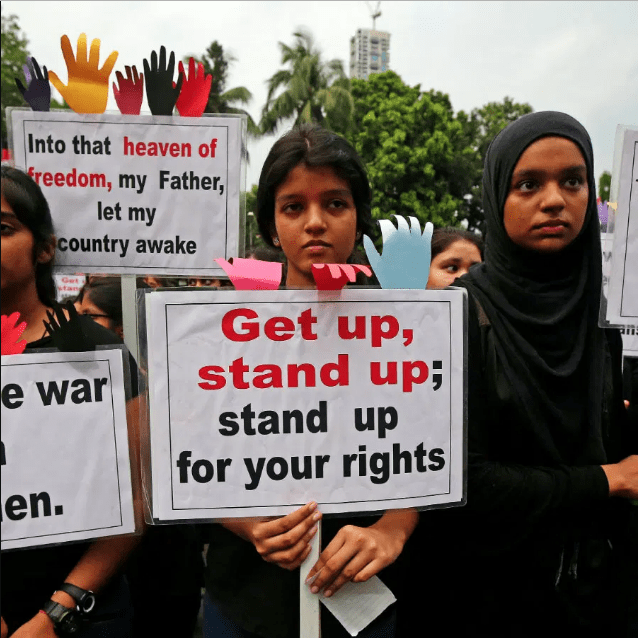
It is high time Women become aware of their rights and Stand up strong! Rise up together against the injustices happening against Women!!

References: India Today

What is Catcalling?

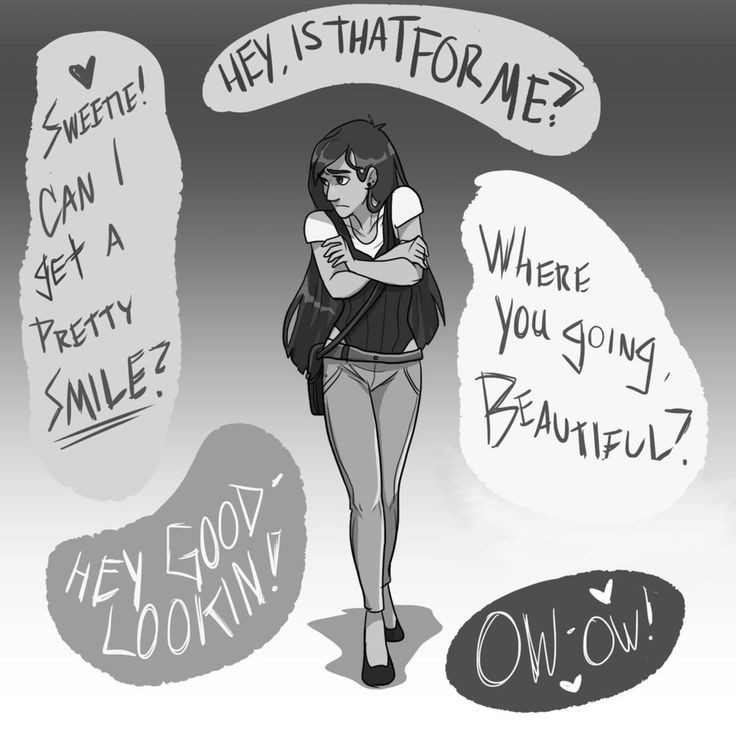
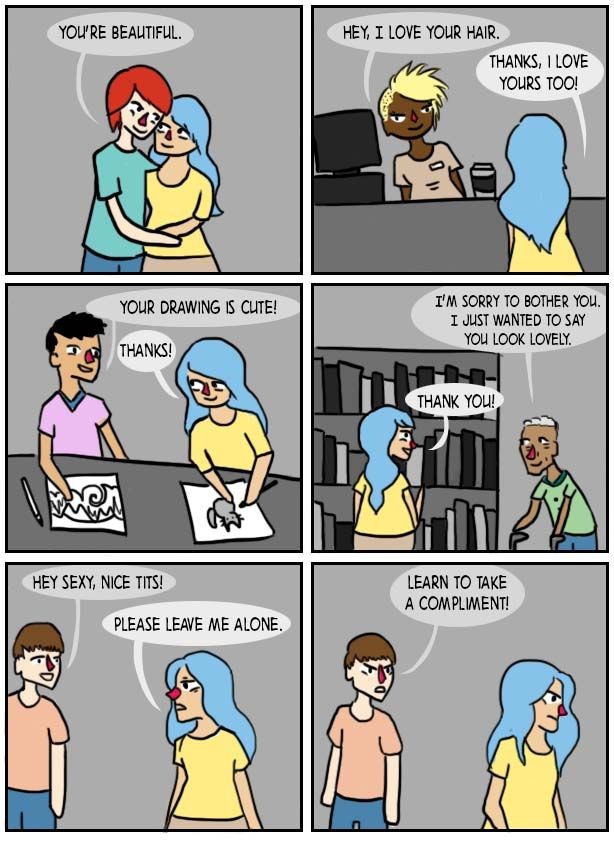
Catcalling is a form of harassment primarily consisting of unwanted sexual comments. This may include honking, wolf-whistling and indecent exposures. Most of the time, it is a man who catcalls and a woman who is catcalled.

According to surveys by Stop Street Harassment (a non-profit organization):

  • Nearly 95% of female respondents were honked at one or more times
  • Nearly 82% of female respondents were the target of a vulgar gesture at least once
  • Nearly 81% of female respondents were the target of sexually explicit comments from an unknown man at least once
  • Just over 77% of women said they were the target of kissing noises from men.

Where catcalling takes place?

Catcalling doesn’t only happen on the streets. Sexual harassers find targets on campus sidewalks, in restaurants and movie theaters, at work, inside homes – literally anywhere. Similarly, anyone can be a catcaller – including a person’s acquaintances. Online catcalling is also an issue just as severe as in-person catcalling. What’s worse, people on social media are able to say more because they are protected by a screen.

The Problems with Catcalling

  • It’s disrespectful: Catcalling is uncalled-for and usually makes the victim feel exposed and uncomfortable. In some cases, catcalling is used as a method of expressing power over someone, rather than the misperception of it being a “compliment”.
  • It’s not impressive: Someone may catcall in order to impress their friends, or the person they are catcalling at, but it’s actually unimpressive and immature.

Catcalling is not a compliment, it’s a harassment!!

Whilst compliments and flirting can be harmless and fun, shouting at strangers is not flattering, it leaves “targets” feeling exposed.

Catcalling is degrading, demeaning, and disgusting.

Women have the right to be treated with as much respect and dignity when walking down the street as any man. Women deserve to feel safe.

How to react if you are being catcalled?

  • Catcallers usually look for a reaction. Don’t give them one, especially fear.
  • Get to a safe or crowded place as soon as you can. Seek help if needed.
  • If you are around other people and it’s safe, you can use a simple comeback like “that’s harassment” or “don’t do that”.
  • While snapping back (if you choose to do so), make sure to keep walking and don’t stop.
  • Avoid the use of swear words or eye contact.
  • If it’s online, you can block and report them. Choosing to reply is also an option (e.g., asking “would you find it okay if someone spoke to your mother or sister in that way?”).
  • Document it: write it down or take a picture/screenshot. By doing this you can call them out later.
  • Share your story if you feel comfortable.

How to intervene if someone is being catcalled?

  • Call out the harasser if it is safe to do so.
  • Create a distraction or start chatting with the target (e.g., drop your keys and ask “are these yours?”).
  • Approach the target afterwards to see if they need company or if there is anything else you can do to help.
  • Whatever you do, don’t put the person who is catcalled at greater risk (e.g., becoming aggressive).

Catcalling has become normalized, as it is often disregarded as a “joke”, or even a compliment. These are some tips to learn why this is absolutely not the case.