

HAVE WE FORGOTTON OUR SHEROES ?

Women have made landmark contributions encompassing various fields.Its time we sing joys of celebration for our sheroes too like we do for men.They have suffered various setbacks in life but emerged powerful as pointed out by Swami Vivekanand ,“Woman has suffered for eons, and that has given her infinite patience and infinite perseverance”.

For celebration we need to know about the milestones they have crossed and the hinderances they’ve overcome.

Their benefactions can be categorized Two folds .First theEducational Sector.

Second the Political and the Social Sector.
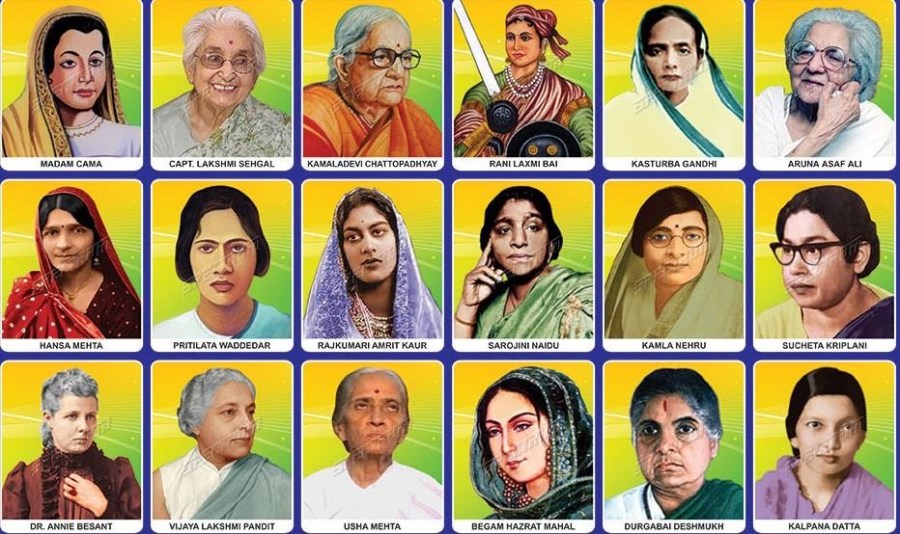
In Education:-

When discussing about Economy we cannot rule out the role education.The first female graduates Kadimbini Ganguly and Chandramukhi Bose long broke the stereotypes of Male centric education system.There have been other historic Educationists of India like Ayyalasomayajula Lalitha who became the first Engineer of India back in 1943.

Anandibai Gopalrao Joshi was the first female doctor of India.

SavitriBai Phule along with Mahatma Jyotiba Phule led a movement for education of Girls.

They faced social ostracization and societal pressures but did not stop.In the end, SavitriBai Died while serving the victims of plague.In the field of law which was highly patriarchic Cornelia Sorabji broke all shakles and became India’s first female lawyer.                                                           Durgabai Deshmukh an early lawyer and political activist said-“I had then decided to take up the study of law so that I could give women free legal aid and assist them to defend themselves.”

These woman are not mere inspirations or role models,theybecame game changers and paved the way for education for the upcoming generation.

Polity:-

Politics despite being male dominated ,some Strong Female leaders have made immense contributions to freedom struggle. Going back to the the Delhi Sultanate,Razia Sultan became the first and last Female to ever became sultan in 1236.

After that there were different princely states in which women lead their dynasties. Rani Laxmibai became an epitome of strength along with JhalkariBai giving a strong fight to British.

Uda Devi a ‘Dalit Virangana’ fought the British Bravely in 1857 Battle.

Rani Gaidinliu of Manipur,was imprisoned at a young age of 13 because of her Anti-British Stand.During the 1857 Revolt the participation of Begum Hazrat Mahal of Lucknow is unmatched.AhalyaBai Holkar of Malwa Kingdom is still remembered as one of the Finest Leaders of India.In the modern era of freedom struggle Female Leaders like Sarojini Naidu,Annie Besant,Vijay Laxmi Pandit(First Female President of UNGA),Aruna Asif Ali(Grand Old Lady of Independence) etc fought against the British.        

Be it Anti partition movement of 1906 or Non Co-operation Movement or Civil Disobedient Movement, Women have added by large,the amplitude of struggle.

Revolutionaries like Capt.Laxmi Sehgal lead the Jhasi rani regiment of INA Army made by Subhash Chandra Bose.AlsoPritilata Waddedar,Kalpana Datta took up arms against the British.

Post-Independence Rajkumari Amrit Kaur became the first woman Health Minister of India.

Indira Gandhi not just became India’s First Prime Minister but also was the first female Finance Minister(1970-71),to present a budget.Sucheta Kriplani became the first female to become a Chief Minister of UP,also Sarojini Naidu became the first ever female Governor in UP.

The list of contributions made by our early Women is never ending. Such zeal and sacrifices, on par with those of Men, despite miniscule opportunities, simply motivates us.

It would be appropriate to agree with Mohammad Ali Jinnah when he quoted,

There are two powers in the world; one is the sword and the other is the pen. There is a great competition and rivalry between the two. There is a third power stronger than both, that of the women”.

Mohd Ali Jinnah

WOMEN EMPOWERMENT

Women’s empowerment refers to addressing powerful women in order to equip them with the ability to make their own decisions. In a world dominated by men, women have gone through a lot throughout time. They were regarded as nearly non-existent human beings in earlier times. As if all rights, including basic rights like voting, belonged to men. Women gradually realized their power as time went on. Since that time, the world has witnessed a revolution in women’s empowerment.
Women can only be empowered if they are informed about their rights. Most girls grow up believing they are inferior to boys and, as a result, submit to the patriarchal and regressive social order. Young girls must be educated that they are no less capable than males and that if they are committed, they can achieve anything.

Women’s contribution to India’s economy:

Women have played a critical part in assisting India’s economic development. Women are thought to contribute 17-18% of total GDP. Despite their strength in agriculture and the dairy industry, India’s growing urbanization has yet to attract more women to enter the workforce. With only 25% of India’s labour force being female, women’s contribution to the country’s GDP is currently among the lowest in the world. However, even if 50% of women choose to work, India’s annual growth rate can range from 1.5 to 9%.

Why is Women’s Empowerment so crucial?

Women’s empowerment is a component of encouraging women to feel powerful by informing them that they can achieve whatever goals they set for themselves. Women can work outside the home and make their own decisions. Women aren’t reliant on men. They can use their skills to support their families and make money. Some women are hesitant to work in a demanding environment or in a high-ranking position because they believe it is not a woman’s duty.
Empowerment aids in the reduction of domestic violence because it encourages people to cherish and promote women. Women are not abused in any way, including sexual, emotional, and physical abuse. Women are now obtaining high-level positions in the same way that males do. Some women are promoted to roles such as president, leader, commune chief, and other high-ranking posts. Many women are now politically, educationally, and economically engaged in society.

Conclusion:

Women’s Empowerment in the purest sense will only be realized once society’s attitudes toward fairness and equality have changed. Women’s empowerment refers to the ability of women to make decisions about their own lives. Women’s empowerment refers to the formation of an environment that benefits both individuals and society as a whole. Women should be granted the same rights as males in order to truly empower them.
For their growth and development, they must be strong, vigilant, and alert at all times. Women’s education, poverty, health, and safety are the most common issues. After the country’s independence, India faced numerous obstacles, many of which resulted in a significant disparity between men and women, particularly in the field of education. Economic prosperity, political stability, and social revolution can all be achieved by empowering girls.

Crimes against Women: soot on the golden image of Bharatvarsh

Article by – Shishir Tripathi

Intern at Hariyali Foundation
In collaboration with
Educational News

From ancient times, India has been known for its culture, its traditions and the simple lifestyle that people follow here, diverse geographical and cultural variations. But still India is also known to be as one of the most unsafe countries for women. Mentioning India’s rank is not at all important as that won’t make a very big impact in justifying that India is a safer Nation for women.

Crimes against women are increasing day by day. Domestic Violence is one of the major crimes in India against women and rape is the second biggest crime in India against women. One rape was reported every 15 minutes in India in 2018. The central state of Madhya Pradesh reported the highest number of rape cases across India in 2018, with over five thousand. Northern states Rajasthan and Uttar Pradesh followed during the measured time period. Overall, the country reported over 33 thousand cases of rape that year.

Being a Nation with a patriarchal society, status of women in India has more or less been the same. Even it has degraded and still degrading. The Mathura first rape case that was an incident of custodial rape in India on 26 March 1972, wherein Mathura, a young tribal girl, was allegedly raped by two policemen on the compound of Desaiganj Police Station in Gadchiroli district of Maharashtra. After the Supreme Court acquitted the accused, there was public outcry and protests, which eventually led to amendments in the Indian rape law via The Criminal Law Amendment Act 1983 (No. 43) .

Another case of rape, known as Delhi Rape case shattered every Indian that happened in 2012 and the incident took place when Jyoti Singh, a 23-year-old female physiotherapy intern, was beaten, gang-raped, and tortured in a private bus in which she was travelling with her male friend. There were six others in the bus, including the driver, all of whom raped the woman and beat her friend. Eleven days after the assault she was transferred to a hospital in Singapore for emergency treatment but died two days later. Four adult convicts sentenced to death; hanged on 20 March 2020 at 5:30 AM at the Tihar Prison Complex, New Delhi.

So it is evident that a victim dies and after that the whole nation has to do online protest and come on the roads. And after all this pressure, the victim’s family gets the justice that too after years. Many rape cases go unreported as in Police station; the victim is being told about the family’s respect and outside the police station the accused, threatens the victim to death. Even if the cases get registered by the police, they are left pending, unattended. More than 32,500 cases of rape were registered with the police in 2017, about 90 a day, according to the most recent government data.  Indian courts disposed only about 18,300 cases related to rape that year, leaving more than 1,27,800 cases pending at the end of 2017.

Other crimes like domestic violence have also been increased especially during this lockdown period that occured in months of March and April. In the country, the number of domestic violence complaints received by the National Commission for Women has doubled from 123 distress calls to 239 domestic violent complaints from March 23,2020 to April 16,2020.

Many other crimes against women like acid attacks, domestic violence are so prevalent in India. Each day, the newspaper filled with cases of crime against women. Newly married brides are forced to get more dowries from their homes and are tortured and sometimes get killed. Many videos go viral on social media where women are beaten publicly, why? Just because they are weak and women!
The mentality of the people is the only thing that is needed to be changed. Formulation of strict laws like all other nations should be there against crimes like rapes, acid attacks, etc. Vulgar material in the form of videos and images on internet objectifying women needs to be permanently banned so that a woman is not looked upon as an object in reality. As soon as the crime is proved, the accused should be given strict punishment and are needed to be given the same level of torture, they gave to the victim. A strict message is needed to be passed so that people with shitty mindsets should fear from committing such crimes and ruining the lives of the innocent victims.

Therefore it is much needed that something so strict is needed to be done by the government so that the nation must not get converted into chaos for the women and all other people who want to live a life freely and safely with proud and respect.

Domestic Violence; eating up someone’s pride, self respect and the willingness to live

Article by – Shishir Tripathi

Intern at Hariyali Foundation
In collaboration with
Educational News

In a country with such a huge population and so much of diversity in culture and nature, it is so common that there would surely be diversity among various types of violence too. Domestic violence includes any type of violence or torture basically against women in any form whether it is physical, emotional, sexual, verbal or economic abuse or torture.

India is poorly ranked in a total of 167 countries all across the world according to the data for cases of domestic violence. Domestic violence has always been a shame for the Indian society. A woman contributes a lot in the nurturing of a whole family and sacrifices her dreams (in most of the cases) for taking care of her husband and his parents and the children too.

A woman is the only person in the family who is always ready to sacrifice her health, her dreams and her happiness just for making the family happy. A woman is the one who turns a house into a home. A home built with the bricks of a woman’s dreams and her crushed desires. Everyone wants to go out, see the world and meet the people, enjoy their selves, but for making this happen somebody is always there at home for taking care of food and for arranging everything, it is always and always a Woman.

In spite of making all these sacrifices, it is the woman only who has to become the victim of the anger of her husband, her in-laws and her children too. Basically in India, it is generally assumed that the woman, the bride is a servant (when she’s jobless) and an ATM machine without any password (when she’s working). A woman is the one who is always expected to make sacrifices and take care of her family and home. Why? Because it is her work, this is the stuff why she was born?! If somebody gets angry, then she is the only river to pour down all the anger.

Moving ahead, everyone knows that from the past times and still at present most of the women at their place are going and suffering through a lot. According to a National Family and Health Survey in 2005, total lifetime prevalence of domestic violence was 33.5% and 8.5% for sexual violence among women aged 15–49. A survey carried out by Thomson Reuters Foundation said that India is the most dangerous country in the world for women.

In 2012 National Crime Records Bureau report of India states a reported crime rate of 46 per 100,000, rape rate of 2 per 100,000, dowry homicide rate of 0.7 per 100,000 and the rate of domestic cruelty by husband or his relatives as 5.9 per 100,000.

But every reader knows that these are just figures and data, too away from the reality. Yes, every reader is correct. Because of poverty and lack of awareness and education, at present many women don’t at all know that they can really complain about this suffering of theirs. Many women don’t tell the concerned authorities for saving the respect of their husband and their family and start making compromises; some fear of survival as they never went to school and couldn’t get a job after separation.

There is mental or psychological absue too. Psychological abuse can erode a woman’s sense of self-worth and can be incredibly harmful to overall mental and physical wellbeing. Emotional/psychological abuse can include harassment; threats; verbal abuse such as name-calling, degradation and blaming; stalking; and isolation.

Women who experience domestic violence overwhelmingly tend to have greater overall emotional distress, as well as disturbingly high occurrences of suicidal thoughts and attempts. According to a study by the National Centre for Biotechnology Information, suicide attempts in India are correlated with physical and psychological intimate partner violence. Of the Indian women who participated in the study, 7.5% reported attempting suicide. This correlation is supported by the high rates of domestic violence in India, although the rates differ greatly by region, individual socioeconomic status and other factors.

And it is shocking to listen that this lockdown period that occurred for stopping the rapid spread of Covid-19 was even more painful for women. As all the activities were banned and there was complete lockdown, men were continuously at home along with all other family members. Hence, many women were suffering domestic violence to far greater extent. The number of domestic violence complaints received by the National Commission for Women has doubled from 123 distress calls to 239 domestic violence complaints, from March 23, 2020, to April 16, 2020.

This so pathetic to read that the lockdown, ‘the so called national holiday when most of the people developed new skills, helped their wives at home’, there were some more monsters and demons who physically, emotionally and sexually assaulted their wives at home.

It actually never changed for women. Almost every Indian woman has to make compromises every day. A lot of women who can’t bear the physical and the emotional pain commit suicides. The report by the National Crime Records Bureau says that in 2018, the number of housewives killing themselves –22,937 – increased by 6.9% when compared to 21,453 women in 2017.

Cases of domestic violence occur either due to the demand of dowry or simply the ill mentality of the husband or the family or even both. Women need to stand against this. There are various laws in the constitution including Dowry Prohibition Act of 1961 and the other two new sections, Section 498A and Section 304B were introduced into the Indian Penal Code in 1983 and 1986. On 19 March 2013, the Indian Parliament passed a new law with the goal of more effectively protecting women from sexual violence in India. It came in the form of the Criminal Law (Amendment) Act, 2013, which further amends the Indian Penal Code, the Code of Criminal Procedure of 1973, the Indian Evidence Act of 1872, and the Protection of Children from Sexual Offences Act, 2012. The law makes stalking, voyeurism, acid attacks and forcibly disrobing a woman explicit crime for the first time, provides capital punishment for rapes leading to death, and raises to 20 years from 10 the minimum sentence for gang rape and rapes committed by a police officer. However, talking about the downside of the law, the new law doesn’t address marital rape, rape committed by the armed forces or rape against men.

Therefore, people should realize that domestic violence of any form is not at all acceptable by men and women both. Keeping into mind the mental health of the sufferer it should be realized that awareness should be spread amongst people and they should be told about their rights. Those who are able bodied and well aware, should take this responsibility into their hands. And whenever a woman or even a man (in some cases) is seen suffering from domestic violence, it should not go unreported.

Because those who stay silent after seeing everything are more wrong than those who commit such heinous acts.