Techniques to Learn Vocabulary Faster

Expanding your vocabulary is one of the most essential—and often most challenging—aspects of learning a new language. Whether you’re just starting or aiming to sound more fluent, knowing the right words can make a world of difference. Fortunately, with the right techniques and tools like a language learning app, you can make this process faster, more effective, and even enjoyable.
Use Context Instead of Isolated Words

Learning words in isolation might help in the short term, but you’re more likely to forget them. Instead, try to learn new vocabulary within context. For example, instead of memorizing the word “recommend,” learn it as part of a sentence like, “I recommend this book.” This approach helps you understand how words function in real situations, making it easier to recall them later.

Reading books, watching shows, or listening to podcasts in your target language are great ways to pick up words in context. Whenever you hear or see a new word, write down the full sentence it appeared in—this deepens retention.

Practice Active Recall and Spaced Repetition

One of the fastest ways to build long-term vocabulary is through active recall—trying to remember a word without looking at it first. Combine this with spaced repetition, a system that reminds you of words just before you’re likely to forget them.

Many language learning apps, like Anki or Quizlet, use these scientifically proven methods to help you remember vocabulary efficiently. You can even create your own flashcards based on words you’ve read or heard recently, ensuring the content is relevant to you.

Group Words by Themes or Categories

Our brains are better at remembering when information is organized. Try learning words in groups—such as “kitchen items,” “transportation,” or “emotions”—instead of random vocabulary. This mental association helps you recall multiple related terms at once.

Thematic learning also mirrors how we use language in real life. If you’re traveling, learning words related to directions, restaurants, or hotels will be far more useful than memorizing abstract terms.

Use a Language Learning App with Smart Features

Modern apps go far beyond simple flashcards. A good language learning app can help you track your progress, suggest words based on your current level, and integrate vocabulary into real-life conversations or reading.

Some apps let you read articles or short stories with built-in vocabulary tools. You can tap a word for instant translation, hear native pronunciation, and even save it for later review. These features make it easier to learn new words during your daily routine.

Write and Speak with New Words

The more you use new vocabulary, the faster you’ll learn it. Try writing a short story, diary entry, or even social media post using recently learned words. If you’re comfortable, use the words in conversation with a language partner or tutor.

By actively using the vocabulary, you reinforce memory through practical application. Don’t worry about making mistakes—each attempt helps move the words from passive recognition to active mastery.

Make Vocabulary Learning a Daily Habit

Consistency beats cramming. Set a goal to learn 5–10 new words a day, and review previous words regularly. Create a routine that combines reading, listening, and app-based practice. Even 15 minutes a day can lead to noticeable improvement over time.

You might pair morning coffee with flashcards, or read an article with your app during a lunch break. Making vocabulary learning part of your lifestyle ensures steady and lasting progress.

Final Thoughts

Learning vocabulary faster doesn’t mean rushing through lists—it means using smart techniques that make words stick. By using context, repetition, thematic grouping, and a reliable language learning app, you can build a strong and lasting vocabulary foundation.

The key is balance: read widely, review regularly, and use new words often. With these strategies, you’ll notice your vocabulary growing—and your confidence in English rising—with every passing day.

Contributor Role Taxonomy (CRediT)

 CRediT is a community-owned 14 role taxonomy that can be used to describe the key types of contributions typically made to the production and publication of research output such as research articles.

Conceptualization

Ideas; formulation or evolution of overarching research goals and aims.

Software

Programming, software development; designing computer programs; implementation of the computer code and supporting algorithms; testing of existing code components.

Resources

Provision of study materials, reagents, materials, patients, laboratory samples, animals, instrumentation, computing resources, or other analysis tools.

Data curation

Management activities to annotate (produce metadata), scrub data and maintain research data (including software code, where it is necessary for interpreting the data itself) for initial use and later re-use.

Formal analysis

Application of statistical, mathematical, computational, or other formal techniques to analyse or synthesize study data.

Supervision

Oversight and leadership responsibility for the research activity planning and execution, including mentorship external to the core team.

Validation

Verification, whether as a part of the activity or separate, of the overall replication/reproducibility of results/experiments and other research outputs.

Visualization

Preparation, creation and/or presentation of the published work, specifically visualization/data

 presentation.

Writing – original draft

Preparation, creation and/or presentation of the published work, specifically writing the initial draft (including substantive translation).

Methodology

Development or design of methodology; creation of models.

Project administration

Management and coordination responsibility for the research activity planning and execution.

Writing – review & editing

Preparation, creation and/or presentation of the published work by those from the original research group, specifically critical review, commentary or revision – including pre- or post-publication stages.

What is KOPPACT?

 KOPPACT is an acronym that stands for Kinesics, Oculesics, Paralanguage, proteomics, Chromatics, Tactics. These all are the variations of different kinds of nonverbal language.

Kinesics

Kinesics discusses different kinds of body language, gestures, postures, facial expressions, and so on. In nonverbal, there are many things like voice quality, adapters, regulators, and many which impact communication. Its say facial expressions are the most important as it takes the impression of 55% of total communication. The postures reflect people’s emotions, quality of thoughts, and personality. Research says postures reflect one’s confidence, receptivity, status to the listener. Gestures are very much related to our daily life. It supports our opinions like moving hands, giving nods, etc. It is very important to take care of the body language while you are representing yourself because it tells half of your personality.

Oculesics

Oculesics include eye contact. Proper eye contact is very important during any conversation. It not only proves your confidence level but helps you to connect with your audience. It helps to bring engagements, interest attention, and so on. It has three basic purposes to serve. Firstly it helps to get feedback. During a conversation or presentation if you look to someone you can easily understand by their eye movements what the are feeling. Secondly, it helps to indicate without uttering a word of address. For instance, if you are talking with some time and when the turn of the next person comes you just look at the person and give a signal of his/her turn. Thirdly it gives a vivid indication if you are liking a person or not. Usually, when we don’t like a person, we try to avoid eye contact.

Proxemics

Proxemics tells about spatial distance. The space distance between two people can reflect the dimension of their relationship. An intimate relation, closeness, group, or society, all can be reflected by their spatial distance. There are zones in the space language, which is called spatial distance. The intimate zone is 0’-18″, Personal Zone is 18”-4′, the social zone is 4’-12′ and the public zone is 12’- rest.

Paralanguage

Paralanguage includes the pitch and tone of the verbal message. Voice is very important because it collects the attention of the people. Not only that it carries the mood of the words, if its sarcastic, anger, happy and more. It highlights the message’s importance. It refers to how something is said, not what is said”.

Artifacts

Artifacts are the artificial things that one carries. For instance, the dressing of a person or some kind of stuff can refer to the personality of the person. It also helps to impress people, drag attention. It helps to analyze better and it also impacts the nonverbal communication.

Chronemics

It indicates a sense of timing. The beginning of the event and the end is very important. It helps to sync between verbal and nonverbal communication. During a presentation, if someone continuously checks the time, it can distract people from listening and also hamper the attention with the presentation quality. So, interval time, temporal processing, cognition all are very important.

Tactilics

It helps to judge the people and their intentions. It helps to understand the positive and negative signals. Some touch can make you feel comfortable some are not. A weak handshake, a timid tap on the shoulder, and a tight hug or slap on the back can reassure the relationship. You can’t get into someone’s territory without knowing. You should know, whom you can touch, when you can touch and how you can touch.

These languages which impact our daily conversation and make it better.

Some common english words important for GRE

Alacrity The GRE has a predilection for words that don’t really sound like what they mean. Alacrity is no exception. Many think the word has a negative connotation. Alacrity, however, means an eager willingness to do something. So imagine the first day at a job that you’ve worked really hard to get. How are you going to complete the tasks assigned to you? With alacrity, of course. An interesting correlation: the more alacritous (adjective form) you are when you’re learning GRE vocabulary, the better you will do.

Prosaic Prosaic conjures up a beautiful mosaic for some. For others, the pro- is clearly positive. So if somebody or something is prosaic, it must surely be good. Once again the GRE confounds expectations. Prosaic means dull and lacking imagination. It can be used to describe plans, life, language, or just about anything inanimate that has become dull (it is not used to describe people).

A good mnemonic: prose is the opposite of poetry. And where poetry, ideally, bursts force with imagination, prose (think of text-book writing), lacks imagination. Hence, prose-aic.

Veracity:- Veracity sounds a lot like voracity. Whereas many know voracity means full of hunger (the adjective form voracious is more common), few know veracity. Unfortunately, many confuse the two on the test. Veracity means truthful. The adjective form, veracious, sounds a lot like voracious. So be careful. Paucity Paucity is a lack of something. In honor of paucity, this entry will have a paucity of words.

Maintain The second definition of this word – and one the new GRE favors – is to assert. One can maintain their innocence. A scientist can maintain that a recent finding support her theory. The latter context is the one you’ll encounter on the GRE. Contrite Word roots are often misleading. This word does not mean with triteness (con- meaning with). To be contrite is to feel remorse.

Laconic Another word that sounds different from what it means. A person is described as laconic when he/she says very few words. I’m usually reminded of John Wayne, the quintessential cowboy, who, with a gravely intonation, muttered few words. As this allusion betrays may age more than anything else, think of Christian Bale in Batman.

Pugnacious Much like a pug dog, which aggressively yaps at things near it, a person who is pugnacious likes to aggressively argue about everything. Verbally combative is another good way to describe pugnacious. Disparate If two things are fundamentally different, they are disparate. For instance, verbal skills and math skills are disparate, and as such are usually tested separately, the GRE being no exception.

https://www.google.com/url?sa=t&source=web&rct=j&url=https://translate.google.co.in/&ved=2ahUKEwjRsZym0N3xAhUYILcAHXjXASwQFjABegQIDhAC&usg=AOvVaw3PxxM8sVv2-Z8mgIzSGywh

http://magoosh.com/gre/2012/grevocabularyebook

PHRASICAL TALE : words of wonder

YOU ARE SO FAT

YOU LOOK LIKE A RAT

YOU HAVE NO HAIR , WEAR A HAT.

BUY YOURSELF A YOGA MAT.

YOUR STOMACH LOOKS LIKE THAT OF A CAT

YOU LOOK LEAN LIKE THE HANDLE OF THE BAT

IT MAKES ME THINK OF WHY DO PEOPLE PUT THEIR NOT SO NEEDED SUGGESTION,

SHOW THEIR AGGRESSION ?

THESE PHRASES HIT HARD AT HEART

JUST LIKE A SHARP DART.

KEEP YOUR VOICES ON MUTE AND DONT UTTER A WORD

DONT BE THE PART OF THE GOSSIPING HERD.

KEEP CALM AND PRAISE THE LORD

SING AND PLAY THE GUITAR RINGING THE CORD.

13 beautiful words you probably never heard of!

Language is art. The calm you get when gazing at art is unparalleled, they say. Little did they know about the sweet words in a language that could sway the souls of millions. Each language has its own charm, wrapping its arms around people whose only solace is words. Keeping aside all distress, gloom and melancholy, I am going to take you places today.

Is it just me, or does your mind couple certain words with visualized scenarios that transport you magically and everything starts to fall into place and just make sense? If you are like me, then get ready for a hell of a ride! I am going to give you 13 never heard words from different languages, with deep, beautiful meaning behind. Tuck in tight. Check the last word for a twist!

Beautiful words that just make sense

1. Zenith (Arabic)

Pronunciation: zen.ɪθ

Meaning: the best or most successful part of time. Astronomy: Highest point reached my a heavenly body

Sample sentence: The sun was at its zenith in a cloudless sky.

2. Gumusservi (Turkish)

Pronunciation: goo-moo-SAIR-vee

Meaning: moonlight shining on water

Sample sentence: To see a silvery trail of gumusservi alone in the quiets of night is paradise on earth.

Gumusservi- Moonlight on water


3. Vellichor (English)

Pronunciation: vel-li-kor

Meaning: the strange wistfulness of used bookstores, which are somehow infused with the passage of time.

Sample sentence: As she entered the dust filled store, she was overcome with vellichor.

4. Eldritch (English)

Meaning: weird and sinister or ghostly.

Sample sentence: The woman, whose voice had risen to a kind of eldritch sing-song, turned with a skip, and was gone.

5. Moonbow (English)

Pronunciation: moon-bow

Meaning: a rainbow caused by reflection and refraction of moon light.

Sample sentence:

A moonbow
A moonbow- rainbow at night

6. Arcane (French)

Pronunciation: ɑːˈkeɪn

Meaning: secret, mysterious, only understood by a few.

Sample sentence: The arcane knowledge he possessed was envied by the Gods.

7. Halcyon (English)

Pronunciation: ˈhælsɪən

Meaning: a time in the past that was calm and peaceful, happy and prosperous.

Sample sentence: She recalled the halcyon days of her childhood, innocent and free.

8. Eunoia (Greek)

Pronunciation: you-no-ya

Meaning: well mind/beautiful thinking

Sample sentence: His compassion and eunoia make him a fantastic candidate.

9. Orenda (Huron)

Pronunciation: aw-ren-duh

Meaning: a mystical force present in all people that empowers them to affect the world, or to effect change their own lives.

Sample sentence: The orenda of the rabbit controls the snow.

10. Charmolypi (Greek)

Pronunciation: char-mo-lip

Meaning: a mixed feeling of happiness while being sad.

Sample sentence: Staring at the sunset, she was overwhelmed by the feeling of charmolypi.

11. Scintilla (Latin)

Pronunciation: sɪnˈtɪlə

Meaning: a tiny trace or spark of a specified quality or feeling.

Sample sentence: I felt a scintilla of guilt washing over me as I saw her walking away.

12. Chatoyant (French)

Pronunciation: ʃəˈtɔɪənt

Meaning: showing a band of bright luster caused by reflection from inclusions in the stone.

Sample sentence: She was attired in a silk dress with chatoyant effects in red and green.

13. Maanvizhi (Tamil)

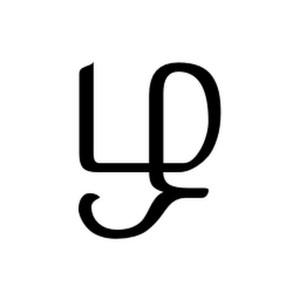
Pronunciation: The ‘zh’ sound cannot be represented in phonetics and is unique to the language itself(Tamizh). It is pronunced by rolling your tongue inwards making sure it doesn’t touch the roof of your mouth. Watch this to learn how to pronounce it.

Meaning: A person(usually female) whose eyes is like a baby deer’s eye

The letter 'zha' in tamil
The letter ‘zha’ in tamil


These are a few words that I curated overtime and found them to be so beautifully formed. They resonate a unique feeling when pronouncing them. I have given to you only a very few words from very few languages across the world. There are certainly many words that I’ve missed. Do comment your favorite ones.