ICMR2023 Conference

International Conference on Multidisciplinary Research (ICMR) 2023 – ICMR 2023 aims to improve its ability to bring together worldwide researchers and professionals, encourage intellectual development of scholars and provide network opportunities for conference attendees for making long lasting academic cooperation. To reach its goal, ICMR2023 benefits from its advisory board members consist of well-known academicians all around world and provide publication opportunities.


Any scholar or professional interested in engineering, science and education around the world is welcome to attend ICMR2023 conferences, which are held couple of times a year.

List of Topics

  • Engineering Topics 
  • Industrial Engineering
  • Textile Engineering
  • Civil and Architecture Engineering
  • Mining Engineering
  • Mechanical Engineering
  • Renewable Energy
  • Chemical Engineering
  • Electrical-Electronics Engineering
  • Metallurgical and Materials Engineering
  • Environmental Engineering
  • Computer and Informatics Engineering
  • Food Engineering
  • Geological Engineering
  • Science Topics 
  • Social Sciences
  • Theology
  • International Relations
  • Communucation Studies
  • Political Science and Public Administration
  • Linguistics
  • Medical Sciences
  • Applied Sciences
  • Law
  • Agriculture
  • Education Topics 
  • Vocational and Technical Education
  • Early Childhood Education
  • Science Education
  • E-learning
  • Secondary Science Education
  • Elementary Education
  • Primary Education
  • Professional Development & Teacher Training
  • Foreign Language Training
  • Educational Sciences
  • Mathematics Education

Venue

The conference will be held in Zoom meeting

Contact

All questions about submissions should be emailed to icmr2023@edupub.org or editor@edupub.org

Important Things to Note

Important Dates

Date for Submission of Papers

20 March 2023 (without Late fee)

30 March 2023 (with late fee)

Acceptance Mail for Papers

10 April 2023

Date of Online Conference

20-22 April 2023

Email id for Submission of Papers

Email: icmr2023@edupub.org

Special Issue for Conference Papers

Visit conference Official Site at https://icmr.edupub.org/

ISBN for Conference Proceedings 

ICMR 2023

International Conference on Multidisciplinary Research (ICMR) 2023 is one of the substantial and most reputable international events of Business, Economics, Social Sciences and natural sciences. Appealing outstanding researchers from over 100 countries worldwide, the conference exhibits a friendly, supportive environment to accept feedback, exchange ideas and find inspiration. The main aim is to provide a forum for people coming for different academic backgrounds to interact and present their researches. Moreover, the conference generates the possibility for publications of research papers in indexed and organized journals. International Conference on Emerging Trends in Multidisciplinary Research (ICMR-2023) will provide a platform for debating on issues and challenges in the aforementioned fields. The objective is to back discussions on strategies that will accelerate worldwide growth and economic recovery as well as evolution in technology and scientific research.  

EDUPUB® is an india based international consulting firm serving the world’s leading businesses, governments, public and private universities of world and not for profit organizations in every field of life. Its mandates is to develop stakeholders in diverse fields ranging from the basic necessities like sustainable health conditions, reduction in the poverty and the basic human rights to the more complicated and glittering demand of time like science and technology, entrepreneurship and telecommunication by focusing on the findings of extensive research conducted by researchers all around the world.

Conference Tracks

Academics from various fields, with an interest in the above themes, are welcome to present their papers. The conference has a multidisciplinary emphasis and, therefore, inviting contributions from across disciplines, e.g.

  •        Social Sciences,
  •        Development and Sustainable Development Studies,
  •        Education,
  •        Science and Technology,
  •        Business and Economics,
  •        Management,
  •        Philosophy,
  •        Psychology,
  •        Sociology,
  •        Political Science
  •        Others.


Send papers to editor@edupub.org

Publication

IJR – International Journal of Research with ISSN 2348-6848 and book with conference proceedings 

Important Things to Note

Important Things to Note

Important Dates

Date for Submission of Papers

20 March 2023 (without Late fee)

30 March 2023 (with late fee)

Acceptance Mail for Papers

10 April 2023

Date of Online Conference

20-22 April 2023

Email id for Submission of Papers

Email: icmr2023@edupub.org

Special Issue for Conference Papers

Visit conference Official Site at https://icmr.edupub.org/

ISBN for Conference Proceedings 

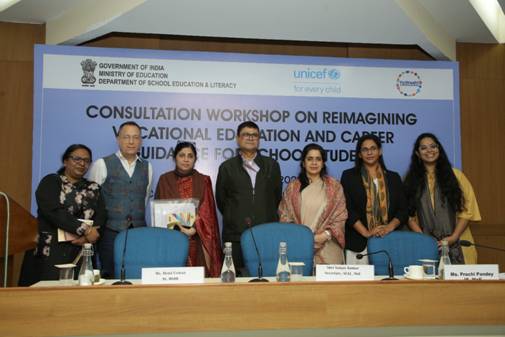
one-day Consultation Workshop on Reimagining Vocational Education and Career Guidance for School Students

 Key Highlights:

-NCrF will help dropouts from the formal education system to get reintegrated by aligning their practical experience with the appropriate Framework level- Shri Sanjay Kumar

-Discussions on career guidance reflected on the role of physical interventions and career counselling that could be done in schools itself.

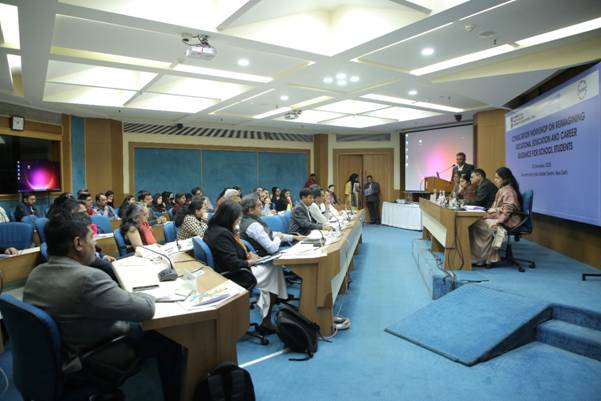
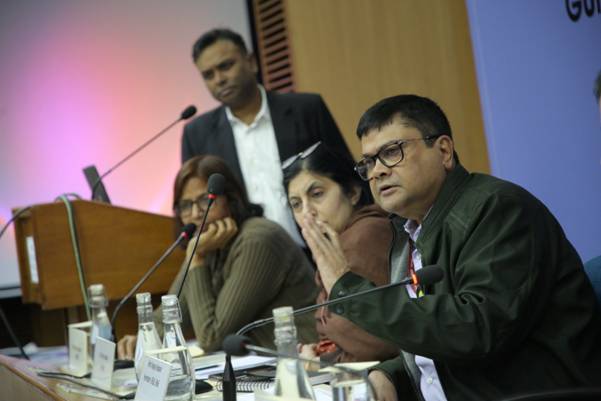
The Ministry of Education organized a one-day Consultation Workshop on Reimagining Vocational Education and Career Guidance for School Students in collaboration with UNICEF and YuWaah on 16th December 2022 at New Delhi.

WhatsApp Image 2022-12-17 at 8.24.57 PM (1).jpeg

WhatsApp Image 2022-12-17 at 8.25.53 PM (1).jpeg


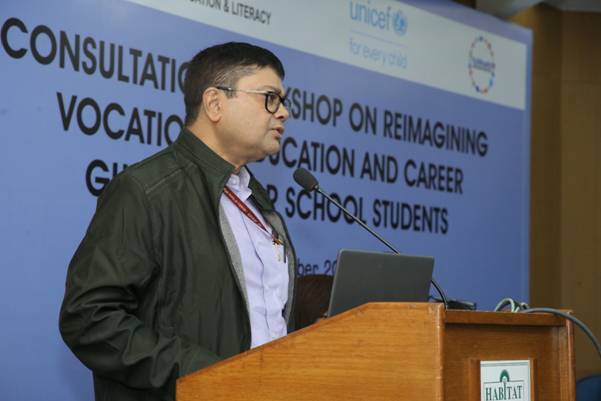
Secretary, Department of School Education and Literacy, Shri Sanjay Kumar, chaired the consultation workshop and two roundtable interactions with Ministry of Skill Development and Entrepreneurship, Directorate General of Training (ITI), PSSCIVE,Bhopal, NCERT, CBSE, NCVET,AICTE etc. The workshop and roundtable interaction were also attended by various experts from PwC, YuWaah, Civil Society organizations, state education department, practitioners and organisations working in the fields of vocational education and career counselling, corporates and current and passed out students.

WhatsApp Image 2022-12-17 at 8.24.57 PM.jpeg

WhatsApp Image 2022-12-17 at 8.25.39 PM.jpeg

During the keynote address, Secretary, Department of School Education and Literacy, Shri Sanjay Kumar, pointed out that India needs to catch up with other countries in terms of skilling the workforce through formal vocational training during the student years. NEP 2020 has identified such issues and has suggested remedial measures, he added.

Shri Kumar pointed out that as per NEP, 2020 Vocational Education needs to be integrated into all schools and higher education institutions in a phased manner over the next decade. Trades and Courses shall be chosen based on skills gap analysis and mapping of local opportunities to make it demand driven. Concerted efforts from all stakeholders will be required to de-stigmatizeVocational Education and make it aspirational.  The National Credit Framework, currently under finalization by the Ministry of Skill Development and Entrepreneurship will also eliminate traditional hierarchies and silos between different areas of learning. It will help in removing complex separations between arts and sciences, between curricular and extra-curricular activities, between vocational and academic streams, etc. By providing credits for academic, extra-curricular and experiential learning, NCrF will help dropouts from the formal education system to get reintegrated by aligning their practical experience with the appropriate Framework level.

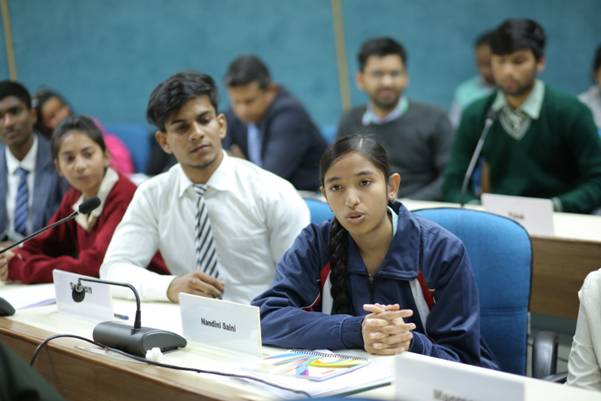
The consultations were also addressed by Ms. Dhuwarakha Sriram Chief of Generation Unlimited (YuWaah), Youth Development and Partnerships and Mr. Terry Durian, Chief of Education, UNICEF.  Various ideas related to reimagining, reinventing vocational education modules etc. were discussed at length. Importance of life skills – both vertical and horizontal, aspirational disconnect and information asymmetry in uptake of vocational education school,giving a gender perspective to vocational education, etc were also focus of these discussions.In the light of newly launched National Education Policy, 2020 the aim should be to empower students with skills such as cloud computing, artificial intelligence, machine learning, data analytics, robotic process automation, cybersecurity, etc. so that vocational graduates could compete in the global economy. The need to establish virtual labs, so that all students have equal access to high-quality practical and hands-on experience, was also stressed upon.  The Conference also benefitted from the feedback from students who have taken vocational courses like Multi-Skilling course and Information Technology course.

WhatsApp Image 2022-12-17 at 8.25.38 PM.jpeg

The 2nd Roundtable deliberated upon the current systems of career counseling in schools and what are the key learnings and best practices.  Secretary, DOSEL stated that solutions should focus on building an institutional model of career counseling in schools with scale, speed and sustainability utilising technological innovations including artificial intelligence.  He also stated that there was a need to map resources and build a database of the same.  Discussions on career guidance also reflected on the role of physical interventions and career counselling that could be done in schools itself.

*****

Workshop on “Interventions Required for Strengthening the PPP Ecosystem (Partners in Progress)”

 The Government of India envisions a major role of Public Private Partnership (PPP) to leverage private sector investment and operational efficiencies in the provision of affordable, qualitative, and sustainable public assets and services.

The Government of India has taken several interventions to encourage private sector investors to participate, leverage their resources, technology, and management skills to increase infrastructure investment and improve the delivery of public goods and services with a high level of efficiency and quality in light of the rising demand of infrastructure facilities.

Continuing with the interventions to encourage the private sector investment, Infrastructure Finance Secretariat, DEA with the support of British High Commission (BHC) organised a workshop on 14.9.2022, with an intent to provide a platform to the key stakeholders (specially the private players) to share their views about the current PPP landscape, their areas/ sectors of interest, and suggest interventions/initiatives required to further strengthen the current PPP ecosystem. The workshop, included sector specific sessions on Health, Education and Sports, Water Supply and Municipal Solid Waste Management, Urban Transport and Roads & Airports.

The Workshop was inaugurated by Shri Ajay Seth, Secretary, DEA, Ministry of Finance (MoF) with welcome address from Shri B Purushartha, Joint Secretary, (ISD), Infrastructure Finance Secretariat.  Special Addresses were also delivered by Dr. V. Anantha Nageswaran, Chief Economic Adviser, MoF, Ms. Sally Taylor, Minister Counsellor (Director Development, Climate, Science and Technology), and Ms. Wendy Werner, Country Head India, International Finance Corporation, World bank Group.

During the Sessions, the private players presented key issues/constraints faced by them during structuring and execution of PPP projects and suggested key interventions that may be required for enhancing private sector investments in the infrastructure sector.

The Workshop witnessed presenters  from infra sector private  players viz., Olympiados, Max Healthcare,  Apollo Hospitals,  Krsnaa Diagnostics,  Medanta,  GenWorks,  Apex Hospitals, Jindal Urban Infrastructure,  Vishwaraj Infrastructure,  VA Tec Wabag,  SUEZ India,  Re Sustainability Co.,  Tata Projects,  Abellon Green Energy,  Megha Engineering,  GreenCell Mobility,  Reliance Infrastructure Limited,  Hindustan Construction Company,  Cube Highways,  IRB Infrastructure,  GMR Infrastructure,  Noida International Airport,  Gammon India, Fortis Memorial Research Institute, and attendees from  Shapoorji Pallonji, L&T Infrastructure, PNC Infrastructure, Ashoka Buildcon, Boehringer Ingelheim, Kishan Agro Industries, Incredible Medtech LLP, Dynatom International GmbH, Innovative Technologies and Projects, Aggcon Equipments, Sekura, etc.

During the workshop Project Sponsoring Authorities (PSAs) presented successful PPP Projects executed in aforementioned sectors. Shri Manu Srivastav, Principal Secretary, Government of Madhya Pradesh presented successful REWA project. IDA Bihar gave a presentation on Jayaprabha Hospital on PPP mode, , Goa Waste Management Corporation presented on Solid waste management facility, Housing &Urban Development Department, Government of Odisha on Bhubaneswar Water Supply , Indore Municipal Corporation on Urban Public Transport , Pune Metro Rail Development Authority (PMRDA) on Pune Metro project , Uttar Pradesh Expressways Industrial Development Authority (UPEIDA)  on road projects undertaken on PPP mode  and Airport Authority of India (AAI)  on Leasing of Airports on PPP mode.

Each session was concluded by senior officials of the respective Central Infra Line Ministries wherein they assured full support from the Government in overcoming the existing challenges while implementation of PPP projects including remarks from, Shri Amit Ghosh, Additional Secretary of the Ministry of Road Transport and Highways, Shri Vishal Chauhan, Joint secretary, Ministry of Health and Family Welfare, Shri Kunal Kumar, Joint Secretary, Ministry of Housing And Urban Affairs, Smt. Rubina Ali, Joint Secretary, Ministry of Civil Aviation and Shri Vishwajeet Kumar, Director, Dept. of Higher Education, Ministry of Education.

The workshop witnessed an active participation of 150+ participants that include participants from Private sector infra players, representatives from FICCI, CII, ASSOCHAM , NIIF, Senior Government officials from Central Ministries and State Governments , officials from British High Commission and International Finance Corporation and Transaction Advisers empanelled by DEA.

****

All India Institute of Ayurveda launches 6-Weeks programme on Ayurveda Day 2022

 All India Institute of Ayurveda (AIIA), under the Ministry of Ayush, today launched the Ayurveda Day 2022 programme. AIIA has been chosen as the nodal agency for driving the Ministry of Ayush’s mandate for Ayurveda Day this year. The theme for the celebration is ‘Har Din Har Ghar Ayurveda’.

Ayurveda Day curtain raiser for the six-week long programme (12th September-23rd October) saw the virtual presence of Minister of Ayush Shri Sarabananda Sonawal,  MoS for Ayush Dr Munjapara Mahendrabhai Kalubhai, Secretary Vaidhya Rajesh Kotecha, Special Secretary Shri  P.K Pathak and  NCSIM chairman Vaidya Jayant Deopujari.

The Ministry of AYUSH celebrates Ayurveda Day every year on Dhanvantari Jayanti and this year it will be celebrated on 23 October. This year the Ministry is celebrating it in   collaboration with all the Ministries and departments of Government of India so that every person of the nation is  made aware of traditional system of medicine.

Speaking at the occasion, Shri Sonawal said, “The six-week programme is a noble endevour to take forward the vision of Prime Minister Narendra Modi ji. The success of this programme will be possible only if we are able to reach every citizen of India, and therefore, over the coming weeks, we will focus all our energies to interact with and sensitise the people so that the message of Ayurveda can percolate down to all levels. ‘Har Din Har Ghar Ayurveda’ stresses on creating awareness of ‘Ayurveda for Holistic Health’ in every household. This will help our nation become healthy and strong.”

Sharing his views, Dr. Mahendrabhai said, “By joining hands with other countries, we aim to take Ayurveda to every house and make true the vision of “From Healthy India to a Healthy World”.

Director AIIA Prof. Tanuja Nesari shared the details of the programme and highlighted the key events that will take place over the next few weeks. The programme will see participation from various ministries of the Government of India with the aim of 3Js – Jan Sandesh, Jan Bhagidari, and Jan Aandolan.       


Benefits of attending Virtual conferences

In-person events such as international conferences, seminars, lectures, debates, symposia, and the like, have long served members of the academic community and professionals from industry, by serving as platforms where the latest knowledge can be acquired. Anyone wishing to update themselves on the most recent developments and advancements in their fields of interest can do so easily by taking part in such events. 

However, over the past few years, a new alternative to these in-person events have emerged in the form of virtual conferences that are conducted online. These online events as most people are aware of, are events that are conducted through the internet. Participants take part in the event by logging into websites or portals where the entire conference is being broadcast. While a lot of conference-goers are skeptical about such events, doubting their efficacy, many (including those who don’t normally take part in conferences) are finding these modern alternatives incredibly convenient and equally, if not more effective than their in-person counterparts. 

Listed below are all the various benefits that virtual conferences have to offer participants.

  • Being Able To Enjoy The Conference Experience From Home

This is perhaps one of the biggest advantages that taking part in an online academic conference has to offer conference-goers. Whereas for an in-person event, one would have to spend money on traveling to the venue of the conference, taking pains to navigate through a city and find the exact location of the venue, partaking in online conferences only requires people to simply sign up and log in, much like they would for an email or social media account. 

Aside from not having to spend money or waste time on traveling, finding accommodations and meals, participants of a virtual academic conference also needn’t worry about dressing conventions and rules. One can dress in the most comfortable attire possible for online conferences and not have to bother about formal wear. 

  • One Can Enjoy The Conference Experience On The Go

Yes! With the rapid advancement of smartphone technology, there’s no reason why one should only take part in an online conference from their home or any other static location. Participants can simply login to the website where the conference is taking place, from their mobile phones while they’re travelling and take part in while travelling from place to place. 

  • Participants Have More Time To Collect Their Thoughts

Unlike in-person conferences and symposia, where attendees are plagued by several distractions, including disturbances by other participants, noises (both from outside the venue and inside), lingering thoughts and worries about food, accommodation, and travel, participants of virtual academic events can devote their entire focus and attention to the virtual events that they’re attending with ease. This unwavering focus and attention that participants of virtual academic conferences are able to devote to these events helps them grasp remarkably more insights, retain more knowledge, understand concepts better, and ask more questions (to gain clarity on complex theories), than those who take part in in-person conferences. 

  • Gaining The Most Bang For Your Buck

Those who take part in conferences that are conducted virtually, also find that they have far more fulfilling experiences for lesser money than they do taking part in in-person academic events. This is because not only are the registration fees for such events far less than for conventional, in-person events, there is also no need for participants to waste their precious money on accommodation, food, and travel. This means that they can learn, network, develop their skills, and do everything else that they would in an in-person event, for much cheaper by taking part in a virtual academic event such as a conference, seminar, debate, lecture, or symposium.  

If you’re someone who has been thinking about taking part in a virtual academic event for a while now but has been putting it off, in the pursuit of better in-person events, you will find that international virtual conference from ARDA Conferences offers far more opportunities for career growth and enhancement, skill development, networking and forming profound collaborative partnerships and association than the former. 

Faculty Development Program (FDP) conducted by Track2Training from June 10 to June 20, 2020

  The Faculty Development Program (FDP) conducted by Track2Training from June 10 to June 20, 2020, was a comprehensive and immersive online event designed to enhance the skills and competencies of educators in various aspects of teaching and learning. Here is a detailed overview of the program:

Overview

Event: Faculty Development Program
Dates: June 10 – June 20, 2020
Mode: Online
Organizer: Track2Training
Objective: To equip faculty members with modern teaching methodologies, technological tools, and innovative strategies to improve educational delivery and student engagement.

Key Components

  1. Curriculum and Content:

    • The program covered a broad range of topics relevant to contemporary educational practices.
    • Sessions included pedagogical innovations, assessment and evaluation techniques, curriculum design, and integration of technology in teaching.
  2. Schedule and Structure:

    • The FDP was structured over 10 days, with daily sessions divided into lectures, workshops, and interactive discussions.
    • Each day consisted of multiple sessions, including keynotes from industry experts, hands-on training, and Q&A segments.
  3. Learning Management System:

    • The program was facilitated through a robust online learning management system (LMS) that provided seamless access to resources, recorded sessions, and interactive tools.
    • Participants had access to a dashboard for tracking progress, submitting assignments, and engaging with peers and instructors.
  4. Expert Speakers and Facilitators:

    • The FDP featured a lineup of distinguished speakers and facilitators from academia and industry.
    • Experts shared insights on various educational trends, technological advancements, and best practices in teaching.
  5. Interactive and Practical Approach:

    • The sessions emphasized active learning through case studies, group activities, and role-playing exercises.
    • Participants were encouraged to share their experiences and apply new strategies in simulated classroom environments.
  6. Assessment and Feedback:

    • Participants underwent periodic assessments to gauge their understanding and application of the content.
    • Feedback mechanisms were in place to provide constructive criticism and guide improvement.

Detailed Session Breakdown

  1. Day 1-2: Introduction to Modern Pedagogy

    • Overview of current trends in education.
    • Understanding student-centered learning.
    • Techniques for fostering critical thinking and problem-solving skills.
  2. Day 3-4: Technology Integration in Teaching

    • Utilizing digital tools for effective teaching.
    • Introduction to e-learning platforms and virtual classrooms.
    • Best practices for creating engaging multimedia content.
  3. Day 5-6: Curriculum Development and Assessment

    • Principles of curriculum design and alignment with learning outcomes.
    • Innovative assessment techniques for measuring student performance.
    • Designing effective rubrics and feedback mechanisms.
  4. Day 7-8: Enhancing Student Engagement

    • Strategies for motivating and engaging students.
    • Incorporating gamification and interactive elements in lessons.
    • Understanding diverse learning styles and adapting teaching methods.
  5. Day 9: Research and Innovation in Education

    • Encouraging research-based teaching practices.
    • Exploring opportunities for educational research and publication.
    • Introduction to grant writing and research funding.
  6. Day 10: Reflection and Future Directions

    • Reflecting on learning outcomes and personal growth.
    • Developing action plans for implementing new strategies.
    • Networking and collaboration opportunities with fellow educators.

Outcomes and Benefits

  • Enhanced Skill Set: Participants gained practical skills in curriculum development, technology integration, and student engagement.
  • Professional Development: The program contributed to participants’ professional growth, enhancing their teaching effectiveness and career prospects.
  • Networking Opportunities: Attendees connected with peers, experts, and industry leaders, fostering collaboration and knowledge exchange.
  • Certification: Participants received a certificate of completion, validating their participation and newly acquired competencies.

The Faculty Development Program organized by Track2Training from June 10 to June 20, 2020, was a highly impactful initiative that equipped educators with essential skills and knowledge to navigate the evolving landscape of education. Through a blend of theoretical insights and practical applications, the program successfully addressed the challenges faced by modern educators and provided a platform for continuous learning and professional advancement.

Faculty Development Program (FDP) conducted by Track2Training 10 June to 20 June 2020

 The Faculty Development Program (FDP) conducted by Track2Training from June 10 to June 20, 2020, was a comprehensive and immersive online event designed to enhance the skills and competencies of educators in various aspects of teaching and learning. Here is a detailed overview of the program:

Overview

Event: Faculty Development Program
Dates: June 10 – June 20, 2020
Mode: Online
Organizer: Track2Training
Objective: To equip faculty members with modern teaching methodologies, technological tools, and innovative strategies to improve educational delivery and student engagement.

Key Components

  1. Curriculum and Content:

    • The program covered a broad range of topics relevant to contemporary educational practices.
    • Sessions included pedagogical innovations, assessment and evaluation techniques, curriculum design, and integration of technology in teaching.
  2. Schedule and Structure:

    • The FDP was structured over 10 days, with daily sessions divided into lectures, workshops, and interactive discussions.
    • Each day consisted of multiple sessions, including keynotes from industry experts, hands-on training, and Q&A segments.
  3. Learning Management System:

    • The program was facilitated through a robust online learning management system (LMS) that provided seamless access to resources, recorded sessions, and interactive tools.
    • Participants had access to a dashboard for tracking progress, submitting assignments, and engaging with peers and instructors.
  4. Expert Speakers and Facilitators:

    • The FDP featured a lineup of distinguished speakers and facilitators from academia and industry.
    • Experts shared insights on various educational trends, technological advancements, and best practices in teaching.
  5. Interactive and Practical Approach:

    • The sessions emphasized active learning through case studies, group activities, and role-playing exercises.
    • Participants were encouraged to share their experiences and apply new strategies in simulated classroom environments.
  6. Assessment and Feedback:

    • Participants underwent periodic assessments to gauge their understanding and application of the content.
    • Feedback mechanisms were in place to provide constructive criticism and guide improvement.

Detailed Session Breakdown

  1. Day 1-2: Introduction to Modern Pedagogy

    • Overview of current trends in education.
    • Understanding student-centered learning.
    • Techniques for fostering critical thinking and problem-solving skills.
  2. Day 3-4: Technology Integration in Teaching

    • Utilizing digital tools for effective teaching.
    • Introduction to e-learning platforms and virtual classrooms.
    • Best practices for creating engaging multimedia content.
  3. Day 5-6: Curriculum Development and Assessment

    • Principles of curriculum design and alignment with learning outcomes.
    • Innovative assessment techniques for measuring student performance.
    • Designing effective rubrics and feedback mechanisms.
  4. Day 7-8: Enhancing Student Engagement

    • Strategies for motivating and engaging students.
    • Incorporating gamification and interactive elements in lessons.
    • Understanding diverse learning styles and adapting teaching methods.
  5. Day 9: Research and Innovation in Education

    • Encouraging research-based teaching practices.
    • Exploring opportunities for educational research and publication.
    • Introduction to grant writing and research funding.
  6. Day 10: Reflection and Future Directions

    • Reflecting on learning outcomes and personal growth.
    • Developing action plans for implementing new strategies.
    • Networking and collaboration opportunities with fellow educators.

Outcomes and Benefits

  • Enhanced Skill Set: Participants gained practical skills in curriculum development, technology integration, and student engagement.
  • Professional Development: The program contributed to participants’ professional growth, enhancing their teaching effectiveness and career prospects.
  • Networking Opportunities: Attendees connected with peers, experts, and industry leaders, fostering collaboration and knowledge exchange.
  • Certification: Participants received a certificate of completion, validating their participation and newly acquired competencies.

The Faculty Development Program organized by Track2Training from June 10 to June 20, 2020, was a highly impactful initiative that equipped educators with essential skills and knowledge to navigate the evolving landscape of education. Through a blend of theoretical insights and practical applications, the program successfully addressed the challenges faced by modern educators and provided a platform for continuous learning and professional advancement.