Being happy is a need or a purpose??

Whatever we are doing in our life at this time is directly or indirectly related to only one ultimate goal and that is we all want to be happy in our life. But, are we really happy? Or why we are not happy? And how to become happy?? There are so many lots of questions that are searched on the internet related to happiness? Funny thing is that we are asking from the machines that how we become happy in our life?

We are the people of the generation that are unhappy so that they become happy. Everyone in one of his/ her childhood faces a question from someone that what do you want to become? And we gave so many options like maybe this or that but neither of us told us nor we realized that before become specialist in a different field first we become happy in our life. After reading this I am sure a question arises in your mind that before achieved financial independence how do we become happy? for one moment think that how you perform well when you are so much depressed? First, you should understand that being successful or being happy is two different goals so don’t mix two in one. Success is a goal but happiness is the thing that you need in this process.

People thought that if they become happy all the time, are they achieve success or not, so I think till now I have not read anywhere or heard from anyone that if you are happy you are not eligible for attaining success. So please don’t become so serious be punctual, be dedicated towards your goal.

And there are so many people in this world that are already trapped in the web of complex things and become unhappy so don’t try to become one of them, be happy for yourself, this is one of the best gifts that you give yourself. Whatever the situation of life is be happy and face that like a warrior,

If you are struggling in your life currently, please don’t become depressed, be happy because this happiness add some power to your confidence so that you face your struggle more valiantly,

There are lots of people in your nearby area they say that when this or that thing will complete they become so much happy, and after that, you saw that after goal achieved they become so much depressed and after asking they say that, this is not that thing what they want in their life, so don’t to be happy it is free of cost in every country. So please be happy,

Because this is a chain reaction when one person is happy, he/ she will never make someone’s life unhappy. So ultimately if you are happy you not only uplift your life you also provide little contributions towards the world’s happiness.

Life is a struggle, so accept it and enjoy your single moment on this planet. And before becoming anyone in any field, become happy in your life. And don’t depend on anyone for your happiness.

Being happy is a need that is required to achieve all the purposes of our life.

WORLD NATURE CONSERVATION DAY – JULY 28

“Earth provides enough to satisfy every man’s needs, but not every man’s greed.” ― Mahatma Gandhi

July 28 is celebrated as “World’s Nature Conservation Day” and reminds us that healthy environment is the foundation of a stable and productive society. This day is observed every year and is celebrated to educate people about the best techniques and practices adopted in different areas of the world to protect and preserve our natural resources as our planet has limited amount of resources left but the reliance on these resources is increasing day by day. This day aims to create and increase the awareness about the importance of natural resources and environment. It shows how we can live sustainably. This day encourages the people to save and protect the natural resources of earth because they are depleting in a rapid rate and are getting exploited and even misused.

This day recognizes that a healthy environment is the most vital part of stable and productive society. And sustainable practices are important for maintaining this stability and this environment for the future generations as well. The day reminds us about our responsibility as the child of the planet and urges us to be responsible and practice sustainable living practices and bring small changes in our lifestyle which can bring sustainability in our life style and lives. This day motivates us to find alternatives which could decrease our dependency on the natural resources.

This day ensures sustainability of present and future generation. How can we help in conserving the nature ? Lets have a look!

  1. WATER CONSERVATION: Everything starts from home and can be done by using less water while showering and bathing. By practicing Rain water harvesting methods in home to reduce our dependency on other water sources and rely on rain water without wasting it. It is important to conserve water because it is estimated that 2050 we may run out of water.
  2. PLANTING OF TREES : This helps in preventing soil erosion and promoting greenery. Home gardening, kitchen garden etc. can be practiced at home and at any scale for planting trees. Green roof is also one such initiative which helps in promoting greenery at homes. Spending few minutes in planting and amid nature can greatly promote mental well being too.
  3. WASTE MANAGEMENT : Reduce, reuse and recycle waste. Practice rainwater harvesting and using wastewater treatment plants for treating the waste water. This waste water when treated can be used in landscaping purpose. Organics can also be used.
  4. SUSTAINABLE COMMUNICATION : Sustainable communication can help in reducing the carbon footprint and lessen the pollution. It is good if people use public transport and sustainable modes of transport while commuting to different places as fewer vehicles will ensure lesser pollution.
  5. Reduce your electricity consumption; switch off electrical appliances when not in use, or every time you walk out of a room.
  6. REDUCE PAPER USE : Saving papers means saving trees and in todays digital age, all the devices are capable of taking notes which saves the need of print outs.
  7. AVOID SINGLE USE OF PLASTIC : The plastics which we are using are getting discharged into the oceans and grasslands or forests etc. which is destroying the lifeforms, ecosystem as well as the natural resources. Single use plastic consumption has increased during the pandemic and the amount of gloves and face masks being used is also increasing. Landfills are getting filled with the large amount of plastics which is polluting the environment.

The main objective of the day is to be live, promotive consciousness and mindful living. The aim is reduce overexploitation of resources and reduce the non-essential travel and play our part of role in building a sustainable future.

Bermuda Triangle

The area referred to as the Bermuda Triangle, or Devil’s Triangle, covers about 500,000 square miles of Atlantic Ocean off the southeastern tip of Florida, bounded by Miami, Bermuda and Puerto Rico. When Christopher Columbus sailed through the area on his first voyage to the New World, he reported that a great flame of fire (probably a meteor) crashed into the sea one night and that a strange light appeared in the distance a few weeks later. He also wrote about erratic compass readings, perhaps because at that time a sliver of the Bermuda Triangle was one of the few places on Earth where true north and magnetic north lined up.

Did you know? After gaining widespread fame as the first person to sail solo around the globe, Joshua Slocum disappeared on a 1909 voyage from Martha’s Vineyard to South America. Though it’s unclear exactly what happened, many sources later attributed his death to the Bermuda Triangle.

Nonetheless, reports of unexplained disappearances did not really capture the public’s attention until the 20th century. An especially infamous tragedy occurred in March 1918 when the USS Cyclops, a 542-foot-long Navy cargo ship with over 300 men and 10,000 tons of manganese ore onboard, sank somewhere between Barbados and the Chesapeake Bay. The Cyclops never sent out an SOS distress call despite being equipped to do so, and an extensive search found no wreckage. “Only God and the sea know what happened to the great ship,” U.S. President Woodrow Wilson later said. In 1941 two of the Cyclops’ sister ships similarly vanished without a trace along nearly the same route.

A pattern allegedly began forming in which vessels traversing the Bermuda Triangle would either disappear or be found abandoned. Then, in December 1945, five Navy bombers carrying 14 men took off from a Fort Lauderdale, Florida, airfield in order to conduct practice bombing runs over some nearby shoals. But with his compasses apparently malfunctioning, the leader of the mission, known as Flight 19, got severely lost. All five planes flew aimlessly until they ran low on fuel and were forced to ditch at sea. That same day, a rescue plane and its 13-man crew also disappeared. After a massive weeks-long search failed to turn up any evidence, the official Navy report declared that it was “as if they had flown to Mars.”

Bermuda Triangle Theories and Counter-Theories

By the time author Vincent Gaddis coined the phrase “Bermuda Triangle” in a 1964 magazine article, additional mysterious accidents had occurred in the area, including three passenger planes that went down despite having just sent “all’s well” messages. Charles Berlitz, whose grandfather founded the Berlitz language schools, stoked the legend even further in 1974 with a sensational bestseller about the legend. Since then, scores of fellow paranormal writers have blamed the triangle’s supposed lethalness on everything from aliens, Atlantis and sea monsters to time warps and reverse gravity fields, whereas more scientifically minded theorists have pointed to magnetic anomalies, waterspouts or huge eruptions of methane gas from the ocean floor.

In all probability, however, there is no single theory that solves the mystery. As one skeptic put it, trying to find a common cause for every Bermuda Triangle disappearance is no more logical than trying to find a common cause for every automobile accident in Arizona. Moreover, although storms, reefs and the Gulf Stream can cause navigational challenges there, maritime insurance leader Lloyd’s of London does not recognize the Bermuda Triangle as an especially hazardous place. Neither does the U.S. Coast Guard, which says: “In a review of many aircraft and vessel losses in the area over the years, there has been nothing discovered that would indicate that casualties were the result of anything other than physical causes. No extraordinary factors have ever been identified.”

Reproductive Health

Total well being in all aspects of the reproduction such as physically mentally and emotionally is called Reproductive health.

All the reproductive organs should be healthy with normal function.

Major problems associated with reproductive health

Overpopulation

  • Overpopulation causes a scarcity of every basic need.
  • It affect the well-being of reproductive health also.
  • To overcome the problem of overpopulation India started family planning program in 1951.
  • Later it was changed to reproductive and Child Health Care program in 1997.
  • A rapid decline in death rate, maternal mortality rate and infant mortality rate leads to overpopulation.

Small family, happy family

Steps to control population explosion

  • People should be educated about the advantages of smaller family.
  • Raising the marriageable age of male and female is an effective way to control the population.
  • Couples should be motivated to family planning by adopting birth control measures.

Step under reproductive and Child Health Care program

  • Increase in awareness about disease related to reproductive system example – sexual transmitted disease (STDs).
  • Increase in awareness through the audio visual media.
  • Increase in awareness about different contraceptive methods.
  • Increase awareness about sex education.

Female foeticide

  • Female foeticide can affect reproductive and sexual health of a Woman.
  • Due to the use of amniocentesis cases of female foeticide increases.
  • Amniocentesis is the technique in which amniotic fluid is studied for any type of enzyme disorder, chromosomal disorder or other bio-chemical disorder.
  • Amniocentesis method is misused to know the sex of an Unborn baby.

Sex education

  • Due to lack of education, people are not concerned about safe and hygienic sexual practice.
  • Introduction of the education in school and colleges its another step to provide right information to the youth.
  • Sex education can save the young youth people from myths and misconceptions about sex related issues.
  • Should provide knowledge about birth control methods and care of mother and child.

Our health is in our own hand…

Sexually transmitted disease

Chlamydiasis

  • Caused by Gram Negative bacteria Chlamydia trachomatis.
  • Causes urethritis which result in painful urination and pus discharge.
  • In male, it causes infertility by causing oligospermia.
  • It increases the chance of ectopic pregnancy.
  • Treatment
    • Treated by antibiotics.

Gonorrhea

  • Causes by negative bacteria Neisseria Gonorrhea.
  • Causes inflammation of reproductive tract, urinary tract infection, and urethritis.
  • Treatment
    • Newly born child is given 1% AGNO3 dose to prevent eye. infection

Genital herpes

  • Causes by herpes simplex virus
  • Causes painful blisters
    • In male – glans penis and foreskin
    • In female – external genitalia
  • There is no proper treatment
  • Treatment is only to extend life.

Genital warts

  • Caused by human papiloma virus.
  • Causes Cancer of different organs such as-
    • cervical cancer
    • penile cancer
    • vaginal cancer
    • vulvar cancer
    • anal cancer
  • Treatment
    • Alpha interferon
    • cryotherapy
    • electrocautery

It is very important to provide information to the couple or who are in marriageable age group about birth control methods, care of pregnant women, important of breastfeeding, equality to the gender and equal opportunity to the male and female child, reproductive tract infections etc.

The education of reproductive health should be provided to all

Mountains- A history (Part-2)- Tectonic plates

Photo by ROMAN ODINTSOV on Pexels.com

Now, before going any further with our mountains, let us first see the various types of interactions possible between our 2 types of tectonic plates- The Oceanic crust and the Continental crust: The 3 basic interactions are converging boundaries, diverging boundaries and transform boundaries.

  • Converging- It is defined as the two plates moving towards each other, colliding in the process. Now, there are 3 possibilities-
  1. Continental-continental collision- Here, two continental landmasses( eg.- The North American plate or the Eurasian plate or collision of Australia, South America and New Zealand (It formed the Great Australian Dividing range)) collide and the two plates fold over one another and lead to the formation of fold mountains. Try using a paper bringing it closer from the opposite ends. The raised structure represents the fold mountains. They have no volcanic activity (though earthquakes are possible). Examples are the Urals, the Atlas, The Rockies, the Alps, the Himalayas
  2. Oceanic- Oceanic Collision- In these types of collision, the heavier oceanic plate subducts under the lighter oceanic plate(forming trenches- eg. Mariana Trench). Due to subduction, it reaches the area of high pressure and temperature in the mantle and thus melts converting to magma. This magma later rises and when it finds an opening (like the one created by the diverging limbs) in the oceanic crust, it comes out. It, hence, forms oceanic volcanoes, ridges and later volcanic islands like those of Indonesia and the Phillipines.
  3. Continental Oceanic Collision- When a continental and an oceanic plate collide, it leads to the formation of either fold mountains(Rockies) or trenches(Philippines Trench) or both(Andes and the Peru- Chile Trench).
  • Diverging- When two plates or landmasses move away from each other ,in the opposite directions, it is known as diverging. Even here, there are 2 possibilities-
  1. Continental continental diversion- When two continental plates move away from each other, it leads to the formation of rift valleys and plateaus. Examples are- The east African rift valley (formed due to the drifting apart of Arabian peninsular plate from African plate- they were connected millions of years ago).
  2. Oceanic oceanic diversion- It occurs when two oceanic plates move away from each other, creating a ridge in its wake. The Atlantic ocean is divides by a ridge known as the Mid oceanic ridge (named so because it passes through the middle of Atlantic ocean). Here, the plate boundaries of Africa, Eurasia, North America , South America diverge from each other. The Pacific and the Indian ocean are the other two oceans that have ridges.
  • Transform – When one tectonic plate moves past another, it forms transform plate boundary. These plate movements most commonly produce earthquakes as during movements the plates experience friction and intermolecular force of attraction due to which one plate might find itself bounded to another plate. Then, when the plates move past one another it requires a lot of energy and produces heat and waves. Example- the boundary between Pacific plate and North American plate in Western California.

Now, that we know about tectonic plates, studying the formation of mountains becomes a lot easier. Stay tuned for the 3rd part where we will look into the formation of various mountains and the tectonic plates and movements involved . Till then, take care (a smiley emoji).

Social Movements.

Social movements seek to bring in social change in our everyday society and our everyday lives, Social movement’s role in society is not necessarily to achieve an agenda or solely change laws. Social movement’s role is to allow people the opportunity to come together, speak their mind, and make people aware of an issue that is close to their heart. Social movements often arise with the aim of bringing about changes on public issues which concern a specific group. Social movements are a prime example of our democratic rights. Being able to practice free speech, organize peaceful protests and having the power to make a difference in our government are all great privileges of living in our country. Social movements have achieved many great things like women’s rights, environmental rights, rights for backward caste and classes and Dalit’s. People can practice their constitutional rights, while making a difference in the world they live in.

Across India, the post-independence movements of women, students, SCs, STs and peasants had a particular significance as they were deprived in the British Period of some fundamental rights and remained largely non-beneficiary of development gains. Social movements in India, contribute to the emergence of a radically new social, economic and political structure. The majority of social movements strive to create new ideas which are expected to be adopted and implemented by the leaders of the party. We had some hope for the upliftment of the Indian Constitution and subsequent legislative initiatives. Now they are motivated to suit the affluent sectors of Indian society. The revolution that started in India’s struggle for liberty centered on throwing the British Empire out of control by becoming self-sufficient Swadesh. This motivated people to speak against their authority and the courage to share their opinions.

 Sometimes, these social movements don’t work or are ineffective but, just because their main goals aren’t met or nothing was achieved on their “agenda” does not mean the social movement was not successful.  For a social movement to be successful, all they have to do is make someone aware of an issue, that they were not aware of before. Overall, social movements have played an integral role in our societal advancement and have ensured that the people have the power to make a difference in their government, one of the great privileges that come along with living in our country.

Social development, an approximately coordinated however supported mission on the side of a social objective, ordinarily either the execution or the counteraction of an adjustment of society’s construction or qualities. Albeit social developments contrast in size, they are on the whole basically aggregate. That is, they result from the pretty much unconstrained meeting up of individuals whose connections are not characterized by rules and strategies however who simply share a typical attitude toward society.

Aggregate conduct in groups, alarms, and rudimentary structures (processing, and so on) are of brief term or wordy and are directed generally by motivation. At the point when brief motivations offer approach to long haul points, and when supported affiliation replaces situational groupings of individuals, the outcome is a social development.

Qualities of social developments

A development isn’t just a propagated swarm, since a group doesn’t have authoritative and persuasive instruments fit for supporting enrollment through times of inaction and pausing. Besides, swarm components can’t be utilized to accomplish correspondence and coordination of movement over a wide region, like a country or landmass. A development is a combination of association and suddenness. There is typically at least one associations that give character, initiative, and coordination to the development, however the limits of the development are never coterminous with the associations.

MAGIC IN A CUP OF TEA!!!

Every morning won’t be complete without a cup tea right? Many people can’t do their work without a cup pf tea. Tea gives us refreshness and make us active. Though many like coffee, there are people who love tea too. The reason for me to talk about tea is nothing but today’s topic revolves around tea. Let me tell you an essay written by Eric Arthur Blair about a cup of tea.

Eric Arthur Blair, known by his pename George Orwell, was an English Novelist, journalist and a critic. He opposed totalitarianism and supported democratic socialism. He is best known for the Allegorical novella ‘Animal farm” and the dystopian novel “Nineteen Eighty Four”. He wrote an essay about ‘A nice cup of tea’ and it was published in London Evening Standards in 1946. It is about the discussion of the art of making tea. He states ten rules to be followed while making tea. Let me tell you about his essay.

Eric Arthur Blair (George Orwell)

The author said that there are no cookery books that has the preparation of tea as a recepie. Countries like Eire, NewZealand and Australia which has tea as a part of civilization. He says that Chinese tea has virtues but there is no much stimulation in it. So the author prefers Indian or Ceylonese tea.

  • The first rule is that one should prefer Indian or Ceylonese tea. One does not feel wiser or more optimistic after drinking it. ‘A nice cup of tea’ literally means Indian tea.
  • Second rule is that tea should be made in small quantities in a tea pot. The teapot should be made of China or earthenware. Silver and birtannia ware tea pots produce inferior tea and enamel parts are worse. In the army, the tea is made in a big cauldron, tastes of grease and whitewash.
  • Thirdly, the pot should be warmed beforehand rather than placing it with water in it.
  • Fourthly, the tea should be strong. He states that one strong cup of tea is better than twenty weak ones. All tea lovers not only love a strong tea but like it a little longer with each year that passes.
  • Fifthly, the tea should be put straight into the pot. Don’t use strainers or muslin bags to imprison the tea. One can swallow tea-leaves in considerable quantities without ill effect and if the tea is not loose in the pot it never infuses properly.
  • Sixthly, one should take teapot to the kettle and no other way about. The water should be boiling at the time, one should keep it on the flame while pouring it.
  • Seventhly, after making the tea, one should stir it, or better give it a good shake allowing the leaves to settle.
  • Eighthly, one should drink it out in a cylindrical type of cup rather than a shallow type of cup. The shallow cup will have the tea half cold before one starts, drinking it.
  • Ninthly, one should pour the cream off the milk before using it for tea. Milk with cream gives a sickly taste.
  • Tenthly, one should pour tea into the cup first and then add milk. By pouring the tea first, one can regulate the amount of milk to be added to the tea. He also says that one should drink tea without adding sugar. Adding sugar, destroys the taste of the tea. He also asks the question to the tea lovers, How can you call yourself a tea lover if you destroy the flavour of your tea by adding sugar into it? He also says that adding sugar is similar to drinking a hot water.

The points said by him are quite controversiable. But try to drink a cup of tea without sugar for a fortnight, and you will never ruin your tea by adding sugar to it. Think about yourself guys. This essay is quite interesting. I like this essay and how about you guys?

Read more;

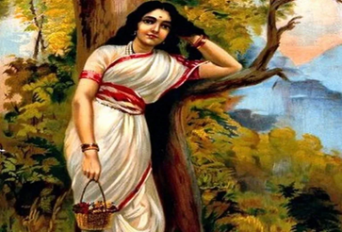
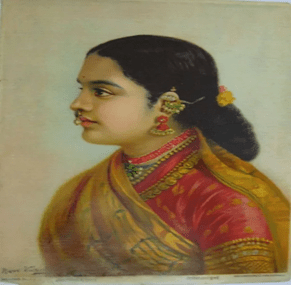
Panchakanya- The story of 5 Eternal Virgins despite being married.

अहिल्या, तारा, मंदोदरी, कुंती दृापदी स्मरणं, नित्यं, महापातक नाशनाम.

Ahalya, Tara, Mandodari, and Sita, while Draupadi and Kunti from the Mahabharata. Sita and Kunti are often replaced by each other according to people’s beliefs.

These five women were born in  Kanya Rashi or the constellation of Virgo. The word ‘Kanya’ is used to denote a woman who is a ‘Virgin’. These women were the symbol of “Purity” and were considered the Eternal Virgins group despite being married.

Virgin women were supposed to have great powers of ‘Tapa’. So, all these women, despite being married, had the power of Tapa. These panchakanya are ones who owned their virginity and could revive it. The panchakanya’s were so pure that even through the fire they could pass unharmed.

Ahalya

The Bala Kanda of the Ramayana mentions that Brahma molds Ahalya out of pure creative energy. Brahma created her out of the water as the most beautiful woman in order to break the pride of Urvashi, the foremost celestial nymph. Brahma places her in the care of Gautama rishi until she reaches puberty. When that time arrives, the sage returns Ahalya to Brahma, who, impressed by Gautama’s sexual restraint and asceticism, bestows her upon him. Indra, who believes that the best women are meant for him, resents Ahalya’s marriage to the forest-dwelling ascetic.

In another tale, it is said Ahalya is created from the ashes of the sacrificial fire by the Saptarishi (seven seers) and gifted to sage Gautama.

The king of the gods, Indra, was infatuated with her beauty and comes disguised as Gautama when the sage was away, and requests to have physical relationships with Ahalya. In some versions, Ahalya sees through his disguise but still complies out of “curiosity” and because her husband would neglect his matrimonial duties. In later versions, Ahalya falls prey to Indra’s trickery and does not recognize him. In all narratives, Ahalya and her lover Indra are cursed by Gautama. Gautama then curses Ahalya to remain invisible to all beings for thousands of years, fast by subsisting only on-air, suffer and sleep in ashes and be tormented by guilt. Nevertheless, he assures her that her sin will be expiated once she extends her hospitality to Rama, who will visit the ashram. Thereafter, Gautama abandons the ashram and goes to the Himalayas to practice asceticism. Indra was cursed to be castrated or be covered by a thousand vulvae that ultimately turn into a thousand eyes.

The Ayodhya prince Rama, with his brother Lakshmana and their guru, the sage Vishvamitra pass Gautama’s desolate ashram while travelling to King Janaka’s court in Mithila. As they near the ashram, Vishvamitra recounts the tale of Ahalya’s curse and instructs Rama to save Ahalya. Ahalya is said to have been touched by Rama’s feet and rises from her stone state to human form and goes to her abode, the Gautama’s hermitage.

Tara

Tara was the wife of the monkey king Bali who was presumed dead after a battle with a demon after which she married his twin brother Sugriva according to the custom of the time. The lack of the description of formal marriage suggests that Tara’s relationship to Sugriva is neither widow re-marriage nor polyandry, but simply appropriation by Sugriva. In the references of the coronation of Sugriva as king, Angada is also described as the heir-apparent crown prince, while Tara is mentioned as Sugriva’s wife. The Adhyatma Ramayana declares that Sugriva acquires Tara.

It turns out that Bali isn’t killed in reality. When Bali returned, he was livid and abducted Sugriva’s first wife, Ruma, as revenge. As battle lines between the brothers were drawn, wise Tara counseled her first husband to return Ruma to his brother. Tara said Sugriva had not snatched her but married her legitimately only because Bali’s death had been confirmed. Tara, the mother of Bali’s son Angad, finally managed to wrest a promise from him that he would not kill his own brother. The brothers fought a duel in which Bali was killed by Sugriva’s mentor Rama. Sugriva was crowned king of the kingdom of Kishkindha. As dowager queen, Tara diplomatically left the question of the ascension of her son to the throne for his stepfather to resolve. She knew well that the guilt-ridden uncle Sugriva would not deny her son his right to the throne.

In his dying breath, Bali reconciles with Sugriva and instructs him to follow Tara’s wise counsel in all matters.

While all was well with the king and his lustful nature got the best of him and he eventually ignored his promise to Rama to help him win Sita back. Lakshaman was livid to find Sugriva had backtracked on his words. He entered Sugriva’s personal chambers to bring upon his wrath on the king but Queen Tara very diplomatically pacified the prince.

Thus she was instrumental in saving the king from the wrath of the Lakshmana and brought coherence in the Rama camp to fight the great war to avenge Sita.

Mandodari

Mandodari is the daughter of Mayasura, the king of the Asuras, who are god-like demons. He rescued a beautiful girl child from the well. He and his, wife, Hema, adopted her and named her Mandodari. She was taught aspects of architecture by King Mayasura. He taught Mandodari about the various landforms of Bharatvarsh which were Swarga (heavenly plateaus), Bhoomi (plains) and Patala (underworld). When she turned fifteen, he started involving her in his projects and eventually met Ravana when he came to seek her counsel.

Valmiki’s Ramayana describes Mandodari as a very beautiful, pious and noblewoman whose appearance once led Hanumana to mistake her for Sita. She was known to be extremely patient with Ravana’s attitude towards women, but always questioning his actions and rebuking his choices.

Despite Ravana’s faults, Mandodari loved him and was proud of his strength. She was aware of Ravana’s weakness towards women. A righteous woman, Mandodari tried to lead Ravana to righteousness, but Ravana ignored her advice.

Draupadi

Draupadi is also referred to as Panchali (meaning one from the kingdom of Panchala), Yajnaseni (meaning one born from a Yajna or fire-sacrifice), Mahabhaaratii (great wife of the five descendants of Bharata) and Sairandhri (an expert maid, her assumed name during her second exile in which she worked as Virat kingdom’s queen Sudeshna’s hair-stylist).

Panchali is the Dharma Pathini of the Pancha Pandavas. The concept behind her marrying five people is that she is the Shakthi Roopa of the five devas, Dharma – Yudhishthira, Vayu – Bheema, Indra – Arjun, Nakul and Sahadev – Ashwini Kumaras.

No woman ever faced the trials and tribulations that Draupadi faced in her life. Even after being born out of the fire to Drupada, even if she had heroic husbands, she had to undergo Vastra harana, exile, Agnata. Post-war she was faced to watch her entire clan being killed.

Kunti

She is one true Matriarch of the Saga of Mahabharata. Kunti or Pritha was the daughter of Shurasena and the foster daughter of his cousin Kuntibhoja. She is the sister of Vasudeva. She was married to King Pandu of Hastinapur and was the mother of Karna and the first three Pandava brothers Yudhishthira, Bhima, Arjuna. She was the paternal aunt of Krishna, Balarama, and Subhadra. She was the stepmother or foster mother of Nakula and Sahadeva.

Kunti’s marital life was also unusual. Having chosen Pandu as her husband in a svayamvara ceremony, she never had a child by Pandu. Her husband had received a curse from the sage Kimdama that he would die on having intercourse with his wife because he had shot the sage with an arrow when he was copulating with his wife in the guise of a deer. Deeply hurt by the turn of events, Pandu decided to retire into the forest and live the life of renunciation. Kunti accompanied him. She invoked her boons for herself and Madri and had 3 children of her own and two for Madri. Pandu dies unable to abstain.


Foreign Aid and Economic Dependency

Introduction

Foreign aid is the voluntary transfer of money, resources, or services (in the form of a gift, grant, or loan) from one country to another, or from an international organization to a certain country, for the ultimate benefit of the recipient country. Hence, the implication here is that the recipient country is in a position of debt, shortage, or some economic strife, such that it requires the assistance of other countries or international organizations (UN, NGOs, and other foundations). It is commonly seen when the more developed countries of the world provide aid to the developing nations, especially after they have suffered from some natural disasters, economic crisis situations or serious conflicts that have caused widespread damage.

Foreign aid, however, is not a purely humanitarian practice, and many countries engage in it with varying objectives. Some countries provide foreign assistance with the objective of furthering the political agenda of a government, thereby allowing it to attain diplomatic recognition. Thus, apart from solely providing economic and social support to the country, many donors provide aid as a means to strengthen and consolidate their political and strategic interests in the country or region.

Many economists argue that foreign aid fosters dependency and corruption in recipient countries, while others argue that it fosters economic growth and helps countries in their development. It is thereby a two-handed conclusion that is arrived at here, where we can say that foreign aid can have strong positive effects, but it clearly depends on what it is used for by the recipient, and whether it is invested efficiently and effectively.

What is Foreign Economic Dependency?

Foreign economic dependency is an international power structure in which weaker countries end up relying on economically stronger countries for financial support, which thereby allows the stronger countries to exercise a certain degree of economic and political control over the weaker nation.

Foreign economic dependency is one of the most important ways in which a country can regrow and rebuild itself after a natural disaster. It does this by getting foreign medical aid and disaster aid, and it helps in rebuilding livelihoods by helping the victims of the calamity directly. Without foreign economic aid a country would definitely have a much more difficult time to rebuild itself. However, dependency on foreign aid also often plays a significant role in shaping the economic and political framework of the weaker nation. The donor countries often use the aid they provide to push forward the economic and political policies preferred by them in the target countries. The receiving nation cannot do much in this case as there is the threat of the powerful nation ending the aid if the receiving nation does not comply with them.

Foreign aid is not only from countries but also from international organizations like the World Bank, but these organizations also might force their economic policies on the receiving nation. For example, the country must agree to adjust its economic structure, liberalize and privatize its economy and also increase its financial accountability. Moreover, paying back these huge loans is a difficult task for the receiving nation while trying to maintain/build a healthy economy at the same time, which leads to their economy taking significant damage.

Hence, foreign dependency usually leads to lesser development in the economically dependent country because it has to tailor its policies to the interest of the stronger country, and this usually leads to the weaker country neglecting to do things which are best for its own development. This causes things like faster environmental destruction and creation of only temporary growth that prevents sustainable development and economic independence.

Conclusion

It can be concluded that the ultimate question about whether foreign aid is really effective or not has not yet been fully settled. This is due to the fact that there is enough evidence to convince a person of both sides of the argument. While there have been cases where foreign aid has done wonders, like in Ethiopia, there are also cases where foreign aid has worsened countries, like Somalia. It is essential for recipient countries to give due importance not only to their economic policies, but also in ensuring that foreign aid is directed towards productive and beneficial causes in the country.

The unfavorable result, as discussed in this article, is when foreign aid leads to economic dependency. In such cases, countries are left with little to no autonomy, and the stronger countries get a say in how to operate them for their own benefit. As long as such a situation is avoided, and foreign aid is mainly helpful for the purposes of resolving humanitarian crises and assisting underdeveloped countries, then it is a helpful practice.

Mountains- A history(Part-1)

Photo by Sam Kolder on Pexels.com

We have all seen mountains or hope to see them, after all they are a very famous holiday destination. All of us certainly have a wonderful mountain destination in our bucket list- be it the Himalayas, The Rockies, The Alps, Mt. Fuji or the Swiss Alps. But have you ever wondered how these mountains came into being? How is it that a flat piece of earth rose so high, almost touching the sky? Well, if you have, then here is the answer. And if you haven’t, even then a little extra knowledge never hurts anybody, right?

So, the mountains were formed millions and even billions of year ago (the oldest one-the Barberton Greenstone Belt in South Africa, is 3.6 billion year old) when the continents were being formed. The most widely accepted theory, currently, believes that the earth’s mantle(the astenosphere layer- a semi-solid) has convection current flowing through them(a result of differential heating- the lighter material rises whereas the denser material sinks ). This current belt in the astenosphere moves with it the lithosphere(continental crust, oceanic crust and the top-most part of mantle(upper mantle)). These movements in the lithosphere are the movements of continents and oceans that lead to earthquakes , volcanoes, tsunamis and the formation of volcanic islands, plateaus (all these for some other day) and fold mountains as well as volcanic mountains.

These convection currents move with them large pieces of land, ocean or both and these large pieces are termed as tectonic plates. There are currently 7 major and some minor tectonic plates. The major tectonic plates are-

  1. Indo-Australian plate
  2. North American plate
  3. South American plate
  4. Pacific plate
  5. Antarctic plate
  6. Eurasian plate
  7. African plate

The minor plates are-

  1. Fillipino plate
  2. Nazca plate
  3. Scotia plate
  4. Caribbean plate
  5. Indian plate
  6. Arabian plate
  7. Cocos plate
  8. Juan-de-fuca plate

Let us first see the types of mountains. There are 4 types of mountains-

  1. Fold mountains- These mountains are formed when one tectonic plate folds over the other, due to collision of two plate boundaries. The plates need not be continental as is in the case of the Alps , the Atlas and the Himalayas. An oceanic and a continental plate boundary collision can also form a fold mountain. The examples of such fold mountains are the Rockies and the Andes
  2. Block mountains- These mountains are formed due to the diverging plate boundaries. When two boundaries diverge, it creates a crack on the surface between them known as a rift. Later, the surrounding raised plate undergoes erosion and takes the shape of a mountain. Examples are The East African Rift Valley, The Rhine Valley, The Vindhyas and Satpuras .

  3. Volcanic mountains- Mountains formed due to fissures in the earth’s surface, that lead to release of magma. The examples are Mt. Fuji, Mt. Mayon. Also, they are known as mountains of accumulation.
  4. Residual mountains- Mountains that are either formed due to the erosion of existing mountains (denudation) or plateaus(dissection) by agents such as rivers, winds, glaciers. Examples are Mt. Manodnock (The Appalachians) , Highlands of Scotland, Scandinavia and Deccan Plateau.

The movement of the tectonic plates creates one of the above or even a combination of the above kind of mountains. Stay tuned for the next part to know how are many of the world mountains created and where are they located? Is there something common about their location? What is the reason for exceptions?

The latest autonomous drone technology and its capabilities

The scout drone 137

American Robotics’ autonomous drone has been certified by the Federal Aviation Administration, making it the first federally licensed drone on the market.

Drones that operate independently are a significant technical advancement. Not for domestic use because safety is still an issue, but this could boost productivity in a variety of industries because it’s nearly impossible to have someone operate multiple drones from day to night all of the time.

The autonomous drone is a fully integrated system that automates everything from landing to charging to data processing, making it an all-in-one solution.

Scout, the AI-powered autonomous drone, Soutbase, the weatherproof charging, and edge computing station, and Scoutview, the fleet management, and analytics software, are the solution’s three key components.

The Scout base is where the Scout is charged and data is processed. Scoutview allows businesses to monitor and communicate with drones without the need for a human operator.

The drone is equipped with visual, multispectral, and infrared cameras, making data collection quick and straightforward. The acquired data may be accessed instantaneously in real-time. The Scout systems will be able to perform missions independently after the installation is complete, collecting, processing, and analyzing data.

Demands for Autonomous Drones and the Market

Drones that can be used for commercial purposes have a huge market. Its TAM is expected to be worth 100 billion dollars (total addressable market). Drones might thus be utilized in a variety of areas, including industry, agriculture, and defense.

It might be used in industrial markets for asset inspection, tracking, security, and safety. It may be used for weed identification, disease detection, plant counting, research, harvest planning, and harvest timing in the agricultural market.

You’re in luck if you’re seeking surveillance and reconnaissance in the defense industry! As a consequence, these markets and sectors may use autonomous drones to perform work in broad fields that are difficult to analyze swiftly by people. It also makes data collection easier thanks to its integrated software and solutions.

Ondas has bought the Software Defined Radio platform for Mission Critical IoT applications. To manage thousands of connected devices over long distances,

Ondas provides a choice of trustworthy and secure broadband networks. With the help of Ondas’ high-bandwidth network, American Robotic’s autonomous drones will be able to send and receive long-range data, with thousands of drones continually gathering and processing high-resolution data.

This, we believe, is the way industrial data will be collected in the future. The combined company can provide the ultimate autonomous drone with unrivaled capabilities that can boost production in a variety of sectors.

World Hepatitis Day 2021: Theme, Hep types, and Significance.

What is hepatitis? Theme this year, few symptoms, about types of Hep, and how to contribute?

THEME 2021 : “Hepatitis Can’t Wait”

What is Hepatitis:

Hepatitis means inflammation of the liver. It can lead to scarring, cirrhosis, and liver cancer. There are 5 main hepatitis viruses: –

Types A, B, C, D and E. These 5 types are very serious since they cause severe illness, even leading to death. They can also cause outbreaks and spread of epidemic.

 A person dying every 30 seconds from a hepatitis related illness 

Causes :

Heavy alcohol use, toxins, some medications, autoimmune diseases can cause hepatitis

Ways of transmission: Have contact or receiving of contaminated blood or blood products, invasive medical procedures using contaminated equipment. Hepatitis B can transfer from mother to baby at birth, from family member to child, and by sexual contact.

Main symptoms:

  • Jaundice (yellowing of the skin and eyes)
  • Dark urine,
  • Extreme fatigue
  • Nausea
  • Vomiting
  • Abdominal pain. 

Types of hepatitis:

1 Hepatitis A Virus (HAV) :

Transmitted through consumption of contaminated water, food; sometimes sexual contact. It’s trace is present in faeces. In most of the cases, it is usually mild and when treated properly it can make one immune from further infections. But, left untreated it can turn life threatening.

Additional symptoms :

  • Abdominal pain or discomfort, (by your liver)
  • Clay-colored bowel movements
  • Severe itching

Safe, effective vaccines are available to prevent HAV.

2 Hepatitis B Virus (HBV): –

Transmitted through exposure to infective blood, semen, and other body fluids, mother to baby, family member to a child during early childhood, transfusions of HBV-contaminated blood and blood products, contaminated injections during medical procedures, and through injection drug use. Medical workers have a greater chance of exposure.

Add Symptoms:

  • Fever
  • Joint pain
  • Loss of appetite

Safe, effective vaccines are available to prevent HAV.

IT HAS NO CURE, BUT JUST CAN BE PREVENTED

3 Hepatitis C Virus :-

Transmitted through exposure to infective blood, instruments during surgeries; even though the chance is low, sexual transmission is possible. If detected soon it can be treated. But, most of them have no idea they have Hep C starts with it’s acute form which rarely shows symptoms.

Add. symptoms:

  • Bleeding easily
  • Bruising easily
  • Itchy skin
  • Fluid buildup in your abdomen (ascites)
  • Swelling in your legs
  • Spiderlike blood vessels on your skin

NO Vaccine yet

4 Hepatitis D Virus : –

It can transmit through blood and body fluids but it only occurs when the person is already affected with Hepatitis B. IT IS MOST SEVERE FORM OF HEPATITIS. It can lead to lifelong liver damage and even death. HBV vaccine gives protection from Hepatitis D virus. If you have HBV, haven’t taken HBV vaccine and live where HDV is more prevalent; the chance of contracting HDV is higher.

Add. Symptoms:

  • Not feeling hungry
  • Joint pain
  • Dark urine
  • Light-colored stool

NO CURE

5 Hepatitis E Virus (HEV): –

Transmission through contaminated food like undercooked meat from infected animals, such as pigs or deer, or water. The one that causes most outbreaks. It can get better by practicing hygiene, but pregnant women and people with weak immune system are at a risk.

Add. symptoms:

  • Light-colored poop
  • Skin rash or itching
  • Joint pain
  • Less hunger and throwing up

Safe and effective vaccines to prevent HEV infection have been developed but are not widely available.

Why 28th July?

It is the birthday of Dr Baruch Blumberg, the Nobel-laurate scientist discovered the Hepatitis B virus (HBV), diagnostic tests and vaccine for Hep B.

How to contribute:

  • Practice hygiene for yourself and encourage those around you.
  • Join drives which support sanitation of unhygienic, neglected areas.
  • Educate yourself and people around you.
  • Donate to legit Hep donations.
  • Before travelling to areas where Hep prevails, get yourself vaccinated against Hep.
  • Spread awareness, because it might help someone one day. (Learning about symptoms encourages one to go to Doctor)
  • Join the campaigns by WHO.

REF:

https://www.who.int/news-room/events/detail/2021/07/28/default-calendar/world-hepatitis-day-2021

Health & Ginger

Ginger is one of the common spices which is used all over the world .It is a very ordinary Spice which can be found in any kitchen . But did you know that it has extraordinary medicinal power? Yes ! Ginger is not only a spice but it is also an organic & aromatic medicine .Ginger is an important compound for making herbal tea which is used for various health purposes .Ginger is the important spice for Asian foods. Come and let’s talk about ginger .

Herbal tea
Ginger Powder as Spice

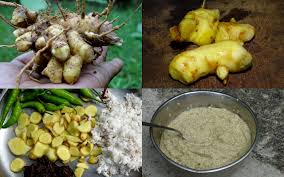
Ginger is the rooting part of a flowering Ginger plant . So obviously  we collect Ginger under soil .The binomial name of Ginger is Zingiber officinale . Ginger is closely connected to turmeric cardamom and some other spices .There are many types of Ginger all over the world .  The taste of the Ginger is very strong  & has a pungent smell .

Young ginger

Various Types of Ginger :   1) COMMON GINGER ( Its Scientific name is Zingiber Officinale . It is the most popular ginger in the world .)

COMMON GINGER

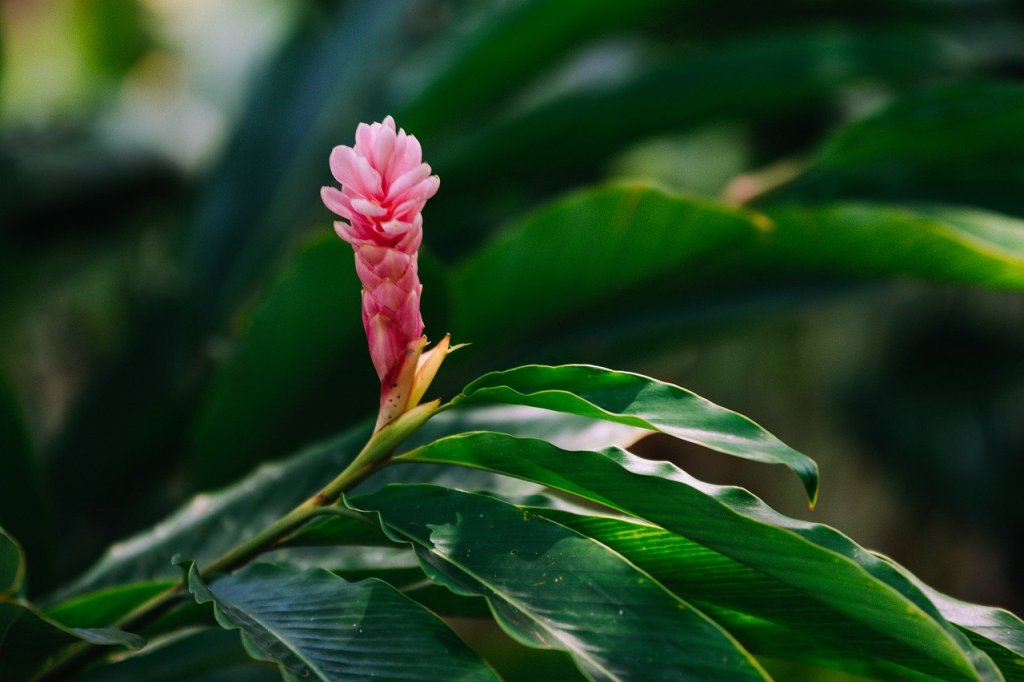
2) PEACOCK GINGER

PEACOCK GINGER Plant

3)MANGO GINGER (Its biological name is Curcuma amada .This type of Ginger has the taste and smell of raw sweet mango . )

Mango Ginger & its Paste

4)GINGER LILY

GINGER LILY Plant & Flower

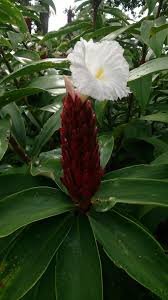
5)CREPE GINGER ( Cheilocostus speciosus is its scientific name & grow in a white crepe paper flowering plant ) 

CREPE GINGER Plant & Flower

6)BUTTERFLY LILY GINGER (  Hedychium coronarium is its botanical name)

BUTTERFLY LILY GINGER Plant & Flower

7)DANCING LILY GINGER ( Scientific name is Globba winitii & have honey sweet smelling unique structural flower)

8)YELLOW GINGER (Its botanical name is  Hedychium flavescens )

YELLOW GINGER

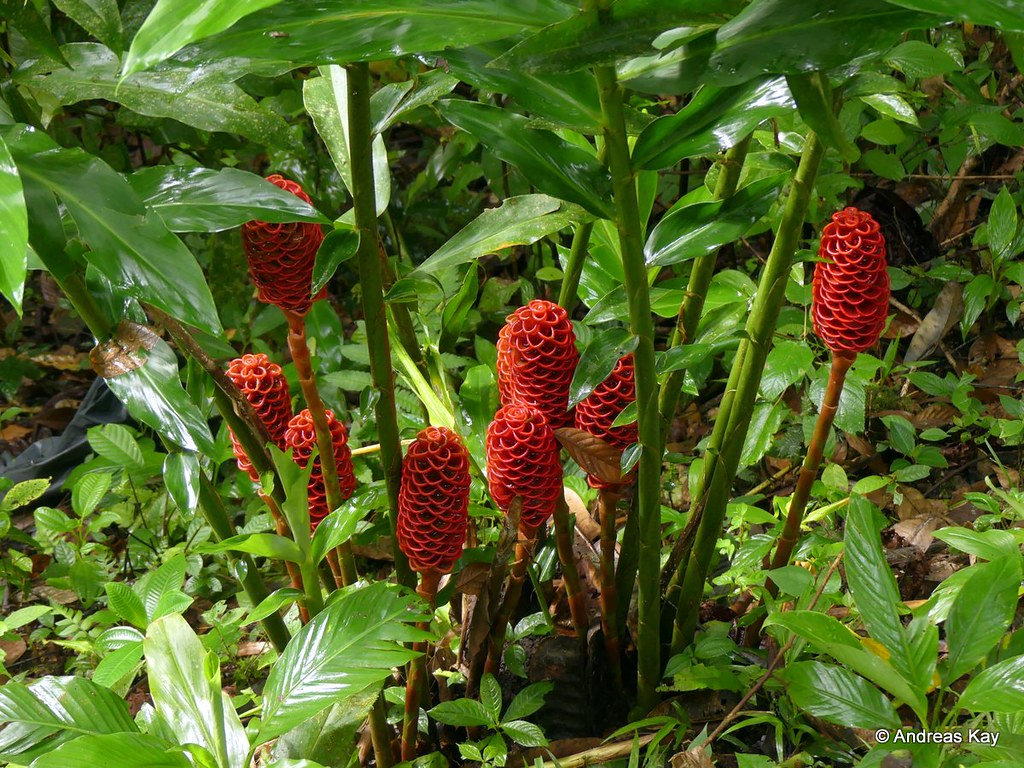
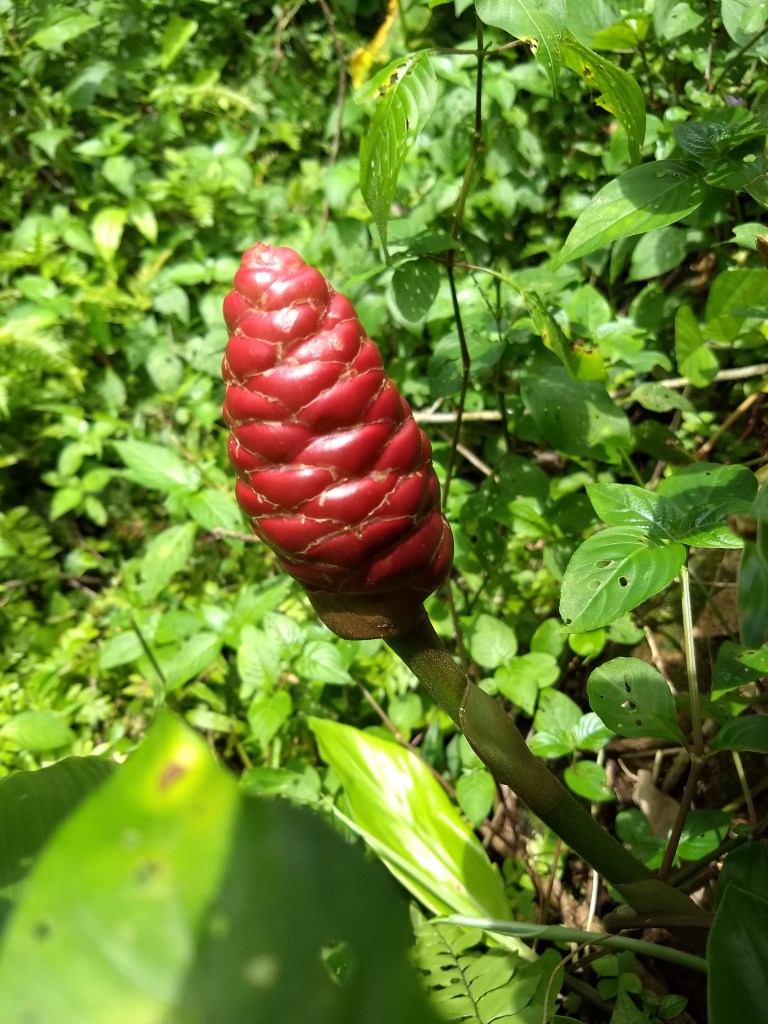
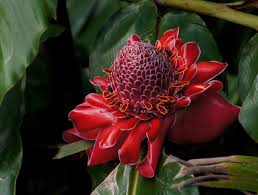
 Apart from this type of these Gingers there are many more  Red Ginger ,Thai Ginger, Japanese Ginger ,Torch Ginger ,Shell Ginger ,Blue Hawaiian Ginger ,Beehive Ginger ,Bitter Ginger , Culinary Ginger ,Spring Ginger , Red Ginger etc.

Beehive Ginger Flowering Plant
Bitter Ginger Flower
Culinary Ginger
Flower of Torch Ginger Flower
Red Ginger
Ginger as common kitchen ingredient

Nutrients of Ginger :100 gm of ginger contain 

a)17.7 gram carbohydrate 

b) 1.7 gm sugar

c) 2 gram dietary fibre

d) 1.8 gram protein

e) 0.7 gram fat

f)  Some vitamins like – 0.7 mg vitamin B3 ,0.2 mg vitamin B5 ,0.16 mg Vitamin B6 ,5 mg Vitamin C ,0.26 mg Vitamin E                                                                                                                                        g) Some minerals – 16 mg calcium ,43 mg magnesium ,34 mg phosphorus ,415 mg potassium ,13 mg sodium ,0.6 mg iron ,0.2 mg manganese ,0.3 mg zinc .

h)Ginger also contains 79 gm water .

i) Ginger gives us 80 kilo cal energy .

j) Ginger also contains Vitamin B1 ,vitamin B2 ,folate . 

k)Ginger has excellent amount of Gingerol which is a powerful antioxidant

Effectiveness : 

1)Gingerol is a very strong and effective antioxidant ,which is found in Ginger in high amounts . It prevents the free radicals from damaging our body cells  by oxidation .

2)Ginger is very effective for pregnant women in the time of morning sickness . Ginger fights back the symptoms of nuisance .It is also helpful for nuisance created by chemical therapy for digestive nuisance and others .

3)Research in 2019 shows that Ginger has a low amount of fat so it is very good for a weight loss diet . 

4)Ginger is also helpful for osteoarthritis, joint pain and other bone problems . 

5)Ginger is able to act as a very powerful anti diabetic medicine which helps to decrease the amount of blood sugar in blood and protect our heart from any heart problems .

6)Menstrual pain during the monthly cycle is a very common problem for girls . This menstrual cramps is called Dysmenorrhea & Ginger is a very good pain reliever for Dysmenorrhea .

7)Some research  shows that Ginger has anticancer properties. It specially helps to prevent colorectal cancer .

8)Gingerol antioxidant which is present in Ginger , can ward off the infection problems .

9)Ginger is also good for an upset stomach ,indigestion and other digestion problems .

10)Ginger also prevents common cold and other symptoms of cold & cough .

The Missile Man

Introduction

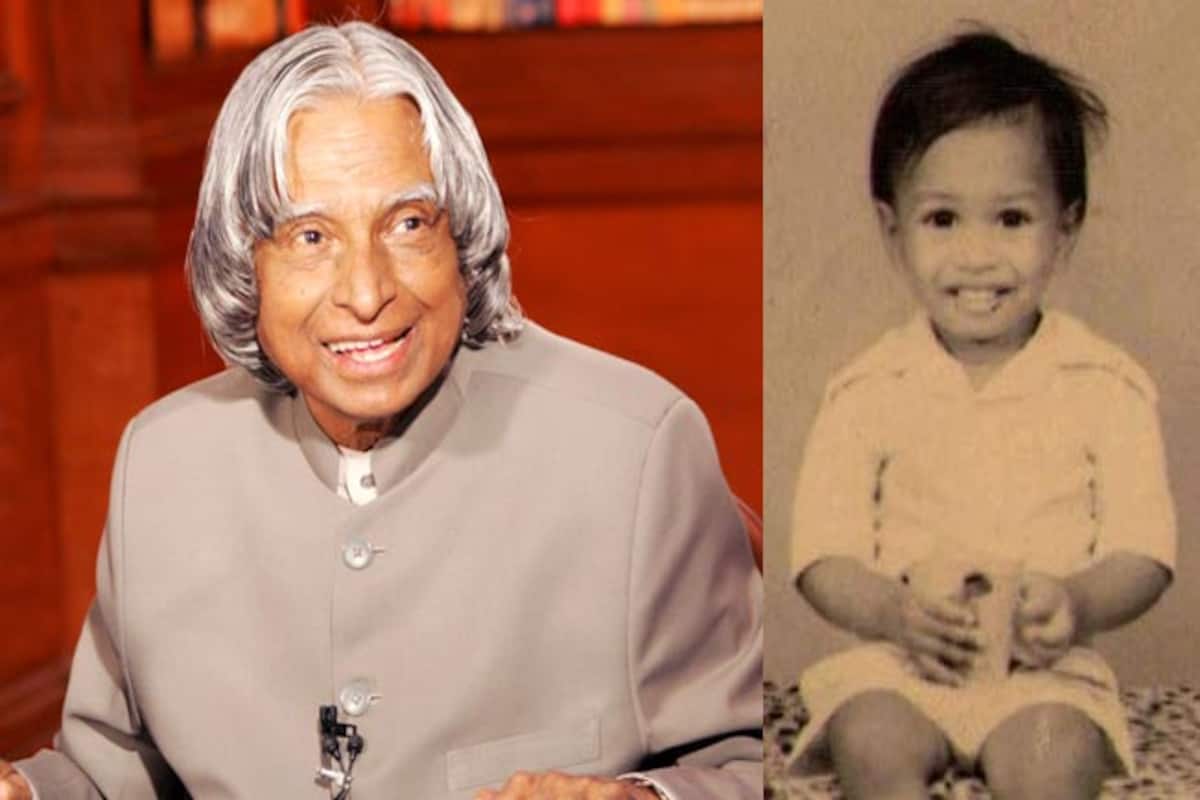
Dr. APJ Abdul Kalam was famously known as the “Missile Man” of India. He was also known for his humility. All the citizens of India are remembering him on his death anniversary on July 27th, when in 2015 he passed away because of a heart attack he suffered in Shillong. He is known to be the people’s President because of his simplicity and humility. He was one of the few Presidents every citizen loved and was fond of. He was the only President of India who did not have a political connection, that is, came from a non-political background. He was the 11th President of India, from 2002 to 2007. This year, July 27th, 2021 is his 6th death anniversary.

About Him

His full name was Avul Pakir Jainulabdeen Abdul Kalam. He was born on 15 October 1931. He was an Indian scientist and politician who played a major role in developing India’s missile and nuclear weapons programs. He was born into a Tamil Muslim family in the pilgrimage center of Rameswaram on Pamban Island, which was then in the Madras Presidency, which now is the State of Tamil Nadu. His father was a boat owner and an imam of their local mosque and his mother was a homemaker. He was the youngest of four brothers and one sister in his family. His ancestors were wealthy Marayakar traders and landowners but the family had lost all fortunes during the poverty-stricken time. Marayakar is a Muslim ethnic found in Tamil Nadu and Sri Lanka who are claimed to be descendants of Arab traders and local women. As a young boy, he sold newspapers to help his family in contributing income.

During his school years, he scored average grades but he was said to be a bright and hardworking student with a desire to learn. He spent a lot of his time studying, especially Mathematics. On completing his education, he went to Saint Joseph’s College, Tiruchirappalli, which was at that time affiliated with the University of Madras. He graduated from there in Physics in 1954. In 1955, he moved to Madras to study aerospace engineering from Madras Institute of Technology. Once while he was working on a senior project, the Dean was dissatisfied because of the lack of progress and he threatened Kalam to either finish the project in three days or get his scholarship revoked. To his surprise, Kalam met the deadline and impressed the Dean. His dream was to become a fighter pilot which he missed by one place.

Career as a Scientist

He had joined the Defense Research and Development Organization (DRDO) in 1958 as a senior scientific assistant. Later on, in 1969, he joined the Indian Space Research Organization (ISRO) where his responsibility was as the project director of the SLV-III, which is known as the first satellite launch vehicle.

He then rejoined DRDO in 1982 as the director. This is when he got the name of the “Missile Man” because of the implementation of the Integrated Guided Missile Development Program. He was then appointed as the senior scientific adviser to India’s defense minister in 1992. He also played an eminent role in the Pokhran-II tests in May 1998.

Awards

He won various awards:

  • Padma Bhushan – 1981
  • Padma Vibhushan – 1990
  • Bharat Ratna – 1997
  • Indira Gandhi Award for National Integration – 1997
  • Veer Savakar Award – 1998
  • SASTRA Ramanujan Prize – 2000
  • Von Braun Award – 2013

Conclusion

We should take a look at his inspiring quotes on this death anniversary and follow the great inspiration that he is to all of us. One of the most important one is “We are all born with a divine fire in us. Our efforts should be to give wings to this fire and fill the world with the glow of its goodness.”

References

Importance and Benefits of Reading Books.

Growing up we all have learned basic skills and out of all the skills, our ability to read is the most significant. Whatever you read, it ends up enlightening you. And when it comes to books, each book that you read is an opportunity to learn something new. By reading you can broaden your vocabulary, improve your writing skills, train your mind, enhance your wellness, lower stress, and most important thing you can discover something new about yourself. 

Why is reading important?

It has been said that a person who can read can educate themselves in any field of life they’d like to. In this modern era, everything is flooding with fresh information. And reading is the best way to clarify and relate to further information. 

Although you can find it easier to watch a Youtube video or listen to a podcast, reading still tastes the cake when it comes to comprehension and enhancing your education. 

What are the benefits of reading books? 

If you are a bookworm, you already know many of the benefits of reading books. And if you are not then you are reading the right article. Mentioned below are some of the benefits of reading books:-

I) Improves Concentration

Reading requires concentration, time, and patience. In simple words, reading forces you to use your brain. According to One World Literacy Foundation, “when you read, you need to reason things out that are unfamiliar to you.”

II)  Broaden Vocabulary 

If you read, you uncover new words, that allow understanding on a greater level. If you read an hour per day, you’ll end up exposing yourself to approx 4 million words in a year. Isn’t it amazing?

III) Reduces Stress

According to a study by Sussex University, reading can reduce stress by 68%. When you read you involve your mind in reading, which takes away your focus from all the worries.  

David Lewis​ (a cognitive neuropsychologist) said, “It doesn’t matter what book you read. By losing yourself in a thoroughly engrossing book you can escape from the worries and stresses of the everyday world and spend a while exploring the domain of the author’s imagination.”

IV) Makes You A Better Communicator

When you learn new vocabulary, you become a far better communicator. With all the new vocabulary, you’ll know which word is right for which context. For example, when you feel bad, it can be anything like you are feeling hungry, you have a fever, you have a headache, etc. But if you say that I am feeling bad then you are not specifying the feelings, which results in another person not understanding what are you going through. In that case, your vocabulary can help, that you learn by reading.

V) It Helps Your Writing

With all the creativity, vocabulary, and communication skills gained from reading, imagine what you can do with your writing skills. By reading other’s work you can experience their way of explaining a feeling or certain situation. Hence, you learn how to use other writers’ experiences to improve yours.

VI) Reading Improves Empathy

Empathy is being able to put yourself in someone’s else shoes. Reading fiction or non-fiction can bring you as close as you’ll ever be in someone”s shoes. Studies have shown that readers have a better sense of empathy. 

There is a saying, “Books are man’s best friend.” I believe every one of us should follow this and start reading.