How To Describe The Indescribable?

“Describing the indescribable is a work of extreme talent and passion.”

  • Amatullah. P

Salut! Today’s article highlights the ways of describing the indescribable aspects of storytelling.

A writer gains popularity when indescribable facets of a story are described fluently. Of course, this can be done through imagination. This is mainly incorporated in fictional story telling. For instance, in my earlier articles, I have elaborated on the ways of writing fiction which also highlights the creation of ‘alien to the world’ characters. Thus, this is a continuation to that. If you create a bizarre character which is non – existent then you sure will need to provide some description. So, that is how describing the indescribable comes into the picture.

So, let us learn some of the ways of describing the indescribable aspects or characters in storytelling.

Create A Fictional Character That Is Easy For You To Describe Later!

So very important! When you design a peculiar character, you must never forget to keep some description of it in your head through rigorous imagination. Try to jot down some points of description in your notepad in case you are forgetful.

Merge The Description With The Existent Objects!

Try creating a description on the basis of the description or attributes of existent things. You could imagine describing some part of it but also merge it with the description of the describable. For instance, if you have framed a story as your visit to mars and your encounter with aliens there, then you are expected to create a good description of that alien. You could assign it humanlike characteristics (describable entities) and merge it with your own imaginative description. (That is their names are in the form of numbers. The alien you met was named 224). Thus, here you see, human tendency of name has been assigned to a non – existent entity alien and merged with the imaginative concept of numbered names!

Include The Facial Features, Setting, And Imaginative Background Story Of That Indescribable Character!

This would not only enhance the story but also your levels of imagination thereby improving your reputation as a writer. Try not to excessively attribute qualities of existent aspects to the non -existent ones because that doesn’t prove your creativity. Include it just once or twice as an auxiliary branch to your content. Include it to make your work interesting and not to escape imagination!  All I mean is that one can’t escape from including the existent qualities in the indescribable content, but the thing to remember is that the description of that fictional being remains unpopular even with the existent aspects. For instance, the alien 224 has 3 eyes with no retina whatsoever. The eyes are milky white and look creepy. The gender isn’t specified there because they all look the same. The aliens are red in colour as the planet mars.
Don’t Beat Around The Bush With Your Description!

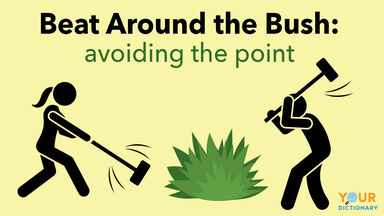
Be straight to the point when describing the characters. Don’t twist and turn the story to the extreme level. In short, don’t incorporate much drama. I don’t say that one must completely avoid twisting the story but there sure is a limit to that. Arrive at conclusions faster after twisting the story for quite some time in order to not avoid breaking the alacrity of the audience.
Beat Around the Bush: Meaning of a Medieval Term Still Used Today

Thus, I would conclude stating that describing the indescribable is a work of imagination which can’t be ignored. Fiction writing would be enhanced with the inclusion of this aspect. Of course, in reality the indescribable things can’t be explained because of their real nature but writing provides us the privilege of including unreal aspects as well which is assigned goodness in the form of imagination! The goal is to describe these non – existent entities as existential. So, now that you know some points, why not try doing it? Plunge your notebook out and get imagining!

Happy Writing And Thinking! 😉

How Can Fiction Be Written? Featuring Barbie!

“Imagination and Fiction make up more than three quarters of our life.”

  • Simone Weil

Today’s article discusses an essential factor when it comes to writing fiction I.e how to write it? Barbie aka Barbara Milicent Roberts is our chief guest for today’s discussion.

“Hello Barbie! Warm Welcome Aboard. We are so glad to have you here with us.”

“Thank you for inviting me. I’m pleased to be a part of this discussion as well.”

“So, would you like to tell us the ways of writing fiction? (That for which you are here)”

“Definitely! Fiction is an interesting genre when you come to look at it. It also, comes with a wide range of interesting sub – genres which have been discussed in the earlier article. It can be written insensibly by taking almost any entity that you prefer or make one for yourself by amalgamating two or more entities. There are mostly no constraints in fiction and that is why, writing or working upon this genre doesn’t actually seem a hard task. Yes! I agree that imagining certain factors is a hard task, but we mustn’t overlook the fact that almost everything comes with its own set of hard work! Here, however I am not considering contemporary fiction or that which pertains to reality. I shall be emphasizing on how fiction (fantasy and other related genres) can be written.

Now, let us learn how exactly to write fiction through a step by step approach.

Brainstorm Over The Fictitious Topic You Intend To Choose!

Brainstorming is a process that requires time. So, first and foremost, the thing to be done, is to sit down on your favourite couch and ponder over the best fictitious topic that would definitely seem great if sketched on paper. However, don’t forget to get yourself in the reader’s shoes as stated in our earlier articles. Consider what your readers would love and write in accordance to that.

Think Of The Characters You Wish To Involve!

This is a quintessential factor that makes a story interesting. The characters make a story. However, framing of characters also depends on the sub – genre you choose. If you choose contemporary fiction, then you would definitely make use of real life characters. In such cases, you could ignore this second step and only consider the first. This step is for people who wish to work with the fantasy sub – genre because framing fictitious characters requires certain amount of deep thought processes.

In Case Of Writer’s Block, Approach The Outside World!

  Certain people experience writer’s block while writing fiction because they seem to fall short of ideas. In such cases, it is advisable to approach the outside world as inspiration to your thought processes. Some incident will definitely inspire you to write about it.

Create Strong Characters!

Make sure that the fictitious characters you create are strong enough so that the readers love them. Like, a certain character should show strong traits in personality and not physical strength 😉 Make the characters take risks throughout the story and later help them succeed. This will also deliver a good message and inspire people to take risks! Thus, all that we mean here is, that try creating characters that would also impart a message to the readers. Also, mostly it is advisable to create Round characters. Round characters are those whose traits or personalities throughout the story aren’t easily decipherable. These characters would arouse the interest factor and enhance your write up.

Create Unique Characters!

By this we mean, that when you choose to create fictitious characters, make sure that you don’t use the same repeated mythological supernatural entities revolving around mermaids, aliens and robots. These are widely known and won’t make your story that interesting. You could always create a new character for yourself by amalgamating existent entities, as stated in the earlier article.

Read Other Fiction Books For Ideas!

This is the basic step that would definitely help you to frame your own story easily. Read more and more fiction books by widely renowned authors for amazing techniques of writing a fiction book easily.

Try Fictionalizing Your Daily Life!

This means, fictionalizing your daily chores and duties in an imaginative and creative way. For instance, you are working in the kitchen and see a ladle, now you could create your own fictitious character named Mr. Ladle who could speak throughout the story. He could also be an antagonist or maybe even a protagonist if you decide to create an animated fictitious story.

Be Alert And Aware Of Your Surroundings For Inspiration!

This is extremely important because developing a fictitious story requires complete imagination. So, you need to be alert when you come across such objects which could make your story interesting. After all, if you aren’t alert then that inspiration wouldn’t be accessible to you and would pass you directly, without you acknowledging it. So, remain alert and vigilant.

“These were such essential points to be noted. We heartily thank you for your precious time! Hoping to have you again to speak on such interesting topics in the near future!”

“Please don’t mention it. I’m touched by this honourable gesture of being a chief guest on such an important discussion. Looking forward to yet another invite in the future for sure!”

Thank You So Much Barbie!

WRITER’S BLOCK

Are you stuck?

Everyone who writes on a regular basis is familiar with a little situation called “writer’s block”. It is a phase where the writers are unable to find inspiration for a new article or even have a hard time keep the old one going. There is a creative lull for a period of time and there are absolutely no new ideas. This time is very frustrating for a writer because the wanders but no inspiration can be found anywhere.

Writer’s block is not necessarily caused due to lack of writing skills or lack of commitment. There are very many reasons like stress or burnout , maybe some health issues or family issues, there could be numerous other reasons. For novelists, this situation arises when they lose touch with their story or the characters in it. If there are too many distractions around it is natural for a writer to lose his writing spree and give into those distractions. One of the more complicated reasons could be that the writer is afraid to fail. Fear of failure can lead to overthinking which finally derails the writer from their main goal. Another could be the pressure of being a perfectionist and not being satisfied with your own ideas. In all of these situations the writers could still be motivated but there would be zero creativity.

If, as a writer, you are facing a writer’s block, here are some ideas that would help you get your creative juices flowing.
1. CHANGE YOUR ENVIRONMENT: If you are cooped up in one corner of your office all day everyday trying to think, your brain will definitely go into a dead end. It is very important that you change your surroundings every once in a while. New place, new ideas and as a bonus it would be very refreshing for your brain.
2. TAKE A NAP: Sleep is the ultimate solution to majority of our problems. Lack of rest can cause unwanted stress and could ultimately lead to burnout. Even for a writer it is necessary to take 7-8 hours of sleep to reduce stress and improve the mood. Not only that it also keeps you mentally healthy and you perform better.
3. WRITE ANYTHING: An accomplished writer can make sense out of randomly written sentences too. So, if you are facing your share of writer’s block just write anything that comes to your mind. Start with writing random words and soon the words with start making sense and connecting together and voila you have your new idea.
4. DO SOMETHING RECREATIONAL: Sometimes to remove a block you need to get away from the thing all together. Take some time off and do something else than writing. Take out some paint and start painting random pictures, go for a walk, go for a hike, just divert your mind and when you are done you’ll have a whole new perspective on things. Your brain will work faster and you will come out of your block in no time.
5. TALK IT OUT: Communication is the best way to let things out. Call an old friend or talk to your family. Maybe the conversation will strike up some new ideas or will help you get that load off your mind and heart.
6. DON’T PUT TOO MUCH PRESSURE ON YOURSELF: Everyone wants to succeed but putting too much pressure on yourself won’t get you anywhere. Keep your perfectionist side aside and just let the ideas flow.

Just like rejection or failure is a part of your success, writer’s block is also just a phase and not something that will stick with you permanently. Don’t stop writing completely because your are facing a block. Keep going. You never know when the inspiration will knock on your door again. Be patient, remember your ideas are there somewhere in your mind just try some of the techniques mentioned above and the block will disappear in no time and the ideas will start flowing once again.