Start-up to Success: Zomato

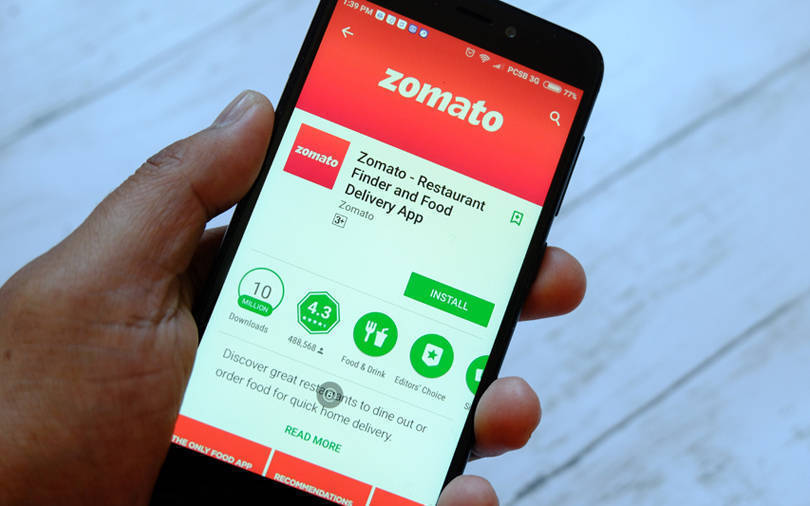
On lazy days when we aren’t in the mood to cook and don’t want to go out either, Zomato is one the first things that comes to our mind, to rescue us in situations like these. Zomato is an Indian food delivery aggregator app, other than delivery food from various partnered restaurants under one roof, it also provides concrete information regarding the restaurant, that includes the menu, reviews, pricing and more.  

The founders Deepinder Goyal and Pankaj Chaddah launched Foodiebay, a food directory website in 2008, and later rebranded it as Zomato in 2010. And since then the growth of Zomato has been phenomenal despite of having few ups and downs. The company is one of India’s first food-tech unicorn.
Origin of Zomato

The founders of Zomato, Deepinder Goyal and Pankaj Chaddah who are both IIT Delhi graduates worked as analysts at Bain and Company, Delhi. One day at their office they realised that there were a lot people who were waiting for a long time just to get a flash of the menu card at a nearby café. And at that moment, they came up with a solution to put an end to such inconveniences. And thus, Foodiebay was launched.   

Foodiebay gained tremendous user base and growth rate, and within nine months of its launch, it became the largest restaurant directory in Delhi NCR. It initially started out in Delhi and eventually extended their services to Mumbai and Kolkata, and now all across India. After having two successful years, the founders decided to go international. After being backed by investors and little modification, Foodiebay was rebranded to be called Zomato in 2010.

In 2012, Zomato started its international with its UAE launch and eventually launching its services in Europe and South Asia. In 2015, it launched Zomato Gold, which is a membership program in which consumers can avail exclusive deal at Gold-tagged restaurants.
Struggles of Zomato

Zomato had a good start to the business till 2014, as it had a fully functional international service, however things took a turn since 2015, and it went through a ‘make or break’ point. In 2015, Zomato laid off 300 employees to curb losses. In the same year, Zomato acquired Urbanspoon in the USA, and rebranded it as their own company, but things did not go as expected and the venture failed miserably.

In 2016, Zomato had to cut out its services in several countries like the US, UK, Chile, Canada, Brazil, Sri Lanka. Ireland, Italy and more. And when they resumed, Zomato had to resort to remote services. In 2017, Zomato faced its biggest blow as it encountered a cyberattack with a hacker that had breached into 17 million users record from the company database. However, the issue was soon resolved, as the hacker just wanted to prove that there were loopholes in the security system.

In 2019, the #logout campaigned surfaced when the partnered restaurants called out Zomato for consuming their profit margins through, Zomato Gold and Infinity dining service. The restaurants also highlighted unreasonably high commissions and arbitrarily applied additional charges. Post this campaigned Zomato altered Zomato Gold rules and discontinued Infinity dining features. In the following years, Zomato has been involved in a number of other controversies, which have been resolved soon.
Re-establishing Itself

Despite having such controversies, Zomato claims to have registered a rise of 177% of restaurant partners and got on board an additional 73,000 restaurants. Zomato has over 1.4 million listed restaurants and 12,000 restaurant partners aligned with its app, as of August 2021.

Zomato has raised more than $2.1 Billion in funding, and continues to do so. In the 12 years of its journey, Zomato acquired around 14 companies, and one of their biggest acquisition was Uber Eats- India for $206 Million in January 2021.

Despite having tough competitors like Swiggy, Foodpanda, it still managed to generate a revenue of $1 billion in the financial year 2021. And offered Rs 9,375 crore as initial IPO, which opened for subscription during July 14-15 July 2021, and received a strong reception from investors. The public issue was subscribed 38 times, which is the highest in the last 13 years among IPOs valued at more than Rs 5,000 crore.

Zomato also has a strong social media presences, which helps in connecting with urban youth. It produces content that are trendy and relevant to the target demographic.  

                      Zomato changed the Indian food delivery system and it continues to mould it further. Zomato’s tagline ‘Never have a bad meal’, truly lives up to it. Zomato shows that despite of having ups and downs, they stood strong and sailed through it, and continue to improve themselves by adding new and relevant features.

Council raises GST on low-cost footwear, garments to 12%

In its first physical meeting in two years, the GST Council on Friday effected several long-pending tweaks in tax rates including an increase in the GST levied on footwear costing less than ₹1,000 as well as readymade garments and fabrics to 12% from 5%.

The new rates on these products, a decision on which had been deferred by the Council over the past year owing to the pandemic’s impact on households, will come into effect from January 1, Finance Minister Nirmala Sitharaman said.

The Council approved a special composition scheme for brick kilns with a turnover threshold of ₹20 lakh, from April 1, 2022. Bricks would attract GST at the rate of 6% without input tax credits under the scheme, or 12% with input credits.

While this will please States like Uttar Pradesh that had sought a special scheme for brick kilns, a decision on extending such a scheme for other evasion-prone sectors like pan masala, gutkha and sand mining was put off.


The Council also decided to extend the concessional tax rates granted for COVID-19 medicines like Amphotericin B and Remdesivir till December 31, but similar sops offered by the Council at its last meeting in June for equipment like oxygen concentrators will expire on September 30.

The GST rate on seven more drugs useful for COVID-19 patients has been slashed till December 31 to 5% from 12%, including Itolizumab, Posaconazole and Favipiravir. The GST rate on Keytruda medicine for treatment of cancer has been reduced from 12% to 5%.

Life-saving drugs Zolgensma and Viltepso used in the treatment of spinal muscular atrophy, particularly for children, has been exempted from GST when imported for personal use. These medicines cost about ₹16 crore, Ms. Sitharaman said.

Food delivery tax shift
The Council also decided to make food delivery apps like Swiggy and Zomato liable to collect and remit the taxes on food orders, as opposed to the current system where restaurants providing the food remit the tax.

Revenue Secretary Tarun Bajaj stressed this did not constitute a new or extra tax, just the tax that was payable by restaurants would now be paid by aggregators. Some restaurants were avoiding paying the GST even though it was billed to customers.

“The decision to make food aggregators pay tax on supplies made by restaurants from January 1, 2022, seems to have been done based on empirical data of under reporting by restaurants, despite having collected tax on supplies of food to customers,” said Mahesh Jaising, Partner, Deloitte India.

“The impact on the end consumer is expected to be neutral where the restaurant is a registered one. For those supplies from unregistered, there could be a 5% GST going forward,” he added.

Aircraft on lease
The GST Council has exempted Integrated GST levied on import of aircraft on lease basis. This will help the aviation industry avoid double taxation, the Finance Minister said, and will also be granted for aircraft lessors who are located in Special Economic Zones.

Goods supplied at Indo-Bangladesh border haats have also been exempted from GST.

Written by: Ananya Kaushal

Everything about Zomato IPO

History

Zomato was established in 2010 as just a restaurant finding platform. Over the years, the young online startup expanded its services and is today one of the largest online food delivery platforms in India. It has currently expanded its territory to 24 countries including India. Its active restaurant partners have grown to over 1.5 lakhs in the fiscal year 2021 as compared to 94,286 in the fiscal year 2019. The average order value on this platform has risen from Rs 264 in 2020 to Rs 395 in 2021.

Zomato also boasts of having the largest local delivery networks in India with almost 1.7 lakh delivery partners. It’s units are making Rs 20.5 per order from the previous fiscal year. But it also suffered a loss of Rs 30.5 per order in the fiscal year 2020. However, the company has been suffering losses over the last three years.

About the IPO

The IPO issue size is Rs 9375 crores. Of this, Rs 9000 crores is a fresh issue which will be used for the company’s organic and inorganic growth. The remaining Rs 375 crores is an offer for sales. The IPO will be allocated to Qualified Institutional Buyers(QIB), Non-Institutional Buyers(NIB) and Retailers. Qualified Institutional Buyers are allotted a quota of 75%, Non-Institutional Buyers are allotted a quota of 15% and the Retailers are allotted a quota of 10%.

Price range per share is Rs 72-76. There will be 195 shares per lot and retailers can bid for a maximum of 13 lots for the maximum price. The issuing of IPO’s has already begun on 14 July 2021. As of now the IPO has been oversubscribed by more than 4 times in the retail investors quota. The QIB quota has been oversubscribed by 7 times and the NIB quota has seen an oversubscription of 0.45 times. Overall, the IPO has been oversubscribed by 4.79 times.

It is believed that the company will be a loss making company for the next 2-3 years. Experts say that this IPO is not suitable for retail investors. Only people with high risk appetite and those who are willing for long term holdings are advised to go for this IPO. Going ahead, the subscription for this IPO will be available for one more day from 10 am till 5 pm on Friday, July 16, 2021.

The allotment of this IPO will begin on Thursday, 22 July 2021. To the investors who didn’t get allotted, the refund will be initiated on Friday, July 23, 2021. Investors who have been allotted will get their shares on their respective demat accounts on Monday, July 26, 2021. The shares will be listed publicly for exchange from Tuesday, July 27, 2021.

Allotment of IPO’s is random and not based on first come first serve. But being too late is also not good for the allotment. To get higher chances of allotment, make sure that you apply early and apply from different demat accounts. If a person has applied for more than one time with the same PAN card, then all of his applications will be rejected. Buy the shares of it’s parent company to ensure more chances of subscription.

Zomato IPO opened for subscription

Indian Twitter is abuzz with activity as online food delivery service provider Zomato’s initial public offering (IPO) worth ₹ 9,375 crore opened up for subscription. India’s biggest this year – will be available for subscription till Friday, July 16, 2021. The price band of Zomato IPO is fixed at Rs 72-76 per share of the face value of Rs 1 each and the company aims to raise Rs 9,375 crore through the offer.The IPO comprises a fresh issue of equity shares worth Rs 9,000 crore and an offer for sale (OFS) worth Rs 375 crore by existing investor Info Edge (India), which is the parent company of Naukri.com, according to the information provided in the red herring prospectus.

What is IPO?

An initial public offering (IPO) refers to the process of offering shares of a private corporation to the public in a new stock issuance. Public share issuance allows a company to raise capital from public investors. The transition from a private to a public company can be an important time for private investors to fully realize gains from their investment as it typically includes share premiums for current private investors. Companies must meet requirements by exchanges and the Securities and Exchange Commission (SEC) to hold an initial public offering (IPO). An IPO can be seen as an exit strategy for the company’s founders and early investors, realizing the full profit from their private investment.

How does IPO work?

Prior to an IPO, a company is considered private. As a private company, the business has grown with a relatively small number of shareholders including early investors like the founders, family, and friends along with professional investors such as venture capitalists or angel investors.

When a company reaches a stage in its growth process where it believes it is mature enough for the rigors of SEC regulations along with the benefits and responsibilities to public shareholders, it will begin to advertise its interest in going public.

Typically, this stage of growth will occur when a company has reached a private valuation of approximately $1 billion, also known as unicorn status.

Zomato.

Zomato was founded as Foodiebay in 2008, and was renamed Zomato on 18 January 2010 as Zomato Media Pvt. Ltd In 2011, Zomato expanded across India to Delhi NCR, Mumbai, Bangalore, Chennai, Pune and Kolkata. In 2012, the company expanded operations internationally in several countries, including the United Arab Emirates, Sri Lanka.

With the introduction of “.xxx” domains in 2011, Zomato also launched zomato.xxx, a site dedicated to food porn. In May 2012, it launched a print version of the website named “Citibank Zomato Restaurant Guide,” in collaboration with Citibank, but it has since been discontinued.

  • On 21 January 2020, Zomato acquired its rival Uber Eats’ business in India in an all stock deal, giving Uber Eats 10% of the combined business.
  • On 29 June 2021, Zomato signed a deal with Grofers to invest nearly $120 Million in the online grocery firm by acquiring 9.3% stakes of the company

Breaches in security of users

On 4 June 2015, an Indian security researcher hacked the Zomato website and gained access to information about 62.5 million users. Using the vulnerability, he was able to access the personal data of users such as telephone numbers, email addresses, and Instagram private photos using their Instagram access token. Zomato fixed the issue within 48 hours of it becoming apparent. On 15 October 2015, Zomato changed business strategies from a Full-Stack market to an Enterprise market. This led Zomato to reduce its workforce by 10%, or around 300 people.