Lok Sabha passes Consumer Protection Bill, 2019

The
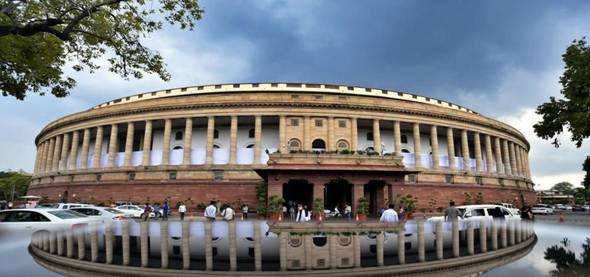
Lok Sabha todaypassed the Consumer Protection Bill 2019 after due
consideration and discussion.The Union Minister for Consumer Affairs,
Food and Public Distribution Shri Ram Vilas Paswan said that the bill
aims at protecting the interests of consumers by establishing
authorities for timely and effective administration and settlement of
consumers’ dispute. Moving the Bill, Minister of State for Consumer
Affairs, Food and Public Distribution, Shri Raosaheb Patil Danve said
the Bill aims to simplify a number of rules. Shri Danve said consumers
do not get quick redressal of their complaints and with the passage of
the Bill, consumers will be able to get speedy justice. He said the
government aims to simplify the entire process of redressal of consumer
grievances.
Under
the Bill, there is provision for central government to set up a Central
Consumer Protection Authority (CCPA) to promote, protect and enforce
the rights of consumers and will be empowered to investigate, recall,
refund and impose penalties. It will regulate matters related to
violation of consumer rights, unfair trade practices, and misleading
advertisements. There is also a provision for class action law suit for
ensuring that rights of consumers are not infringed upon. The authority
will have power to impose a penalty on a manufacturer or an endorser of
up to 10 lakh rupees and imprisonment for up to two years for a false or
misleading advertisement. 
Salient Features of the Bill
1.         Central Consumer Protection Authority (CCPA): Executive Agency to provide relief to a class of consumers. The CCPA will be empowered to-
  1. Conduct  investigations into violations of consumer rights and institute Complaints /Prosecution
  2. Order recall of unsafe goods and services
  3. Order discontinuance of Unfair Trade Practices and Misleading  Advertisements
  4. Impose penalties on Manufactures /Endorsers /Publishers of Misleading Advertisements
2.         Simplified Dispute Resolution process
i) Pecuniary Jurisdiction enhanced to-
  • District Commission –Up to Rs1 crore
  • State Commission- Between  Rs1 crore and Rs 10 crore
  • National Commission –Above Rs.10 crore
ii) Deemed admissibility after 21days of filing
iii) Empowerment of Consumer Commission to enforce their orders
iv) Appeals only on question of law after second stage
v) Ease of approaching consumer commission
  • Filing from place of residence
  • E-filing
  • Videoconferencing for hearing 
3.         Mediation
  • An Alternate Dispute Resolution (ADR) mechanism
  • Reference to Mediation by Consumer Forum wherever scope for early settlement exists and parties agree for it.
  • Mediation cells to be attached to Consumer Forum
  • No appeal against settlement through mediation
4.         Product Liability
A
manufacturer or product service provider or product seller to be
responsible to compensate for injury or damage caused by defective
product or deficiency in services
The Basis for product liability action will be:
  • Manufacturing  defect
  • Design defect
  • Deviation from manufacturing specifications
  • Not conforming to express warranty
  • Failing to contain adequate instruction for correct use
  • Services provided arefaulty, imperfect or deficient
New Bill- Benefit to Consumers
Presently
Consumer only have a single point of access to justice, which is time
consuming. Additional swift executive remedies are proposed in the bill
through Central Consumer Protection Authority (CCPA)
Deterrent punishment to check misleading advertisements and adulteration of products
Product liability provision to deter manufacturers and service providers from delivering defective products or deficient services
Ease of approaching Consumer Commission and Simplification of Adjudication process
Scope for early disposal of cases through mediation
Provision for rules for new age consumer issues: e-commerce & direct selling
Nepali and Santhali languages in the Scheme for grant of Senior/Junior Fellowships of Culture Ministry

The
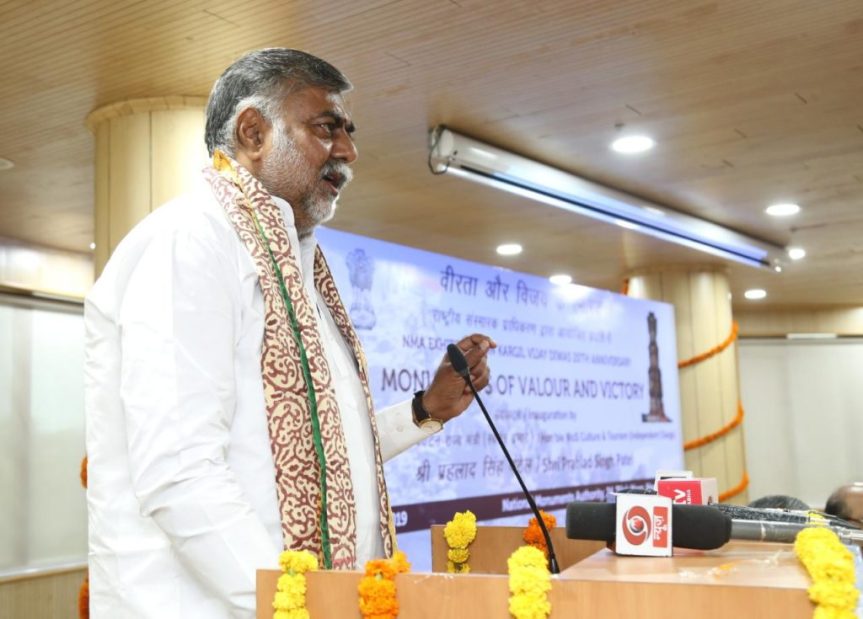
Union Minister of State for Culture and Tourism, Shri Prahlad Singh
Patel has announced to include the remaining 02 languages from the 8th 
Schedule of the Indian Constitution i.e. Nepali and Santhali in the
Sub-Field of Field “Literature” in the scheme component ‘Award of
Senior/Junior Fellowships to Outstanding Artistes in the Fields of
Culture’. The announcement was made by the Culture Minister during an
interaction with media in New Delhi today.

The
Ministry of Culture administers a scheme component namely Award of
Senior/Junior Fellowships to Outstanding Artistes in the Fields of
Culture. The fellowships are awarded for undertaking research oriented
projects.
Centre
for Cultural Resources and Training (CCRT), Dwarka is the Nodal
institute for handling the Scheme of Sr. /Jr. Fellowship till selection
process. “Literary Arts” is one of the Fields under this Scheme where
candidates can apply for research in 22 languages as their Sub-Field.
These 22 languages include the following 20 languages from the 8th Schedule of Articles 344(1) and 251 of the Indian Constitution along with English and Khasi:-
(1)
Assamese, (2) Bengali, (3) Bodo, (4) Dogri, (5) Gujarati, (6) Hindi,
(7) Kannada, (8) Kashmiri, (9) Konkani, (10) Maithili, (11) Malayalam,
(12) Manipuri, (13) Marathi, (14) Oriya, (15) Punjabi, (16) Sanskrit,
(17) Sindhi (18) Tamil, (19) Telugu and (20) Urdu.

Central Board of Secondary Education (CBSE) declares results of Central Teachers Eligibility Test (CTET) – July 2019

The
Central Board of Secondary Education (CBSE) declares results of Central
Teachers Eligibility Test (CTET) – July 2019 here today. The
12th edition of Central Teachers Eligibility Test (CTET) was conducted
on 7th July 2019 in 104 cities at 2942 centres all over country. Total
no of 114 City Coordinators, 2942 centre superintendents, 4335 observers
and 827 CBSE officials were deputed for smooth and fair conduct of
examination.

A
total no of 29.22 Lacs candidates were registered for this examination
out of which 23.77 Lacs candidates appeared in the examination.
The
result of this examination is declared in a record time of 23 days in
which 3.52 Lacs candidates declared qualified. Out of 3.52 Lacs, 2.15
Lacs from Paper -1(Primary school) & 1.37 Lacs from Paper-2 (Junior
high school) have qualified. The result is available at CTET website
i.e. www.ctet.nic.in and CBSE website i.e. www.cbse.nic.in.
The
mark sheet of candidates, who appeared in CTET examination July, 2019
will be available in the DigiLocker.  The qualifying certificate will be
uploaded in the DigiLocker & the qualified candidate will be
provided their login details on their registered mobile number.
The details of CTET July, 2019 Examination is as under:
Registered Candidates
Appeared Candidates
Qualified Candidates
Paper-I
1656091
1359478
214658
Paper-II
1266136
1017553
137172
TOTAL
29,22,227
23,77,031
3,51,830
The candidates are advised to check their result by login on website of CTET and CBSE.

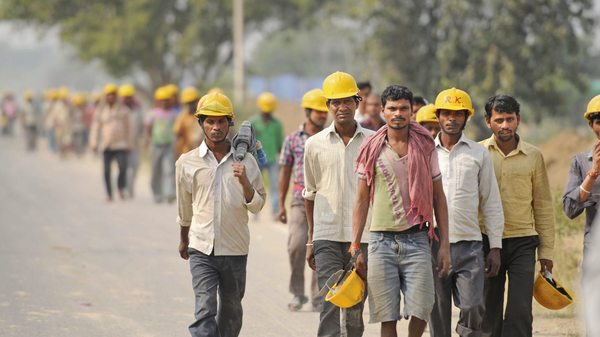
Lok Sabha Passes the Code on Wages Bill, 2019

The
Lok Sabha today passed The Code on Wages Bill, 2019. While opening the
discussion for consideration and passing of the Bill,  Minister of State
(I/C) for Labour and Employment Shri Santosh Kumar Gangwar said that it
is a historic Bill which aims to transform the old and obsolete labour
laws into more accountable and transparent ones which is need of the
hour. As many as 17 present labour laws are more than 50 years old and
some of them even belong to pre-independence era.

Among
the four Acts being subsumed in The Code on Wages Bill, The Payment of
Wages Act, 1936 belongs to pre-independence era and The Minimum Wages
Act 1948 is also 71 years old. The Payment of Bonus Act, 1965 and The
Equal Remuneration Act, 1976 are also being subsumed in the Code. 
He
further said that wide consultations were held with trade unions,
employers and State governments and tripartite consultations were held
on 10th March, 2015 and 13th April, 2015. A draft
of Wage Code was made available in public domain through Ministry’s
website. Many persons gave their valuable suggestions. The Bill was
introduced in last Lok Sabha on 10 August, 2017 and was referred to
Parliamentary Standing Committee which submitted its Report on 18th December 2018. Out of 24 recommendations made by standing committee, 17 were accepted by government.
He
further said that the Code ensures minimum wages along with timely
payment of wages to all the employees and workers. Many unorganized
sector workers like agricultural workers, painters, persons working in
restaurants and dhabas, chowkidars etc. who were out of the ambit of
minimum wages will get legislative protection of minimum wages after the
bill becomes an Act. It has been ensured in the bill that employees
getting monthly salary shall get the salary by 7th of next
month, those working on weekly basis shall get the salary on last day of
the week and daily wagers should get it on the same day.
He
expressed hope that The Code on Wages will prove to be a milestone and
give respectable life to 50 crore unorganized sector workers. The
Minister responded to the debate in detail and thanked all the respected
members for cooperation in passing the Bill.
The salient features of the Code are as following:
The
Code on Wage universalizes the provisions of minimum wages and timely
payment of wages to all employees irrespective of the sector and wage
ceiling. At present, the provisions of both Minimum Wages Act and
Payment of Wages Act apply on workers below a particular wage ceiling
working in Scheduled
Employments only. This would ensure “Right
to Sustenance” for every worker and intends to increase the legislative
protection of minimum wage from existing about 40% to 100% workforce.
This would ensure that every worker gets minimum wage which will also be
accompanied by increase in the purchasing power of the worker thereby
giving fillip to growth in the economy. Introduction of statutory Floor
Wage to be computed based on minimum living conditions, will extend
qualitative living conditions across the country to about 50 crore
workers. It is envisaged that the states to notify payment of wages to
the workers through digital mode.

There are 12 definitions of wages in the different Labour Laws leading
to litigation besides difficulty in its implementation. The definition
has been simplified and is expected to reduce litigation and will entail
at lesser cost of compliance for an employer. An establishment will
also be benefited as the number of registers, returns, forms etc., not
only can be electronically filed and maintained, but it is envisaged
that through rules, not more than one template will be prescribed.

At present, many of the states have multiple minimum wages. Through
Code on Wages, the methodology to fix the minimum wages has been
simplified and rationalised by doing away with type of employment as one
of the criteria for fixation of minimum wage. The minimum wage fixation
would primarily based on geography and skills. It will substantially
reduce the number of minimum wages in the country from existing more
than 2000 rates of minimum wages.

Many changes have been introduced in the inspection regimes including
web based randomised computerised inspection scheme, jurisdiction-free
inspections, calling of information electronically for inspection,
composition of fines etc. All these changes will be conducive for
enforcement of labour laws with transparency and accountability.
 •
There were instances that due to smaller limitation period, the claims
of the workers could not be raised. To protect the interest of the
workers, the limitation period has been raised to 3 years and made
uniform for filing claims for minimum wages, bonus, equal remuneration
etc., as against existing varying period between 6 months to 2 years.

It can be said that a historical step for ensuring statutory protection
for minimum wage and timely payment of wage to 50 crore worker in the
country has been taken through the Code on Wages besides promoting ease
of living and ease of doing business.

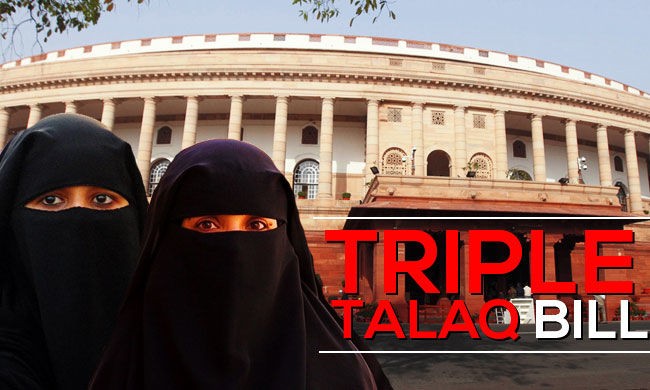
Parliament passes the Muslim Women (Protection of Rights on Marriage) Bill 2019

Parliament today passed the Muslim Women (Protection of Rights on Marriage) Bill 2019.

Expressing
satisfaction over this landmark moment, Union Minister for Home
Affairs, Shri Amit Shah congratulated Prime Minister Narendra Modi for
fulfilling his commitment and ensuring that a law is made to ban Triple
Talaq. 

The
Home Minister also congratulated Muslim women by saying, “On the
passage of this Bill, I congratulate the Muslim sisters across the
country on getting rid of the Triple Talaq curse. This act will free
Muslim women from the curse of this regressive practice”
Shri
Shah said that the Modi government is dedicated to protecting women’s
rights and ensuring their empowerment. This bill is a historic step to
protect the dignity of Muslim women and keep it intact. It will bring a
new era of hope and respect in the lives of Muslim women. From now on,
the door to unlimited possibilities will open for Muslim women and they
would now be able to play an effective role in the creation of ‘New
India’.
“Today
is a great day for India’s democracy. I thank all parties who supported
this historic bill”, Shri Shah said while thanking all the members of
Parliament.

Victory of Gender Justice and will Further Equality In Society: PM on the Passage of Triple Talaq Bill

PM Shri
Narendra Modi thanked all the parties and MPs who have supported the
passage of the Muslim Women (Protection of Rights on Marriage) Bill,
2019 in both Houses of Parliament. He said that they have risen to the
occasion and this step of theirs will be forever remembered in India’s
history.
In a series
of tweets he said that “An archaic and medieval practice has finally
been confined to the dustbin of history! Parliament abolishes Triple
Talaq and corrects a historical wrong done to Muslim women. This is a
victory of gender justice and will further equality in society. India
rejoices today!”
He further
tweeted that “This is an occasion to salute the remarkable courage of
those Muslim women who have suffered great wrongs just due to the
practice of Triple Talaq.The abolition of Triple Talaq will contribute
to women empowerment and give women the dignity they deserve in our
society.”

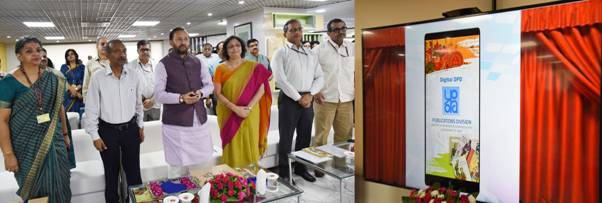
Shri Prakash Javadekar launches several e-projects of Publications Division

Union
Minister Shri Prakash Javadekar launched several e-projects of
Publications Division including its redesigned dynamic website, mobile
app “Digital DPD”, e-version of Rozgaar Samachar and  e-book “Satyagrah
Geeta” during his visit to Book Gallery at Soochna Bhawan in Delhi
today.
Speaking
on the occasion, Shri Javadekar said that in line with PM Modi’s call
to citizens in ‘Mann Ki Baat’ 2.0 programme, to make reading a habit, we
should revitalise the reading culture. He also urged for the creation
of Reading Clubs in the neighbourhood to improve the reading culture. He
added that the role of Rozgar Samachar can be improved when all the job
listing including the private jobs are listed in the newspaper. He
suggested that Rozgar Samachar when distributed in the Colleges will
help the students to improve their skill sets and make them better
suited for the job market. He said that the revamped website of
Publications Division looks attractive and dynamic, updating it daily
would make the people visit the site frequently. He was happy for the
launch of a mobile app for Publications Division which would help in
improving the reading habits of people in the era of e books and Kindle.
The details of the e-projects launched is as under:
1. Redesigned Dynamic Website: The newly revamped dynamic website (www.publicationsdivision.nic.in)
with integrated payment gateway is capable of providing real time
purchase facilities as well as updated information about Publications
Division’s books and  journals. The website will facilitate ease of
purchase. All books are available on the website for sale via payment gateway of Bharatkosh.
The website has an attractive look and feel and a well planned architecture. Catalogue of books and updates
and new books’ releases are displayed prominently for effective
engagement with aesthetic layout, soothing colour, well-designed icons
with good contrast between background and text for easy viewing. The
information is organised into different sections and categories,
catering to all stakeholders, viz. readers, authors, other publishers,
printers, agents etc.,in neatly stacked lists, with proper visual
material which is easy to understand.
The website is user-friendly with easily accessible Social Media tools. It is clutter-free with effective search feature and informative menus and sub-menu. The smooth
interface provides easy interactivity in English and Hindi. It is
accessible to everyone including specially-abled persons (with a screen
reader). Easy interface for feedback and suggestions with
Facebook and Twitter links for connecting with the organisation on Social Media have also been provided.
It has a special section on Gandhi@150. This
section details with the work undertaken with special features
including special Gandhi Catalogue, link to Gandhi Heritage Portal for
reading volumes of Collected works of Mahatma Gandhi and other Gandhian
publications.
2. Mobile App “Digital DPD”:  It
is available for free download on Google Play Store and will facilitate
tapping into the growing mobile commerce potential. The Mobile App is
synced with the Digital Rights Management System to keep a check on a
piracy and integrated with the Bharatkosh payment gateway for the ease
of payments.
3. e-version of Rozgar Samachar:
Rozgar Samachar,  a corresponding version of Employment News (English),
is a prominent job journal in Hindi  providing  information about job
opportunities in Central Government including  Public Sector
Enterprises.  It also provides information and guidance about admission
and career opportunities in various streams through career-oriented
articles by experts. 
The
e-Rozgar Samachar will provide the journal in digital form and is
available @ Rs.400 for yearly subscription The e- Rozgar Samachar is
expected to fulfil the growing needs of young readers, turning to
electronic modes of communication.
4. e-book “Satyagraha Geeta”:
The heritage value book written by eminent poet Dr Kshama Rao in 1930s
in Sanskrit verses presents the life and activities of Gandhiji. As part
of Gandhi@150 commemoration, DPD procured a PDF version of the book and
prepared the e-version of the book. English translation has also been
added to ensure wider reach.  Divided in eighteen chapters (like Adhyays of Bhagwat Geeta),
Satyagraha Geeta presents Gandhi’s ideas, philosophy of life and his
methods of action in Sanskrit verse form, capturing Gandhian ethos and
tenets.

How to Write a Press Release?

So, how to write a press release? That’s a million dollar question.
If done right, it can indeed bring you a million dollars in revenue.
Let’s get started by answering what a press release is.
“A press release is simply a statement prepared for distribution to the news media
announcing something claimed as having news value with the intent of gaining media coverage.”
A press release consists of following elements:
  • Headline

    The headline is the first single line of text in the press release and
    tells what the press release is about. It can be a very effective tool
    to grab the attention of the journalists, so writing it from a
    journalists perspective is very important. Think what headlines catch
    your eyes in the newspaper.

    The headline should be descriptive but not too long. For the
    later reason, Eduindex News limits it to 100 characters.

    The headline should be formatted in title case, that is, each word in
    the sentence should have first letter capitalized, and rest of the
    letters in lowercase. Acronyms can be in uppercase.

  • Summary

    The summary lets you build up your chance to sell your press release to
    the journalist.
    It is generally a requirement of online press release services. Identify
    a unique feature about your product or service and then write how it is
    going to revolutionize the world.

    The summary should be a single paragraph with about three to
    five lines. Beyond 250 characters is too long, so this is the limit for
    PRLog.

    All sentences in the summary should be in sentence case, that is, only
    first letter of a sentence should be capital, and all others should be
    lowercase. Again, acronyms can be all capital letters.

  • Body

    1. Dateline

      The dateline contains the release date of the press release and usually
      also the originating city of the press release. For online press release
      services like PRLog, the date stamp is automatic and should not be
      entered.

    2. Introduction

      The introduction is where the press release body starts.
      It is the first paragraph in a press release,
      that generally gives basic answers to the questions of who, what, when, where and why.

    3. Details

      The details come after the introduction.
      It gives further explanation, statistics, background, or other details relevant to the news
      and also serves to back up whatever claims were made in the introductory paragraph.

    The body should be around 3000 characters or 450 words. The body should
    have a minimum of two paragraphs. All paragraphs should be ideally
    between 5 to 8 lines each. There should be a blank line after each
    paragraph for good visibility.

  • About

    The about section is also called the “boilerplate” as it used over and
    over again. It is generally a short section providing background
    information on the press release issuing company or organization.

  • Media Contact Information

    This section contains the contact information like name, phone number,
    email address, mailing address, etc for the media relations contact
    person. For good credibility, the email address should be the same as
    the organization the press release is about. For example, if the press
    release is about an organization with a website called abcd.com, then
    the email address should be email_address@abcd.com.

General Tips

  • A press release should be written in third person. Instead of using we, us and ours, your should be using they, them and theirs.
  • It is very useful to look at other people’s press releases. Feel
    free to take a look at the most viewed press releases, as it usually
    gives a lot of insight into how to write a press release.
  • Submit press release to Eduindex News at news@eduindex.org

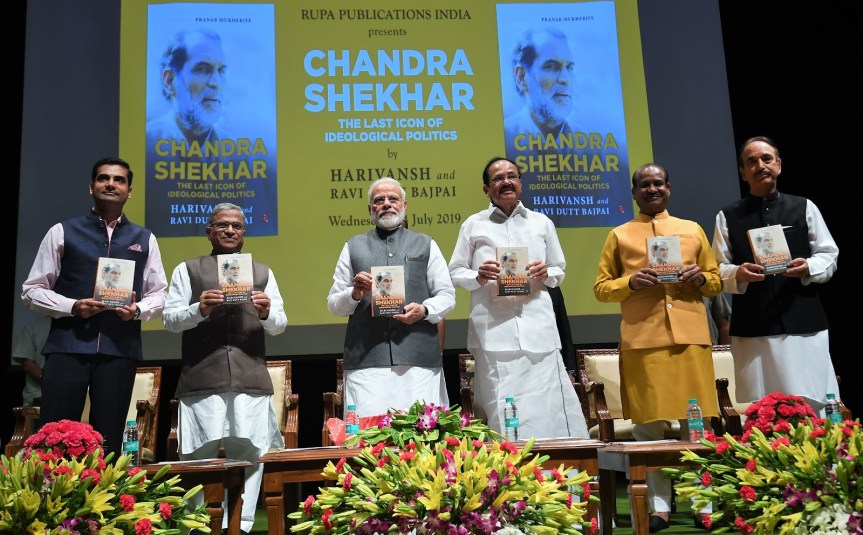
PM releases the book “Chandra Shekhar – The Last Icon of Ideological Politics”

The
Prime Minister, Shri Narendra Modi, today released the book “Chandra
Shekhar – The Last Icon of Ideological Politics.” The book has been
written by Shri Harivansh, Deputy Chairman, Rajya Sabha; and Shri Ravi
Dutt Bajpai. The book release event was held at the Balayogi Auditorium,
Parliament Library Building.
PM releases the book "Chandra Shekhar - The Last Icon of Ideological Politics"
PM releases the book “Chandra Shekhar – The Last Icon of Ideological Politics”
The Prime Minister presented the first copy of the book to the Vice President of India, Shri Venkaiah Naidu.
Speaking
on the occasion, the Prime Minister said that in today’s political
context, it is remarkable that even after about 12 years of his passing
away, the thoughts of former Prime Minister Chandra Shekhar ji, continue
to guide us, and are as vibrant as ever.
Congratulating
Shri Harivansh for writing the book, the Prime Minister shared some
memories and anecdotes of his interactions with Shri Chandra Shekhar.
He
recalled that he had first met Shri Chandra Shekhar ji in 1977. He
saidthat he was travelling with former Vice President Bhairon Singh
Shekhawat ji, and had met Shri Chandra Shekhar at Delhi Airport. He said
that the two leaders shared a close bond, despite their different
political ideologies.
The
Prime Minister also recalled that Shri Chandra Shekhar ji addressed
Shri Atal Bihari Vajpayee ji as “Guru ji.” He described Chandra Shekhar
ji as a man of remarkable culture and principles, who did not hesitate
to oppose the dominant political party of his time, because he disagreed
with certain aspects of it.
The
Prime Minister mentioned political leaders such as Mohan Dharia ji and
George Fernandes ji, both of whom, he said, spoke highly about Chandra
Shekhar ji.
Shri
Narendra Modi recalled his last meeting with Shri Chandra Shekhar ji.
He said the ailing former Prime Minister had telephoned him and invited
Shri Modi to visit him whenever he was in Delhi. During that
interaction, Shri Chandra Shekhar ji had inquired about Gujarat’s
development, and shared his perspective on many national issues.
The Prime Minister appreciated his clarity of thought, commitment to the people, and dedication to democratic principles.
The
Prime Minister also recalled the historic Padyatra that Shri Chandra
Shekhar ji had undertaken, for the farmers, the poor, and the
marginalized. The Prime Minister said that it is unfortunate that we
failed give him the respect he deserved, at that time.
The
Prime Minister said that there is a coterie of people who have sought
to create adverse impressions of some great Indian leaders, including
Dr. Ambedkar and Sardar Patel. He asserted that a museum for all former
Prime Ministers will be established in Delhi. He urged the family
members of former Prime Ministers to share aspects of the life and work
of these Prime Ministers. He said the country needs a new political
culture, beyond political untouchability.
Speaker,
Lok Sabha, Shri Om Birla; Deputy Chairman, Rajya Sabha, Shri Harivansh;
and Leader of Opposition in the Rajya Sabha, Shri Ghulam Nabi Azad,
were present on the occasion, and also addressed the gathering.

22nd National Conference on e-Governance 2019 to be held at Shillong on 8-9, 2019

The
Department of Administrative Reforms & Public Grievances (DARPG),
in association with Ministry of Electronics & Information Technology
(MeitY), Government of India and the State Government of Meghalaya will
organize the 22nd National Conference on e-Governance 2019 on 8-9th
August, 2019 at Shillong, Meghalaya on the

“Theme of the Conference is “Digital India: Success to Excellence”

. This is the first time the event
is being organized in North-Eastern region of the country. This
Conference provides a platform to disseminate knowledge on effective
methods of designing and implementing sustainable e-Governance
initiatives to provide end-to-end Digital Services, exchange experiences
in solving problems, mitigating risks, resolving issues and planning
for success. This was announced in a press conference addressed by Shri
P. S. Thangkhiew, Chief Secretary, Government of Meghalaya, Shri V.
Srinivas, Additional Secretary, Department of Administrative Reforms and
Public Grievances, at Shillong today.  The 22nd National e-Governance Conference at Shillong is part of the DARPG’s 100 days initiatives in the new Government.
The theme of this Conference is “Digital India: Success to Excellence”.
Discussions will be held on 5 sub-themes in Plenary session during the
Conference: India Enterprise Architecture (INDEA), Digital
Infrastructure, One Nation – One Platform, Emerging Technology for
Practitioners, Secretariat Reforms, National e-Governance Service
Delivery Assessment (NeSDA). 4 Breakout Sessions will be held on
sub-themes-Inclusion and Capacity Building, Engaging with Innovators and
Industry, End- to- End Digital Services: IT initiatives of State
Governments.
28 States and 8 Union Territories have confirmed their participation in the 22nd
National e-Governance Conference. Over 450 delegates are expected to
attend the Conference. An Exhibition will also be organized during the
event to showcase India’s achievements in the field of e-Governance,
along with a Hall of Fame/ photo exhibition on the award winners.
Shri P. S. Thangkhiew, Chief Secretary, Meghalaya said that the 22nd
National e-Governance Conference would be inaugurated by the Shri
Conrad Kongkal Sangma, Chief Minister of Meghalaya, and Dr. Jitendra
Singh Minister of State (Independent Charge) of the Ministry of
Development of North Eastern Region and the Minister of State in the
Prime Minister’s Office, Personnel, Public Grievances & Pensions,
Department of Atomic Energy, Department of Space. The Minister of
Information Technology and Communication and Urban Affairs Department,
Government of Meghalaya, Shri Hamletson Dohling would also address the
inaugural session. Senior Secretaries from the Government of India
including Shri K. V. Eapen, Secretary Department of Administrative
Reforms and Public Grievances and Pensions, and Shri Ajay Prakash
Sawhney Secretary Ministry of Electronics and Information Technology
would attend the conference. 15 States would be presenting their IT
initiatives and success stories in the breakout sessions.
Shri V. Srinivas, Additional Secretary DARPG said that the 22nd
National e-Governance Conference at Shillong would provide considerable
momentum to the e-Governance initiatives in the region, providing
opportunities for civil servants and industry captains of North Eastern
region to showcase their successful interventions in e-Governance in
improving end to end service delivery.

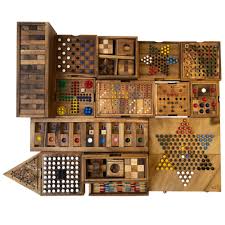
Play the classic brain teaser games to enhance your mental ability!!!

If
you are a player (in the gaming world) then you might always be eager to play
challenging games and here, you can get ideas about some of those. Playing challenging games such as
the impossible quiz
is always a great option because these kinds of games will enhance your mental
ability in numerous ways. 
Whether
your wallet lack some green or not, a “free” is a word that attracts all the
people towards it. Nowadays, various reputed websites have video games where
you can play the best video games for free. These websites do this to attract
customers towards themselves and to offer the best experience to their customers.
But the thing is that why people should play these games? Are not these just a
waste of time? Well about to know by yourself.
The
Strategy Games
are always the finest offering to us by our personal computers. There are a lot
of games that are not just the waste of time while others may be. Usually, the
games that are challenging make offers you enhanced mental ability. Playing these
games will be helpful to confuse you until your head gets hurt. It is very
challenging to play these games.
There
are also the games full of twists and turns that you would not only enjoy
playing but as well as offers you various benefits. These are the best way of
mental exercising and give your brain a run for its money.
These kind of gamesaffects
differently to different peoples. Like some people want to unwind their enemies
one after the other while others love to have an action in their games one
after the other.
Overall,
these games have a lot to offer
to their players, if observed closely. It is up to you what kind of game do you
want to play. You won’t believe as how many people love playing games which
puts them on edge and are challenging in more than one way. Now, these are one
of the most popular games in the world.
After
playing games which requires
strategizing
, you would not only find it fun to play but as well as the learn
the art of planning and creating strategies to complete the tasks and win the
game. These kinds of games can keep you entertained for a very long time.
You
will experience the situations that will take you into an imaginative world.
The blend of realization and thrill offers in these games makes it very
enjoyable and addictive. 
Things you will learn while playing
strategy games!!!
All
real-time video games are focused on realism. Human loves to play these games
since many years ago. These games are so enjoyable at various psychological
levels. These games offer an exhilarating group experience and a very enjoyable
individual experience. No one in the entire world does not like to beat his
opponent in a game by out-smarting.
These help you to understand your
friends
If
you want to learn something about the real- time situations like with friends and
family, then playing these games
is one of the best ways to understand the concepts in hypothetical sense.
Knowing their strategies how they defeat their opponent will let you know their
behavior. Throughout the whole process, there are interesting insights that you
will get to know about these. Sometimes these are very revealing.
It
is always a great way to play games with your fiancée whom you are going to get
married, you will get to know a lot about your fiancée. This will be helpful
for you and your partner to understand each other.
Enhances your mental ability
There
are a lot of things that are similar to the real situations of the world. You
need to make strategies against opponents; therefore, you will get to know the
problems of the world and on the other hand, you will enhance your mental
ability by creating the best strategies. It is always a great way to enhance
your reading skills. You will go through the situations as well as take instant
decisions based on the scenario to defeat your opponent. Additionally, you will
get your results at the same time therefore, you will know what the best
strategy and whatnot is.

India and Myanmar Sign Mou on Defence Co-Operation

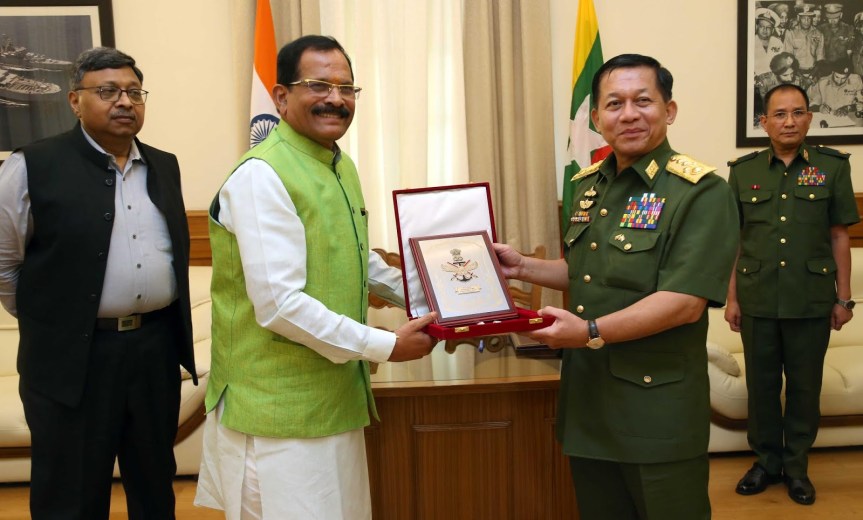
Senior
General Min Aung Hlaing (MAH), Commander-in-Chief of Defence Services
(CDS) of the Republic of Union of Myanmar, is currently on an official
visit to India from 25th July – 2nd August, 2019.

Raksha
Rajya Mantri Shri Shripad Yesso Naik held talks with Senior General Min
Aung Hlaing, Commander-in-Chief of Defence Services (CDS) of the
Republic of Union of Myanmar. Both sides were accompanied by senior
officials. The talks were aimed at enhancing defence co-operation,
review joint exercises and training provided to Myanmar Defence
Services, strengthen maritime security by joint surveillance and
capacity building, medical co-operation, pollution response and for
developing new infrastructure.
On conclusion of the talks, India and Myanmar signed a Memorandum of Understanding on defence co-operation.
Earlier,
the visiting dignitary, accompanied by a high-level delegation from the
Myanmar Defence Services, called on Chairman Chiefs of Staff Committee
and Chief of Air Staff, Air Chief Marshal BS Dhanoa, Chief of Army Staff
General Bipin Rawat and Chief of Naval Staff Admiral Karambir Singh.
Senior
General Min Aung Hlaing, Commander-in-Chief of Defence Services (CDS)
of the Republic of Union of Myanmar was accorded a Tri-Services Guard of
Honour. He also paid homage at the National War Memorial.
Myanmar
is a key pillar of India’s Act East Policy towards prioritising
relations with its East Asian neighbours. India has steadily increased
defence co-operation with Myanmar in recent years.

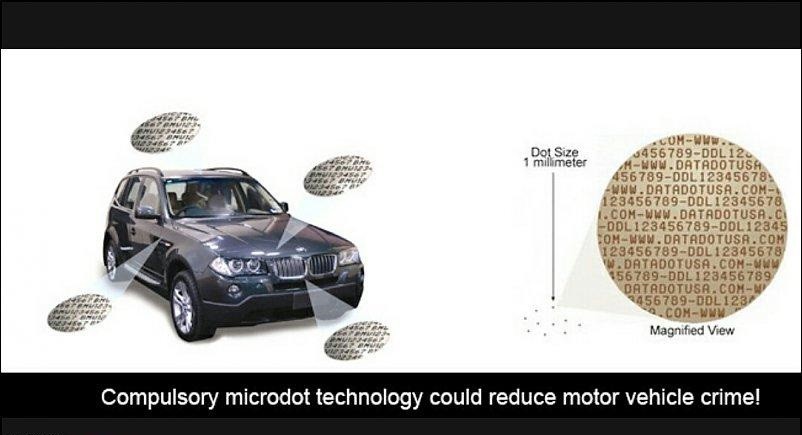
Draft Notification Issued Allowing Motor Vehicles and their Parts to be Affixed with Microdots

The Ministry of Road Transport & Highways has issued a draft notification GSR 521(E) dated 24thJuly
2019, amending Central Motor Vehicle Rules,allowing motor vehicles and
their parts, components, assemblies, sub-assemblies to be affixed with
permanent and nearly invisible microdots that can be read physically
with a microscope and identified with ultra violet light source.
Microdot
technology involves spraying the body and parts of the vehicle or any
other machine with microscopic dots, which give a unique identification.
Use of this technology will help check theft of vehicles and also use
of fake spare parts.   
The
microdots and adhesive will become permanent fixtures/affixationwhich
cannot be removed without damaging the asset, that is the vehicle
itself. The notification says that the microdots, if affixed,will have
to comply with AIS 155 requirements.

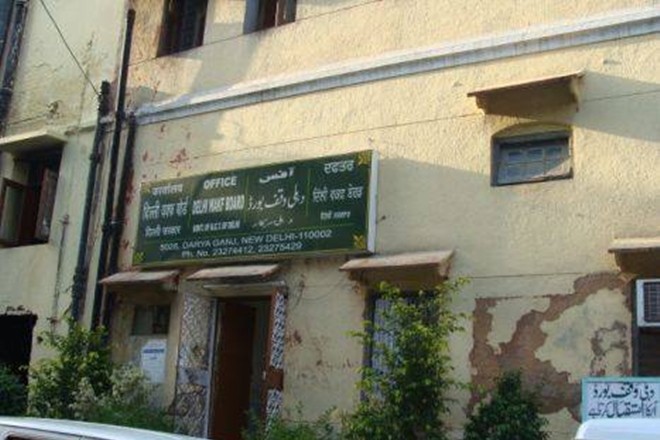
Central government has set a target to achieve 100 per cent digitisation of Waqf properties

Union
Minority Affairs Minister Shri Mukhtar Abbas Naqvi today inaugurated a
national conference of Central Waqf Council (CWC), organised at NDMC
Convention Centre in New Delhi. Shri Mukhtar Abbas Naqvi said here that
the Central Government has set a target to achieve 100 per cent
digitisation of Waqf properties across the country in its first 100
days. There are more than 6 lakh registered Waqf properties across the
country.

         
Shri
Naqvi awarded 8 Mutawalis under “Qaumi Waqf Board Taraqqiati Scheme”
for better management of Waqf properties in their respective state Waqf
boards. This is for the first time that Mutawalis have been encouraged
and awarded for better utilisation of Waqf properties especially for
socio-economic-educational empowerment of needy.
Shri
Naqvi said that Mutawalis are “Custodian” of the Waqf properties and
it’s their responsibility to ensure safety and better utilisation of
Waqf properties.
Secretary,
Ministry of Minority Affairs Shri Shailesh, other senior officials,
Central Waqf Council Secretary, CWC Members, senior officials of the
council, Chairmen/CEOs of state Waqf boards attended this national
conference. 
Shri
Naqvi said that a programme on war footing has been launched for 100
per cent Geo tagging and digitalisation of Waqf properties across the
country to ensure these properties can be utilised for welfare of the
society. Central Waqf Council is providing financial help and technical
assistance to state Waqf boards for digitalisation, GI Mapping/Geo
Tagging of Waqf properties so that state Waqf boards can complete
digitalisation work within decided timeframe.
GIS/GPS
mapping of the Waqf properties has been initiated with the help of IIT
Roorkee and Aligarh Muslim University. The Central Waqf Council has
provided video conferencing facilities to 20 state Waqf boards and it
would be provided in the remaining state Waqf boards by the end of this
year. 
Shri
Naqvi said that for the first time since Independence, Prime Minister
Shri Narendra Modi led Government is providing 100 per cent funding to
develop schools, colleges, ITIs, polytechnics, hospitals, multi-purpose
community hall “Sadbhav Mandap”, “Hunar Hub”, common service centres,
employment oriented skill development centres and other basic
infrastructure on Waqf land under Pradhanmantri Jan Vikas Karykram
(PMJVK) for weaker sections and needy especially girls in those backward
areas which had been deprived of these basic facilities. 
Shri
Naqvi said that while only 90 districts of the country had been
identified for Minority communities’ development earlier; Prime Minister
Shri Narendra Modi led Government has expanded development programmes
for Minorities in 308 districts, 870 blocks, 331 towns and thousands of
the villages of the country.
Shri
Naqvi said that the report of a five-member committee, constituted to
review Waqf properties lease rule, headed by Justice (Retd) Zakiullah
Khan, has been submitted. The recommendations of the committee will
ensure that Waqf rules are made easy and effective for better
utilisation of Waqf properties and to free these properties, several of
these entangled in disputes for several decades, from disputes.  The
Central Government, in consultation with the state governments, is
taking necessary action on the recommendations of the committee.

10 historical Monuments across the country will remain open till 9 pm for common public

Union
Culture Minister (IC) Shri Prahlad Singh Patel announced that opening
hours of 10 historical Monuments across the country has been increased
and now these Monuments will remain open from Sunrise to 9 pm for common
public. The decision made public by Culture Minister while talking to
media in New Delhi. Earlier these monuments used to open from 9am to
5.30 pm for general public. Shri Patel said that this decision has been
made for the benefit of general public/tourists who can visit and
appreciate the beauty of such historical sites for long hours.

The
Minister also informed that other than these 10 monuments some other
historical monuments are also under consideration for long opening hours
for visitors. These 10 Monuments have been selected in first phase, he
added.
The list of 10 historical Monuments is given below –
SL No.

Name Of Monuments

District

State

1

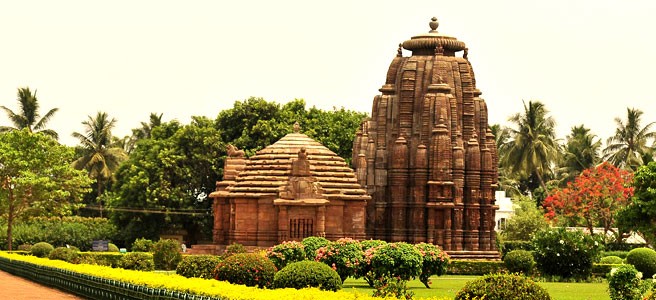
Rajarani Temple Complex

Bhubaneswar

Odisha

2

Dulhadeo Temple, Khajurao

Chattarpur

Madhya Pradesh

3

Sheikh Chilli Tomb, Thanesar

Kurukshetra

Haryana

4

Safdarjung Tomb

Delhi

Delhi

5

Humayun’s Tomb, Delhi

Delhi

Delhi

6

Group of Monuments at Pattadakkal, Karnataka

Bhagalkot

Karnataka

7

Gol Gumbaz

Vijayapura

Karnataka

8

Group of Temples, Markanda, Chamursi

Gadchiroli

Maharashtra

9

Man Mahal, Vaidhshala

Varanasi

Uttar Pradesh

10

Rani-ki-Vav

Patan

Gujarat